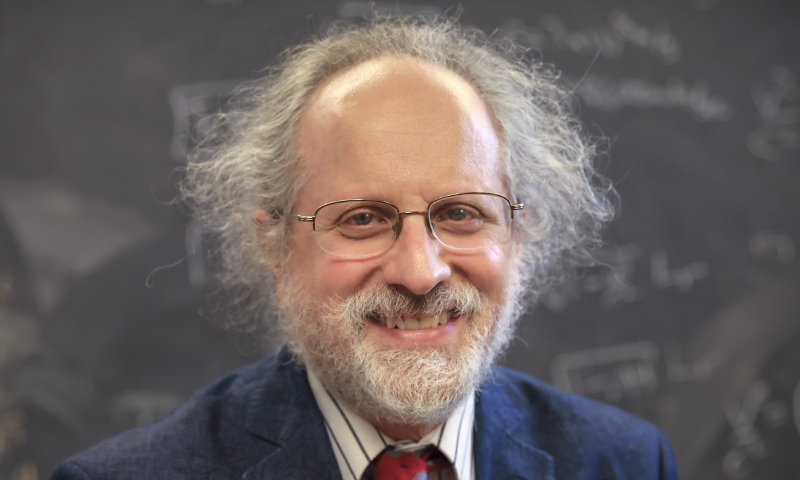
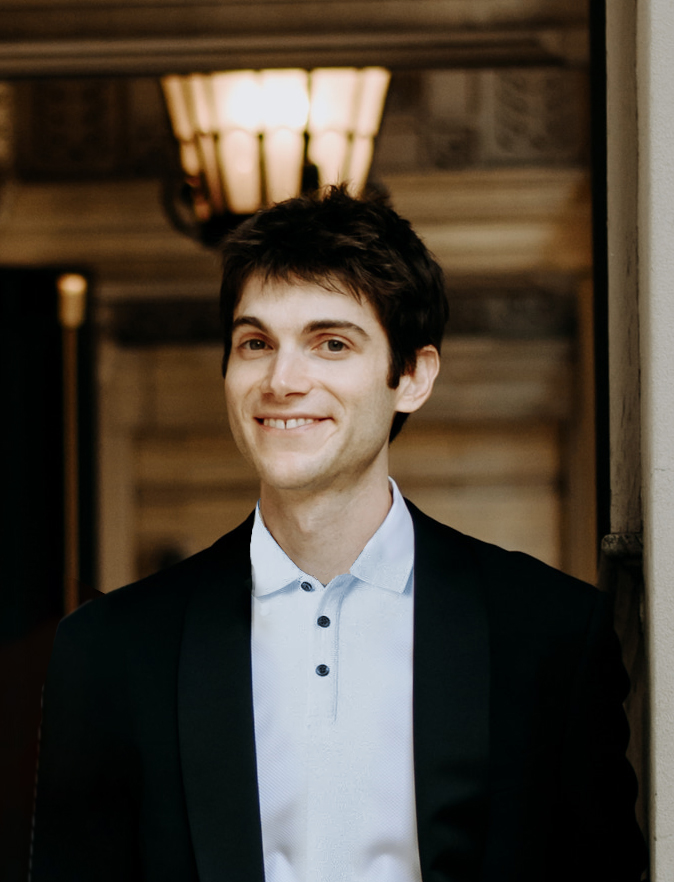
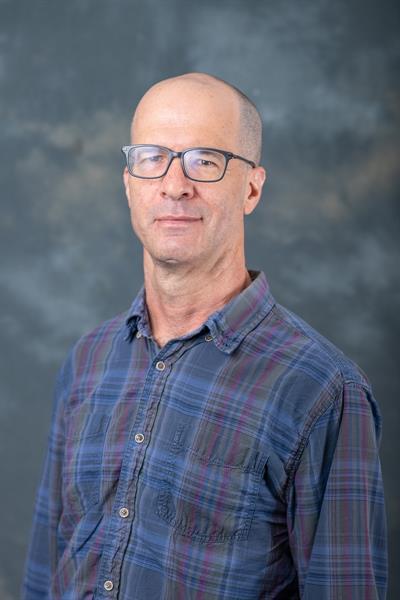
Professor Michael Ben-Gad is a Professor of Economics at City, University of London, where he has served since 2009. He previously held roles as Head of the Department of Economics (2010–2013) and Deputy Head (2008–2010). His research focuses on dynamic macroeconomics, taxation, public debt, immigration economics, and national security, with notable contributions to endogenous growth models and compositional data econometrics. He holds a PhD from the University of Chicago (1996) and has taught at institutions including the University of Houston and University of Haifa. Ben-Gad served on the U.S. National Academy of Sciences panel on immigration's economic and fiscal impacts (2014–2016) and received a 2017 Fellowship from the Royal Society of Arts (FRSA). His work spans academic journals (Economic Modelling, Journal of Economic Dynamics and Control) and media outlets (BBC, CNBC, Al Jazeera), addressing topics like Brexit economics, fiscal policy, and geopolitical challenges. He co-convenes the City Branch of Academics for Academic Freedom and is a founding member of London Universities' Council for Academic Freedom. His research grants include funding from HM Treasury/ESRC on fiscal policy and immigration (2011), the Israel Science Foundation (2007–2008), and the Samuel Ne'eman Foundation (2004). Professional roles include editorial board membership for Economic Affairs and membership of the ESRC Grant Assessment Panel (2021). He is proficient in Hebrew and contributes to policy debates on taxation, macroprudential frameworks, and defense economics.
John MacFarlane is a Professor of Philosophy at the University of California, Berkeley , with affiliations to the Group in Logic and the Methodology of Science and co-organizer roles in the Meaning Sciences Club and Townsend Center Working Group . His research spans philosophy of language, philosophical logic, metaphysics, epistemology, philosophy of mathematics, history of logic , and ancient philosophy , particularly Aristotle . He has held visiting positions at institutions like École des Hautes Études en Sciences Sociales (EHESS), Paris . Education : Ph.D. in Philosophy (2000, University of Pittsburgh), M.A. in Classics (1997) and Philosophy (1994), A.B. summa cum laude in Philosophy (1991, Harvard). Research Interests focus on semantic relativism , particularly assessment sensitivity as explored in his book Assessment Sensitivity: Relative Truth and Its Applications (Oxford, 2014). He investigates how epistemic modals and vagueness interact with truth evaluation. His work in philosophical logic includes a textbook Philosophical Logic: A Contemporary Introduction (Routledge, 2021). Secondary interests include ancient philosophy (Aristotle, Plato), formal logic , and fiddlosophy . Article Trends reveal contributions to relativism , epistemic modals , vagueness , and logicism . His recent work (2025) examines Plato’s Protagoras and belief utility , while 2022–2020 articles address semantic indecision and probabilistic knowledge . Earlier works (2008–2000) include foundational studies on Frege, Kant, and Aristotle . Scientific Awards include a 2023 Residential Fellowship at Wissenschaftskolleg, Berlin (declined), 2016–17 Fellow at IEA Paris , and 2015 American Academy of Arts and Sciences membership . He has received multiple Humanities Research Fellowships at Berkeley (2016, 2008, 2003) and Research Enabling Grants (2000–2009). Advising includes supervising 15+ PhD students in areas like logic, epistemology, and philosophy of language . Notable advisees include Richard Lawrence (2017) and Sophie Dandelet (2021). He also guided honors theses at Berkeley, such as Benjamin Logan’s work on epistemic modals (2018). Labs and Teams involve co-organizing the Townsend Center Working Group in History and Philosophy of Logic, Mathematics, and Science and contributing to the Group in Logic and Methodology of Science . His interdisciplinary approach integrates philosophy, logic, and computational tools , including creating Pandoc for document conversion.
Jakob Schoeffer is a tenure-track Assistant Professor in the Artificial Intelligence department at the Bernoulli Institute for Mathematics, Computer Science and Artificial Intelligence, Faculty of Science and Engineering, University of Groningen (Netherlands). His work focuses on the intersection of human decision-making and artificial intelligence, particularly in high-stakes contexts where fairness, transparency, and appropriate human-AI collaboration are critical. Dr. Schoeffer's research interests center on responsible and explainable AI, with specific focus areas including: Human-AI collaboration dynamics in decision-making processes Fairness perceptions and interventions in AI systems Appropriate reliance on AI recommendations Explainable AI techniques for high-stakes domains Transparency mechanisms that improve human-AI team performance Label indeterminacy issues in medical AI applications His recent publications (2023-2025) reveal a strong trend toward applying AI research in critical domains like healthcare (particularly neurological recovery prediction), while maintaining a rigorous focus on the human aspects of AI deployment. His work spans both theoretical foundations of human-AI interaction and practical implementations, often employing mixed-methods approaches that combine technical AI development with behavioral studies. Dr. Schoeffer actively collaborates with researchers across institutions including the University of Texas at Austin and has made significant contributions to top conferences in AI ethics, fairness, and human-computer interaction. His research has been featured in multiple news outlets and policy discussions, indicating real-world impact of his work on responsible AI development. Prior to his current appointment, Dr. Schoeffer was a Postdoctoral Research Fellow at the University of Texas at Austin. He received his PhD from the Karlsruhe Institute of Technology (KIT) in Germany with a dissertation titled "On the Interplay of Transparency and Fairness in AI-Informed Decision-Making." He also holds a master's degree in Operations Research from Georgia Tech and industry experience as a Senior Data Scientist at IBM.
Andrea Lanza serves as Associate Professor in the Department of Italian Studies within the Faculty of Arts & Science at the University of Toronto. Originally from Italy, he completed his academic training in France at the École des Hautes Études en Sciences Sociales (EHESS), earning both his Diplôme d'Études Avancées and Doctorat degrees, following his Laurea from Università degli Studi di Milano La Statale. His scholarly profile demonstrates extensive transnational engagement with French political thought while maintaining institutional affiliation with Italian Studies. Doctorat, École des Hautes Études en Sciences Sociales (Paris) Diplôme d'Études Avancées, École des Hautes Études en Sciences Sociales (Paris) Laurea, Università degli Studi di Milano La Statale Lanza's research focuses on the historical intersections between political thought and social science, with particular emphasis on Early French Socialism (1800-1850), the making of French working classes, and Contemporary French Political Thought. His scholarly trajectory follows two interrelated axes: the emergence of socialist discourse in 19th century France and historic-philosophical debates on democratic society, especially regarding French thinkers like Lefort, Gauchet, Rosanvallon, Foucault, and Rancière. His work demonstrates remarkable interdisciplinary range, connecting political philosophy with historical anthropology, sociology, and religious studies. His recent publications reveal a growing engagement with contemporary issues including decolonization debates, cancel culture, and the epistemological challenges facing social sciences today. Lanza has also held significant administrative roles, serving as Associate Chair for Undergraduate Studies in the Department of Italian Studies during 2022-2023. Administrative Service: Associate Chair - Undergraduate, Department of Italian Studies (2022-2023) Lanza's scholarly network extends across North America and Europe, with collaborations spanning multiple disciplines. His recent editorial work on Claude Lefort's political philosophy and Marcel Gauchet's theories of democratic society demonstrates his position at the forefront of contemporary political thought scholarship.
Professor Fabio Milani is a faculty member in the Department of Economics at the University of California, Irvine (UCI), where he also serves as Director of Graduate Studies for the Economics Ph.D. Program. He holds a Laurea in Economics from Bocconi University (2000) and a Ph.D. in Economics from Princeton University (2006). His research focuses on Macroeconomics, Monetary Economics, International Macroeconomics, and Time Series Econometrics, with an emphasis on deviations from rational expectations and the impact of learning behavior on macroeconomic fluctuations. Professor Milani’s work explores how psychological factors and heterogeneous expectations drive economic outcomes, including business cycles and inflation dynamics. He has extensively analyzed the role of sentiment, news shocks, and adaptive learning in macroeconomic models. His teaching spans Ph.D. courses like Macroeconomic Theory and Advanced Macroeconomics, as well as undergraduate courses on Financial Markets and the Macroeconomy. He advises numerous Ph.D. students, many of whom hold academic and policy roles globally. His publications span over 30 articles in top journals, including the Economic Journal , Journal of Economic Dynamics and Control , and Journal of Monetary Economics . Recent research includes studies on inflation tolerance, heterogeneous expectations, and the implications of learning models for monetary policy design. While no scientific awards are explicitly listed, his contributions reflect significant scholarly impact in macroeconomic theory and policy analysis.
Jennifer Rhee is an Associate Professor and Director of the MA in English program at Virginia Commonwealth University. She holds a PhD in Literature from Duke University and a BA in English from Princeton University, focusing on intersections between literature, science, and technology. Education PhD, Program in Literature, Duke University BA, English, Princeton University Her research examines artificial intelligence and robotics through lenses of race, gender, and labor, particularly how visions of "humanness" shape these technologies. She connects AI discourses to speculative fiction and art, with expertise in feminist science and technology studies, critical AI studies, and ecocritical media studies. Key publications include The Robotic Imaginary (2018) and contributions to The Palgrave Handbook of Twentieth- and Twenty-First Century Literature and Science (2020). Her recent work explores automated care labor ethics and facial recognition technology's historical implications. Scientific Awards Residential Fellowship, Humanities Research Center (2022–23) ACLS Fellowship (2019–20) First Book Institute Fellowship (2015) Postdoctoral Fellowships at Emory (2013–14) and Penn State (2011–12) Rhee teaches speculative fiction, contemporary American literature, and ENGL 301. She mentors graduate students exploring literary-science intersections and AI analysis through humanities frameworks. Her work bridges speculative fiction studies with critical AI discourses, emphasizing ethical and sociocultural implications.
Henrik Andersson is an Associate Professor and researcher in Practical Philosophy at the Department of Philosophy, Lund University, within the Faculty of Humanities and Theology. He is also an affiliated researcher at the Birgit Rausing Centre for Medical Humanities (BRCMH). His academic career includes a postdoctoral fellowship at Lund University and the University of Colorado, and prior work at the Institute for Futures Studies on the project 'Population and the Sustainable Development Goals: An Ethical Evaluation.' Andersson's research focuses on value theory and applied ethics, with particular expertise in incomparability, semantic vagueness, and ethical evaluation of population policies. His fingerprint shows strong engagement with concepts of indeterminacy, incommensurability, vagueness, and ethics across multiple domains. His recent scholarly output demonstrates a clear trend toward addressing contemporary ethical challenges related to food systems, population policies, and moral progress. The articles show increasing engagement with practical applications of philosophical theory to real-world problems, particularly in the areas of sustainable development and technological innovation. Oscar II Scholarship for best humanities dissertation at Lund University (2017) Zapffe award (2024) Andersson has led and participated in significant research projects including 'Non-Determinate Trade-offs in Ethics' (active) and 'Value Relations' (completed dissertation project). He actively organizes academic events such as the Value Theory Seminar Series and Value Incommensurability workshops, demonstrating leadership in his field. His collaborative work spans multiple institutions and disciplinary boundaries, reflecting his commitment to interdisciplinary approaches to philosophical problems. Andersson maintains an active presence in both academic and public discourse, with publications ranging from peer-reviewed journal articles to newspaper contributions addressing ethical dimensions of contemporary issues.
Ryan Calo is the Lane Powell & D. Wayne Gittinger Professor of Law at the University of Washington School of Law, with joint appointments at the Information School and adjunct roles at the Paul G. Allen School of Computer Science and Engineering. He co-founded the UW Tech Policy Lab and Center for an Informed Public, focusing on technology policy, data privacy, and AI ethics. His research explores the intersection of law and technology, emphasizing AI regulation, surveillance law, and privacy harms. Key themes include legal indeterminacy in tech policy, ethical challenges of autonomous systems, and market manipulation in digital economies. His work spans law reviews, technical journals, and policy reports. Ryan Calo's articles highlight critical gaps in AI governance, surveillance frameworks, and robotics law. His publications address algorithmic bias, cultural responsiveness in AI, and legal implications of autonomous vehicles, with recurring focus on consumer protection, constitutional challenges, and cross-disciplinary policy solutions. Phillip A. Trautman 1L Professor of the Year Award (2014, 2017) Washington Law Review Faculty Award (2019) As a public intellectual, Calo has testified before the U.S. Senate multiple times, including on AI-driven privacy risks. He serves on advisory boards for major tech policy organizations and frequently appears in media discussing AI ethics, data breaches, and constitutional tech regulation.
Professor Katja Vogt is a distinguished faculty member in the Department of Philosophy at Columbia University's Faculty of Arts and Sciences. She serves as Professor of Philosophy, Director of the M.A. Program in Philosophy, and Chair of the Climate Committee. Additionally, she is an Affiliate of the Data Science Institute and has affiliations with Computing Systems for Data-Driven Science, Data, Media and Society, and Health Analytics. Professor Vogt joined Columbia University in 2002 after teaching at Humboldt University Berlin, both in the Philosophy Department and at the Charité Medical School. Professor Vogt specializes in ancient philosophy, ethics, and normative epistemology, with particular expertise in Plato, Aristotle, Stoicism, and Pyrrhonian skepticism. Her research explores fundamental questions that bridge ancient and contemporary philosophical discussions: What are values? What kind of values are knowledge and truth? What does it mean to want one's life to go well? She has developed significant work on the role of knowledge in ethics, generics and generalizations, and is currently finalizing a monograph entitled The Original Stoics . Her approach combines careful historical scholarship with contemporary philosophical analysis, creating dialogues between ancient texts and modern debates in metaethics, epistemology, and philosophy of action. Professor Vogt's scholarly output reveals consistent engagement with ancient philosophical frameworks while addressing contemporary concerns. Her recent work shows a particular focus on Stoic philosophy, with multiple papers examining Stoic logic, physics, and ethics. She also maintains a strong interest in skepticism, particularly Pyrrhonian approaches, and has made significant contributions to understanding how ancient philosophical concepts can inform current debates about generics, value theory, and the relationship between knowledge and virtue. Her collaborative work with Jens Haas on topics like ignorance, love, and hatred demonstrates her interdisciplinary approach that connects ancient philosophy with contemporary philosophical issues. Columbia Distinguished Faculty Award Class of 1932 Fellow in Classical Philosophy at Princeton University Fellowships from the Templeton Foundation, Maimonides Centre in Hamburg, Center for Advanced Studies in Munich, DFG (German Research Association), and Columbia University-Paris 1 Alliance Program Professor Vogt is actively involved in mentoring students and developing innovative educational approaches. She serves as academic sponsor for "Logic Made Accessible," a project mentored with Columbia College student Jonathan Tanaka that has reached students in over 30 countries. The project makes ancient logic freely accessible to learners of all ages, backgrounds, and interests. She has also served on numerous university committees including the Provost's Faculty Committee on Educational Innovation, Policy and Planning Committee, Committee on Instruction, and as Acting Director of the Center for the Ancient Mediterranean. Her grant work includes support from major foundations that have enabled her to pursue research at the intersection of ancient philosophy and contemporary epistemology. Professor Vogt collaborates with photographer and artist Jens Haas on the "On the Road" project, which combines artistic photography with philosophical reflection. She is also involved in "Movies and Morals," a collaboration with H8URS that provides philosophical commentary on contemporary film and television. These projects demonstrate her commitment to making philosophical inquiry accessible beyond traditional academic settings.
Olga Vechtomova is a Professor at the University of Waterloo, affiliated with the Information Systems research group and specializing in Search Engines and Natural Language Processing. Her work bridges computational creativity, multimodal systems, and AI-driven text generation. She leads projects like LyricJam , a real-time lyric generation system for live music, and explores applications in dynamic story generation, hate speech detection, and low-resource summarization. Her research emphasizes ethical AI, creative technologies, and leveraging large language models for diverse tasks. Research interests include natural language processing, machine learning, and multimodal interaction. Recent work focuses on artistic inspiration modeling, stylized text generation, and improving NLP efficiency through semi-supervised learning and distillation techniques. Her contributions span over 60 papers since 2000, with a strong emphasis on foundational NLP challenges and real-world applications. She collaborates on systems like Promptmix for model distillation and LyricJam sonic for music-audio lyric generation.
Matthew Kramer is the Churchill College Professor of Legal and Political Philosophy at the University of Cambridge's Faculty of Law. He holds academic qualifications including B.A. (Cornell), J.D. (Harvard), Ph.D., and LL.D. (Cambridge). His research focuses on Legal Philosophy, Political Philosophy, and Moral Philosophy. He leads the Cambridge Forum for Legal and Political Philosophy (CFLPP), a key center for UK analytic legal and political philosophy. Kramer is a Fellow of the British Academy (F.B.A.) and has authored influential works such as Freedom of Expression as Self-Restraint (2021) and Liberalism with Excellence (2017). His scholarship critically engages with H.L.A. Hart's legal positivism, rights theory, and moral realism. Recent publications explore Hohfeldian analysis, legal normativity, and liberal principles in contexts like hate-speech regulation. Education: B.A. Cornell University, J.D. Harvard Law School, Ph.D. and LL.D. from Cambridge University. His work bridges legal theory, political morality, and moral philosophy, addressing topics such as the death penalty, torture ethics, and the boundaries of liberal tolerance. Kramer’s interdisciplinary approach is evident in contributions to debates on constitutional design, rights ontology, and the intersections between law and moral obligation. Awards: Fellow of the British Academy (F.B.A.) Key Roles: Director of CFLPP, Member of Faculty of Law Research Groups: Cambridge Forum for Legal and Political Philosophy His publications span over 50 books and articles, including critiques of legal positivism and defenses of moral realism. Kramer’s recent work emphasizes the philosophical foundations of rights and the ethical dimensions of legal practice, reflecting his commitment to advancing analytic jurisprudence.
Donald Spector is Professor of Physics at Hobart and William Smith Colleges (HWS), where he has been a faculty member since 1989. He holds a Ph.D. in Physics from Harvard University (1986) and has taught at Harvard, Cornell, and the University of Utrecht. He is affiliated with the Department of Physics in the School of Natural and Social Sciences and has served as coordinator of the Engineering Program and chair of the Physics Department. Ph.D., Harvard University, 1986 A.M., Harvard University, 1983 A.B., Harvard University, 1981, magna cum laude His research centers on supersymmetry, quantum field theory, and mathematical physics, with significant contributions to Q-balls, magnetic monopoles, and duality in supersymmetric quantum mechanics. He explores the intersection of physics with number theory, set theory, and computational complexity. His interdisciplinary work spans physics and the arts, particularly music (e.g., John Cage, Terry Riley) and theatre (e.g., Waiting for Godot ). His recent publications reveal a strong trend toward foundational questions in physics and information theory, especially the application of set-theoretic forcing to generalize information theory. His work bridges theoretical physics, mathematics, and the humanities, often drawing analogies between physical principles and artistic expression. Scientific awards and honors include: Teaching awards at Harvard and Cornell NSF-NATO Postdoctoral Fellowship KITP Scholar (2005–2008) Japan Society for the Promotion of Science Visiting Fellowship Philip J. Moorad Professor of Science (2005–2010) FQXi Grant (2013–2015) Spector has been regularly funded by the National Science Foundation, FQXi, KITP, and JSPS. He has supervised student research in quantum mechanics and simulated annealing. He is a founding member and board member of the Anacapa Society, which promotes theoretical physics at undergraduate institutions. He teaches courses such as Quantum Computing, Modern Physics, and interdisciplinary seminars like Physics through Star Trek and Time Travel & Multiple Universes . He is involved in multiple labs and collaborative initiatives, including organizing workshops at the Kavli Institute for Theoretical Physics and contributing to interdisciplinary projects at the Institute for Science and Interdisciplinary Studies. His recent work includes performing in plays and providing dramaturgical support for theatre productions.
Anthony Gritten is Head of Undergraduate Programmes at the Royal Academy of Music in London. A distinguished scholar-performer, he completed his doctorate at Cambridge University on Stravinsky's neoclassical music under Alexander Goehr. As a Fellow of the Royal College of Organists, Gritten has given over 400 recitals across the UK, France, and Canada, establishing himself as a leading interpreter of organ repertoire. His academic journey includes positions at the University of East Anglia, the Royal Northern College of Music, and Middlesex University before his current leadership role at the Royal Academy of Music. Gritten's scholarly profile is marked by an interdisciplinary approach that bridges performance practice with philosophical inquiry. Gritten's research interests focus on the intersection of music, philosophy, and performance studies. His work explores musical gesture, the phenomenology of performance, and the philosophical dimensions of musical practice. He has made significant contributions to understanding the works of John Cage, Charles Rosen, and Stravinsky through the lens of performance philosophy. His research reveals how embodied experience shapes musical interpretation and how philosophical concepts manifest in performance practice. His scholarly output demonstrates a sustained engagement with questions of indeterminacy, distraction, and ecological awareness in musical performance. Gritten's work has helped establish Performance Philosophy as a legitimate field of academic inquiry, connecting practical musical concerns with broader philosophical questions about meaning, interpretation, and embodiment. Fellow of the Royal College of Organists Gritten has supervised numerous doctoral students in the field of performance philosophy and artistic research. His administrative leadership as Head of Undergraduate Programmes has shaped curriculum development at the Royal Academy of Music, emphasizing the integration of practical performance with theoretical and philosophical inquiry. He has been instrumental in developing research frameworks that validate practice-based research in music, contributing to the institutional recognition of artistic research as a legitimate scholarly pursuit.
Carl D'Apolito-Dworkin serves as a Design Critic in Architecture at Harvard University's Graduate School of Design and is an associate partner/project architect at Preston Scott Cohen, Inc. His professional practice has produced significant public buildings including the Temple Beth Shalom Synagogue (2024), Anhui Province Museum of Science and Technology (2023), and Taubman College of Architecture at the University of Michigan (2016). Education: M. Arch from Harvard Graduate School of Design (AIA Henry Adams Medal recipient) B.A. summa cum laude from Yale University (Louis Sudler Prize for the Arts) His research centers on translating between physical matter and mathematical models to transform architectural construction processes. He investigates dual modes of material behavior, fabrication systems, and environmental conditions to manage indeterminacy in building projects through constraint modeling and geometric innovation. Specific research foci include facade component standardization across fabrication systems, airflow simulation, developable approximation of complex forms, and social geometries governing site-lines, acoustics, accessibility, and ritual practices within architectural spaces. Scientific Awards: AIA Henry Adams Medal Louis Sudler Prize for the Arts While no formal student advising relationships are documented, his teaching portfolio includes core architecture studios and specialized courses such as Architectural Representation II and Digital Media: Environmental Geometries at Harvard GSD, along with part-time lecturing roles at Penn and Northeastern. At Preston Scott Cohen, Inc., he leads multidisciplinary project teams in delivering complex public buildings, integrating computational design with construction innovation through collaborations with engineers, fabricators, and environmental consultants.
Avner Baz is a Professor of Philosophy at Tufts University’s School of Arts and Sciences. He specializes in ethics, aesthetics, epistemology, and the philosophy of Wittgenstein and Kant, with a focus on ordinary language philosophy and philosophical method. His work critiques representationalist approaches and advocates for contextualist insights from ordinary language traditions. Recent research explores aspect perception through Wittgenstein and Merleau-Ponty’s phenomenology, emphasizing the interplay between perception and language. Education: PhD from University of Illinois at Chicago (2000) and MA from Tel-Aviv University (1994). His publications include When Words are Called For (2012) and The Crisis of Method in Contemporary Analytic Philosophy (2017). Current projects address transcendental idealism’s relevance and critique of moral modals in ethics. Teaching focuses on courses like Knowing and Being , Phenomenology and Existentialism , and seminars on Wittgenstein and ordinary language philosophy. Professional activities include conference presentations and administrative roles, including chairing the Department of Philosophy (2018-2024).