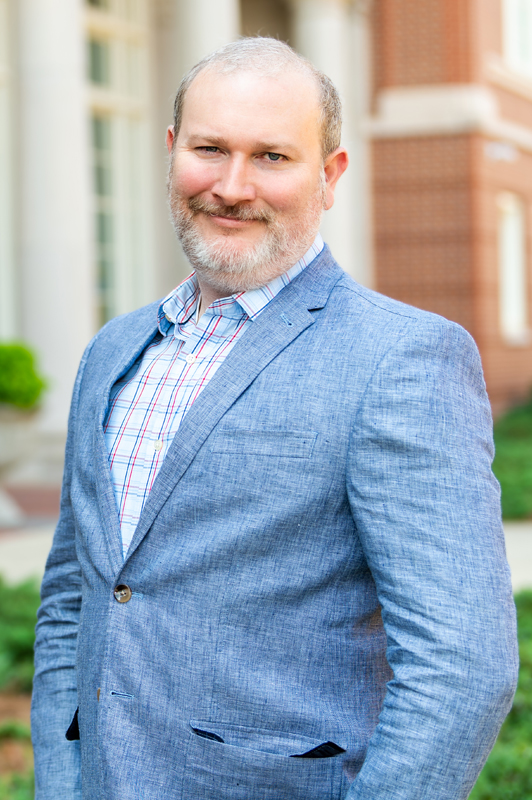
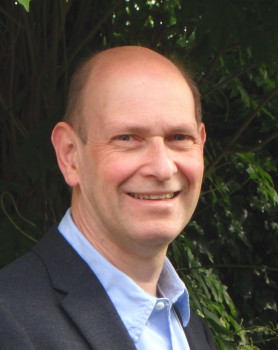
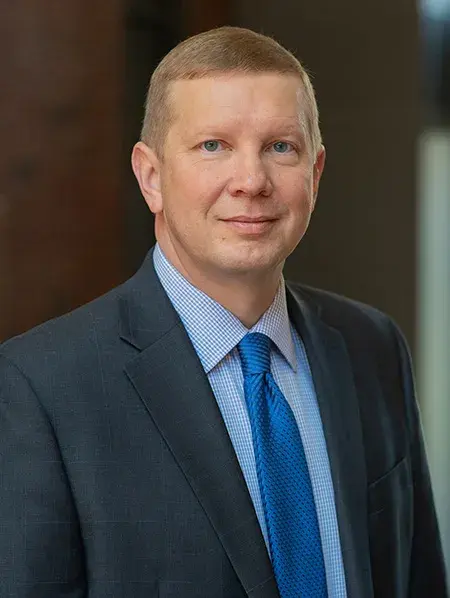
Kyle Schulze is an Assistant Professor in the Department of Mechanical Engineering at Auburn University. His research focuses on soft matter mechanics, soft implants, and tissue interface interactions, with particular emphasis on friction, adhesion, and wear. He holds a Ph.D., M.S., and B.S. in Mechanical Engineering from the University of Florida. Dr. Schulze has secured over $216,000 in National Science Foundation funding for his work on epithelial cell mechanics and lubrication. His research bridges mechanical engineering with biomedical applications, including studies on hydrogel friction, additive manufacturing processes, and cell monolayer dynamics. He actively participates in national competitions, such as NASA’s Artemis missions and the Robotic Mining Challenge, mentoring student teams in innovative engineering solutions. His recent publications span topics like biotribology, additive manufacturing quality assurance, and material characterization. He emphasizes educational innovation through projects like leveraging LASSI to measure student independence in learning. His work often intersects with interdisciplinary challenges, such as soft material interfaces and smart material applications.
Dr. Opukuro David-West is a Senior Lecturer in Mechanical Engineering at the School of Physics, Engineering and Computer Science, University of Hertfordshire. He holds a PhD in Mechanical Engineering from the University of Strathclyde and has previously worked as a researcher at Queen’s University of Belfast, Kingston University, and Plymouth University. Research focus on composite structures, dynamic loading, vibration measurement, and finite element analysis Published extensively on natural composites, green materials, and structural integrity Active in structural health monitoring, model updating, and impact mechanics Recent research trends show emphasis on sustainable composites (flax, hemp), bio-inspired stacking configurations, and energy absorption properties under quasi-static loading. His computational methods integrate finite element analysis with experimental validation, particularly in wind turbine systems and structural dynamics. Scientific awards include: Corporate Member of the Institution of Mechanical Engineers Fellow of the Higher Education Academy Chartered Engineer (CEng) status He has served as an external examiner for Solent University, module moderator for international institutions, and editorial board member for the International Journal of Mechanical Engineering and Applications. His work involves collaborations with EPSRC, Technology Strategy Board, and industry partners like Caterpillar and Raytheon UK.
Roger Lewis is a Professor of Mechanical Engineering at the University of Sheffield , affiliated with the School of Mechanical, Aerospace and Civil Engineering . He graduated from Sheffield in 1996 with an MEng and completed his PhD in the Tribology Research Group . His academic career progressed from Lecturer (2002) to Senior Lecturer (2006), Reader (2011), and finally a personal chair in 2013. In 2019, he was appointed a Royal Academy of Engineering Research Chair , co-funded by the Rail Safety and Standards Board , focusing on low adhesion management in wheel/rail interfaces. PhD in Tribology (University of Sheffield) MEng in Mechanical Engineering (University of Sheffield) His research spans two domains: industrial wear solutions (railway wheel/rail tribology, friction modifiers, condition monitoring) and human tissue interactions (skin friction modeling, medical device interface analysis, slip/fall mechanics). He pioneered ultrasonic techniques for contact analysis and edited The Wheel/Rail Interface Handbook . Awards include the Tribology Trust Bronze Medal (2001), Brian Mercer Innovation Award (2003), and Donald Julius Groen Prize (2020). Roger's recent publications (2025-2024) focus on railway wear mechanisms (corrosion interactions, Mn13/CrB1400 rail steels), particle entrainment modeling , and adhesion optimization via sanding. His work integrates experimental twin-disc testing , DEM/CFD simulations , and real-time monitoring of wheel/rail contacts. Scientific Honors: Tribology Trust Bronze Medal (2001) Brian Mercer Award for Innovation (2003) Institute of Physics Innovation Prize (2008) Donald Julius Groen Prize (2020) Chartered Engineer and IMechE Fellow Roger leads the Leonardo Tribology Centre and has developed laser cladding techniques for rail repair. His work on friction modifiers and adhesion management has direct applications in railway safety and efficiency.
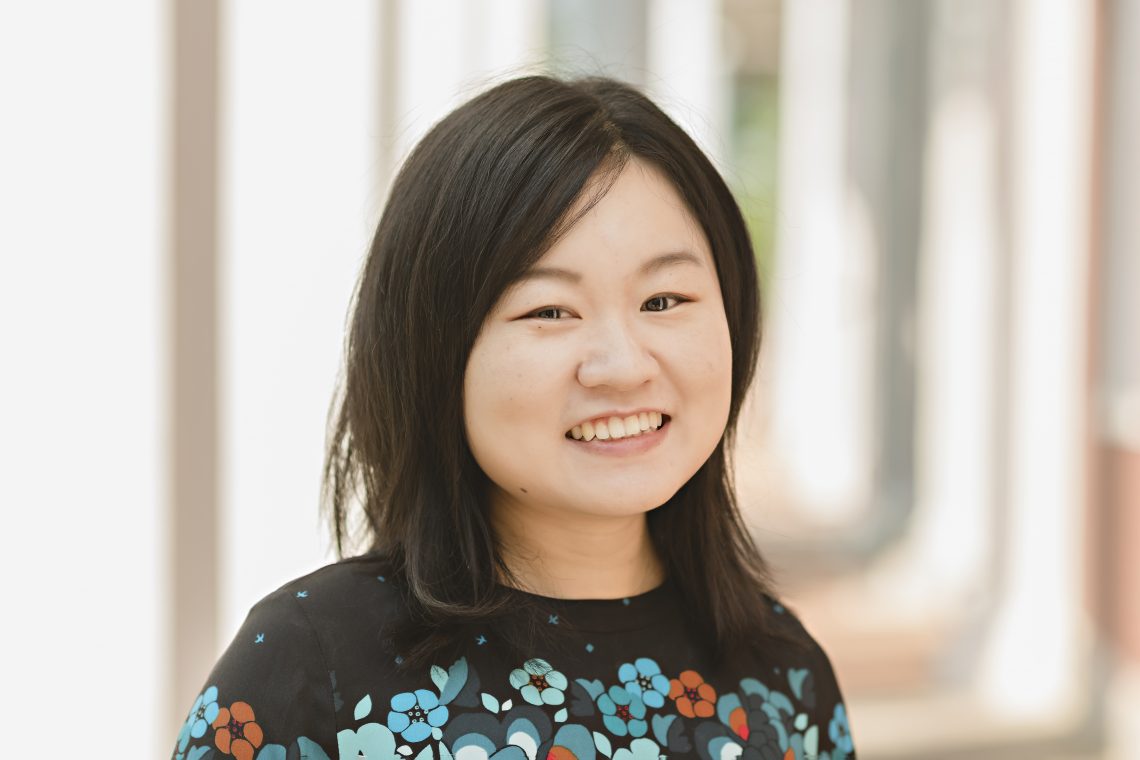
Mengying Liu is an Assistant Professor of Engineering at Washington and Lee University (W&L), where she investigates the environmental degradation of metallic materials. Her work combines scanning electron microscopy (SEM) with digital image correlation (DIC) to explore the structure-properties relationship in materials such as Ni-based alloys and pure nickel. Education: B.Sc. from Tianjin University (China) Graduate research at Virginia Tech Ph.D. from Texas A&M University (2021) Research focuses on hydrogen embrittlement and localized corrosion, with current efforts to acquire 3D DIC equipment for advanced deformation analysis. She teaches Solid Mechanics and lab courses, emphasizing hands-on learning and mentorship. Scientific Awards: American Association of University Women Grant (2023) for high-throughput crystallographic mapping research in the UK Her publications span topics like crack initiation mechanisms, thermal decomposition of nanomaterials, and metrology in DIC analysis. She is passionate about student mentoring and enjoys culinary experimentation and marathon training.
Rahul Cherukuri is a Doctoral Researcher at the Department of Materials Science and Environmental Engineering, Faculty of Engineering and Natural Sciences, Tampere University. His research focuses on advanced materials science, with an emphasis on biomedical applications, additive manufacturing processes, and mechanical property characterization of materials such as stainless steels, polymers, and superalloys. His work involves interdisciplinary exploration of tribology (friction and wear), biocompatibility of materials, and high-throughput microstructural analysis using techniques like in-situ SEM micropillar compression and nanoindentation. Key areas of study include laser powder bed fusion for biomedical implants, wire and arc additive manufacturing of duplex stainless steels, and high-strain-rate behavior of SU-8 polymers. Rahul has contributed to peer-reviewed articles published between 2018 and 2025, with a recent focus on nickel-free stainless steel for biomedical use and polymer mechanics under extreme conditions. His research bridges fundamental material science with applied engineering solutions for medical and aerospace applications. No scientific awards or grants are explicitly mentioned in the provided text, but his OrcID (https://orcid.org/0000-0001-8888-3618) indicates ongoing academic activity. Contact details include +358504641633 and rahul.cherukuri@tuni.fi.
Lei Chen is an Assistant Professor in the Department of Mechanical Engineering at Mississippi State University, College of Engineering. His research focuses on advanced computational modeling techniques applied to materials and mechanical systems. Education: Ph.D., Mechanical Engineering, National University of Singapore (NUS), Singapore, 2012 M.E., Materials Processing, Huazhong University of Science & Technology (HUST), China, 2007 B.E., Materials Processing, Huazhong University of Science & Technology (HUST), China, 2005 His research interests lie at the intersection of computational mechanics and materials science, particularly in fracture modeling, multi-scale simulations, and phase-field methods. He develops and applies advanced numerical techniques to model phenomena such as dendrite growth in batteries, microstructure evolution in alloys, and mechanical behavior of biological and composite materials. His work integrates finite element methods, smoothed finite element methods (S-FEM), and phase-field models with crystal plasticity and multi-physics coupling. The recent publications highlight a strong trend in computational modeling of energy materials and structural integrity. Key themes include phase-field simulations of lithium dendrite formation, multi-scale modeling of polycrystal grain growth, and advanced fracture mechanics using edge-based strain smoothing techniques. These works span disciplines from battery technology to biomaterials, demonstrating a versatile and impactful research program. Scientific Awards and Honors: Travel Fellowship, Enabling Methods for Materials Innovation, University of Florida, 2015 Travel Grant, USNCCM13, 2015 Z. Hsu Scientific Paper Award, 2015 Vice-Chancellor's Research Fellowship, QUT, AUS Chinese Excellent Self-financed Student Abroad Scholarship, 2012 President Graduate Fellowship (top 5%), NUS, 2009–2011 Research Graduate Scholarship, NUS, 2007–2011 Outstanding Graduate Student Award, HUST, 2006 Excellent Bachelor Graduate Award, HUST, 2005 First-Class Scholarship, HUST, 2002–2004 Dr. Chen has advised research students and collaborated extensively with leading researchers such as Long-Qing Chen. His work is supported by academic grants and institutional fellowships. He has contributed to significant advancements in computational methods for fracture and microstructure modeling. He has also published in high-impact journals and presented at major international conferences. He is actively involved in research related to energy storage systems, additive manufacturing, and biological materials, often leveraging high-performance computing and image-driven simulations. His lab focuses on developing robust and accurate numerical frameworks for predicting material behavior across scales.
Morten Mattrup Smedskjær , Professor at the Department of Chemistry and Life Sciences, Faculty of Engineering and Science, Aalborg University, is a world-leading researcher in disordered materials and oxide glass chemistry. With over 534 publications and 34 ongoing/complete projects, his work bridges fundamental glass science and advanced technological applications. Institution: Aalborg University, Denmark Department: Chemistry and Life Sciences Research Focus: Glass structure/mechanics, self-healing materials, solid-state batteries, bioactive glass His groundbreaking research explores glassy electrolytes for batteries, porous liquid-derived self-healing glass, and disordered metal-organic frameworks (MOFs) for drug delivery. Recent projects like MultiBat and DrugMOF demonstrate his interdisciplinary approach. Scientific Awards: EliteForsk Prize 2025 Grundfos Prize 2019 Vittorio Gottardi Prize 2019 W.H. Zachariasen Award 2019 Sir Alastair Pilkington Award 2018 Current work focuses on diffusion probabilistic models for inverse material design and economic impacts through glass-based manufacturing innovations. His 2025 Energy and Environmental Science review article establishes new paradigms in amorphous battery interfaces.
Carmine Putignano is an Associate Professor at the Politecnico di Bari , affiliated with the Department of Mechanics, Mathematics & Management . His research focuses on contact mechanics, tribology, and viscoelasticity, with applications in polymer bearings, hydrogels, and surface engineering. Recent work includes advancements in viscoelastic contact modeling, lubrication of soft materials, and laser-induced surface texturing. These studies address challenges in friction reduction, material durability, and biomedical applications like articular cartilage lubrication. His 15 most recent publications (2023–2025) span topics such as viscohydrodynamic lubrication, micro-indentation techniques, and multi-laboratory benchmarks for surface topography characterization. The research emphasizes numerical simulations, experimental validation, and energy-based methodologies.
Helge Pfeiffer is a Research Fellow at KU Leuven's Faculty of Engineering Science, affiliated with the Division of Metallurgy and Materials Engineering and the Structural Composites and Alloys, Integrity and Nondestructive Testing (SCALINT) unit. His work focuses on non-destructive testing (NDT) and structural health monitoring (SHM) in aerospace engineering, particularly involving composite materials and acoustic emission analysis. Non-Destructive Testing (NDT) Structural Health Monitoring (SHM) Composite Materials Acoustic Emission Analysis Sensor Development His recent research explores NDT techniques for aircraft maintenance, including acoustic fuel tank monitoring, thermal fuselage inspections, and printed percolation sensors for moisture detection. He investigates phase transitions of water in engineering contexts using acoustic emissions. Helge collaborates extensively with industry partners, focusing on innovations like nanoparticle dispersion in fibrous composites for energy applications and percolation sensors for corrosive liquid detection. His work bridges academia and airlines, emphasizing practical solutions for structural integrity challenges.
Professor David Fletcher is a faculty member at the School of Mechanical, Aerospace and Civil Engineering , University of Sheffield , where he holds the Professor of Railway Engineering position. He graduated from Leeds University and earned his PhD from the University of Sheffield in 1999 after post-doctoral work at Newcastle University . His academic journey includes progression from lecturer to full professor. His research spans Railway Engineering, Tribology, Materials Science, and Rail System Design , focusing on the Rail-Wheel Interface (contact mechanics, adhesion, fatigue, wear), Overhead Line Electrification (system dynamics), and Rail Safety (counter-terrorism measures). He also explores Network Modelling for pedestrian flow optimization and energy demands in railway stations. Recent publications analyze lateral sleeper resistance , wheel-rail friction estimation , and energy storage systems in railways. His work combines experimental testing and numerical modeling , with applications in laser cladding and arc damage prevention for contact wires. Scientific Awards : Institution of Mechanical Engineers AR Bennett Premium Award (2013) World Congress on Railway Research Best Paper (2008) Institution of Mechanical Engineers TA Steward-Dyer Prize (2005) Institution of Mechanical Engineers Tribology Bronze Medal (2000) He leads the Rail Innovation and Technology Centre with Network Rail and serves on the International Committee for Contact Mechanics and Wear of Rail/Wheel Systems . His teaching includes MEC448 Railway Engineering and Sustainable Transport and mentorship in industrial design projects.
Professor Andy Bushby is a leading academic in Materials Science at Queen Mary University of London's School of Engineering and Materials Science. He serves as Director of the NanoVision Centre, a research facility focused on advanced microscopy and 3D imaging techniques. His work bridges fundamental research in nanomechanics with commercial applications through Ultima Forma Ltd, a spin-out company developing high-strength lightweight metallic components for aerospace, defense, and clean energy sectors. Research Themes: Micro/Nano-mechanics of materials Size-dependent strength in metals and composites 3D electron microscopy for biological and environmental applications Hydrogen containment solutions for zero-carbon transport Key Collaborations: National Environment Research Council (NERC) funded projects EPSRC grant (EP/C518044/1) His recent publications highlight innovations in spherical indentation techniques, radiation damage analysis, and bio-inspired material design. Awards include QMUL Innovation of the Year (2018) and the Aerospace Technology Institute's 'Shaping the Future Award'. Current funding extends through 2023, focusing on dental caries prevention and sediment dynamics.
John Balk is a Professor in the Department of Chemical and Materials Engineering at the University of Kentucky , where he has served as Associate Dean for Research and Graduate Studies since 2018. His research focuses on the mechanical behavior of nanoporous metals , scandate cathodes , and high entropy alloys , using advanced techniques like transmission electron microscopy and Kelvin probe systems. Education: B.S. in Materials Science & Engineering, University of California, Berkeley (1995) B.S. in Mechanical Engineering, University of California, Berkeley (1995) M.S. and Ph.D. in Materials Science & Engineering, Johns Hopkins University (1997, 2000) Postdoctoral work on Thin Film Plasticity at Max Planck Institute for Metals Research (2000–2002) His research group investigates structure-property relationships in materials, particularly through projects involving dealloying , thermionic emission , and mechanical testing of nanoscale structures. Recent work includes collaborations with LBNL on high entropy alloy development and studies on radiation effects in nanoporous metals. Scientific Facilities: The group utilizes advanced equipment such as the iNano Nanoindenter , ORION magnetron sputtering system , and Kelvin probe systems for material synthesis and characterization. Students: Balk currently supervises seven Ph.D. students, including Alex Allamon, Huanhuan Bai, and Tibra Das Gupta, while former students like Dr. Azin Akbari and Dr. Julius Schoop have transitioned to academic and research roles.
Elizabeth Zimmermann is an Assistant Professor at McGill University’s Faculty of Dental Medicine and Oral Health Sciences and an Associate Member of the Department of Biomedical Engineering. She investigates multiscale structure–function relationships in mineralized tissues, focusing on how hierarchical architecture imparts resistance to deformation and fracture, and how aging, disease, and therapeutic interventions modulate bone quality. Research Interests: Biomaterials & Tissue Engineering – design and characterization of mineralized biomaterials Imaging & Microscopy – high-resolution techniques (HR-pQCT, synchrotron X-ray scattering, nano-indentation) Hard Tissue Biomechanics – mechanics of cortical and trabecular bone, collagen deformation, crack propagation Mechanobiology – how mechanical loading and cellular activity regulate bone adaptation Clinical Translation – therapeutic strategies for osteogenesis imperfecta, osteoporosis, cerebral palsy, diabetes-related bone fragility, and Marfan syndrome Across her 2023-2025 publications, Zimmermann employs advanced imaging and mechanical testing to elucidate bone quality deficits in pediatric neuromuscular disorders, evaluate novel sclerostin-neutralizing antibody therapies in osteogenesis imperfecta, and explore structure-property relationships in genetic and metabolic bone diseases. Methodologically, her work integrates high-resolution micro-computed tomography, nano-indentation, synchrotron X-ray scattering, and finite-element modeling to span from molecular to whole-bone scales. Scientific Awards & Honors: No specific awards or fellowships are listed in the provided materials. Funding & Students: Grant details and current graduate advisees are not disclosed in the source text. Laboratory & Teams: Zimmermann’s laboratory is housed within the Strathcona Anatomy & Dentistry Building at McGill University. While precise lab names are not provided, her affiliation with both dental medicine and biomedical engineering encourages interdisciplinary collaboration across imaging, biomechanics, and translational musculoskeletal research groups.
Ericmoore Jossou holds the John Clark Hardwick (1986) Professorship and is an Assistant Professor of Nuclear Science and Engineering and Electrical Engineering and Computer Science at MIT. His research focuses on advancing materials for next-generation nuclear reactors through integrated experimental, computational, and data-science approaches. Key areas include high-throughput machine learning for nuclear fuel design, in situ monitoring of materials under irradiation, and atomic-scale simulations of radiation effects. Leads efforts to develop accident-tolerant fuels and high-entropy alloys using novel synthesis and characterization techniques. Develops multimodal imaging tools for real-time material analysis, including 3D X-ray tomography and Bragg coherent diffraction. Explores machine learning applications in materials discovery, phase prediction, and high-speed video segmentation. His work addresses critical challenges in nuclear energy sustainability, such as improving fuel performance under extreme conditions and enhancing materials durability for advanced reactor systems. Recent contributions include studies on uranium-doped fuel microstructures, strain relaxation mechanisms, and thermal conductivity optimization of composite materials. Research outputs span computational modeling, experimental validation, and data-driven methodologies, with a focus on bridging atomic-scale mechanisms to macroscopic material behavior.
Hanna Wiese is a Researcher at the Institute for Chemical and Thermal Process Engineering (ICTV), Faculty of Mechanical Engineering, Technische Universität Braunschweig. Her work focuses on fouling mechanisms and cleaning processes in chemical engineering systems. Current research projects include DFG-funded studies on ageing of fouling deposits and cleaning mechanisms for whey protein-based residues. She supervises advanced courses in Thermal Process Engineering and Fluid Separation Processes . Her research contributes to optimizing industrial cleaning processes through mechanical analysis of fouling materials. Selected publications include experimental studies on fouling deposit characterization, reflecting her expertise in process engineering and material analysis.