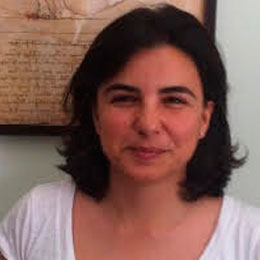
Marino Miculan is a Professor of Computer Science at the University of Udine, leading the MADS Lab and Cybersecurity Lab. His research focuses on formal methods, cybersecurity, and distributed systems, with an emphasis on verifying security in concurrent systems. He has authored over 100 publications and contributed to 16 research projects. His research interests include formal verification of security protocols, distributed computing architectures, and the application of category theory to system modeling. He has developed frameworks like Netstaldi for network discovery and tools such as DBCChecker for analyzing container compositions. Miculan’s work bridges theoretical foundations (e.g., adhesive categories, behavioral equivalences) with practical applications in IoT security, multi-factor authentication, and cloud containerization. His labs explore cutting-edge topics like continuous learning for anomaly detection and stateful access control mechanisms.
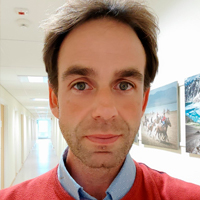
Dr. Victor Kebande is an Assistant Professor of IT Security in the Secure Distributed Systems (SDS) group at Blekinge Institute of Technology's Department of Computer Science (DIDA). He holds a PhD in Cyber and Information Security from 2018 and has held postdoctoral and visiting researcher roles at institutions like Luleå University of Technology and Colorado State University. His research focuses on cybersecurity, digital forensics, IoT/IIoT security, blockchain, and critical infrastructure protection. He is a member of IEEE, ACM, and IITPSA, and serves on the editorial board of Forensic Science International: Reports . Education: PhD in Computer Science (Cyber and Information Security & Digital Forensics) - 2018 Research Interests: Cybersecurity, digital forensics, IoT/IIoT security, cloud security, blockchain, threat modeling, privacy-preserving techniques, and AI integration with immersive realities. Projects: dAIEDGE: Horizon Europe-funded Network for trustworthy AI at the Edge DISS: Threat detection in IoT systems Symphony: Robust distributed service exposure Awards: None explicitly mentioned, but he holds editorial and reviewer roles in top journals. Grants & Advising: Supervised numerous theses on topics like IoT security, blockchain forensics, and cloud forensics. Active in funding projects like HINTS and Eclipse ArrowHead. Labs/Teams: Part of SDS group, ATLAS Institute (CU Boulder), and collaborations with industry partners like Axis Communications.
Peyman Moghadam is a Principal Research Scientist at CSIRO Data61 and an Adjunct Professor at Queensland University of Technology (QUT). He leads the Embodied AI Research Cluster at CSIRO, focusing on robotics and machine learning intersections. His roles include former Group Leader of Robotic Perception and Acting Leader of the Spatiotemporal AI portfolio within CSIRO's MLAI Future Science Platform. Education: PhD in Robotics from Nanyang Technological University (2012). Professional experiences include Visiting Professorships at ETH Zurich (2022) and University of Bonn (2019), alongside leadership in multidisciplinary projects. Research interests span self-supervised learning, embodied AI, 3D perception, and agricultural robotics. Awards include CSIRO's Julius Career Award, Collaboration Medal, and national/state iAwards for innovation in robotics. He has held adjunct roles at QUT and the University of Queensland. Current roles emphasize AI-driven solutions for scientific challenges, such as Great Barrier Reef conservation and autonomous systems in agriculture. Key projects include the DARPA Subterranean Challenge (2nd place), Hovermap LiDAR technology, and collaborations with industry partners like Emesent and Georgia Tech. His work bridges foundational research with real-world applications in mining, agriculture, and environmental monitoring.
Guoning Chen is an Associate Professor in the Department of Computer Science at the University of Houston, leading the Data Visualization and Modeling (DaViM) Lab. He holds a Ph.D. in Computer Science from Oregon State University and M.E. and B.E. degrees from Guangxi University and Xi'an Jiaotong University in China. His research focuses on data visualization, topology-based methods, geometric modeling, and physically-based simulations. Key contributions include vortex extraction in turbulent flows, hexahedral mesh optimization, and interactive vector field design systems. His work bridges computational science and engineering applications, with applications in fluid dynamics, medical imaging, and urban modeling. Chen has received numerous awards, including the NSF CAREER Award (2016) and multiple Best Paper Awards at IEEE Visualization conferences. He is actively involved in software development, including tools for hex-mesh quality analysis and web-based visualization frameworks like FCLWebVis. His teaching includes courses on visualization and introductory programming at the University of Houston. He mentors students in research and contributes to educational frameworks like mastery learning in CS1 courses.
Badri Roysam is the Hugh Roy and Lillie Cranz Cullen University Professor and Chair of Electrical and Computer Engineering at the University of Houston. He holds adjunct professorships and has held leadership roles at Rensselaer Polytechnic Institute. His research focuses on biological image analysis, signal processing, and computational methods for cell-based therapies. Key contributions include FARSIGHT toolkit development and automated image analysis for histopathology and neuroscience. Education: B.Tech (Electronics Engineering, IIT), M.S. and D.Sc. (Electrical Engineering, Washington University). Awards include IEEE and AIMBE Fellowships, Engineering Research Excellence Award (2005), and numerous best-paper recognitions. His work spans multiplex computational histology, high-performance computing, and drug discovery. Notable projects include NIH-funded research on neuroprosthetics and tumor therapy. He leads teams in developing open-source tools for 3D neuronal tracing and cell tracking. Labs/Teams: FARSIGHT Open Source Toolkit, Center for Sub-Surface Sensing, Rensselaer Center for Open Source Computing Grants: DARPA, NIH (R01 grants for neuroprosthetics, cancer therapy)
Sanjukta Bhowmick is an Associate Professor in the Department of Computer Science and Engineering at the University of North Texas, part of the College of Engineering. Her research focuses on network analysis, graph algorithms, parallel computing, and scalable data systems. She is actively involved in collaborative projects such as LEGAS (Learning Evolving Graphs At Scale) and MLN-DIVE (Multilayer Network Data Infrastructure for Visualization and Exploration), emphasizing interdisciplinary applications like precision agriculture and cybersecurity. Her work bridges theoretical foundations with practical implementations, addressing challenges in dynamic networks, community detection, and high-performance computing. Notable contributions include efficient algorithms for motif counting, centrality disruption analysis, and checkpointing systems optimized for GPU acceleration. She has co-authored numerous papers presented at conferences like SIAM Data Mining and HPC Symposium, showcasing her commitment to advancing computational methods for complex systems. Grants & Collaborations: Collaborative Research projects funded by NSF (SHF: Small, CSSI: CANDY), ANACIN-X framework for nondeterminism analysis, and multilayer network infrastructure initiatives. Key Themes: Network robustness, scalable parallel algorithms, graph-based machine learning, and interdisciplinary data-driven solutions. Her research emphasizes real-world applications, such as optimizing variable rate spraying in agriculture and enhancing fault tolerance in distributed systems. She actively contributes to workshops and symposiums, promoting co-design approaches for deep learning accelerators and high-performance computing systems.
Vincenzo Lomonaco is a Researcher at the University of Pisa's Department of Computer Science, specializing in Continual Learning. He leads the Pervasive AI Lab and holds roles such as Co-Founding President of ContinualAI, a non-profit advancing AI research. His work focuses on deep learning, distributed systems, and AI sustainability, with key contributions including the Avalanche library (winner of the W&B Best Library Award) and foundational research in Continual Learning. Education: PhD in AI from the University of Bologna (2019), recognized as one of Italy's top-5 AI dissertations. Postdoctoral research and visiting roles at institutions like Numenta, Purdue University, and ENSTA ParisTech. Research Interests: Continual Learning dynamics, practical applications, and AI sustainability. Active in industrial collaborations (e.g., Meta, Intel), European projects, and initiatives like FAIR (Future Artificial Intelligence Research). Notable Achievements: Organized the 1st Continual Learning workshop at CVPR 2020, authored an open-access Continual Learning course (430+ students), and co-founded ContinualIST, a University of Pisa spin-off.
Russell C. Hardie is a full-time Professor at the University of Dayton , holding positions in the Department of Electrical and Computer Engineering with joint appointments in Electro-Optics and Photonics and Bioengineering . His academic journey began with a B.S. in Engineering Science from Loyola College (1988), followed by M.S. and Ph.D. in Electrical Engineering from the University of Delaware (1990, 1992). Prior to joining the University of Dayton in 1993, he served as a Senior Scientist at Earth Satellite Corporation (now MDA Federal). Research Interests : Digital signal/image processing, medical imaging, super-resolution techniques, hyperspectral/infrared imaging, pattern recognition Key Awards : 2006 Alumni Award in Teaching (University of Dayton) 1998 Rudolf Kingslake Medal (SPIE) 1999 School of Engineering Excellence in Teaching 2002 IEEE Professor of the Year 1997 Epsilon Delta Tau Engineering Professor of the Year Recent Work : Focuses on machine learning applications for medical imaging (lung segmentation, nodule detection), atmospheric turbulence mitigation, and hyperspectral data analysis. His 15 most recent publications span topics from zero-shot chest X-ray analysis to methane plume detection and turbulence-corrected imaging systems. Contact: rhardie1@udayton.edu
Yifei Zhang is an Assistant Professor in the Department of Computer Science at Northeastern University's School of Computer Science and Engineering, with extensive research collaborations including the University of Hong Kong (notably with Irwin King). Active since 2009, Zhang has produced 257 publications through 2025, demonstrating sustained research productivity across artificial intelligence domains. Zhang's research spans Artificial Intelligence , Machine Learning , and Computer Vision , with recent focus on federated learning systems, multimodal AI, and security applications. The work shows strong technical depth in developing novel algorithms for personalized learning, anomaly detection, and efficient model training. Recent publications reveal increasing specialization in privacy-preserving machine learning and cross-modal understanding, particularly for Chinese language and cultural contexts. Publication trends indicate growing influence in AI conferences (CVPR, ACL, NeurIPS), with 61 publications in 2024 alone. The research demonstrates practical applications in cybersecurity, education technology, and urban planning, while maintaining theoretical rigor in model architecture and optimization techniques. Zhang frequently collaborates with Neng Gao and Shuang Song on security-related AI projects. Zhang serves on program committees for major AI conferences and has contributed to workshop organization including FL@FM-TheWebConf'25: International Workshop on Federated Foundation Models for the Web. The research has attracted significant attention in the AI community, particularly in federated learning and multimodal systems.
Ning Zhang is a researcher affiliated with Tsinghua University , Department of Electronic Engineering, focusing on interdisciplinary applications of computer science and artificial intelligence in domains such as medical imaging, fault diagnosis, and multimodal systems. Their work bridges theoretical advancements with practical implementations in engineering, agriculture, and finance. Research Interests : Machine learning, signal processing, graph neural networks, and neuromorphic computing. Key Contributions : Recent publications highlight innovations in event-based tracking, digital twin systems, and reinforcement learning integration with vision-language models. Technological Focus : Applications include fault diagnosis in rotating machinery, medical image segmentation (CT-Net), and AI-driven urban risk assessment. The 2024-2025 publication trends reveal a strong emphasis on deep learning for remote sensing, reinforcement learning security, and stochastic control systems. Collaborations span institutions like the University of Manchester, Peking University, and Washington University in St. Louis.
Jonay Tomás Toledo Carrillo is a Full Professor at the University of La Laguna, affiliated with the Department of Computer Science and Systems Engineering within the School of Computer Science and Systems Engineering. He leads the GRULL (Robotics Group of the University of La Laguna), focusing on robotics, control systems, and autonomous systems. He earned his PhD in 2008 with a thesis on nonlinear control strategies for quadrotor helicopters, advised by Dr. Leopoldo Acosta Sánchez. His research interests span robotics, autonomous navigation, sensor fusion, and assistive technologies. Key projects include developing mobility aids for visually impaired individuals and enhancing localization systems through adaptive algorithms. Recent work emphasizes real-time sensor processing (e.g., LSTM networks for odometry), magnetic field control for accessibility, and Kalman filter variants for multi-sensor integration. Publications highlight contributions to robotics applications, including autonomous vehicles, wheelchair navigation, and BCI systems. His work bridges theoretical control methods with practical implementations in unstructured environments. Collaborations include interdisciplinary efforts in computer vision, ontology-based navigation, and educational simulators like MNEME for memory hierarchy teaching. Dr. Toledo Carrillo’s research aligns with the university’s engineering and automation priorities, with a focus on real-world impact through low-cost, high-precision solutions. His team’s innovations address challenges in both robotics engineering and accessibility technologies.
Robi Polikar is Professor and Department Head of Electrical & Computer Engineering at Rowan University's Henry M. Rowan College of Engineering. He holds a PhD in Electrical Engineering and Biomedical Engineering from Iowa State University. His research develops fundamental computational intelligence approaches for machine learning challenges in nonstationary environments, adversarial settings, and biomedical applications. Polikar's impactful research areas include adversarial machine learning defenses, incremental learning algorithms for streaming data, ensemble-based systems for imbalanced datasets, and applications to metagenomic classification. He directs the Signal Processing and Pattern Recognition Laboratory (SPPRL) where his group studies concept drift, missing data problems, and high-content screening. His publication record demonstrates sustained innovation in adaptive learning systems, with recent advances in adversarial robustness for continual learners, incremental bioinformatics algorithms, and noise-resistant classification. His research has applications in healthcare diagnostics, transportation analytics, and security systems. Honors include the IEEE Computational Intelligence Magazine Best Paper Award, NSF CAREER Award, and Rowan University Research Achievement Award. He has graduated 16 PhD students who now hold positions in academia and industry.
Prof. Dr. Adrian-Olimpiu Petruşel is a distinguished Professor at the Faculty of Mathematics and Informatics, Babes-Bolyai University in Cluj-Napoca, Romania. Currently serving as Prorector of the university (since 2020) and appointed as Interim Rector starting in 2025, he has held numerous academic leadership positions including Dean of the Faculty of Mathematics and Informatics (2012-2020) and Pro-Dean (2008-2012). A highly respected researcher in fixed point theory and nonlinear analysis, he ranks among the top 2% most influential scientists worldwide according to Stanford University's analysis (2020-2023). Educational Background: Undergraduate Studies: 1982-1986, Faculty of Mathematics and Informatics, Babes-Bolyai University Cluj-Napoca Doctoral Studies: 1990-1994, Faculty of Mathematics and Informatics, Babes-Bolyai University Cluj-Napoca PhD Thesis: "Technica punctului fix în teoria operatorilor multivoci şi aplicaţii la incluziuni diferenţiale" (Fixed Point Technique in the Theory of Multivalued Operators and Applications to Differential Inclusions) Prof. Petruşel's research primarily focuses on Fixed Point Theory , Nonlinear Operators , and Differential Equations . His work spans theoretical developments in metric fixed point theory, applications to differential and integral equations, and interdisciplinary connections with dynamical systems. He has made significant contributions to the theory of multivalued operators, particularly in the areas of weakly Picard operators, fiber contraction principle, and Ulam-Hyers stability. His research demonstrates exceptional depth in both pure mathematical theory and practical applications across various scientific domains. Analysis of Prof. Petruşel's recent publications (2024-2025) reveals continued innovation in fixed point theory, with particular emphasis on multi-valued Feng-Liu operators, vector-valued metric spaces, and applications to differential equations. His work maintains strong connections between abstract fixed point results and concrete problems in mathematical physics, optimization, and integral equations. The interdisciplinary nature of his research is evident in collaborations spanning mathematics, physics, and engineering applications. Scientific Recognition: Premiul Universitatii "Babes-Bolyai" (2002) for the seminal book "Fixed Point Theory 1950-2000: Romanian Contributions" Profesor Bologna distinction (2021) awarded by AOSR student organization Ranked among the top 2% most influential scientists worldwide (2020-2023) by Stanford University and SciTech Strategies Full member of Academia Oamenilor de Stiinta din Romania (since 2020), previously associate member (2016) and corresponding member (2018) As an academic advisor, Prof. Petruşel has successfully supervised 15 PhD students since 2004, contributing significantly to the next generation of mathematicians specializing in nonlinear analysis. His editorial leadership is remarkable, serving as Editor-in-Chief of "Fixed Point Theory - An International Journal" and co-Editor-in-Chief for several other prestigious journals including "Fixed Point Theory and Applications" (Springer). He has coordinated numerous national and international research programs, demonstrating sustained excellence in both theoretical research and academic leadership.
Alicia Troncoso is a Full Professor in the Computer Science Division at Universidad Pablo de Olavide's School of Engineering, where she directs the Master's Degree in Computer Science and co-leads the Data Science & Big Data Research Lab. She received her PhD from the University of Seville, recognized with the best research award from Andalusian Universities. Her research focuses on: Time series forecasting Machine learning algorithms Big data streaming analytics Explainable AI methods Recent publications demonstrate applications in energy forecasting, environmental monitoring, and sustainable computing. Her work integrates deep learning with optimization techniques for high-dimensional data analysis. She has supervised 13 PhD theses to completion and serves as President of the Spanish Association of Artificial Intelligence. Her research has been funded by numerous European and national projects focused on big data infrastructure and sustainable AI.
Francisco Martínez Álvarez is a Full Professor in the Computer Science Division at Universidad Pablo de Olavide's School of Engineering. He received his PhD in Computer Science in 2010, honored with the extraordinary doctoral prize. He has completed research stays at Université de Lyon, New York University, and Universidad de Chile. His research focuses on: Big data time series analysis Deep learning for forecasting Seismicity pattern recognition Explainable AI systems Recent publications cover applications in energy forecasting, environmental monitoring, and quantum machine learning. He has supervised 10 doctoral theses and co-founded the Data Science & Big Data Lab. Recognized among the world's top 2% scientists by Stanford University, he has led multiple national and European projects on big data streaming and sustainable AI.