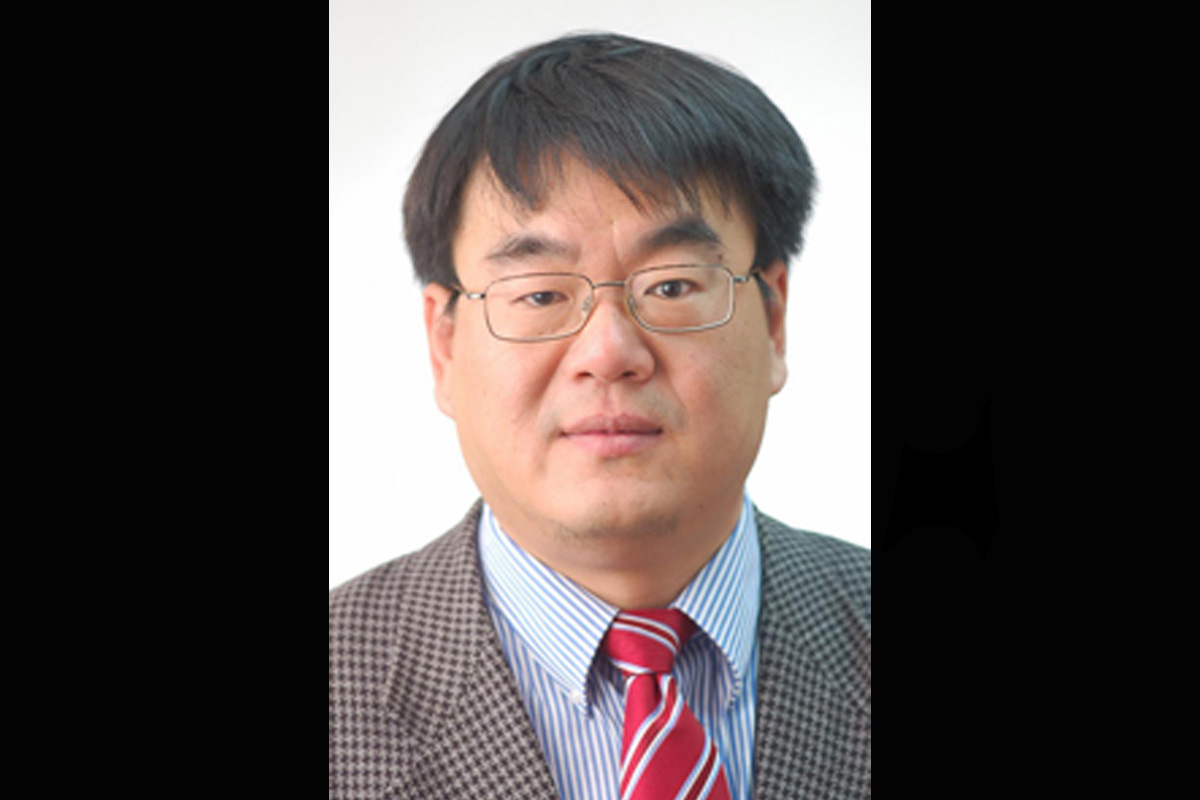
Jean-Charles Lamirel is a Researcher affiliated with the University of Strasbourg, University of Tartu, and the SYNALP Team at LORIA in Nancy. His research focuses on developing advanced statistical methods for text analysis and knowledge discovery in evolving data environments. Developed novel feature maximization techniques for clustering and categorization of textual data, addressing challenges in high-dimensional, heterogeneous information spaces. These methods enable efficient analysis of dynamic datasets through incremental learning approaches. Research contributions include innovative algorithms for knowledge extraction from scientific texts, semantic analysis, and adaptive information retrieval systems.
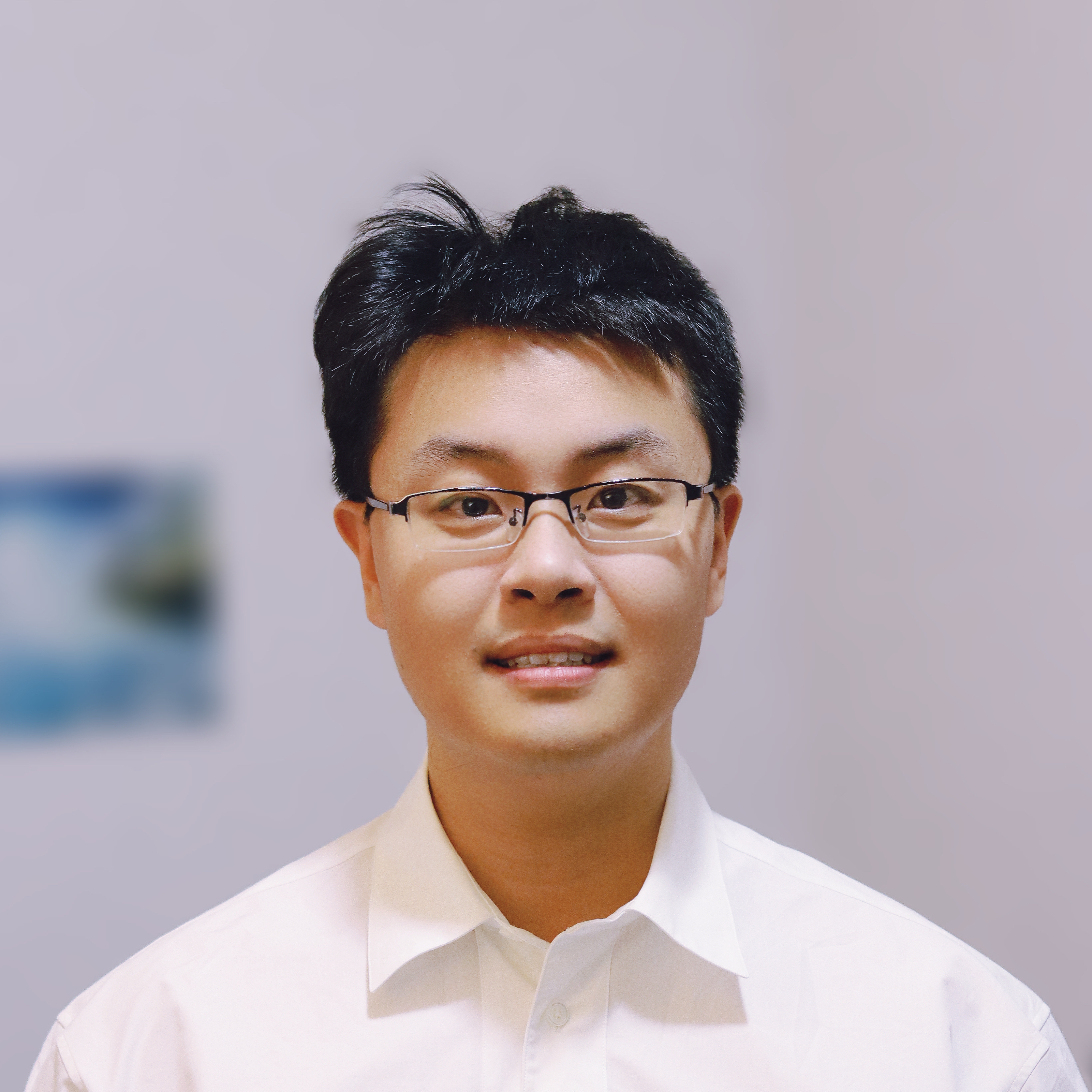
Jiangpeng He is a Research Fellow in Mechanical Engineering at MIT, working on rehabilitation robotics with Dr. Hermano Igo Krebs. Previously an Adjunct Professor at Purdue University, he holds a PhD in Electrical and Computer Engineering from Purdue and a bachelor's from the University of Electronic Science and Technology of China. He will join Indiana University Bloomington as Assistant Professor in Fall 2025. His research focuses on developing AI systems for healthcare applications, particularly continual learning approaches for visual recognition tasks. Current projects include food recognition for dietary monitoring and rehabilitation technology development. His publications demonstrate consistent focus on machine learning applications in healthcare, with recent advances in continual learning architectures and their implementation in medical domains. Work spans theoretical algorithms to clinical applications in motor assessment and rehabilitation. Awards include: Top-5 Postdoctoral Mentoring Award (Purdue University) Outstanding Reviewer for CVPR 2024
Richard Peng is an Associate Professor in the Computer Science Department at Carnegie Mellon University, part of the School of Computer Science. He specializes in designing efficient algorithms for fundamental computational problems, particularly in graph algorithms, dynamic algorithms, and linear algebraic computations. Prior to joining CMU in 2023, he earned his BMath from the University of Waterloo, a PhD from CMU under Gary L. Miller, and completed a postdoc at MIT's Applied Math department. His research focuses on advancing algorithmic efficiency, including work on sparse linear systems, graph convolutions, and flow optimization. He advises PhD students Hoai-An Nguyen, Alicia Stepin, and Junzhao Yang. His teaching includes courses such as 15495 and 15151, reflecting his engagement in both research and education. Peng’s articles span topics like approximate spanning tree counting, dynamic graph algorithms, and Laplacian solvers, emphasizing practical scalability and theoretical guarantees. His contributions bridge theoretical computer science with applied challenges in network analysis and numerical computation.
Jelena Diakonikolas is an Assistant Professor in the Department of Computer Sciences at the University of Wisconsin–Madison, within the School of Computer, Data & Information Sciences. Her research focuses on large-scale optimization with applications to machine learning and networked systems. She explores algorithm design, convergence analysis, and robust learning techniques, with contributions to optimization theory and practical implementations in wireless networks and distributed systems. Her work spans theoretical advancements, such as analyzing convergence properties of incremental methods and variance-reduced algorithms, alongside applied research in robust learning, adversarial noise mitigation, and resource allocation in wireless networks. Notable areas include fixed-point equations, primal-dual methods, and block-coordinate optimization techniques. She has authored numerous papers on topics like stochastic gradient descent, variational inequalities, and distributionally robust optimization. Dr. Diakonikolas' research also intersects with wireless communication systems, including full-duplex networking and integrated circuit design. Her contributions address challenges in full-duplex systems, such as interference cancellation and resource allocation. She has explored fairness and delay in heterogeneous networks, as well as energy harvesting in wireless networks.
Donald Dansereau is a Senior Lecturer in the School of Aerospace, Mechanical and Mechatronic Engineering at the University of Sydney and Perception Theme Lead for the Sydney Institute for Robotics and Intelligent Systems. His research develops novel imaging systems for robotic perception. His work pioneers light field and computational imaging techniques to enable robust robotic vision in challenging environments. Current projects address underwater imaging, low-light conditions, space applications, and privacy-preserving vision systems. Recent advances include event-based satellite docking simulations, adaptive neural radiance fields for 3D reconstruction, and task-specific camera optimization frameworks. Key research directions include: Real-time light field processing for robotic navigation Neural rendering techniques for scene understanding Privacy-preserving computer vision architectures Hardware-software co-design for specialized imaging He received the Best Paper Award at ACRA (2014) and Distinguished Poster Awards from Stanford SCIEN (2016, 2017). Teaching includes Mechatronic Design and System Design courses.
Professor Bernhard Scholz is a faculty member in the School of Computer Science at the University of Sydney . He specializes in compiler optimization, static program analysis, Datalog systems, blockchain technology, and parallel processing. His research focuses on improving compiler efficiency, analyzing complex programs, and developing tools for smart contract security. He holds a professorial position and has been involved in significant projects like the Fantom blockchain partnership, which funds specialized blockchain research. His work includes developing the Soufflé Datalog compiler and tools like MadMax for smart contract analysis. Research interests span compiler design, formal verification, distributed systems, and energy-efficient computing. His recent work emphasizes blockchain security, Datalog scalability, and parallel execution optimization. Notable contributions include EVMTracer for Ethereum analysis and Julia Cloud Matrix Machine for cloud-based matrix computations. Key grants include ARC Discovery Projects on heterogeneous systems and smart contracts. Awards include industry partnerships and sustained research funding. He advises on large-scale program analysis and has collaborated globally with institutions like ETH Zurich and Fantom Foundation. Labs and collaborations include the University of Sydney's Blockchain Lab and Fantom-funded projects. His work bridges theoretical compiler research with practical applications in security and distributed systems.
Peyman Moghadam is an Adjunct Associate Professor at the University of Queensland (UQ) and a Principal Research Scientist at CSIRO Data61. He also holds an adjunct professorship at Queensland University of Technology (QUT). His roles include leading the Embodied AI Research Cluster at CSIRO Data61 and overseeing the Spatiotemporal AI portfolio within CSIRO's Machine Learning and Artificial Intelligence (MLAI) Future Science Platform. He has held visiting appointments at ETH Zürich (2022) and the University of Bonn (2019). His research focuses on self-supervised learning for robotics, embodied AI, 3D multi-modal perception, and computer vision applications in robotics and environmental science. Education details are not explicitly provided in the text, but his professional experience and research output suggest advanced academic training in robotics, computer science, and machine learning. Awards include the CSIRO Julius Career Award, National and Queensland iAwards, and the Lord Mayor's Budding Entrepreneurs Award. He has led large-scale interdisciplinary projects and published extensively in top-tier journals and conferences. His research themes span robotics perception, AI-driven environmental modeling, and sensor fusion. Notable contributions include benchmark datasets (e.g., WildScenes), novel algorithms for LiDAR place recognition, and geo-encoded transformers for plant species prediction. His work bridges robotics, machine learning, and real-world applications in agriculture, environmental monitoring, and autonomous systems. Awards: CSIRO Julius Career Award, Collaboration Medal, National/Queensland iAwards, Lord Mayor's Budding Entrepreneurs Award Grants & Projects: Led multidisciplinary projects in robotics, AI, and environmental science funded by CSIRO and industry collaborators Labs/Teams: Embodied AI Research Cluster (CSIRO Data61), Spatiotemporal AI portfolio (CSIRO MLAI)
Casey Kennington, Ph.D., is an Associate Professor in the Department of Computer Science at Boise State University. He specializes in Natural Language Processing (NLP), Robotics, and Human-Robot Interaction. His research focuses on dialogue systems, language model learning, and embodied AI, with a particular emphasis on creating practical applications for educational and healthcare contexts. He leads the Speech, Language, & Interactive Machines (SLIM) research group. Education: B.S. in Computer Science from Brigham Young University, M.Sc. in Computational Linguistics (Saarland University, Germany) and Cognitive Science (University of Lorraine, France), and Ph.D. in Computer Science from Bielefeld University, Germany. Research Interests: Developing language models for efficiency and interpretability, multimodal learning, and improving accessibility of NLP tools for children. His work bridges theory and application, with projects like HADREB (emotional robot behaviors) and KidSpell (child-focused spellchecking). Key Contributions: NSF CAREER Award recipient, creator of the AI Science degree program at Boise State, and developer of the SLIM group's dialogue systems. His publications span computational linguistics, robotics, and educational technology. Grants & Awards: National Science Foundation CAREER Award (research on language models and dialogue systems). Teaching: Courses in NLP, Deep Learning, and Data Science. Labs/Teams: Leads the SLIM Group, advancing research in interactive dialogue systems and robot communication.
Ouahib GUENOUNOU is a Researcher-Lecturer at CESI (Conservatoire d'Enseignement des Industries) in Le Mans, France. His primary research focuses on multi-objective optimization, artificial intelligence, renewable energy systems, and modeling/control of engineering systems. He holds a PhD in Automatic Systems from Toulouse University (2009), a Master's in Automatic and Signal Processing from Bejaia University (2003), and an Engineering degree in Electronics (1999). His work integrates fuzzy logic, genetic algorithms, and particle swarm optimization (PSO) to address challenges in photovoltaic energy conversion, MPPT (Maximum Power Point Tracking), and control systems. Key contributions include self-adaptive MPPT algorithms, hybrid energy systems optimization, and TSK fuzzy model simplification. He has published extensively in IEEE journals and conferences, with notable work on real-time implementation of fuzzy controllers and multi-objective optimization frameworks. GUENOUNOU teaches Electronic Control and Photovoltaic Energy at CESI, reflecting his expertise in applying theoretical models to practical engineering problems. His research team, Engineering and Numerical Tools, emphasizes computational methods for energy systems and control engineering.
William PASILLAS-LEPINE is a Senior Researcher at CentraleSupélec’s Laboratoire des signaux et systèmes (L2S), focusing on automatic control, systems engineering, and their applications in automotive, biomedical, and energy systems. His work bridges theoretical advancements in control systems with practical implementations in domains such as electric vehicles, biomedical monitoring, and power electronics. He is affiliated with L2S’s MODESTY and SYCOMORE teams, specializing in modeling, observer design, and robust control strategies. Research Interests : His research emphasizes automatic control theory, nonlinear systems, and hybrid control architectures. Key areas include observer-based stabilization, robust control under sensor imperfections, and applications in automotive systems (ABS, electric power steering) and biomedical engineering (respiratory effort estimation, neural population modeling). Publications : Over 15 peer-reviewed articles in journals like IEEE Transactions on Automatic Control and conferences such as CDC, showcasing contributions to hybrid control systems, biomedical signal processing, and dynamic models for electric vehicles. Recent work includes non-invasive respiratory monitoring and robust control under feedback delays. Collaborations & Patents : He co-authored a patent (FR3134928) on polyphase electrical systems for vehicles, reflecting industry-relevant innovations. His interdisciplinary projects span automotive safety, energy-efficient power converters, and neural systems modeling. Labs/Teams : Active member of L2S’s teams focusing on Modélisation pour la commande des Systèmes Dynamiques (COMEDY) and Commande robuste sous contraintes (SYCOMORE), advancing both theoretical and applied control methodologies.
Gersende Fort is a CNRS Senior Researcher affiliated with the Institut de Mathématiques de Toulouse (IMT) at the University of Toulouse. Her research focuses on stochastic approximation methods, Bayesian statistics, optimization algorithms, and computational statistics. She has presented at major conferences such as ICASSP 2025 (Suzhou & Hyderabad) and the French-German-Spanish conference on Optimization (Gijon, 2024), often collaborating with researchers like Eric Moulines and Hoi To Wai. Recent work includes developing sampling techniques for nonsmooth log-concave densities, hierarchical Bayesian models for epidemiological analysis (e.g., COVID-19 reproduction number estimation), and federated learning algorithms. She leads the MAD project funded by the French National Research Agency (ANR), advancing scalable optimization methods. Her publications span technical reports on stochastic proximal-gradient algorithms, fluid-limit-based MCMC tuning, and PLS classification in microarray data analysis. Fort actively engages in academic outreach, including the 'AI and Society' Summit in Paris (2025) and a workshop on mathematics of machine learning. She also contributed to educational initiatives like the Women and Mathematics event in Lavelanet (2024). Her research bridges theoretical foundations with applications in health, optimization, and machine learning.
Professor Xiaowei Zhao is a Professor of Control Engineering at the University of Warwick's School of Engineering, leading the Intelligent Control & Smart Energy (ICSE) research group. He serves as Director of the EPSRC Supergen Network Plus in AI for Renewable Energy and Co-Director of the EPSRC Supergen Offshore Renewable Energy Hub. His work focuses on control theory, machine learning, and their applications in renewable energy systems, smart grids, and autonomous systems. He has secured over £40 million in grants from EPSRC, Horizon Europe, Innovate UK, and industry, establishing four state-of-the-art labs: Offshore Renewable Energy Lab, Renewable Energy Integration Lab, Hydrogen Technology Lab, and Autonomous Systems Lab. Education: PhD in Control Theory from Imperial College London (2010), postdoctoral research at the University of Oxford (2010-2013). Research interests include offshore wind farm control, energy storage, and AI-driven energy systems. Notable recognition includes being a 2024 finalist for the UK Government’s Manchester Prize for AI in public good. Grants and Projects: Over 17 grants since 2017, including EPSRC Supergen Hubs, Horizon Europe projects, and industry collaborations. Recent grants include leadership roles in the £26M EPSRC Supergen Network Plus and a £4.86M Horizon Europe grant for economic DC microgrids. Awards: Manchester Prize finalist (2024), EPSRC funding leadership, and over 90 peer-reviewed publications. His work spans reinforcement learning, control systems, and sustainable energy integration.
Hamid Hamed is an FWO Postdoctoral Fellow and project leader at Hasselt University's Department of Electrochemical Engineering, focusing on physics-based and data-driven models for advanced batteries. His work integrates non-equilibrium thermodynamics and multicomponent transport theory in porous media. Education: B.Sc. (2013) and M.Sc. (2016) in Chemical Engineering from Sharif University of Technology (Iran). His Bachelor’s thesis addressed in-situ groundwater remediation, while his Master’s explored dialysis membrane microstructure optimization. He completed his Ph.D. (2017–2021) at Hasselt University under Prof. M. Safari, studying mesoscale properties-performance relationships in batteries. Research interests span electrochemical engineering, battery modeling, and sustainable materials for energy storage. His projects address challenges in lithium-ion batteries, sodium-ion systems, and supercapacitors, with a focus on improving energy density and operational efficiency through material design and process optimization. Notable contributions include studies on lithium metal electrode dendrite growth, sodium-ion battery electrolyte strategies, and biomass-derived electrode materials. His work bridges theoretical modeling with experimental validation, emphasizing practical applications in energy storage systems.
Pierre-Antoine ADRAGNA serves as a Research Teacher at the University of Technology of Troyes (UTT), affiliated with the Laboratory of Mechanical & Material Engineering (LASMIS). His academic work bridges theoretical research and industrial applications in advanced manufacturing technologies. His research interests focus on Additive Manufacturing optimization , particularly FDM 3D printing processes, where he develops techniques for infill reinforcement and continuous extrusion. Additional expertise includes Reverse Engineering for medical prosthetics and building reconstruction, Mechanical Tolerancing methodologies, and Finite Element Analysis for predicting manufacturing outcomes. His work demonstrates strong industry collaboration, notably with Levels3D in the Automodel3D project for 3D building reconstruction. Dr. ADRAGNA's publication record reveals consistent contributions to mechanical engineering literature, with recent work emphasizing practical solutions for 3D printing challenges and manufacturing process optimization. His research integrates computational methods with experimental validation to address real-world manufacturing constraints. Automodel3D (2016-2019): Automated 3D building reconstruction from point clouds, co-financed by EU and Champagne-Ardenne region OptiFabAdd (2018-2021): Digital tool development for FDM additive manufacturing optimization, supported by EU and CD10 His laboratory work at LASMIS focuses on advancing mechanical engineering methodologies through computational approaches and experimental validation, contributing to UTT's research profile in advanced manufacturing systems.
Professor Weidong Zhu is a mechanical engineering professor at the University of Maryland, Baltimore County (UMBC), specializing in vibration analysis, acoustics, and nonlinear dynamics. His research focuses on applications such as high-speed elevator cable dynamics, wind turbine optimization, and automotive systems. He has developed innovative methodologies for vibration measurement using advanced laser Doppler vibrometry techniques. Zhu's work has been recognized with prestigious awards, including the Rayleigh Lecture from the American Society of Mechanical Engineers (2023) and the 2020 Board of Regents’ Faculty Award for Excellence in Scholarship. His research bridges theoretical analysis and practical engineering solutions, addressing challenges in structural health monitoring, energy harvesting, and dynamic system control. Key contributions include studies on rotating machinery dynamics, nonlinear energy sinks, and the integration of machine learning for control systems. His methodologies enhance the understanding and mitigation of vibrations in critical infrastructure, such as wind turbines and tidal energy converters.