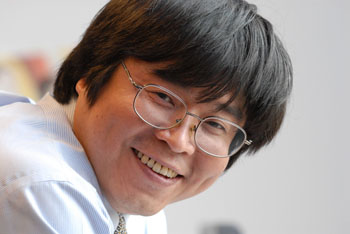
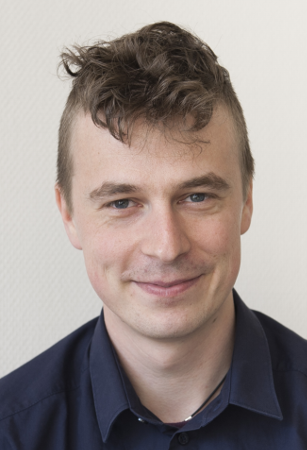
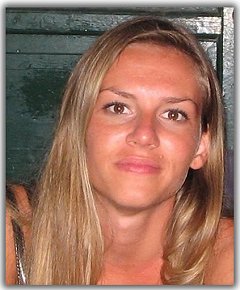
Professor Ihab Ilyas is a leading figure in data management and machine learning at the Cheriton School of Computer Science , University of Waterloo , where he holds the Thomson Reuters Research Chair in Data Quality . He is currently on leave from the university, serving as a Distinguished Engineer, Proactive Intelligence at Apple Inc . His research focuses on data cleaning , large-scale data integration , knowledge graphs , and machine learning applications in data quality . He has pioneered systems like HoloClean and Saga , with commercial impacts through co-founded startups Inductiv (acquired by Apple) and Tamr . PhD in Computer Science from Purdue University Co-founder of Inductiv (acquired by Apple) Co-founder of Tamr Research Interests include: Probabilistic and uncertain data management Machine learning for data quality and enrichment Big data systems and information extraction Knowledge graph construction and optimization Scientific Awards and Recognitions include: Fellow of the Royal Society of Canada (2024) C.C. Gotlieb Computer Award (2024) IEEE Fellow (2021) ACM Fellow (2020) Cheriton Faculty Fellowship (2013-2016) Ontario Early Researcher Award
Chang Xu is a Professor and Ph.D. supervisor at Nanjing University, affiliated with the State Key Laboratory for Novel Software Technology, School of Computer Science, and Institute of Computer Software (ICS). He has been a full-time faculty member since 2010, when he joined as an associate professor and was later promoted to full professor in 2015. Education: Ph.D. from The Hong Kong University of Science and Technology (HKUST) in 2008 (advisor: Prof. S.C. Cheung) M.Eng. from Institute of Software, Chinese Academy of Sciences (ISCAS) in 2003 B.Eng. from University of Science and Technology of China (USTC) in 2000 Research Interests: Professor Xu's research focuses on big data software engineering, intelligent software testing and analysis, and adaptive and autonomous software systems. His recent work centers on constructing and providing runtime support for intelligent software in open environments, with emphasis on inconsistency detection and resolution for environments, and quality assurance for adaptive, concurrent, learning-based, smartphone-based, and spreadsheet-based applications. His work bridges theoretical foundations with practical applications in software engineering, particularly in program analysis, software testing, and self-adaptive systems. Scientific Awards: ACM SIGSOFT Distinguished Paper Award from ICSE 2025 Best Student Paper Award from EUROSYS 2025 ACM Distinguished Member in 2024 Best Paper Award from SOSP 2023 Best Paper Candidate from ISSRE 2022 Yangtze River Scholar by the Ministry of Education in 2021 Multiple ACM SIGSOFT Distinguished Paper Awards from conferences including ASE, ICSE National Science and Technology Progress Award (Second Class) in 2011 Academic Service and Advising: Professor Xu has served on numerous program committees for top software engineering conferences including ICSE, ASE, ESEC/FSE, and ISSTA. He is an editorial board member for several journals including Journal of Computer Science and Technology and Frontiers of Computer Science. He has supervised numerous Ph.D. and MSc students, with research topics spanning program analysis, software testing, self-adaptive systems, and more. His students have gone on to successful careers in both academia and industry. Research Groups: Professor Xu is associated with the SPAR research group at Nanjing University and the CASTLE research group at HKUST, focusing on software analysis, reliability, and testing.
Pierre Marquis is a distinguished Professor of Computer Science at Université d'Artois , affiliated with the Centre de Recherche en Informatique de Lens (CRIL-CNRS, UMR 8188) . Since December 2024, he has served as the vice-president for research and doctoral studies at Université d'Artois. His research focuses on Artificial Intelligence , particularly knowledge representation , automated reasoning , inconsistency handling , and knowledge compilation , with recent emphasis on Explainable AI (XAI) . Research Interests: Marquis's work spans foundational AI topics including abduction , induction , belief revision , and preference modeling . He has pioneered knowledge compilation techniques to optimize AI tasks and developed frameworks for reasoning under inconsistency through paraconsistent logics and argumentation. His EXPEKTATION chair (2020-2026) under France's national AI program drives his current focus on interpretable machine learning models. Scientific Awards: 2025: CNRS Silver Medal 2022: AAIA Fellow 2017: Senior Member of Institut Universitaire de France (IUF) 2009: EurAI (ECCAI) Fellow Doctoral Students: Mentoring Clément Lens (critical patient monitoring systems) and Mehdi Sabiri (data-knowledge integration for AI explanations). Collaborating with students like Louenas Bounia (formal XAI models) and Romain Wallon (pseudo-Boolean constraints). Grants & Projects: Leads the EXPEKTATION research chair (2020-2026) and participates in ANR PING/ACK (2019-2023), ANR THEMIS (2021-2025), CNRS IRP MAKC (2020-2024), and H2020 TAILOR (2020-2024). Previously led PIA4 MAIA (2023-2032) and Pint (2022-2023). Labs & Teams: Active in CRIL-CNRS, contributing to PyXAI (Python XAI library) and d4 (model counting), while mentoring teams on consensus belief merging and dynamic constraint processing .
Amir Gilad is a Scharf-Ullman endowed Assistant Professor (Senior Lecturer) at the Hebrew University of Jerusalem’s School of Computer Science and Engineering. His research focuses on responsible data science, including causal inference, differential privacy, fairness in data, and tools for data analysis. He holds a Ph.D. in Computer Science from Tel Aviv University, where he was advised by Prof. Daniel Deutch. Prior to this, he was a postdoctoral researcher at Duke University, mentored by Prof. Sudeepa Roy, Prof. Ashwin Machanavajjhala, and Prof. Jun Yang. Education: Ph.D. in Computer Science, Tel Aviv University (Advisor: Daniel Deutch) MSc in Computer Science, Tel Aviv University BSc in Mathematics and Computer Science, Tel Aviv University His research interests span data quality assessment, private and fair data generation, and causal inference applications . He has received notable awards, including the 2024 Alon Scholarship and the 2019 Google Ph.D. Fellowship. Recent Projects: Developing algorithms for data quality repair and assessing bias in datasets Generating differentially private data that satisfies fairness constraints Applying causal inference to enhance data analysis tools Awards and Honors: 2024 Alon Scholarship for Outstanding Faculty Integration 2019 Google Ph.D. Fellowship in Structured Data 2018 SIGMOD Research Highlight Award 2017 VLDB Best Paper Award Teaching: Courses include “Topics in Responsible Data Science” and “Seminar on Causal Inference in Data Analysis” at Hebrew University, and “Extended Introduction to Computer Science” at Tel Aviv University. He has also led workshops on Google Technologies. Labs & Teams: His work is centered around the School of Computer Science and Engineering’s database group, focusing on foundational and applied aspects of privacy-aware data systems.
Professor Foto N. Afrati is a Distinguished Faculty Member at the National Technical University of Athens, specifically within the School of Electrical and Computing Engineering and the Division of Communication, Electronic and Information Engineering. She has held this position since 1993, following previous academic ranks at the same university as Associate Professor (1989-1993), Assistant Professor (1985-1989), Lecturer (1982-1985), and Research Fellow (1980-1982). She completed her PhD in Electrical Engineering at Imperial College of the University of London in March 1980, with a dissertation focused on Error Correcting Codes by Algorithms. Her academic journey also included a Diploma from Imperial College (March 1980) and an earlier Diploma in Electrical and Mechanical Engineering from the National Technical University of Athens (June 1976). Professor Afrati's research interests span several critical areas in computer science: Parallel and distributed computation Processing of very large data (including MapReduce) Data and web mining Database Systems Information integration Query optimization Computation and complexity of algorithms Approximation algorithms Her most recent publications demonstrate expertise in MapReduce environments, query optimization with views, and data exchange frameworks. These works are published in prestigious venues like EDBT, VLDB, PODS, and ICDT, with specific focus areas including adaptive sampling techniques, data source integrity, and algorithm complexity in database environments. Professor Afrati has received significant recognition in her field, including Fellow of the Association for Computing Machinery (ACM) Best Paper Award at the International Conference on Database Theory (ICDT) 2009 She has advised numerous PhD students throughout her career, including Theodoros Mitakos, Ezz Hattab, Nikos Kiourtis, and Angelos Vasilakopoulos. Her current PhD students include Victor Kyritsis and Nikos Stassinopoulos. Professor Afrati maintains strong professional networks through her various visiting positions at institutions such as Google, Stanford University, IBM Research Center, University of Helsinki, University of Paris, DIMACS, and others. She has served as associate editor and reviewer for major academic journals and conferences including IEEE TKDE, ACM Transactions of Database Systems (TODS), Journal of ACM (JACM), and Theoretical Computer Science (TCS). Her extensive work in research projects spans both national and international initiatives, with funding from sources including the European Union's Thalis project, ESPRIT working groups, HCM networks, and Greek General Secretariat of Research and Technology grants.
Sarah Fakhoury is a Senior Researcher in the Research in Software Engineering (RiSE) group at Microsoft Research, Redmond. Her work bridges formal methods, empirical software engineering, machine learning, and human-computer interaction to optimize developer cognitive effort in AI-assisted programming tools. Her research focuses on trustworthy AI for code generation , leveraging formal verification to ensure correctness in LLM-generated outputs. Key areas include program comprehension, source code readability, and empirical evaluation of developer-AI interaction. She develops tools like 3DGen for provably correct binary parsers and NL2Fix for natural language-based code repair. Her publications reveal strong trends in formal methods integration with AI (60% of recent work), empirical developer studies (30%), and readability/metrics innovation (10%). Keywords cluster around program verification, LLM evaluation, and cognitive load measurement. ACM/SIGSOFT Distinguished Paper Award (ICPC 2018) Fakhoury actively contributes to the academic community as PC member for ASE, ICSE, and ESEC/FSE. She co-organizes workshops like Muslims in ML at NeurIPS and mentors through SMeW. Her RiSE group collaboration with Shuvendu Lahiri and Madanlal Musuvathi drives Microsoft's trustworthy AI4Code initiatives, focusing on verifiable developer tools.
Professor Wenfei Fan is a Chair of Web Data Management at the University of Edinburgh since 2006. He holds adjunct roles at Huawei Edinburgh Research Laboratory and the International Research Center on Big Data at Beihang University. His research focuses on database systems, theory, big data, data quality, and constraint applications. He is a Fellow of the ACM and Royal Society of Edinburgh, and recipient of the ERC Advanced Grant (2015). His work includes foundational contributions to XML constraints, data quality management, and graph databases, with over 160 top-tier publications and 8 patents. Education: BSc and MSc from Peking University (1985, 1988); PhD from the University of Pennsylvania (1999). Professional Roles: Editor for TODS, TCS, VLDBJ, and TBD; PC Chair for PODS, CIKM, APWeb, and others. Key awards include the Roger Needham Award (2008), Yangtze River Scholar (2007), and multiple best paper awards at SIGMOD, PODS, VLDB, and ICDE. He has led over 15 grants totaling €6M and advised students who all received top conference awards. His labs and initiatives drive industry collaboration, with deployed solutions at Huawei for big data query optimization.
Daria Stepanova is a researcher at the Institute of Information Systems , Technische Universität Wien. Her work focuses on Answer-Set Programming (ASP), inconsistency resolution in hybrid knowledge bases, and optimization algorithms for scheduling and scene generation. Education: PhD (Dr.techn.) in Technical Sciences, MSc in Computer Science. Research Interests: Answer-Set Programming for scheduling and optimization Inconsistency handling in Description Logic Programs Hybrid reasoning systems combining logic and semantic methods Applications of automated reasoning in manufacturing and gaming Publications highlight trends in ASP-driven scheduling, inconsistency repair techniques, and semantic scene generation using contextual reasoning and algebraic measures. Labs & Teams: Active member of the Network Lab at TU Wien Collaborator on projects like ALASPO and Angry-HEX
Francesco Kriegel is a Postdoctoral Research and Teaching Associate at the Institute of Theoretical Computer Science within the Faculty of Computer Science at Dresden University of Technology. He is a key member of the International Center for Computational Logic (ICCL), working under Professor Franz Baader's research group. His academic journey began with Mathematics as his major (focusing on Algebra and Analysis) and Computer Science as his minor, culminating in a doctoral degree in 2019 with a dissertation on constructing and extending Description Logic ontologies using Formal Concept Analysis. Dr. Kriegel's research is deeply rooted in Knowledge Representation and Reasoning, with a particular focus on Description Logics (especially the EL family), ontology repair, and the integration of Formal Concept Analysis with Description Logics. His work has significantly advanced the field of ontology engineering through the development of optimal repair frameworks that preserve maximal consequences while removing errors. He has explored theoretical foundations such as the EL subsumption hierarchy's structure and navigational properties, while also developing practical applications for ontology construction and maintenance. His publication record from 2016-2025 reveals a consistent research trajectory focused on ontology repair mechanisms, with increasing sophistication in handling quantified ABoxes, hierarchical concrete domains, and interactive repair systems. The research demonstrates a clear progression from theoretical foundations to practical implementations, with recent work emphasizing user-centered approaches to ontology repair that balance theoretical optimality with practical usability. Best Paper Award at CLA 2015 Principal Investigator for DFG-funded project 'Construction and Repair of Description-logic Knowledge Bases' Research Associate at ScaDS.AI (Center for Scalable Data Analysis and Artificial Intelligence) Former Research Associate in DFG project 'Repairing Description Logic Ontologies' and CPEC (Center for Perspicuous Computing) Dr. Kriegel has been actively involved in teaching since his third semester and throughout his doctoral studies, primarily conducting tutorials for foundational and advanced computer science courses. In summer semester 2024, he delivered his first full lecture series 'Building and Maintaining Ontologies in the Description Logic EL', reflecting his expertise in the field. He serves on program committees for major AI conferences including IJCAI, AAAI, and KR, and reviews for prestigious journals such as Artificial Intelligence Journal and Journal of Artificial Intelligence Research.
Antoon Bronselaer is an Assistant Professor at Ghent University's Department of Telecommunications and Information Processing within the Faculty of Engineering and Architecture. He is an active member of the Database, Document and Content Management (DDCM) research group, focusing on advancing database theory and applications. His research centers on data quality (particularly measurement models and improvement techniques), temporal databases , data fusion , and uncertainty management in databases . Key contributions include measure-theoretic foundations for data quality assessment, dynamical order construction in data fusion, and predicate enrichment techniques for wrapper induction. Analysis of his recent publications reveals consistent innovation in data cleaning algorithms (e.g., Swipe framework), temporal data modeling, and orthographic similarity measures for graph-based text representations. His work increasingly bridges database theory with healthcare applications (e.g., statin-gait relationship studies) and digital humanities (Byzantine epigrams project). No scientific awards are mentioned in the source materials. Dr. Bronselaer's academic guidance includes formal advisees at Ghent University, though specific student names aren't documented in the provided texts. His research is supported through university positions and likely Belgian/Flemish research grants given his publication venues. Current projects involve automated news update analysis, persistent identifier validation, and syntactic interoperability frameworks. He leads research within the DDCM group, specializing in data quality measurement systems and temporal data management solutions. Recent work demonstrates expansion into healthcare data analytics and cultural heritage informatics while maintaining core expertise in database theory.
Ronald Fagin is a Research Fellow at IBM Research - Almaden, renowned for his groundbreaking contributions to database theory, finite model theory, and reasoning about knowledge. His work bridges logic with practical applications in computer science, including entity resolution, query answering, and uncertainty modeling. Ph.D. in Mathematics, UC Berkeley B.A. in Mathematics, Dartmouth College His research focuses on applying logic to computer science, particularly in database theory, finite model theory, and knowledge representation. His recent work explores quantifier complexity, multi-structural games, and ontology-driven data integration. His publications span database theory, logic, and information extraction, with a strong emphasis on formal frameworks and complexity analysis. Key themes include entity linking, uncertainty reasoning, and algorithmic voting theory. Member of National Academy of Sciences Member of National Academy of Engineering Recipient of Gödel Prize and IEEE Technical Achievement Award Laurea Honoris Causa (Italy) and Docteur Honoris Causa (France) Senior Fellow of ACM, IEEE, and AAAS Ronald Fagin has mentored prominent collaborators in database theory and information extraction. His research includes leading projects on imprecise probabilistic logic and developing frameworks for knowledge representation under uncertainty.
Alessandra Gorla is an associate researcher professor at IMDEA Software Institute in Madrid, Spain, with a strong background in software engineering research. She previously worked as a postdoctoral researcher with Andreas Zeller at Saarland University in Germany and completed her PhD under Mauro Pezzè at the University of Lugano in Switzerland. Her research bridges theoretical foundations with practical applications in mobile software systems. Her research focuses on malware detection for mobile applications, automatic software repair, software testing and analysis. She has developed techniques for detecting behavior anomalies in graphical user interfaces, identifying third-party libraries in mobile apps, and leveraging intrinsic software redundancy for reliability. Her work spans both Android and iOS ecosystems, with particular attention to permission systems, release practices, and security implications. Analysis of her recent publications reveals a strong trend toward mobile application security and analysis, with increasing focus on iOS systems alongside traditional Android research. Her work combines static and dynamic analysis techniques, often incorporating natural language processing for comment analysis and test generation. There's a clear progression from foundational work on intrinsic software redundancy to more applied research on mobile security and testing. FRITZ-KUTTER AWARD! for PhD thesis on Automatic Workarounds BEST PAPER AWARD! for Search-based Security Testing of Web Applications BEST STUDENT POSTER AWARD! for Automatic Workarounds as Failure Recoveries Dr. Gorla actively mentors students and seeks motivated individuals for internship and PhD opportunities in software engineering. She has served in various organizational roles including Tool Demonstrations co-chair for FSE 2016, Artifact Evaluation co-chair for ESSoS 2016 and ISSTA 2016, and multiple program committee positions at top software engineering conferences. Her work has been supported through collaborations with major research institutions and industry partners. At IMDEA Software Institute, Dr. Gorla leads research on mobile application analysis, particularly focusing on behavioral analysis of Android and iOS applications. Her CHABADA prototype for clustering Android apps by description topics and identifying API usage outliers demonstrates her practical approach to malware detection. She also investigates intrinsic software redundancy for building more resilient systems.
Anastasia Dimou is an Assistant Professor in the Department of Computer Science at KU Leuven's Faculty of Engineering Technology, affiliated with the Declarative Languages and Artificial Intelligence (DTAI) research group at the De Nayer Campus in Sint-Katelijne-Waver. Her research centers on semantic web technologies and knowledge graphs, specializing in RDF mapping frameworks (RML), SHACL validation, and knowledge graph generation for machine learning applications. She develops methods for heterogeneous data integration, stream processing, and ensuring data quality through rule-based validation and inconsistency resolution. Recent publications (2019-2023) demonstrate expertise in RML ontology design, SHACL validation techniques, and systematic reviews of RDF graph generation. Key projects include 'Knowledge Graphs for Machine Learning Data Management' (2021-2023) and 'Knowledge Graphs for Data Integration' (2022-2026), focusing on scalable knowledge graph applications. Dr. Dimou serves on the Council of the Faculty of Engineering Technology, the Computer Science Department Council, and the POC Elektronica-ICT for the Faculty of Industrial Engineering Sciences, contributing to institutional governance and academic strategy. As part of DTAI, she collaborates on declarative language applications in artificial intelligence, with teaching responsibilities spanning Web AI, Data Engineering, and Knowledge Graph courses that bridge theoretical research with practical implementation.
Dr. Carl Corea is a postdoctoral researcher at the University of Koblenz-Landau, Germany, affiliated with the Process Science Group within the Department of Computer Science. He holds a PhD in Computer Science (with distinction, 2020) and has served in roles such as Acting Professor of Business Information Systems (2023/24) at Justus Liebig University Giessen and Visiting Researcher at SAP Signavio. His research bridges business informatics and theoretical computer science, focusing on process mining, declarative process specifications, and decision modeling (DMN). He actively contributes to academic leadership roles, including memberships on doctoral committees, examination boards, and interdisciplinary research centers at the University of Koblenz. Corea's research interests include business process management, artificial intelligence applications in processes, and inconsistency measurement in business rules and process models. He has delivered courses on AI in Accounting, Project Management, and Business Process Management at multiple institutions. His work has been recognized with awards such as the Best Paper Award at WI 2019 and the Debeka Innovationspreis for research projects like 'Predictive Process Monitoring'. He serves on the program committees of major conferences in AI and business process management, including KR, AAAI, BPM, and ECAI. His publications span topics like declarative process modeling, DMN verification, and carbon-aware process execution. Corea also chairs Minitracks at events like HICSS and oversees conference organization for tracks such as Business Process Technology. Education: PhD in Computer Science (2020, with distinction) Awards: Multiple research and teaching awards, including nominations for early-career recognition Administration: Member of doctoral committees, academic boards, and interdisciplinary research centers Grants: DAAD Fellowship for international conference participation (2020)
Badran Raddaoui is a Senior Lecturer (Maître de Conférences) at Telecom SudParis, where he conducts extensive research in artificial intelligence with a focus on knowledge representation, reasoning under uncertainty, and data mining. His work bridges theoretical foundations with practical applications in knowledge management and pattern discovery. His primary research interests include: Argumentation frameworks and logical reasoning systems Measurement and quantification of inconsistencies in knowledge bases SAT-based approaches for data mining problems Ontology reasoning under uncertainty Community detection in complex networks High utility itemset mining from transaction databases Dr. Raddaoui's recent publications demonstrate a strong emphasis on symbolic AI techniques for pattern extraction and robust reasoning with imperfect information. His work on inconsistency measurement through minimal inconsistent subsets and prime implicates has established him as a notable contributor to the field. He frequently applies constraint programming and SAT solving to problems in data mining and knowledge representation. His publication record shows consistent output from 2010 through 2024, with numerous papers in top-tier AI venues including IEEE Intelligent Systems, IJCAI, ECAI, and AAMAS. His research often involves collaborations with Saïd Jabbour and other researchers across multiple institutions. As an academic, Dr. Raddaoui contributes to the scholarly community through conference reviewing and participation in research projects focused on AI theory and applications. His current work continues to advance frameworks for knowledge base repair and conceptual clustering through pattern mining techniques.