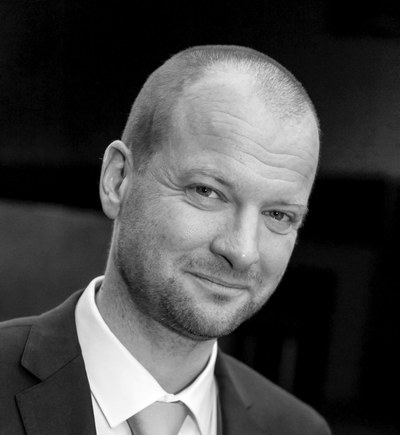
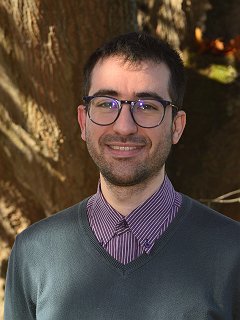
Sergio Greco is Full Professor at University of Calabria's DIMES Department, Coordinator of the Computer Engineering Degree, and Vice-president of the Computer Engineering national Group. His research spans database theory, data integration, inconsistent data processing, and computational logic. Research Focus: Development of theoretical frameworks for data management including argumentation frameworks, knowledge base querying under inconsistency, and decentralized learning systems. Recent work integrates machine learning with formal reasoning methods. Honors: Best Paper Award at International Conference on Logic Programming (2020) Best Paper Award at RuleML Symposium (2014) Leads projects on cybersecurity and data management funded by EU and Italian Ministry of Research, coordinating national and international research groups.
Ihab Francis Ilyas is a Professor at the University of Waterloo , affiliated with the Cheriton School of Computer Science . He currently holds the Thomson Reuters Research Chair in Data Quality and is on leave while serving as a Distinguished Engineer, Proactive Intelligence at Apple Inc. . He has co-founded two successful startups— Inductiv (acquired by Apple) and Tamr —and is a Fellow of the Royal Society of Canada , IEEE Fellow , and ACM Fellow . Research Interests : AI for Data Quality and Curation Knowledge Graphs Large-Scale Data Integration Information Extraction Managing Uncertain Data Data Cleaning Error Detection and Repair Probabilistic and Uncertain Data Management Scientific Awards and Recognitions : C.C. Gotlieb Computer Award, 2024 IEEE Fellow, 2021 ACM Fellow, 2020 NSERC-Thomson Reuters Industrial Research Chair, 2018 Google Faculty Award, 2014 Ontario Early Researcher Award, 2008 IBM CAS Faculty Fellow, 2006–2010 Taha Hussein Medal (Egyptian Ministry of Education), 1990 Leadership and Service : Board of Trustees, VLDB Endowment (2016–2021) Vice Chair, ACM SIGMOD (2016–2021) Co-founder, Inductiv (acquired by Apple) and Tamr Co-author of the leading text Data Cleaning (ACM Books) Lead developer of the HoloClean open-source data repair system Contributor to Saga , a next-generation knowledge construction platform at Apple Publications and Trends : His recent research focuses on AI-driven data cleaning, knowledge graph construction, and scalable data integration systems. Collaborative works span probabilistic inference, differentially private data synthesis, error detection, and HTAP workloads. His publications appear in top venues like SIGMOD , VLDB , and ICDE .
Meghyn Bienvenu is a full-time CNRS Senior Researcher (Directrice de Recherche) at the LaBRI research lab in the University of Bordeaux , France. Since 2023, she co-directs the GDR RADIA (National Research Network on Reasoning, Learning, and Decision in AI). Her research focuses on knowledge representation and reasoning , particularly description logic ontologies and their application to querying data . She spent the 2023-2024 academic year at the Japanese-French Laboratory for Informatics (JFLI) in Tokyo, Japan. Current affiliation: CNRS Senior Researcher at LaBRI, University of Bordeaux Co-director of GDR RADIA since January 2023 Research location: JFLI (2023-2024 academic year) Research Interests Meghyn's work spans knowledge representation, description logics, and ontology-mediated query answering. She explores: Querying inconsistent knowledge bases Paraconsistent reasoning frameworks Shapley value computation in AI Entity resolution and data repair Lightweight description logics (EL, DL-Lite) Connections between data management and AI Recent Publications Her recent publications (2022-2024) focus on: Paraconsistent description logics Cost-based semantics for inconsistent data Shapley value applications in query answering Collective entity resolution frameworks (ASPEn, REPLACE) Counting queries over ontology languages Honors and Awards Best Paper Award at RR 2016 Teaching Activities She has taught courses on knowledge representation, description logics, and ontology-based data access at institutions including: University of Bordeaux (since 2018) Université Montpellier (2015-2016) Universität Bremen (2009-2010) European Summer Schools (Reasoning Web, ESSLLI) Labs and Collaborations Active in the LaBRI research laboratory and the INTENDED AI Chair at University of Bordeaux, she collaborates with institutions in France, Germany, and Japan. Her work intersects AI, databases, and formal reasoning.
Wesley Klewerton Guez Assuncao serves as an Associate Professor in the Department of Computer Science within the College of Engineering at North Carolina State University. Previously, he held positions as a University Assistant/Senior Researcher at Johannes Kepler University Linz in Austria, Postdoctoral Researcher at Pontifical Catholic University of Rio de Janeiro in Brazil, and Assistant/Associate Professor at Federal University of Technology - Paraná in Brazil. His academic journey includes a Ph.D. in Computer Science from the Federal University of Paraná with a visiting period at Johannes Kepler University. Dr. Assuncao's research spans several critical areas in modern software engineering. His primary interests include Software Modernization (reverse engineering, re-engineering, and migration), Variability Management (variability mechanisms, software customization, and software reuse), and Software Quality (technical debt, code smells, and software refactoring). He also investigates Model-Driven Engineering (model inconsistency detection, repair generation, and change propagation), Collaboration in Systems Engineering (change synchronization, tool flexibility, and conflict awareness), Software Testing (regression testing, integration testing, and test case selection/prioritization), and AI4SE (Generative AI, Machine Learning, and Evolutionary Algorithms for Software Engineering). His recent publications reveal a strong focus on software modernization challenges, particularly regarding legacy systems transformation, microservices architecture, and the application of AI techniques in software engineering. The research shows increasing integration of Large Language Models in addressing software evolution problems, with emphasis on empirical validation through industrial collaborations. His work consistently bridges theoretical foundations with practical applications, as evidenced by multiple industry partnerships and real-world case studies. Dr. Assuncao has received numerous prestigious awards including Distinguished Reviewer Awards from FSE and SANER conferences, a Young Researcher Award from Johannes Kepler University, and multiple Best Paper Awards from top software engineering conferences. His research has been recognized with ACM SIGSOFT Distinguished Paper Awards and IEEE Computer Society TCSE Distinguished Paper Awards. In terms of academic service, he serves as Co-editor of the In Practice track at the Journal of Systems and Software and has held various leadership roles in major conferences including ICSE, SANER, MSR, and SPLC. He has successfully secured substantial research funding totaling approximately USD 1.91 million from sources including the Austrian Science Fund, Brazilian National Council for Scientific and Technological Development, and state-level Brazilian research foundations. Dr. Assuncao leads the Wolfpack Innovations in Software Engineering Research (WISER) Lab at NC State University, where he supervises graduate students working on cutting-edge software engineering research problems. His lab maintains strong collaborations with international institutions and industry partners including Dynatrace and ITPRO Consulting & Software GmbH.
Carlo A. Furia is an Associate Professor in the Software Institute at the Faculty of Informatics , Università della Svizzera italiana (USI) in Lugano, Switzerland. His research focuses on formal methods for software engineering , including automated verification, exception handling analysis, and empirical evaluation of software quality techniques. PhD in Computer Science from Politecnico di Milano Master of Science in Computer Science from University of Illinois at Chicago Laurea in Computer Science and Engineering from Politecnico di Milano Research interests span Java bytecode analysis , software reliability , and Bayesian data analysis for empirical studies. His recent work includes verification tools like AutoProof and empirical comparisons of programming languages. He actively contributes to conferences such as FM , ASE , and journals like Empirical Software Engineering (EMSE) . Teaching includes courses like Software Analysis and Software Design & Modeling . He leads the ATOM research group which develops open-source software analysis tools.
Yanju Chen is a postdoctoral scholar at University of California, San Diego working with Prof. Yufei Ding. Previously, Chen earned a Ph.D. in Computer Science at University of California, Santa Barbara, advised by Prof. Yu Feng, and studied Computer Science at Sun Yat-sen University, advised by Prof. Rong Pan. Chen's research focuses on developing formal and synthesis-based methods for building trustworthy, performant, and secure programming abstractions. Key application areas include zero-knowledge proofs, smart contract verification, and data-centric systems. The work combines program synthesis, program verification, and artificial intelligence to address complex software engineering challenges, with emphasis on practical implementations through multiple open-source projects. Chen's publication record shows consistent contributions to top-tier conferences including PLDI, OOPSLA, ASE, and CCS, with a clear trajectory from foundational program synthesis techniques to specialized applications in blockchain and zero-knowledge proofs. Recent work demonstrates increasing focus on security-critical applications, particularly in the rapidly evolving domains of DeFi and zero-knowledge circuits. Scientific Awards 2025: University of California, Riverside: FAME Award 2023: Ethereum Foundation Academic Award 2023: UCSB Computer Science Outstanding PhD Student of the Year 2022: ACM SIGPLAN PAC Award - OOPSLA 2022: ACM SIGPLAN PLDI Distinguished Paper Award 2022: ACM SIGPLAN PAC Award - PLDI 2017: AAAI Student Scholarship Chen actively contributes to the academic community through service on program committees for PLDI, OOPSLA, and ASE, and artifact evaluation committees for numerous conferences. The research has attracted significant industry attention and funding, particularly from blockchain and cryptocurrency sectors. Chen leads several influential open-source projects including Trinity-Edge for data science synthesis, Picus for ZK circuit verification, and ZKap for practical security analysis, which have gained substantial adoption in both academic and industry settings.
Dr. Yun Peng is an Assistant Professor in the Department of Computer Science and Engineering at The Chinese University of Hong Kong, specializing in software engineering with a focus on intelligent code analysis, automatic program repair, and software ecosystems. With an active research profile, Dr. Peng serves on program committees for major conferences including ASE and ESEC/FSE. Dr. Peng's educational background includes doctoral training focused on programming languages and software engineering, though specific institutions aren't detailed in the available information. Their research primarily addresses challenges in type inference, code analysis, and the application of large language models to software engineering tasks. Research interests center on intelligent code analysis techniques, particularly in type inference systems for dynamic languages like Python. Dr. Peng has pioneered hybrid approaches combining static analysis with deep learning, as demonstrated in their influential ICSE 2022 paper on HiTyper. Recent work has shifted toward leveraging large language models for code review, program repair, and API recommendation, reflecting the field's evolution. Current projects examine LLM applications in secure code review, code efficiency optimization, and vulnerability detection in smart contracts. Dr. Peng's publication record shows a clear progression from foundational type inference research toward cutting-edge LLM applications in software engineering. The work spans multiple dimensions of code quality including security, performance, and maintainability, with tools like HiTyper, TypeGen, and APIBench making significant contributions to the research community. As a program committee member for top-tier conferences, Dr. Peng actively contributes to the software engineering research community. Their work has been recognized through publication in premier venues including ICSE, ASE, and ESEC/FSE, demonstrating consistent high-impact contributions to the field. Dr. Peng maintains an active research group focused on advancing the state of the art in intelligent code analysis, with current projects exploring the intersection of large language models and traditional program analysis techniques. The research has practical applications in developer productivity tools, security analysis systems, and software maintenance automation.
Stephan Poelmans serves as an Assistant Professor at KU Leuven within the Faculty of Economics and Business (FEB). He is affiliated with the Information Systems Engineering Research Group (LIRIS), maintaining offices in both Brussels (Warmoesberg 26) and Leuven (Naamsestraat 69). His academic duties encompass teaching courses such as Business Process Management, ICT-Management, and Data Management, alongside conducting research in conceptual modeling and educational technology. His primary research areas include business process management, conceptual modeling education, and the development of e-learning methodologies. Poelmans investigates how token-based animations in BPMN can enhance novice modelers' comprehension and explores adaptive blended learning techniques to improve software engineering education. His work bridges theoretical modeling frameworks with practical educational applications, emphasizing empirical validation through user studies and learning analytics. Analysis of his recent publications (2023-2025) shows a concentrated effort on optimizing business process modeling education. Key themes include token animation for process model comprehension, ambiguity detection in user stories, and the application of explainable AI in learning analytics. His research increasingly integrates eye-tracking and anomaly detection to understand learner behavior, reflecting a multidisciplinary approach combining information systems, cognitive science, and educational technology. Stephan Poelmans has not been recognized with any scientific awards, fellowships, or major prizes as per the available information. As a promotor, Poelmans leads two significant research projects: "Doctoral Researcher in Information Management: Teaching Modelling Skills in the BPMN formalism" (2021-2025) and "Adaptive Blended learning effectiveness in teaching software engineering" (2019-2025). These projects focus on pedagogical innovation in information systems education, particularly for novice learners. Although specific student advisees are not listed, his role as promotor indicates active supervision of doctoral candidates. He operates within the LIRIS research group, which specializes in information systems engineering. His collaborative work extends to the Faculty of Economics and Business, where he participates in the Council and Campus Council for the Brussels Campus, contributing to academic governance and strategic initiatives.
Paris Koutris is an Associate Professor in the Department of Computer Sciences at the University of Wisconsin-Madison, where he researches theoretical and practical aspects of data management. His work spans parallel query processing, data pricing, consistent query answering, and database theory. He earned his PhD from the University of Washington under Dan Suciu. Research focuses on developing efficient algorithms for modern data processing challenges, including work on worst-case optimal join algorithms, data markets, and distributed computation models. His publications frequently appear in top database venues including PODS, SIGMOD, and VLDB. He teaches undergraduate database systems (CS564) and graduate foundations of data management (CS784). Current PhD students include Simon Frisk, Austen Fan, and Hangdong Zhao working on query optimization and distributed algorithms.
Dr. Hiba Arnaout is a postdoctoral researcher at the Ubiquitous Knowledge Processing (UKP) Lab at TU Darmstadt, led by Prof. Iryna Gurevych. She holds a PhD from the Max Planck Institute for Informatics, where she focused on discovering informative negative statements in open-world knowledge bases. Her research spans AI for mental health, commonsense knowledge, and knowledge graph curation. She has held roles including lecturer at TU Darmstadt (2024), researcher at Bosch AI (2021–2022), and visiting researcher at the University of Edinburgh (2020). Education: PhD in Computer Science, Max Planck Institute for Informatics (2018–2023) MSc in Computer Science, American University of Beirut (2014–2017) BSc in Computer Science, Haigazian University (2010–2013) Research Interests: She explores AI-driven mental health solutions, analysis of research paper impacts, and systems for mining negative knowledge in large-scale knowledge bases. Her work emphasizes improving knowledge graph completeness through methods like negation inference and leveraging LMs for repair tasks. Awards: 2024 SWSA Distinguished Dissertation Award Best Paper Awards at AKBC (2020), IC3K (nominee 2017) DFG grant for negative knowledge research (2021) Advising & Grants: Supervised 6 students on topics like LLM-based mental health analysis and culturally-aware AI. Co-developed the UnCommonSense system (2022) and contributed to the WikiNegata platform. Labs & Teams: Active member of the UKP Lab and previously in the Databases & Information Systems group at MPI. Co-organized the Wikidata Workshop (ISWC 2023).
Prof. Dr. Patrick Delfmann is a University Professor at the Department of Computer Science (FB4) of the University of Koblenz, leading the Process Science research group. His roles include Research Dean of the Department and chairman of the Institute for Business and Administrative Information Systems. He holds a Dr. rer. pol. from the University of Münster (2006) and has held academic positions since 2002, including senior academic councillor roles and acting professorships before his current position since 2017. His research focuses on technological aspects of business process management, including process mining, predictive process monitoring, and ontology-based process engineering. Current projects include AI-DPA (funded by Rhineland-Palatinate) and DFG-funded MIB (declarative process models). Methodological foundations include algorithmic graph theory, computational linguistics, and quantum machine learning. Key achievements include the 2024 Best Paper Award at ICPM’s PODS4H workshop for process-oriented cancer data analysis. He advises on interdisciplinary theses requiring strong algorithmic and modeling skills, and collaborates with industry partners to ensure practical applicability of research outcomes. Education: PhD in Business Administration (2006), University of Münster; earlier roles as research assistant (2001–2013). Grants: DFG MIB Project (2023–), RLP AI-DPA Research College (2023–). Labs/Teams: Process Science Group develops tools like declare-js and ProPoneRe, focusing on predictive modeling and process compliance.
Arne Meier is a Professor at Leibniz Universität Hannover, affiliated with the Faculty of Electrical Engineering and Computer Science and the Institute of Theoretical Computer Science. He heads the Algorithms research group, focusing on theoretical aspects of computer science with applications to artificial intelligence and database systems. Meier obtained all his academic degrees—Bachelor's, Master's, PhD, and Habilitation—at Leibniz Universität Hannover, establishing a strong foundation in theoretical computer science. His academic journey at the same institution reflects his deep commitment to advancing research in computational theory. Meier's research spans several interconnected areas in theoretical computer science. His primary focus is on complexity theory, particularly the parameterized complexity of problems in non-classical logics with applications to AI. He also investigates enumeration algorithms and the logical foundations of artificial intelligence. His work bridges theoretical computer science with practical applications in knowledge representation and reasoning systems. He has a notable interest in LaTeX and typography, having developed the 'timeline' package for creating timelines in LaTeX documents. His recent publications (2023-2025) demonstrate a consistent focus on the intersection of logic, complexity, and artificial intelligence. Meier's work shows progression from foundational research in dependence and team logics toward more applied areas in argumentation theory and database systems. His research increasingly addresses computational challenges in AI systems, particularly in reasoning under uncertainty and handling inconsistent information. Meier actively contributes to the academic community through extensive program committee service for major conferences including AAAI (2021, 2023, 2024, 2025), IJCAI (2021-2025), and FoIKS (2024 as Co-Chair, 2026). He has also served as a reviewer for numerous conferences and journals in theoretical computer science and artificial intelligence. His current research projects include the DAAD-funded 'Applications and Complexity of Logics in Semiring-Team-Semantics' (2024-2025) and the DFG project 'Team Logics: New Bridges to Database Repairs' (2023-2026). Previously, he led the DFG project 'Nonclassical logics: parametrised and enumeration complexity' (2013-2022) and the MWK project 'Innovation Plus: Komplexität von Algorithmen' (2020-2022). Meier leads the Algorithms research group at Leibniz Universität Hannover, which focuses on theoretical aspects of algorithms with applications to logic and artificial intelligence. The group's work spans complexity theory, logical formalisms, and their applications to computational problems in knowledge representation and database systems.
Stephan Schulz is a Professor at the Baden-Wuerttemberg Cooperative State University Stuttgart (DHBW Stuttgart) in the Faculty of Engineering, where he serves as the Program Director for Computer Science. His office is located in room B 3.14 at Lerchenstraße 1, 70174 Stuttgart, Germany. Professor Schulz is a leading researcher in automated reasoning and theorem proving, with extensive experience teaching computer science courses including Formal Languages and Automata, Logic and Foundations of Computer Science, Compiler Construction, and Algorithms. Professor Schulz's primary research interest lies in automated reasoning, specifically developing efficient algorithms and intelligent search control for automatic theorem proving. His long-term goal is integrating high-performance inference mechanisms with machine learning techniques to create robust reasoning systems across diverse domains. He is the principal developer of the E Theorem Prover, a high-performance system for full first-order logic with equality that has performed exceptionally well in international competitions like CASC. His recent publications demonstrate a clear trend toward extending theorem proving capabilities to higher-order logic while maintaining performance. Schulz has made significant contributions to practical aspects of automated reasoning, including watchlist implementations, contradiction detection in large theories, and the integration of machine learning techniques to improve search heuristics in theorem provers. Professor Schulz has received multiple prizes for his work on the E Theorem Prover, though specific award names are not detailed in the available information. His contributions to the field have been recognized through leadership roles in major conferences. Professor Schulz actively mentors students through project work (Studienarbeiten) at DHBW Stuttgart and has taught numerous courses throughout his career at institutions including the University of Miami, Mona Institute of Applied Sciences, Universität Hildesheim, and INRIA/MPI. While specific grant information isn't provided, his sustained development of the E Theorem Prover suggests ongoing research support. Professor Schulz is significantly involved with several workshop and conference series including the International Workshop on the Implementation of Logics (IWIL), Practical Aspects of Automated Reasoning (PAAR), and Artificial Intelligence and Theorem Proving (AITP). His current roles include PC co-chair for the 15th IWIL (2024) and 9th AITP (2024), and PC member for multiple other conferences including the 25th LPAR (2024) and 12th IJCAR (2024).
Djamel Eddine Khelladi is a CNRS Researcher at the IRISA laboratory within the DIVERSE team at University of Rennes, specializing in software engineering with emphasis on model-driven techniques and empirical validation. His work bridges theoretical frameworks and industrial-scale applications, particularly in evolving software ecosystems. His academic foundation includes a Ph.D. from Sorbonne University (formerly University Pierre et Marie Curie) at the Laboratory of Computer Science of Paris 6 (LIP6), followed by postdoctoral research at Johannes Kepler University Linz's Institute for Software Systems Engineering. This trajectory established his expertise in software evolution and model-driven approaches. Khelladi's research centers on software evolution challenges, particularly model-code co-evolution in highly-configurable systems like the Linux kernel. He develops scalable analysis tools (e.g., HyperAST, HyperDiff) and investigates empirical phenomena in build systems, configuration management, and polyglot programming environments. Recent work increasingly integrates large language models for automated co-evolution tasks while maintaining rigorous empirical validation. His publication trends reveal a consistent focus on practical tooling for software evolution, with growing exploration of AI-assisted engineering. Key themes include scalability in software history analysis, reproducibility in configurable systems, and debugging multi-language environments, often using Linux kernel ecosystems as testbeds. As an active community contributor, Khelladi serves on program committees for ASE, ICSE, and ESEC/FSE while advancing research through the DIVERSE team at IRISA. This group specializes in variability-intensive software systems, providing the collaborative environment for his empirical and tool-building research.