Leo Yan is an Associate Professor in the Department of History, Philosophy, Political Science, and Religious Studies at Indiana University of Pennsylvania (IUP), part of the College of Arts, Humanities, Media, and Public Affairs. His research focuses on ethics, practical reason, and decision theory. He teaches courses such as Contemporary Moral Issues, Biomedical Ethics, and Philosophy of Law. Education: PhD in Philosophy, Brown University MA in Philosophy, University of Missouri MSc in Philosophy and Public Policy, London School of Economics and Political Science BA in Philosophy, Boston University His professional interests include ethical theory, political philosophy, and the application of decision theory to moral and political contexts. Prior to academia, he worked as a public policy research assistant at MDRC and served as an AmeriCorps VISTA volunteer. He has presented at conferences such as the American Philosophical Association and the Central States Philosophical Association, discussing topics like parity, incomparability, and categorical judgments in ethical frameworks.
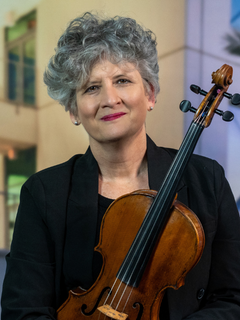
Jodi Levitz serves as Professor of Viola at the Frost School of Music, University of Miami, where she specializes in viola performance and pedagogy within the classical music tradition. Her artistic focus centers on viola performance techniques, chamber music interpretation, and advancing viola repertoire. Critics consistently highlight her "incomparably smooth, open sound" and "positively vibrant" suite performances that convey expressive immediacy, reflecting deep expertise in string performance practices. Contact: jxl1604@miami.edu | (305) 284-6717
Professor Jun Liu is a Professor of Artificial Intelligence and Director of the Artificial Intelligence Research Centre (AIRC) at the School of Computing, Ulster University. With over 270 publications and more than £18 million in research funding, he is a leading figure in artificial intelligence, particularly in trust and explainable AI systems and logic-based reasoning methods. Dr. Liu received his BSc and MSc degrees in Applied Mathematics, and PhD degree in Information Engineering from Southwest Jiaotong University, Chengdu, China, in 1993, 1996, and 1999, respectively. Prior to joining Ulster University, he held postdoctoral positions at The University of Manchester, UK (Feb. 2002 - Dec. 2004) and the Belgian Nuclear Research Centre (SCK*CEN) (Mar. 2000 - Feb. 2002). Professor Liu's research focuses on trust and explainable data-knowledge integrated AI decision models with applications in safety and risk analysis, policy decision making, security/disaster management, and healthcare; and logic and automated reasoning methods for intelligent systems, including resolution-based automated reasoning and lattice-valued logics for handling incomparability, inconsistency, and imprecision. His work spans theoretical foundations to practical applications in smart homes, healthcare, and industrial settings. His recent publications demonstrate a strong trend toward developing more trustworthy and explainable AI systems, with particular emphasis on belief rule-based approaches for handling uncertainty in decision-making. The research spans multiple domains including smart home activity recognition, medical imaging, food quality analysis, and environmental monitoring, showing the versatility and applicability of his methodologies. Ulster University best computer science paper award for 2016 IEEE Senior Member including IEEESMC and IEEECI Fellow of the UK Higher Education Academy Associate Editor of IEEE Transaction on Fuzzy Systems Current Chair of IEEE CIS Emergent Technologies Technical Committee As Director of the Artificial Intelligence Research Centre, Professor Liu has secured significant research funding as principal investigator and co-investigator. His current projects include "The use of Agentic AI in judicial decision-making" funded by EPSRC and "Adaptive Modeling Method for Deep Belief Rule Base" for smart home applications. He serves on editorial boards of multiple high-impact journals and organizes international conferences including the 23rd UK Workshop on Computational Intelligence. The Artificial Intelligence Research Centre under Professor Liu's leadership focuses on developing cutting-edge AI methodologies with practical applications. The center collaborates extensively with industry partners including BT through the BTIIC Phase 2 initiative and PwC through their Advanced Engineering and Research Centre, ensuring research has real-world impact across multiple sectors.
Spencer Blake Anderson serves as Assistant Professor in the Department of Accounting at Indiana University's Kelley School of Business, Bloomington campus. His academic appointment focuses on financial accounting research and instruction within one of the nation's leading business schools. His educational foundation includes: PhD in Accounting, Indiana University (2016) Master of Accountancy (MACC), University of Utah (2011) BS in Accounting, Utah Valley University (2010) Professor Anderson's research program centers on judgment and decision-making processes in financial accounting contexts. He investigates how financial statement presentation—particularly regarding intangible assets—affects professional users' assessments, and examines the consequences of financial statement incomparability on investment decisions. His work bridges theoretical accounting frameworks with empirical analysis of real-world user behavior, contributing to understanding how accounting standards translate into practical decision outcomes. His scholarly contributions have been recognized through: Financial Accounting and Reporting Section Outstanding Reviewer Award (2020, 2021) Indiana University Kelley School Research Productivity Award (2016) William Panschar Teaching Excellence Award (2013) As an active researcher with publications in premier journals including The Accounting Review and Journal of Accounting Research, Professor Anderson maintains strong scholarly productivity. His dual recognition for research (Productivity Award) and teaching (Panschar Award) early in his career indicates balanced commitment to academic excellence. Current research examines the intersection of accounting presentation choices and professional judgment, with implications for standard-setting and financial reporting practice.