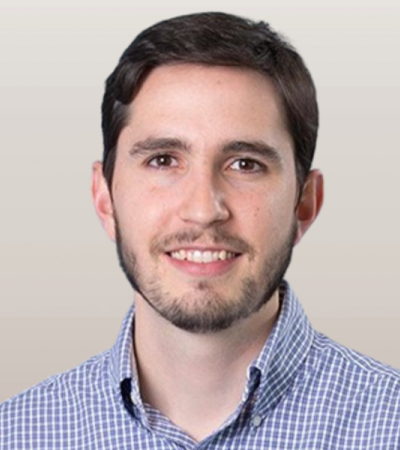
Dong Lou is a Professor of Finance at the Hong Kong University of Science and Technology (HKUST), where he serves as Associate Dean of Business and Management (Strategic Planning and Research) and Acting Head and Chair Professor of the Department of Finance. He is also a CEPR Research Fellow at the London School of Economics (LSE). His research focuses on asset pricing, investment management, and behavioral finance, with a particular emphasis on market inefficiencies, trading dynamics, and macrofinancial linkages. PhD in Finance, Yale University, 2009 His scholarly work explores liquidity provision, arbitrage activity, investor behavior, and the impact of information dissemination on financial markets. Recent studies include the effects of dollar asset holdings on global yields, retail margin trading dynamics, and the relationship between communication rates and security prices. His publications appear in top journals like Management Science , Journal of Financial Economics , and Review of Financial Studies . His research has been recognized with numerous awards, including the Crowell Memorial Award, NASDAQ OMX Award, and multiple INQUIRE and CRSP Forum grants. He mentors PhD students in finance and co-directs the HKUST-DXM AI for Finance Joint Laboratory, advancing AI applications in financial research and practice.
Adrien Auclert is an Associate Professor in the Department of Economics at Stanford University. He holds prestigious research affiliations including Research Fellow at the Centre for Economic Policy Research (CEPR), Senior Fellow at the Stanford Institute for Economic Policy Research (SIEPR), Research Associate at the National Bureau of Economic Research (NBER), and member of the French Council of Economic Analysis. His research centers on inequality, macroeconomics, and international economics with a focus on heterogeneous-agent models (HANK). He develops computational tools like the Sequence-Space Jacobian to analyze fiscal/monetary policy, debt relief, and global imbalances. His work bridges theoretical macroeconomics with urgent policy questions, particularly examining how distributional heterogeneity shapes aggregate economic dynamics. Recent publications reveal a dominant trend in studying household-level heterogeneity's role in macroeconomic transmission mechanisms. Auclert demonstrates how fiscal stimulus, monetary policy, and trade shocks propagate asymmetrically through income/wealth distributions, with significant implications for inequality dynamics and policy design in open economies. His scientific honors include: Research Fellow, Centre for Economic Policy Research Senior Fellow, Stanford Institute for Economic Policy Research Research Associate, National Bureau of Economic Research Member, French Council of Economic Analysis Auclert actively engages in policy formulation through the French Council of Economic Analysis, co-authoring influential notes on fiscal consolidation and monetary policy. He is co-organizing the upcoming SITE workshop "Macroeconomics in the Sequence Space" at Stanford (September 8-10, 2025), advancing methodological frontiers in heterogeneous-agent modeling.
Jakob Madsen is a Professor of Economics at the UWA Business School, The University of Western Australia, since January 2019. He previously held the Xiaokai Yang Distinguished Professorship at Monash University (2011–2019) and has held professorial roles at institutions including the University of Copenhagen and Brunel University. Madsen is a Fellow of the Australian Academy of Social Sciences and was an ARC Professorial Fellow (2011–2015). His research focuses on macroeconomics, economic growth, inequality, and applied econometrics, with over 140 publications in top journals. Education: PhD in Economics from the Australian National University (1992), Cand. Oecon (MEc) from Aarhus University (1983). Prior to academia, he worked in Denmark’s financial sector as Deputy Chief Economist at the Bank of Jutland. Research Interests: Madsen’s work examines long-run macroeconomic trends, including unified growth theory, inequality dynamics, the historical drivers of economic development, and the interplay between finance and growth. Recent projects explore aging societies, the impact of plagues on medieval markets, and the role of education in economic transitions. Grants & Awards: He has secured over AUD 2.3 million in ARC grants, including current projects on income inequality and capital shares. His awards include the Georgescu-Roegen Prize (2001) for work on the Great Depression and the Dean’s Award for Teaching Excellence (2009). Collaborations: Engages with global institutions like Aix-Marseille Université and the University of Bologna. Active in UN Sustainable Development Goals related to education and economic inequality.
Jan Eeckhout is an ICREA Research Professor at Pompeu Fabra University (UPF) in Barcelona, specializing in macroeconomic theory, labor markets, and urban economics. His work focuses on market power dynamics, wage inequality, and technological impacts on labor and urban systems. He holds a PhD from the London School of Economics (LSE). Eeckhout has received a prestigious ERC Advanced Grant (€2.45M) for research on 'Macro Market Power and Distribution.' He authored the influential book The Profit Paradox (2021), exploring how dominant firms reshape labor markets and economies, translated into multiple languages. His research frequently appears in top journals like the Quarterly Journal of Economics and Review of Economic Studies. Research Interests: Macro-Labor Theory, Labor Markets, Urban Economics, Market Power, and Economic Inequality. Recent work examines technological origins of labor market stagnation, IT-driven urban polarization, and wealth effects on worker productivity. Advising and Grants: Supervises PhD students (e.g., Milena Djourelova, David Puig) and collaborates with institutions globally (CEMFI, EUI, Sciences Po). His team includes co-authors like Jan De Loecker and Philipp Kircher. Active in policy discussions via think tanks and media outlets like VoxEU and the NYT. Labs/Teams: Leads a diverse research group at UPF, with projects on market power, urban economics, and labor dynamics.
Professor Fabio Milani is a faculty member in the Department of Economics at the University of California, Irvine (UCI), where he also serves as Director of Graduate Studies for the Economics Ph.D. Program. He holds a Laurea in Economics from Bocconi University (2000) and a Ph.D. in Economics from Princeton University (2006). His research focuses on Macroeconomics, Monetary Economics, International Macroeconomics, and Time Series Econometrics, with an emphasis on deviations from rational expectations and the impact of learning behavior on macroeconomic fluctuations. Professor Milani’s work explores how psychological factors and heterogeneous expectations drive economic outcomes, including business cycles and inflation dynamics. He has extensively analyzed the role of sentiment, news shocks, and adaptive learning in macroeconomic models. His teaching spans Ph.D. courses like Macroeconomic Theory and Advanced Macroeconomics, as well as undergraduate courses on Financial Markets and the Macroeconomy. He advises numerous Ph.D. students, many of whom hold academic and policy roles globally. His publications span over 30 articles in top journals, including the Economic Journal , Journal of Economic Dynamics and Control , and Journal of Monetary Economics . Recent research includes studies on inflation tolerance, heterogeneous expectations, and the implications of learning models for monetary policy design. While no scientific awards are explicitly listed, his contributions reflect significant scholarly impact in macroeconomic theory and policy analysis.
Andrei A. Levchenko is the John W. Sweetland Professor of International Economics at the University of Michigan's Department of Economics. He holds affiliations with prominent institutions including NBER, CEPR, and CEBRA, where he directs the International Trade and Macroeconomics Program. His research focuses on international trade, global production networks, business cycle transmission, and the macroeconomic implications of institutional changes. Levchenko's work bridges micro and macroeconomics, analyzing firm-level data to understand aggregate phenomena. Key contributions include studies on global supply chains' role in economic fluctuations, the impact of industrial policy on long-term growth, and the distributional consequences of large devaluations. He has been recognized with the Bhagwati Award and featured in the Economic Report of the President multiple times. His research spans topics such as trade elasticities, inflation dynamics, and the intergenerational trade-offs of pandemic lockdowns. Levchenko collaborates with leading economists globally, producing influential papers in top journals like the American Economic Review and Review of Economic Studies. His Google Scholar profile highlights over 10,000 citations, underscoring his significant impact on modern international economics. Education: Not explicitly listed in the provided materials. Affiliations: NBER Research Associate, CEPR Research Fellow, CEBRA Director of ITM Program. Grants & Awards: Bhagwati Award (2021/2022), multiple NBER/CEPR working papers, and contributions to policy dialogues via IMF and World Bank collaborations.
Shouyong Shi is a Professor and David C. Smith Chair in Economics at Queen's University. Previously, he held positions at the University of Toronto (as a Tier 1 Canada Research Chair) and Pennsylvania State University. His research focuses on macroeconomics, monetary economics, financial economics, and labor economics, with notable contributions to search theory, market frictions, and business cycle analysis. Shi has been a Research Fellow at the Bank of Canada and holds editorial roles, including co-editing the Annals of Economics and Finance . Education: Ph.D. in Economics, University of Toronto (1991) M.A. in Economics, University of Toronto (1988) B.Sc. in Industrial Engineering and Management Science, Huazhong University of Science and Technology (1984) Research Interests: Shi’s work spans macroeconomic theory, monetary policy, financial markets, and labor markets. Key topics include price dispersion, liquidity dynamics, wage-tenure contracts, and the role of search frictions in economic cycles. His influential papers address topics like directed search models, efficient job search mechanisms, and the impact of skill-biased technology on inequality. Awards and Honors: Tier 1 Canada Research Chair (2002–2014) John Rae Prize (2000, for best researcher in five years) Bank of Canada Fellowship (2003–2012) Grants and Supervision: Shi has supervised over 20 Ph.D. students, many of whom now hold academic or policy roles. He has received SSHRC grants for research on macroeconomic policies, search frictions, and monetary economics. Notable grants include projects on “Search Frictions and Macroeconomic Policies” and “Decentralized exchanges and market efficiency.” Labs/Teams: Shi collaborates with institutions like the Bank of Canada, Federal Reserve Banks, and international universities (e.g., Tsinghua, Fudan). His work often involves interdisciplinary teams addressing real-world economic challenges, such as pandemic impacts on output and liquidity dynamics in financial markets.
Academic Profile: Damir Filipovic is a Full Professor and the Swissquote Chair in Quantitative Finance at the College of Management of Technology (CDM) of École Polytechnique Fédérale de Lausanne (EPFL), Switzerland. He previously held academic positions at the University of Vienna, University of Munich, and Princeton University, and served as Head of the Vienna Institute of Finance. Research Focus: Quantitative finance, risk management, stochastic processes, term structure modeling, volatility risk, and machine learning applications in financial markets. Industry Collaboration: Co-developed the Swiss Solvency Test for insurance capital requirements while consulting for the Swiss Federal Office of Private Insurance. Publications: Contributed extensively to journals like Journal of Financial Economics, Mathematical Finance, and Annals of Applied Probability, with a textbook on Term-Structure Models. Academic Service: Editorial board member of multiple journals and organizer of advanced workshops on systemic risk and financial technology. Recent Research: His work emphasizes machine learning for portfolio risk management, kernel-based yield curve estimation, and robust stochastic modeling. Keynote speaker at international conferences on finance and insurance mathematics, with over 15 recent publications in 2023-2025 addressing high-dimensional financial problems, neural control systems, and causal inference in market data. Education: Ph.D. in Mathematics from ETH Zurich (2000). Graduate of ETH Zurich and University of Vienna. Teaching & Mentorship: Supervises current and former EPFL Ph.D. students in quantitative finance, including Nicolas Camenzind, Joshua Hayes, Andrea Ruglioni, and ten others. Former students like Damien Ackerer and Lotfi Boudabsa now lead research in risk management. Labs & Programs: Directs EPFL's Finance and Technology Programme, leads the Computational Finance Group (CSF) at EPFL, and contributes to Swiss Finance Institute initiatives. Scientific Leadership: Served on EPFL Committee of Academic Evaluation and Doctoral Program Finance committee.
David M. Silverman is an incoming Assistant Professor in the Department of Psychology at Yale University. His academic work bridges social psychological theory with practical applications for institutional change. Dr. Silverman's research focuses on identity and person-context interactions, specifically examining how schools, workplaces, and other societal institutions shape (in)equity. He is particularly interested in developing and testing new approaches for shifting these institutions to expand equitable access to opportunity. Much of his work emphasizes 'strength-based approaches' that recognize valuable skills and knowledge gained through marginalized identities rather than focusing on deficit narratives. His recent publications demonstrate a clear trajectory toward practical interventions in educational and organizational settings. The research examines how institutions can reject stigmatizing narratives about marginalized people in favor of approaches that recognize their strengths. His work has particular relevance for educators and administrators seeking to implement equity-focused changes. Second most cited paper of 2024 in Personality and Social Psychology Review Dr. Silverman actively engages with practitioners, having published articles in EdWeek and making research accessible through open-access publications. His work on classroom practices supporting students from lower socioeconomic status backgrounds demonstrates his commitment to translating research into practical applications.
Patrick Baylis is an Assistant Professor of Environmental Economics at the Vancouver School of Economics, University of British Columbia. His research focuses on how people respond to environmental threats such as wildfires, air pollution, and extreme temperatures. He employs large datasets, natural language processing, and spatial information in his work, primarily using R/RStudio and Python for data analysis. Dr. Baylis earned his PhD from the University of California Berkeley in 2016 in Agricultural and Resource Economics. Prior to joining UBC, he was a postdoctoral fellow at the Stanford Center on Food Security and the Environment. He also worked as a research assistant at the Energy Institute at Haas and is a proud alumnus of Carleton College. His research interests span environmental economics with a particular focus on climate change impacts, energy economics, and behavioral responses to environmental threats. His work often examines the intersection of climate, health, and economic behavior, using innovative methods like social media data analysis to measure sentiment responses to temperature changes and other environmental factors. Analysis of his publication record reveals a strong focus on using big data approaches to understand human responses to environmental challenges. His work frequently appears in top journals including Nature Climate Change, PNAS, and the Journal of Public Economics. His research spans multiple subfields including wildfire economics, air quality valuation, climate migration, and the behavioral impacts of temperature extremes. Dr. Baylis has received significant media attention for his work, with coverage in major outlets including The New York Times, The Washington Post, The Guardian, and The Atlantic. His research on temperature and suicide rates, as well as climate perception, has been particularly influential in connecting environmental conditions with human behavior and mental health outcomes. He maintains an active research program examining critical environmental challenges, including wildfire risk, air pollution impacts, climate adaptation strategies, and the economic dimensions of climate change. His work combines rigorous economic analysis with innovative data collection and processing methods to provide new insights into how humans respond to environmental threats.
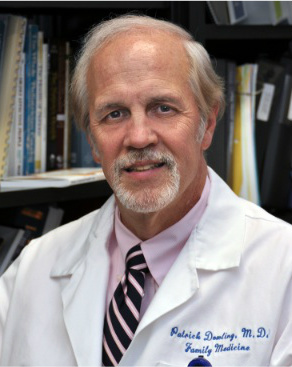
Patrick T. Dowling, M.D., M.P.H., is the Kaiser Permanente Endowed Professor of Community Medicine and Chair of the UCLA Department of Family Medicine. He holds dual degrees from the Medical College of Ohio (1974) and the University of Michigan School of Public Health. Dr. Dowling's career spans over four decades in family medicine, residency training, and health policy advocacy, with a focus on underserved populations. He has directed residency programs at Cook County Hospital, Brown University, and Harbor-UCLA Medical Center before leading UCLA's Family Medicine department since 1998. His research emphasizes health policy, chronic disease management, cross-cultural medicine, and integrating substance abuse treatment into primary care. He co-founded UCLA's IMG pathway program to train bilingual (English-Spanish) international medical graduates for underserved areas. Dr. Dowling has advised the National Health Service Corps and LA County Public Health Commission, and currently serves on Drew University's Board of Trustees. Publications highlight systemic barriers to healthcare access, physician practice location determinants, opioid epidemic responses, and community-based participatory research. His work bridges medical education innovation with socioeconomic health equity, reflecting lifelong commitment to universal healthcare access inspired by his early work with Cesar Chavez's United Farm Workers Clinics.
Daniela Goya-Tocchetto is an Assistant Professor of Organization and Human Resources at the School of Management, University at Buffalo. Her research focuses on inequality perceptions, meritocracy beliefs, social class/racial biases, and moral/political decision-making. She holds a PhD from Duke University's Fuqua School of Business and multiple advanced degrees from the Federal University of Rio Grande do Sul and the London School of Economics. Her work bridges social psychology and organizational behavior, addressing topics like system justification theory, partisan polarization, and interventions to reduce antidemocratic attitudes. Recent studies include analyzing income inequality perceptions and the Andrew Carnegie effect on wealth allocation. She has been recognized with the NTR-IACM Early Career Scholars Program (2022–24) and a Best Paper award at the 2022 Academy of Management Meeting. Professionally, she advises CLOO Behavioral Insights Unit on organizational behavior projects in Brazil and Portugal. Her research is published in journals like Science , Nature Communications , and Journal of Experimental Social Psychology .
Benjamin Tippet is a Lecturer in Development Economics at the Department of International Development, King's College London, within the School of Global Affairs. He serves as a council member of the Progressive Economy Forum and committee member of the Post-Keynesian Economics Society. His research focuses on wealth and income inequality, global climate action, labor bargaining power, housing cycles, and fiscal policies. He leads a British Academy-funded project analyzing UK wealth concentration through The Sunday Times Rich List archives. His expertise includes quantitative methods like causal identification, macro-econometrics, and agent-based modeling. Key research areas include the political economy of growth models, global capitalism's structural hierarchies, and the interplay between wealth taxation and inequality. He contributes to UN Sustainable Development Goals related to inequality reduction and climate action. Recent work highlights include dynamic analysis of UK wealth taxes, EU excess profit taxation, and vulnerability-climate action linkages. He collaborates with institutions like PEGFA and Greenpeace on policy-oriented research. Teaching focuses on macroeconomics for development and inequality studies. Current projects address global care work migration and housing system impacts on economic growth.
Heitor Pellegrina is an Assistant Professor of Economics at the University of Notre Dame, specializing in trade and development economics with a particular focus on agriculture and environmental resources. He is affiliated with the Building Inclusive Growth (BIG) Lab and became a Kellogg faculty fellow in 2023. Prior to joining Notre Dame, Pellegrina spent six years as an assistant professor at New York University Abu Dhabi, where he coordinated DevLab seminars from 2021-2023 and co-organized the conference "The End of Globalization" in 2022. His research spans multiple countries including Brazil, India, Colombia, and parts of Africa, examining the intersection of trade policies, economic development, and environmental sustainability. Pellegrina holds a PhD in economics from Brown University (2017) and both bachelor's and master's degrees in economics from the University of São Paulo, Brazil (2009 and 2011 respectively). His research program addresses critical questions at the intersection of international trade, agricultural productivity, and environmental sustainability. Recent work examines how weather shocks affect farm size distribution, the relationship between economic development and greenhouse gas emissions from agriculture, and the global impacts of trade policies on deforestation patterns. His publications appear in top journals including the Journal of Political Economy, Journal of Development Economics, and Journal of International Economics. PhD, Brown University, 2017 M.Sc., University of São Paulo, Brazil, 2011 B.Sc., University of São Paulo, Brazil, 2009 Pellegrina teaches undergraduate courses in Economic Growth and graduate courses in Quantitative International Trade and Development Economics. His research methodology combines empirical analysis of large datasets with theoretical modeling to address questions of economic development and trade policy. He has organized academic events including the Development Economics Working Group at Notre Dame and previously coordinated DevLab seminars at NYU Abu Dhabi.
Claus Thustrup Kreiner is a Professor of Economics and Director of the Center for Economic Behavior and Inequality (CEBI) at the University of Copenhagen's Faculty of Social Sciences, Department of Economics. He also serves as Area Director of Public Economics in the CESifo network and was co-editor of the Journal of Public Economics from 2014 to 2020. Kreiner has held various leadership positions including Director of the Economic Policy Research Unit (EPRU) since 2005 and Director of the Center of Excellence WEST from 2011-2013. Education: Ph.D. in Economics, University of Copenhagen, 1998 Visiting Ph.D. student, University of York, 1996 M.Sc. in Economics, University of Copenhagen, 1994 B.Sc. in Economics, University of Copenhagen, 1991 Claus Thustrup Kreiner's research primarily focuses on Public Economics , with secondary specializations in Labor Economics, Household Finance, Applied Microeconometrics, and Experimental Economics. His work examines inequality in income, wealth and health, optimal redistribution policy, and behavioral responses to public policy. Kreiner has conducted significant research using Danish administrative data to analyze tax compliance, labor supply responses, and inequality dynamics. His research often involves collaborations with institutions like Columbia University, London School of Economics, and UC Berkeley. His recent publications reveal a strong focus on inequality across multiple dimensions (income, wealth, health, life expectancy), tax policy design and compliance, labor market responses to policy changes, and the intersection of behavioral economics with public policy. Kreiner frequently employs high-frequency administrative data from Denmark to provide empirical evidence on how individuals and households respond to economic policies and shocks. Scientific Awards and Recognition: Appointed Knight of The Order of Dannebrog by Queen Margrethe II (2018) The Invisible Hand Award from the Society of Social Economics (2006, 2001) Best Teacher Award from the Study Board of Economics at University of Copenhagen (2002) Research Fellow at Centre for Economic Policy Research (CEPR), London (2009-) Kreiner has supervised numerous students primarily in Public Economics and has received multiple research grants including from the Danish Social Science Research Council (2003, 2006, 2009), International Growth Center (2009), and Danish National Research Foundation (1998-2003). He has served on important policy bodies including as co-chair of the Danish Economic Council (2010-2014) and member of the Danish Tax Commission (2008-2009). As Director of CEBI (Center for Economic Behavior and Inequality), Kreiner leads a major research center funded by the Danish National Research Foundation. He also directs the Economic Policy Research Unit (EPRU) and has been instrumental in establishing research collaborations through networks like CESifo. His work bridges academic research and policy application, as evidenced by his practical policy experience with government commissions.