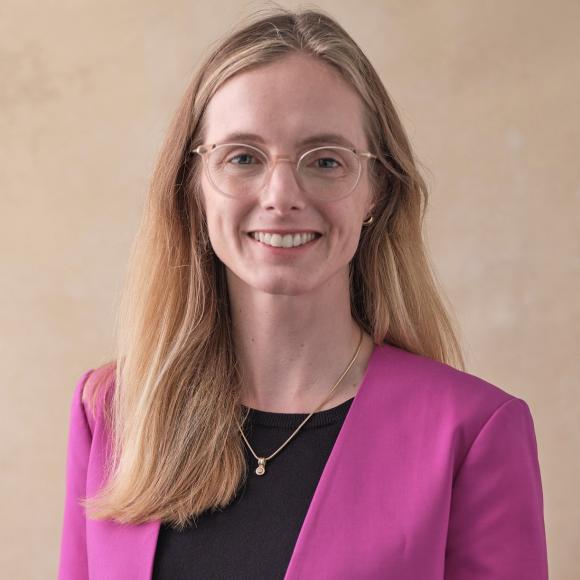
Carolin Pflueger is an Associate Professor at the Harris School of Public Policy , University of Chicago, and holds affiliations as a NBER Faculty Research Fellow and CEPR Research Affiliate . Her work bridges macroeconomics and finance, focusing on inflation dynamics, monetary policy impacts, and financial market risk perception. University: University of Chicago School: Harris School of Public Policy Affiliations: NBER, CEPR Role: Associate Professor Her research explores how inflation and monetary policy influence financial markets, including models connecting Treasury bond risk to stagflation drivers and analyzing economic agents' perceptions of policy uncertainty. Recent work leverages cross-sectional data of stock prices and economic forecasts to quantify macrofinancial linkages. Notable scientific recognitions include the Fama DFA Prize (2023), AQR Insight Award Finalist (2018), and the Arthur Warga Award (2014). She has received NSF Grant 2149193 for macrofinance research. Contact: cpflueger@uchicago.edu | GitHub Code Repositories
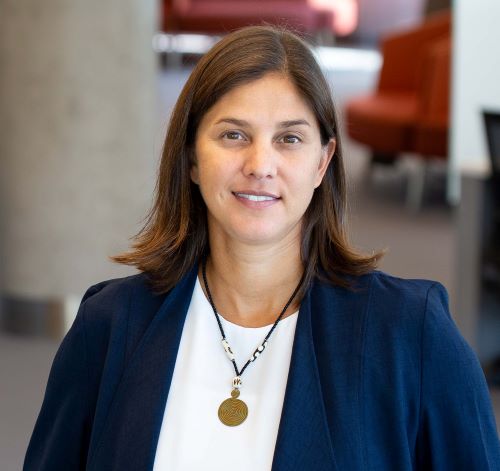
Dr. Manisha Kulkarni is a Professor at the School of Epidemiology and Public Health, University of Ottawa, where she holds the University Research Chair in Climate Change and Emerging Diseases. She is also the Director of the INSIGHT (Interdisciplinary Spatial Informatics for Global Health) research lab and serves as Scientific Director of the Canadian Lyme Disease Research Network (TickNet Canada). Her work spans global public health, with a focus on vector-borne and zoonotic diseases. PhD in Medical Entomology, McGill University (2006) BSc in Environmental Biology, McGill University (2001) Dr. Kulkarni's research centers on the socio-ecological determinants of infectious disease emergence, particularly malaria, Lyme disease, and West Nile virus. She applies population surveys, entomological field sampling, molecular diagnostics, and GIS to study spatio-temporal patterns and the impacts of climate change and landscape transformation on disease transmission. Her work emphasizes One Health approaches and capacity building in low-resource settings. Her recent research trends show a strong focus on geospatial modeling of vector-borne diseases, climate change adaptation, urban tick surveillance, and international collaborations in Tanzania, Benin, and Latin America. She leads interdisciplinary projects integrating drone mapping, citizen science (e.g., eTick.ca), and community participation to identify disease risk factors. Scientific awards and recognitions include: University Research Chair in Climate Change and Emerging Diseases Ontario Early Researcher Award Faculty of Medicine Award for Leadership in Global Health (2023) Researcher of the Year, Faculty of Medicine (2019) Member, College of New Scholars, Royal Society of Canada NSERC Discovery Grant and CIHR funding Dr. Kulkarni has successfully advised multiple PhD and Master’s students and leads major funded projects supported by CIHR, PHAC, CFI, IDRC, and NSERC. She has held leadership roles as Associate Dean of Global Health (2021–2024) and currently serves on the CIHR Institute of Infection and Immunity advisory board. Her lab, INSIGHT, fosters an interdisciplinary training environment combining field, lab, and analytical methods for global health research. Key research teams and collaborations include: INSIGHT Lab, University of Ottawa Pan-African Malaria Vector Research Consortium (PAMVERC) Canadian Lyme Disease Research Network (TickNet Canada) London School of Hygiene & Tropical Medicine (LSHTM) National Microbiology Lab, PHAC Centre de Recherche Entomologique de Cotonou (CREC), Benin
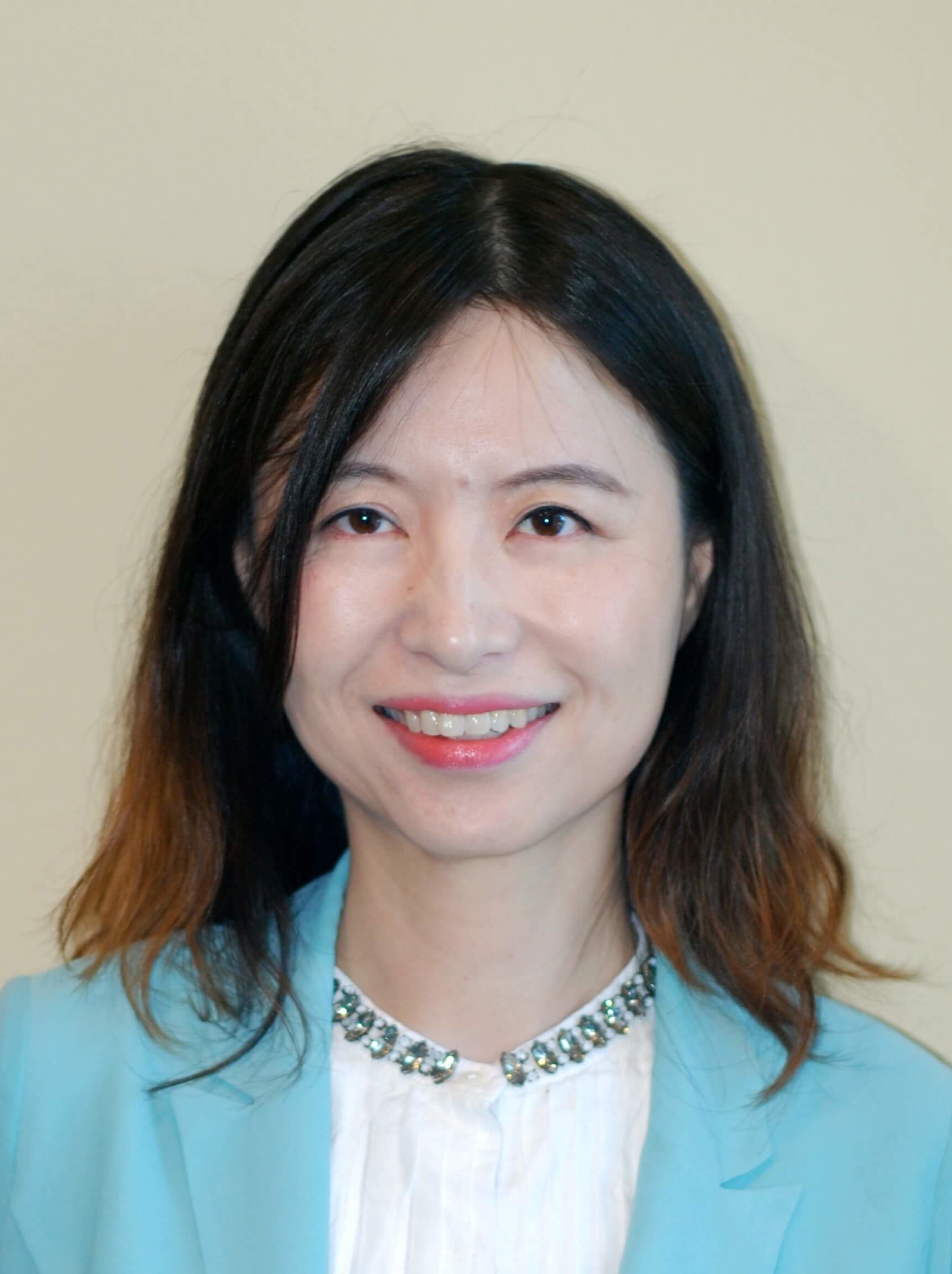
Philip F. Postlewaite serves as the Harry R. Horrow Professor in International Law and Director of the Tax Program at Northwestern University School of Law, where he is a leading authority in federal taxation with extensive expertise in individual, corporate, partnership, and international tax systems. His academic foundation includes: BBA from Texas Christian University J.D. from University of California, Berkeley LL.M. in Taxation from New York University Professor Postlewaite's research examines complex intersections of domestic and international tax frameworks, with particular focus on partnership structures and cross-border compliance. His scholarship directly informs his teaching of advanced courses including Partnership Tax (LLM), Advanced Partnership Taxation, and U.S. International Taxation, where he integrates practical applications with theoretical foundations of tax law. Analysis of his recent publications reveals sustained scholarly leadership in partnership taxation mechanics and international tax compliance, with recurring emphasis on problem-solving methodologies and evolving regulatory landscapes. His textbooks systematically address both foundational principles and advanced technical challenges in tax practice. Throughout his career, Professor Postlewaite has maintained active engagement with tax practice through his directorship of Northwestern's Tax Program and development of comprehensive educational materials used nationally in legal education.
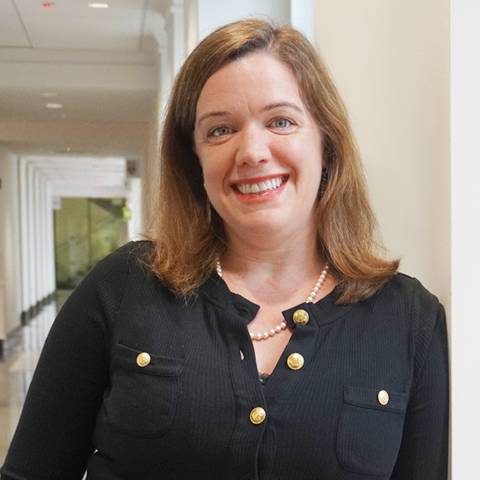
Professor Tomo Suzuki (Waseda University, Faculty of Commerce) holds a D.Phil. from Oxford University and has held academic positions at Oxford, London School of Economics, and Meiji University. His research spans Institutional Mechanism Design , Sustainability Management , and Mature Socio-Economy across Japan, India, and China. Former Oxford Professor with top academic awards (2008-2012) Advisor to Japanese Cabinet (2020-2023) and LDP Policy Committee Developed "One Additional Line" $2B/year system in India Lead author on 9 Scopus publications with 212 citations Research Focus : • Applied Institutional Design for mature economies • Distribution Statement (DS) for fair value allocation • Critique of shareholder-first capitalism Scientific Awards : Cosmo Awards for Research Excellence (1996, 2015) UK Research Assessment Exercise Top Score (2008) Oxford Executive MBA Outstanding Professor
Dr. Femke Roosma is an Associate Professor at the Tilburg School of Social and Behavioral Sciences , affiliated with the Department of Sociology . Her research focuses on public opinion, welfare state legitimacy, and political discourse dynamics. Current courses: Soc. Movements in Contemporary Societies, Social Problems, Hybrid Organizations. Email: F.Roosma@tilburguniversity.edu Research Interests : Welfare state attitudes and deservingness theory Universal Basic Income (UBI) policy debates Impact of radical right discourse on welfare chauvinism Democratic interventions for societal discontent Recent Publications analyze multidimensional UBI support, welfare chauvinism during crises, and Dutch Twitter discourse networks. Scientific Recognition : Fellow, Wetenschappelijk Bureau GroenLinks (2022–present) External Roles : Chairman, Stichting Straatalliantie (2023–) Professor by Special Appointment, Dr. J.M. Den Uyl Chair, University of Amsterdam (2023–) Member, Stichting De Waterheuvel (2022–) Former Boardmember, Stichting Pro Juventute (2016–2021) Former Member, Amsterdam City Council (2014–2022)
Peter J. Boettke is a Distinguished University Professor of Economics at George Mason University, holding the BB&T Professorship for the Study of Capitalism. He directs the F.A. Hayek Program at the Mercatus Center. His academic roles include editorships of the Review of Austrian Economics and Journal of Economic Behavior & Organization . Boettke earned his Ph.D., M.A., and B.A. in Economics from George Mason University and Grove City College. Research interests span Austrian economics, institutional economics, comparative political economy, and the history of economic thought. He emphasizes market process theory, emphasizing how institutions and entrepreneurship shape social outcomes. His work critiques socialist systems and advocates classical liberal principles, informed by Hayek’s insights on knowledge and spontaneous order. Awarded for teaching excellence and academic contributions, Boettke has supervised over 30 doctoral students. His publications include authored books like The Struggle for a Better World (2021), Money and the Rule of Law (2021), and edited volumes on Hayek, Buchanan, and Tocqueville. His recent articles address monetary policy, socialism, and pandemic governance. Boettke’s work bridges theory and policy, advocating for rule-of-law frameworks in economics and institutions that foster decentralized decision-making. His intellectual contributions span academic entrepreneurship, policy analysis, and interdisciplinary collaboration across economics, philosophy, and political science.
Professor Ruchi Choudhary is a Professor in Architectural Engineering at the University of Cambridge, Department of Engineering, within the School of Technology. She leads the Energy Efficient Cities initiative (EECi), a cross-disciplinary research project focused on strengthening the UK's capacity to address energy demand reduction and environmental impact in cities through research in building and transport technologies, district power systems, and urban planning. Her research interests span urban energy systems, building energy modeling, sustainable cities, geothermal energy systems, and data-driven energy modeling . She has pioneered work in digital twins for energy systems, urban subsurface thermal modeling, and building-integrated agriculture. Her research group develops numerical tools to improve energy efficiency of cities, with particular focus on modeling energy consumption of large building sets at multiple time and spatial resolutions. Analysis of her recent publications reveals a strong trend toward integrating machine learning with physics-based modeling for energy systems, with increasing emphasis on uncertainty quantification, digital twins, and value of information analysis for decision-making. Her work bridges the gap between theoretical modeling and practical urban implementation, with significant focus on city-scale geothermal potential, underground climate change impacts, and energy equity considerations. Professor Choudhary has supervised numerous PhD students who have gone on to prominent positions at institutions including UCL, University of Cambridge, BEIS, Arup, and various international universities. Her research group includes faculty members, research associates, graduate students, and international collaborators from institutions worldwide. Her current research focuses on two parallel investigations: one on using multi-scale multidisciplinary models to address energy use questions in the built environment, and second, on quantifying uncertainties in model outcomes. Current projects include integration of food production in urban environments, analysis of underground transport systems as energy sources, large-scale integration of ground source heat pumps, and distributed energy networks.
Huiyan Sang is a Professor and Director of the Undergraduate Program in the Department of Statistics at Texas A&M University (College of Arts & Sciences). She earned her Ph.D. in Statistics from Duke University and a B.Sc. in Mathematics and Applied Mathematics from Peking University. Her research focuses on spatial statistics, Bayesian nonparametric methods, machine learning, computational statistics, and applications in environmental sciences, geosciences, urban planning, and biomedical research. Her interdisciplinary work integrates statistical methodologies with real-world challenges, such as analyzing extreme environmental events, optimizing urban infrastructure, and modeling complex systems like human mobility during pandemics. She has contributed to advancing spatio-temporal modeling, Gaussian processes, and Bayesian hierarchical frameworks for large datasets. Recent publications highlight innovations in nonparametric regression, spatial functional data analysis, and stochastic frontier analysis, often leveraging computational efficiency and scalability. Her work addresses critical societal issues, including the impact of community design on public health and environmental monitoring through remote-sensing data. No scientific awards are explicitly listed in the provided texts. She advises no students or grants in the current dataset but collaborates widely on interdisciplinary projects. Her research lab focuses on developing cutting-edge statistical tools with applications in engineering, public health, and environmental science.
Colleen Carey is an Associate Professor at the Jeb E. Brooks School of Public Policy, Cornell University. Her research focuses on the industrial organization of healthcare systems, particularly federal regulation of health insurance markets like Medicare and Medicaid. She examines topics such as reinsurance mechanisms, risk adjustment policies, and the impact of physician-industry financial relationships on prescribing behaviors. Carey is a Faculty Research Fellow at the National Bureau of Economic Research and previously held roles including Robert Wood Johnson Scholar in Health Policy Research and Staff Economist at the Council of Economic Advisers. Education: Bachelor’s Degree: Yale University Ph.D. in Economics: Johns Hopkins University Research Interests: Federal health insurance market design (e.g., ACA marketplaces) Adverse selection mitigation strategies in subsidized insurance Pharmaceutical industry practices and physician prescribing Opioid abuse policy evaluation Social Security Disability Insurance health outcomes Recent Work Trends: Her 2020-2025 publications emphasize healthcare policy evaluation, including analyses of Medicare Advantage enrollment dynamics, racial disparities in disability programs, and the effects of prescription drug marketing on clinical decisions. She consistently bridges economic theory with applied policy analysis. Scientific Awards and Roles: Editorial Board Member, American Journal of Health Economics Robert Wood Johnson Health Policy Research Scholar (2018-2020) NBER Faculty Research Fellow (ongoing) Advising and Grants: Though no formal advisees are listed, her research often involves collaborations with institutions like the Council of Economic Advisers and NBER. She contributes to policy discussions through evidence-based insights. Labs and Teams: Collaborates extensively with NBER’s Health Economics Group and maintains affiliations with Princeton’s Center for Health and Wellbeing.
Philippe Aghion is a Professor at the College de France holding the chair in Economics of Institutions, Innovation and Growth, and a Professor at INSEAD. He also serves as a visiting professor at the London School of Economics. His academic work has established him as a leading figure in growth economics, particularly through his development of the Schumpeterian Growth paradigm. Professor Aghion's research focuses on the economics of growth, innovation, productivity, and income mobility. He has pioneered the Schumpeterian Growth theory with Peter Howitt, which examines economic growth through the lens of "creative destruction" - where innovation drives progress by replacing outdated technologies and business models. His work analyzes the design of growth policies, the role of competition and industrial policy, the relationship between innovation and inequality, and solutions to the "secular stagnation" observed in developed economies. A recurring theme in his research is understanding how institutions shape innovation and growth dynamics. The analysis of his recent publications reveals a strong focus on innovation economics, environmental sustainability, and the relationship between technological change and economic outcomes. His work spans theoretical developments in growth models and empirical investigations using firm-level data, particularly from France. Key trends include examining how market competition affects innovation, the dynamics of green technology adoption, the impact of globalization on firm behavior, and the relationship between automation and labor markets. His research consistently connects theoretical frameworks with empirical evidence to inform policy design. Professor Aghion has received numerous prestigious awards for his contributions to economics: 2001: Yrjo Jahnsson Award (best European economist under age 45) 2009: John Von Neumann Award March 2020: BBVA "Frontier of Knowledge Award" (shared with Peter Howitt) Fellow of the Econometric Society Fellow of the American Academy of Arts and Sciences As the holder of the Economics of Institutions, Innovation and Growth chair at the College de France (established in 2015), Professor Aghion leads a research team comprising more than twenty researchers. His chair focuses on cutting-edge research examining the economics of innovation, environmental sustainability, productivity dynamics, and household income mobility. His influential books, including "Endogenous Growth Theory" (1998), "The Economics of Growth" (2009), "Competition and Growth" (2006), and "The Power of Creative Destruction" (2021), have shaped the field of growth economics and provided frameworks for understanding modern economic challenges.
Prasad Krishnamurthy is a Professor of Law at Berkeley Law School, University of California, Berkeley. His work bridges legal institutions, financial regulation, and empirical economic analysis. Education: B.A./M.A. from University of Chicago (1999), J.D. from Yale Law School (2004), M.A./Ph.D. in economics from UC Berkeley (2011). Research focuses on empirical analysis of legal rules, financial regulation, antitrust policy, economic development, and distributive justice. His recent publications examine debt documentation reforms, student loan forgiveness, and merger deregulation impacts. His 2024 articles highlight empirical evaluations of state court reforms (California, Texas, Connecticut) and debates on public banking. Earlier work spans banking deregulation, affirmative action, and Indian public policy.
Nina Pavcnik is the Interim Dean of Arts and Sciences and the Niehaus Family Professor in International Studies at Dartmouth College, where she has served as a Professor of Economics since 2009. She holds a B.A. from Yale University and a Ph.D. in Economics from Princeton University. Her research focuses on the intersection of international trade, development, and industrial organization, examining how globalization impacts workers, households, and firms in developing economies. Education: B.A. in Economics, Yale University (1994); Ph.D. in Economics, Princeton University (1999). Her research interests include international trade policy, trade and development, child labor, and the structural transformation of economies. Pavcnik’s work analyzes the effects of trade liberalization on inequality, labor markets, and firm dynamics in low-income countries. She has contributed to understanding how globalization reshapes economic landscapes and influences poverty reduction strategies. Her awards include the Phi Beta Kappa Visiting Scholar (2022–2023), the Best Coeditor Prize from the Journal of International Economics (2018 and 2019), and the Dean of Faculty Award for Outstanding Mentoring and Advising at Dartmouth (2017). She has also held editorial roles at leading journals like the Journal of Economic Perspectives and the World Bank Economic Review. Pavcnik has advised numerous students and mentees, including undergraduates and junior researchers in economics. Her grants and fellowships include funding from the Social Sciences and Humanities Research Council, the Economic Research Institute for ASEAN and East Asia, and the World Bank. She actively contributes to policy discussions on trade, development, and globalization through her advisory roles at institutions like the IMF and the Inter-American Development Bank. Her research has been disseminated through prestigious journals and books, with a focus on topics such as informal employment, firm dynamics, and the distributional effects of trade policies. Pavcnik’s work emphasizes the need for evidence-based policies to address the challenges and opportunities posed by globalization.
Jan O. Jonsson is a Professor of Sociology at Nuffield College, University of Oxford. His primary research focuses on social stratification, including educational inequality, class structure, and social mobility. He also studies ethnic stratification, particularly through his role as Principal Investigator (PI) for Sweden in the comparative CILS4EU project on minority schoolchildren integration. Jonsson oversees the Swedish Level-of-Living Survey (LNU), shaping his interest in welfare distribution analysis. His work bridges macro-level social structures with micro-level individual experiences, emphasizing intergenerational processes and immigrant integration. Research interests prominently feature studies on educational attainment disparities, immigrant integration dynamics in Sweden and Europe, and the social consequences of economic hardship. His recent work explores occupational aspirations among immigrant youth, mental health advantages of immigrant backgrounds, and policy impacts on child poverty during economic crises. As PI for CILS4EU, Jonsson leads a multinational study investigating educational and social integration trajectories of second-generation immigrants across Europe. His contributions include analyzing Sweden’s ‘middle way’ between social mobility and inequality patterns, and evaluating educational expansion strategies’ equity impacts. He has authored numerous articles on poverty measurement, family influences on mobility, and the role of education in socioeconomic reproduction. Key projects include the Level-of-Living Survey (LNU), which tracks welfare metrics, and comparative studies on social mobility across nations. His work frequently engages with policy implications of structural inequities, offering evidence-based insights for educational and social policies.
Owen O'Donnell is a Full Professor of Applied Economics at the Erasmus School of Economics and Erasmus School of Health Policy & Management , Erasmus University Rotterdam. He is a Research Fellow at the Tinbergen Institute and an Editor of the Journal of Health Economics . Education: DPhil, University of York (UK) Research Interests: His work focuses on health economics, including health inequality, health insurance, financial protection, and labor economics, with applications in low-, middle-, and high-income countries. He employs cross-sectional analyses, equity-sensitive frameworks, and global health policy evaluation. Publications & Collaborations: He has published extensively in top journals like Lancet , PLOS Medicine , and Demography , addressing cardiovascular disease, hypertension screening, and healthcare access in India, Philippines, and Sub-Saharan Africa. His recent research emphasizes equity-sensitive welfare weights and treatment gain inequality. Professional Activities: He has served as an Editor for the Journal of Health Economics since 2007 and is actively involved in peer-review and editorial work until 2026.
Dr. Kaitlyn Zhou is an incoming Assistant Professor in the Department of Information Science at Cornell University's Bowers College of Computing and Information Science, commencing August 2026. Her research focuses on human-language model interaction dynamics, with recognition at premier NLP and HCI conferences. Education: PhD in Computer Science, Stanford University (Advised by Dan Jurafsky) B.Sc., B.Se., M.S. in Computer Science and Human Centered Design and Engineering, University of Washington Research Focus: Her work investigates how language models shape human decision-making through three pillars: (1) identifying model overconfidence risks, (2) developing context-aware evaluation frameworks, and (3) reimagining interactions for marginalized user groups. This spans NLP, HCI, and AI ethics with emphasis on trust calibration and inclusive design. Publication Trends: Recent work examines human reliance on unreliable language models (NAACL 2025 Best Paper Runner-Up), uncertainty expression failures (ACL 2024), and evaluation metric limitations. Collectively, these advance responsible AI through human-centered methodologies across 12 major publications from 2017-2025. Scientific Awards: NAACL Best Paper Runner-Up (2025) MIT EECS Rising Star (2024) Stanford Graduate Fellowship College of Engineering Dean's Medal School of Engineering Dean's Medal of Excellence (UW) Advising & Grants: Supported by Stanford Graduate Fellowship and research internships at Microsoft Research FATE (hosted by Olteanu/Blodgett) and Allen Institute for AI (hosted by Sap/Hwang/Ren). Will recruit NLP/HCI students at Cornell starting 2026. Appointed by Washington Governor to UW Board of Regents, advocating for educational equity. Research Ecosystem: Collaborates with Stanford's NLP group, Microsoft's FATE team, and Allen Institute researchers. Features in NYT/WSJ for methods impacting real-world AI deployment.