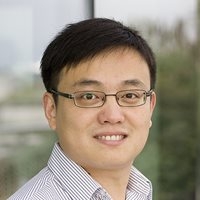
Prof. Sergio Ginebri is an Associate Professor at the Department of Jurisprudence, University of Rome Tre. He holds a PhD in Economics from Sapienza University of Rome and has extensive experience in fiscal policy, pension systems, and public finance research. His work focuses on topics like pension sustainability, social inequality, and the political economy of public debt. Education: PhD in Economics, Sapienza University of Rome (1988–1992) MA in Economics, University of Warwick (1987–1988) Laurea in Statistics and Demography, Sapienza University of Rome (1977–1984) Research Interests: Prof. Ginebri specializes in public policy, fiscal sustainability, and the social impacts of pension reforms. His research explores how demographic trends, wealth distribution, and political dynamics shape economic policies. Recent work includes analyses of longevity risks, pension equity, and fiscal policy integration in the EU. Key Projects: Coordinated studies on pension system sustainability (2002–2018) Developed models for forecasting public pension expenditure Contributed to EU tax policy observatories Awards: Recipient of the national PhD award (1994) and recognition for academic excellence in tax policy research (2001). Teaching: Teaches courses in political economy, public finance, and macroeconomics at undergraduate and graduate levels.
Professor Michael Ben-Gad is a Professor of Economics at City, University of London, where he has served since 2009. He previously held roles as Head of the Department of Economics (2010–2013) and Deputy Head (2008–2010). His research focuses on dynamic macroeconomics, taxation, public debt, immigration economics, and national security, with notable contributions to endogenous growth models and compositional data econometrics. He holds a PhD from the University of Chicago (1996) and has taught at institutions including the University of Houston and University of Haifa. Ben-Gad served on the U.S. National Academy of Sciences panel on immigration's economic and fiscal impacts (2014–2016) and received a 2017 Fellowship from the Royal Society of Arts (FRSA). His work spans academic journals (Economic Modelling, Journal of Economic Dynamics and Control) and media outlets (BBC, CNBC, Al Jazeera), addressing topics like Brexit economics, fiscal policy, and geopolitical challenges. He co-convenes the City Branch of Academics for Academic Freedom and is a founding member of London Universities' Council for Academic Freedom. His research grants include funding from HM Treasury/ESRC on fiscal policy and immigration (2011), the Israel Science Foundation (2007–2008), and the Samuel Ne'eman Foundation (2004). Professional roles include editorial board membership for Economic Affairs and membership of the ESRC Grant Assessment Panel (2021). He is proficient in Hebrew and contributes to policy debates on taxation, macroprudential frameworks, and defense economics.
Maja J Matarić is the Chan Soon-Shiong Chaired and Distinguished Professor of Computer Science at the University of Southern California's Viterbi School of Engineering, with courtesy appointments in Neuroscience and Pediatrics. She serves as founding director of the USC Robotics and Autonomous Systems Center, co-director of the USC Robotics Research Lab, and Principal Scientist at Google DeepMind. Previously, she held leadership roles as USC's interim Vice President of Research (2020-2021) and Vice Dean for Research (2006-2019). Her educational background includes: PhD in Computer Science and Artificial Intelligence from MIT (1994) MS in Computer Science from MIT (1990) BS in Computer Science from University of Kansas (1987) Matarić pioneers Socially Assistive Robotics (SAR) , a field her lab named, focusing on human-robot interaction that provides assistance through social rather than physical support. Her research targets critical health and wellness challenges including post-stroke rehabilitation, autism spectrum disorder therapy, cognitive exercises for Alzheimer's patients, ADHD academic support, and mental health interventions. She develops systems modeling user engagement, personality, and motivation, with extensive real-world deployments in schools, rehabilitation centers, and homes. Analysis of her recent publications reveals dominant themes in cognitive health robotics (2025 CHI paper on LLM-powered elder care), pediatric assistive technology (2025 IDC speech therapy review), and adaptive preference modeling (2025 HRI contrastive learning work). Her research consistently bridges machine learning with human-centered design for vulnerable populations. Major scientific recognition includes: ACM Athena Lecturer Award (2024) ACM Eugene L. Lawler Humanitarian Award (2024) ACM Fellow (2020) Presidential Mentoring Award (2011) Multiple society fellowships (AAAS, IEEE, AAAI) As a dedicated mentor, Matarić has championed underrepresented groups through CRA-W, placing numerous women in faculty positions. She leads USC Viterbi's K-12 STEM Outreach Program serving low-income Los Angeles schools and authored The Robotics Prime for student education. Her research has secured significant funding enabling real-world technology transfer, with documented impact in rehabilitation centers and homes through deployable SAR systems. Her Robotics Research Lab at USC drives innovation in embodied AI, with current projects spanning LLM-integrated elder care robots, ADHD academic companions, and autism therapy systems. The lab emphasizes co-design with end-users and rigorous real-world validation across diverse populations.
Zhi Da is the Howard J. and Geraldine F. Korth Chair in Finance and Professor of Finance at the University of Notre Dame , Mendoza College of Business, Department of Finance. He completed his Ph.D. in Finance at Northwestern University’s Kellogg School of Management (2006), preceded by an M.Sc. in Financial Engineering from the National University of Singapore (2001) and a B.B.A. with First-Class Honors (1999) from the same institution. Holding editorial roles at Journal of Finance , Management Science , Review of Financial Studies and several other top journals, he is a leading voice in empirical finance research. Education Ph.D. in Finance, 2006 – Kellogg School of Management, Northwestern University M.Sc. in Financial Engineering, 2001 – National University of Singapore B.B.A. (1st Class Honors), 1999 – National University of Singapore Research Interests Zhi Da’s scholarship sits at the intersection of asset pricing , behavioral finance , and market microstructure . He investigates how investor attention, institutional trading, liquidity frictions, and information flows jointly determine the cross-section of expected returns. His work delves into retail margin trading, the role of pension-fund flows in exchange-rate dynamics, the informational content of SEC filings, and the efficiency of short-selling mechanisms. By combining large-scale data analytics, textual analysis, and structural modeling, he uncovers novel predictors of returns ranging from presidential approval ratings to real-time attention measures. Recent projects explore fractional trading ’s impact on price efficiency, hedging demand as a driver of intraday momentum, and the hidden effort problem in delegated portfolio management. These themes collectively advance our understanding of limits to arbitrage and the formation of extrapolative beliefs. Publication Landscape Spanning 2025 back to 2009, his 15 most recent articles in Journal of Finance , Review of Financial Studies , Management Science , Journal of Financial Economics , and Journal of Financial and Quantitative Analysis converge on three broad motifs: (1) micro-level trading frictions—liquidity costs, margin requirements, and short-selling constraints; (2) macro-finance linkages—exchange rates, fiscal policy, and global capital flows; and (3) information economics—attention allocation, media analytics, and regulatory disclosures. The collective evidence demonstrates that seemingly small trading or informational frictions aggregate into large, persistent cross-sectional return predictability. Honors and Awards 2017 William F. Sharpe Award for Best Paper, Journal of Financial and Quantitative Analysis Lead-article distinctions in Journal of Finance , Review of Financial Studies , and Management Science Featured coverage in SmartMoney and CNBC Teaching & Mentorship At Notre Dame’s Mendoza College, Professor Da teaches Investments (undergraduate and MBA) and Fixed Income Securities , integrating cutting-edge research insights into the curriculum. While specific advisees are not listed, his extensive co-author network (22+ recurring collaborators) attests to a vibrant mentoring environment. Laboratory & Data Resources He publicly distributes the NAT (Net Arbitrage Trading) dataset, a stock-quarter panel of arbitrage positions used in Chen, Da & Huang (2019). This resource has become a standard tool for researchers studying arbitrage capital movements.
Dr. Daniel Dutton is an Associate Professor in the Department of Community Health and Epidemiology at Dalhousie University's Faculty of Medicine, based at the Dalhousie Medicine New Brunswick campus in Saint John. His research focuses on how social environments influence health outcomes and the role of government policies in mitigating these impacts, particularly in areas like poverty, homelessness, and health economics. He holds adjunct roles at the University of New Brunswick (Sociology) and is the Scientific Director of APPTA, a hub bridging aging research and policy. He teaches courses in epidemiology, population health, and statistics. Education: PhD in Community Health Sciences (University of Calgary) MA in Economics (University of Calgary) BA Honours in Economics (Queen’s University) Research Interests: Dr. Dutton examines population-level health determinants, government policy effectiveness, and socioeconomic disparities. His work employs large datasets and econometric models to analyze topics such as homelessness incidence, healthcare cost savings through preventive measures, and the distributional impacts of public spending. Key Contributions: Scientific Director of the APPTA aging and technology hub. Co-founder of the IMPART research collaborative. Author of influential studies on Housing First programs, opioid prescribing patterns, and the fiscal benefits of guaranteed annual income policies. Advising & Grants: Supervises multiple MSc students and has collaborated on grants analyzing healthcare utilization in New Brunswick and Alberta. His work often intersects with policy-making, emphasizing actionable insights from quantitative research. Labs & Teams: Leads the Dutton Research Group, which uses mascot Odin the Saint Bernard to foster team cohesion. Active in interdisciplinary collaborations across public health, sociology, and economics.
Dr. Jeremy Guest is the Levenick Professor in Civil and Environmental Engineering (and courtesy appointment in Chemical & Biomolecular Engineering) at the University of Illinois Urbana-Champaign (UIUC). He serves as Associate Director for Research at the Institute for Sustainability, Energy, and Environment (iSEE) and leads the Center for Advanced Bioenergy and Bioproducts Innovation (CABBI). His research focuses on advancing circular bioeconomies through sustainable sanitation systems, resource recovery from wastewater, and biofuel/bioproduct development from lignocellulosic biomass. Guest's work emphasizes Quantitative Sustainable Design (QSD) methodologies to bridge engineering innovation with policy and investment decisions. Education: PhD in Environmental Engineering (University of Michigan, 2012); MS (Virginia Tech, 2007); BS (Bucknell University, 2005). Research interests include wastewater treatment innovation, nutrient recovery, bioenergy systems design, and sustainable agriculture practices. Key contributions include the EcoRecover phosphorus recovery process, the QSDsan modeling platform, and leadership in CABBI's $262.5M DOE-funded initiative. Guest has secured funding from NSF, US EPA, USDA, and the Bill & Melinda Gates Foundation. Recognitions include the NSF CAREER Award, 2021 James J. Morgan Early Career Award, and the Paul L. Busch Award. He advises over 15 graduate students and leads multiple high-impact projects like the NEWgenerator sanitation system and oilcane biorefinery integration. Lab/Group: Guest Research Group focuses on experimental, computational, and policy-oriented research to solve global sustainability challenges. Current projects address algae-based wastewater treatment, fecal sludge management in low-income regions, and precision fermentation systems development.
Aaron Kappeler is a Lecturer in Anthropology of Development at the University of Edinburgh's School of Social and Political Science, Department of Social Anthropology. He teaches core courses in the MSc International Development program and MA Social Anthropology, including Anthropology and Environment and Social Development. Education: PhD, University of Toronto Graduate studies, University of Heidelberg and University of Leipzig Undergraduate, University of Arizona Research Focus: Kappeler specializes in Latin American political economy with emphasis on agricultural development , petro-populism , and rural livelihoods . His fifteen-year ethnographic fieldwork in Venezuela examines state enterprises, agrarian reform under Chávez, and the interplay of race, nature, and capital in socialist policy implementation. Current work analyzes oil rent redistribution mechanisms. Publication Trends: Recent scholarship (2021-2025) reveals consistent focus on Venezuelan political economy , bridging anthropology and political science . Key themes include petro-populism's impact on rural cooperatives (2024), racialized sovereignty production (2023), and neo-structural socialism in state enterprises (2025). His work critically engages with dependency theory while documenting grassroots responses to resource nationalism. Scientific Awards: None documented in source material. Academic Supervision: Kappeler annually supervises MSc dissertations in International Development and MA dissertations in Social Anthropology. He has served as Director of Admissions for graduate development programs and coordinates departmental open-day events.
Witold J. Henisz serves as Vice Dean and Faculty Director of the Impact, Value, and Sustainable Business Initiative at The Wharton School, University of Pennsylvania, holding the Deloitte & Touche Professorship in Management. His research centers on political and social risk identification, ESG impact materiality, and corporate diplomacy frameworks that transform stakeholder relationships into strategic assets. His educational background includes a Ph.D. in Business and Public Policy from UC Berkeley's Haas School and an M.A. in International Relations from Johns Hopkins SAIS. Henisz has served as Departmental Editor at Journal of International Business Studies and Associate Editor at Strategic Management Journal , reflecting his scholarly influence. Research interests converge on geopolitical risk quantification, stakeholder engagement optimization, and sustainable business model innovation. His work demonstrates how political hazards materially impact firm valuation and how corporate diplomacy can mitigate conflict through strategic stakeholder alignment. Recent publications leverage massive media datasets (4+ billion articles) to model populism dynamics, indigenous land conflicts, and ESG-credit risk linkages. Award highlights include the Aspen Institute Ideas Worth Teaching Award (2020), Iron Prof recognition (2019), and Academy of International Business Fellowship. His geostrategy framework Geostrategy by Design (2024) provides executives with actionable methods for navigating geopolitical volatility. Aspen Institute Ideas Worth Teaching Award (2020) Iron Prof recognition (2019) Academy of International Business Fellow (2014-present) Multiple Wharton Excellence in Teaching Awards (2006-2021) Industry Studies Association Best Paper Award (2019) Henisz consults through PRIMA LLC for multinational firms (Rio Tinto, Shell), financial institutions (Eaton Vance, World Bank), and NGOs. His executive education programs train leaders in ESG integration and geopolitical risk management, while his KEROVKA crisis simulation develops real-time strategic response capabilities. Media frequently cites his expertise on ESG controversies, with 50+ major publications featuring his analysis since 2022 including Financial Times , Bloomberg , and Wall Street Journal .
Carolin Pflueger is an Associate Professor at the Harris School of Public Policy , University of Chicago, and holds affiliations as a NBER Faculty Research Fellow and CEPR Research Affiliate . Her work bridges macroeconomics and finance, focusing on inflation dynamics, monetary policy impacts, and financial market risk perception. University: University of Chicago School: Harris School of Public Policy Affiliations: NBER, CEPR Role: Associate Professor Her research explores how inflation and monetary policy influence financial markets, including models connecting Treasury bond risk to stagflation drivers and analyzing economic agents' perceptions of policy uncertainty. Recent work leverages cross-sectional data of stock prices and economic forecasts to quantify macrofinancial linkages. Notable scientific recognitions include the Fama DFA Prize (2023), AQR Insight Award Finalist (2018), and the Arthur Warga Award (2014). She has received NSF Grant 2149193 for macrofinance research. Contact: cpflueger@uchicago.edu | GitHub Code Repositories
Dr. Femke Roosma is an Associate Professor at the Tilburg School of Social and Behavioral Sciences , affiliated with the Department of Sociology . Her research focuses on public opinion, welfare state legitimacy, and political discourse dynamics. Current courses: Soc. Movements in Contemporary Societies, Social Problems, Hybrid Organizations. Email: F.Roosma@tilburguniversity.edu Research Interests : Welfare state attitudes and deservingness theory Universal Basic Income (UBI) policy debates Impact of radical right discourse on welfare chauvinism Democratic interventions for societal discontent Recent Publications analyze multidimensional UBI support, welfare chauvinism during crises, and Dutch Twitter discourse networks. Scientific Recognition : Fellow, Wetenschappelijk Bureau GroenLinks (2022–present) External Roles : Chairman, Stichting Straatalliantie (2023–) Professor by Special Appointment, Dr. J.M. Den Uyl Chair, University of Amsterdam (2023–) Member, Stichting De Waterheuvel (2022–) Former Boardmember, Stichting Pro Juventute (2016–2021) Former Member, Amsterdam City Council (2014–2022)
Colleen Carey is an Associate Professor at the Jeb E. Brooks School of Public Policy, Cornell University. Her research focuses on the industrial organization of healthcare systems, particularly federal regulation of health insurance markets like Medicare and Medicaid. She examines topics such as reinsurance mechanisms, risk adjustment policies, and the impact of physician-industry financial relationships on prescribing behaviors. Carey is a Faculty Research Fellow at the National Bureau of Economic Research and previously held roles including Robert Wood Johnson Scholar in Health Policy Research and Staff Economist at the Council of Economic Advisers. Education: Bachelor’s Degree: Yale University Ph.D. in Economics: Johns Hopkins University Research Interests: Federal health insurance market design (e.g., ACA marketplaces) Adverse selection mitigation strategies in subsidized insurance Pharmaceutical industry practices and physician prescribing Opioid abuse policy evaluation Social Security Disability Insurance health outcomes Recent Work Trends: Her 2020-2025 publications emphasize healthcare policy evaluation, including analyses of Medicare Advantage enrollment dynamics, racial disparities in disability programs, and the effects of prescription drug marketing on clinical decisions. She consistently bridges economic theory with applied policy analysis. Scientific Awards and Roles: Editorial Board Member, American Journal of Health Economics Robert Wood Johnson Health Policy Research Scholar (2018-2020) NBER Faculty Research Fellow (ongoing) Advising and Grants: Though no formal advisees are listed, her research often involves collaborations with institutions like the Council of Economic Advisers and NBER. She contributes to policy discussions through evidence-based insights. Labs and Teams: Collaborates extensively with NBER’s Health Economics Group and maintains affiliations with Princeton’s Center for Health and Wellbeing.
Dong Lou is a Professor of Finance at the Hong Kong University of Science and Technology (HKUST), where he serves as Associate Dean of Business and Management (Strategic Planning and Research) and Acting Head and Chair Professor of the Department of Finance. He is also a CEPR Research Fellow at the London School of Economics (LSE). His research focuses on asset pricing, investment management, and behavioral finance, with a particular emphasis on market inefficiencies, trading dynamics, and macrofinancial linkages. PhD in Finance, Yale University, 2009 His scholarly work explores liquidity provision, arbitrage activity, investor behavior, and the impact of information dissemination on financial markets. Recent studies include the effects of dollar asset holdings on global yields, retail margin trading dynamics, and the relationship between communication rates and security prices. His publications appear in top journals like Management Science , Journal of Financial Economics , and Review of Financial Studies . His research has been recognized with numerous awards, including the Crowell Memorial Award, NASDAQ OMX Award, and multiple INQUIRE and CRSP Forum grants. He mentors PhD students in finance and co-directs the HKUST-DXM AI for Finance Joint Laboratory, advancing AI applications in financial research and practice.
Jakob Madsen is a Professor of Economics at the UWA Business School, The University of Western Australia, since January 2019. He previously held the Xiaokai Yang Distinguished Professorship at Monash University (2011–2019) and has held professorial roles at institutions including the University of Copenhagen and Brunel University. Madsen is a Fellow of the Australian Academy of Social Sciences and was an ARC Professorial Fellow (2011–2015). His research focuses on macroeconomics, economic growth, inequality, and applied econometrics, with over 140 publications in top journals. Education: PhD in Economics from the Australian National University (1992), Cand. Oecon (MEc) from Aarhus University (1983). Prior to academia, he worked in Denmark’s financial sector as Deputy Chief Economist at the Bank of Jutland. Research Interests: Madsen’s work examines long-run macroeconomic trends, including unified growth theory, inequality dynamics, the historical drivers of economic development, and the interplay between finance and growth. Recent projects explore aging societies, the impact of plagues on medieval markets, and the role of education in economic transitions. Grants & Awards: He has secured over AUD 2.3 million in ARC grants, including current projects on income inequality and capital shares. His awards include the Georgescu-Roegen Prize (2001) for work on the Great Depression and the Dean’s Award for Teaching Excellence (2009). Collaborations: Engages with global institutions like Aix-Marseille Université and the University of Bologna. Active in UN Sustainable Development Goals related to education and economic inequality.
Academic Profile: Damir Filipovic is a Full Professor and the Swissquote Chair in Quantitative Finance at the College of Management of Technology (CDM) of École Polytechnique Fédérale de Lausanne (EPFL), Switzerland. He previously held academic positions at the University of Vienna, University of Munich, and Princeton University, and served as Head of the Vienna Institute of Finance. Research Focus: Quantitative finance, risk management, stochastic processes, term structure modeling, volatility risk, and machine learning applications in financial markets. Industry Collaboration: Co-developed the Swiss Solvency Test for insurance capital requirements while consulting for the Swiss Federal Office of Private Insurance. Publications: Contributed extensively to journals like Journal of Financial Economics, Mathematical Finance, and Annals of Applied Probability, with a textbook on Term-Structure Models. Academic Service: Editorial board member of multiple journals and organizer of advanced workshops on systemic risk and financial technology. Recent Research: His work emphasizes machine learning for portfolio risk management, kernel-based yield curve estimation, and robust stochastic modeling. Keynote speaker at international conferences on finance and insurance mathematics, with over 15 recent publications in 2023-2025 addressing high-dimensional financial problems, neural control systems, and causal inference in market data. Education: Ph.D. in Mathematics from ETH Zurich (2000). Graduate of ETH Zurich and University of Vienna. Teaching & Mentorship: Supervises current and former EPFL Ph.D. students in quantitative finance, including Nicolas Camenzind, Joshua Hayes, Andrea Ruglioni, and ten others. Former students like Damien Ackerer and Lotfi Boudabsa now lead research in risk management. Labs & Programs: Directs EPFL's Finance and Technology Programme, leads the Computational Finance Group (CSF) at EPFL, and contributes to Swiss Finance Institute initiatives. Scientific Leadership: Served on EPFL Committee of Academic Evaluation and Doctoral Program Finance committee.
Patrick Baylis is an Assistant Professor of Environmental Economics at the Vancouver School of Economics, University of British Columbia. His research focuses on how people respond to environmental threats such as wildfires, air pollution, and extreme temperatures. He employs large datasets, natural language processing, and spatial information in his work, primarily using R/RStudio and Python for data analysis. Dr. Baylis earned his PhD from the University of California Berkeley in 2016 in Agricultural and Resource Economics. Prior to joining UBC, he was a postdoctoral fellow at the Stanford Center on Food Security and the Environment. He also worked as a research assistant at the Energy Institute at Haas and is a proud alumnus of Carleton College. His research interests span environmental economics with a particular focus on climate change impacts, energy economics, and behavioral responses to environmental threats. His work often examines the intersection of climate, health, and economic behavior, using innovative methods like social media data analysis to measure sentiment responses to temperature changes and other environmental factors. Analysis of his publication record reveals a strong focus on using big data approaches to understand human responses to environmental challenges. His work frequently appears in top journals including Nature Climate Change, PNAS, and the Journal of Public Economics. His research spans multiple subfields including wildfire economics, air quality valuation, climate migration, and the behavioral impacts of temperature extremes. Dr. Baylis has received significant media attention for his work, with coverage in major outlets including The New York Times, The Washington Post, The Guardian, and The Atlantic. His research on temperature and suicide rates, as well as climate perception, has been particularly influential in connecting environmental conditions with human behavior and mental health outcomes. He maintains an active research program examining critical environmental challenges, including wildfire risk, air pollution impacts, climate adaptation strategies, and the economic dimensions of climate change. His work combines rigorous economic analysis with innovative data collection and processing methods to provide new insights into how humans respond to environmental threats.