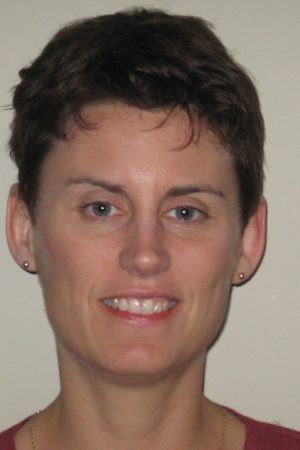
Tarja Tiainen is a University Lecturer at the Faculty of Information Technology and Communication Sciences, Department of Computing Sciences, Tampere University. Her research focuses on virtual environments, user-centered design, and gender dynamics in ICT. She holds expertise in healthcare design, product development, and innovation diffusion. Her work explores how virtual prototyping enhances collaborative design processes in industries like healthcare and manufacturing. Notable research includes studies on gender bias in academic recruitment and the perception of renewable energy infrastructure using VR. Tiainen has also contributed to methodologies for evaluating user experiences in virtual spaces, emphasizing ethical considerations and semantic clarity for diverse populations. Her publications span over two decades, addressing themes such as participatory design, ICT specialists' predispositions, and the interplay between technology and societal structures. She actively engages with interdisciplinary teams to bridge theoretical and applied research in computing sciences. Professional activities include organizing conferences like IRIS and FeBR, demonstrating her leadership in advancing information systems research. Her work consistently bridges technical innovation with human-centered values, particularly in contexts requiring equitable and inclusive design solutions.
Professor Matt-Mouley Bouamrane is a Professor of Health & Care Informatics & Implementation Science at the Division of Computing Science and Mathematics, University of Stirling. His expertise spans Electronics Engineering (B.Eng., Université de Paris XI), Computing Science (PhD & Pg. Dip, Trinity College Dublin), and Health Services Research (M.Sc., University of Glasgow). His research focuses on developing and implementing digital health solutions to address unmet care needs, particularly for patients with chronic diseases and high treatment burdens. Key domains include assistive technologies for ageing populations, smart home solutions for dementia care, and co-design of patient portals for renal care. He has led major initiatives such as the TITTAN Interreg programme (£134k) and the Data Driven Innovation Talent programme (£989k). Research interests emphasize systems engineering, socio-technical design, and implementation science. Notable projects include a patient portal for chronic kidney disease patients and remote postoperative monitoring systems. He has authored over 100 publications in top journals like Nature npj Digital Medicine and conferences like CHI and CIKM. Current roles include membership on the CSO Health Improvement, Protection and Services Research Committee. He actively seeks collaborations with universities, health boards, and industry, offering mentorship for post-doctoral fellowships and supervising PhD students in digital health, telecare, and data science. Grants: TITTAN (£134k), Data Driven Innovation (£989k), DALLAS (£563k) Labs/Teams: Leads interdisciplinary teams in digital health innovation Future Work: Scaling assistive technologies, optimizing ePrescribing systems, multimorbidity research
Cara Djonko-Moore is an Associate Professor and Chair of Educational Studies at Rhodes College, affiliated with the Africana Studies program. She holds a Ph.D. in Urban Education from Temple University (2011), an M.A. in Elementary Education from the University of Pennsylvania, and a B.A. in Psychology from Northwestern University. Her research focuses on culturally responsive teaching in early childhood education, teacher retention in diverse and high-poverty schools, and quantitative methods in educational research. Current projects include analyzing early childhood teachers' cultural orientations and beliefs, and examining her own teaching practices through self-study methodologies. She teaches courses such as Diversity Among Children and Families and Action Research in Early Childhood Education, emphasizing culturally responsive pedagogy and experiential learning. Her publications address critical race theory in education, STEM integration in early childhood, and the impact of school environments on teacher attrition. She actively contributes to educational equity initiatives, linking theory to practice through field-based research and teacher preparation programs.
Amvrossios C. Bagtzoglou is a Professor in the School of Civil and Environmental Engineering at the University of Connecticut. He holds a Ph.D. from the University of California, Irvine (1990). His research focuses on hydrologic modeling, water quality management, climate change impacts, and infrastructure resilience. Current projects include studying microplastics in wastewater systems, rural-urban vulnerability to extreme weather, and groundwater sustainability in data-scarce regions like Ethiopia’s Upper Blue Nile Basin. Education: Ph.D., University of California at Irvine, 1990 Affiliations: Department of Civil and Environmental Engineering, University of Connecticut Research Interests Prof. Bagtzoglou’s work spans environmental engineering and systems analysis. Key areas include: Hydrologic modeling for climate adaptation Water quality management in estuaries and rivers Citizen science for community-driven solutions Resilience of power and water infrastructure Machine learning applications in environmental systems Recent Research Trends Recent publications emphasize interdisciplinary approaches, combining field data with computational models. Notable themes include: Climate change impacts on water resources Equity in disaster resilience and resource management Innovative sensors for real-time environmental monitoring Grants & Collaborations His work is supported by grants focusing on sustainable development goals (SDGs), particularly in Ethiopia. Collaborations include partnerships with local communities and international agencies to implement participatory groundwater modeling. Labs & Teams Prof. Bagtzoglou leads research groups in water systems engineering and infrastructure resilience. His team develops novel methods for high-resolution monitoring of water quality and flow dynamics using advanced sensor technologies.
Dr. Reza Rafiee is a Lecturer (Education) in Data Analytics and Machine Learning at Queen's University Belfast's School of Electronics, Electrical Engineering and Computer Science, part of the Faculty of Engineering and Physical Sciences. He holds a PhD in Machine Learning from Newcastle University and is a Fellow of the Higher Education Academy. Education: PhD in Machine Learning, Newcastle University (2013) MSc in Artificial Intelligence and Robotics, Iran University of Science and Technology (2001) BEng (Hons.) in Computer Engineering, Iran Azad University (1998) Research Interests: AI in Education: Developing personalized learning tools, virtual reality for healthcare training, and data science pedagogy. AI in Health: Cancer genomics, tumor subgroup classification, and clinical diagnostic software (e.g., MIMIC and ICST). High-Throughput Genomic Analysis: RNA-Seq, DNA methylation, and bioinformatics pipeline development. Recent Article Trends: Focus on AI-driven solutions in medulloblastoma research (subgroup classification, relapse prediction) and educational innovations (VR-based learning, personalized pathways). His work bridges machine learning with clinical and educational applications. Scientific Awards: Fellow of the Higher Education Academy (2019) Queen's University Belfast Innovation in Teaching Fund (2025) STAR Recognition Award (2023) Teaching & Leadership: Leads the EEECS Academic Quality Assurance (2025) and advises the MSc AI program. Teaches courses like AI for Health and Principles of Machine Learning . Labs/Teams: Active in GitHub repositories including ICST (immune-based tumor classification) and MIMIC (DNA methylation diagnostics).
Michelle Jarvie-Eggart is an Assistant Professor in the Department of Engineering Fundamentals at Michigan Technological University, with affiliated appointments in Civil, Environmental, and Geospatial Engineering and Psychology and Human Factors. She holds a PhD, MS, and BS in Environmental Engineering and Environmental Policy from Michigan Technological University. PhD, Environmental Engineering, Michigan Technological University MS, Environmental Policy, Michigan Technological University BS, Environmental Engineering, Michigan Technological University Her research focuses on technology adoption in engineering education, online learning, service learning, and first-year engineering experiences. She applies a liberation pedagogy to create inclusive learning environments and empower students and faculty. Her work spans sustainability, computational thinking, and educational equity, with a strong emphasis on improving programming self-efficacy, especially among underrepresented groups. Her recent publications and funded research projects center on the adoption of programming tools like MATLAB and Python, the impact of code critiquers (e.g., WebTA), and faculty development in technology integration. These works reflect a cohesive trend in improving engineering education through innovative pedagogical tools, immediate feedback systems, and inclusive curriculum design. She is a principal or co-principal investigator on multiple externally funded grants, including: National Science Foundation: “Partnering to Prepare STEM Master Teachers for Michigan’s Middle Schools” ($2.7M) National Science Foundation: “Scholarships for Success: Husky Pathways for Academic Wellness and Success” ($2.5M) Environmental Protection Agency: “Innovative Water Technologies for Lagoon Wastewater Systems” (~$1M) National Science Foundation: “Research Initiation: Factors Motivating Engineering Faculty to Adopt New Technologies” (~$200K) She mentors undergraduate researchers through programs like MiCUP and collaborates extensively with interdisciplinary teams. She is also involved in workshops and training initiatives to promote best practices in online STEM teaching and faculty-student interaction. Dr. Jarvie-Eggart leads or contributes to research in labs and collaborative groups focused on engineering education innovation, including work with the WebTA code critiquer and studies on faculty technology adoption. Her team includes researchers from computer science, cognitive and learning sciences, and civil/environmental engineering, reflecting a highly interdisciplinary approach.
Lorenzo Porcaro is a Marie Skłodowska-Curie Postdoctoral Fellow at the Department of Computer, Control, and Management Engineering (DIAG) at Sapienza University of Rome, where he leads the project Algorithmic Auditing for Music Discoverability (AA4MD) in collaboration with Professor Tiziana Catarci of the HCI group and Professor Fabrizio Silvestri of the RSTLess research group. He completed his PhD cum laude at Universitat Pompeu Fabra (UPF) in Barcelona, with research conducted at the Music Technology Group, Department of Information and Communication Technologies. Prior to his postdoctoral role, he served as a Scientific Project Officer at the European Commission’s Joint Research Centre (JRC), contributing to the Human Behaviour and Machine Intelligence (HUMAINT) team and the European Centre for Algorithmic Transparency (ECAT). Education: Bachelor's in Applied Mathematics, Sapienza University of Rome (2014) Master's in Sound and Music Computing, Universitat Pompeu Fabra (2015) Master's in Intelligent Interactive Systems, Universitat Pompeu Fabra (2018) PhD in Information and Communication Technologies, Universitat Pompeu Fabra (2022, cum laude) His research focuses on recommender systems, algorithmic auditing, music information retrieval, and AI ethics. He investigates how algorithmic systems impact user behavior, diversity, and fairness in music discovery, with a strong emphasis on transparency and user empowerment. His work integrates technical AI methods with human-centered evaluation and societal impact analysis, particularly in the context of digital platform regulation such as the Digital Services Act (DSA). He has contributed to EU-funded projects like TROMPA and MusicalAI, and his publications appear in top venues including ACM Transactions on Recommender Systems, IEEE Transactions on Affective Computing, and RecSys. His recent publications highlight a consistent focus on diversity, fairness, and auditing in music and information systems. Themes include longitudinal studies on music recommendation diversity, user-centric algorithmic auditing frameworks, open datasets for emotion recognition, and critical analyses of diversity in AI research communities. His work bridges technical innovation with ethical and societal considerations. Scientific Awards and Recognition: Marie Skłodowska-Curie Postdoctoral Fellowship PhD awarded cum laude (with full marks) 2024 Featured Article by the Editor-in-Chief of ACM Transactions on Recommender Systems Lorenzo actively mentors prospective PhD students and is involved in research leadership through organizing workshops such as MuRS (Music Recommender Systems) and HCMIR. He has no formal advisees listed yet but welcomes PhD applicants interested in music recommender systems and algorithmic auditing. His research is supported by significant grants, including the Marie Curie fellowship and prior EU and national funding. He is a member of the RSTLess research group and collaborates with leading experts in HCI and AI. Labs and Research Groups: Principal Investigator of AA4MD project, Sapienza University of Rome Member of the RSTLess research group (led by Prof. Fabrizio Silvestri) Former member of the HUMAINT team at the European Commission’s JRC Collaborator with the Music Technology Group (MTG) at UPF Collaborator with the HCI group at DIAG, Sapienza
Jarutas Andritsch is a Lecturer in Computing at Solent University, affiliated with the Science and Engineering Research Group and Solent Computing and AI. She holds a PhD from the University of Southampton (2014). Her research focuses on leveraging AI and data science for healthcare enhancement, including projects like MSTAC (COVID-19 chest X-ray classification), an AI-driven chest X-ray screening initiative funded by the Global Challenges Research Fund, and tele-rehabilitation systems for osteoarthritis patients. She also explores data analytics in healthcare and education, such as flooding incident monitoring via Twitter data and inclusive programming pedagogy. Education initiatives include enhancing student performance through collaborative learning approaches, inquiry-based methods for non-STEM students, and content co-creation for novice programmers. She serves on a consultancy committee for the Royal College of Radiologists in Thailand, advising on AI procedures. Her work spans AI applications in cybersecurity (e.g., phishing detection via digital twins), healthcare analytics (cardiovascular ICU prediction), and fitness technology (personalized feedback via computer vision). Notable contributions include peer-reviewed publications on AI-driven healthcare solutions and education strategies, reflecting her dual focus on technological innovation and inclusive pedagogical practices. She actively collaborates on interdisciplinary projects, blending machine learning, computer vision, and educational theory to address real-world challenges.
Prof. Fares Kayali is affiliated with TU Wien's Department of Human Computer Interaction. His research focuses on designing interactive technologies for health, education, and live performance contexts. He has been involved in projects like Breaking The Wall (audience participation in music) and PlayBionic (rehabilitation games for prosthetic users). His work addresses long-term engagement in healthcare interventions, accessible mobility solutions for dementia patients, and game-based learning in STEM education. Key areas include game mechanics for physical activity encouragement, technology-mediated audience participation in live music, and digital tools for inclusive education. He has supervised multiple theses on topics like dementia-awareness games and wayfinding systems for elderly care. Publications span conferences such as CHI and IEEE, focusing on human-centered design principles in health tech, music interaction, and assistive technologies.
Janko Žufić, M.Sc.ing, is a Senior Lecturer at the Faculty of Educational Sciences, University of Pula, Croatia. He holds degrees in Electrical Engineering with a major in Automation from the Faculty of Electrical Engineering and Computing (FER) in Zagreb (1993) and pedagogical competences acquired in 2001. A certified computer science professor since 2002, he has dedicated his career to bridging technology and education, with particular emphasis on e-learning systems and computer science education. Employment History: Private sector work (1993-1999), teaching roles in primary/secondary schools (1998-2002), head of IT support at Faculty of Educational Sciences (2002-present), Senior Lecturer since 2007, and part-time teacher at Algebra Group. Research Focus: E-learning optimization, microlearning, educational technology design, programming pedagogy for elementary grades, and human factors in computing. His scholarly work spans 20+ publications, with recent studies exploring ChatGPT's educational implications (2025), video-based microlearning (2024), and gamification in computer science education (2022). He has also contributed to understanding the role of color and typography in digital learning environments (2009-2019). Žufić's practical expertise includes developing Web 2.0 tools for educators (2017), creating three books, and mentoring students in producing approximately 50 films. As an active project manager, he has coordinated two EU-funded initiatives and over 80 smaller projects focused on social and technical sciences, supported by organizations ranging from Zagreb Bank to Croatian employment agencies and Istrian municipalities. His academic rank was last renewed on January 24, 2018, within the field of Information and Communication Sciences, specializing in Information Systems.
Anders Dechsling is a Professor at the Department of Education, ICT and Learning at Østfold University College (HIOF). He is affiliated with the Special Education academic environment within the Faculty of Teacher Education and Languages. His primary role includes teaching in the master's program in Special Education and involvement in courses related to the national professional development initiative Kompetanseløftet. He has led and contributed to multiple externally funded research projects, including studies on VR applications in education, autism interventions, and auditory processing disorders. His academic background includes a master’s degree in Learning in Complex Systems from OsloMet and a doctoral dissertation on autism and VR. Previously, he worked in schools and health services as an environmental therapist and family counselor. Dechsling serves on the Faculty Board of Teacher Education and Languages and leads the Østfold chapter of the Norwegian Association for Behavior Analysis. He has collaborated with institutions like Yale University, UCLA, and the Karolinska Institutet. His research focuses on special education practices, interdisciplinary approaches between social education and special education, and VR applications in aiding individuals with neurodevelopmental conditions. Notable projects include evaluating VR interventions for children with autism and studying the effectiveness of Småsteg on socio-emotional learning in kindergartens. Dechsling has authored or co-authored over 30 peer-reviewed articles and book chapters, with recent work emphasizing VR’s role in autism support, audio technology for sensory differences, and teacher perspectives on implementing VR in special education. He actively reviews for journals like Journal of Autism and Developmental Disorders and guest-edited a special issue for Research in Developmental Disabilities . His advising includes three PhD candidates focused on topics ranging from auditory processing disorders to AAC interventions. He has also led projects totaling over NOK 35 million in external funding, demonstrating a strong commitment to translating research into practical educational tools.
Dr. Maggie Ellis is a Senior Lecturer at the University of St Andrews' School of Psychology and Neuroscience, specializing in dementia communication and care. Her research focuses on the psychological and social impacts of dementia, particularly communication challenges faced by individuals with dementia and their caregivers. She supervises PhD student Effie Assan and has developed innovative approaches like Adaptive Interaction to enhance nonverbal communication in advanced dementia cases. Her work integrates mixed-methods research, technology development, and practical caregiver training. Notable projects include the CIRCA system (a multimedia conversation aid) and the LIM Games initiative for cognitive engagement. She actively consults on dementia care staff training and has contributed to over 30 peer-reviewed publications since 2002. Educational background and specific grants are not detailed in the provided text, but her extensive collaboration with interdisciplinary teams is evident through numerous co-authored works. Her research emphasizes real-world applications, such as using AI-driven video analysis to measure therapeutic engagement and designing accessible technologies for older adults.
Shaun Liverpool is a Researcher in evidence-based child and adolescent mental health, affiliated with the Allied Health, Social Work & Wellbeing Health Research Institute. His academic rank is Researcher, and he holds a PhD in Evidence-Based Child & Adolescent Mental Health from University College London (2020), alongside advanced degrees in Health Psychology (UCL, 2015), Psychology (University of the West Indies, 2014), and Computing & Information Systems (Goldsmiths, 2010). He leads research projects addressing global youth mental health, digital interventions, and shared decision-making in mental health services. Recent projects include scaling arts-based interventions (Arts4Us) and evaluating mental health apps for students. He is an Honorary Researcher at Anna Freud and holds roles in networks like the Children and Young People Research Network. His work contributes to UN Sustainable Development Goals, focusing on education and health equity. Dr. Liverpool has published extensively on topics like digital mental health tools, marginalized groups, and youth crime prevention. He received the Research Team Leadership Prize in 2023 and is active in professional organizations like the International Association of Youth Mental Health and the British Psychological Society. Education: PhD in Evidence-Based Child & Adolescent Mental Health, University College London (2020) MSc in Health Psychology, University College London (2015) BSc in Psychology (Hons), University of the West Indies at Cave Hill (2014) Associate Degree in Psychology, College of Science Technology and Applied Arts of Trinidad & Tobago (2011) Computing & Information Systems, Goldsmiths, University of London (2010) Research Focus: His work emphasizes three core areas: Development and evaluation of digital mental health interventions Shared decision-making in child and adolescent mental health services Global youth mental health, particularly among minority/marginalized groups He has pioneered studies on apps like Paradym and Orpheus, as well as scoping reviews on young carers and marginalized students’ mental health needs. Grants & Projects: Lead PI on the Feasibility of Orpheus app study (2022–2023) Co-Investigator in Arts4Us (2024–2027), scaling arts initiatives for youth mental health Principal Investigator for Learning Partner in Barnardo’s Mental Health ACT (2023–2024) His research has attracted £multi-million funding, focusing on community-based solutions and asset-based care models. Labs & Teams: Affiliated with the Children’s Rights and Wellbeing Research Network, Inclusion, Diversity, and Identity Research Network, and Sport, Physical Activity, Health & Wellbeing groups.
MICAEL DA SILVA E SOUSA is a Researcher affiliated with HEI-Lab (Digital Laboratories of Environments and Human Interactions), focusing on serious games, participatory design, and urban development. His work bridges analog game design with collaborative planning and educational innovation. Active in Serious Games , Participatory Design , and Game-Based Learning Contributions to urban planning , digital literacy , and inclusive education His recent publications explore the intersection of analog games with transformative learning, co-creation, and neurodiverse engagement. Key projects include methodologies for collaborative urban planning and accessibility innovations in board game design.
Michelle Stephan is an Associate Professor of Mathematics Education at the University of North Carolina at Charlotte with a joint appointment in the Department of Mathematics and Statistics (College of Liberal Arts & Sciences) and the Department of Middle/Secondary Mathematics (College of Education). She teaches middle and secondary mathematics methods courses and provides extensive professional development to teachers in Cabarrus and Kannapolis County. Her educational background includes: Ed.D. in Mathematics Education from Vanderbilt University (1998) M.S. in Mathematics from Mississippi State University (1994) B.Sc. in Mathematics from Vanderbilt University (1992) Dr. Stephan's research centers on design research methodology, instructional design, and supporting students with special needs in mathematics. She pioneers lesson imaging for inquiry STEM and advocates for community engagement through educational equity initiatives. Her work develops frameworks for 21st-century mathematics education that emphasize contextual problem-solving and critical consciousness. Analysis of her 15 most recent publications (2022-2024) reveals dominant themes in special needs mathematics education, STEM integration through systems thinking, and ethical reasoning development. Key trends include ratio/proportion instruction using ratio tables, co-teaching models for students with disabilities, and teacher strategies for contextualizing mathematical explanations. Her design research consistently focuses on creating equitable instructional sequences that bridge engineering practices with mathematical concepts while addressing social justice dimensions. Dr. Stephan has developed statewide teacher learning communities and co-designed instructional frameworks for high-quality mathematics instruction across North Carolina districts. Her professional development work emphasizes ethical data science implementation and critical consciousness development in K-12 settings, though specific grant details are not documented in the source material.