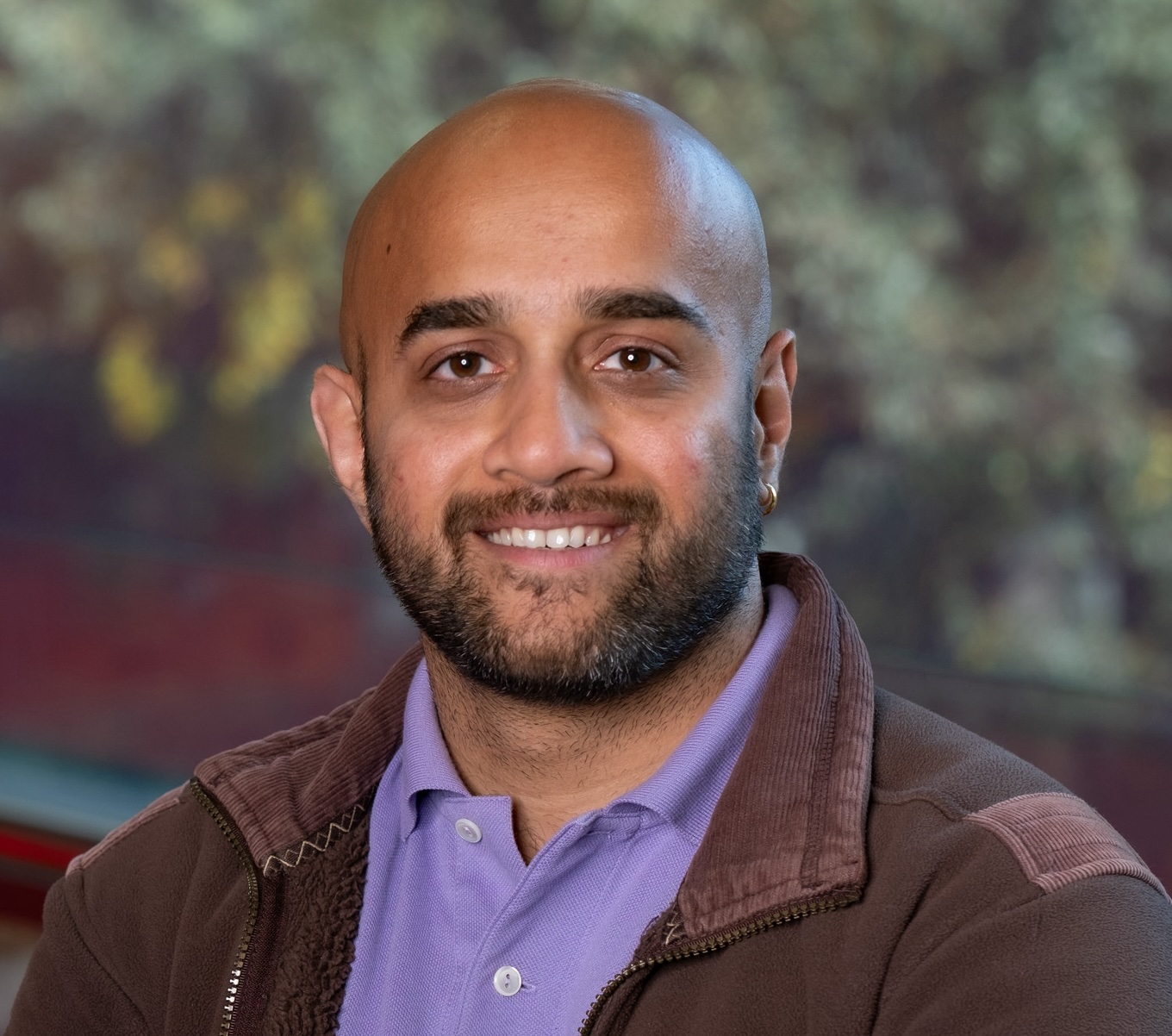
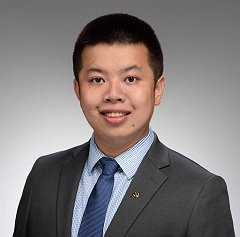
Yanzhi Wang is a Professor in the Department of Electrical and Computer Engineering at Northeastern University , affiliated with the Institute for Experiential AI and the Institute for the Wireless Internet of Things . He holds a PhD from the University of Southern California (2014). His research focuses on real-time AI systems, deep neural network compression, neuromorphic computing, and non-von Neumann architectures. Notable projects include NSF-funded initiatives on age-inclusive urban design, superconducting computing (DISCoVER), and edge device optimization (PatDNN). He has received prestigious awards such as the Army Research Office Young Investigator Award and the Constantinos Mavroidis Translational Research Award. His work emphasizes algorithm-hardware co-design for energy efficiency, with grants from NSF, ARO, and industry partners like Google. Recent research trends reflect his focus on accelerating vision transformers, diffusion models, and large language models for edge computing. He has pioneered methods like AutoViT and Fastcar, addressing latency and resource constraints in mobile platforms. Collaborations span academia and industry, driving innovations in superconducting circuits and neuromorphic systems.
Dr. Aditya Joshi is a Senior Lecturer in the School of Computer Science & Engineering at the University of New South Wales (UNSW). He specializes in Natural Language Processing (NLP), with a focus on sarcasm detection, dialectal NLP, and ethical AI applications in public health and cybersecurity. He joined UNSW in 2023 following industry roles at SEEK, Notiv, and Fractal Analytics, where he developed NLP systems for recommendation engines and meeting analytics. His research has garnered over 3,000 citations (h-index 26) and secured $3.1M in grants, including Defence Trailblazer and Google exploreCSR awards. Education: Joint PhD (2018) from IIT Bombay (India) and Monash University (Australia); MTech in CSE (2011) from IIT Bombay. Research Interests: Making NLP models robust for non-native English speakers and the LGBTI+ community, algorithmic enhancements to transformers, and applications in public health, cybersecurity, and societal issues. His work spans epidemic intelligence (collaborations with EPIWATCH and IFCYBER), cybersecurity tools like AuditNet, and inclusive AI initiatives such as queer-inclusive workshops funded by Google. He designed UNSW's new NLP course (COMP6713) and co-authored a Wiley textbook on NLP. Notable grants include the A$1.4M 'Comprehensive Defence Data Platform' (Lead CI) and A$92K Google exploreCSR grant for benchmarking dialectal sentiment. His awards include the Best PhD Thesis from IITB-Monash and Best Paper accolades at FAccT 2023 and MoMM 2020. He supervises projects on kernel-based attention reformulation, prompt-based sarcasm detection, and multilingual small-scale LLMs. His service roles include Executive Committee Member at ALTA and arXiv moderator for computational linguistics.
Professor Michael C.L. CHAU serves as Professor and Deputy Area Head of Innovation and Information Management at The University of Hong Kong's Faculty of Business and Economics. He also holds the position of Associate Director at the HKU HKJC Centre for Suicide Research and Prevention, and serves on the HKU Senate and Court. His academic journey includes a Ph.D. in Management Information Systems from the University of Arizona and a B.Sc. in Computer Science (Information Systems) from the University of Hong Kong. Dr. Chau's research spans business analytics, artificial intelligence, web mining, fintech, smart health, and security informatics. His work focuses on applying data/text/web mining techniques to business, education, and social domains. He leads the Artificial Intelligence Research Group at HKU Business School, which has secured significant funding from the Hong Kong Research Grants Council, Food and Health Bureau, and other agencies for projects including 'The Invisible Hand in Crowdfunding' and 'Factors Moderating the Predictive Power of Social Media Sentiment on Stock Returns'. His publication portfolio includes over 150 articles in premier journals like MIS Quarterly, JMIS, and IEEE Transactions, with recent work exploring large language models, hate speech detection, and disaster-related social media analysis. His research demonstrates strong interdisciplinary connections across computer science, information systems, and business applications. INFORMS ISS Design Science Award (2020) IEEE ITSS Leadership Award in Intelligence and Security Informatics (2020) AIS Sandra Slaughter Service Award (2016) HKU Outstanding Young Researcher Award (2014) Faculty Research Postgraduate Supervision Award (2020 & 2025) Cited over 9,400 times (h-index = 47) Dr. Chau actively mentors doctoral students and has supervised numerous PhD graduates who now hold academic positions at institutions including Fudan University, Xi'an Jiaotong-Liverpool University, and the University of Maryland. His research grants portfolio demonstrates sustained funding success across diverse areas including blockchain, mental health applications, and social media analytics. The Artificial Intelligence Research Group he leads maintains strong industry connections through projects with Hong Kong Red Cross and the Hospital Authority.
Margarita Boenig-Liptsin is a tenure-track Assistant Professor of Ethics, Technology and Society at ETH Zurich's Department of Humanities, Social and Political Sciences, a position she has held since September 2022. Trained in Science, Technology and Society with dual PhDs from Harvard University (History of Science) and Université Paris-Sorbonne (Philosophy), she brings interdisciplinary expertise to examining the relationship between technology, power, democracy, and ethics. Her research spans several interconnected areas focusing on transformations to human identity and citizenship in relation to information technologies across time and cultures. She investigates the social and political aspects of digital technologies, identity and selfhood in technological societies, ethics of technology, and comparative cultures of innovation. Her work uniquely bridges historical analysis with contemporary ethical concerns, examining how concepts like human dignity evolve alongside technological developments from punch cards to AI governance frameworks. Her recent publications (2023-2025) reveal a strong focus on AI ethics, data justice, and the philosophical implications of algorithmic systems. These works demonstrate her consistent interest in how technology shapes democratic processes, citizenship, and ethical frameworks. Her research shows progression from historical studies of computer literacy programs to contemporary analyses of generative AI's impact on knowledge production and everyday ethics. Her scientific recognition includes: NSF funding for her collaborative project on Silicon Valley's innovation imaginary Mozilla Foundation Responsible Computer Science Challenge grant (2018-2021) Academic Data Science Alliance support (2020-2022) Sorbonne Université's Paris IAS Chair on 'Major Changes' (2021-2022) At ETH Zurich, she leads research and teaching initiatives that build connections between engineering and social sciences. Previously at UC Berkeley, she directed the Human Contexts and Ethics Program, developing the Human Contexts and Ethics component for data science education. Her work consistently emphasizes translating social science theory for diverse audiences and connecting scholarly work to community needs in Zurich, Switzerland, and Europe. She teaches courses including 'Artificial Intelligence and Human Values' and 'Research in Ethics, Technology and Society' for the Fall 2025 semester.
Georgia Perakis is the John C Head III Interim Dean of MIT Sloan School of Management and a Professor of Operations Management and Operations Research & Statistics. She has been on MIT Sloan's faculty since 1998, contributing extensively to research in analytics/AI, optimization, and machine learning applications in pricing, supply chains, healthcare, and energy. Recognized as a leading academic, she has won numerous awards, including the INFORMS Fellow and Distinguished MSOM Fellow, along with multiple best paper awards. Perakis has supervised 30 PhD and 59 master's students, fostering lifelong academic relationships. Her administrative roles include co-director of the Operations Research Center and Associate Dean for Social and Ethical Responsibilities of Computing. She currently serves as Editor-in-Chief of M&SOM and has held editorial leadership roles in top journals like Operations Research and Management Science. Her education includes a BS in Mathematics from the University of Athens and advanced degrees in applied mathematics from Brown University. Research Interests : Perakis focuses on solving complex problems at the intersection of optimization and machine learning, with applications in retail promotions, healthcare operations (e.g., emergency department management), and energy systems. Her work emphasizes practical solutions to real-world challenges, leveraging data-driven analytics and prescriptive models. Recent projects include optimizing patient placement in emergency departments and modeling demand for new products in retail. Grants & Awards : Her accolades include the NSF CAREER Award, PECASE Award, and over a dozen best-paper recognitions. Notable contributions include a finalist position in the JD.com Competition (2019) and winning first place for Johnson & Johnson’s demand-prediction work (2018). She has also pioneered methodologies for equitable resource allocation in healthcare. Education & Leadership : Perakis holds leadership roles in interdisciplinary initiatives like the MIT Initiative on the Digital Economy and the Food Supply Chain Analytics and Sensing Initiative. Her teaching excellence is underscored by awards such as the Jamieson Prize and Teacher of the Year (MIT Sloan). She has directed major programs like the MIT Leaders for Global Operations and the Executive MBA program. Labs & Teams : She is affiliated with the Operations Research Center (an interdepartmental PhD program) and collaborates with institutions like UMass Memorial Hospital on healthcare optimization projects. Her work integrates ethics into AI development, emphasizing fairness, bias mitigation, and societal impact.
Toby Jia-Jun Li is an Assistant Professor in the Department of Computer Science and Engineering at the University of Notre Dame, where he leads the SaNDwich Lab. He also serves as the Director of the Human-Centered Responsible AI Lab in the Lucy Family Institute for Data & Society and is a Faculty Fellow at the Institute for Educational Initiatives (IEI). Previously, he was affiliated with Carnegie Mellon University's Human-Computer Interaction Institute (HCII) and GroupLens Research. Dr. Li's research spans the intersection of Human-Computer Interaction (HCI), End-User Software Engineering, Machine Learning (ML), and Natural Language Processing (NLP), with recent work focusing on addressing societal challenges in the future of work through human-AI collaborative approaches. His work has resulted in over 40 publications at premier venues including CHI, UIST, CSCW, ACL, and ICSE, with 8 papers winning Best Paper or Honorable Mention awards. His recent publications demonstrate a strong focus on human-AI collaboration across various domains, including code understanding, privacy, accessibility, and creative tools. The work shows a trajectory toward increasingly sophisticated integration of human-centered design with AI capabilities, particularly using large language models to enhance human productivity and address societal challenges. Google Research Scholar Award recipient Recipient of Yahoo! Fellowship ($100,000/year) Best Paper Award at UIST 2020 Best Paper Honorable Mention Award at CHI 2021 Best Paper Award at CSCW 2024 Best Paper Award at CHI 2025 Dr. Li actively mentors Ph.D. students and has established collaborations with Google, Microsoft Research, IBM Research, Adobe, Verizon, and J.P. Morgan. His research has been supported by NSF, Google Research Scholar Program, AnalytiXIN Initiative, Yahoo! InMind project, and J.P. Morgan. He is currently recruiting Ph.D. students and undergraduate researchers for his SaNDwich Lab, which focuses on developing interactive systems to empower individuals to create, configure, and extend AI-powered computing systems.
Prof. Anya Belz is Full Professor of Computer Science at Dublin City University's School of Computing and Science Lead at ADAPT Research Centre. A leading NLP researcher with PhD-level expertise, she specializes in natural language generation, evaluation methodologies, and multimodal systems. Recipient of multiple best paper awards and NAACL Test of Time Award nomination. Research innovations include foundational work on statistical language generation (deployed in weather forecasting systems), comparative evaluation frameworks, vision-language integration, and reproducibility quantification. Current EPSRC-funded ReproHum project coordinates 20 global labs studying evaluation consistency. Achievements : Developed industry-deployed generation systems for accessibility applications Pioneered cross-modal alignment techniques for image description Authored 100+ publications spanning generation, evaluation, and reproducibility
Vaishak Belle is a Reader in Logic and Learning at the School of Informatics, University of Edinburgh, and serves as Director of Research and Innovation at the Bayes Centre (40% position). His academic career focuses on the critical intersection of artificial intelligence, formal logic, and machine learning systems. His research spans multiple domains within AI: Neurosymbolic AI integration approaches Logic-based machine learning frameworks Ethics, fairness, and responsibility in AI systems Generative AI and its societal impact Robotics with advanced reasoning capabilities Causal modeling and probabilistic reasoning Belle leads a research laboratory dedicated to advancing neurosymbolic AI, which combines the explainability of symbolic systems with the learning capabilities of neural networks. His recent work has explored abduction in logical frameworks, formal languages for AI safety, and the relevance of logic for general-purpose AI systems. He has made significant contributions to bridging the gap between theoretical AI foundations and practical applications. His publications demonstrate consistent focus on creating AI systems that can reason formally while learning from data, with applications ranging from robotics to ethical decision-making frameworks. His research addresses fundamental challenges in developing trustworthy, explainable AI that can operate safely in complex environments. Beyond technical research, Belle is actively engaged in AI education through executive programs on AI leadership and ethics, and has contributed to public understanding through his children's book "The girl and the robot" which explores human-robot relationships and emotional projection onto artificial agents. He maintains an active presence in the international AI research community, regularly participating in major workshops including Dagstuhl seminars on neurosymbolic AI, and collaborating with researchers across disciplines from computer science to philosophy.
Marc-Antoine Dilhac serves as Associate Professor in the Department of Philosophy at the University of Montreal's Faculty of Arts and Sciences, where he also directs governance and international collaboration initiatives. He holds leadership roles as Scientific Director of Algora Lab and leads the Ethics and Politics research axis at the Centre de recherche en éthique (CRÉ). His academic affiliations extend to the Centre d'études et de recherches internationales (CÉRIUM) and the Canada Research Chair in Public Ethics and Political Theory (2014-2019). Education: PhD in Philosophy and Political Science, University of Paris I: Panthéon-Sorbonne (2009) Master 2 in Philosophy and Political Science, University of Paris I: Panthéon-Sorbonne (2003) Agrégation in Philosophy, University of Paris I: Panthéon-Sorbonne (2002) Dilhac's research spans ethics, political philosophy, and AI governance, with particular focus on democratic tolerance, multiculturalism, and the ethical implications of artificial intelligence. His work bridges theoretical political philosophy with practical applications in AI policy development, sustainable finance, and democratic institutions. He has contributed significantly to UNESCO's Recommendation on the Ethics of Artificial Intelligence and leads initiatives examining AI's impact on French-speaking culture and democratic values. His recent publications reveal a clear trajectory from foundational work on tolerance and justice theory toward contemporary AI ethics challenges. The thematic evolution shows increasing engagement with practical governance frameworks, particularly in finance and education sectors, while maintaining strong philosophical grounding in democratic theory and institutional design. Key Awards and Recognition: Canada Research Chair in Public Ethics and Political Theory (2014-2019) Banting Postdoctoral Fellowship (2011) Contributor to UNESCO's Recommendation on AI Ethics (2021) Dilhac has supervised over 15 graduate students across philosophy, political science, and interdisciplinary AI ethics programs. His research is supported by multiple grants from FRQSC, FRQNT, SSHRC, and MITACS, totaling over $2 million CAD. Current projects include the Generative AI Ethics Framework for Educational Technology (2024-2025) and the Sustainable Finance AI Tools project examining ESG/DEI disclosure analysis. He co-founded and leads the CORDÉ research group on corruption and democracy, and directs Algora Lab's work on AI governance. His upcoming February 2025 panel at Université Laval will address AI and Francophone cultural perspectives ahead of the Paris AI Action Summit.
Ryuko Kubota is a Professor in the Department of Language and Literacy Education at the University of British Columbia (UBC), Faculty of Education, since 2009. Her research spans critical applied linguistics , race and language education , and decolonial pedagogies . She has contributed extensively to understanding language ideologies , multicultural education , and critical literacies . Education: BA in English Linguistics, Rikkyo University (1980) MAT in TESOL, School for International Training (1987) PhD in Education, OISE/University of Toronto (1992) Her research interests focus on the intersection of race, language policies, and critical pedagogies. She examines neoliberal paradoxes in language learning, translingual practices , and antiracist engagement in global contexts. Her work addresses systemic inequities in English language education and immersion programs . Recent publications highlight critical approaches to World Englishes , AI-assisted writing , and raciolinguistic hegemony . These studies span interdisciplinary sub-fields including critical race theory , decolonial education , and language teacher identity . Scientific awards include the DSSA Award 2020 . She supervises graduate students like Charu Gupta (PhD) and collaborates with institutions such as the Language Sciences Institute at UBC. Her teaching includes courses on critical multicultural education and language politics .
Dr. Andrea R. English is a Senior Lecturer in Philosophy of Education at the Moray House School of Education and Sport, University of Edinburgh. She holds significant academic leadership roles, including President-Elect of the John Dewey Society and Editor-in-Chief of IMPACT: Philosophical Perspectives on Education Policy . Her research focuses on productive struggle in learning, dialogic pedagogy, and decolonizing education. She earned her doctorate from Humboldt University Berlin and has taught globally, including at Mount Saint Vincent University and Humboldt University Berlin. Dr. English leads the Productive Struggle Lab and the Listening Study Group, emphasizing anti-oppressive and democratic educational approaches. She coordinates teacher education initiatives and supervises PhD students exploring critical thinking, inclusive education, and decolonization. Her work bridges philosophy and practice, addressing how teachers foster student resilience through pedagogical listening, particularly in STEM education. She actively contributes to Scotland’s anti-racist curriculum project and collaborates internationally on transformative learning and ethical teaching practices. Dr. English’s teaching spans undergraduate and postgraduate programs, including courses on critical thinking, inclusive pedagogy, and John Dewey’s educational philosophy. Her funded research explores AI tools for identifying student struggle and the role of negativity in transformative learning. She frequently presents at global conferences, advocating for dialogic teaching and moral education reform.
Kin Wai Michael Siu is the Eric C. Yim Professor in Inclusive Design and Chair Professor of Public Design at The Hong Kong Polytechnic University (PolyU) . He founded the Public Design Lab and directs two joint research centers: the PolyU-HIT Inclusive Environment Center and the PolyU-WUT Ship/Marine Aesthetic Design Lab . His roles include PhD/postdoc supervision, coordination of design research methods, and extensive editorial/advisory board memberships. PhD, The Hong Kong Polytechnic University PhD, University of Bath MSc, City University of Hong Kong MA, The Hong Kong Polytechnic University MEd, The University of Hong Kong BA(Hons), Loughborough University of Technology A leading figure in inclusive design, Siu integrates Vygotsky's ZPD and Bruner's scaffolding theory into his 'Scaffolding Innovation' framework. His work balances creative design with technological application, focusing on inclusive public spaces (playgrounds, country parks, recycling facilities) and pandemic prevention strategies (e.g., COVID-19/NID mitigation through design ). Recent projects explore AI-enhanced recycling , bioinspired wearables , and cultural heritage semiotics . His publications span design education , participatory design , and cross-cultural heritage preservation , with a fingerprint highlighting 'Public Design', 'Inclusive Design', 'Visually Impaired', 'Cultural Semantics', and 'Spatial Practice'. Key collaborators include researchers from Hong Kong, China, and international institutions. Scientific Awards : 2024 G Cross Award for Excellent Guidance (Instructor) 2024 Hong Kong Contemporary Design Awards for Exceptional Advisor Multiple international design/invention awards (over 100 total) 2008 Romanian Ministry Invention Awards for Rapid Demountable Platform (RDP) Awarded over 50 patents, Siu has secured numerous external grants for public design innovations. His Public Design Lab collaborates with institutions like Tsinghua University, MIT, and Cambridge, while his editorial roles span design, engineering, and education journals.
Motahhare Eslami is an Assistant Professor at Carnegie Mellon University’s School of Computer Science, Human-Computer Interaction Institute. Her research bridges human-computer interaction, social computing, and AI ethics. Education : PhD in Computer Science from University of Illinois at Urbana-Champaign, advised by Karrie Karahalios Research Focus : Dr. Eslami investigates algorithmic opacity and user behavior in socio-technical systems, developing frameworks to enhance transparency and stakeholder participation in AI governance. Her work addresses: Algorithmic bias mitigation through participatory audits Ethical implications of generative AI and smart assistants Inclusion of marginalized communities in AI design Transparency mechanisms for opaque algorithms Civic technology and public sector AI Recent Article Trends : Her publications analyze algorithmic harms through lenses of: Medical imaging and data generation Labor market equity and low-wage employment Youth perspectives on AI ethics Content creator experiences with demonetization Explainability in black-box AI systems Scientific Recognition : Best Paper at AAAI HCOMP (2025) Google Academic Research Award (2024) Microsoft AI & Society Fellowship (2024) 100 Brilliant Women in AI Ethics (2023) Teaching Innovation Award at CMU (2023) Advising & Collaborations : Mentors PhD students Shixian Xie, Wesley Deng, Seyun Kim, and former post-doc Jaemarie Solyst. Collaborates with NSF AI Institute for Collaborative Assistance (2022–2027), Amazon, Google, and Microsoft on responsible AI initiatives.
Elaine M. Huang is an Associate Professor of Human-Computer Interaction at the Department of Informatics, University of Zurich, where she has served since 2010. She also leads the People and Computing Lab, focusing on the dynamic interplay between human practices and technological advancements. Her academic background includes: PhD in Computer Science, Georgia Institute of Technology (2006) Dr. Huang's research centers on human-computer interaction, examining the bidirectional relationship between technology and human practices. She is particularly known for her work on gender equality in technology, challenging assumptions about innate gender differences and investigating how AI systems may perpetuate biases. Her research also spans sustainable interaction design, mental health technologies, and chronic disease management, always emphasizing empirical data over intuition. Analysis of her recent publications (2023-2025) reveals a strong trajectory toward socially impactful HCI, with significant focus on health technologies (diabetes management, mental health), cultural sensitivity in design, and the ethical challenges of AI. Her methodology often involves field studies to understand real-world technology use, countering the industry's reliance on intuition. As head of the People and Computing Lab, Dr. Huang oversees a research group dedicated to designing and evaluating technologies that address complex human needs. The lab's work frequently involves co-design with diverse user communities to ensure relevance and inclusivity in technological solutions.
Jan Oliver Borchers is a full professor of computer science and head of the Media Computing Group at RWTH Aachen University, where he holds the endowed Chair in Media Informatics and Human-Computer Interaction (Computer Science 10). He established his research group in 2003 and pioneered modern HCI academic research and teaching in Germany, becoming a leading lab in terms of archival publications at CHI, the top international conference in HCI. Before joining RWTH, he held faculty positions at Stanford University and ETH Zurich. His research focuses on Human-Computer Interaction with particular interest in new user interfaces for soft robotics, textile user interfaces, 3D printing and personal fabrication, augmented reality, wearable and tangible computing, interfaces for software development, deceptive patterns, and interactive guides and exhibits. He opened Germany's first Fab Lab in 2009 and has been instrumental in advancing digital fabrication and maker culture in academia. His work bridges theoretical HCI research with practical applications, as evidenced by his consulting for major companies including AirBus, Apple, ARD, Bayer, Children's Museum Boston, Daimler, Handelsblatt, OTIS, Scout24, TEDx, and Deutsche Telekom. His recent publications show a strong focus on deceptive patterns in UI design, textile interfaces, and the intersection of AI with human interaction. The research demonstrates consistent innovation in tactile interaction techniques, with numerous honorable mentions at top conferences like CHI. His lab has produced significant contributions to eyes-free interaction, textile computing, and the ethical implications of dark patterns, particularly regarding children's experiences with deceptive designs. IDC 2025 Best Work in Progress for research on children's assessment of deceptive designs CHI'25 Student Games Competition Winner for The Deceptive Dungeon RWTH-Wissenschaftsnacht 2024 Best Science Slam for Usability: 4 Prinzipien guter User Interfaces Multiple CHI Honorable Mentions spanning from 2008-2021 Best Note and Best Demo awards at ITS and UIST conferences Borchers has served in numerous leadership roles including heading the Computer Science Department's Examination Board (2015-2025), coordinating the department's public relations since 2010, and organizing the weekly Faculty Lunch since 2003. He is an active member of the ACM, SIGCHI, SIGCHI Germany, and GI, and introduced the Interactivity format to the CHI conference in 2005. His PhD thesis, A Pattern Approach to Interaction Design, became the first book to bring design patterns to HCI. The Media Computing Group under his leadership has developed significant expertise in physical computing, textile interfaces, and fabrication technologies, with a strong emphasis on both theoretical contributions and practical applications. His lab continues to push boundaries in interactive technologies while maintaining a strong ethical stance on user experience, particularly regarding deceptive design patterns.