Prof. Dr. Ariane S. Willems holds the Chair of Empirical Educational Research (W3) at the Institute of Educational Science, University of Göttingen, since 2015. Her work bridges school research, instructional design, and teacher professionalization through innovative methodologies. Education: First State Examination in Mathematics and English (RWTH Aachen, 2007), PhD in Education (Technical University of Munich, 2011) Research Focus: She investigates student perceptions of teaching quality, flipped classroom implementations in teacher training, motivational student profiles, extracurricular programs' impact on competence development, and inclusion-related attitudes across educational contexts. Her work combines quantitative modeling with practical interventions. Project Leadership: Directs third-party funded initiatives like FlipViU (video-supported flipped classrooms) and FeeHe (heterogeneity-sensitive feedback systems). Holds a university teaching certificate from ProLehre, Technical University of Munich. Scientific Awards: Best Teaching Award (Technical University of Munich) Committee Roles: Active in University of Göttingen's Ethics Committee, Research Commission, and Examination Boards. Promotes equal opportunities and systemic accreditation of teacher training programs.
Philip Grabowski is an Assistant Professor of Sustainable Development at Taylor University, affiliated with the Department of Biology, Environmental Science & Sustainable Development . He holds a Ph.D. in Community Sustainability from Michigan State University. Education : Ph.D. (MSU), M.S. (MSU), B.S. (MSU) His research focuses on sustainable agricultural intensification , gender equity in farming systems, and systems thinking for environmental challenges. His work spans Eastern and Southern Africa, with a particular emphasis on conservation agriculture and participatory research . Recent publications highlight his contributions to gender-sensitive data tools , adoption models for sustainable practices , and ethical food choices . His grant work on equitable benefits from agricultural intensification and his teaching award (2022) underscore his dual focus on research and education. Scientific Awards : Dr. Joe Burnworth Teaching Award (2022), C.S. Mott Pre-doctoral Fellowship (2012) He integrates Christian faith into his teaching, emphasizing creation care and justice in sustainable development. His personal interests include organic gardening and composting to promote healthy food systems.
Professor Emma Stewart is a distinguished academic at Lincoln University's Department of Tourism, Sport & Society within the Faculty of Environment, Society & Design. She currently serves as Associate Dean (Research) and has over 20 years of experience researching the human dimensions of environmental change, with particular expertise in polar tourism and climate-sensitive nature-based settings. As a human geographer, she bridges social and natural sciences through interdisciplinary collaborations with sea-ice modellers, glaciologists, climate scientists, and biologists. PhD in Human Geography, University of Calgary, Canada Post-Graduate Certificate in Education Development, University of Glamorgan, UK Masters in Parks, Recreation and Tourism Management, Lincoln University, New Zealand BA(Hons), Leeds Metropolitan University, UK Professor Stewart's research focuses on the implications of bio-physical change for society, particularly in polar, coastal, and high mountain environments. Her work has been instrumental in understanding tourism adaptation to climate change, with over 50 peer-reviewed publications. She is a core member of the UN World Meteorological Organization's Polar Prediction Project and her research has been cited as evidence in multiple Intergovernmental Panel on Climate Change (IPCC) reports. Her research interests span environmental management, tourism impacts, human geography, and tourism forecasting, with special emphasis on climate action and life on land as aligned with UN Sustainable Development Goals. Analysis of Professor Stewart's recent publications reveals a strong trend toward interdisciplinary polar research that integrates social science perspectives with climate science. Her work increasingly focuses on the practical application of weather, water, ice, and climate information services in polar regions, climate change adaptation frameworks for tourism, and sustainable management of polar tourism. The publications demonstrate a clear evolution from foundational polar tourism research toward more applied studies addressing climate adaptation, decision-making processes, and sustainable tourism practices in sensitive environments. Research Associate at the Arctic Institute of North America (AINA) since 2009 Core member of UN WMO Polar Prediction Project's SERA task team Multiple publications cited as evidence in IPCC reports Invited advisor to New Zealand government on Antarctic tourism management Professor Stewart has supervised numerous postgraduate students across diverse research topics including climate change adaptation for tourism businesses, community resilience, outdoor recreation, and polar tourism. Her research is supported by international collaborations and has influenced policy development through her advisory roles with New Zealand's Ministry of Foreign Affairs and Trade's Antarctic and Southern Ocean Unit. She actively contributes to the International Polar Tourism Research Network as a steering committee member and serves on editorial boards for leading tourism journals including the Journal of Sustainable Tourism and The Polar Journal.
Elena Dimitrova is a Part-time Lecturer at the Department of Urban Planning within the Faculty of Architecture at the University of Architecture, Civil Engineering and Geodesy (UACEG) in Sofia, Bulgaria. She has been affiliated with the institution since 1983 and holds a Doctor of Architecture degree awarded in 1990 from the same university (then known as VIAS). Her research interests focus on spatial and socio-cultural aspects of sustainable development, interdisciplinary research on urban sustainability, socio-spatial and cultural identity of European cities, and contemporary challenges for cities in Southeastern Europe. Her work spans spatial policies for sustainable development, methods for assessing urban sustainability, energy transformation at regional and local levels, public participation in urban planning, urban and regional mobility, and cultural heritage management. Dimitrova has been involved in numerous research projects since 1997, including several Horizon 2020 projects such as URBINAT (2018-2024) and ECHOES (2016-2019), where she served as principal investigator for the UACEG team. Her scholarly output demonstrates consistent contributions to the field of urban planning, with recent publications examining gender-inclusive urban regeneration, post-war heritage, and sustainable mobility. Member of the Bulgarian National Committee of ICOMOS (2011-2022, as Vice President) Vice President of CIVVIH (International Scientific Committee of ICOMOS for historic cities and villages) since 2021 Member of the Committee for Selection of Europa Nostra Awards in Education category (2022) Chair of working groups related to sustainable development goals implementation Her international engagement includes extensive teaching collaborations across European universities through ERASMUS+, TEMPUS, and CEEPUS programs, reflecting her commitment to transnational academic exchange in urban planning education.
Dr. Sara Namvar is an Associate Professor in Biomedical Science at the University of Salford, School of Science, Engineering & Environment. She joined the University in 2018 after seven years of postdoctoral research at the University of Manchester and currently serves as Directorate Head of Student Experience while leading the Biomedical Science programme. Her dual expertise spans respiratory biology and biomedical education, making significant contributions to both scientific research and pedagogical innovation. Education: Postgraduate Certificate in Academic Practice (PGCAP), University of Salford (2019-2020) PhD in Neuroscience, University of Manchester (2007-2011) Bachelor's Degree in Neuroscience (2003-2006) Dr. Namvar's research program bridges fundamental science and educational practice. In respiratory biology, she investigates asthma mechanisms, particularly focusing on Aspergillus fumigatus and its role in airway inflammation and remodeling in fungal-sensitized individuals. Her educational research centers on graduate capital development, student employability, and innovative teaching methods that enhance engagement. She has pioneered authentic learning experiences including pathology specimen reception simulations and TED-style talks that develop professional skills. Her work with diverse student populations, many from underprivileged backgrounds, informs her inclusive educational approaches. Analysis of her publication trends reveals increasing integration between her scientific and educational research domains. Recent publications demonstrate how understanding disease mechanisms directly informs better training for future healthcare professionals, with growing emphasis on employability and authentic learning experiences alongside continued contributions to respiratory biology. Scientific Awards and Recognitions: IBMS Educational Institute of the Year (2024) Times Higher Most Innovative Teacher of the Year (Shortlist) (2021) Times Higher Most Innovative Teacher of the Year (Nomination) (2022) Renal Tract conference, best oral presentation (2018) Trevor Cook Award for best oral presentation (2017) University of Salford Merit Award (2022) Dr. Namvar has secured multiple research grants including the KidsCan Student Placement Grant (£2,000, 2019), 'Investigating the role of Endothelin-1 in A. fumigatus driven airway remodelling' (2019-2020), and 'Inorganic chaperons fused fungal derived chemotherapies for neuroblastoma' (PhD studentship, 2019-2022). She has organized significant events including the Human and Natural Sciences Careers festival (2021-2024), Future Health Conference (2020), and 'Current Challenges, Innovative Practice and Student Experience in Physiology Education' (2024). As Academic Editor for the Bioscientist magazine, she has co-created an initiative resulting in over 100 peer-reviewed articles by Salford students. Dr. Namvar serves in multiple leadership roles including Elected Member of University Senate (2021-2024, 2024-2027), Deputy Chair of the academic bureaucracy review (2024-2025), and membership on the Equity in Learner Outcomes Task and Finish Group (2023-2024). Her work on the 'Current Challenges' physiology education event and special issue on 'A Global Perspective on Current Research in Physiology Education' demonstrates her commitment to advancing teaching practices across the sector.
Katherine Dauge-Roth is an Associate Professor of Romance Languages and Literatures at Bowdoin College, specializing in the literature, history, and culture of the early modern Francophone world with a focus on the history of the body and material culture. She is a core faculty member in both the Romance Languages and Literatures department and the Francophone Studies program, teaching across the curriculum from language instruction to advanced seminars. Professor Dauge-Roth earned her PhD and MA in French Literature from the University of Michigan, a DEUG in Lettres Modernes from Université de Caen, and an AB in French and History from Colby College. Her educational background reflects her dual expertise in French language and historical studies. Her research examines how the body served as a privileged surface for displaying authority and identity during periods of increased global circulation in the early modern period. She has made significant contributions to understanding skin marking practices including tattooing, branding, stigmata, and other corporeal inscriptions, with particular attention to their intersections with writing and print culture. Her work spans Native American tattooing practices, criminal branding, devotional stigmata, and the representation of race in early modern France. Professor Dauge-Roth's scholarly impact is evident in her monograph Signing the Body: Marks on Skin in Early Modern France (Routledge, 2020) and the co-edited volume Stigma: Marking Skin in the Early Modern World (Penn State University Press, 2023), which brings together international scholars to examine body marking from a global perspective. Karofsky Teaching Prize (2005) National Endowment for the Humanities grant (summer 2023) Executive Director of the Society for Interdisciplinary French Seventeenth-Century Studies President of Bowdoin's Alpha of Maine chapter of Phi Beta Kappa Professor Dauge-Roth is deeply committed to inclusive pedagogy and developing students' linguistic and cultural fluency. She has co-authored several pedagogical articles on teaching the early modern period and contemporary France. Her teaching portfolio includes innovative courses such as 'Spoken Word and Written Text,' which examines oral and written sources from the Middle Ages through the abolition of enslavement in 1848, and 'Contemporary France through the Media,' where students analyze current French social and political issues. She is an active member of the Early Modern Race reading group and the Skin Studies reading group, contributing to scholarly conversations that bridge historical inquiry with contemporary concerns about race, embodiment, and cultural representation.
Shannon Johnson is an Associate Professor and Chair of the Social Work program at the University of Colorado Colorado Springs (UCCS) College of Public Service. She holds a Ph.D. in Social Work from the University of Texas at Austin and dual Master's degrees in Social Work and Public Policy from the University of Michigan (2008). Prior to academia, she worked as a substance use and mental health counselor. Her research focuses on trauma, bereavement, spirituality, and moral injury, emphasizing meaning-making processes in adversity. She develops spiritually-integrated and culturally responsive interventions for survivors of traumatic loss. Dr. Johnson teaches courses in social work practice, ethics, social welfare policies, research methods, and death and dying. Education: Ph.D. in Social Work, University of Texas at Austin (2016) M.S.W. & M.P.P., University of Michigan (2008) Her research interests include exploring how individuals navigate spiritual and existential challenges following trauma, particularly homicide survivors. She advocates for trauma-informed, anti-oppressive educational frameworks in social work curricula and emphasizes culturally sensitive therapeutic practices. Dr. Johnson's work bridges clinical practice, policy, and spirituality to address systemic inequities in mental health and bereavement care. Recent publications examine spiritually integrated psychotherapy outcomes, homicide survivor spiritual change, and trauma-informed pedagogy. She has contributed to studies on health risk behavior interventions and motivational interviewing techniques. While no specific grants or labs are mentioned, her role as Department Chair suggests institutional leadership in academic and programmatic initiatives.
Kristina Lemmer is a Professor in the Department of Mechanical and Aerospace Engineering at Western Michigan University (WMU). She leads the Aerospace Laboratory for Plasma Experiments (ALPE) and mentors the Western Aerospace Launch Initiative (WALI), a student-led small satellite project. Her work focuses on experimental plasmadynamics, advanced electric propulsion systems, and plasma diagnostics for space applications. Dr. Lemmer holds a Ph.D. in aerospace engineering from the University of Michigan, specializing in plasma dynamics and electric propulsion. She has secured over $4.5M in external funding from agencies like the Air Force Office of Scientific Research, NASA, and the National Science Foundation. Her research spans spacecraft propulsion optimization, plasma diagnostic tool development, and environmental plasma applications. Key achievements include the Young Investigator Program Award (AFOSR), 2021 WMU Emerging Scholar Award, and 2022 Outstanding Researcher Award. She serves on the board of the Electric Rocket Propulsion Society and chairs the AIAA Electric Propulsion Technical Committee. ALPE collaborates with WALI to develop CubeSats for on-orbit plasma diagnostics. The lab emphasizes diversity and inclusion, fostering an equitable environment for student researchers. Current projects include plasma decomposition studies, propellant dynamics, and CubeSat mission design.
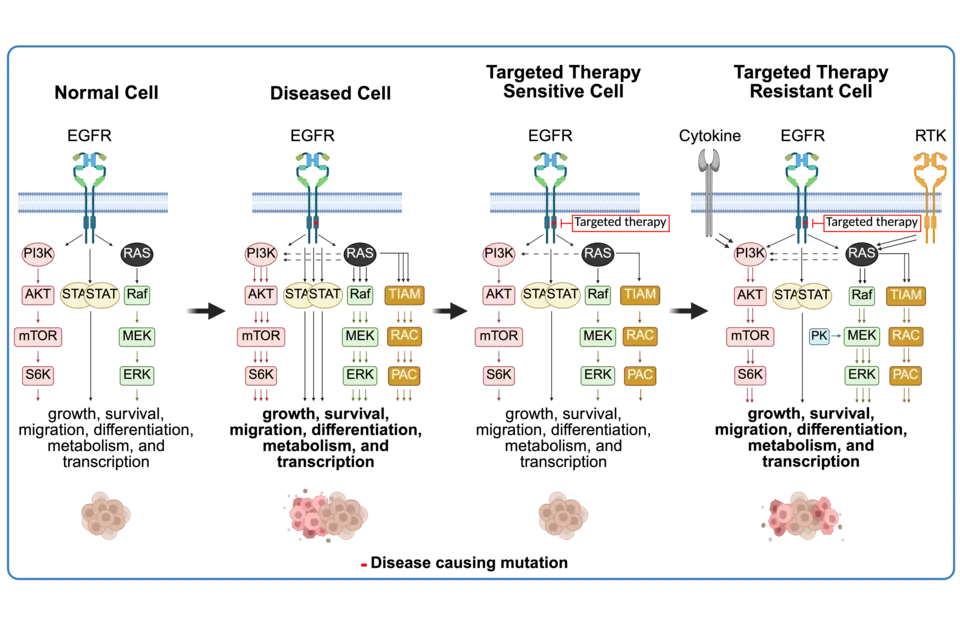
Tikvah Katheryn Hayes is an Assistant Professor in the Department of Molecular and Medical Pharmacology at the University of California Los Angeles (UCLA) School of Medicine. Her research focuses on oncogene dependency, signal transduction, and therapeutic strategies for cancers, particularly pancreatic and lung tumors. She leads the Hayes Lab, which investigates molecular mechanisms of cancer progression and drug resistance. 2024: Author Correction on EGFR extracellular domain mutants and TKI sensitivity 2023: Study on lung cancer evolution in Nature 2021: ERK-autophagy combination therapy for pancreatic cancer in Cell Reports 2020: Research on KRAS epigenetics and RAS protein interactions 2019: NRAS-mutant melanoma drug resistance landscape 2015: ERK inhibition effects on KRAS pancreatic cancer Her work spans DNA repair pathways, RAS biology, and genome instability, with collaborations across institutions like UCSD and USC. Key methodologies include functional genomics, protein interaction analysis, and preclinical cancer modeling.
Dr. Sam Steen is a Professor and Director of the Diversity Research and Action Consortium at George Mason University's College of Education and Human Development, Department of Counseling. He holds a PhD from George Mason University and has served as a school counselor for 10 years, shaping his research and teaching focused on school counseling, group work, and Black students' academic identity development. His current roles include directing the CFCE Division within CEHD and coordinating academic programs. Research Interests: Dr. Steen's work emphasizes culturally sustaining interventions like the ASE Group Model to improve student achievement, particularly for students of color, and explores counselor training efficacy. He leads an NSF-funded project advancing STEM accessibility for Black male middle school students. Key Awards: Al Dye Research Award, Professional Advancement Award (ASGW), CSJ Advocacy of the Year Award Grants: Principal Investigator for an NSF project targeting Algebra 1 readiness and STEM careers among Black males Labs/Teams: Directs the Diversity Research Action Consortium and oversees CFCE initiatives Teaching: Instructs courses including Group Processes, School Counseling Foundations, and Advanced Education Topics.
Clare Thomson is an Assistant Professor (Digital Pedagogies and Course Design) at the Learning and Teaching Academy, Heriot-Watt University. She supports staff across all five global campuses and has over 20 years of experience in higher education and 22 years in education technology. She is a Senior Fellow of Advance HE (SFHEA) and Senior Certified Member of the Association of Learning Technology (SCMALT), winning the 2022 Advance HE Collaborative Award for Teaching Excellence (CATE). Her research focuses on digital pedagogies, course design, and accessibility, with notable contributions to medical education and digital escape rooms in education. Education: Clare holds a degree in Pharmacology from the University of Edinburgh. Her professional journey includes roles at Queen's University Belfast and Ulster University, where she pioneered digital learning environments and accessibility strategies. Research Interests: Clare's work spans digital pedagogies, course design, open education, medical education technology, and accessibility. She founded the international Escape Rooms in Education Showcase , attracting over 300 global participants annually. Her research emphasizes humanizing learning design, ethical pedagogy, and inclusive practices. Key Awards: Advance HE Collaborative Award for Teaching Excellence (2022) AdvanceHE Aurora Leadership Programme (2019) Best Research Project with Students (2015) Distinguished Collaborative Education Excellence Fellowship (2021) Advising & Grants: While no formal advisees are listed, Clare has organized and contributed to numerous conferences and workshops (e.g., Escape Rooms in Education, Open Education Conference). Her work emphasizes collaborative projects and community-building initiatives. Labs/Teams: As founder of the Escape Rooms in Education Showcase , she leads a global community exploring creative, technology-driven teaching methods. She also advocates for digital accessibility and open educational resources through platforms like the National Teaching Repository.
Cristina Caperchione is Professor in the School of Sport, Exercise and Rehabilitation at University of Technology Sydney (UTS), and Head of Discipline for Health Services Management. She also serves as Health Promotion Discipline Lead. Research uses mixed methodologies to understand socio-cultural mechanisms in designing community health promotion interventions. Focuses on physical activity and lifestyle behaviors in populations at high risk of chronic disease including Indigenous communities, men, and cancer survivors. Current projects include TIDDA Talk for Aboriginal and Torres Strait Islander girls, HATTRICK program for men's health, and cancer workforce capacity building. Research spans exercise oncology, gender-responsive programming, cultural adaptation of interventions, and workplace wellness. Awards: Women's Healthcare Australasia Medal of Distinction (2021) Gold Award: HAT TRICK Playbook in Patient Education (2017) Certificate of Merit for outstanding workplace health initiative (2017, 2018) Leads multiple nationally-funded projects developing innovative health promotion frameworks. Teaches Health Promotion and Sport & Exercise Psychology courses.
Jenna Rickus is a Professor in Agricultural & Biological Engineering at Purdue University, with a joint appointment in Biomedical Engineering. She also serves as Vice Provost for Teaching and Learning. Her research focuses on biofunctional materials for cell sensing and actuation, including biosensors, implantable devices, and tissue engineering. Dr. Rickus holds B.S. degrees in Food Process Engineering and Biochemistry from Purdue, followed by a PhD in Neuroengineering from UCLA. She has pioneered innovations in biosensor materials, such as silica-based cell encapsulation and nano/micro biosensors for real-time cellular monitoring. Her research spans applications in diabetes treatment (e.g., islet cell encapsulation), space biology (e.g., SporeSat nanosatellite experiments), and neuroengineering. She emphasizes interdisciplinary education, training students in quantitative biology and systems thinking. Awards include the 2015 Favorite Faculty and Most Distinguished Research Faculty awards, and her lab has secured NSF grants and NASA collaborations. Her work bridges engineering and biology to address challenges in healthcare, sustainability, and environmental stewardship. Key achievements include developing lab-on-a-chip systems for space experiments, creating novel biosensor architectures, and advancing 3D tumor microenvironment models. She mentors graduate students like Marisol Herrera-Perez (2015 Teaching Assistant Award) and Jen Kahn (Wadsworth Mentoring Award recipient). Her lab is part of Purdue’s Bindley Bioscience Center and Birck Nanotechnology Center, fostering collaborative research environments.
Aurelie Delisle is a Senior Research Fellow at the Australian National Centre for Ocean Resources and Security (ANCORS) within the University of Wollongong's Faculty of Business and Law. She specializes in marine social science, focusing on small-scale fisheries management in the Pacific region, with an emphasis on gender equality, environmental sustainability, and food security. Her interdisciplinary work bridges natural and social sciences to support community-driven resource governance. Dr. Delisle leads Kiribati-focused initiatives under DFAT/ACIAR-funded programs, including the 'Coalitions for Change' project and the 'Extending Integrated Analysis' initiative. She coordinates ANCORS' graduate courses such as SEA 919 (Social Dimensions of Fisheries Management) and SEA 921 (Governance of Coastal Fisheries), and collaborates with regional partners like the Solomon Islands National University. Her research interests encompass co-management systems, participatory approaches, cultural ecosystem services, and the human dimensions of resource management. Recent work highlights include advancing gender equity in fisheries, analyzing coastal community fisheries diversity in Kiribati/Vanuatu, and promoting inclusive policy frameworks for persons with disabilities in Pacific fisheries. Delisle has secured over AUD 14 million in research funding through grants from ACIAR, DFAT, and European Commission programs. Her service roles include representing ANCORS on the Faculty's EDI and International Committees, and convening outreach initiatives to strengthen Pacific fisheries education and policy capacities.
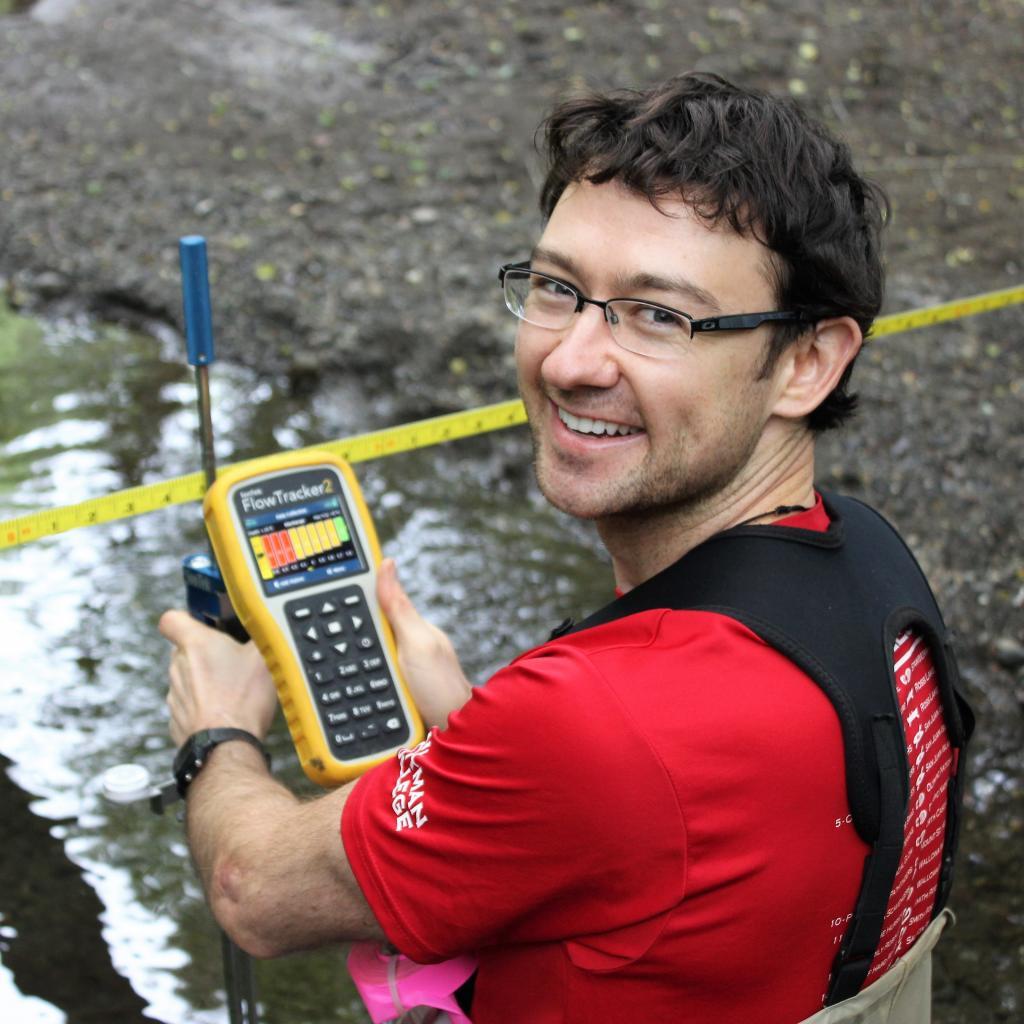
Dr. Theodore Grantham is an Associate Professor of Cooperative Extension and Equity Advisor at UC Berkeley's Department of Environmental Science, Policy, and Management. He holds a Ph.D. from UC Berkeley (2010) and a B.Sc. from Stanford University (2000). His research integrates freshwater ecology, hydrology, and climate risk assessment to advance sustainable water management. Education: Ph.D. Environmental Science, Policy, and Management, UC Berkeley, 2010 B.Sc. Biological Sciences, Stanford University, 2000 Research Focus: His work addresses environmental flow science, California water policy, spatial conservation planning, and climate adaptation. Recent studies examine streamflow sensitivity to climate change, functional flow modeling, and equity in water allocations. Publications: His 15 most recent articles (2023-2025) emphasize climate impacts on aquatic ecosystems, environmental flow optimization, and equitable water governance, utilizing field studies, geospatial analysis, and hydrological modeling. Awards: U.S. Geological Survey Mendenhall Postdoctoral Fellowship (2014-2015) U.S. Fulbright Scholarship (Spain, 2010) NSF Graduate Research Fellowship (2005-2008) Leadership: He directs the Grantham Lab and co-leads the Berkeley Freshwater Research Group, which promotes interdisciplinary collaboration and anti-racist practices in water science. The group's mission emphasizes equity, open science, and community-engaged research.