John Harry Evans is the III Katz Alumni Professor of Accounting at the Department of Accounting, Katz School of Business, University of Pittsburgh. His research focuses on economic perspectives of accounting phenomena, analytical models of incentives, experimental studies in managerial and tax reporting, and empirical investigations of healthcare incentives. He teaches courses in Financial Accounting, Financial Statement Analysis, Managerial Accounting, and Strategic Cost Management. Research spans incentive design, corporate governance, healthcare accounting, and empirical methodologies. Recent publications address CEO turnover, physician compensation, tax reporting ethics, and organizational incentive structures. Awarded multiple honors including the Outstanding Management Accounting Paper Award (2012), Provost Award for Excellence in Mentoring (2011), and multiple Best Paper Awards across journals. Active in professional service as a financial consultant to the Department of Defense and expert witness in legal cases. Designed financial analysis training programs for healthcare managers at University of Pittsburgh Physicians and Highmark Insurance Company.
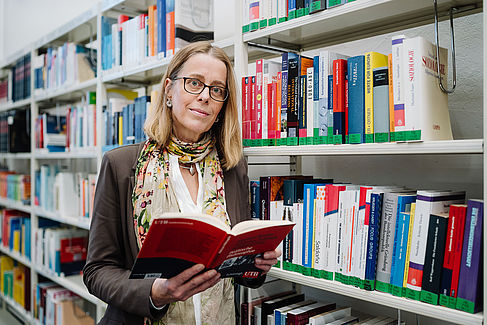
Prof. Dr. Jörg Budde is a faculty member at the University of Bonn , affiliated with the Department of Economics . His academic rank is Professor , and he is actively engaged in research related to managerial accounting, performance measurement, and incentive contracts. Institute: Institute for Applied Microeconomics Email: joerg.budde@uni-bonn.de Contact: +49 228 73-9247 Budde’s research focuses on incentive design and performance evaluation in agency models, particularly under conditions of limited liability and distorted metrics. His work explores topics such as bonus pools , rank-order tournaments , and contractual frameworks that balance risk and incentive alignment. His publications span journals like Journal of Economics , Management Accounting Research , and Journal of Mathematical Economics , with a thematic emphasis on agency theory , information systems , and organizational behavior .
Prof. Dr. Barbara Praetorius is a leading scholar in sustainability economics at HTW Berlin since 2017. She co-chaired Germany's Coal Commission ("Kommission Wachstum, Strukturwandel und Beschäftigung") and serves on advisory boards for Berliner Wasserbetriebe and VERBUND AG. Her work bridges climate policy, energy economics, and social equity, with a focus on Germany and the Global South. Research Themes: Climate economics, decarbonization pathways, renewable energy integration, and sustainable development in emerging economies. Policy Influence: Regular contributor to national climate policy debates, particularly on carbon pricing and coal phase-out strategies. Academic Roles: Professor at HTW Berlin's Department 3: Economics and Law since 2017, previously Deputy Director of Agora Energiewende (2014-2017). Recent Publications emphasize plug-in solar systems' socio-economic impacts, just coal transitions in Hesse, and ecological industrial policy frameworks. Her 2024 work on energy market transformation highlights the need for policy innovation and market redesign. Scientific Recognition : Ranked among Germany's most influential female economists by FAZ Active in EU energy policy advisory roles Recipient of BMBF research funding for international projects
Su-Hua Lee is a Professor of Law at National Taiwan University (NTU) and an affiliate professor in the School of Pharmacy. She has served as a full-time faculty member at NTU since 2016, following academic positions at National Tsing Hua University and National Taipei University. Her expertise spans intellectual property law with specialized focus on pharmaceutical and biotechnology applications, competition law, and civil law. Her educational background includes: Bachelor of Laws from National Taipei University Master of Laws (Magister iuris comparativi, M. iur. Comp.) from Rheinischen Friedrich-Wilhelms-Universität Bonn Doctor of Laws (PhD) from National Taiwan University in 2006 Professor Lee's research examines the complex interplay between intellectual property frameworks and specialized industries, particularly pharmaceuticals and biotechnology. She has conducted extensive comparative analysis of German and Taiwanese legal systems, informed by her time as a visiting researcher at the Max Planck Institute for Innovation and Competition in Munich (2005-2007). Her scholarship addresses critical issues including patent linkage systems, infringement damages calculation, trade secret protection, and the application of competition law to digital platforms. She frequently bridges theoretical legal concepts with practical policy implications, making her work highly relevant to legislative and regulatory development. Analysis of her recent publications (2022-2024) reveals three dominant trends: 1) Examination of IP challenges in digital environments (internet marketing, social media trademarks), 2) Pharmaceutical regulation issues (patent linkage, term extension, public health crises), and 3) Economic dimensions of IP enforcement (damages calculation, multi-sided platform economics). Her work consistently incorporates comparative perspectives, particularly from German legal frameworks, while addressing Taiwan-specific legal and policy contexts. Professor Lee leads a research team that has been instrumental in drafting Taiwan's drug approval-patent linkage legislation since 2015. She serves on governmental expert committees related to intellectual property and pharmaceutical affairs and participates in regional academic networks focused on Asian intellectual property law development. Her research has been supported by multiple grants from Taiwan's Ministry of Science and Technology, Ministry of Health and Welfare, Intellectual Property Court, and Fair Trade Commission. Her scholarly contributions span numerous law journals in Taiwan and internationally, with publications covering patent law, trademark enforcement, trade secrets, and the intersection of intellectual property with competition policy. She has also contributed chapters to several edited volumes on intellectual property systems in Asia and comparative approaches to patent enforcement.
Prof. Dr. Guido Voigt serves as a Professor at the Institute for Logistics and Supply Chain Management within the University of Hamburg Business School. His office is located at Moorweidenstraße 18, Room 2013, Hamburg, with contact details including phone +49 40 42838-1549 and email guido.voigt@uni-hamburg.de. Office hours are by appointment. His research centers on Supply Chain Management and Behavioral Operations, focusing on contract design under asymmetric information, inventory management, remanufacturing, and sustainability. Key themes include the impact of communication media on supply chain information sharing, carbon footprint reduction strategies, and behavioral modeling of consumer choices in service operations. His work bridges theoretical optimization with empirical assessments of decision-making. Recent publications (2024-2015) reveal a trajectory toward behavioral supply chain dynamics, examining online appointment systems, ratchet effects in contracting, and ambiguity aversion in remanufacturing. The body of work consistently addresses information asymmetry and risk management through experimental and modeling approaches. No scientific awards are documented in the source material. No information regarding student advising or research grants is provided in the available text. Prof. Voigt leads the Institute for Logistics and Supply Chain Management at the University of Hamburg Business School, collaborating with researchers including Alexander Daniels, Hannes Cordes, Victoria Riemer, and Ira Widderich. The institute maintains active research streams in logistics optimization and behavioral supply chain phenomena.
Dr. Michelle Gallant serves as Professor at the University of Manitoba's Faculty of Law (Robson Hall), where she has taught continuously since 1999 and attained full professorship in 2014. She concurrently holds an Adjunct Professor appointment in the university's Peace and Conflict Studies Program since 2005 and is an Associate member of St. Paul's College. Her significant administrative roles include Manitoba Law Reform Commissioner (2012-2018), Deputy Commissioner of the Residential Tenancies Commission (2008-2011), and former Associate Dean (Research and Graduate Studies) and Director of the Legal Research Institute (2004-2010). Her academic credentials feature a Doctor of Philosophy from King's College London (2000), preceded by a Master of Laws from the University of British Columbia (1996) and Bachelor of Laws from the University of New Brunswick (1990). Prior to doctoral studies, she practiced as Legal Counsel for the Federal Department of Justice in Halifax. Dr. Gallant's research centers on the governance of tainted finance, with primary expertise in Money Laundering, Terrorist Finance, and Taxation intersecting with Philanthropy and the Law. Her work critically examines civil forfeiture mechanisms, anti-money laundering regulations, and the tension between financial crime control and human rights protection. She employs empirical methodologies to evaluate regulatory effectiveness across Canadian and international contexts, with particular attention to banking sector vulnerabilities and cross-jurisdictional enforcement challenges. Analysis of her publication record reveals evolving scholarly focus from theoretical frameworks toward empirical studies of civil forfeiture and international regulatory cooperation. Recent work increasingly addresses the impact of financial secrecy jurisdictions on crime control efforts and explores innovative approaches to balancing security imperatives with fundamental rights protections in financial regulation. She maintains active scholarly engagement through presentations at premier international forums including the Cambridge International Symposium on Economic Crime and Global Conference on Transparency Research, where she contributes expertise on civil forfeiture patterns, terrorist finance regulation, and philanthropy law applications.
Dr. Rodney Coyte is a Senior Lecturer in Accounting at the University of Sydney Business School, where he serves as Program Director for the Master of Professional Accounting. Prior to his 2006 appointment at Sydney, he worked at the Australian School of Business, University of New South Wales. PhD in Accounting (UNSW) Master of Commerce (Honors) (UNSW) Bachelor of Commerce (Honors) (University of Melbourne) His research investigates how management accounting practices influence organizational outcomes, focusing on management control systems , incentive compensation design , and knowledge sharing . He employs field studies and behavioral experiments to analyze systems that align decision-making with strategic goals. Recent publications in Management Accounting Research and Accounting, Auditing and Accountability Journal highlight his work on emotional influences in capital investment decisions , consultant impact on project evaluations , and knowledge-sharing dynamics . His 2023 study on mood and project escalation exemplifies this focus. Research Support Grant, Chartered Accountants Australia and New Zealand (2009) Rodney contributes to program innovation through curriculum development integrating AI and technical business skills , while his industry experience includes roles at Mars Corporation and consulting for Australian/Southeast Asian organizations.
Lauri Sääksvuori is an Academy Research Fellow at the Finnish Institute for Health and Welfare (THL), within the Service System Research unit under Welfare State Research, and holds the position of Professor of Practice at the University of Turku. His work bridges health economics, behavioral economics, and experimental methodologies. Research Interests: His research focuses on understanding human decision-making in economic contexts, particularly in health and labor markets. He integrates experimental designs with biometric and neuroeconomic tools to explore preferences, fairness, competition, and property rights. His interests span health economics, behavioral and experimental economics, labor economics, and public policy evaluation. Publication Trends: His recent and forthcoming work demonstrates a strong trajectory in applying non-choice behavioral and biometric data to infer economic preferences, as well as analyzing long-term health outcomes of medical interventions. His publications appear in high-impact interdisciplinary journals, reflecting a blend of economics, psychology, and neuroscience. Scientific Awards: Academy Research Fellow (Academy of Finland) Advising and Grants: As an Academy Research Fellow, he leads independent research projects funded by the Academy of Finland. While specific advisees are not listed, his roles at THL and the University of Turku imply mentorship and collaboration with early-career researchers and students. Labs and Teams: He is embedded in the Service System Research unit at THL, contributing to research on welfare state structures, health and social economics, and policy-relevant empirical analysis.
Noah Gans is the Anheuser-Busch Professor of Management Science at the Wharton School of the University of Pennsylvania, where he serves as Professor in the Operations, Information and Decisions department. His research focuses on service operations with particular emphasis on call center management, stochastic processes, and queueing system control. Department Editor, Stochastic Models and Simulation at Management Science President of Manufacturing and Service Operations Management Society (MSOM) PhD Program Coordinator for the OID Department His academic work spans diverse domains including healthcare technology pricing, container inspection security, workforce optimization, and revenue management. He has pioneered adaptive clinical trial designs and developed novel models for customer demand sensitivity in overbooking scenarios. Key research areas include: Bayesian sequential learning for multi-arm clinical trials Value-based pricing under uncertainty Stochastic control in service systems Security policy analysis for global supply chains Risk-sharing mechanisms in healthcare Scientific honors include NSF CAREER Award (1998), INFORMS George E. Nicholson Prize (1995), and multiple teaching awards from the Wharton MBA program (2004, 2010-2011, 1997-2001). His publications bridge theoretical operations research with practical implementation across healthcare, transportation, and service industries.
Professor Basil Al-Najjar is a leading academic in finance at the Department of Finance and Economics, Manchester Metropolitan University (MMU). As departmental research lead, he specializes in corporate finance, corporate governance, and sustainable finance. His career includes roles as head of finance at Northumbria University and professorships at Huddersfield University, Birkbeck University, and Middlesex University. Al-Najjar is globally recognized, ranking in Stanford University’s top 2% of influential scientists and achieving notable academic awards including Emerald’s Best Paper Award (2012). His research focuses on capital structure, dividend policy, corporate governance, and environmental finance. Notable contributions include studies on board diversity’s impact on corporate performance and the role of ownership structures in financial decisions. Al-Najjar actively bridges research and teaching, developing programs like MSc Investment Management and modules in financial modeling and international finance at postgraduate levels. Key research themes include the intersection of governance mechanisms and sustainability practices, particularly in emerging economies like the UAE and GCC countries. His work frequently examines how executive compensation, board composition, and regulatory environments influence financial policies and environmental management. Al-Najjar also explores macroeconomic factors such as consumer confidence and policy stringency on financial sector behavior. Education & Career : Extensive academic career across UK institutions, with prior roles as Senior Lecturer (Middlesex University, 2008–2012) and Professorial positions since 2017. Awards : Multiple top-paper recognitions, including Emerald’s accolades and global research influence rankings. Teaching : Specializes in corporate finance, financial modeling, and international finance modules.
Martine Cools is an Associate Professor at KU Leuven's Faculty of Economics and Business (FEB), based in the Accounting Research Group with campuses in Antwerp and Leuven. Her research focuses on management accounting and control, with specialties in knowledge management, international transfer pricing, and creative collaboration governance. She actively participates in FEB's academic governance through roles in councils and doctoral committees. Her research projects include exploring adaptive performance through management control systems, co-creation in creative partnerships, and Industry 5.0 applications in agri-food supply chains. She has supervised multiple PhD candidates, such as Abts, Distelmans, and Voermans. Teaching focuses on strategic management control, research methods, and tax policy, including courses like Business Research Methods and Strategic Management Control. Recent work emphasizes governance in public-private partnerships, contract design in R&D collaborations, and the role of informal leadership in risk management. Her sabbatical (2023-2024) advanced research on strategic management accounting and international taxation.
David Sraer is the James J. and Marianne B. Lowrey Professor of Business & Professor of Economics at the University of California, Berkeley, with dual appointments in the Haas School of Business and the Department of Economics. He serves as the chair of the finance unit at Haas and has established himself as a leading scholar in financial economics, behavioral finance, and macro-finance. Professor Sraer received his B.S. in applied mathematics and economics from École Polytechnique in France in 2001 and his Ph.D. in economics from the Toulouse School of Economics in 2007. Before joining UC Berkeley, he was an assistant professor of economics at Princeton University, where he was awarded the Jacob Viner preceptorship. David Sraer's research spans several interconnected areas within finance and economics. His work in behavioral finance examines how psychological factors influence financial decision-making, while his research in corporate finance investigates capital structure, investment decisions, and corporate governance. He has made significant contributions to macro-finance , exploring the connections between financial markets and the broader economy, particularly in how monetary policy transmits through banking systems. His work on collateral constraints and resource misallocation has provided new methodologies for quantifying financial frictions in the economy. Professor Sraer's publication record demonstrates a consistent focus on empirical and quantitative approaches to understanding financial markets and institutions. His recent work shows increasing emphasis on micro-macro connections , using detailed firm-level data to understand aggregate economic phenomena. He has developed innovative methods for measuring misallocation and studying the effects of financial frictions on productivity and output. A significant portion of his research leverages natural experiments and quasi-experimental designs to establish causal relationships in financial economics. James J. and Marianne B. Lowrey Chair in Business Jacob Viner preceptorship from Princeton University Associate editor for the Journal of Finance Co-Editor of Management Science (2021-2022) Professor Sraer is actively involved in policy-relevant research, having served as a member of the Economic Council of the French Prime Minister (CAE) from 2021 to 2024. He maintains strong research affiliations as a research associate at the National Bureau of Economic Research (NBER) and a research affiliate at the Centre for Economic Policy Research (CEPR). His collaborative research network spans multiple institutions, with frequent co-authorship with scholars from various universities.
Gorkem Celik serves as Professor of Economics at ESSEC Business School since 2015, teaching PhD, advanced masters, and MBA programs. He concurrently holds a Research Fellow position at THEMA (CY Cergy Paris University and CNRS), focusing on economic theory with emphasis on institutional design under private information constraints. His academic credentials include: Ph.D. in Economics, Northwestern University (2002) B.A. in Economics with Highest Honors, Bilkent University (1997) Celik's research integrates Economics of Information, Microeconomic Theory, and Game Theory to analyze strategic behavior in mechanism design contexts. His work examines how institutions can achieve objectives when agents possess private information and conflicting interests, with applications spanning Industrial Organization, Positive Political Theory, and Law and Economics. He employs rigorous game-theoretic modeling to investigate information revelation dynamics and incentive structures. Publication trends reveal sustained contributions to mechanism design theory, with recent work addressing dispute resolution protocols (2025), organizational information aggregation (2023), and public goods provision (2021). His scholarship consistently bridges theoretical innovation with institutional applications, appearing in premier journals like Journal of Economic Theory and RAND Journal of Economics. Key recognitions include: Marie Curie Reintegration Grant (2011) SSHRC Standard Research Grant (2006) Robert Eisner Graduate Fellowship (2000) Top of Class at Bilkent University (1997) Celik advises doctoral candidates including FAZELI N. (2020 thesis on Industrial Organization) and serves on multiple thesis committees. His research program receives support from European Commission and Canadian funding bodies, while his academic service encompasses conference organization (e.g., Workshop on Voting Theory), journal reviewing for 20+ publications, and committee roles at LabEx MME-DII. He maintains active collaboration networks through visiting positions at Humboldt-Universität (2023-2024) and previous appointments at Tor Vergata University. As head of ESSEC's Economics track (2017-2021) and THEMA laboratory member since 2010, he contributes to research infrastructure development while leading projects on information economics and strategic manipulation in institutional settings.
Darragh Hare is a Research Fellow in the Department of Natural Resources at Cornell University, affiliated with the Center for Conservation Social Sciences. His interdisciplinary research combines conservation science with moral and political theory, examining wildlife governance, human-wildlife conflicts, and the evolution of environmental ethics. Current field projects include deer management studies in Scotland and the US, human-wildlife conflict resolution in Africa, and predator reintroduction debates. Hare's publications analyze conservation conflicts through social-ecological frameworks, investigating topics such as trophy hunting policies, wildlife trade regulation, and ethical dimensions of rewilding. His theoretical work develops evolutionary models of environmental morality, exploring how human moral psychology influences conservation behaviors. With an MA in moral and political theory and PhD in Natural Resources, Hare bridges academic research with practical conservation policy, collaborating with agencies and NGOs to design equitable wildlife governance systems.
Iivo Vehviläinen serves as Professor of Practice in the Department of Economics at Aalto University, specializing in applied microeconomics with emphasis on energy markets, market structures, and regulatory frameworks. His expertise stems from a PhD in mathematical finance applied to Nordic electricity markets, complemented by extensive industry experience in the energy sector. Current research focuses on renewable energy impacts on hydro-dominated markets, utility strategic responses to energy transitions, and demand-side technology economics. His research program centers on three interconnected themes: (1) wind power integration effects in Nordic hydro systems, (2) incumbent utility adaptation strategies (particularly nuclear power in Sweden), and (3) economic viability and distributional consequences of demand response and battery storage technologies. These investigations address critical challenges in electricity market design during the energy transition, emphasizing equilibrium impacts, regulatory effectiveness, and societal distributional effects. Analysis of recent publications (2020-2025) reveals consistent focus on electricity market design challenges, renewable integration dynamics, and policy responses to energy crises. His work demonstrates strong empirical grounding in Nordic and European contexts, with recurring themes of market equilibrium analysis, regulatory intervention effectiveness, and distributional consequences across households and industries. Scientific recognition includes: AEI Award (Department of Economics, January 2023) The Societal Influencer of the Year 2022 for contributions during the Energy Crisis (Department of Economics, January 2023) While the source material indicates active research leadership and industry engagement, specific details regarding academic advising, research grants, laboratory facilities, or formal research teams were not provided. His industry background informs practical policy applications, particularly regarding market design solutions for contemporary energy challenges.