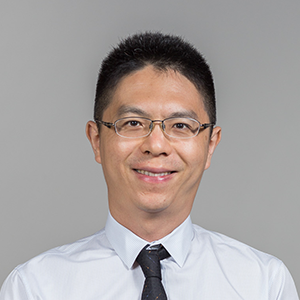
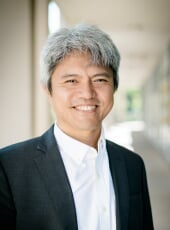
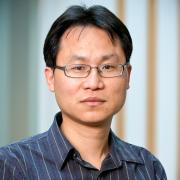
Professor Begona Dominguez is a faculty member in the School of Economics at The University of Queensland (UQ), within the Faculty of Business, Economics and Law. She holds a Doctor of Philosophy in Economics from Universitat Autònoma de Barcelona. Her research focuses on Macroeconomics, Public Finance, and Monetary Economics, with emphasis on fiscal policy design, central bank balance sheets, and optimal taxation frameworks. Her key projects include Supporting Entry and Growth of Australian Businesses via Tax and Transfers (2022–2024) and The role of a central bank's balance sheet in shaping the economy (2021–2024) . She is available for PhD supervision and actively contributes to applied macroeconomic analysis, particularly in urban economic advantages and policy evaluation. Publications span topics like fiscal sustainability, inflation dynamics under central bank policies, and the implications of constitutional constraints on taxation. Her work bridges theoretical models (e.g., Ramsey frameworks) with empirical applications in tax policy and public debt management. Professor Dominguez maintains affiliations with the Centre for Applied Macroeconomic Analysis (ANU) and has reviewed prominent texts such as John Taylor's Reform of the International Monetary System . She is based in Room 507, Colin Clark Building at UQ.
Christopher S. Tang is a UCLA Distinguished Professor and Edward W. Carter Chair in Business Administration at the Anderson School of Management , where he researches global supply chain management with a focus on social innovation in developing countries . He also serves as Senior Associate Dean for Global Initiatives and Faculty Director of the Center for Global Management . Education: Ph.D. in Management Science (1985, Yale University) M.Phil. in Administrative Science (1983, Yale University) M.A. in Statistics (1983, Yale University) B.Sc. in Mathematics (First Class Honors, 1981, King’s College, University of London) His research explores the intersection of corporate responsibility and supply chain innovation , addressing topics like microfinancing , mobile platforms for developing economies , direct agricultural procurement , and disaster response logistics . He emphasizes visibility, integrity, and agility in uncertain environments. Recent work highlights AI adoption benefits for supply chains , strategies to reduce forced labor risks , and policy impacts on ride-sharing platforms . His research bridges operations management and social justice , advocating for environmental stewardship alongside business growth. Scientific Awards: Salzberg Medallion (2017) Lifetime Fellow, INFORMS (2011) Responsible Research in Management Award (2017) Teaching Excellence Award (multiple years, UCLA-NUS) Dean’s Excellent Service Award (2014) As an influential adviser and consultant , Tang has worked with Amazon, HP, IBM, Nestlé, GKN , and Accenture . He has taught at Stanford University, UC Berkeley, Hong Kong University of Science and Technology , and served as visiting professor at Cambridge University and the Institute of Advanced Study at HKUST .
Adam B. Badawi is a Professor of Law at the University of California, Berkeley - School of Law, where he maintains an active research agenda at the intersection of law, finance, and corporate governance. His scholarly work has established him as a leading expert in contract law, M&A transactions, securities litigation, and ESG compliance. Professor Badawi's research interests span multiple dimensions of corporate law and legal theory. His work on contractual complexity, particularly in debt agreements and M&A transactions, has provided significant insights into how legal drafting affects economic outcomes. He has extensively examined the business judgment rule, board authority, and the role of courts in corporate governance. More recently, his research has expanded into ESG-related topics, analyzing how environmental, social, and governance considerations intersect with traditional corporate law frameworks. His methodological approach often combines legal analysis with empirical techniques, including text analysis of legal documents and event studies of litigation outcomes. Professor Badawi's scholarly output demonstrates consistent high-impact research across multiple domains of corporate law. His early work focused on foundational aspects of contract theory and interpretation, while his more recent publications reflect growing interest in ESG metrics, executive compensation structures tied to sustainability goals, and the evolving regulatory landscape. The trajectory of his research shows a progression from theoretical legal analysis toward increasingly empirical and interdisciplinary approaches that bridge law with finance and data science. Professor Badawi has collaborated with numerous scholars across different institutions, including Duke University, Stanford Law School, and the University of Chicago Law School, reflecting the interdisciplinary nature of his work and its relevance to multiple academic communities.
Elena Simperl is a Professor of Computer Science and Deputy Head of Department for Enterprise and Engagement at King's College London's Department of Informatics. She co-directs the King's Institute for Artificial Intelligence and serves as Director of Research for the Open Data Institute. As a Hans Fischer Senior Fellow at the Technical University of Munich's Institute for Advanced Study, she leads the Trustworthy Knowledge Graphs focus group and contributes to advancing human-centric AI research across European institutions. Professor Simperl obtained her doctoral degree in Computer Science from the Free University of Berlin and her diploma from the Technical University of Munich. Prior to joining King's, she held academic positions in Germany, Austria, and at the University of Southampton, and was a Turing Fellow. Her career trajectory demonstrates consistent leadership in bridging academic research with practical applications in data ecosystems. Her research sits at the critical intersection of AI and social computing, focusing on human-centric approaches to building sociotechnical systems that integrate data, algorithms, and human capabilities. She investigates how to make knowledge engineering more accessible, how to leverage collective intelligence for data quality improvement, and how to design participatory AI systems that address societal challenges like misinformation. Her work spans knowledge graphs, semantic technologies, crowdsourcing, and open data, with particular emphasis on the social dimensions of data-intensive systems and the governance frameworks needed for trustworthy AI deployment. Analysis of her recent publications reveals a strong evolution toward integrating large language models with traditional knowledge engineering practices while maintaining human oversight. There's a clear trajectory from foundational work on knowledge representation toward increasingly applied research addressing real-world challenges in media ecosystems, citizen science, and data governance, with growing attention to policy implications of AI technologies. Fellow of the British Computer Society Fellow of the Royal Society of Arts Hans Fischer Senior Fellow at TUM-IAS (2023) Ranked among top 100 most influential scholars in knowledge engineering of the last decade Included in Women in AI 2000 ranking Professor Simperl has led 14 major European and national research projects totaling millions in funding, including MediaFutures (a Horizon 2020 program tackling online misinformation), QROWD, ODINE, Data Pitch, and ACTION. She currently co-chairs the Croissant working group in ML Commons developing data standards for AI, and serves as president of the Semantic Web Science Association. Her research has directly influenced the development of data ecosystems supporting startups and citizen science initiatives across Europe, demonstrating exceptional ability to translate theoretical advances into practical impact. As Director of Research at the Open Data Institute, she oversees initiatives connecting data entrepreneurs with artists and civic organizations. Her leadership in the MediaFutures project established a data-driven innovation hub that supported 51 startups/SMEs and 43 artists through three open calls, creating a sustainable model for arts-technology collaborations addressing media challenges. Her work with the ODINE project helped create a European ecosystem for data-driven startups, demonstrating her commitment to building practical applications of open data principles.
Yusupova Guzel Fatehovna is an Associate Professor at the Department of Applied Economics within the Faculty of Economic Sciences at the National Research University Higher School of Economics (HSE), where she has been working since 1998 with 28 years of scientific and teaching experience. She also serves as a Senior Research Fellow at the Institute for Enterprise and Market Analysis, specifically in the Laboratory of Competition and Antimonopoly Policy. Her research interests focus on Industrial Organization, Competition Policy, Antitrust Economics, Digital Markets, Market Analysis, and Economics of Network Effects, with particular attention to Russian industrial markets. Her professional expertise stems from her Candidate of Economic Sciences degree (2007) in Economics and Management of the National Economy, with a dissertation on "Boundaries of Russian markets and competition," and her Associate Professor title awarded in 2013. Dr. Yusupova's publication record shows a consistent focus on competition policy and market analysis, with her most recent work examining AI applications in cartel detection, digital platform competition, and the nuances of antitrust enforcement in specialized markets. Her research demonstrates progression from foundational industrial organization topics to increasingly complex digital market challenges. Honorary certificate of the Ministry of Science and Higher Education of the Russian Federation (November 2022) Gratitude of HSE (March 2022) Gratitude of the Faculty of Economic Sciences HSE (January 2021) Winner of the Competition for the best Russian-language scientific works of HSE employees - 2021 Multiple academic bonuses for publications and contributions to HSE reputation (2010-2024) As an educator, Dr. Yusupova teaches graduate and undergraduate courses including Analysis of Industry Markets and Competition Policy, Introduction to the Economy of Digital Platforms, and Theory of Industrial Markets. Her teaching reflects her research expertise, bridging theoretical industrial organization concepts with practical antitrust applications. She has participated in numerous international conferences and research projects focused on competition policy effectiveness, with particular emphasis on Russian market contexts and transition economy challenges.
Tarik Abou-Chadi is a Professor in European Union and Comparative European Politics at the University of Oxford's Department of Politics and International Relations, and a Professorial Fellow at Nuffield College. He holds a PhD from Humboldt University Berlin (2015). His research focuses on elections, political parties, and the transformation of democratic representation in post-industrial societies. Key affiliations include the Government and Politics Network, Comparative Politics and Government, and leadership of the Swiss National Science Foundation-funded project on 'Social Status and the Transformation of Electoral Behavior in Western Europe'. He previously served as Assistant Professor at the University of Zurich before joining Oxford. His work appears in top journals like the American Political Science Review and World Politics. Awards include the Henrik Enderlein Prize (2022) and inclusion in Capital magazine's 'Top 40 under 40' (2022). He advises four doctoral students and actively contributes to media commentary on European political trends through outlets like The Economist. Research interests emphasize far-right dynamics, voter behavior, and party strategy in Western Europe. His recent analyses address gendered political preferences among youth, climate policy acceptance, and the electoral consequences of mainstream parties adopting radical-right policies.
Richard MA Tianbai is an Associate Professor at the School of Computing, National University of Singapore (NUS), and serves as IT Coordinator for Computing Facilities. He holds a B.Sc. (First-Class Honors) and M.Phil. from the Chinese University of Hong Kong, followed by an M.Sc. and Ph.D. from Columbia University, USA. His research focuses on systems & networking, distributed computing, and internet economics, with projects addressing cloud-based big data systems and internet peering agreements. Richard has received multiple awards, including the Best Paper Award Runners-up at ACM Mobihoc 2020 and the Teaching Excellence Award from NUS School of Computing in 2019. His work bridges theoretical models with practical applications in network economics and distributed systems. Education: B.Sc. (First-Class Honors), Computer Science & Engineering, Chinese University of Hong Kong (2002) M.Phil., Computer Science & Engineering, Chinese University of Hong Kong (2004) M.Sc., Columbia University (2008) Ph.D., Columbia University (2010) Research Interests: Cloud-Based Big Data Systems: Innovating serverless paradigms for real-time analytics (e.g., Stream as a Service). Internet Economics: Modeling peering agreements, premium peering dynamics, and regulatory alternatives to net neutrality. Distributed Computing: Auto-scaling frameworks (e.g., Elasticutor, DRS) for real-time stream processing. His research emphasizes performance guarantees and resource optimization in dynamic networked systems. Awards: Best Paper Award Runners-up (ACM Mobihoc 2020) Teaching Excellence Award (School of Computing 2019) Bell Labs Best Paper Award (IEEE SDP 2015) Best Paper Awards at ICNP 2014 and IC2E 2013 Grants & Advising: Recipient of research grants supporting projects like “Testbed for Innovative Inter-Networking Research.” Advises on doctoral projects related to stream processing and network economics. His work is funded by industry collaborations and institutional grants. Labs & Teams: Part of the Distributed Network Analysis (DNA) Research Group and Advanced Networking & Systems Research Group, fostering interdisciplinary collaborations in networking and distributed systems.
Atreyi Kankanhalli is a Professor at the National University of Singapore, specializing in Information Systems with a focus on knowledge management, healthcare IT, and digital innovation. Their research spans over three decades, with prolific contributions in top journals like MIS Quarterly, Journal of AIS, and Information & Management. They have co-authored over 150 papers addressing topics such as crowdsourcing, online communities, and the impact of AI on scholarly practices. Notable work includes studies on user adherence to health apps, innovation in public sector data utilization, and the ethical challenges of generative AI in peer review. Kankanhalli has also led research on global virtual teams and digital technologies' role in social justice, reflecting a commitment to both technical and societal dimensions of information systems. Education & Background: While specific degree details are not provided, their extensive publication history and academic roles imply advanced qualifications in Information Systems or related fields. They have collaborated with global researchers across institutions like NUS, University of Illinois, and Singapore Management University. Research Themes: Core areas include digital health interventions (e.g., fitness app adherence), organizational innovation via open data and crowdsourcing, and the socio-technical challenges of AI in academia. Their work often bridges theoretical frameworks with practical applications, such as healthcare decision support systems and policy-driven technology adoption. Impact & Influence: As an editorial board member and frequent conference contributor (e.g., ICIS, PACIS), Kankanhalli shapes the field's research agenda. Their recent focus on generative AI's implications highlights proactive engagement with emerging technologies' ethical and methodological challenges.
Hanna Halaburda is an Associate Professor of Technology, Operations, and Statistics at the Leonard N. Stern School of Business, New York University, where she joined in 2019. Her research lies at the intersection of economics, technology, and digital platforms, with a strong focus on blockchain, cryptocurrencies, and platform competition. She has published extensively in top academic journals and co-authored the seminal book Beyond Bitcoin: The Economics of Digital Currencies . PhD in Economics, Northwestern University MA in Economics, Warsaw School of Economics MA in Philosophy, Warsaw University Her research interests center on the economic implications of digital transformation. She investigates how blockchain technology reshapes trust, governance, and competition in digital markets. Her work explores token design, consensus mechanisms, smart contracts, and the strategic use of decentralization in platforms. She also studies platform competition under network effects, consumer choice, and omnichannel marketing. A recurring theme is how digital technologies alter traditional economic forces and business models. The most recent articles show a strong trend toward analyzing the governance, security, and economic design of blockchain systems. Her work combines rigorous theoretical modeling with empirical insights, often applying game theory and industrial organization frameworks. Topics include permissioned vs. permissionless blockchains, the role of cryptographic tokens in coordination, and the macroeconomic implications of digital currencies. She also contributes to debates on Web3, AI, and the future of digital platforms. Scientific awards and recognitions include: ISR Best Paper Published in 2022 Runner-Up Lead article in RAND Journal of Economics Best Paper Award at Tokenomics 2023 Best Paper Award at WISE 2023 Best Paper Finalist at WISE 2022 and WISE 2021 Hanna Halaburda has advised and collaborated with numerous researchers and institutions. Her co-authors include leading scholars from Harvard, NYU, and international universities. She has received research recognition through best paper awards and invitations to contribute to high-impact journals and policy discussions. Her work has been supported by academic and policy institutions, including the Bank of Canada, where she previously served as a senior economist. She frequently publishes in both academic and practitioner outlets, including Harvard Business Review and Nature Human Behavior , indicating strong translational impact. She is actively involved in research teams focused on digital assets, blockchain governance, and platform economics. While no formal lab is mentioned, her extensive list of working papers and collaborations suggests leadership in a dynamic research group at NYU Stern. Her recent work on DAOs, public crypto mining firms, and CBDCs indicates ongoing, forward-looking research programs with real-world policy and business implications.
Dominique Foray is a Professor at Ecole Polytechnique Fédérale de Lausanne (EPFL) and holds the Chair of Economics and Management of Innovation (CEMI). He is a member of the Swiss Council for Science, chairman of the KOF Swiss Economic Research Institute's Advisory Board, and a foreign member of Columbia University's Center of Capitalism and Society. His career includes extensive advisory roles, such as with the European Commission's 'Knowledge for Growth' group and Germany's Expert Commission for Research and Innovation. Education: Ph.D. in Economics, University Lumière of Lyon (1984) Habilitation à diriger des recherches, University Lumière of Lyon (1992) Foray's research focuses on the economics of innovation, knowledge-based economy dynamics, technology policy, smart specialization strategies, and institutional frameworks for innovation. He has authored seminal works including The Economics of Knowledge (MIT Press, 2004) and Smart Specialisation (Routledge, 2015). His recent publications explore mission-oriented innovation policies, smart specialization in EU contexts, and knowledge diffusion mechanisms. Foray's work bridges academic theory with practical policy design, influencing regional and national innovation strategies globally. Advising: Past EPFL PhD students: Aouinait Camille Marguerite, Ayoubi Charles Chadi, Baruffaldi Stefano Horst, Bednyagin Denis, Bogers Marcellus, Coffano Monica, Conti Annamaria, Cristelli Gabriele, Gaulé Patrick, Hamdan Livramento Intan Maizurah, Marino Marianna, Muñoz Tellez de Kieffer Viviana Carolina, Pellegrin Claudia, Simeth Markus Foray's institutional roles include leadership in European policy initiatives and contributions to the World Bank's studies on innovation's role in economic growth. His interdisciplinary approach integrates economics, policy analysis, and technology management to address grand societal challenges through innovation.
Chee-Wooi Ten is a tenured Professor in the Department of Electrical and Computer Engineering at Michigan Technological University, where he has served since 2010 and achieved tenure in 2016. He concurrently holds an Affiliated Professor appointment in Applied Computing and directs both the PSERC Site and ICC CPS Center. His institutional roles emphasize cyber-physical security integration within power infrastructure. His educational background includes: PhD in Electrical Engineering from University College Dublin (2009) MSc in Electrical Engineering from Iowa State University (2001) BSc in Electrical Engineering from Iowa State University (1999) Ten's research pioneers cyber-informed security engineering strategies for bulk power systems, focusing on quantifying rare events through system risk models and data science. His work bridges power grid interactions with robotics and transportation systems to advance decarbonization and electrification. Key methodologies include validating cyber-physical security frameworks against steady-state and dynamic grid approaches, with emphasis on attack/defense combinatorics and smart home technologies. This transdisciplinary approach supports the fourth industrial revolution's resilience requirements. His publication trends reveal strong focus on risk-aggregated substation testbeds using generative adversarial networks, cyber insurance models for power systems, and cascading failure analysis from switching attacks. Recent works increasingly integrate machine learning with physics-based modeling to address cybersecurity threats in inverter-based resource integration and distribution emergency operations. Ten has secured over $6.5M in active funding including: $2M DOE grant (MTU portion $105,000) for CyDERMS Center on DERs/Microgrids cybersecurity $704,409 CyManII award for secure digitalization in smart manufacturing $1.05M DOE ARPA-E grant for decarbonized freight transportation modeling NSF CyberCorps Scholarship for Service program ($3.38M) His grants consistently address risk management through data-driven and physics-based modeling, with industry partnerships through PSERC and utility collaborations. As ICC CPS Center Director, he leads research on cyber-physical security testbeds and coordinates the PSERC Summer Transformation School. His team develops validation frameworks for NERC CIP compliance while addressing practical pain points in OT cybersecurity for grid operators.
Wim A Van der Stede is a **Professor of Accounting and Financial Management** at the **London School of Economics (LSE)**, specifically within the **Department of Accounting**. He holds the prestigious **CIMA Professorship** and serves in leadership roles such as LSE Council Member and Houghton Street Ventures Advisory Board member. His research focuses on **management control systems**, **corporate governance**, **executive compensation**, and **performance measurement**, with notable contributions to understanding incentive systems and organizational design. He has authored influential books like *Management Control Systems: Performance Measurement, Evaluation, and Incentives*, translated into multiple languages. Van der Stede’s academic leadership includes editorial roles in top journals like *Management Accounting Research* (Editor-in-Chief 2015–2024), and he has received awards such as the LSE Teaching Excellence Award (2016/17) and the AAA Outstanding International Educator Award (2019). His work integrates empirical studies with practical insights, addressing topics like budgeting, innovation selection, and the impact of information technology on organizations. He actively contributes to global accounting discourse through research, teaching, and advisory roles.
Prof. Dr. Johannes Sauer is a Professor at the Technical University of Munich (TUM), holding dual affiliations with the TUM School of Management and the TUM School of Life Sciences . His academic focus is on production and resource economics, with expertise in agricultural sustainability, policy evaluation, and circular economy strategies in Asia-Pacific and Latin America. Education: Bachelor’s/Master’s in Agricultural Economics from Universities of Tübingen, Hamburg, and Imperial College London. Doctorate (summa cum laude) in Agricultural Economics from the University of Bonn (2004). Research Interests: Prof. Sauer’s work spans productivity and resilience in agricultural systems, adoption of sustainable technologies, water resource valuation, and bioeconomic trends. He emphasizes smart technologies and circular economy applications in developing regions. His research employs econometric methods to analyze policy impacts and environmental-economic trade-offs. Key Trends in Publications: Recent articles highlight climate-smart agriculture, ICT adoption in rural China, and agroforestry’s role in reducing ecological-economic trade-offs. He explores behavioral drivers of policy participation and innovative tools like the IoFarm decision support system. Awards: 2021 Honorary Professorship at ANU OECD Fellow Awards (2010, 2016) Best Paper Awards (2008–2015) Consulting & Roles: OECD and Asian Development Bank consultant, ESRC Peer Review College member, and liaison lecturer for the German National Academic Foundation. He advises on agri-environmental policies and international development. Labs/Teams: Active in collaborative projects such as PONDERFUL Framework and IPM Popilia , focusing on nexus research and pest management strategies.
Matthew Bidwell is a Professor of Management at the Wharton School of Business, University of Pennsylvania . His research focuses on evolving employment relationships, career dynamics, and human resource management in modern labor markets. He serves as faculty co-director of the Wharton People Analytics Initiative and faculty director of the Wharton CHRO Program. Ph.D., MIT Sloan School S.M., Political Science, MIT M. Chem, Oxford Bidwell's research examines international career mobility , managerial contracting , and organizational labor market strategies . His work reveals complex relationships between global mobility and compensation, and analyzes how institutions like search firms shape career trajectories. Recent publications show trends in cross-border employment , executive career progression , and status-driven wage dynamics . His studies utilize longitudinal datasets and organizational personnel records to uncover patterns in managerial mobility. Scientific Recognition Wharton Teaching Excellence Award (2020) ASQ Scholarly Contribution Award (2017) John T. Dunlop Outstanding Scholar Award (2014) Sloan Foundation Industry Studies Fellowship (2010-2012) Bidwell has served as Senior Editor at Organization Science and contributes regularly to business media outlets. His teaching emphasizes evidence-based people management through the People Analytics course at Wharton.
Dr. Xiaodong Lin is a Professor at the University of Guelph's School of Computer Science and an IEEE Fellow (2017) for contributions to secure vehicular communications. He leads the Blockchain Technology and Cybersecurity (BTC) lab, focusing on privacy-enhancing technologies, digital forensics, wireless network security, blockchain applications, and DeFi security. PhD, Beijing University of Posts and Telecommunications, China PhD, University of Waterloo, Canada His research bridges theoretical and applied domains in cybersecurity, particularly vehicular networks, smart grids, and decentralized systems. Recent work examines blockchain security, privacy-preserving protocols for IoT, and secure data aggregation in wireless networks. Key publication trends include secure fog computing for vehicular crowdsensing, privacy-preserving authentication in 5G, and cryptographic solutions for smart grids. Awards highlight multiple Best Paper recognitions at IEEE conferences. IEEE Fellow (2017) Best Paper Awards (IEEE INFOCOM 2018, GLOBECOM 2017, SECURECOMM 2016) Dr. Lin supervises graduate students in blockchain security, AI security, and digital forensics. His lab provides financial support to qualified students.