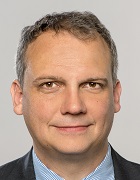
Prof. Martin Schulz is a Full Professor and Chair for Computer Architecture and Parallel Systems at Technische Universität München (TUM), joining in 2017. He also serves on the board of directors at the Leibniz Supercomputing Centre. Previously, he worked at Lawrence Livermore National Laboratory (LLNL) and Cornell University. His research focuses on parallel architectures, quantum computing integration, HPC optimization, and fault tolerance. He has published over 250 papers and chairs the MPI Forum, a key standard in HPC. Education: Doctorate in Computer Science (TUM, 2001), Master of Science (UIUC). Research Interests: Parallel systems, performance analysis, quantum computing, memory optimization, and tool support for HPC. Awards: Gordon Bell Award (2006), R&D 100 Award (2011), Best Paper Awards at IPDPS and SC. Grants/Projects: SEANERGYS, PlasmaPEPS, OpenCUBE, and others. Active in academic service, including program chairs for ISC, EuroMPI, and IPDPS.
Dr. David Kappel leads the Sustainable Machine Learning research group at the Institute of Neuroinformatics (INI) , part of the Faculty of Computer Science at Ruhr-University Bochum. Previously, he held postdoctoral positions at the University of Göttingen (with Christian Tetzlaff) and TU Dresden (with Christian Mayr). His research focuses on the intersection of computational neuroscience and machine learning, emphasizing sustainable AI and neuro-inspired systems. Research interests include: sustainable ML, computational neuroscience, neural networks, reinforcement learning, and neuromorphic engineering. His work explores mechanisms underlying deep neural networks, synaptic working memory, and efficient recurrent architectures. Recent projects include frameworks like CoBeL-RL for neuroscience-oriented simulations and studies on transformer-based vision models. Notable publications span topics such as memristive device applications, sparse backpropagation optimization, and behavioral modeling in reinforcement learning. He has advised master's theses on spatial working memory, reinforcement learning agents, and Monte Carlo tree search algorithms. The INI, his host institution, bridges natural cognition insights with artificial systems design, drawing from experimental psychology, machine learning, and robotics. Lab/Team: Member of the Institute of Neuroinformatics , leading the Sustainable Machine Learning group. Collaborates with interdisciplinary teams to advance AI sustainability and neurocomputational models.
Torsten Hoefler is a Professor affiliated with ETH Zurich, leading research in parallel computing, distributed systems, and high-performance computing (HPC). His work bridges theoretical foundations and practical implementations, focusing on optimizing algorithms, network topologies, and hardware-software co-design. Research Interests: His primary areas include parallel algorithms, distributed systems, machine learning infrastructure, and network architectures. He emphasizes scalable solutions for large-scale applications, particularly in data-centric computing and serverless environments. Publications: Recent work highlights include innovations in network topologies (e.g., HammingMesh), serverless benchmarking frameworks (SeBS), and optimizations for large language models (LLMs). His publications often address performance bottlenecks and energy efficiency in HPC and cloud systems. Awards & Grants: While no specific awards are listed here, his prolific publication record and leadership in HPC indicates significant recognition in the field. Active in grant-funded projects related to exascale computing and AI infrastructure. Labs & Teams: Leads the Communication Systems Lab at ETH Zurich, collaborating with industry partners like NVIDIA and IBM on hardware-accelerated computing and cloud-native systems.
Dr. Maximilian Stark is a Lecturer at the Institute of Communications, TU Hamburg. His research focuses on machine learning-driven advancements in communication systems, particularly applying the information bottleneck method to decoding algorithms, signal processing, and quantization techniques. His work bridges theoretical information theory with practical implementation challenges in coding and channel design. Key research areas include LDPC and polar codes optimization, low-bitwidth decoding architectures, and distributed signal processing frameworks. Recent publications emphasize adaptive learning systems for error resilience under quantization constraints and hardware-efficient receiver design. Dr. Stark's academic contributions span over 20 peer-reviewed articles since 2016, with a strong emphasis on integrating machine learning principles into traditional communication engineering problems. Notable themes include neural decoding paradigms, resource-constrained quantization strategies, and distributed information compression methods. No scientific awards explicitly listed. Academic advising details and lab affiliations are not provided in source materials.
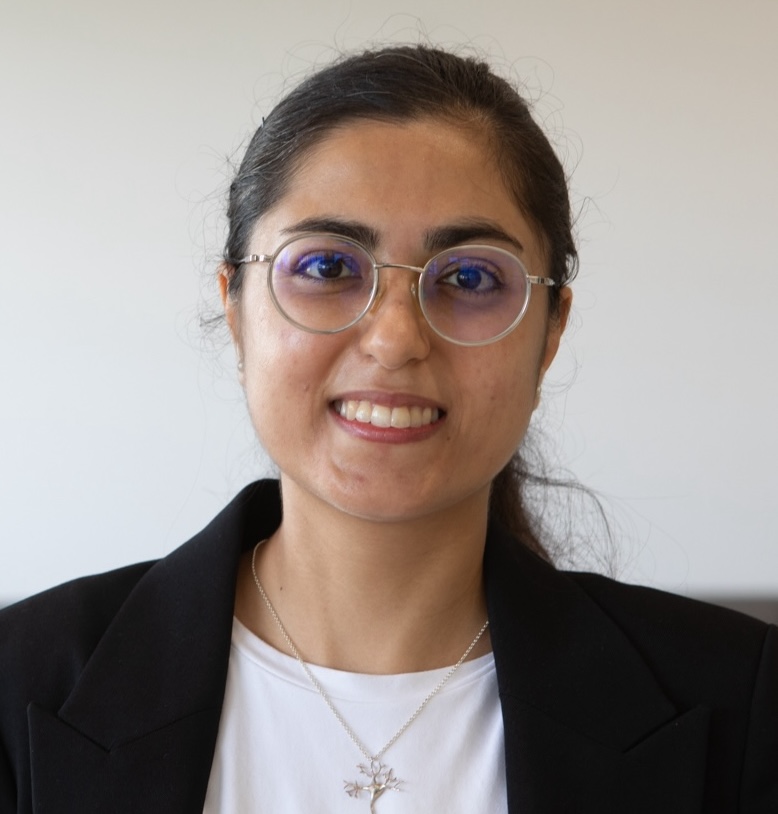
Roxana Zeraati is a postdoctoral researcher at the Max Planck Institute for Biological Cybernetics, previously affiliated with the Graduate Training Center of Neuroscience at the University of Tübingen. Her work bridges systems and computational neuroscience, focusing on adaptive learning and neural dynamics. PhD in Computational Neuroscience (2019-2024), University of Tübingen MSc in Neural Information Processing (2016-2018), University of Tübingen BSc in Biomedical Engineering (2011-2016) and Physics (2011-2015), Amirkabir University Her research investigates how neural timescales adapt to environmental demands, linking spatiotemporal dynamics to behavior through computational models and data analysis. Key projects include: Exploring single-neuron vs. network-mediated timescales in adaptive behavior Developing task-optimized RNNs to study working memory mechanisms Analyzing neural activity fluctuations across brain regions Her 2024 Attempto Award recognized contributions to understanding neural timescales in visual information processing and attention.
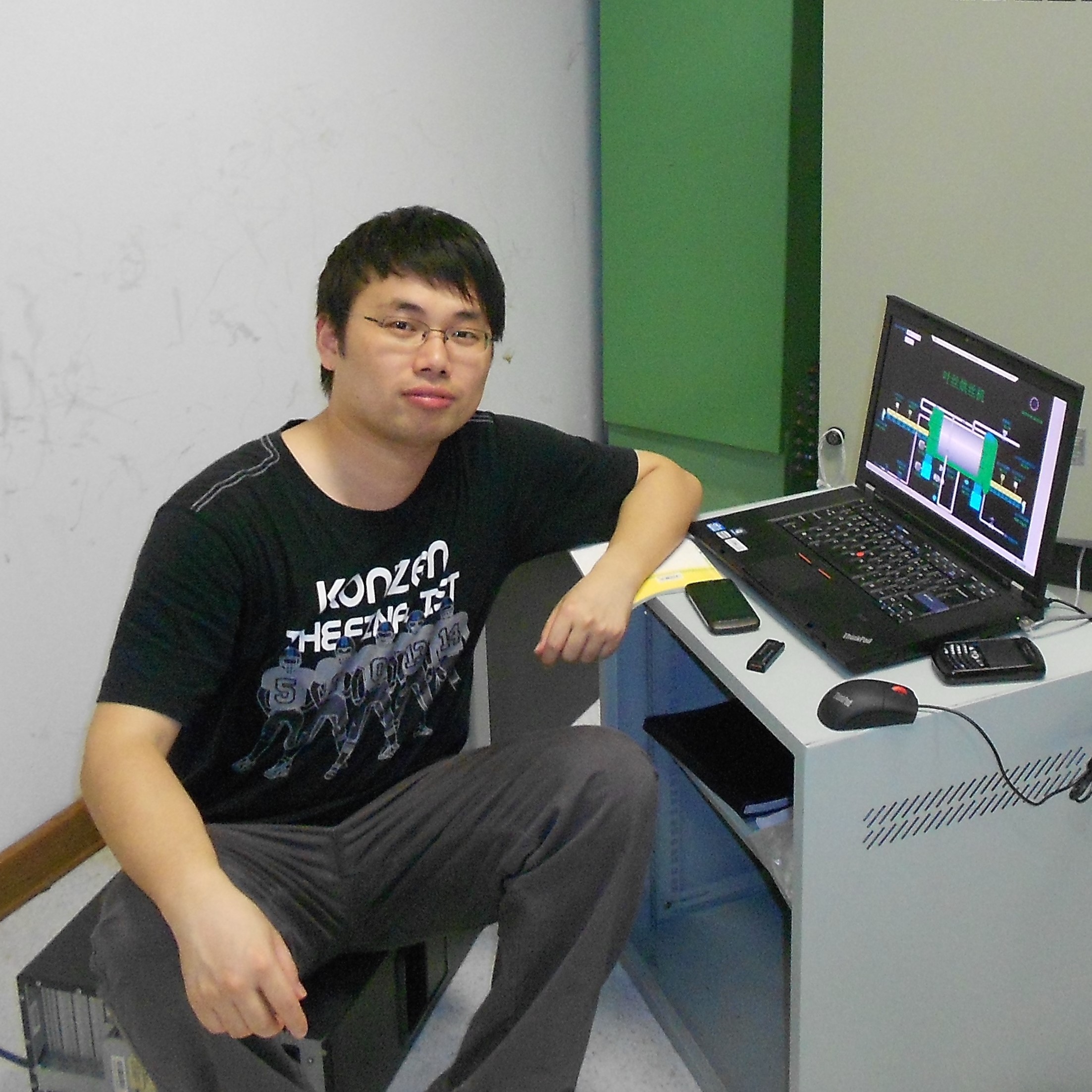
Cheng Li is an Associate Professor at the School of Computer Science, University of Science and Technology of China , and Director of the Information Computing Platform at the Institute of Artificial Intelligence, Hefei Comprehensive National Science Center. His research focuses on parallel and distributed intelligent computing systems, with an emphasis on optimizing computational efficiency through data-centric approaches. Education: PhD in Computer Science from Max Planck Institute for Software Systems (MPI-SWS) and Saarland University (2016) Bachelor's degree in Computer Science from Nankai University (2009) Research interests include distributed systems, machine learning optimization, database systems, and high-performance computing. Notable contributions include innovations in distributed training of deep neural networks, geo-replicated databases, and efficient graph processing. His work has been published in top-tier conferences like NSDI, AAAI, VLDB, and SOSP. Professional Activities : PC member at OSDI 2025, EuroSys 2024/2025, FAST 2024, and SOSP 2021. Teaching includes Systems Seminar and Compiler Principles at USTC since 2017. Grants : Secured $500k/year funding from Chinese government agencies and collaborations with Huawei/Alibaba. Active in cloud-native systems and AI infrastructure research.
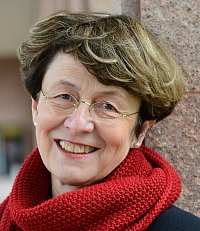
Prof. Dr. Ingrid Mertig is a Professor at the Institute of Physics, Faculty of Natural Sciences II - Chemistry, Physics and Mathematics, Martin Luther University Halle-Wittenberg. Her research is centered on theoretical and computational condensed matter physics, particularly in spintronics, magnetism, and topological quantum phenomena in nanostructures and heterointerfaces. Research Interests: Her group investigates a wide range of topics including non-collinear magnetic structures, spin relaxation, atomistic magnetization dynamics, tunneling magneto-resistance, nanowires, scanning tunneling microscopy, molecular electronics, oxide interfaces, multiferroic materials, thermoelectric heterostructures, topological insulators, spin-orbit coupling, Berry-phase effects, and the anomalous Hall and Nernst effects. These studies are grounded in advanced theoretical methods such as density functional theory (DFT), Korringa-Kohn-Rostoker multiple scattering theory, Green's function theory, and relativistic transport theory. Recent Research Trends: Analysis of her recent publications (2021–2025) reveals a strong focus on topological spin textures (especially skyrmions), spin-orbit torque effects, spin-charge interconversion at interfaces, and the design of novel quantum materials for spintronic applications. Her work frequently bridges fundamental theory with potential device concepts, such as skyrmion-based memory and spin diodes, and involves close collaboration with experimental groups, as evidenced by co-authorship on terahertz spectroscopy and transport studies. Scientific Networks and Funding: She is actively involved in major collaborative research initiatives, including the Collaborative Research Centre/Transregio (CRC/TRR) 227: 'Ultrafast Spin Dynamics', the EU-funded 'Orbital Engineering for Innovative Electronics', and the MSCA-ITN 'SPEAR' network. Previous projects include participation in Priority Programmes on topological insulators, oxide interfaces, spin calorics, and nanostructured thermoelectrics. These affiliations demonstrate sustained, high-level funding and leadership in her field. Advising and Grants: While specific students are not listed, her leadership of a research group and supervision of numerous publications indicate active mentoring of PhD and postdoctoral researchers. Her involvement in large, funded collaborative networks like CRC/TRR 227 and EU projects confirms her success in securing significant research grants. Labs and Teams: She leads the 'Quantum Theory of the Solid State' research group at the Institute of Physics, Martin Luther University Halle-Wittenberg. This group specializes in first-principles and theoretical modeling, operating as a key theoretical partner in several national and international experimental collaborations.
Dr. Wenjie Ruan is a Senior Lecturer in Data Science at the Department of Computer Science, College of Engineering, Mathematics and Physical Sciences, University of Exeter, a Russell Group university. He is also the Co-Lead of the Trustworthy AI Theme at IDSAI. Previously, he was a Lecturer at Lancaster University and a Postdoctoral Researcher at the University of Oxford, funded by EPSRC. He holds a PhD from the University of Adelaide and conducted research at Tsinghua University. University: University of Exeter School: College of Engineering, Mathematics and Physical Sciences Department: Department of Computer Science Position: Senior Lecturer (~Associate Professor) Research Theme: Co-Lead, Trustworthy AI at IDSAI His primary research interests lie in robustness, safety, and interpretability of deep learning models, with applications in health data analytics and human-centred computing. He focuses on adversarial robustness, verification, testing, and explainable AI, particularly in safety-critical domains such as healthcare and autonomous systems. The recent publications reflect a strong trend in trustworthy machine learning, with emphasis on adversarial robustness (e.g., Vision Transformers, 3D models), verification techniques, and healthcare applications (e.g., COVID-19 severity prediction, EMR data analysis). His work often includes open-sourced tools like GUAP, DeepConcolic, and DeepGO, highlighting a commitment to reproducibility and practical impact. Dean's Commendation for Doctoral Thesis Excellence, University of Adelaide (2017) Scholarship for Outstanding PhD Students Abroad, Chinese Government (2017) Best Student Paper, ADMA 2016 Best Poster Award, ACM IOT & Cloud Computing Workshop (2016) PRF Project Grant (£180K) from ORCA Hub Subcontract from DSTL via Liverpool University (£15K) Dr. Ruan has actively advised numerous PhD and Master’s students, many of whom have achieved distinctions or secured prestigious positions. He has been involved in significant research grants, including projects on accountable AI in robotics and AI test coverage metrics for defense applications. His leadership in the ORCA-funded AELARS project demonstrates his role in guiding emerging researchers and shaping future work in trustworthy AI. He leads a dynamic research group and has hosted postdoctoral researchers like Dr. Syed Yuns. His team focuses on developing robust, verifiable, and interpretable AI systems, particularly in digital health and autonomous robotics. Collaborations with institutions such as Oxford, Liverpool, and Imperial College London further enrich the lab’s research ecosystem.
Prof. Raimund Rolfes is a Professor at the Institute of Structural Analysis, Leibniz University Hannover, specializing in structural mechanics, composite materials, and wind energy systems. He leads research projects on fatigue damage modeling, rotor blade design, and structural health monitoring. His work involves advanced numerical simulations and experimental validation. He holds executive roles in the Institute and contributes to university governance, including the Faculty Council. His research spans over 340 publications, focusing on composite materials' mechanical behavior, offshore wind infrastructure, and aeroelastic simulations. Research Interests: Fatigue and damage mechanics in composites Wind turbine structural design and analysis Structural health monitoring (SHM) systems Material modeling for nanocomposites and hybrid laminates Aeroelastic simulations of large wind turbines Offshore wind farm acoustics and environmental impact Notable Projects: LENAH/HANNAH: Nanomodified materials for rotor blade durability SE²A Cluster: Lightweight aircraft structures for sustainability CraCpit: Safety cockpits for gliders Monitoring SBJ: Offshore wind turbine foundation analysis Grants & Funding: Over 20 projects funded by DFG, BMWi, and EU, totaling millions in research support. Collaborations include TU Dresden, TU Braunschweig, and industry partners like Senvion and Akaflieg. Labs & Teams: Leads the Institute of Structural Analysis lab, supervising PhD researchers in composite mechanics, rotor blade dynamics, and computational modeling.
Sam Tobin-Hochstadt is an Assistant Professor at the School of Informatics & Computing, Indiana University, with a focus on programming languages and systems. He is affiliated with the Department of Computer Science and actively contributes to the Racket and JavaScript language ecosystems. Research: Design and implementation of programming systems, particularly languages enabling software evolution (e.g., Racket, Typed Racket, JavaScript). Teaching: Courses like C211, P632, and honors sections of CS 2510. Collaborations: Mozilla Research, Sun Labs Programming Language Research Group. His research spans gradual typing , DSL implementation , compiler design , and parallel programming , with recent work on build systems and probabilistic programming. While specific scientific awards aren't listed, his contributions to PLDI, POPL, and other program committees highlight his field prominence. He mentors Ph.D. students at Indiana University and has organized academic events like IFL 2014. Personal interests include Ultimate and outdoor activities, alongside his wife Katie Edmonds' post-doc work in chemistry.
Martina Zitterbart is a Professor of Computer Science at the Karlsruhe Institute of Technology (KIT) , with a career spanning over 30 years in telematics research. She leads the Institute of Telematics , focusing on multimedia communication systems , mobile networking , and wireless sensor networks . Current C4 Professor at KIT since 2001 PhD in Computer Science (University of Karlsruhe, 1990) Visiting scientist at IBM Research (USA/Switzerland, 1989-1992) Her research now integrates artificial intelligence into network security and 6G automation . Key projects include: KIWI : Federated machine learning for cross-domain attack detection Open6GHub : 6G infrastructure development (€66.8M BMBF grant) 6G-ANNA : Network automation for next-gen mobile systems Recent publications focus on: DDoS attack detection through machine learning QUIC protocol performance in long-term use energy packet transmission for smart grids autonomic network management She has received multiple awards including: Alcatel SEL Research Prize (2002) Best Paper Awards (EI.A 2024, NoF 2023) Teaching Excellence Recognition (2003, 2008) As a member of IEEE, ACM, and the German Society for Informatics, she actively contributes to academic discourse through conferences like SIGCOMM and workshops on blockchain technology.
Markus Holzbach is a Professor of Visualization and Materialization at the Offenbach University of Art and Design (HfG Offenbach), where he has been a faculty member since 2009. He leads the Institute for Materials Design (IMD) and has held significant leadership roles, including Dean and Vice Dean of the Design Department. His academic affiliations extend internationally through visiting professorships at Politecnico di Milano, MIT, RWTH Aachen, and the Berlage Institute. His research centers on material innovation , parametric design , and bio-materialization , exploring the dialogue between materials and their environments. Holzbach’s work emphasizes interdisciplinary experimentation, digital fabrication, and sustainable design practices. Projects like the Angel’s Trumpet and ECHOLOT Pavilion exemplify his integration of nature-inspired forms with interactive technologies. The 15 most recent projects reflect a consistent focus on computational design , material transfer , and sustainable architecture . Themes include responsive environments, modular systems, and the reinterpretation of natural forms through digital tools. His work spans product design, pavilions, housing, and industrial structures, often involving CNC fabrication and algorithmic modeling. Notable scientific awards include the Red Dot Design Award , BEST of SHOW ’16 at ISE 2016 , and the Music Super NAMM Award 2016 for the CURV 500® speaker. He has served on design juries such as the materialPREIS 2018 and Werk.Klasse. Markus Holzbach advises students and leads research teams at the IMD, fostering innovation in material design. His projects often receive institutional or corporate sponsorship, such as Palmengarten Frankfurt and Sonosfera. He has not received mention of formal grants, but his work is supported through collaborative and applied research funding. He directs the Institute for Materials Design (IMD) , a hub for experimental material research, student projects, and public exhibitions. The IMD has showcased work at events like the Triennale di Milano and Passagen Köln, emphasizing hands-on, interdisciplinary exploration of materiality.
Dominik Haneberg serves as a Senior Researcher at the Institute for Software & Systems Engineering within the Faculty of Applied Computer Science at the University of Augsburg. His work spans formal methods, software architecture, and IT security with a focus on verified systems. His educational background includes a Diploma in Informatics from the University of Ulm (2000) and a Doctorate in Informatics (2006). His research centers on software quality assurance , formal verification techniques , and security-critical systems , particularly for electronic payment applications and flash memory systems. His methodology emphasizes mathematically provable correctness in software design. Haneberg's publication trends reveal consistent focus on formal verification of storage systems (flash file systems, UBIFS), security protocols for electronic purses (Mondex case studies), and educational approaches to agile methodologies . His work bridges theoretical formal methods with industrial applications in embedded systems. Awards include: Award of the Swabian Economy 2007 (IHK Schwaben) Best Paper Award at Second International Conference on Software Engineering Advances 2007 Administrative contributions include serving on the faculty board, coordinating the elite Master's program in Software Engineering, student counseling for Computer Science in Engineering, and membership in multiple admission and examination boards. He has taught courses ranging from Formal Methods to Software Engineering and supervised numerous student theses. Haneberg works within the Institute for Software & Systems Engineering directed by Prof. Wolfgang Reif, contributing to both fundamental and applied research in software engineering while developing verification tools like KIV for industrial applications.
Azzurra Ruggeri is an Assistant Professor of Cognitive and Developmental Psychology at the Technical University of Munich's School of Education and an Assistant Professor in the Department of Cognitive Science at Central European University in Vienna. From 2016-2023, she served as a Max Planck Research Group Leader at the Max Planck Institute for Human Development, where she led the iSearch research group focused on information search and active learning across the lifespan. She is also affiliated with the International Max Planck Research School on the Life Course (LIFE). Her educational background includes dual PhDs in Psychology from Humboldt University of Berlin and in Cognitive Science from University of Siena (both 2012), as well as an MA in Philosophy with focus on Decision Making and Philosophy of Science from University of Pisa (2008). Prior to her current positions, she completed postdoctoral training at both the Max Planck Institute for Human Development and the University of California, Berkeley. Ruggeri's research focuses on how children and adults actively search for information when making decisions, drawing causal inferences, and solving categorization tasks. She investigates how adaptive search strategies are to the structure of tasks and how active information generation impacts learning and understanding. Her work bridges cognitive development, decision science, and educational psychology with strong emphasis on ecological validity. Analysis of her recent publications reveals a consistent focus on children's information search behaviors, particularly how preschoolers and toddlers adapt their exploration to task structures, goals, and information gain. Her research employs both experimental paradigms and computational modeling approaches to understand developmental changes in active learning strategies across the lifespan. John Templeton Foundation Virtual Research Network on the Development of Intellectual Humility ($30,000) Volkswagen Foundation - Artificial Intelligence and the Society of the Future, "Towards a theory of curiosity" (€1,500,000, of which €585,800 to Ruggeri) Innovation funds of Museum für Naturkunde Berlin for "Center for Active Learning in Museums" (€15,500) DFG Focus Program: The active self project "Climbing to yourself" (€350,000) Marie Curie Actions International Outgoing Fellowships ($282,000) Best Early Career Developmental Paper, AIP (Italian Psychological Association) ($1,200) Ruggeri has supervised PhD students including C. De Simone ("Active and ecological learning to navigate the social world") and A. Jones ("Active learning strategies in child- and adulthood: An interdisciplinary perspective"). Her research group has received substantial grant funding supporting work on children's information search strategies, active learning, and the development of curiosity across multiple institutions. Her laboratory work focuses on designing ecologically valid experimental paradigms that capture real-world information search behavior while maintaining experimental control, often using games and interactive tasks to examine exploration behavior across development.
Graham Hutton is a Professor of Computer Science at the University of Nottingham , where he leads the Functional Programming Lab and serves as Director of the Midlands Graduate School . He co-founded the Quotient Haskell project and maintains key roles in Journal of Functional Programming editorial work and Haskell Foundation governance. Co-leader, Functional Programming Lab (2008–date) Director, Midlands Graduate School (2023–date) ACM Distinguished Scientist Principal investigator for £912k EPSRC project (2024–2027) His research focuses on mathematical approaches to program construction , particularly through functional languages like Haskell and Agda . He develops techniques for compiler correctness , type system design , and program optimization , with recent work on quotient polymorphism and denotational cost models . Key article themes include: Compiler derivation from formal semantics Effect handling in functional languages Graph-based code generation over traditional tree structures Quotient type systems with SMT solver integration Concurrency semantics using choice trees Operational improvement with parametric polymorphism Scientific awards include: ACM Distinguished Scientist (2013) Best Paper & Best Student Paper (2018) EPSRC funding for compiler correctness projects He advises current PhD students in compiler calculation and memory safety , while maintaining extensive educational contributions through his widely-used textbook Programming in Haskell and open course materials.