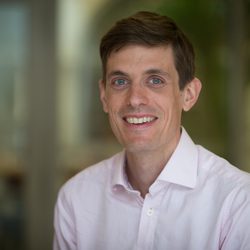
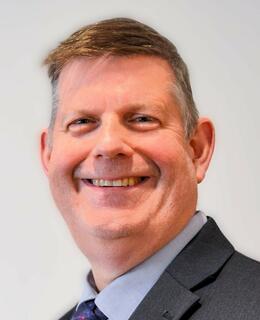
Michael A Osborne is Professor of Machine Learning at the University of Oxford and leads the Bayesian Exploration Lab . He serves as Director of the EPSRC Centre for Doctoral Training in Autonomous Intelligent Machines and Systems and co-directs the Oxford Martin AI Governance Initiative. His research focuses on Bayesian optimization, Gaussian processes, and probabilistic numerics with applications in quantum devices, battery modeling, and AI governance. Key Positions: Professor of Machine Learning, University of Oxford Official Fellow, Exeter College Co-founder of Mind Foundry Lead Researcher, Oxford Martin Programme on Technology and Employment Research Themes: Probabilistic modeling for quantum systems Uncertainty quantification in energy storage AI safety and societal impact analysis Automated experimental design Quantum device calibration Probabilistic numerical methods Technical Contributions: Bridging reality gap in quantum devices Efficient Bayesian quadrature techniques Personalized neurostimulation algorithms Automated measurement protocols Quantum-classical hybrid ML
Prof. Catherine O'Sullivan is a Professor of Particulate Soil Mechanics at Imperial College London's Department of Civil and Environmental Engineering, part of the Faculty of Engineering. She leads the Geotechnics Section and serves as Editor-in-Chief of the ASCE Journal of Geotechnical and Geoenvironmental Engineering. Her research focuses on particulate soil mechanics, employing Discrete Element Modelling (DEM) and micro-CT imaging to study sand behavior, reservoir sandstones, and internal erosion. Notable recognitions include the 2016 Shamsher Prakash Research Award and the 2021 President’s Teaching Innovation Award. Education : PhD in Civil Engineering, University of California, Berkeley (2002) MEngSc in Civil Engineering, University College Cork (Ireland) BEng (Civil Engineering), University College Cork (Ireland) Research Interests : Prof. O'Sullivan's work integrates computational and experimental methods to explore granular material behavior. Key areas include DEM validation, μCT analysis, and pore network modeling. Her group collaborates across disciplines, involving physicists and mechanical engineers alongside civil engineers. Awards & Recognition : 2015 Geotechnique Lecture Student Choice Supervision Award (nominated twice) 2023 Alert Geomechanics Special Lecture Advising & Grants : She supports PhD and postdoctoral researchers through Imperial scholarships and fellowships. Her students often explore particulate soil behavior, with many securing prestigious awards. Labs & Teams : Leads the Geotechnics Section at Imperial, fostering interdisciplinary research in geomechanics and computational modeling.
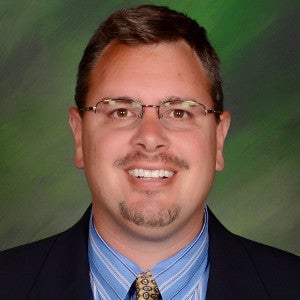
Hank Childs is a Professor in the School of Computer and Data Sciences at the University of Oregon, specializing in scientific visualization and high-performance computing. He leads the Research Group on Computing and Data Understanding at eXtreme Scale (CDUX) and has held leadership roles including Interim Executive Director of the School of Computer and Data Sciences. His educational background includes a Ph.D. (2006) and B.S. (1999) in Computer Science from the University of California at Davis. Prior to academia, he worked for 14 years at Lawrence Livermore and Lawrence Berkeley National Laboratories, where he served as architect of the VisIt open-source visualization tool. Research interests center on visualizing extreme-scale scientific datasets from supercomputers, with a focus on in situ visualization for cosmology, seismology, and fluid dynamics. He has pioneered projects like VTK-m and Ascent, and his work explores power-performance tradeoffs and data-parallel algorithms for GPUs. Recent publications emphasize scalable visualization techniques for exascale computing, with 15 notable works from 2021-2020 covering particle advection, in situ triggering, and power-aware frameworks. His research has been honored with multiple best paper awards at IEEE LDAV, EGPGV, and SC conferences. DOE Early Career Award (2012) University of Oregon Faculty Excellence Award (2018) 4+ million dollars in research funding since 2013 5 Best Paper awards in 2021 alone As an educator, he received four consecutive CIS Best Teacher Awards (2014-2019). He has served as Associate Editor for IEEE Transactions journals and organized numerous visualization workshops including Dagstuhl seminars and Shonan workshops.
Amol Deshpande is a Professor in the Department of Electrical Engineering and Computer Sciences at the University of California, Berkeley, College of Engineering. With over 160 publications spanning from 2000 to 2025, his research has significantly impacted the database systems community. His work bridges theoretical foundations with practical systems, evidenced by numerous publications in top-tier venues including SIGMOD, VLDB, and ICDE. Professor Deshpande's research focuses on database systems, with particular expertise in graph databases, data management, probabilistic databases, query optimization, and data provenance. His work addresses fundamental challenges in managing complex data, including efficient graph analytics, dataset versioning, streaming data processing, and privacy-preserving data management. Recent research directions include entity-relationship abstractions beyond traditional relations, standalone catalog engines for large data systems, and graph theoretical approaches to dataset versioning. His publication trends show a consistent focus on evolving database technologies, with early work on probabilistic databases and query optimization, transitioning to graph analytics and data provenance, and more recently addressing modern challenges in data cataloging, privacy-first data management, and serverless stream processing. His research spans both theoretical contributions (e.g., approximation algorithms for stochastic optimization) and practical systems building (e.g., RStore, TreeCat). Professor Deshpande has mentored numerous PhD students who have become active researchers in the database community, including Hui Miao, Souvik Bhattacherjee, and Konstantinos Xirogiannopoulos. His collaborative work spans across institutions, with frequent collaborations with researchers from MIT, University of Maryland, and other leading institutions. His research has been supported by major funding agencies and has influenced both academic research and industry practices in data management. The evolution of his work reflects the changing landscape of data management, from traditional relational systems to modern graph and streaming data challenges.
Jung Soo Lim is an Assistant Professor in the Department of Computer Science at California State University, Los Angeles, within the College of Engineering, Computer Science, and Technology. He earned his B.S. from Cal State LA and M.S. and Ph.D. from UCLA, returning to his alma mater as a part-time lecturer in 2014 before transitioning to a full-time assistant professor role in 2019. Education: B.S. (Cal State LA), M.S. (UCLA), Ph.D. (UCLA) His research focuses on Internet of Things (IoT) , Cyber-Physical Systems , Wireless Networking , Software Engineering , and Medical Computing . He has active projects in IoT applications for healthcare, urban safety, and wastewater monitoring, including the Center for Inclusive Computing (CIC) Transfer Pathways Project. Recent publications highlight interdisciplinary work bridging IoT, healthcare diagnostics, and smart city infrastructure. Notable topics include stroke detection algorithms , IoT communication protocols , and sensor-based environmental monitoring . Scientific Awards: Outstanding Senior at Cal State LA (1997) He teaches core computer science courses such as Computer Programming Fundamentals and Analysis of Algorithms, and actively mentors graduate students. His lab focuses on developing embedded systems and IoT solutions for real-world challenges.
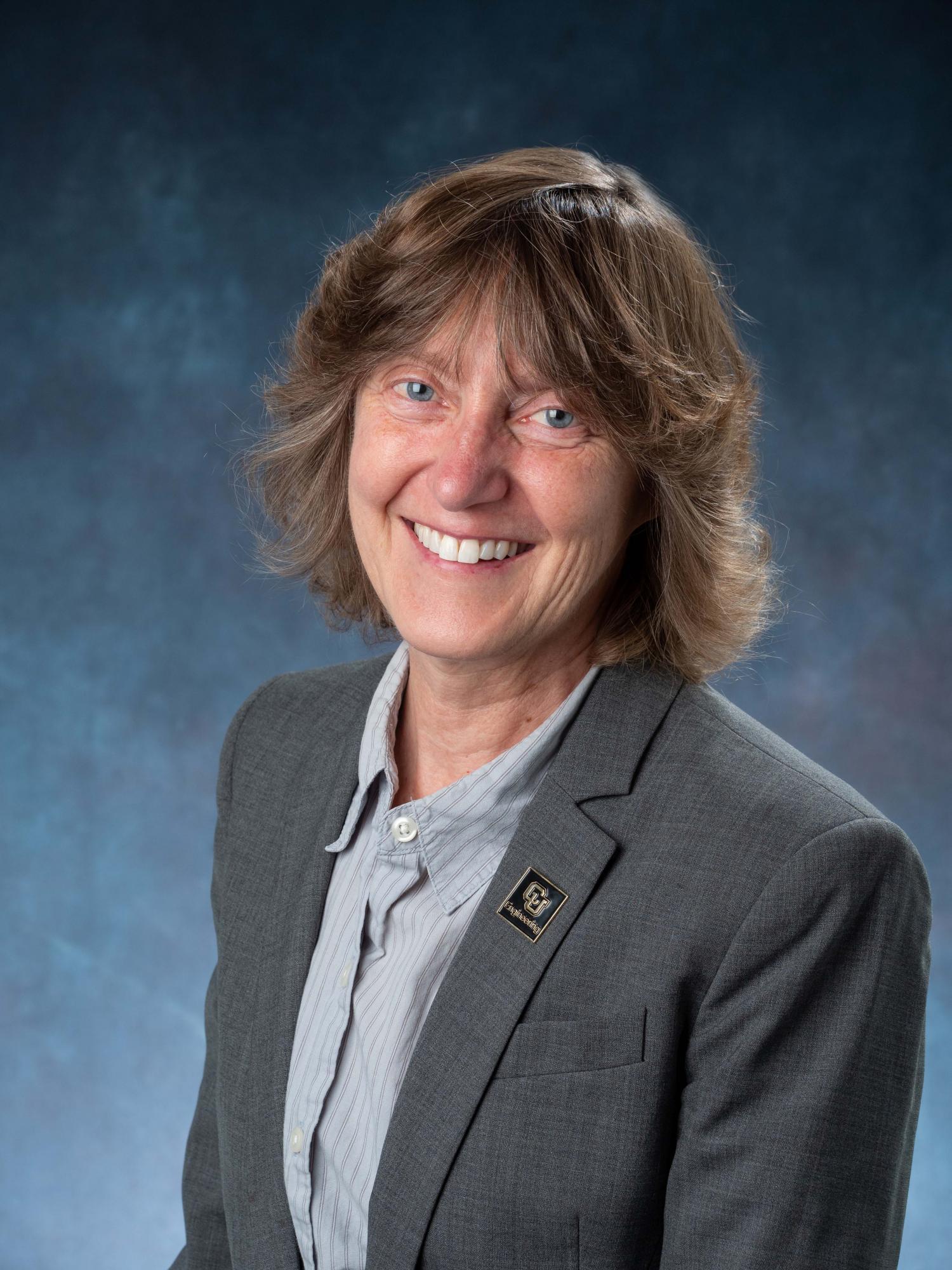
Dr. Hope Michelsen is an Associate Professor in the Department of Mechanical Engineering at the University of Colorado Boulder, specializing in Thermo Fluid Sciences and Air Quality. Her research focuses on carbonaceous particle formation mechanisms, combustion diagnostics, and their environmental impacts. She leads efforts in developing laser/X-ray-based diagnostic tools for studying soot evolution in flames and atmospheric systems. Research Interests include soot inception/growth, black carbon climate effects, and particle synthesis control. She has pioneered studies on resonance-stabilized radicals' role in soot formation and developed novel sampling techniques like jet-entrainment methods. Her work bridges fundamental combustion science with practical applications in air quality and climate mitigation. Awards: Fellow, American Physical Society Fellow, The Optical Society Alameda County Women’s Hall of Fame Inductee Lab facilities include advanced diagnostics at ECME 1B68/ECNW 180. Research collaborations involve multi-scale modeling of emissions and atmospheric transport. Current projects address wildfire soot dynamics and Arctic methane monitoring through inverse modeling techniques.
Jung-Ho Yu is Assistant Professor of Chemistry at the University of Waterloo, specializing in nanoscale bioanalytical platforms. His research develops nanotechnology for multiplexed molecular monitoring in biological systems, with applications in cancer imaging and diagnostics. Research focuses on: Design of excretable nanoparticle contrast agents Multiplexed tumor imaging using surface-enhanced Raman spectroscopy Advanced microscopy techniques for deep-tissue visualization Professional associations include the American Chemical Society and World Molecular Imaging Society. Teaches courses in Multi-Component Analysis and Analytical Chemistry.
Paul Joshua Hurst is a Postdoctoral Scholar in the Department of Chemistry at Stanford University, affiliated with the School of Humanities and Sciences. His research focuses on advanced polymer chemistry, self-assembly mechanisms, and their biomedical applications. He explores topics such as drug delivery systems, nanomedicines, and cryo-electron microscopy for material characterization. His work integrates interdisciplinary approaches, combining organic synthesis, materials science, and biophysics. Key areas of investigation include the design of bioreducible polymers for mRNA delivery, chemically driven hydrogel systems, and the structural analysis of enzyme@metal-organic frameworks using cryo-EM. He is affiliated with the CMAD, ChEM-H, and SSRL research programs. Recent research trends show a focus on reaction-driven self-assembly, sustainable polymer synthesis, and dynamic materials with tunable properties. His studies emphasize both fundamental mechanisms and translational applications in drug delivery and nanotechnology. No scientific awards have been listed in the provided information. While no student advisees are mentioned, his research contributions span over 15 peer-reviewed articles from 2020 to 2025, reflecting a strong publication trajectory in top-tier journals. His work is supported through collaborations with Stanford’s affiliated programs.
Jaewon Lee is an Assistant Professor in the Department of Mechanical and Aerospace Engineering at the University of Missouri. He holds a PhD in Chemical Engineering from Purdue University and BS/MS degrees in Chemical Engineering from Yonsei University. His research focuses on understanding self-assembly mechanisms and crystal growth dynamics, with applications in photonics, energy storage, and biomedical technologies. Education: PhD in Chemical Engineering, Purdue University MS in Chemical Engineering, Yonsei University BS in Chemical Engineering, Yonsei University Research Interests: Jaewon Lee’s work explores the interplay between colloidal forces, nanoparticle dynamics, and material properties. His studies bridge fundamental nanotechnology with practical applications, including thermoelectric materials, energy storage systems, and biocompatible nanoparticles for diagnostics. Key areas include defect engineering in nanocrystals, phase-change material encapsulation, and real-time characterization of self-assembly processes. Awards: Excellent Academic Record, Yonsei University Outstanding Graduate Student in Cancer Research, SIRG Outstanding Postdoctoral Performance, Pacific Northwest National Lab Grants & Collaborations: Lee secured a $1.1M grant ($800K NSF + $300K university) to develop real-time microscale reaction visualization tools. He also collaborates with Samsung Advanced Institute of Technology and the Korea Institute of Chemical Engineers. Labs & Teams: His lab integrates advanced microscopy, computational modeling, and materials synthesis to address challenges in nanotechnology and energy systems. Research is conducted at the interface of chemical engineering and mechanical engineering disciplines.
Tino Weinkauf is a Professor of Visualization and Head of the Division of Computational Science and Technology at KTH Royal Institute of Technology in Stockholm. His work bridges computer science and applied mathematics, with a focus on visualization and topological data analysis. He leads research in visualizing complex data from fields like fluid dynamics, neurobiology, and human-computer interaction. Education: Ph.D. in Computer Science (not explicitly stated in provided texts, but inferred from career trajectory). Research interests include flow visualization, topological methods for data analysis, and interactive visualization techniques. He develops tools like the TopoInVis Toolkit (TTK) and contributes to infrastructure such as the Swedish Research Infrastructure for Visualization Support (InfraVis). His work emphasizes applications in turbulence modeling, biomedical imaging, and user-centered design. Teaching: Responsible for courses such as Advanced Topics in Visualization and Computer Graphics , Information Visualization , and Introduction to Visualization and Computer Graphics . Supervises degree projects in Computer Science and Engineering across specializations like Machine Learning and Interactive Media Technology. Publications focus on topological data analysis, flow segmentation, and algorithm optimization. Notable projects include binary segmentation of turbulent flows and interactive reward tuning systems for preference elicitation. Labs/Teams: Leads the Division of Computational Science and Technology at KTH, fostering interdisciplinary research in computational methods and visualization technologies.
Srikanth Rangarajan is an Assistant Professor at Binghamton University's School of Systems Science and Industrial Engineering. He holds a PhD and MS from the Indian Institute of Technology Madras (2017) and a BE from Anna University Chennai (2011). His research focuses on energy storage systems, thermal management of electronics, battery optimization, and digital twinning. He previously served as an Associate Research Professor in Mechanical Engineering at Binghamton under Bahgat Sammakia. Rangarajan authored the book Phase Change Material Heat Sinks: A multi-objective Perspective and holds a patent for a rotatable heat sink design. His teaching includes optimization techniques, thermal modeling, and neural networks. Recent work explores virus spread modeling via genetic algorithms, with a preprint under review in Journal of Healthcare Informatics . He has received multiple awards including an Institute Post-Doctoral Fellowship and Research Assistantships from the Indian government. His research bridges thermal engineering with advanced manufacturing and sustainability, addressing challenges in high-power electronics and data center cooling. Education: BE in Mechanical Engineering, Anna University (2011) MS in Thermal Engineering, IIT Madras (2017) PhD in Heat Transfer, IIT Madras (2017) Research Interests: Digital twin systems for battery optimization Thermal energy storage design Advanced electronics packaging Data center cooling innovations Phase change material composites His recent articles highlight cooling solutions for high-density electronics, battery recycling challenges, and predictive models for epidemiological patterns using computational methods. Ongoing work includes embedded cooling technologies for heterogeneous integrated circuits and sustainable thermal management strategies. Awards: Patent: Rotatable Heat Sink (Government of India) Institute Post-Doctoral Fellowship (IIT Madras, 2017) Research Associate, Divecha Centre (IISc, 2017) Half-Time Research Assistantship (MHRD, 2012-2013) Advising & Grants: While no formal advisees are listed, his prior roles indicate involvement in mentorship. His research has been supported by institutional grants including those from the Indian Ministry of Human Resource Development. Labs/Teams: Active in Binghamton's Systems Science and Industrial Engineering lab, collaborating on thermal management and additive manufacturing projects.
Prof. Sebastian Kaiser is a full professor at the University of Duisburg-Essen's Institute for Combustion and Gas Dynamics, where he leads research on reactive fluid dynamics since 2011. His academic background includes a Bachelor's from Dartmouth College, Diplomingenieur from RWTH Aachen, and PhD from Yale University, followed by postdoctoral work at Sandia National Laboratories. Research Focus: Kaiser specializes in optical diagnostics for reactive systems with emphases on: High-speed imaging of combustion processes Nanoparticle synthesis via spray-flame techniques Tribology and fluid-structure interactions Engine diagnostics using laser-based methods His work bridges experimental techniques and simulation development for energy and propulsion systems. Publication Trends: Recent articles (2023-2025) demonstrate consistent focus on advanced optical diagnostics applied to combustion systems, nanoparticle synthesis, and engine research. Key methodologies include laser-induced fluorescence, high-speed imaging, and machine learning for fluid dynamics analysis. Awards & Honors: Harding-Bliss Prize for Engineering Excellence (Yale, 2005) SAE Excellence in Oral Presentation Award (2008) NRW Returning Scientists Grant (2010) Professional Affiliations: Member of Society of Automotive Engineers (SAE) and The Combustion Institute, with extensive experimental facilities for reactive flow characterization.
Lynne Grewe serves as a Professor in the Department of Computer Science at California State University, East Bay, where she maintains active research and teaching responsibilities with current office hours and contact information. Her work bridges theoretical computer science with real-world applications across healthcare, education, and emergency response domains. Her research portfolio centers on three interconnected thrusts: Medical Technology : Development of computer vision systems for stroke detection through facial pattern analysis (StrokeChange), infrared-based disease monitoring, and assistive navigation tools for the visually impaired (Seeing Eye Drone) Educational Innovation : Creation of multimodal systems like ULearn that detect student frustration using deep learning, alongside community college partnerships to broaden participation in computing Sensor Fusion Applications : Integration of multi-modal data for disaster response, infrastructure monitoring, and mobile health platforms using advanced machine learning techniques Publication analysis reveals consistent evolution toward real-time, deployable systems—particularly mobile health applications and educational tools—while maintaining foundational work in sensor fusion. Her 2020-2024 output shows increasing emphasis on healthcare applications (40% of recent work) and educational technology (25%), often combining computer vision with mobile platforms. Grewe demonstrates significant commitment to educational equity through the Faculty in Residence program, collaborating with community colleges to prepare underrepresented students for computing careers. Her Google partnership and focus on practical applications indicate strong industry engagement, though specific grant details aren't documented in source materials. Current projects suggest ongoing expansion into in-situ health monitoring and AI-driven educational support systems.
Pierre Kennepohl is a Professor and Associate Dean (Innovation) in the Faculty of Science at the University of Calgary, Department of Chemistry. He holds a PhD in Physical Inorganic Chemistry from Stanford University (2002) and a BSc in Chemistry from Concordia University. His research focuses on electronic structure & bonding, X-ray absorption/emission spectroscopy, molecular electron spin qubits, and data integrity in chemical analysis. He leads initiatives in Energy Innovations for Today and Tomorrow (2013-2021). His recent work spans catalyst design, halogen bonding mechanisms, and spectral analysis tools like SpectraFit. He advises on chemical education through courses like CHEM 201 and contributes to interdisciplinary collaborations. Research highlights include studies on CO2 reduction catalysts, copper-based antimicrobial materials, and computational modeling of reactive intermediates. His articles bridge theoretical insights with experimental validation, emphasizing sustainable chemistry and advanced spectroscopic techniques. He maintains active labs in SB231 (research office) and SB234 (laboratory).
Joerg Jinschek is a Professor at the Technical University of Denmark (DTU), leading the Nano-Micro-Macro. Structure in Materials department. He is affiliated with the National Centre for Nano Fabrication and Characterization and the VISION – Center for Visualizing Catalytic Processes. His research focuses on materials characterization, additive manufacturing, electron microscopy, and nanomaterials. Jinschek supervises multiple PhD projects, including studies on quantum dot ligands, electrocatalysts, and additive manufactured metal components. He has over 70 publications in high-impact journals and holds editorial roles, such as a reviewer for the Journal of Materials Science . Key research interests include in-situ TEM/SEM analysis of phase transformations, radiation effects in materials, and structural characterization of additively manufactured alloys. His work contributes to Sustainable Development Goals related to clean energy and industrial innovation. Jinschek’s lab, nanolab.dtu.dk , emphasizes cutting-edge microscopy techniques and microstructural analysis for advanced materials. Education: Dr. rer. nat. (PhD) in Materials Science Affiliations: National Centre for Nano Fabrication, VISION Catalytic Processes Center Grants/Projects: 9 active projects focusing on additive manufacturing, catalysis, and material characterization His recent work highlights advancements in functional graded alloys, electron beam damage mitigation, and laser-induced nanomaterials for electrochemical sensing. Jinschek collaborates internationally and actively engages in conference presentations and peer-review activities.