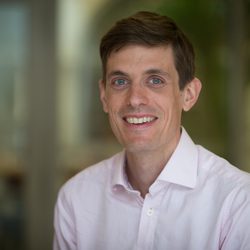
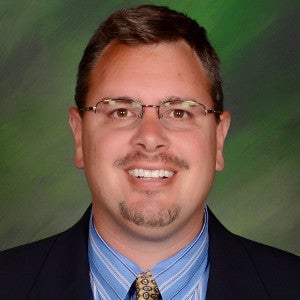
Michael A Osborne is Professor of Machine Learning at the University of Oxford and leads the Bayesian Exploration Lab . He serves as Director of the EPSRC Centre for Doctoral Training in Autonomous Intelligent Machines and Systems and co-directs the Oxford Martin AI Governance Initiative. His research focuses on Bayesian optimization, Gaussian processes, and probabilistic numerics with applications in quantum devices, battery modeling, and AI governance. Key Positions: Professor of Machine Learning, University of Oxford Official Fellow, Exeter College Co-founder of Mind Foundry Lead Researcher, Oxford Martin Programme on Technology and Employment Research Themes: Probabilistic modeling for quantum systems Uncertainty quantification in energy storage AI safety and societal impact analysis Automated experimental design Quantum device calibration Probabilistic numerical methods Technical Contributions: Bridging reality gap in quantum devices Efficient Bayesian quadrature techniques Personalized neurostimulation algorithms Automated measurement protocols Quantum-classical hybrid ML
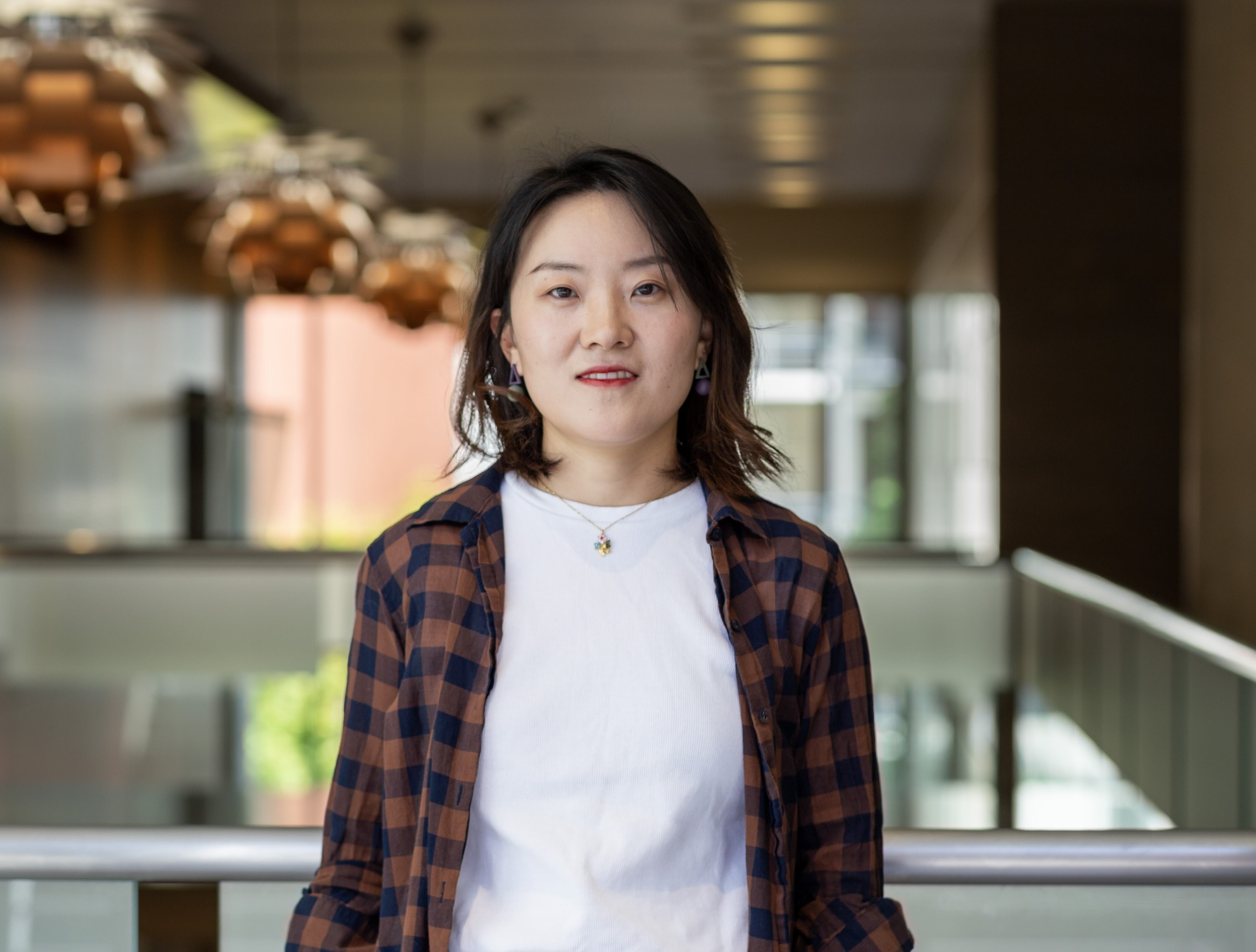
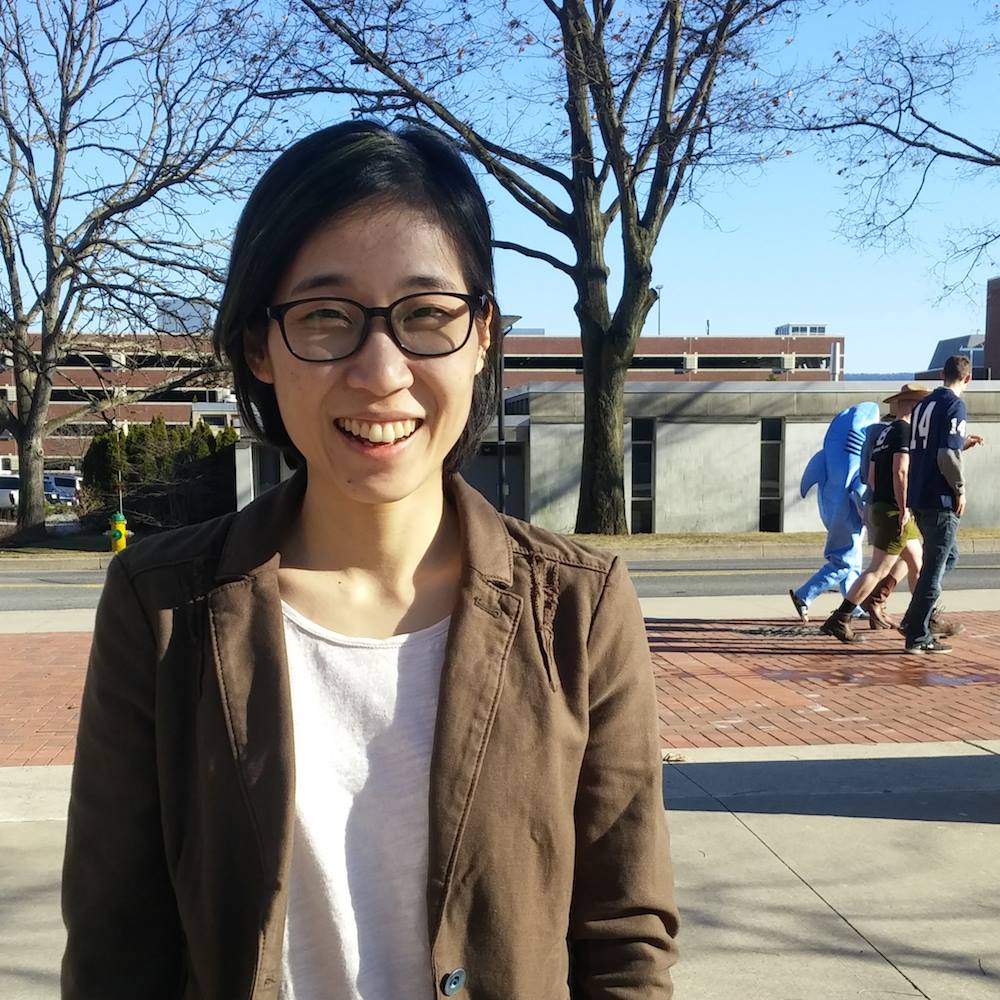
Jieyu Zhao is an Assistant Professor in the Thomas Lord Department of Computer Science at the University of Southern California (USC), part of the Viterbi School of Engineering. She holds a Ph.D. from UCLA and was a NSF Computing Innovation Fellow at the University of Maryland. Her research focuses on fairness in machine learning and NLP, particularly addressing biases in AI systems and promoting ethical AI practices. Education: Ph.D. in Computer Science (UCLA, 2021), Postdoc at University of Maryland (2022-2023), and multiple research internships at Microsoft Research, Google Research, and AI2. She also completed her undergraduate studies at the University of Virginia. Research interests include bias detection and mitigation in NLP models, trustworthy AI, and social responsibility in technology. Her work has been recognized with awards such as the EMNLP Best Long Paper Award (2017), Microsoft PhD Fellowship (2020), and EECS Rising Star (2021). She has delivered talks at conferences like NeurIPS, EMNLP, and USC Law School, and serves on committees including AAAI workflow chair. Her lab explores topics like alignment of LLMs, fairness in sequential decision-making, and ethical model interventions. She actively participates in initiatives promoting diversity and inclusion in AI, such as the UN-WOMEN Beijing panel on gender equality. Awards: 100 Brilliant Women in AI Ethics (2025), Capital One Research Award (2024), Microsoft PhD Fellowship (2020) Grants: NSF Computing Innovation Fellowship, USC Viterbi funding Labs/Teams: Leads the USC Lab focused on trustworthy AI and ethical NLP
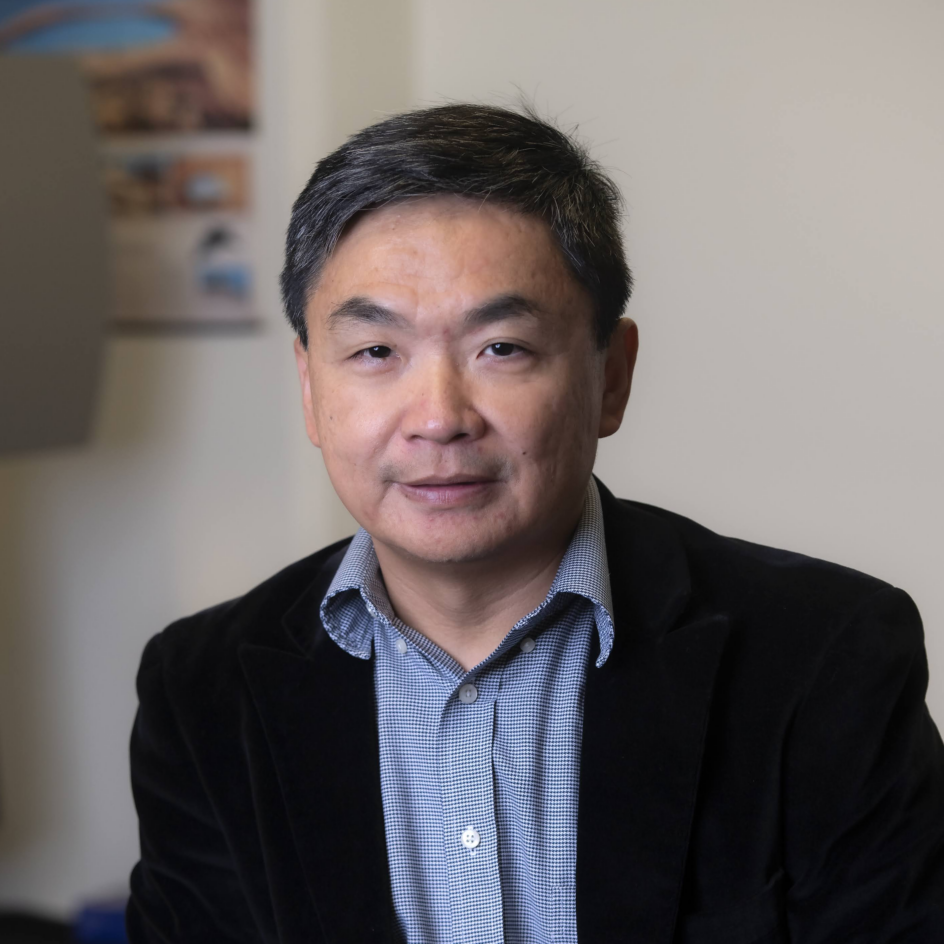
Chen Li is a Professor in the Department of Computer Science at the University of California, Irvine (UCI), affiliated with the Donald Bren School of Information and Computer Sciences (ICS). He holds a Ph.D. from Stanford University and bachelor's and master's degrees from Tsinghua University. His research focuses on data management, including databases, query optimization, machine learning systems, and open-source tools like AsterixDB and Texera. He has received prestigious awards such as the NSF CAREER Award and IEEE Fellow recognition. Li is also a board member of the VLDB Endowment and the former Faculty Director of UCI's ICS Master of Computer Science Program. Education: Ph.D., Computer Science, Stanford University M.S. and B.S., Computer Science, Tsinghua University Research interests span next-generation databases, approximate query processing, and AI-driven data analytics. Notable contributions include the Texera system for collaborative data science workflows and the Apache AsterixDB project. He has led NIH-funded initiatives in diabetes research and pandemic prediction, emphasizing real-world applications of data science. Professional roles include PC co-chair of VLDB 2015, General Co-chair of SIGMOD 2027, and a visiting research scientist at Google. His awards highlight his impact in both academia and industry. Advising and mentoring are central to his career, with a focus on graduate education. He has pioneered outreach programs like DS4ALL to teach high-school students data science using Texera.
Soumya Dutta is an Assistant Professor in the Department of Computer Science and Engineering at the Indian Institute of Technology Kanpur (IITK), where he leads the INSIGHT: Intelligent Scientific and Visual Computing of Big Data Research Group. He joined IIT Kanpur in October 2022 after working as a Scientist II at Los Alamos National Laboratory (LANL) from July 2019 to August 2022, and previously as a Postdoctoral Research Associate at LANL from June 2018 to July 2019. His educational background includes a Ph.D. and M.S. in Computer Science and Engineering from The Ohio State University (2011-2018), where he was part of the GRAVITY research group, and a B.Tech. in Electronics and Communication Engineering from West Bengal University of Technology, India (2005-2009). Research Interests: Dr. Dutta's research focuses on the intersection of machine learning, visual computing, big data, and high-performance computing. His primary research areas include Machine Learning for Visual Computing and Image Analysis, Big Data Visualization and Analytics, Data Science and HPC, Machine Learning for Scientific Computing, and Explainability and Interpretability of AI Models. His work addresses various big data characteristics including the 5 Vs: Volume, Velocity, Variety, Veracity, and Value. He develops techniques that make complex machine learning models more interpretable and explainable, enabling their effective adoption in real-life applications across scientific domains, social media, IoT, healthcare, and industry applications. Dr. Dutta's research group has secured multiple funded projects including: DAVi: An Intelligent Data Analytics and Visualization Framework (funded by ISRO), Intelligent Visual Computing of Extreme-scale Data for Accelerating Scientific Discovery (IIT Kanpur Initiation Grant), Enabling Interactive Big Data Analytics and Visualization at Exascale (SERB), Development of AI-Enabled National Portal for Efficient Search of Missing People (C3iHub), and Proactive and Generalized Deepfake Defense Mechanisms (C3iHub). Best Reviewer, Honorary Mention Award for IEEE Transactions on Visualization & Computer Graphics (TVCG), 2021 Best Paper Award at ISAV 2021, co-located with Supercomputing (SC) LAAP Award at Los Alamos National Laboratory, 2021 Best Paper Award at TopoInVis 2019 Best Paper Award at ISAV 2018, co-located with Supercomputing (SC) Best Poster Award in 12th Annual CSE Student Poster Exhibition, The Ohio State University, 2018 Best Poster Award in 11th Annual CSE Student Poster Exhibition, The Ohio State University, 2017 Best Paper Honorable Mention Award at IEEE Visualization Conference (IEEE VIS) 2016 Dr. Dutta actively mentors a large group of students including Ph.D., M.Tech., and B.Tech. students. His current Ph.D. students include Shanu Saklani, Sankhadeep Bhowmick, Ananya Chaturvedi, Arpita Santra, Anubhav Dixit (co-supervised), and Robin Shah. He has supervised numerous M.Tech. students with thesis topics ranging from uncertainty-aware neural networks to deepfake detection. Dr. Dutta currently teaches courses including CS360 - Introduction to Computer Graphics and CS661 - Big Data Visual Analytics. The INSIGHT research group collaborates internationally with researchers from Meta, Oak Ridge National Laboratory, and National Taiwan Normal University. The group's work focuses on building machine learning and data science-based solutions to analyze large-scale multifaceted data in a scalable way, enabling interactive and interpretable analytics of complex data from scientific simulations, social media, IoT, healthcare, and other application domains.
Michael Nebeling is an Associate Professor at the University of Michigan's School of Information (UMSI), leading the Information Interaction Lab. His research focuses on Augmented, Virtual, and Mixed Reality (XR) interfaces, emphasizing usability, accessibility, and privacy. He co-directs the HCI seminar series in the Michigan Interactive and Social Computing (MISC) group and teaches AR/VR courses (SI 559/659). Nebeling has held roles such as UIST 2026 General Co-Chair and CHI 2026 Subcommittee Co-Chair. He pioneered the Extended Reality for Everybody Coursera specialization and the XR MOOC series . His work includes projects like XRDirector , MRAT , and 360proto , addressing challenges in XR design and tool development. Awards include the Disney Research Faculty Award, Mozilla Research Award, and Epic MegaGrant. He advises the student-led Alternate Reality Initiative (ARI) and collaborates with industry partners like Meta, Epic, and Disney. Education: PhD in Computer Science from ETH Zurich (2015), Postdoc at Carnegie Mellon University's Human-Computer Interaction Institute (2016). Research Themes: XR toolkits, privacy/security in AR/VR, inclusive design, educational applications, and ethical considerations in mixed reality. Over 90 publications in venues like CHI, UIST, and ACM Transactions on CHI. Awards: Disney Research Faculty Award (2018), Mozilla Research Award (2018), Epic MegaGrant (2019), Meta Reality Labs Gift (2020). Recognized with Best Paper Awards at CHI and UIST.
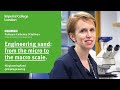
Prof. Catherine O'Sullivan is a Professor of Particulate Soil Mechanics at Imperial College London's Department of Civil and Environmental Engineering, part of the Faculty of Engineering. She leads the Geotechnics Section and serves as Editor-in-Chief of the ASCE Journal of Geotechnical and Geoenvironmental Engineering. Her research focuses on particulate soil mechanics, employing Discrete Element Modelling (DEM) and micro-CT imaging to study sand behavior, reservoir sandstones, and internal erosion. Notable recognitions include the 2016 Shamsher Prakash Research Award and the 2021 President’s Teaching Innovation Award. Education : PhD in Civil Engineering, University of California, Berkeley (2002) MEngSc in Civil Engineering, University College Cork (Ireland) BEng (Civil Engineering), University College Cork (Ireland) Research Interests : Prof. O'Sullivan's work integrates computational and experimental methods to explore granular material behavior. Key areas include DEM validation, μCT analysis, and pore network modeling. Her group collaborates across disciplines, involving physicists and mechanical engineers alongside civil engineers. Awards & Recognition : 2015 Geotechnique Lecture Student Choice Supervision Award (nominated twice) 2023 Alert Geomechanics Special Lecture Advising & Grants : She supports PhD and postdoctoral researchers through Imperial scholarships and fellowships. Her students often explore particulate soil behavior, with many securing prestigious awards. Labs & Teams : Leads the Geotechnics Section at Imperial, fostering interdisciplinary research in geomechanics and computational modeling.
Long Cai is a Professor at the California Institute of Technology, affiliated with the Biology and Biological Engineering department. He pioneered the field of spatial genomics and co-developed transformative technologies such as seqFISH and MEMOIR. Research Interests: His work focuses on decoding biological systems through spatial genomics, integrating molecular imaging with computational analysis to uncover cellular organization in tissues. Key areas include developmental biology, neuroscience, kidney regeneration, and cancer biology. Publications: Recent studies highlight applications of spatial transcriptomics in kidney disease, brain nuclear architecture, and multi-omics tissue mapping. His research emphasizes creating high-resolution atlases of cellular dynamics. Scientific Awards: NIH Director’s Pioneer Award (2022) Labs & Collaborations: He leads the Cai Lab, which develops cutting-edge imaging tools in collaboration with the Elowitz Lab and other interdisciplinary teams.
Hank Childs is a Professor in the School of Computer and Data Sciences at the University of Oregon, specializing in scientific visualization and high-performance computing. He leads the Research Group on Computing and Data Understanding at eXtreme Scale (CDUX) and has held leadership roles including Interim Executive Director of the School of Computer and Data Sciences. His educational background includes a Ph.D. (2006) and B.S. (1999) in Computer Science from the University of California at Davis. Prior to academia, he worked for 14 years at Lawrence Livermore and Lawrence Berkeley National Laboratories, where he served as architect of the VisIt open-source visualization tool. Research interests center on visualizing extreme-scale scientific datasets from supercomputers, with a focus on in situ visualization for cosmology, seismology, and fluid dynamics. He has pioneered projects like VTK-m and Ascent, and his work explores power-performance tradeoffs and data-parallel algorithms for GPUs. Recent publications emphasize scalable visualization techniques for exascale computing, with 15 notable works from 2021-2020 covering particle advection, in situ triggering, and power-aware frameworks. His research has been honored with multiple best paper awards at IEEE LDAV, EGPGV, and SC conferences. DOE Early Career Award (2012) University of Oregon Faculty Excellence Award (2018) 4+ million dollars in research funding since 2013 5 Best Paper awards in 2021 alone As an educator, he received four consecutive CIS Best Teacher Awards (2014-2019). He has served as Associate Editor for IEEE Transactions journals and organized numerous visualization workshops including Dagstuhl seminars and Shonan workshops.
Emad Oveisi serves as a Research and Teaching Associate at École Polytechnique Fédérale de Lausanne (EPFL), primarily affiliated with the Interdisciplinary Centre for Electron Microscopy (CIME) at the EPFL Valais Wallis campus in Sion. He simultaneously holds roles in EDCH-ENS (Teaching), EDMX-ENS (Teaching), the Teachers Council (CCE), and the EPFL Assembly (AE), reflecting his multifaceted contributions to research, education, and academic governance. His academic foundation includes a PhD in Materials Science and Engineering from EPFL (2014), an MSc from the University of Tehran (2008), and a BSc in Metallurgy and Materials Engineering from the University of Tehran (2005). PhD: Materials Science and Engineering, EPFL (2014) MSc: Materials Science and Engineering, University of Tehran (2008) BSc: Metallurgy and Materials Engineering, University of Tehran (2005) Oveisi pioneers advanced electron microscopy techniques with emphasis on real-time 3D imaging of crystal defects and precision measurement of materials properties using aberration-corrected S/TEM. His work bridges fundamental materials science with practical applications in nanotechnology and in situ dynamic analysis, enabling breakthroughs in visualizing atomic-scale structural evolution. His research directly supports over 250 researchers across 12 interdisciplinary groups at EPFL-Valais. His scientific excellence is recognized through prestigious awards: Rodolphe and Renée Haenny Prize (2022) for contributions to electron microscopy techniques and teaching dedication Microscopy Today Innovation Award (2018) for inventing "Single-shot three-dimensional electron imaging" Oveisi actively mentors the next generation of scientists as evidenced by his supervision of PhD student Gulnaz Ganeeva. His research program receives substantial support from major funding bodies including the Swiss National Science Foundation (SNSF), European Research Council (ERC), Horizon 2020, and the Research Council of Norway. Beyond the lab, he shapes institutional policy as an elected member of EPFL's Teachers Council Bureau and the School Assembly. As manager of EPFL-Valais' electron microscopy platform, Oveisi leads a critical infrastructure hub serving diverse research teams. His operational framework integrates cutting-edge instrumentation with rigorous safety protocols, while his collaborative approach fosters cross-departmental innovation in materials characterization across physics, chemistry, and engineering disciplines.
David Lindlbauer is an Assistant Professor at Carnegie Mellon University's Human-Computer Interaction Institute (HCII), where he leads the Augmented Perception Lab and co-directs the CMU Extended Reality Technology Center. His research focuses on advancing Mixed Reality (MR) and Extended Reality (XR) interfaces through computational interaction methods that optimize spatial, temporal, and multimodal feedback.
Amol Deshpande is a Professor in the Department of Electrical Engineering and Computer Sciences at the University of California, Berkeley, College of Engineering. With over 160 publications spanning from 2000 to 2025, his research has significantly impacted the database systems community. His work bridges theoretical foundations with practical systems, evidenced by numerous publications in top-tier venues including SIGMOD, VLDB, and ICDE. Professor Deshpande's research focuses on database systems, with particular expertise in graph databases, data management, probabilistic databases, query optimization, and data provenance. His work addresses fundamental challenges in managing complex data, including efficient graph analytics, dataset versioning, streaming data processing, and privacy-preserving data management. Recent research directions include entity-relationship abstractions beyond traditional relations, standalone catalog engines for large data systems, and graph theoretical approaches to dataset versioning. His publication trends show a consistent focus on evolving database technologies, with early work on probabilistic databases and query optimization, transitioning to graph analytics and data provenance, and more recently addressing modern challenges in data cataloging, privacy-first data management, and serverless stream processing. His research spans both theoretical contributions (e.g., approximation algorithms for stochastic optimization) and practical systems building (e.g., RStore, TreeCat). Professor Deshpande has mentored numerous PhD students who have become active researchers in the database community, including Hui Miao, Souvik Bhattacherjee, and Konstantinos Xirogiannopoulos. His collaborative work spans across institutions, with frequent collaborations with researchers from MIT, University of Maryland, and other leading institutions. His research has been supported by major funding agencies and has influenced both academic research and industry practices in data management. The evolution of his work reflects the changing landscape of data management, from traditional relational systems to modern graph and streaming data challenges.
Gianmarco Pinton is an Associate Professor in the Department of Biomedical Engineering at the University of North Carolina at Chapel Hill. His research focuses on nonlinear ultrasound and mechanical wave propagation, with applications to medical imaging and therapy. He specializes in traumatic brain injury, shear shock waves, and ultrasound therapy. Ph.D., M.S., and B.S.E. in Biomedical Engineering/Physics from Duke University His lab develops physics and simulation tools for nonlinear wave propagation, aiming to create advanced diagnostic ultrasound methods. Key areas include traumatic brain injury, transcranial imaging, and therapeutic ultrasound. His recent work explores super-resolution imaging, brain motor circuits, and Alzheimer's disease vascular mapping using ultrasound. Article trends highlight innovations in transcranial ultrasound, super-resolution techniques, lung imaging, and neuromodulation. His publications address image degradation, contrast agents, and shear wave dynamics in neurological contexts.
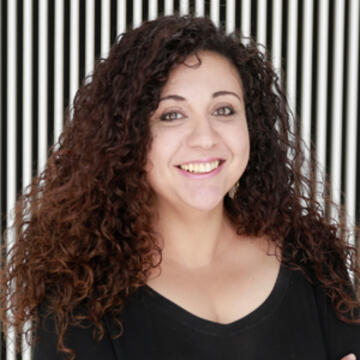
Dina El-Zanfaly serves as an Assistant Professor in the School of Design at Carnegie Mellon University (CMU), where she directs the hyperSENSE: Embodied Computations Lab. Her work bridges computational design and human-centered interaction, focusing on how physicality shapes sensory experiences and cognitive processes through intelligent systems. Education: PhD in Design and Computation, Massachusetts Institute of Technology (MIT) Master of Science in Design and Computation, MIT (Fulbright scholar) Her research critically examines computational methods for augmenting sensory perception, with emphasis on embodied sense-making in hybrid environments. She investigates co-creative interactions between humans and intelligent systems, exploring how computational tools empower designers and non-designers to shape products, social spaces, and interconnected technologies. Key questions address mutual learning between humans and machines through improvisation and creative production. Analysis of her 2022-2025 publications reveals dominant themes in mixed reality interfaces, AI-augmented skill acquisition (particularly in crafts and welding), and tangible co-creation with generative AI. Her work consistently integrates physical computing with mindfulness applications and privacy-aware smart environments, demonstrating interdisciplinary reach across education, manufacturing, and therapeutic contexts. Scientific Awards: Fulbright Scholarship As lab director, El-Zanfaly mentors students in computational making and embodied interaction projects. Her research is supported through initiatives like Fab Lab Egypt and collaborations with MIT, where she co-founded the Computational Making Group. She chairs major conferences including Fab15 in Egypt and serves on the DESFORUM program committee, indicating significant leadership in maker education and design research communities. She founded and leads the hyperSENSE Lab at CMU, which investigates computational embodiment through projects like Origami Sensei and Sand-in-the-loop. Previously, she co-established the Computational Making Group at MIT and co-founded Fab Lab Egypt (the first community maker space in North Africa/Arab world), demonstrating sustained commitment to global maker ecosystems and interdisciplinary team building.
Jung Soo Lim is an Assistant Professor in the Department of Computer Science at California State University, Los Angeles, within the College of Engineering, Computer Science, and Technology. He earned his B.S. from Cal State LA and M.S. and Ph.D. from UCLA, returning to his alma mater as a part-time lecturer in 2014 before transitioning to a full-time assistant professor role in 2019. Education: B.S. (Cal State LA), M.S. (UCLA), Ph.D. (UCLA) His research focuses on Internet of Things (IoT) , Cyber-Physical Systems , Wireless Networking , Software Engineering , and Medical Computing . He has active projects in IoT applications for healthcare, urban safety, and wastewater monitoring, including the Center for Inclusive Computing (CIC) Transfer Pathways Project. Recent publications highlight interdisciplinary work bridging IoT, healthcare diagnostics, and smart city infrastructure. Notable topics include stroke detection algorithms , IoT communication protocols , and sensor-based environmental monitoring . Scientific Awards: Outstanding Senior at Cal State LA (1997) He teaches core computer science courses such as Computer Programming Fundamentals and Analysis of Algorithms, and actively mentors graduate students. His lab focuses on developing embedded systems and IoT solutions for real-world challenges.
Eun Kyoung Choe is an Associate Professor in the College of Information at the University of Maryland, College Park. She returned to UMD in Fall 2024 after a year-long sabbatical at Seoul National University’s Computer Science Department. Her research bridges Human-Computer Interaction (HCI), Health Informatics, and Ubiquitous Computing, with a focus on designing inclusive and accessible health technologies for marginalized populations such as blind and low-vision individuals, older adults, and stroke survivors. She earned her BS from KAIST, MIMS from the University of California, Berkeley, and PhD in Information Science from the University of Washington, where she received the Distinguished Alumni Award in 2024. Her research focuses on creating technologies that empower individuals to manage their health through personalized and accessible systems. Key areas include personal informatics, semi-automated tracking, teachable interfaces, and mobile data visualization. She investigates how people reflect on personal data and how visualizations can support insight generation, particularly on mobile devices. Her work emphasizes inclusive design, addressing health disparities through accessible technologies. The trends in her recent publications reveal a strong focus on health equity, aging, and rehabilitation. Her research spans activity tracking for older adults, stroke recovery systems, and inclusive health technologies for people with disabilities. She leverages mixed-methods approaches, co-design, and user-centered development to build systems that are both technically sound and socially impactful. Distinguished Alumni Award, University of Washington, 2024 Dr. Choe has advised several students and researchers, including Young-Ho Kim, Diana Chou, and Sabahat Fatima, and leads interdisciplinary teams on projects funded by NSF, NIH, and Microsoft Research. Her major projects include MyMove (personalized activity tracking for older adults), mHealth platforms for stroke survivors, and OmniTrack (flexible self-tracking tools). She has served on editorial boards of PACM IMWUT and Foundations and Trends in HCI and co-chaired the Health Subcommittee for CHI (2021–2023). Her work continues to advance the frontiers of accessible and human-centered health technologies. She leads the Inclusive and Accessible Health Tracking Lab, where her team develops technologies in collaboration with users from marginalized communities. The lab emphasizes participatory design, real-world deployment, and ethical considerations in health technology development.