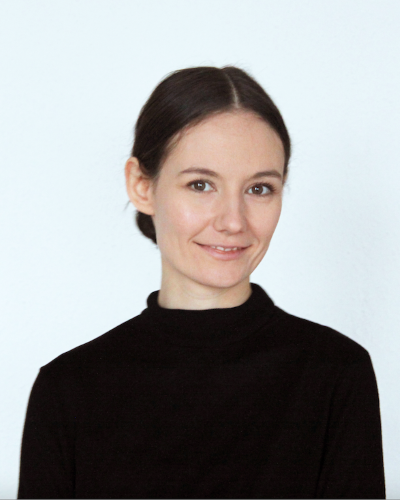
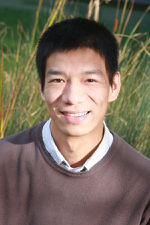
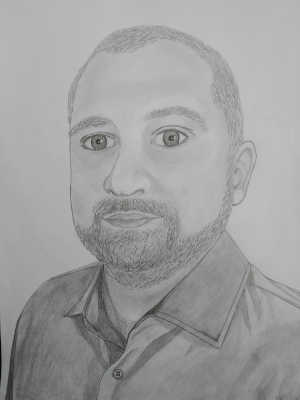
Robert Miller is a Professor of Biopsychology at the Institute of Psychology, Faculty of Natural Sciences, Technische Universität Dresden. His research focuses on endocrine time series analysis, stress biomarkers (e.g., cortisol), and psychometric diagnostics for sensory processing. He holds a Diplom (MSc equivalent) in Psychology from Georg-August University Göttingen and has been a research assistant at TU Dresden since 2010. Key research areas include neuroendocrine stress responses, hair cortisol analysis, and methodological advancements in biomarker research. He co-authored guidelines for cortisol awakening response assessment and pioneered studies on cortisol’s impact on cognitive functions like memory and visual processing. His work bridges biostatistics, neuroimaging, and clinical applications. Awards: Scholarship from Saxonian State Ministry of Education & Arts Lab Affiliation: Chair of Biopsychology, TU Dresden Key Projects: Dresden Burnout Study (bio-psychological burnout mechanisms), CIRCORT database (salivary cortisol reference ranges) Publications span stress physiology, biomarker validation, and translational medicine, emphasizing methodological rigor in endocrine research and clinical translation.
Prof. Werner Martin is a Professor of Big Geospatial Data Management at the Technical University of Munich (TUM), affiliated with the School of Engineering and Design and the Department of Aerospace and Geodesy. His research focuses on georeferenced data processing, distributed computing, quantum algorithms, and machine learning applications in geospatial contexts. Prof. Martin holds a doctorate from LMU Munich and has held academic and research positions at institutions including LMU Munich, Leibniz-University Hannover, the German Aerospace Center (DLR), and UniBW Munich. His work bridges theoretical advancements with practical applications in spatial data analysis, visualization, and high-performance computing. Awards ACM SIGSPATIAL GIS Certificate of Appreciation (2019) 1st place ACM SIGSPATIAL GIS Cup (2015) IPIN Best Paper Award (2014) His recent publications emphasize geospatial AI, quantum computing for data processing, and environmental monitoring systems. Collaborations with industry partners like DLR highlight his focus on real-world geospatial challenges.
Prof. Veit Köppen holds the Professorship for Library Science - Technologies, Systems and Services at the University of Applied Sciences Potsdam (since 2023). He previously served as Director for Digital Development and Network Affairs at the Central and State Library of Berlin (2020-2023), and held leadership roles in IT and academic research at institutions like Otto von Guericke University Magdeburg and Humboldt University Berlin. His research focuses on database technology, data management, business process optimization, and library information systems. Notable contributions include work on multi-dimensional index structures, learning analytics metadata models, and FAIR data principles. He chairs the Departmental Council and represents library interests at Potsdam. His expertise spans digital transformation, data warehousing, and privacy-preserving systems. Over 50 peer-reviewed publications reflect his interdisciplinary impact across library science, computer science, and business informatics.
Susanne Kather is a Researcher at the Axel Springer Endowed Chair for German-Jewish Literature and Cultural History, Exile and Migration at Europa-Universität Flensburg. Since November 2021, she has been a Research Associate in the DFG-funded project 'Digitales Archiv jüdischer Autorinnen und Autoren in Berlin 1933-1945' (DAjAB). Her expertise spans political science, gender studies, and National Socialist history, with a focus on gender relations under authoritarian regimes. Education: Political Science diploma thesis at Freie Universität Berlin (2021), titled 'Nurses as perpetrators of the National Socialist murder of the sick. The portrayal of female Nazi perpetrators in the media coverage of the Munich ‚nurses trial‘.' Research interests include intersectional analyses of gender and violence, media representation of historical perpetrators, and Holocaust studies. Her interdisciplinary work bridges media studies, history, and political science. She brings extensive experience in genealogical research and digitization from over a decade of professional genealogical practice. Professional roles include work at the Berlin-Hohenschönhausen Memorial Foundation (2013-2014) and ongoing contributions to DAjAB’s archival digitization efforts. Her skills in handling 20th-century archival data and database systems enhance the project’s methodological rigor.
Dr. Richard Herzog is a Researcher affiliated with the Collaborative Research Center (SFB 138) 'Dynamics of Security' at Philipps-Universität Marburg. He holds a Dr. Phil. from Justus Liebig University Giessen (2021), focusing on Nahua voices in colonial Central Mexico. His career includes postdoctoral scholarships at the Leibniz Institute of European History (2021–2020) and the International Graduate Center for the Study of Culture (2016–2019). Herzog’s research interests span Ibero-American colonial history, ethnohistory of the Nahua, food history, digital humanities, and decolonial studies. He currently leads the database and website 'Dynastische Eheverträge der Frühen Neuzeit' and teaches global history courses at Marburg. Key research projects include intercultural marriage politics in colonial Ibero-America and the impact of food transfers between Spanish America and Europe. He has published widely on Indigenous historiography, colonial governance, and emotions, earning the 2022 'Preis der Zeitschrift für Weltgeschichte.' Herzog actively collaborates with institutions like the Max Planck Institute and presents at global conferences on topics ranging from Nahua cosmology to colonial epidemics.
Dr. Daniel Lindner is a researcher at the Information Systems Group of the Hasso Plattner Institute. His work focuses on integrating data dependencies into database query optimization through unsupervised discovery techniques and advanced optimization methods. Research Area: Data Profiling, Query Optimization, Data Quality Teaching: Lecturer for 'Develop Your Own Database' (Summer 2022, 2023, 2025) and 'Advanced Data Profiling' (Winter 2023/24) Contact: daniel.lindner@hpi.de | Room F-2.07 | +49 (331) 5509-3475 His research aligns with the group's projects including Metanome (Big Data Profiling), Metis (Data Quality Assessment), and KITQAR (Data Quality for AI Applications). Recent work explores workload-driven data encoding trade-offs and CXL memory integration for database systems. Key contributions include publishing in venues like SIGMOD, CIDR, and EDBT. He co-supervised Niklas Riekenbrauck's 2023 master's thesis on CXL-attached memory buffer management.
Hannes Mühleisen is a prominent database systems researcher affiliated with Centrum Wiskunde & Informatica (CWI) in Amsterdam, with a PhD from Free University of Berlin (2012) in distributed query processing. His research spans database architecture, embedded analytics, and query optimization, with significant contributions to the DuckDB open-source analytical database project. His primary research interests focus on embedded analytical database systems , query processing optimization , columnar storage , and database reliability . Mühleisen's work bridges theoretical database concepts with practical implementations, particularly in the context of analytical workloads. His research demonstrates how database systems can be optimized for modern hardware architectures including WebAssembly and tensor processing units. Mühleisen has published extensively in top database venues including VLDB, SIGMOD, ICDE, and SSDBM, with a consistent publication record from 2009 through 2025. His recent work shows increasing focus on robustness, reliability, and practical deployment of database technology in diverse environments from the web browser to scientific computing contexts. His collaborations reveal strong ties to the CWI database research group, with frequent co-authorship with Peter Boncz, Martin Kersten, and Mark Raasveldt. Mühleisen's work on DuckDB has made significant impact in the data science community as an embedded analytical database solution.
Prof. Lucia Melloni is a Research Professor at New York University (NYU) School of Medicine's Department of Neurology and a W2 Group Leader (Tenure) at the Max Planck Institute for Empirical Aesthetics, leading the Research Group Neural Circuits Consciousness and Cognition. She holds a PhD in Psychology from the Catholic University of Chile and the Max Planck Institute for Brain Research. Her work focuses on neural mechanisms underlying consciousness, predictive processing, and brain plasticity. She has held positions at Columbia University, the Max Planck Institute for Brain Research, and Goethe University. Key achievements include developing methods for analyzing neural correlates of consciousness and advancing theories on predictive coding in sensory and cognitive systems. Education : PhD, Psychology (2006); BA in Psychology (2000) and Social Sciences (1995) from Catholic University of Chile. Affiliations : NYU School of Medicine (since 2020), Max Planck Institute for Empirical Aesthetics (since 2017). Research Interests : Domain-general cortical computations, neural mechanisms of perception and language comprehension, consciousness theories, and neuroplasticity. Her lab investigates how the brain uses predictions to control sensory processing and cognition, with implications for understanding disorders like minimally conscious states. Recent Work : Recent articles explore perceptual biases, auditory predictive processing, and adversarial testing of consciousness theories. Her work bridges clinical neurology and cognitive neuroscience, emphasizing methodological rigor and interdisciplinary collaboration. Awards : Israel Institute for Advanced Studies Fellow (2019), AcademiaNet member (2018). Grants : Over €10M secured from Templeton World Charity Foundation, NIH, and ONR for projects on consciousness, neural correlates, and cognitive neuroscience. Labs/Teams : Leads the Neural Circuits, Consciousness, and Cognition group at Max Planck, collaborating with institutions globally on projects like the Consciousness Theories Studies (ConTraSt) database.
Bartolomeo Montrucchio is a full Professor at the Polytechnic University of Turin's Department of Electrical, Computer and Biomedical Engineering. His research focuses on IoT systems, quantum computing applications, RFID technologies, and sensor networks. He leads interdisciplinary projects involving environmental monitoring, cybersecurity, and embedded systems design. Key research areas include: Development of low-cost air quality monitoring systems leveraging IoT and sensor fusion Quantum algorithm design for financial risk analysis and game theory applications RFID security protocols and anti-collision mechanisms for dense networks Energy-efficient image processing techniques for mobile displays Recent work highlights quantum computing's potential in vulnerability analysis and financial modeling, while maintaining strong contributions to sensor network reliability and environmental applications. His publications span prestigious journals like IEEE Internet of Things Journal and IEEE Transactions on Dependable and Secure Computing. Collaborations with industry partners and academic institutions emphasize practical implementation of theoretical advancements, particularly in smart city technologies and healthcare monitoring systems.
Dr. Long Cheng was a former Researcher at the International Center for Computational Logic (ICCL) within the Faculty of Computer Science at TU Dresden. His research focused on cloud computing, big data analytics, and distributed systems, particularly in optimizing large-scale data processing, outer join operations, and semantic web technologies. He contributed to projects involving parallel programming models like X10, MapReduce frameworks, and efficient data compression techniques for RDF datasets. Cheng collaborated with the Knowledge-Based Systems research group, addressing challenges in scalable systems, high-throughput indexing, and parallel reasoning under non-monotonic logics. His work emphasized performance optimization in distributed environments, including skew handling, data redistribution strategies, and algorithm scalability for large datasets. Publications span topics such as outer join evaluation in cloud environments, efficient compression of semantic web data, and high-performance query execution over distributed systems. His research bridges theoretical computational logic with practical applications in big data and cloud infrastructure.
Jeffrey F. Naughton is a Professor at the University of Wisconsin and works at Google Inc in Madison, WI, USA. His academic career spans decades with significant contributions to database systems, data mining, and privacy-preserving analytics. Research Interests : Distributed query processing and optimization Machine learning integration with relational databases Differential privacy in data analysis Scalable data warehousing systems Energy-efficient database architectures Temporal data management Article Trends : Over the past decade, Naughton's publications demonstrate a trajectory from foundational database optimization to modern challenges in scalable analytics and privacy-preserving techniques. Key themes include query execution prediction, workload summarization, and system design for big data environments. Scientific Awards : ACM Software System Award (2008) - Recognizing his contributions to database software systems Collaborative Network : He has collaborated with leading researchers including AnHai Doan (entity matching), Somesh Jha (privacy), and Stratis Viglas (query optimization), producing impactful work in SIGMOD, VLDB, and ICDE venues.
Francisco José Cuesta Valero is a researcher at the Helmholtz Centre for Environmental Research - UFZ in the Department of Remote Sensing . His work focuses on climate change, Earth's energy imbalance, and subsurface thermal dynamics using remote sensing and climate models. Education: Ph.D. in Environmental Sciences, Memorial University of Newfoundland (2020) Master in Earth Sciences, St. Francis Xavier University (2016) BSc in Physics, University of Murcia (2013) Research Interests include: Earth's heat inventory quantification Satellite-based ground heat flux estimation Permafrost and climate feedbacks Borehole climatology methods Thermodynamic modeling of soil-bedrock systems Scientific Contributions reveal trends in climate modeling, heat storage metric development, and land-air temperature coupling analysis. His publications span 2016-2024 with 20+ peer-reviewed works. Awards: Alexander von Humboldt Research Fellowship (2021) He contributes to major projects like G-Flux (global ground heat flux from satellite data) and AI4GHEObs (machine learning for heat flux estimation). Collaborates with institutions including Memorial University, St. Francis Xavier University, and international climate research centers.
Mohammad Sadoghi is a Professor in the Department of Computer Science at University of California, Davis, where he leads the Exploratory Systems Lab. His research spans database systems, distributed computing, and blockchain technologies with over 54 publications from 2007-2025 and more than 900 citations. His primary research domains include: Distributed database transactions Byzantine fault tolerance Consensus protocols Event processing systems Blockchain applications Database indexing techniques Prof. Sadoghi's publication trajectory shows evolution from foundational work on boolean expression indexing and event processing to cutting-edge research on blockchain consensus mechanisms. His recent work (2023-2025) demonstrates significant contributions to understanding BFT protocols, with publications in top venues like VLDB, EuroSys, and IEEE TKDE. His research bridges theoretical analysis with practical implementations, particularly focusing on performance optimization and security in distributed environments. His notable recognition includes: ACM Senior Member (2020) Prof. Sadoghi has advised multiple doctoral students who have become active researchers in distributed systems, including Suyash Gupta and Thamir M. Qadah. His lab has secured research funding for projects spanning database engines, consensus protocols, and blockchain infrastructure. The Exploratory Systems Lab maintains strong industry and academic collaborations worldwide, with recent work focusing on edge-cloud consensus applications and high-performance data management systems.
Verena Ebert serves as a researcher at the Institute for German Philology, University of Würzburg, specializing in linguistic approaches to decolonization through the analysis of colonial street name renamings. Currently leading a DFG-funded project (2022-2025) titled Sprachliche Praktiken der Dekolonisierung? Umbenennungen kolonialer Straßennamen , she examines historical and contemporary renaming processes in German urban landscapes since 1945 through three methodological pillars: name inventories, decision-making scenarios, and public documentation forms. Her educational background includes First (2014) and Second State Examinations for teaching at German secondary schools (Gymnasien) in German, History, and Social Studies. While maintaining teaching credentials, her research focuses on the intersection of linguistics, onomastics, and postcolonial studies, investigating how street names reflect colonial legacies and how renaming functions as linguistic decolonization practice. Ebert's scholarly output reveals consistent thematic concentration on colonial topography in German cities, with increasing methodological sophistication. Her work combines historical analysis of colonial-era naming (1884-1945) with contemporary discourse studies of renaming debates, identifying patterns in argumentation types, decision processes, and textual documentation. Recent publications demonstrate expansion into comparative frameworks and educational applications, such as adapting renaming processes for German language classrooms. She actively engages public discourse through presentations at the GAL conference in Dresden (2024) and the Kiel research workshop Wen interessieren schon Straßennamen? (2024), plus representation at the Africa Festival (2025). As principal investigator for significant DFG projects (Grant No. 492996932), Ebert demonstrates substantial research leadership. Her current project analyzes renaming processes across democratic contexts, incorporating both top-down administrative perspectives and bottom-up public participation. The upcoming 2025 follow-up project will develop an integrated database documenting colonial street name handling since 1945. Within the Chair of German Linguistics, Ebert collaborates with colleagues including Breyl, Fritz-Scheuplein, Fulst, and Schulz, contributing to the institute's broader linguistic research ecosystem that includes the Bavarian Dialect Database and Würzburg Language Doubt Database. Her work represents a critical bridge between academic linguistics and contemporary societal debates about colonial legacies in public space.
Dr. Manuel Mildner is a researcher at the Institute for German Philology, Faculty of Philosophy, Julius-Maximilians-Universität Würzburg. His research focuses on medieval German literature, particularly Arthurian romances and Konrad von Würzburg's works, with expertise in heraldic semiotics and intermediality. Academic Career: Academic Counselor on Contract (since 2023), former Research Assistant at TU Braunschweig (2016–2021) Research Areas: Medieval epic poetry, literary heraldry, manuscript studies, translation cultures, and compilation poetics His 2025 monograph Wortgewandte Wappen analyzes heraldic codes in medieval literature. Current projects include a critical edition of Konrad von Würzburg’s Turnier von Nantes and organizing interdisciplinary conferences on medieval manuscripts. Scientific Awards: 2025 Dissertationspreis des Mediävistikverbands (2nd Place) 2024 Joint Dissertationspreis Universität Würzburg/Unterfränkische Gedenkjahrstiftung He contributes to editorial work (Zeitschrift Das Mittelalter ) and academic societies, including Deutsche Gesellschaft für Ästhetik and Internationale Artusgesellschaft. His recent publications explore intermedial relations in Arthurian manuscripts and translation practices in early modern Europe.