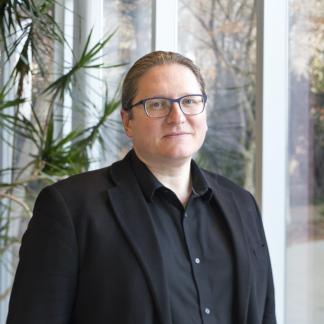
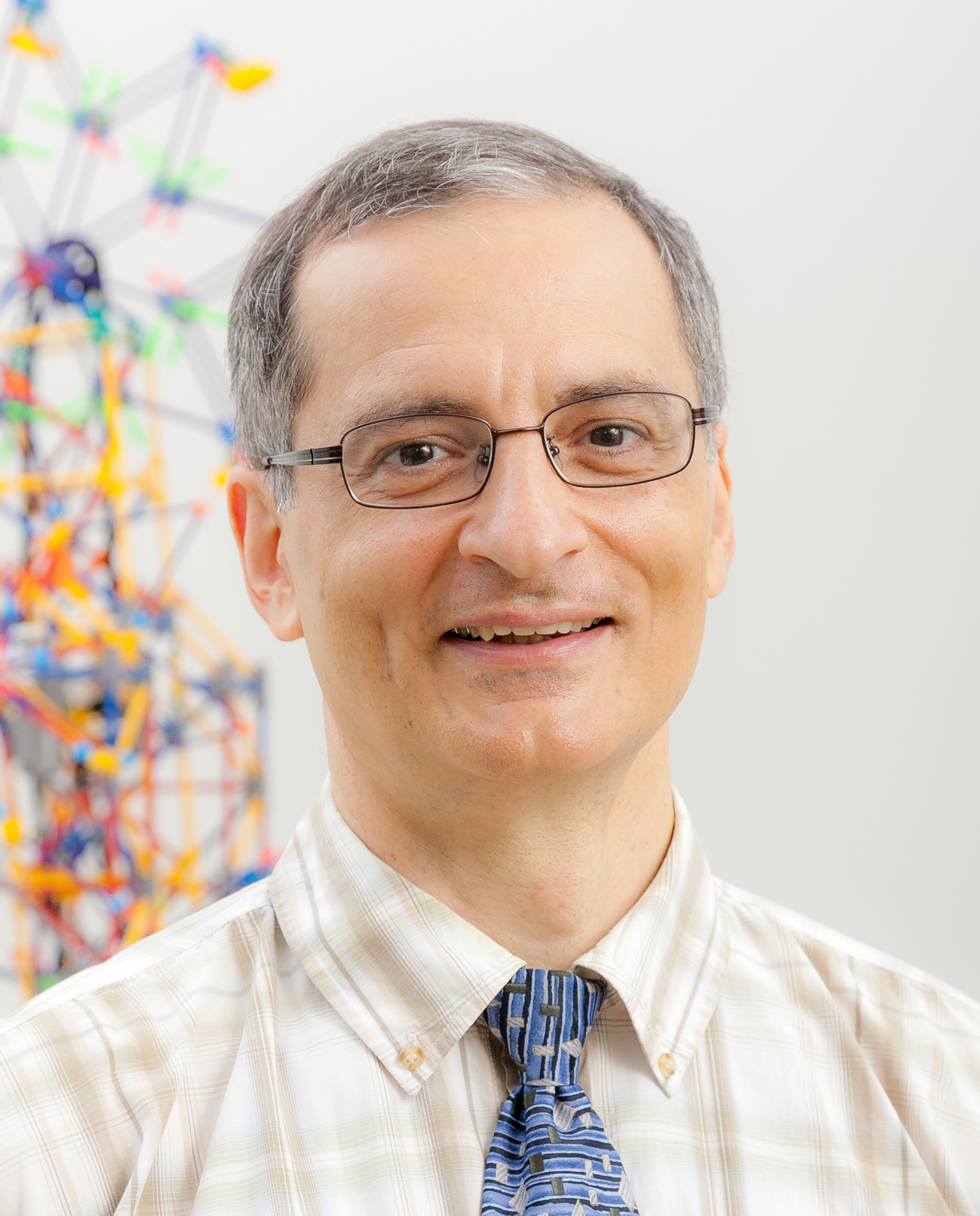
Joseph Kable is the Jean-Marie Kneeley President's Distinguished Professor of Psychology at the University of Pennsylvania's Department of Psychology within the School of Arts and Sciences. His research integrates experimental economics, cognitive neuroscience, and personality psychology to investigate the neural and psychological mechanisms underlying decision-making. He explores how subjective value is represented in the brain, deviations from rational choice theory, and individual differences in decision processes. His lab employs fMRI and interdisciplinary methods to study topics like risk tolerance, impulsivity, and neural plasticity. Education: BS in Chemistry from Emory University (undergraduate), PhD in Neuroscience from the University of Pennsylvania (doctoral). Research focuses on behavioral and cognitive neuroscience mechanisms of choice, including studies on temporal predictions, value signals, and brain structure-function relationships. His recent work examines how neural markers correlate with decision-making variability across individuals. He currently advises graduate students in Psychology and has post-doctoral researchers in his lab. Associated with MindCORE, Penn's hub for integrative mind research. Lab activities include undergraduate research programs and active studies exploring decision neuroscience and neuroeconomics.
Joe Kable, PhD, serves as the Baird Term Associate Professor of Psychology at the University of Pennsylvania, where his research investigates the neurophysiological basis of human decision-making through integrative approaches from experimental economics, cognitive neuroscience, and judgment psychology. His laboratory specializes in fMRI studies examining how subjective value representations guide choices involving immediate versus delayed rewards. Education: B.S. in Chemistry, Emory University PhD in Neuroscience, University of Pennsylvania Dr. Kable's research program centers on neural mechanisms of temporal discounting, risk assessment, and individual differences in choice behavior. His work demonstrates how socioeconomic status, aging, and clinical conditions modulate decision processes, with particular emphasis on hippocampal-prefrontal interactions during value computation. Recent studies reveal how time perception alterations affect neural activity in reward circuits and how social factors influence trust decisions across the lifespan. Analysis of his 15 most recent publications shows a strong methodological focus on fMRI and lesion studies, with growing clinical translation in depression, addiction, and dementia. Key thematic trends include the neural encoding of effort costs in social contexts, structural brain markers for impulsivity, and the dissociable roles of frontal subregions in persistence behaviors. His work consistently bridges basic decision neuroscience with real-world applications in mental health. Scientific Awards: No scientific awards mentioned in source material Dr. Kable leads an active research laboratory at Penn but the source text provides no details about graduate student advising or specific grant funding. His publications indicate collaboration with clinical researchers at the Penn Memory Center, particularly in aging-related decision studies. The laboratory employs multimodal neuroimaging techniques including resting-state fMRI, TMS, and lesion mapping to investigate decision circuits, with recent work extending to computational modeling of value representation and social cognition mechanisms.
Professor Victor Fung is a leading academic in neurology and motor control at the Sydney Medical School , University of Sydney. He serves as Director of the Movement Disorders Unit at Westmead Hospital and holds prominent roles in the International Parkinson and Movement Disorder Society (President) and the Asia Pacific Affairs Committee of the Australian and New Zealand Association of Neurologists. His research focuses on Parkinson's disease , dystonia , tremor , and movement disorder genetics , with over 250 peer-reviewed publications and an h-index of 61. His work spans Clinical trials for Parkinson's treatments (e.g., foslevodopa/foscarbidopa infusion, incobotulinumtoxinA) Genetic studies on dystonia and Parkinsonism Neurophysiological assessments of tremor and balance Development of screening tools for dystonia and Parkinson's complications Key article trends highlight genetic diversity in dystonia, neuroinflammatory mechanisms in tremor, and behavioral neurology in Parkinson's disease. He contributes to editorial boards of npj Parkinson's Disease , Journal of Clinical Movement Disorders , and Faculty Opinions . While no explicit student lists are provided, his collaborations span global institutions. His clinical work at Westmead Hospital addresses device-assisted therapies and complex movement disorders.
Nori Franco serves as Professor in the Department of Physics at the University of Michigan and Chief Scientist at RIKEN's Theoretical Quantum Physics Laboratory in Japan. His dual appointments reflect his significant contributions to both American and Japanese academic communities, with continuous service at Michigan since 1990 and at RIKEN since 2002. His research spans quantum information, condensed matter physics, and quantum optics, with particular focus on light-matter interactions, superconducting qubits, optomechanics, and quantum open systems. Franco's work bridges theoretical foundations with experimental implementations, especially in circuit quantum electrodynamics and quantum computing applications. Analysis of his recent publications reveals a strong emphasis on non-Hermitian quantum systems, quantum control techniques, and applications of quantum information science to fundamental physics problems. His research group consistently produces highly cited work, with publications appearing in top journals across quantum physics and condensed matter disciplines. Scientific Awards: Charles Hard Townes Medal (2024) - sole recipient for fundamental contributions to quantum optics and quantum information processing Research Doctorate Honoris Causa from University of Messina (2024) Highly Cited Researcher for eight consecutive years (2017-2024) Member of Academia Europaea (2023) Willis E. Lamb Medal (2023) for quantum electronics research Throughout his career, Franco has secured significant research funding and mentored numerous students and postdoctoral researchers. His work has received international recognition through invitations to deliver prestigious lectures including the Stanislav Ulam Lecture and Sir Nevill Mott Lecture in 2024. His research group maintains strong collaborations across multiple continents, reflecting his global impact on quantum physics. At RIKEN, Franco leads the Quantum Information Physics Theory Research Team within the Quantum Computing Center, directing cutting-edge theoretical work that complements experimental efforts in quantum computing hardware development.
John Monterosso is an Associate Professor of Psychology at the University of Southern California, specializing in addiction, motivation, and decision-making research. His work explores the neurocognitive mechanisms underlying impulse control and reward processing, with particular focus on substance use disorders and behavioral interventions. Monterosso's research integrates behavioral experiments with neuroimaging to examine decision-making processes in addiction contexts. His lab investigates how immediate rewards influence behavior and how cognitive control mechanisms can be harnessed for addiction treatment. Recent work examines the impact of e-cigarette flavors on appeal and sensory perception, obesity medication perceptions, and neural correlates of value representation. With collaborations spanning public health and neuroscience, his publications demonstrate consistent focus on translating basic psychological research into clinical applications. The methodological progression shows increasing sophistication in neuroimaging techniques and large-scale behavioral studies examining substance use patterns across diverse populations.
Professor Gavan McNally is a distinguished behavioral neuroscientist at the University of New South Wales, where he serves as a Professor in the School of Psychology. He is actively engaged in research on the fundamental behavioral and brain mechanisms for learning and motivation, with applications to clinical conditions such as addictions, anxiety disorders, and mood disorders. McNally holds several prestigious editorial positions, including Editor-in-Chief of Neurobiology of Learning & Memory and Senior Editor of The Journal of Neuroscience. He also serves as President-Elect of the European Behavioral Pharmacology Society and is a Member of the Australian Research Council College of Experts. McNally's research interests span behavioral neuroscience, focusing on how fundamental brain mechanisms apply to clinical conditions. He employs a systems neuroscience approach, combining well-controlled behavioral approaches with optogenetics, chemogenetics, in vivo calcium imaging, and whole brain circuit mapping in both normal and transgenic animals. His work bridges basic science with clinical applications through collaborations with colleagues at University of Sydney, Sydney Local Health District, Monash University, and Turning Point. McNally's research particularly examines the cellular, circuit, and systems level mechanisms underlying learning, motivation, and their dysregulation in disorders like addiction. His laboratory investigates how these mechanisms translate to human conditions, with a strong emphasis on developing new treatments for psychological disorders. His extensive publication record demonstrates a clear trajectory in understanding punishment learning, addiction mechanisms, and the neural circuits underlying motivated behavior. Recent work has increasingly focused on the cognitive pathways to punishment insensitivity, the role of specific neural circuits in addiction, and translational approaches to understanding maladaptive behaviors. McNally's research bridges animal models with human studies, creating a comprehensive understanding of the neural mechanisms that govern learning and motivation, with particular attention to how these processes go awry in addiction and other psychological disorders. 2008 QEII Fellow, Australian Research Council 2009 Association for Psychological Science, International Rising Star 2010 Fellow, Association for Psychological Science 2010 UNSW Faculty of Science Staff Excellence Award for Research and Training 2011 Pavlovian Research Award, The Pavlovian Society 2012 Future Fellow (Level 3), Australian Research Council 2016 D.G. Marquis Behavioral Neuroscience Award, American Psychological Association 2017 Fellow, American Psychological Association 2019 Fellow of the Academy of Social Sciences in Australia 2021 D.G. Marquis Behavioral Neuroscience Award, American Psychological Association 2022 Ross Day Plenary Lecturer, Australasian Brain and Psychological Sciences 2023 European Behavioural Pharmacology Society Plenary Lecturer 2024 Elspeth McLachlan Plenary Lecturer, Australasian Neuroscience Society 2024 D.G. Marquis Behavioral Neuroscience Award, American Psychological Association Professor McNally actively supervises several students including Bixuan Lin, Si Yin Lui, Hannah Machet, Bart Cooley, Kelly Zhuang, and Alexandra Gregory. His current research is supported by significant funding including an Australian Research Council Discovery Project (2024-2026) on "Risky choices: From cells and circuits to computations and behaviour," another Discovery Project (2025-2028) on "Multimodal mapping of punishment learning," and NHMRC grants including a Synergy Grant on "Linking clinical and basic science discovery to find new treatments for alcohol-use disorder" and an Ideas Grant on "Novel pathways to abstinence from alcohol seeking." These projects reflect his commitment to both fundamental neuroscience and translational applications for treating psychological conditions. His teaching responsibilities include PSYC2081 Learning & Physiological Psychology and PSYC3051 Physiological Psychology. McNally's laboratory employs advanced techniques including optogenetics, chemogenetics, in vivo calcium imaging, and whole brain circuit mapping to investigate the neural mechanisms underlying learning, motivation, and their dysregulation in disorders. His team works at the intersection of basic neuroscience and clinical applications, with strong collaborations across multiple institutions to translate fundamental findings into potential treatments for addiction and other psychological disorders. The lab has made significant contributions to understanding the role of brain regions like the ventral pallidum, paraventricular thalamus, and nucleus accumbens in addiction, fear learning, and punishment sensitivity.
Dr. Georgie Agar is a Lecturer at the School of Life & Health Sciences, Aston University , affiliated with the College of Health and Life Sciences and the Applied Health Research Group . Her research focuses on sleep disorders, self-injurious behavior, and caregiver impact in individuals with intellectual disabilities and rare genetic syndromes like Smith-Magenis and Angelman syndromes. Research Interests : Dr. Agar specializes in developing inclusive clinical assessment tools for sleep, pain, and behavior in neurodevelopmental populations. She employs mixed-methods, meta-analytic approaches, and longitudinal studies to explore sleep trajectories, behavioral conditioning models, and caregiver experiences. Publications : Her work spans sleep management in Smith-Magenis syndrome, overactivity metrics in genetic conditions, and systematic reviews on self-restraint in autism. Key journals include Molecular Autism , Orphanet Journal of Rare Diseases , and Research in Developmental Disabilities . Labs & Collaborations : She collaborates with the Aston Institute of Health & Neurodevelopment , focusing on neurodevelopmental research and cross-institutional partnerships in sleep and behavioral science.
Robin A. Murphy is a Professor of Experimental Psychology at the University of Oxford and a Fellow and Tutor for Admissions at Corpus Christi College. He holds a PhD from McGill University (Canada) and has contributed over 50 scientific publications on associative learning mechanisms, their role in mental disorders like depression and psychopathy, and translational neuroscientific applications. His research bridges animal and human learning, with a focus on computational psychopathology and neurochemical modulation (e.g., serotonin). Education: Undergraduate degree, Queen's University MA and PhD in Psychology, McGill University Research Interests: Dr. Murphy investigates how associative learning processes underpin mental disorders, particularly through neurochemical systems like serotonin. His work explores causal reasoning biases in depression, psychopathy's learning deficits, and translational models linking animal studies to human cognition. Key themes include agency perception, contingency judgment, and the neural substrates of prejudice. Recent projects involve peptide research in aging and computational modeling of multi-agent systems in depression. Grants and Funding: Supported by MRC, BBSRC, Wellcome Trust, and Japan Society for the Promotion of Science. He has advised UK Research Councils and NSERC (Canada). Labs and Teams: Leads a lab focusing on associative learning mechanisms, collaborating with institutions globally on computational psychopathology and translational neuroscience.
Josep Marco Pallares is a Professor at the University of Barcelona's Faculty of Psychology, affiliated with the Department of Cognition, Development and Educational Psychology. He leads the Brain Dynamics and Structure of Human Cognition (BraCo) research group and holds an ICREA Academia Fellowship (2018-2023). His work focuses on neural mechanisms underlying reward processing, music perception, and social cognition using neuroimaging techniques. Education: Licenciatura in Psychology (University of Barcelona, 2000), Doctorate in Neuroscience (2012), and Doctorat (University of Barcelona, 2005) Research interests include brain oscillations in reward systems, music-evoked emotions, and decision-making. His recent studies explore how theta and gamma oscillations underpin pleasantness responses to music and social information. Ongoing projects investigate neural correlates of gambling behaviors and white matter correlates of music reward sensitivity. Awards: ICREA Academia Fellowship (2018) Has supervised doctoral theses on music reward processing and atypical reinforcer anticipation mechanisms. Active in teaching courses on neuroimaging techniques and music psychology at the University of Barcelona. Labs/Teams: Principal Investigator of the BraCo group, collaborating with AGAUR and Ministerio de Ciencia-funded projects.
Professor Rosalyn Moran is a Professor of Computational Neuroscience and Deputy Director of King's Institute for Artificial Intelligence at King's College London. She holds roles in the Department of Neuroimaging and School of Neuroscience within the Institute of Psychiatry, Psychology & Neuroscience. Her research focuses on computational neuroscience, computational psychiatry, and neurology, particularly integrating brain connectivity with algorithmic principles like the free energy principle. She explores neurotransmitter roles in decision-making and disease modeling, with applications in artificial intelligence and neurodegenerative disorders. Moran serves as an editor for Neuroimage and collaborates with leading institutions. Key projects include global neuroimaging initiatives (UNITY) and low-field MRI advancements in low-resource settings. Her work bridges Bayesian inference, AI, and neurobiology, with recent emphasis on pediatric neuroimaging and treatment-resistant psychosis. Education & Research Interests Rosalyn Moran's research spans computational psychiatry, neuroimaging techniques, and AI applications in healthcare. Her lab investigates serotonin and dopamine signaling, brain connectivity patterns, and predictive coding frameworks. Notable contributions include modeling NMDA receptor dysfunction in encephalitis and developing super-resolution MRI methods for global health contexts. Grants & Collaborations Funded projects include MRC Human Functional Genomics (2024-2028), NIHR Maudsley BRC (2022-2027), and Gates Foundation initiatives for low-field MRI enhancement. Collaborators include Karl Friston (UCL), Read Montague (Virginia Tech), and Klaas Enno Stephan (University of Zurich). Recent events include presenting the Free Energy Principle's role in generative AI (May 2023). Labs & Teams Her lab focuses on computational psychiatry and AI-driven neuroimaging solutions, collaborating with the King’s Global Health Institute to advance medical imaging accessibility in low-income regions.
Eduardo Mercado III is a Professor in the Department of Psychology at the University at Buffalo, College of Arts and Sciences. His research focuses on bioacoustics, cognitive psychology, and marine ecology, particularly the vocal behavior of humpback whales and its implications for understanding human impact on marine ecosystems. He is also known for his work in perceptual learning, autism spectrum disorder, and comparative cognition. Scientific Awards Guggenheim Fellowship Harvard Radcliffe Institute Fellowship Research Trends His recent publications emphasize bioacoustic analysis of humpback whale songs, including their spectral entropy, cyclical variations, and adaptive adjustments to anthropogenic noise. Additional work explores perceptual learning mechanisms in autism, neural network modeling for acoustic classification, and cognitive processes in canines and rodents. Projects Mercado’s “Singers as Sentinels” project combines acoustic analysis of humpback whale songs with public awareness initiatives about ocean noise pollution. The project will produce a book, Why Whales Sing and Dolphins Don’t , and a web-based interface for public engagement.
Jennifer Mitchell, PhD is a Professor in the Departments of Neurology and Psychiatry & Behavioral Sciences at the University of California, San Francisco (UCSF) School of Medicine. She serves as the Associate Chief of Staff for Research and Development at the San Francisco VA Medical Center. Dr. Mitchell is affiliated with the UCSF Weill Institute for Neurosciences and is a member of both the UC Berkeley Center for the Science of Psychedelics and the UCSF Neuroscape Psychedelics Division. Dr. Mitchell's research focuses on identifying and developing novel therapeutics for drug and alcohol abuse, PTSD, stress, anxiety, impulsivity, and depression. Her work examines the neural mechanisms responsible for these disorders through translational neuroscience research that bridges psychology, behavioral pharmacology, and neuroanatomy. She has made significant contributions to the field of psychedelic therapeutics, particularly in developing MDMA for PTSD treatment and psilocybin for demoralization and depression. Dr. Mitchell's research portfolio demonstrates a strong emphasis on human and animal pharmacology, hypothesis-driven neuroscience, human proof-of-concept studies, translational models, and clinical trials. Her work on MDMA-assisted therapy for PTSD has reached phase 3 clinical trial status, representing a significant advancement in the field. Her recent publications show a consistent focus on psychedelic therapeutics, with particular attention to MDMA for PTSD treatment, but also extending to policy considerations, cost-effectiveness analyses, and the broader application of psychedelic compounds for various psychiatric conditions. Dr. Mitchell has received multiple DoD grants for the Institute for Translational Neuroscience from 2007 through 2014, demonstrating sustained funding support for her research program. Her work has been published in high-impact journals including Nature Medicine, Neuropsychopharmacology, and JAMA Neurology. As an advisor and mentor, Dr. Mitchell has contributed to the training of numerous researchers in the field of neuroscience and psychedelic therapeutics. Her laboratory work combines behavioral pharmacology with neuroimaging techniques to understand the mechanisms underlying addiction and stress-related disorders.
Professor Celso Grebogi, Sixth Century Chair in Nonlinear & Complex Systems at the University of Aberdeen, is a globally recognized leader in nonlinear dynamics , chaos theory , and systems biology . He founded the Institute for Complex Systems and Mathematical Biology and co-founded the Aberdeen-Lanzhou-Tempe Research Centre. His career spans institutions including University of Maryland, University of São Paulo, and Max-Planck-Society (External Scientific Member since 1998).
Antonino Vallesi is a Full Professor in Neuropsychology and Cognitive Neuroscience at the University of Padua. He holds a master's degree in Psychology (University of Padua, 2003) and a PhD in Neuroscience (SISSA, Trieste, 2007). He has held roles as Assistant and Associate Professor at SISSA and the University of Padua before achieving his current rank. His research focuses on executive functions, cognitive aging, and temporal processing, employing neuroimaging, EEG, and experimental psychology methods. He has supervised over 10 PhD students, 13 postdocs, and 65 trainees. Education: PhD in Neuroscience, SISSA, Trieste (2007) Master's in Psychology, University of Padua (2003) Research Interests: The anatomo-functional organization of executive functions, cognitive aging, temporal processing, and neuropsychological methodologies. His work explores these areas through advanced techniques like EEG, neuroimaging, and neuromodulation. Awards: Bertelson Award (2011) Outstanding Young Person Award (2011) SIPF Prize (2017) ERC Starting Grant (2013) Advising & Grants: Supervisor of over 10 PhD students and 13 postdocs. Secured significant funding including an ERC grant. Involved in grant reviewing for EU programs (e.g., Horizon 2020) and international agencies. Labs & Teams: Leads the Executive Function Lab at the University of Padua, focusing on cognitive neuroscience and clinical applications.
Adam Fox is the Sarah Johnson '82 Professor in the Sciences within the Psychology Department at St. Lawrence University. His research focuses on the experimental analysis of human and non-human behavior, particularly in the context of choice, time, and learning. He investigates variables controlling behavior using quantitative methods and laboratory models, including studies on ADHD and ASD in rats, as well as applied animal behavior with domesticated animals like horses. His work bridges basic and translational research, emphasizing principles of behavior analysis. Education : PhD in Psychology (Behavior Analysis specialization), West Virginia University MA, BS in Psychology, Western Michigan University Research Interests : Fox explores timing mechanisms and decision-making processes in behavior analysis. His lab uses rat models to study neurodevelopmental disorders (e.g., ADHD, ASD) and employs translational approaches to connect findings to clinical and applied settings. He also applies behavior analytic principles to improve human-animal relationships, particularly in equine behavior modification. Recent work includes investigating precrastination, the impact of environment on impulsive choice, and the role of genetics in behavioral timing. Recent Work Trends : Publications emphasize translational research in neurodevelopmental disorders, cross-species temporal judgment studies, and behavioral interventions. His 2024 work on high-fat diets and impulsive choice highlights interdisciplinary approaches, while 2025 studies on FMR1 knockout rats explore genetic influences on timing. Grants & Advising : Advises graduate and undergraduate students (e.g., Bibiana Thieret, William DeCoteau) on experimental and applied projects. Active in collaborative research with institutions like the Behavior Analyst Certification Board. Labs & Teams : Research conducted in St. Lawrence’s Psychology Department labs, focusing on behavioral analysis, animal models, and applied behavior studies. Collaborates with interdisciplinary teams on translational and animal welfare projects.