Dr. Dan J. Segrist is Professor and Chair of Psychology at Southern Illinois University Edwardsville (SIUE), part of the School of Education, Health and Human Behavior. He holds a PhD in Clinical Psychology from Southern Illinois University Carbondale (2000) and completed his pre-doctoral internship at its Counseling Center. His research integrates clinical psychology with educational practice, focusing on: Scholarship of teaching and learning in psychology education Generalized anxiety disorders and assessment approaches Addictive behaviors, particularly alcohol use patterns Career development frameworks for psychology students Dr. Segrist teaches both graduate and undergraduate courses. At the graduate level, he specializes in Cognitive Assessment and Adult Personality Assessment . Undergraduate offerings include Careers in Psychology , Theories of Personality , and Capstone in Psychology . His publications reflect dual themes: recent work (2018-2019) explores classroom dynamics, humor efficacy, and teaching innovations, while earlier research (2007-2012) examines addictive behaviors and social misperceptions around substance use. He maintains an open mentorship approach for students targeting clinical practice or academia.
Arnaud Carré is a Professor of Psychology at the University of Savoie Mont Blanc, where he serves as Deputy Director of the LIP/PC2S laboratory and Scientific Director of the Chaire Bien-Être, Santé, Territoire (BEST). His academic career spans over a decade of research and teaching in psychopathology, with a focus on emotional and cognitive regulation processes. Professor Carré's research interests span three interconnected axes: 1) Interpersonal functioning and its disturbances, particularly examining empathy and social cognition; 2) Intra-personal regulation processes in addictive behaviors and emotional disorders; 3) Applications of psychological science to public health challenges. His work employs diverse methodologies including experimental approaches, neuroimaging, and large-scale epidemiological studies. His recent publications (2022-2025) demonstrate consistent productivity across high-impact journals, with emerging focus areas including climate anxiety, socioeconomic disparities in education, and digital interventions for addictive behaviors. These works collectively highlight his transdiagnostic approach to understanding emotional regulation processes across clinical and non-clinical populations. As an educator, Professor Carré teaches psychopathology at undergraduate levels and affective neuroscience, epigenetics, and mental health prevention at the graduate level. He has been instrumental in developing Mental Health First Aid programs since 2020 and incorporates simulation-based learning in health education. Professor Carré currently supervises two doctoral students and has successfully guided four others to completion in recent years. His leadership extends to institutional roles including membership in the Research Bureau of USMB and serving as a qualified personality for the Conférence Prévention Etudiante since 2025.
Sandra Carvalho is an Assistant Professor of Neuropsychology at the Department of Education and Psychology, University of Aveiro, where she serves as Director of the Psychology Course and Coordinator of the Translational Neuropsychology Laboratory. Her work integrates clinical practice with cutting-edge research in neuromodulation and neuroimaging to address complex psychiatric and neurological conditions. Her research program focuses on non-invasive brain stimulation techniques including transcranial direct current stimulation (tDCS) and transcranial magnetic stimulation (TMS), combined with EEG and fMRI methodologies. She investigates neuronal and behavioral correlates of clinical responses across diverse conditions such as neuropathic pain, obsessive-compulsive spectrum disorders, major depression, Tourette’s syndrome, and post-stroke cognitive rehabilitation. This work spans basic neuroscience, translational applications, and clinical trial implementation. Analysis of her recent publications reveals a strategic emphasis on personalized neuromodulation protocols, with growing attention to brain connectivity mapping through neuroimaging. Key trends include optimizing tDCS parameters for depression treatment, developing combined tDCS-cognitive therapy approaches, and expanding applications to language rehabilitation in aphasia and autonomic regulation in emotion processing. Dr. Carvalho leads the Translational Neuropsychology Laboratory, which operates at the intersection of neuroscience, psychology, and clinical medicine. The laboratory prioritizes rapid translation of mechanistic findings into practical clinical interventions, particularly through evidence-based neuromodulation frameworks for treatment-resistant psychiatric and neurological conditions.
Kent Nilsson is an Adjunct Professor at Uppsala University's Department of Medical Sciences (Child and Adolescent Psychiatry) and Director of the Centre for Clinical Research, Västmanland County. His research bridges psychiatry, genetics, and public health, focusing on adolescent mental health, substance use, and behavioral outcomes. Key affiliations include Uppsala University and the Västmanland clinical research center. His research examines gene-environment interactions in adolescent development, with emphasis on: Mental health trends and lifestyle factors in youth populations Genetic markers (e.g., MAOA, 5-HTTLPR) influencing depression, gambling, and substance use Impact of COVID-19 on anxiety, loneliness, and behavioral addictions Neurobiological mechanisms of addiction using animal models Analysis of 15 recent articles (2023-2025) reveals dominant themes: longitudinal studies of adolescent mental health/substance use, genetic moderation of environmental stressors, and clinical interventions in psychiatry. Publications frequently employ community-based samples, genetic analyses, and psychometric validation.
Dr. Matthew T. Weaver serves as Associate Professor and Chair of the Department of Psychology at Mercyhurst University, a position held since joining the institution in 2012. He directs the Laboratory of Addictive and Impulsive Behaviors, driving research on substance abuse mechanisms and behavioral control. His academic foundation includes: B.S. from Allegheny College M.S. and Ph.D. from the University of Florida Postdoctoral training at the University of Pittsburgh Research centers on behavioral and neurobiological processes of drug abuse and impulsivity , utilizing experimental models to investigate neural substrates of addictive behaviors. This work bridges psychopharmacology and decision neuroscience, with direct implications for intervention strategies in substance use disorders. Dr. Weaver emphasizes translational approaches connecting basic science to clinical applications. Prestigious recognition includes: 2013 APA Division 25 Young Researcher Award 2009 APA Division 25 Basic Dissertation Award A dedicated mentor, he actively promotes undergraduate research through laboratory opportunities and consortium leadership. His professional service spans APA Division 28 Program Chair (2015), Division 25 Membership Chair (2010-2016), Division 25 Member-at-Large (2019-2021), and Western Pennsylvania Undergraduate Psychological Consortium Steering Committee Chair (2015-2023). The Laboratory of Addictive and Impulsive Behaviors provides hands-on research experiences for students, focusing on behavioral pharmacology and neurobiological correlates of compulsive behaviors within a collaborative academic environment.
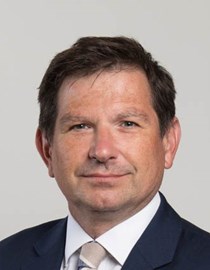
Martin Bareš is Professor of Neurology at Masaryk University's Medical Faculty and currently serves as Rector of Masaryk University. He also leads the Neurophysiological Laboratories and consults at the Movement Disorders Center at St. Anne's Faculty Hospital in Brno, Czech Republic. His academic journey at Masaryk University spans over two decades, progressing from Resident in Neurology to Full Professor. Professor Bareš earned his M.D. from Medical Faculty Masaryk University Brno (1987-1993) and completed his Ph.D. in 2002. His academic progression includes Assistant Professor (1999-2003), Associate Professor (2005-2009), and Full Professor since 2009. He also holds an Adjunct Professor position at the University of Minnesota's Department of Neurology since 2015. His research focuses on Movement Disorders, particularly the cerebellum's role in motor control and timing. His laboratory investigates Parkinson's disease, dystonia, essential tremor, and functional movement disorders using advanced neuroimaging techniques. Professor Bareš has pioneered research on predictive motor timing and has made significant contributions to understanding neural mechanisms underlying movement disorders, with particular emphasis on cerebellar function. Professor Bareš has earned recognition including the Poster of the Day award at the XI International Congress on EMG and Clinical Neurophysiology (1999) and the Czech Neurological Society award for best publication (2002). He serves on editorial boards of Clinical Neurophysiology, Tremor and Other Hyperkinetic Movements, and Cerebellum and Ataxias. As an educator, Professor Bareš mentors dissertation theses in Neurology and Neuroscience, teaches medical students and allied health professionals, and has served as an opponent for professorships at multiple Czech universities. His research has been supported by significant grants including Horizon 2020 projects and Ministry of Health research programs. Professor Bareš has held numerous administrative positions at Masaryk University including Dean of the Medical Faculty (since 2018), Vice-Rector for Academic Affairs (2015-2018), Deputy Rector (2012-2018), and Vice-Rector for Development (2011-2015). He currently leads one of the largest and most prestigious universities in the Czech Republic as its Rector.
Shilan Caman is a Postdoctoral Researcher at the Department of Clinical Neuroscience, Karolinska Institutet, Stockholm, Sweden (2023-2026), affiliated with the Centre for Psychiatry Research and Katarina Howner's Research Group. Her work bridges forensic behavioral neuroscience and clinical psychiatry within Sweden's legal-medical framework. She earned her Doctor of Philosophy from Karolinska Institutet's Department of Clinical Neuroscience in 2017, establishing her expertise in violence-related research through population-based Swedish studies. Dr. Caman's research critically examines intimate partner violence , femicide , and homicide through intersecting lenses of forensic psychology , psychiatry , and criminology . Her methodology combines quantitative epidemiological analysis with qualitative perpetrator interviews, revealing gendered patterns in youth violence, mental disorder comorbidity, and treatment resistance. Key contributions include identifying boldness-meanness-disinhibition dynamics in psychopathy and exposing systemic gaps in femicide prevention. Analysis of her 15 most recent publications (2015-2025) shows escalating focus on youth intimate partner homicide ( 2024 ) and voluntary help-seeking perpetrators ( 2024 ), while maintaining core investigation of Swedish homicide databases. Her work consistently employs controlled population studies, highlighting Sweden's unique forensic registry advantages and revealing cross-cultural applicability in perpetrator typologies. Dr. Caman currently leads a Swedish Research Council-funded grant (2023-2025) evaluating social service interventions for intimate partner violence perpetrators through mixed-methods design. This project collaborates with Örebro County service providers (Social Services Örebro, Mansforum Örebro) to measure recidivism risk reduction and treatment accessibility barriers, directly informing national policy reforms following Sweden's 2021 Social Services Act amendment. As a core member of Katarina Howner's Research Group, she contributes to the Centre for Psychiatry Research's mission of translating neuroscientific findings into forensic practice, particularly through psychophysiological assessments of empathy and criminal responsibility.
Samantha Miadich, Ph.D., serves as Assistant Professor in the Department of Psychology within the College of Fine Arts, Humanities and Social Sciences at the University of Massachusetts Lowell. Based in Coburn Hall Room 370F with contact number 978-934-3941, she specializes in pediatric health psychology using advanced methodologies to examine childhood chronic conditions including asthma and sleep disorders through risk/resilience frameworks. Her academic credentials include: Postdoctoral Fellowship in Developmental Psychology and Behavior Genetics, Arizona State University (Tempe, AZ) Ph.D. in Health Psychology, Virginia Commonwealth University (2017) M.A. in Clinical Psychology, Ball State University (2010) B.A. in Psychology, University of Dayton (2008) Dr. Miadich's research program integrates behavior genetics with ecological momentary assessment to investigate genetic and environmental contributions to pediatric health outcomes. Her work focuses on objective measurement of sleep, pain, and asthma management in community and urban populations, emphasizing intervention targets through longitudinal modeling. Key methodological approaches include twin studies, actor-partner interdependence modeling, and real-time data collection techniques. Analysis of her 15 publications (2015-2024) reveals consistent investigation of pediatric chronic conditions through genetic-environmental interaction lenses. Her work demonstrates increasing methodological sophistication with emphasis on objective sleep measurement, urban health disparities, and family-level influences on child health outcomes. The research trajectory shows progression from asthma management studies toward integrated models examining sleep-pain relationships and genetic contributions to health behaviors. Her scientific recognition includes: NHLBI Fellowship for Effects of Cumulative Risk on Asthma Outcomes in Urban Children and Adolescents (2015) Dr. Miadich currently leads two major funded projects: the NIH Loan Repayment Program award (2023-2025) for Pediatric Lung Function and Asthma in the Broader Health Context, and the Society of Pediatric Psychology Targeted Research Grant (2023-2024) for the Health Advancement and Wellbeing in Kids (HAWK) Study. These projects examine asthma outcomes through comprehensive health frameworks and develop wellbeing interventions for pediatric populations. She directs the HARP Research Lab (Health, Asthma, and Resilience in Pediatric populations), which employs innovative assessment tools including ecological momentary assessment and objective physiological measures. The lab maintains strong collaborations with Arizona State University's research teams, particularly through the Arizona Twin Project examining developmental psychopathology and health resilience mechanisms.