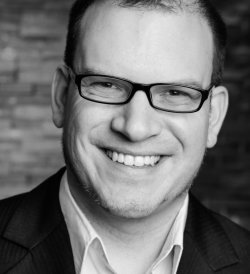
Prof. Dr. Oliver Tüscher is a W2 Professor of Clinical Resilience Research at Johannes Gutenberg University Mainz. He serves as Deputy Director and Head of the Geronto- and Neuropsychiatry Clinic, leading the Functional and Structural Imaging Groups. He directs the Clinical Investigation Center (CIC) within the Translational Neuroscience Research Focus Area. Medical Doctorate (Dr. med.) from Heidelberg University (2002) Habilitation in Neurology at University of Freiburg (2011) Research focuses on neural mechanisms of emotion regulation, impulse control, and neuropsychiatric aspects of neurodegenerative diseases. Uses advanced neuroimaging techniques (fMRI, sMRI) to study psychiatric disorders. Active in translational neuroscience bridging clinical and neurobiological research. Leadership roles include coordinating multidisciplinary teams in functional imaging research groups and managing clinical trial infrastructure through the CIC. Professional certifications include specialist qualifications in Neurology (2010) and Psychiatry/Psychotherapy (2013).
Boris Schiffer is a Professor in the Faculty of Medicine at Ruhr-University Bochum, specializing in Forensic Psychiatry and Psychotherapy. He is affiliated with the LWL University Hospital Bochum and LWL Correctional Hospital Herne. Research Interests: His work focuses on the neural mechanisms underlying delinquent and violent behavior in mental disorders such as antisocial personality disorder, substance abuse, schizophrenia, and paraphilias. He also investigates forensic care (Maßregelvollzug) to identify predictors of treatment success, intervention effectiveness, and legal probation issues for mentally ill or addicted offenders. Publications: His research spans neuroimaging studies on pedophilia, cognitive control deficits in antisocial behavior, brain structure in schizophrenia-addiction comorbidity, and social brain function in alcohol dependence. These works emphasize interdisciplinary links between neuroscience, psychiatry, and forensic science. Contact: Email: boris.schiffer@ruhr-uni-bochum.de | ORCID: orcid.org/0000-0002-6935-8903
Prof. Dr. Esther Sobanski is a visiting professor affiliated with the Central Institute of Mental Health in Mannheim, Germany, focusing on adult ADHD research. Her work spans clinical trials, psychotherapy, and neuroimaging studies. Key Affiliation: Research Group ADHD in Adulthood Academic Rank: Visiting Professor Research Interests: Sobanski specializes in ADHD in adults, combining clinical trials with neuroimaging and psychopharmacology. Her studies often explore multimodal treatments, therapy adherence, and neurobiological correlates. Recent Article Trends: Focus on methylphenidate effects, COMPAS trial outcomes, maternal ADHD impacts, and neurotransmitter dynamics in BPD-ADHD comorbidity. Collaborations: Works with the COMPAS Consortium and international researchers on randomized clinical trials in adult psychiatry.
Raoul Wüllhorst holds a postdoc position as a Researcher at the Chair of Addiction Research since 2017. He earned his doctoral degree in clinical psychology from Humboldt-Universität zu Berlin, specializing in EEG studies of uncertainty processing in obsessive-compulsive disorder. Previously, he worked at Otto-von-Guericke Universität in Magdeburg, investigating decision-making models under Prof. Markus Ullsperger. His research focuses on neurobiological mechanisms of craving regulation, decision-making processes, and electrophysiological correlates of cognitive control. Key areas include obsessive-compulsive disorder, substance use disorders, and impulsivity. His work employs EEG techniques to study neural responses to unpredictable threat and reward contingencies. Publications highlight his contributions to understanding binge-watching neural correlates, error-related negativity in self-control, and the role of childhood trauma in addiction. His peer-reviewed articles span cognitive neuroscience, clinical psychology, and educational pedagogy. Raoul actively contributes to interdisciplinary collaborations at the intersection of neuroscience and mental health, with a focus on translational research bridging basic science and clinical applications.
Prof. Hugo Fastl is a Professor at the Technical University of Munich (TUM), holding a position in the TUM School of Computation, Information and Technology, and leading the Chair of Human-Machine Communication. His research integrates engineering and acoustics, focusing on psychoacoustics, audio-visual interactions, and applications in noise assessment, sound quality design, and hearing disorder diagnosis. A pioneer in interdisciplinary acoustics, he has contributed to audio technology and musical acoustics. Prof. Fastl earned his Dipl.-Ing. in Electrical Engineering (1970) and studied Music at the Munich University of Music (1969), majoring in double bass. He completed his doctorate (1974) and habilitation (1981) at TUM, later serving as a visiting professor at Osaka University (1987) and as an associate professor of technical acoustics at TUM (1991). His career has spanned academia and industry, blending theoretical and applied research. His scientific contributions include seminal work on psychoacoustic parameters in automotive noise assessment and foundational textbooks like Psychoacoustics: Facts and Models (2007). Key awards include the EAA Lifetime Achievement Award (2017) and the Rayleigh Medal (2003). His research bridges engineering principles with human perception, addressing both technical and auditory challenges in communication systems. Prof. Fastl’s work extends to video quality assessment and signal processing innovations, as seen in his development of a hybrid metric for digital video quality (2011) and blind estimation of blocking artifacts (2010). His interdisciplinary approach underscores the intersection of technology and human experience.
Prof. Dr. Sabine Steins-Löber is the Chairholder of Clinical Psychology and Psychotherapy at the University of Bamberg's Faculty of Human Sciences and Education. Her research focuses on addictive behaviors (substance/non-substance), eating disorders, and cognitive mechanisms underpinning these conditions. She leads multiple DFG-funded projects investigating gaming/shopping disorders, obesity, and gender-specific aspects of addiction. Her research interests span: Learning mechanisms in addictive behaviors Cognitive control impairments in addiction/eating disorders Psychotherapeutic interventions for relapse prevention Neural correlates of reward processing Publications emphasize addiction psychopathology, behavioral interventions, and transdiagnostic mechanisms across disorders. Recent work explores digital health applications, stress modulation of habits, and cross-cultural validations of behavioral addictions. Awards & Honors: Wilhelm Feuerlein Research Award (2007) She supervises doctoral candidates in clinical psychology and collaborates internationally with institutions including Hannover Medical School, University of Duisburg-Essen, and University of Sussex. Her lab investigates affective/cognitive mechanisms in specific Internet-use disorders.
Laura Potsch is a Research Associate at the Department of Clinical Psychology and Psychotherapy I, School of Psychology, Philipps University of Marburg. Specializing in reward sensitivity mechanisms and transdiagnostic factors in mental disorders, her work bridges clinical research with intervention development. She also serves as a therapist at IPAM (Marburg Psychotherapy Institute) and previously worked at PAM (Marburg Psychotherapy Outpatient Clinic) and Birkental Clinic. Current: Research Associate & Therapist Education: PhD in Psychology (2024), MSc in Clinical Psychology (2020), BSc in Psychology (2017) Her research focuses on reward insensitivity in depression, individualized therapeutic approaches, and modifying maintaining factors in mental disorders. She integrates behavioral activation, mindfulness techniques, and digital interventions in clinical practice. Recent publications analyze reward sensitivity interventions (2024), transdiagnostic symptom networks (2023), and non-invasive brain stimulation effects on impulsivity (2020). Key themes include depression treatment, mechanism-based psychotherapy, and cognitive-behavioral processes. Dr. Potsch contributes to clinical education through case seminars, disorder-specific teaching (trauma-related conditions), and competency-oriented psychotherapy training. She previously held research assistant roles at TU Dresden and Justus-Liebig-University Giessen.
Dr. Sandra Düpjan is a Researcher at the Research Institute for Farm Animal Biology (FBN), leading the working group on Animal Behaviour & Welfare. Her research focuses on affective states in animals, bioacoustics, and animal cognition. Since 2023, she heads the focus topic 'Individualising farm animal husbandry' and serves as Deputy Equal Opportunities Representative. Research Interests: Her work investigates how animals express emotions through behavior, integrating bioacoustic analysis with studies on cognition-physiology interactions. Key areas include emotional lateralization, cognitive bias paradigms, and welfare indicators in livestock. Articles Focus: Recent publications (2017-2022) emphasize swine ethology, emotional contagion, and welfare assessment, with recurring themes in vocal communication analysis, laterality studies, and affective state monitoring. Methodological innovations include automated bioacoustic systems for estrus detection. Teaching: Delivers lectures on behavioural biology at the University of Rostock and practical courses on animal-friendly husbandry.
Julia Berghäuser is a Doctoral Researcher at the Technische Universität Dresden, affiliated with the Faculty of Psychology, Institute of Clinical Psychology and Psychotherapy, and the Chair of Addiction Research. Her research focuses on neural mechanisms underlying decision-making and learning in mental disorders such as substance use disorder and obsessive-compulsive disorder. She employs techniques like EEG and computational modeling to investigate reinforcement learning, goal-directed behavior, and their interaction with executive functions. Since March 2017, she has been pursuing her PhD at TU Dresden, following a Master's degree (2015, Magdeburg) and Bachelor's degree (2011, Bremen) in Psychology. Professional experience includes roles as a research assistant at the University Hospital Schleswig-Holstein (2015–2017) and the University of Magdeburg’s Department of Neuropsychology (2015). Her work contributes to understanding cognitive control in impulsivity and compulsivity, with implications for clinical psychology and addiction research. She is part of the research team addressing these issues under the C6 subproject.
Prof. Gerhard Bühringer is a Senior Professor and Director of the Work Group Addictive Behaviors, Risk Analysis, and Risk Management at the Technical University of Dresden. He holds a Dr. rer. soc. from Eberhard Karls University Tübingen (1981) and a Diploma in Psychology from Ludwig Maximilian University, Munich (1973). His research focuses on addiction etiology, epidemiology, and public health interventions, with a particular emphasis on cognitive control mechanisms in addictive behaviors. Professional roles include leadership positions such as President of the International Organisation of Alcohol, Tobacco, and Behavioral Addictions Research Association (ICARA, 2014–2016) and Director of the European Graduate School in Addiction Research (ESADD, 2008–2015). He has authored over 200 publications, including seminal works on gambling disorder regulation and self-control deficits in addiction. Research interests span substance use disorders, behavioral addictions (e.g., gambling), treatment systems analysis, and policy advocacy. His work bridges clinical practice and public health, emphasizing risk stratification for vulnerable populations. Notable contributions include developing Germany’s methadone maintenance standards and advising the European Monitoring Centre for Drugs and Drug Addiction (EMCDDA). Recent studies highlight impulsive decision-making as a key predictor of addiction trajectories and explore brain mechanisms underlying self-control failures. His team’s longitudinal research underscores the interplay between cognitive traits (e.g., action/state orientation) and addictive behaviors. Honors include the 2017 Diotima Award for contributions to psychotherapy and addiction science. He remains active in global policy forums, advocating for evidence-based gambling regulations and ethical research practices.
Dr. Johannes Petzold is a Specialist in Psychiatry and Psychotherapy affiliated with the Department of Psychiatry and Psychotherapy. His research focuses on addiction and impulsive decision-making, aiming to improve treatment matching by investigating behavioral phenotypes and neural correlates across neuropsychiatric diseases. He leads the Collaborative Research Center TRR 265: Losing and Regaining Control over Drug Intake. His work emphasizes identifying neural substrates of mental disorders and potential treatment targets. Despite no explicitly listed awards or grants, his involvement in high-profile research initiatives underscores his academic contributions.
Prof. Marc Tittgemeyer leads the Department of Translational Neurocircuitry at the Max Planck Institute for Metabolism Research in Cologne, Germany. His work bridges neuroendocrinology, neurodegenerative diseases, and neuroimaging, focusing on dopamine pathways, obesity mechanisms, and Parkinson’s disease progression. His research employs multimodal approaches including PET imaging, neuropharmacology, and computational modeling. Research Interests: His key areas include: Neurocircuitry of reward and motivation Dopamine-driven motor and cognitive deficits in Parkinson’s Neuroendocrine regulation of appetite and metabolism Genetic and metabolic drivers of impulse control disorders Deep brain stimulation mechanisms Key Findings: Recent work highlights dopamine’s role in movement motivation, thalamic opioid effects on sugar craving, and liraglutide’s cognitive benefits in obesity. His articles emphasize network connectivity disruptions in neurodegenerative diseases and metabolic-neural interactions. Collaborations: Engages in translational research combining clinical imaging (PET/fMRI), genetic analysis, and behavioral studies to advance disease biomarkers. Active in developing AI-driven diagnostic tools for Parkinson’s using machine learning on radiomic data.
Prof. Dr. Christian J. Merz is a Professor at the Department of Cognitive Psychology, Institute of Cognitive Neuroscience, Ruhr University Bochum. He leads the department as Commissary head since August 2023 and has been a Principal Investigator in the SFB 1280 'Extinction Learning' since 2017. Prior roles include Interim Professor (W2) at Trier University (2014-2015) and various postdoctoral and research positions at Ruhr University Bochum and Justus Liebig University Giessen. His academic credentials include a Habilitation (2017) and a Dr. rer. nat. (2011) from Ruhr University Bochum, focusing on stress hormones' influence on fear conditioning and emotional learning. Research expertise spans Psychoneuroendocrinology (stress hormones, sex differences) Psychophysiology (fMRI, EEG, physiological responses) Emotional learning mechanisms (fear conditioning, extinction learning) Clinical applications in anxiety disorders and behavioral addictions Notable achievements include organizing major conferences (e.g., 2020 European Meeting on Human Fear Conditioning) and securing DFG grants for projects on stress hormone effects. His work bridges basic neuroscience and clinical implications, with 200+ peer-reviewed publications. Active in teaching, he leads courses on cognition, stress, and neurobiology at both undergraduate and graduate levels. Professional service includes roles in German Psychological Society committees and editorial work for Biological Psychology. Recognized with teaching awards and international grants, Merz maintains a highly cited research trajectory (over 15k citations).
Tobias Kalenscher is a Professor at the Institute of Experimental Psychology, Heinrich-Heine-University Düsseldorf. His research focuses on the neural and cognitive foundations of economic decision-making, including irrationality in choices and evolutionary roots of decision patterns. He employs interdisciplinary methods spanning behavioral experiments and neuroscientific techniques. Neuroeconomics Behavioral Neuroscience Comparative Psychology Evolutionary Psychology Kalenscher's recent work explores precommitment strategies, social discounting, and reward processing using animal and human models. His studies involve tetrode recordings, fMRI, and pharmacological interventions to dissect neural mechanisms. He is affiliated with the Neuroscience Network Düsseldorf and collaborates on projects involving mutual reward systems, stress-related decision biases, and gender differences in social preferences. His research bridges fundamental cognitive processes with real-world economic behaviors.
Ricarda Richter-Dennerlein is a W2 Professor at the Department of Molecular Biology, University Medical Center Göttingen since 2023, following her Emmy-Noether research group leadership (2016-2023) and postdoctoral positions at the same institution. Her research focuses on mitochondrial gene expression machinery within the medical faculty context. Her academic training includes: PhD in Medical Sciences at Newcastle University (2007-2010) EMBO Long Term Fellowship at University of Cologne (2011-2014) Postdoctoral research at University Medical Center Göttingen (2014-2016) Dr. Richter-Dennerlein's research centers on mitochondrial ribosome biogenesis, translation initiation/termination mechanisms, and quality control pathways. She investigates GTPase-driven assembly processes, tRNA modification impacts on translation efficiency, and the coupling of mitochondrial protein synthesis to oxidative phosphorylation complex formation. Her work employs biochemical, structural, and genetic approaches to address fundamental questions in mitochondrial gene expression regulation. Analysis of her 15 most recent publications (2020-2025) reveals consistent focus on mitochondrial ribosome assembly intermediates, translation regulation, and quality control mechanisms. Key themes include GTPase functions in biogenesis/recycling, tRNA modification effects, respiratory chain assembly factors, and novel quality control pathways. These studies demonstrate technical innovation through microscopy screens, in vitro reconstitution, and structural analyses, establishing new paradigms for mitochondrial protein synthesis regulation. Her major recognitions include: Lower Saxony impulse professorship (2023) GZMB award for outstanding research (2017) DFG Emmy Noether program admission (2016) EMBO Long Term Fellowship (2011-2013) Newcastle University Doctoral Thesis Prize (2011) As an independent group leader since 2016, she has secured competitive funding from DFG and Volkswagen Foundation, leading research within the Göttingen Center for Molecular Biosciences. Her laboratory develops innovative methodologies including mitochondrial gene silencing systems and kinase modulation screens, fostering collaborations across the University Medical Center Göttingen. While specific advisees aren't documented, she mentors junior researchers in mitochondrial biochemistry techniques. Her research group operates within the Department of Molecular Biology infrastructure, utilizing advanced microscopy and biochemical facilities to investigate mitochondrial translation dynamics. The team maintains active collaborations with structural biologists and clinical researchers to bridge basic mechanisms with mitochondrial disease pathologies, particularly focusing on oxidative phosphorylation disorders.