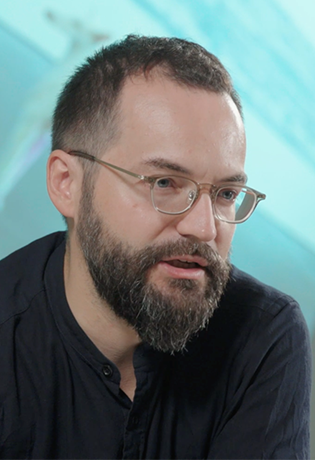
Dr. Damien Charrieras is an Associate Professor at the School of Creative Media , City University of Hong Kong, where he serves as Program Leader for the Master of Art in Creative Media and deputy program leader for the PhD in Creative Media. His work bridges cultural studies, new media theory, and the intersection of financial technologies with artistic practices through the ACIM Laboratory for Interventions in Speculative Finance . Doctoral research on digital artists' trajectories in Montreal FRQSC Postdoctoral Fellowship at McGill University Research spans game engine design , datafication of creativity , blockchain in art , and post-anthropocentric creative processes . With over HK$3.14M in grants as Principal Investigator, he explores situated digital creativity in urban contexts, critical worldbuilding pedagogy , and the mediation of technical systems in cultural production. His publications in Cities , Organized Sound , and Human Relations analyze the reconfiguration of artistic practices through software infrastructures and automation paradigms. Scientific awards include: FRQSC Postdoctoral Fellowship
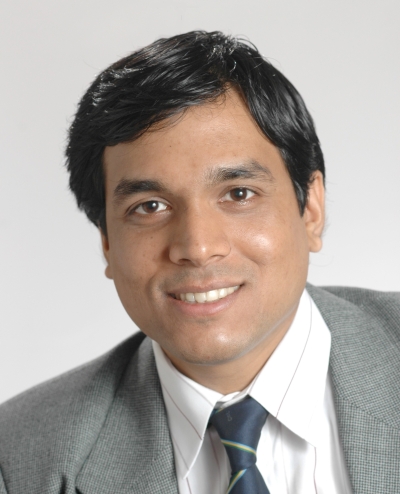
Takako Fujioka is an Associate Professor of Music at Stanford University, affiliated with the Center for Computer Research in Music and Acoustics (CCRMA). Her research focuses on the neural mechanisms underlying auditory perception, auditory-motor coupling, and music-supported therapy for neurorehabilitation. She holds a Ph.D. in Physiology from the Graduate University for Advanced Studies, Japan, and M.Sc./B.Eng. degrees in Electrical Engineering from Waseda University. Her work combines neurophysiological techniques such as MEG and EEG to study brain plasticity in development, aging, and stroke recovery. Notable contributions include investigating how music influences motor and cognitive recovery in stroke patients, as well as exploring the neural basis of musical perception through rhythmic synchronization and pitch discrimination studies. Supported by awards from the Canadian Institutes of Health Research during her postdoctoral work at the Rotman Research Institute, her research bridges clinical neuroscience and music cognition. Dr. Fujioka’s expertise spans auditory neuroscience, neurorehabilitation, and technology-assisted music therapy. She has pioneered studies on tactile mapping for cochlear implant users and networked music performance systems, emphasizing cross-modal perception and human-technology interaction. Her findings contribute to both theoretical understanding of auditory processing and practical applications in medical and educational settings. Awards: Canadian Institutes of Health Research Awards (postdoctoral phase) Labs/Teams: CCRMA, Stanford Music Perception Laboratory, Rotman Research Institute collaborations Key Themes: Neuroplasticity, Music-Mediated Rehabilitation, Auditory-Motor Integration, Multisensory Processing Her recent work examines aging-related changes in binaural hearing and the role of beta/gamma oscillations in rhythmic processing. She advocates for translational research that connects neural mechanisms with real-world therapeutic interventions.
Sanjit A. Seshia is the Cadence Founders Chair Professor in the Department of Electrical Engineering and Computer Sciences at the University of California, Berkeley . He is affiliated with the Group in Logic and the Methodology of Science and participates in centers like the Industrial Cyber-Physical Systems Center , Berkeley AI Research , and the Simons Institute for the Theory of Computing . Research interests include formal methods for automated verification and synthesis of dependable systems, with applications to cyber-physical systems , AI-based autonomy , and computer security . His work spans SMT solving, model counting, syntax-guided synthesis, and algorithmic improvisation, with tools like UCLID5 , VerifAI , and Scenic for verifying autonomous systems and educational platforms like CPSGrader . Students and collaborators include notable researchers such as Dorsa Sadigh (Stanford), Daniel Fremont (UC Santa Cruz), and Hazem Torfah (Chalmers). He has co-founded startups like Decyphir and 20ⁿ Labs based on his research.
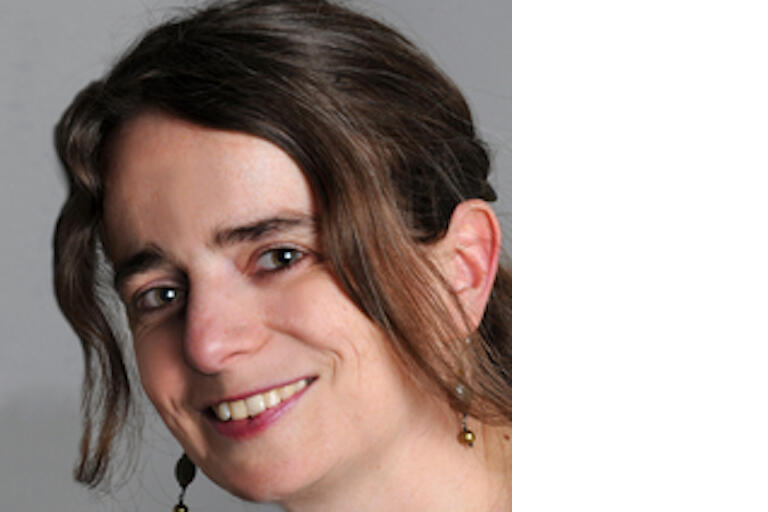
Anne-Lise François is an Associate Professor in the Departments of English and Comparative Literature at the University of California, Berkeley. She earned her PhD in Comparative Literature from Princeton University. Her work bridges 18th- and 19th-century British literature with contemporary environmental humanities, focusing on themes of ecological ethics, literary minimalism, and non-productive temporalities. Current research explores pastoral worldliness and commons-based economies in Romantic and modernist texts. Key scholarly contributions include her prize-winning book *Open Secrets: The Literature of Uncounted Experience* (2007), which examines 'affirmative reticence' in works by Jane Austen, Mme de Lafayette, and Emily Dickinson. Her recent projects address climate crisis narratives, food politics, and the intersection of aesthetic theory with ecological urgency. Teaching emphasizes transhistorical literary studies and environmental criticism Active in interdisciplinary collaborations across literature, philosophy, and environmental science Current book project: *Provident Improvisers: Parables of Subsistence from Wordsworth to Benjamin* Her writing synthesizes close textual analysis with broader socio-ecological frameworks, challenging Enlightenment models of productivity and advocating for 'recessive fulfillment' in both art and life.
Patrick Sturt is a Reader in Psychology at the University of Edinburgh's School of Philosophy, Psychology and Language Sciences. His research focuses on syntactic processing in language comprehension, computational models of incremental parsing, anaphor resolution, and eye movements in reading. With over 100 publications and more than 3,300 citations, he is a recognized expert in psycholinguistics and language processing. Dr. Sturt's research interests span multiple areas of language processing. He investigates how humans comprehend sentences in real-time, with particular focus on syntactic structures, agreement phenomena, and anaphoric reference. His work often employs eye-tracking methodologies to examine the moment-by-moment processing of linguistic information. He has made significant contributions to understanding how readers handle syntactic ambiguities, garden-path sentences, and the role of prediction in language comprehension. His recent publications demonstrate a strong focus on cross-linguistic studies, particularly examining language processing in Mandarin Chinese and Korean. Many of his studies investigate how syntactic and semantic information interact during comprehension, and how linguistic structures like honorifics, classifiers, and non-canonical word orders are processed. His work bridges theoretical linguistics with experimental psycholinguistics, providing empirical evidence for models of sentence processing. Dr. Sturt actively supervises PhD students including Carine Abraham, Wenjia Cai, Chiuchou Hao, Ruomeng Zhu, and Christy Gu. He teaches Psychology of Language 1 and 2 at the MSc level, as well as Data Analysis for Psychology in R for first-year undergraduates. His teaching reflects his research expertise, providing students with both theoretical knowledge and practical analytical skills. Based in Room G29 of the Psychology Building at 7 George Square, Edinburgh, Dr. Sturt maintains regular office hours on Tuesdays from 3-4pm, providing accessibility to students and colleagues. His email address is patrick.sturt@ed.ac.uk.
Dr. Ronald C. McCurdy is a Professor of Music at the University of Southern California's Thornton School of Music and former Chair of the Jazz Studies Department (2002-2008). A distinguished academic and performer, he has held leadership roles such as Associate Dean of the Culture, Community & Impact Committee and served as Director of the Thelonious Monk Institute of Jazz at USC (1999-2001). His career spans decades, including chairing the Afro-African American Studies Department and directing Jazz Studies at the University of Minnesota (1990-1999), and a Visiting Professorship at Maria-Curie Sklodowska University in Lublin, Poland (1997). PhD, University of Kansas (1983) MM, University of Kansas (1978) BM, Florida A&M University (1976) Dr. McCurdy's research and professional work focus on Jazz Studies , African American Music , and Artist Entrepreneurship . He has pioneered innovative educational approaches through publications like Teaching Music in Performance Through Jazz and The Artist Entrepreneur , blending pedagogy with cultural analysis. His Langston Hughes Project , a multimedia exploration of Hughes' poetry, has been performed internationally with artists like Ice-T and premiered at iconic venues such as Disney Hall (2015) and the Grammy Museum (2019). His publications demonstrate expertise in Jazz education , African American cultural theory , and performance pedagogy , with works including African Americans and Popular Culture (2007) and Meet the Great Jazz Legends (2004). These contributions reflect his commitment to preserving jazz heritage while advancing contemporary academic discourse. Jazz Educator of the Year 2005 (LA Jazz Society) Distinguished Alumni Award, University of Kansas (2001) FM Awards Winner for Best 'Live' Performance (2015) Dr. McCurdy has shaped global jazz education through roles at the Grammy Foundation , Jamey Aebersold Jazz Camp , and Walt Disney All-American Summer College Jazz Ensemble . He has collaborated with legendary artists including Joe Williams , Rosemary Clooney , Arturo Sandoval , and Dianne Reeves , while performing with Yamaha International Corporation as a featured artist. His creative projects, such as the Shanghai Jazz: A Cultural Mix premiere (2019), highlight his dedication to cross-cultural artistic exchange.
Dominic Thibault is an Assistant Professor at the Faculty of Music, Université de Montréal . His research-creation explores human-machine interaction in musical contexts, focusing on embodied cognition through electroacoustic compositions, audiovisual performances, and musical software development. Co-director, Laboratoire Formes·Ondes Active member, CIRMMT (Centre for Interdisciplinary Research in Music Media and Technology) Research axis leader, Expanded Musical Practice (CIRMMT) Member, Québecor Millénium entrepreneurship committee Scientific committee member, ACFAS
Mark d'Inverno is a Professor in the Department of Computing at Goldsmiths, University of London, where he has established himself as a leading researcher at the intersection of artificial intelligence, multi-agent systems, and creative applications. His academic journey began with foundational work in formal methods and agent-based systems, culminating in his 1998 PhD thesis 'Agents, Agency and Autonomy: A Formal Computational Model' from University College London, and has evolved toward practical applications in music technology and ethical AI systems. Professor d'Inverno's research interests span multiple interconnected domains, with a particular focus on computational creativity, multi-agent systems, and the application of AI in musical contexts. His work explores how artificial intelligence can enhance creative processes, particularly in music composition and performance, while maintaining ethical considerations in social AI systems. He has made significant contributions to understanding how agents can interact meaningfully in social contexts, how ethical frameworks can be embedded in online systems, and how technology can support creative learning experiences. His recent scholarly output demonstrates a clear trajectory toward applied research with social impact, as evidenced by his 2021-2024 publications which increasingly address ethical considerations in AI, human-AI collaboration in creative domains, and educational applications of technology. These works reveal a researcher deeply engaged with both theoretical foundations and practical implementations, bridging the gap between abstract computational models and real-world creative and educational applications. Professor d'Inverno maintains an extensive collaborative network, frequently working with Matthew Yee-King on music technology applications, with Pablo Noriega on ethical AI frameworks, and with Jon McCormack on computational creativity. His research has been supported through various projects that connect theoretical computer science with practical creative applications, particularly in the development of systems that facilitate human-AI creative collaboration.
Dr. Jules Rawlinson is a Senior Lecturer in Digital Design at the Reid School of Music , University of Edinburgh. He serves as Programme Director for the MSc Sound Design and contributes to MSc Design and Digital Media, ESALA undergraduate courses, and the Reid School's MSc Digital Composition and Performance. PhD in Composition (University of Edinburgh, 2011) MSc Sound Design (University of Edinburgh, 2006) BA Combined Arts (Sunderland University) Jules investigates audiovisual composition , live electronics , and interactive performance systems , blending machine learning , virtual environments , and corpus-based sound synthesis . His work explores non-linear narrative structures , graphical scores , and political sound-art through collaborations like Raw Green Rust and projects such as Lie Still My Sleepy Fortunes and w[i]nd . His 15 most recent outputs span audiovisual installations , generative sound systems , and collaborative performances , focusing on virtual reality , spectral transformation , and digital improvisation . Jules co-founded the LLEAPP network and has secured grants from EPSRC and New Media Scotland's Alt-w Fund . He supervises PhD students Tim Bentley, Hal Xu, Benjamin Cantil, and Liam Peacock, with works showcased at festivals including Sonorities , Edinburgh International Film Festival , and Edinburgh Festival Fringe . His Requiem for Edward Snowden was featured in BBC Radio 3's Hear and Now and selected for Creative Scotland's Made In Scotland Showcase.
Professor Anne Keegan is a Full Professor of International Human Resource Management at University College Dublin (UCD), leading the HRM and Employment Relations Group within the School of Business. She previously held roles at the Amsterdam Business School and Erasmus University Rotterdam, and completed her PhD at Trinity College Dublin. Her research focuses on HRM in online labor platforms, gig economies, project-based organizations, and institutional/paradox theories. Education: Bachelor of Arts (BA), Trinity College Dublin Doctor of Philosophy (DPhil), Trinity College Dublin Research Interests: HRM in digital labor platforms and gig economies Institutional complexity and paradox theory applications HR practices in project-based organizations Career dynamics in non-traditional work environments Awards: EGOS Award in Honour of Max Boisot (2014) Van der Schroeff Award for Best Lecturer (2013) Professional Activities: Editorial Board roles for International Journal of Human Resource Management and International Journal of Project Management Committee memberships: UCD Academic Council, Faculty Promotions Committee, Widening Participation initiatives Keynote speaker at NEON Annual Conference (2019) Grants: UCD School Funded Research Account (2024-2027) Labs/Teams: Leading research on algorithmic management, platform ecosystems, and gig economy ethics through collaborative international projects.
Marié Abe is an Associate Professor in the Department of Music at the University of California, Berkeley, where she joined the faculty in 2023 after twelve years at Boston University. Her research explores how auditory culture produces social space through the political and affective dimensions of sound in contemporary Japan, Okinawa, Ethiopia, and the United States. Her educational background includes: B.A. in Ethnomusicology/Cultural Anthropology, Swarthmore College (2001) M.A. in Ethnomusicology, University of California, Berkeley (2004) Ph.D. in Ethnomusicology, University of California, Berkeley (2010) Abe's research investigates how culturally specific listening practices elucidate power dynamics, human difference, and spatial understandings. Her work spans sound studies, ethnography, human geography, and affect theory, with fieldwork focusing on Japanese street music, US military bases in Okinawa, and sonic connections between Japan and Ethiopia during the Korean War. She emphasizes long-term ethical engagements with interlocutors and draws from locally grounded epistemologies. Her scientific awards include: Peabody Award (2008) for co-producing NPR program 'Squeezebox Stories' Reischauer Center for Japanese Studies Fellowship, Harvard University (2010-2011) Newhouse Center for the Humanities Fellowship, Wellesley College (2013-2014) International Research Center for Japanese Studies Fellowship, Kyoto, Japan (2018-2019) Abe has advised over a dozen doctoral students at Boston University across diverse geographical contexts including Senegal, Ghana, Cambodia, and Japan. She pioneered public ethnomusicology through the BU Global Music Festival and co-founded the Peabody Award-winning radio documentary 'Squeezebox Stories'. As an active accordion performer, she engages with indie pop, Ethiopian jazz, and free improvisation ensembles, performing at major international festivals including Bonaroo and New Orleans Jazz Festival.
Catherine Laws is a Professor of Music at the University of York, affiliated with the School of Arts and Creative Technologies. She holds a dual role as a musicologist and pianist specializing in contemporary music, with particular focus on interdisciplinary performance practices and the relationship between music and language. Her research explores collaboration, embodiment, and subjectivity in performance, alongside studies of Samuel Beckett’s musical intermediality. Laws maintains a Senior Artistic Research Fellowship at the Orpheus Institute in Ghent, leading the 'Performance, Subjectivity, and Experimentation' research cluster. Education: PhD in Music (University of York, 1996), MA and BA in Music (University of York) Her research spans two core areas: 1) performance-based studies examining performer agency, embodiment, and interdisciplinary collaboration through works like the multimedia Player Piano ; and 2) investigations into composers’ responses to literary texts, notably Beckett’s works. Key outputs include co-authored Voices, Bodies, Practices (2019) and edited Performance, Subjectivity, and Experimentation (2020). Her recent projects with filmmaker Minyung Im reimagine piano performances through film, blending sound, visual, and spatial elements. Publications reflect her dual focus: experimental music performance, Beckett studies, and collaborative art practices. Her work often bridges theory and practice, integrating compositional, performative, and audiovisual mediums.
Brian Magerko is Professor of Digital Media in the School of Literature, Media, and Communication at Georgia Institute of Technology , where he also serves as Director of Graduate Studies for the Digital Media program and holds an adjunct appointment in the School of Interactive Computing . He directs the Expressive Machinery Lab and has led over $20 million in federally funded research at the intersection of cognition, computation, and creativity. Education Ph.D. Computer Science and Engineering, University of Michigan (2006) M.S. Computer Science and Engineering, University of Michigan (2001) B.S. Cognitive Science (minor Computer Science & Jazz Performance), Carnegie Mellon University (1999) Research Interests Dr. Magerko’s scholarship integrates cognitive science , AI , and computational media to investigate three core themes: (1) social and creative collaboration between humans and AI; (2) design of interactive narrative, music, and arts-based computational experiences; and (3) inclusive STEAM education that leverages personal expression—most notably through the widely-adopted EarSketch platform, which engages learners in computer science via music remixing and coding. Publication Trends Recent publications (2022-2025) reveal a surge in work on generative and co-creative AI systems , AI literacy frameworks , and accessible computing education . Studies span dance improvisation agents (LuminAI), inclusive design for blind and visually-impaired learners, and large-scale evaluations of creativity and learning outcomes in EarSketch classrooms across the United States. Awards & Honors Methods Paper Recognition, ACM CSCW 2022 Best Paper Award, ACM Creativity & Cognition 2021 & 2017 Ivan Allen College Researcher of the Year 2018 NCWIT Engagement Excellence Award 2017 Multiple Best Student Paper Awards (AIED 2021, ICCCI 2021) CETL Thank-a-Teacher Award 2008 Grants & Advising Dr. Magerko has served as PI or Co-PI on numerous NSF, NEA, and private foundation grants totaling more than $20 million. His projects fund interdisciplinary teams of graduate and undergraduate students, post-docs, and external collaborators, producing open-source software, museum installations, and K-12 curricula. Labs & Teams As head of the Expressive Machinery Lab , he mentors researchers creating AI partners for dance, drawing, music, and storytelling. The lab’s artifacts have been exhibited at the Smithsonian, ArtScience Museum Singapore, MoogFest, and other international venues.
Charlotte Baskerville is a postgraduate researcher at the University of York (School of Arts and Creative Technologies) and Head of Choral Music at Warwick School. Her PhD research explores placemaking through composition, focusing on community engagement and shared musical identity. She holds a BA from Christ’s College, Cambridge (2015) and a master’s thesis on music cognition under Prof. Ian Cross. Her work bridges composition, choral performance, and community projects with groups like dementia care groups and schools. A prize-winning clarinetist and choral scholar, she actively performs with choirs in Cheltenham, Gloucester, and Tewkesbury. Her research interests center on creative placemaking via collaborative composition processes, leveraging local musical heritage to foster community identity. Her compositional output spans liturgical works, seasonal carols, and secular choral pieces, emphasizing accessibility and communal participation. Recent publications reflect her dual focus on sacred music traditions and innovative community-driven projects. Education: Bachelor of Arts in Music, Christ’s College, Cambridge (2015) Master’s thesis on music cognition under Prof. Ian Cross Sir Jack Lyons Research Scholar, University of York Awards: Christ’s College Charles Blackham Memorial Recital Competition (2016) Professional Roles: Head of Choral Music at Warwick School Clarinetist with multiple ensembles Active choral singer in multiple locations Her compositional output emphasizes collaborative creation with communities, particularly through workshops and participatory performances. Current projects involve primary/secondary schools, professional choirs, and dementia groups, aiming to strengthen communal bonds through shared musical experiences.
R. Luke DuBois is an Associate Professor and Co-Chair of the Technology, Culture and Society Department at the NYU Tandon School of Engineering, where he also directs the Integrated Design & Media program and the Brooklyn Experimental Media Center. He holds a DMA in music composition from Columbia University and is a renowned artist, composer, and performer whose work explores intersections between technology, sound, and visual media. His research focuses on digital media, human-computer interaction, and emerging technologies applied to artistic expression and accessibility. Key roles include directing the SONYC initiative (addressing urban noise pollution via AI) and leading the NYU Ability Project (advancing disability studies through technology). He has collaborated with institutions like the Smithsonian and artists such as Maya Lin, and his work has been exhibited globally, including at the Sundance Film Festival and the Aspen Institute. DuBois co-developed the Jitter software suite for real-time data manipulation and performs in avant-garde groups like Bioluminescence and Fair Use. His artistic practice combines time-lapse phonography, interactive installations, and interdisciplinary projects that critique cultural ephemera while advancing accessibility in STEM and the arts. Recent contributions include browser-based tools for accessible music notation (SoundCells) and sonification techniques for calculus education. He serves on the Board of the ISSUE Project Room and has been featured in major publications like the New York Times and TED Conference talks.