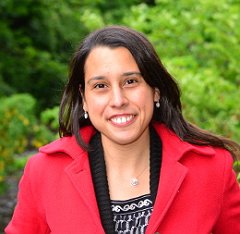
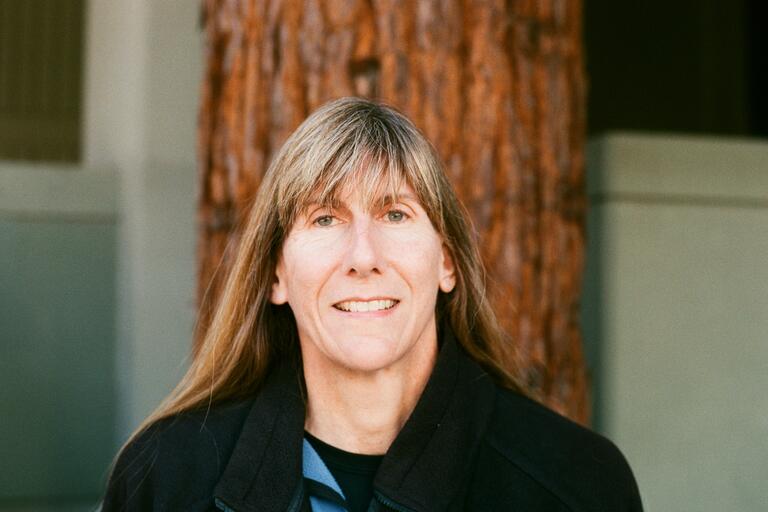
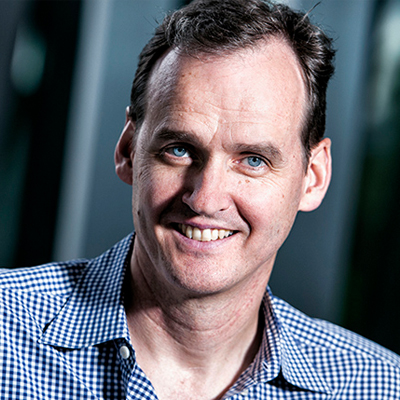
Işıl Dillig is an Associate Professor in the Department of Computer Science at the University of Texas at Austin, leading the UToPiA research group. She focuses on programming languages, with emphasis on static analysis, verification, and synthesis to enhance software reliability and security. Education: BS, MS, PhD in Computer Science from Stanford University Her research addresses critical challenges in: Program analysis for security and correctness Automated program synthesis for complex tasks Verification of concurrent and database-driven systems Recent publications span neurosymbolic synthesis, database integration, and smart contract optimization. Trends include hybrid AI-formal methods approaches and domain-specific language design. Scientific recognition includes: Sloan Fellowship NSF CAREER award She actively contributes to academic leadership as committee member, program chair, and keynote speaker in top conferences like PLDI, OOPSLA, and POPL.
Kristine Kahr Nilsson is an Associate Professor in the Department of Communication and Psychology at Aalborg University, Faculty of Social Sciences and Humanities. Her research focuses on clinical and developmental psychology, particularly in the areas of mental disorders, psychotherapy processes, and early childhood predictors of psychopathology. Research Interests: Her work spans developmental pathways to neurodevelopmental and emotional disorders, the impact of childhood experiences on mental health, within-disorder heterogeneity (especially in affective disorders), and individual differences in psychotherapy outcomes. She also investigates mentalization in eating disorders and the effectiveness of deliberate practice in training psychotherapists. Recent Research Trends: Her recent publications (2020–2025) reflect a strong emphasis on longitudinal studies of early predictors of mental illness, therapist-client dynamics, trauma in eating disorders, and validation of psychological assessment tools. Her work increasingly integrates clinical practice with empirical research, particularly through university clinics and randomized trials. Scientific Contributions: Principal investigator and collaborator on multiple research projects, including TRIPS (deliberate practice in psychotherapy training), mentalization in eating disorders, and early childhood development. Active contributor to Danish adaptation and validation of psychological instruments. Regular engagement in public discourse on mental health topics through media contributions. Advising and Grants: While no formal students are listed, she supervises research projects and collaborates extensively with PhD candidates and early-career researchers. She has secured funding for multiple research initiatives, including longitudinal cohort studies and clinical trials. She is part of active research groups such as the Klinisk og Sundhedspsykologisk Forskningsgruppe and collaborates with institutions and clinics in Denmark. Labs and Teams: She is embedded in the Cognition, Development and Clinical Psychology research environment at Aalborg University and contributes to the University Clinic as a research and training site. Her work is closely aligned with interdisciplinary teams focusing on mental health, child development, and psychotherapy innovation.
Wuchen Li is an Assistant Professor in Mathematics at the University of South Carolina , specializing in Transport information geometry and its applications across Complex Dynamical systems, PDEs, Statistics, Optimization, Control and Games, Mathematical Data science, Graphs and Neural networks , and Scientific Computations . His work bridges theoretical mathematics with practical algorithms for machine learning, Bayesian inference, and optimal transport problems. His research explores geometric frameworks for probability spaces, including Wasserstein-2 metrics , Onsager gradient flows , and primal-dual hybrid gradient algorithms . Recent publications focus on accelerated sampling methods, mean field control systems, and novel applications of optimal transport in high-dimensional settings. 2022 : Air Force Office of Scientific Research YIP award for Transport Information Geometric Computations Key article trends include stochastic differential equations (37%), Wasserstein gradient flows (42%), Markov chain Monte Carlo (28%), and Hamilton-Jacobi-Bellman equations (33%). Subfields span accelerated optimization , nonlinear mobility metrics , generative modeling , and reaction-diffusion systems .
Peter Bartlett is a Professor in the Department of Electrical Engineering and Computer Sciences and the Department of Statistics at the University of California, Berkeley. He also serves as Head of Google Research Australia and Director of the Foundations of Data Science Institute and the Collaboration on the Theoretical Foundations of Deep Learning. His research focuses on machine learning, statistical learning theory, and related areas such as pattern classification, adaptive control, and reinforcement learning. Bartlett earned a Ph.D. in Electrical Engineering from the University of Queensland, Australia (1992). He has held roles including Associate Director of the Simons Institute for the Theory of Computing and visiting positions at institutions like the University of Paris and the Australian National University. His contributions include co-authoring Neural Network Learning: Theoretical Foundations and pioneering work on AdaBoost, online learning, and high-order Langevin diffusion. He has been recognized with awards like the Malcolm McIntosh Prize (2001), ACM Fellowship (2018), and election to the Australian Academy of Science (2015). Bartlett advises numerous students and collaborates on grants related to theoretical foundations of machine learning. His leadership in research institutes and editorial roles at journals like Journal of Machine Learning Research underscores his impact on the field.
Vicente Fco Candela Pomares is an Associate Professor in the Department of Mathematics at the Faculty of Mathematics, University of Valencia, Spain. His academic career has been centered on numerical analysis and computational mathematics, with a focus on iterative methods for nonlinear equations and multiresolution techniques. His research interests lie primarily in Numerical Analysis , especially iterative root-finding methods such as Halley, Chebyshev, and Steffensen-type algorithms. He has contributed significantly to the convergence analysis of these methods, particularly in Banach spaces and for ill-conditioned problems. His work extends to multiresolution analysis , wavelets , and image restoration , where he applies fractional regularization and nonlinear approximation frameworks. The trends in his recent publications show a sustained focus on derivative-free iterative methods , convergence theory , and applications in image processing . His work often bridges theoretical numerical analysis with practical computational challenges. He earned his PhD from the University of Valencia in 1988 under the supervision of Dr. Antonio Marquina Vila, with a thesis on a priori error estimators for iterative methods. He has collaborated extensively with researchers including Sergio Amat, Sonia Busquier, and Rosa Peris. Notable co-authors include Pantaleón D. Romero and Francesc Aràndiga. His publications appear in high-quality journals such as Journal of Computational and Applied Mathematics , Applied Mathematics and Computation , and SIAM journals. He is actively affiliated with the University of Valencia, as evidenced by his institutional email and ongoing publications. There is no indication of part-time status, retirement, or awards in the available data.
Scott Zimmerman is an Associate Professor of Mathematics at The Ohio State University at Marion. His research focuses on geometric measure theory, analysis in metric spaces (particularly Carnot groups like the Heisenberg group), and harmonic analysis. He explores extension problems, Whitney extension theorems, and Lusin approximation for curves in non-Euclidean settings. Research Areas: Analysis on metric spaces, Geometric measure theory, Harmonic analysis His work often addresses theoretical challenges in sub-Riemannian geometry, such as curve regularity, singular integrals, and Sobolev extensions. Recent contributions include advancements in Whitney extension theorems for horizontal curves in Heisenberg groups and studies of 1-rectifiable measures in Carnot groups. His articles highlight interdisciplinary connections between pure mathematics and applied fields like computer vision (e.g., object tracking in video data). Despite no listed awards, his research demonstrates sustained innovation in geometric analysis. No advising or grant details are provided, but his active publication record reflects ongoing academic engagement.
Alison Jane Martingano is an Assistant Professor in the Department of Psychology at the University of Wisconsin-Green Bay, within the College of Arts, Humanities and Social Sciences. Her research explores empathy as a malleable skill that can be strengthened through practice, examining how activities like virtual reality, reading, and social interactions impact empathy development. With over 20 peer-reviewed publications and more than 600 citations, she is an emerging scholar in social psychology. Dr. Martingano earned her academic credentials through a rigorous educational path: Ph.D. in Cognitive, Social, and Developmental Psychology from the New School for Social Research (2020) M.Phil. and M.A. in Psychology from the New School for Social Research B.Sc. (Hons) from the University of York Postdoctoral training at the National Institutes for Health Her research program investigates empathy as a 'muscle' that strengthens with regular exercise through perspective-taking activities. She examines how various life experiences—such as virtual reality exposure, reading, socializing, emigrating, and higher education—impact empathy development across different demographic groups. Dr. Martingano is particularly interested in the cognitive and emotional components of empathy, their relationship to rational thinking, and how empathy manifests across diverse populations. Her work bridges theoretical psychological concepts with practical applications for enhancing social understanding. Analysis of Dr. Martingano's recent publications reveals a strong emphasis on virtual reality as a research tool for empathy studies, with significant attention to demographic differences in VR experiences, effectiveness of VR for empathy training, and racial disparities in cybersickness. She has conducted extensive research on empathy trends in youth populations, the relationship between social media use and empathy across different cultural contexts, and digital interventions to enhance empathy through smartphone applications. Her work consistently demonstrates methodological rigor while addressing socially relevant questions about human connection in the digital age. Winner of several early career research and teaching awards Featured on BBC Radio 4's The Digital Human Regular contributor to Psychology Today Host of the Psych & Stuff podcast Dr. Martingano actively mentors undergraduate students through the Social Research Lab at UW-Green Bay, where she guides research on empathy development using both traditional and innovative methodologies. She has secured research funding to support her investigations into empathy training interventions and virtual reality applications. Her commitment to education extends beyond the classroom through her public science communication efforts and dedication to making psychological research accessible to broader audiences. As head of the Social Research Lab, Dr. Martingano leads a team of undergraduate researchers conducting cutting-edge studies on empathy development, frequently utilizing virtual reality technology. Her lab serves as a comprehensive training ground for students interested in social psychology research methods, providing hands-on experience with experimental design, data collection, and analysis. Dr. Martingano's lab work directly supports her broader research agenda while preparing the next generation of psychological researchers.
Michael J. Lindsey is an Assistant Professor in the Department of Mathematics at the University of California, Berkeley, and a Faculty Scientist at Lawrence Berkeley National Laboratory. His research focuses on computational methods driven by Numerical Linear Algebra , Optimization , and Randomization , particularly for High-Dimensional Scientific Computing in quantum many-body problems and applied probability. University : UC Berkeley (Assistant Professor since 2022) Lab Affiliation : Mathematics Group at Lawrence Berkeley National Laboratory Email : lindsey@berkeley.edu His work includes Semidefinite Relaxation for quantum and classical problems, Monte Carlo Sampling techniques, and Tensor Networks for high-dimensional functions. He has pioneered Variational Embedding theory with guaranteed energy bounds and scalable solvers for quantum systems. Recent publications span Quantum Chemistry , Machine Learning , and High-Dimensional Probability , with applications to Electronic Structure , Molecular Dynamics , and Optimal Transport . He received the 2024 Hellman Fellowship and the 2019 SIAM Student Paper Prize . Teaching includes graduate and undergraduate courses in numerical analysis and applied mathematics at UC Berkeley and New York University. He also organizes the HDSC Seminar on high-dimensional scientific computing.
Chris Shannon is a Professor of Economics and Mathematics at the University of California, Berkeley, holding the Richard and Lisa Steiny Professorship. He serves as Senate Faculty and coordinates the NBER/NSF/CEME conference series on Mathematical Economics and General Equilibrium Theory. His research focuses on Mathematical Economics, General Equilibrium Theory, and Decision Theory under Uncertainty. Key areas include Knightian uncertainty, surplus extraction, mechanism design, and the mathematical foundations of economic theory. His work bridges rigorous mathematical analysis with economic applications, particularly in microeconomic theory and financial markets. Shannon's recent publications (2019-2022) demonstrate a strong trend toward uncertainty modeling in economic mechanisms, with emphasis on robustness, verifiability, and risk-sharing under ambiguity. His mathematical contributions to Lipschitz analysis and transversality theorems support foundational work in equilibrium theory. He has advised doctoral students including Kun Chen (2018) and Junjie Zhou (2012), focusing on stability and microeconomic theory. Shannon has taught Econ 204 (Mathematical Methods for Economic Theory) continuously from 2010 through 2023, with materials showing consistent coverage of set theory, fixed point theorems, differential equations, and measure theory. His teaching spans both in-person and online formats, with detailed lecture notes and problem sets maintained across multiple years. Shannon maintains active research collaborations, particularly with Luca Rigotti, Giuseppe Lopomo, and other leading theorists in uncertainty economics.
Peter L. Bartlett is a Professor at the University of California at Berkeley , affiliated with the Department of Electrical Engineering and Computer Sciences and the Department of Statistics. He also serves as ML Research Director at the Simons Institute for the Theory of Computing, Director of the Foundations of Data Science Institute, and Director of the Collaboration on the Theoretical Foundations of Deep Learning. Additionally, he holds a position as Principal Scientist at Google DeepMind. Research Interests : His work focuses on Machine Learning , Statistical Learning Theory , Pattern Classification , Adaptive Control , and Reinforcement Learning . He investigates theoretical aspects of learning algorithms, optimization dynamics, and generalization in overparameterized models. Article Trends : Recent publications emphasize scaling laws in linear regression , gradient descent optimization , benign overfitting , generative adversarial networks (GANs) , and implicit bias in neural training . Key sub-fields include overparameterized learning , minimax optimization , low-dimensional data analysis , and efficient decoding algorithms . Students and Postdocs : He has advised numerous students and postdocs across institutions, including Ishaq Aden-Ali , Spencer Frei , and Yeshwanth Cherapanamjeri , with former advisees like Yasin Abbasi-Yadkori (Adobe) and Alexander Rakhlin (Penn). Contact : Email peter@berkeley.edu , Address: 387 Soda Hall #1776, Berkeley, CA 94720-1776.
Dr. Saïd Moussaoui is a Professor in the Department of Automation and Robotics at École Centrale de Nantes , affiliated with the Nantes Digital Sciences Laboratory (LS2N) and the Signal, Image and Sound research team. His work spans machine learning, medical imaging, and signal processing, with a focus on EEG-based mental workload classification, PET reconstruction, and 4D Flow MRI optimization. Research Areas : Signal Processing, Medical Imaging, Machine Learning, Neuroscience, Biomedical Engineering Labs/Teams : LS2N Laboratory, Signal, Image and Sound Team Recent publications highlight trends in graph learning for EEG analysis, deep learning regularization in PET imaging, and super-resolution techniques in cardiovascular MRI. His research integrates physics-based models with data-driven approaches for applications in healthcare and industrial predictive maintenance. The LS2N laboratory provides a multidisciplinary environment for his work, combining advanced computational methods with real-world applications in biomedical engineering and robotics. Collaborations with institutions like IEEE and projects on digital twins underscore his technical leadership in applied research.
Dr. Sören Umlauft serves as a Researcher at the Institute for Pedagogy within the Faculty of Philosophy III Educational Sciences at Martin Luther University of Halle-Wittenberg, Germany, where he has maintained continuous employment since 2005 following completion of his psychology diploma. His academic credentials include: Diploma in Psychology (Dipl.-Psych.) from Martin Luther University of Halle-Wittenberg (2004) Dr. Umlauft's scholarly work centers on educational psychology with specialized focus on socialization dynamics and cultural influences in learning environments. His research trajectory began with the German Research Foundation (DFG) project "Double Dissociation of an Implicit and Self-attributed Justice Motive" (2004-2005), examining psychological mechanisms of fairness perception, and has evolved toward investigating how cultural contexts and socialization processes shape educational experiences. This interdisciplinary approach bridges psychological theory with practical educational frameworks. His professional activities include participation in DFG-funded research initiatives and maintaining regular office hours (Tuesdays 1-2 p.m.) for academic consultation at the university's Franckeplatz campus.
Rui Yao is a Lecturer at École Polytechnique Fédérale de Lausanne (EPFL), affiliated with the College of Engineering (ENAC) and the Department of Civil Engineering. Additionally, he works as a Scientist in the Laboratory for Human-Oriented Mobility Eco-system (HOMES) within EPFL. His research focuses on large-scale equilibrium modeling in multi-modal transport systems, individual mobility choice modeling, and demand management strategies. Education: B.Sc. in Civil Engineering, Technion – Israel Institute of Technology Direct-track Ph.D. in Transportation Engineering, Technion – Israel Institute of Technology His research spans both theoretical and applied domains, including stochastic traffic equilibrium , multi-passenger ridesharing systems , perturbed utility models , and deep learning for choice analysis . He has contributed to advancements in data-driven route choice modeling , integrated equilibrium models for electrified logistics , and stable matching frameworks for mobility platforms . Rui Yao is affiliated with the Human-Oriented Mobility Eco-system (HOMES) lab at EPFL, which focuses on innovative transportation solutions. His work bridges theoretical modeling with real-world applications in smart mobility and transportation policy.
Dr. Abida Malik is a Research Fellow at Johannes Kepler University Linz's Institute for Business and Vocational Education. Her academic journey includes positions at Nazarbayev University (Kazakhstan), Bremen University of the Arts, and Johannes Gutenberg University Mainz. She holds memberships in several philosophical societies including the German Society for Philosophy and The Aristotelian Society. Education includes: Doctoral studies in Philosophy, University of Bonn (2014-2018) MA in Renaissance Studies, Universities of Florence and Bonn (2011-2014) BA in German-Italian Studies, Universities of Bonn and Florence (2008-2011) Her research explores fundamental questions in: Epistemology - especially implicit knowledge and testimony Ancient Philosophy - Platonic and Aristotelian scholarship Philosophy of Language - examining linguistic meaning and communication with extensions into philosophy of mind, education, science, and action theory. Recent publications show strong focus on knowledge theory, with articles examining tacit knowledge acquisition, epistemic decolonization, and Platonic philosophy published in leading philosophy journals between 2023-2025. Scientific recognition includes: Scholarship from German National Academic Foundation She maintains regular student office hours and contributes to academic service through editorial work and conference organization. She is affiliated with the Research Network Implicit Knowledge (FORIM).
Dr. Philippe Blondé is a Senior Lecturer at Jagiellonian University's Faculty of Philosophy, Department of Cognitive Science, since 2024. His career includes a PhD in Cognitive Sciences (Université Paris Descartes, 2021), a lectureship in applied statistics at Université Clermont-Auvergne (2022), and a postdoctoral fellowship at the University of Iceland (2022-2024). He is affiliated with the Multimodal Integration and Interaction Lab and Brain and Cognition Lab. PhD: Université Paris Descartes (2021) Lecturer: Université Clermont-Auvergne (2022) Postdoc: University of Iceland (2022-2024) His research explores the interplay of mind-wandering, memory, and statistical learning in cognitive psychology. Key themes include how internal/external perceptual and attentional phenomena affect information extraction, encoding, and retention, particularly in statistical regularity learning and event coding. Publications span topics like visual perception, temporal context adaptation, attention-memory interactions, and aging-related cognitive modulation. Contact: ul. Ingardena 3, 30-060 Kraków, Poland. Email: p.blonde@uj.edu.pl .