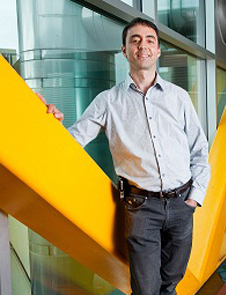
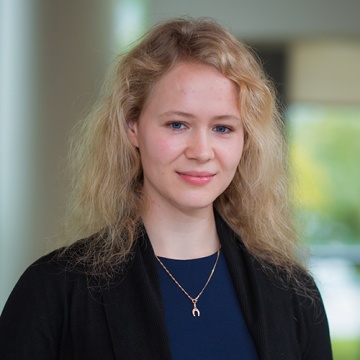
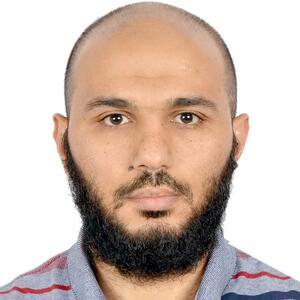
Michael Bode is a Professor in the School of Mathematical Sciences at Queensland University of Technology (QUT). His research focuses on applying mathematical and computational methods to ecological and conservation challenges, particularly in marine ecosystems and coral reef management. He holds a PhD in Applied Mathematics from the University of Queensland. Research Interests: Professor Bode specializes in larval dispersal modeling, conservation prioritization, and the application of ecosystem models to real-world management scenarios. His work integrates disciplines like applied mathematics, statistics, and ecology to address issues such as coral reef resilience, invasive species control, and climate change impacts. Grants & Projects: Securing Antarctica's Environmental Future (2020) Conserving Coral Reef Fish and Sustaining Fisheries in the Anthropocene (2019) Tackling Pests Using Game Theory (2019) New Methods for Conserving Dispersing Species on Coral Reefs (2017) Awards: 2020 Fenner Medal (Australian Academy of Science) Eureka Prize finalist (2020) Australian Research Council Future Fellowship (2017) Labs & Teams: He leads the QUT Applied Mathematical Ecology Group (QUTAMEG), which develops quantitative tools for ecological and conservation problems. His work is published in journals like Conservation Biology , Nature Sustainability , and PLoS Biology .
Robert Laganière is a Professor at the School of Electrical Engineering and Computer Science at the University of Ottawa, where he has been actively contributing to the fields of computer vision and image analysis. He is a member of the VIVA research laboratory and holds a Ph.D. and M.Sc. from INRS-Telecommunications in Montreal, as well as a bachelor's degree in Electrical Engineering from École Polytechnique de Montréal. Bachelor's in Electrical Engineering: École Polytechnique de Montréal (1987) Master's Degree: INRS-Telecommunications (1990) Doctorate: INRS-Telecommunications (1996) Professor Laganière's research focuses on computer vision, with particular expertise in image and video analysis, visual surveillance, embedded vision systems, and deep learning applications. His work spans fundamental research in feature detection and matching to practical applications in autonomous driving, human recognition, and real-time object tracking. He has made significant contributions to the development of algorithms for pedestrian detection, age and gender recognition, and 3D object localization. His publication trends reveal a consistent focus on practical computer vision applications with a strong emphasis on real-time performance and embedded implementation. Over the past decade, his research has evolved from foundational work in feature matching and homography estimation toward more complex applications in action recognition, human-computer interaction, and intelligent surveillance systems. His work consistently bridges theoretical computer vision with practical engineering constraints, particularly for mobile and embedded platforms. Best Paper Award, IEEE International Conference on Computer and Robot Vision (CRV 2014) Best Paper Award, CVPR Embedded Vision Workshop, Providence, RI, June 2012 Best Real-time Tracker, IEEE International Conference on Computer Vision (ICCV) Workshop on Visual Object Tracking (VOT2015) Professor Laganière has supervised numerous graduate students through the years, with a particular focus on practical applications of computer vision in surveillance, human recognition, and embedded systems. His research has been supported through industry partnerships with companies including CogniVue Corp, NXP, iWatchLife.com, Solink Corp, CBSA Canada, Ross Video, Thales, Habitat Seven, and YouI Labs. He has successfully translated his research into commercial applications through his founding of Visual Cortek (acquired by iWatchLife in 2009) and Tempo Analytics (founded in 2016). As a member of the VIVA research laboratory, Professor Laganière collaborates with colleagues on advanced computer vision projects, particularly those involving intelligent video analytics for security and commerce applications. His work on NAVIRE (Virtual Navigation in Remote Environments) demonstrates his commitment to developing practical solutions for real-world navigation challenges using image-based representations of real environments.
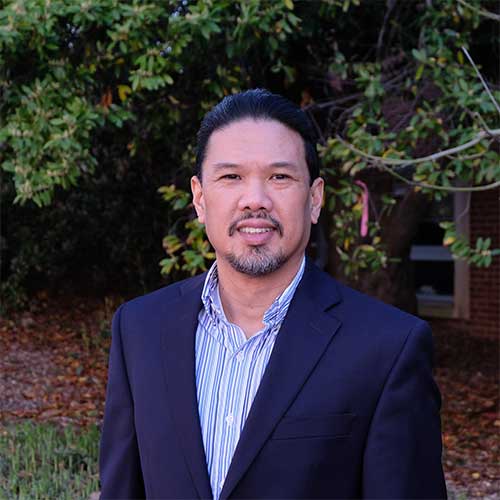
Roderick M. Rejesus is a Professor and Extension Specialist in the Department of Agricultural and Resource Economics at North Carolina State University. He holds a Ph.D. from the University of Illinois at Urbana-Champaign. His work focuses on applied production economics, agricultural risk management (including crop insurance and safety-net policies), and economic impacts of agricultural technologies. He teaches ECG 741: Agricultural Production and Supply in Fall semesters. Education: Ph.D. in Agricultural Economics, University of Illinois at Urbana-Champaign (2001) Research Interests: Dr. Rejesus examines policy-driven agricultural practices such as soil health management and cover crops, their resilience to climate extremes, and their economic implications. His work integrates empirical analysis of crop insurance mechanisms, yield risk, and environmental sustainability. He evaluates conservation programs (e.g., no-till practices) and their effects on land values and erosion. His studies often address global challenges like climate change and food security, with projects in the U.S., Philippines, and other regions. Recent Research Trends: His articles emphasize climate-smart agriculture, crop insurance dynamics under extreme weather, and policy incentives for sustainable practices. Key themes include quantifying yield sensitivity to environmental factors (e.g., warming temperatures), analyzing soil health benefits, and modeling production risk in agricultural systems. Advising & Grants: While specific grants or advisees are not listed, his role as an Extension Specialist suggests involvement in applied research partnerships with farmers and policymakers. His work often involves collaborative projects with international institutions. Labs/Teams: Affiliated with North Carolina State’s Extension programs and interdisciplinary teams focused on agricultural economics and policy.
Elizabeth Ooi is a Senior Lecturer of Finance at the UWA Business School, University of Western Australia. She holds a PhD from Monash University and has extensive experience in financial literacy and personal finance research, including consulting for the OECD. Her research focuses on superannuation governance, financial education, and corporate governance, with notable contributions to policy reports and peer-reviewed journals. She has secured over $140,000 in research grants and co-founded the UnderstandingSuper initiative to enhance financial literacy. Education: BA, BCom, PGradDipEc&Com (Monash University), PhD (Monash University). Research interests include financial literacy measurement, gender disparities in financial knowledge, superannuation fund governance, and socially responsible investing. Her work aligns with UN Sustainable Development Goals related to economic empowerment and financial inclusion. Grants and funding include projects with CPA Australia, Industry Superannuation Australia, and the NSW TechVoucher grant. She has supervised multiple PhD and honours students, contributing to academic and policy discussions on financial systems reform. Professional roles include Deputy Director of External Engagement (2018-2022), seminar series coordinator, and board memberships. She has presented globally at institutions like the OECD and the United Nations, and her media engagements include contributions to The Conversation, The Australian, and Sydney Morning Herald.
Prof. Dr. Ahmet ÖZMEN is a Professor at Sakarya University's Faculty of Computer and Information Sciences, Department of Software Engineering. He has held various administrative positions including Head of the Software Engineering Department (2019-2028) and Director of the Computer Research and Application Center (2019-2022). With extensive experience in academia since 1991, he has made significant contributions to computer vision, traffic monitoring systems, and sensor technologies. Sakarya University: Professor (2019-present), Associate Professor (2011-2019) Dumlupınar University: Assistant Professor (2001-2011), Research Assistant (2000-2001, 1993-1998) Istanbul Technical University: Research Assistant (1991-1993) Prof. ÖZMEN's research spans computer vision applications for traffic monitoring, indoor air quality systems, parallel computing, and sensor technologies. His work bridges theoretical computer science with practical engineering applications, particularly in developing vision-based systems for nighttime vehicle detection, traffic flow monitoring, and environmental sensing. His interdisciplinary approach combines machine learning, image processing, and embedded systems to solve real-world problems in transportation and environmental monitoring. His publication record shows a clear evolution from parallel and distributed systems in his early career to computer vision and sensor applications in recent years. The majority of his recent work focuses on traffic monitoring systems using computer vision techniques, particularly for nighttime conditions, and indoor air quality monitoring systems using sensor networks. His research demonstrates strong industry and societal relevance, with applications in smart transportation, environmental protection, and educational technology. TÜBİTAK Publication Awards (2006, 2008, 2009, 2010) Physical implementation award from TÜBİDER (2008) Microsoft Certified Professional Certificate (2005) YÖK overseas study scholarships (1993, 1998) Elginkan graduate scholarships (1990, 1991) Prof. ÖZMEN has supervised numerous graduate students across multiple institutions, with a focus on practical engineering problems. His research has been supported by various projects including TÜBİTAK projects, institutional research grants, and industry collaborations. He has led significant research initiatives in traffic monitoring systems, indoor air quality monitoring, and educational technology platforms. His administrative leadership has included directing research centers and shaping curriculum development in software engineering. His work has involved establishing research teams focused on computer vision applications, sensor network development, and educational technology. These teams have produced numerous publications, developed practical systems, and trained the next generation of computer engineers. Current research directions include advanced traffic monitoring systems using deep learning and multi-camera setups for urban planning applications.
John Rowan is a Professor of Physical Geography and Director of the UNESCO Centre for Water Law, Policy & Science at the University of Dundee. His roles include advancing sustainable development, particularly SDG6 (water and sanitation), and leading interdisciplinary initiatives. Previously, he served as Vice Principal for Research and inaugural Dean of the School of Social Sciences. His research focuses on environmental change, climate impacts on water resources, and policy-driven solutions, with global collaborations in Bangladesh, India, and Kenya. He has held advisory roles in Scottish Government’s Centres of Expertise and chairs UNESCO’s UK International Hydrological Committee. Research Interests: Environmental change, climate-water-food nexus, river basin management, sediment dynamics, and policy integration. His work bridges academic and applied domains, emphasizing governance and sustainable practices. Key projects include enhancing water security under climate uncertainty, developing risk frameworks for drinking water, and addressing the water-food-energy nexus. Publications: Over 111 articles, focusing on climate adaptation, water resource vulnerabilities, and ecohydrological modeling. Recent highlights include studies on the Karakoram Anomaly’s hydrological tipping points and frameworks for climate-resilient water safety plans. Awards: Gold Engage Watermark Award (2020), United Nations Risk Award (2019). Projects span international collaborations and policy advisory roles. He has supervised 12 students and led over 33 research projects, including the Hydro Nation Scholars Programme. Labs/Teams: UNESCO Centre for Water Law, Policy & Science; Centre for Environmental Change and Human Resilience (CECHR), collaborating with the James Hutton Institute. Active in global forums like the UNFCCC Climate Assembly and World Water Forum.
Shion Guha is an Assistant Professor at the University of Toronto's Faculty of Information, cross-appointed to the Department of Computer Science. He directs the Human-Centered Data Science Lab and is affiliated with the Schwartz Reisman Institute for Technology and Society and the Data Sciences Institute. His research focuses on integrating technical methodologies with critical social science approaches to address algorithmic biases in public sectors like child welfare, healthcare, and policing. Key roles include coordinating the Human-Centred Data Science concentration in the Master of Information program and advising national policies on AI ethics. Education: PhD in Information Science and Statistics, Cornell University (2016) MS in Information Science, Indian Statistical Institute (2010) Bachelor of Business Administration, Jadavpur University (India) Research Interests: Human-Centered Data Science, AI ethics, public policy, healthcare systems, algorithmic accountability, and marginalized communities' interaction with technology. His work emphasizes participatory design and real-world impact, addressing high-stakes decisions in public services. Recent Trends in Articles: Focus on participatory AI design in public sectors, algorithmic harms in child welfare, and cultural biases in NLP tools. His studies explore the intersection of technical systems and societal values, advocating for equity and transparency in algorithmic decision-making. Awards: Way-Klingler Early Career Award (2019) Connaught New Researcher Award (2021) Schwartz-Reisman Institute Faculty Fellowship (2023–2025) Grants & Advising: Secured funding from NSERC, CIFAR, and others for projects like the Responsible AI for Health Systems (RAIHS) framework. Advises PhD students through cross-departmental programs and collaborates with organizations like Parkview Health and the ACLU. Current supervisees include Ramaravind Kommiya Mothilal and Seh Young Moon. Labs & Initiatives: Leads the Human-Centered Data Science Lab, contributing to interdisciplinary research on AI ethics. Active in policy advocacy, including work with the Canadian government’s AI Policymakers Expert Group and the CIFAR AI Solutions Network.
Christian Newman is an Associate Professor in the Department of Software Engineering at the Golisano College of Computing and Information Sciences, Rochester Institute of Technology (RIT). He serves as the Graduate Program Director and has expertise in software engineering methodologies, refactoring techniques, and source code analysis. His research focuses on improving code quality, developer practices, and automated documentation. Education: Newman holds a BS, MS, and Ph.D. from Kent State University. His academic background aligns with his current research in software engineering and empirical studies. Research Interests: His work emphasizes identifier naming standards, technical debt management, refactoring strategies, and code reuse. He explores how developers perceive and implement refactoring tools, as well as the role of large language models (LLMs) in programming education and code generation. Publications: Newman's recent work includes studies on identifier semantics, part-of-speech tagging for code analysis, and the performance of LLMs in introductory programming tasks. His research often combines empirical studies with tool development, such as SATDBailiff for technical debt tracking and TSDetect for test smell detection. Teaching & Advising: He teaches courses like SWEN-250 (Personal Software Engineering), SWEN-331 (Engineering Secure Software), and graduate-level thesis supervision. His courses emphasize secure development, software design principles, and team-based projects. Tools & Contributions: Newman has developed tools like srcSlice (static slicing), srcType (type resolution), and SCALAR (identifier analysis). These tools support software evolution, code comprehension, and empirical research in the field.
Raymond T. Ng is a Professor of Computer Science at the University of British Columbia (UBC) and serves as Director of the Data Science Institute . In addition, he is the part-time Chief Informatics Officer at the PROOF Centre of Excellence for the Prevention of Organ Failures located at St Paul’s Hospital. Since 2016 he has held the prestigious Canada Research Chair in Data Science and Analytics. Education B.Sc. (Hons.) Computer Science, University of British Columbia, 1986 M.Math. Computer Science, University of Waterloo, 1988 Ph.D. Computer Science, University of Maryland, College Park, 1992 Research Interests Professor Ng’s research lies at the intersection of data mining , text mining , health informatics , sensor analytics , and databases . Over the past decade he has focused on two major domains: Genomics & Biomarker Discovery: Developing multi-omics biomarker panels for heart, lung and kidney transplant rejection and COPD exacerbations using transcriptomics, proteomics and metabolomics data. Natural Language Processing: Mining and summarizing conversational text such as emails, blogs and meeting transcripts to generate structured metadata and actionable insights. Scientific Awards Canada Research Chair in Data Science and Analytics (2016-2026) Best Paper Award, ACM SIGMOD 2004 Best Paper Award, ACM SIGKDD 2001 Selected among Best Papers of VLDB ’99 & ’98 Governor General’s Gold Medal, UBC (1986) Research Funding & Leadership Since joining UBC in 1992, Professor Ng has continuously secured major peer-reviewed funding from NSERC, CIHR, Genome Canada, CFI, MITACS and industry partners (Google, IBM, SAP). He leads or co-leads several large-scale initiatives: HEARTBiT multi-marker blood test for cardiac transplant rejection (CIHR 2018-2021) MERIDIAN ocean acoustic data infrastructure (CFI 2018-2021) Pan-Canadian Early Detection of Lung Cancer (Terry Fox 2018-2021) Business Intelligence Network (NSERC 2009-2014) Multiple Genome Canada programs on biomarker translation (2004-2018) Laboratories & Teams Professor Ng directs the Data Science Institute and works closely with the Natural Language Processing Research Group . At the PROOF Centre he heads a multidisciplinary team of statisticians, computer scientists and clinicians advancing computational biomarker pipelines from discovery to clinical implementation.
Akash Kumar is a Professor at Ruhr University Bochum, Germany, with affiliations to multiple institutions including TU Dresden and National University of Singapore. His research focuses on computer architecture, hardware acceleration, and approximate computing, with a strong emphasis on FPGA-based systems and neural network optimization. He has contributed extensively to embedded systems, mixed-criticality systems, and security in emerging technologies like reconfigurable nanodevices. His work spans cross-layer approximation methodologies, graph neural networks, and energy-efficient processing for edge AI. Collaborations with industry and academia highlight his leadership in VLSI design and secure hardware implementations. Notable contributions include frameworks for bounding time in mixed-criticality systems and resilient logic locking techniques. Research interests include hardware-software co-design, real-time systems, and efficient neural network architectures. His publications in top-tier conferences (DAC, DATE, FCCM) and journals (IEEE Trans. CAD, ACM TECS) underscore his impact in the field.
Associate Professor Anton Didenko is a leading academic at UNSW Sydney's School of Private & Commercial Law, specializing in FinTech regulation, banking law, and central bank digital currencies (CBDC). He holds law degrees from Russia and the UK, including an MJur and DPhil from the University of Oxford. His research focuses on CBDC design, regulatory sandboxes, open banking frameworks, and cybersecurity in finance. University Affiliation: UNSW Sydney Key Academic Roles: Author of Banking Law in Australia (11th ed, 2024) and lead author of Customer Data Sharing Frameworks (2024) Global Engagement: Adviser to G20, Asian Development Bank, and UN agencies Research Interests: - CBDC policy and design implications - Regulatory frameworks for FinTech innovation - Cybersecurity in financial systems - Transnational commercial law and secured transactions - Open data and customer consent mechanisms Recent Articles: Focus on CBDC adoption in Pacific economies, weaponization of digital currencies in geopolitical conflicts, and comparative analysis of blockchain liabilities. His work bridges legal, technological, and policy dimensions of financial innovation. Awards : Australian Academic of the Year in Digital Finance (2023) Advising & Grants: - No listed advisees - Collaborations include Asian Development Bank-funded Pacific CBDC studies - Co-authored policy reports for UN Capital Development Fund and CPA Australia Labs/Teams: - Editor-in-Chief of the Cape Town Convention Journal - Co-leader of UNSW's FinTech regulation research initiatives
Professor Michael Davies is Professor of Building Physics and the Environment at the UCL Institute for Environmental Design and Engineering (IEDE) within The Bartlett School of Environment, Energy & Resources at University College London. He is also a member of the UK Climate Change Committee. With over two decades of academic experience, Professor Davies leads research at the critical intersection of building physics, environmental design, and public health, focusing on how the built environment impacts human well-being. His educational background includes: Doctor of Philosophy from the University of Westminster (1994) Postgraduate Certificate in Education from the University of York (1990) Bachelor of Science from the University of Manchester (1986) Professor Davies has pioneered transdisciplinary research methods, particularly in modeling health impacts and applying system dynamics approaches to address urban health challenges. His work demonstrates how healthy sustainable development can be achieved through innovative stakeholder participation and methodological advancements. His research spans building physics, climate change adaptation, indoor environmental quality, and the health implications of urban design, with particular attention to vulnerable populations and environmental justice considerations. His extensive publication record (over 300 outputs) reveals a consistent evolution toward more integrated approaches that connect building science with public health and climate policy. Recent work shows growing emphasis on health equity in climate adaptation, advanced modeling of complex urban systems, and the application of system dynamics to understand interconnected challenges in housing and urban environments. His research bridges technical building performance analysis with broader policy implications, reflecting his commitment to solutions that address both environmental sustainability and social equity. Professor Davies has secured significant research funding, including the prestigious EPSRC Platform Grant funding the Complex Built Environment Systems group at UCL (awarded only to "world leading" centers) and the Wellcome Trust-funded 'CUSSH' project. In total, he has served as PI or Co-I on approximately 50 research projects, demonstrating exceptional ability to lead large-scale, transdisciplinary research initiatives addressing critical urban challenges. As an educator, Professor Davies leads the 'Energy Context' module in the Environmental Design and Engineering MSc course and supervises EngD and PhD students. His teaching emphasizes the integration of energy systems within broader environmental, social, and policy contexts, preparing students to address complex sustainability challenges in the built environment sector.
Mariya Grinberg is an Associate Professor of Political Science at the Massachusetts Institute of Technology (MIT), where she is also a core faculty member in the Security Studies Program. She joined MIT as an Assistant Professor in 2021 and was promoted to Associate Professor in 2025. Her academic journey includes postdoctoral fellowships at Stanford University's Center for International Security and Cooperation (2019-2020) and Dartmouth College's Dickey Center for International Understanding (2020-2021). Dr. Grinberg earned her PhD in Political Science from the University of Chicago in 2019, with a dissertation titled "Planning for the Short Haul: Explaining Wartime Trade between Enemies." Her educational background also includes an MA from the University of Chicago's Committee on International Relations and dual undergraduate degrees (BA in International Relations and BS in Business Administration) from the University of Southern California, all earned with honors. Her research focuses on how time and uncertainty shape strategic decisions of states, examining economic statecraft, military planning, and questions of state sovereignty. Dr. Grinberg's groundbreaking work challenges conventional wisdom about the relationship between economic interdependence and conflict, demonstrating that states frequently engage in trade with their enemies even during wartime. Her research spans international security, political economy of security, wartime trade, order formation, sovereignty, and state decline. Dr. Grinberg's scholarly contributions reveal important patterns in international behavior, particularly the "denial-escalation dilemma" in economic statecraft and the inherent trade-offs in strategies for managing state decline. Her work shows that economic ties between states may be insufficient to prevent war, as states balance competing imperatives of preventing enemies from gaining military advantage while maintaining economic security. Committed to Caring Honoree, MIT Office of Graduate Education, 2024 Nuclear Security Research Grant, Stanton Foundation, 2025-26 Junior Faculty Research Grant, Smith Richardson Foundation, 2025-26 Hans J. Morgenthau Fellowship, Notre Dame International Security Center, 2020-21 As an advisor, Dr. Grinberg is renowned for her commitment to students' intellectual growth, providing both incisive criticism and staunch advocacy. She maintains one of the largest advising loads in the department while delivering prompt, discerning feedback. Students describe her as someone who can be "both your most incisive critic and staunchest advocate." She teaches courses including "How to Theory," "Introduction to International Relations," and "Political Economy of International Security." Dr. Grinberg is actively engaged in professional communities, regularly presenting her research at major conferences including the International Studies Association (ISA) and the American Political Science Association (APSA). Her work has particular relevance to contemporary security challenges including the Russia-Ukraine conflict, where she has provided expert analysis on the limitations of economic sanctions.
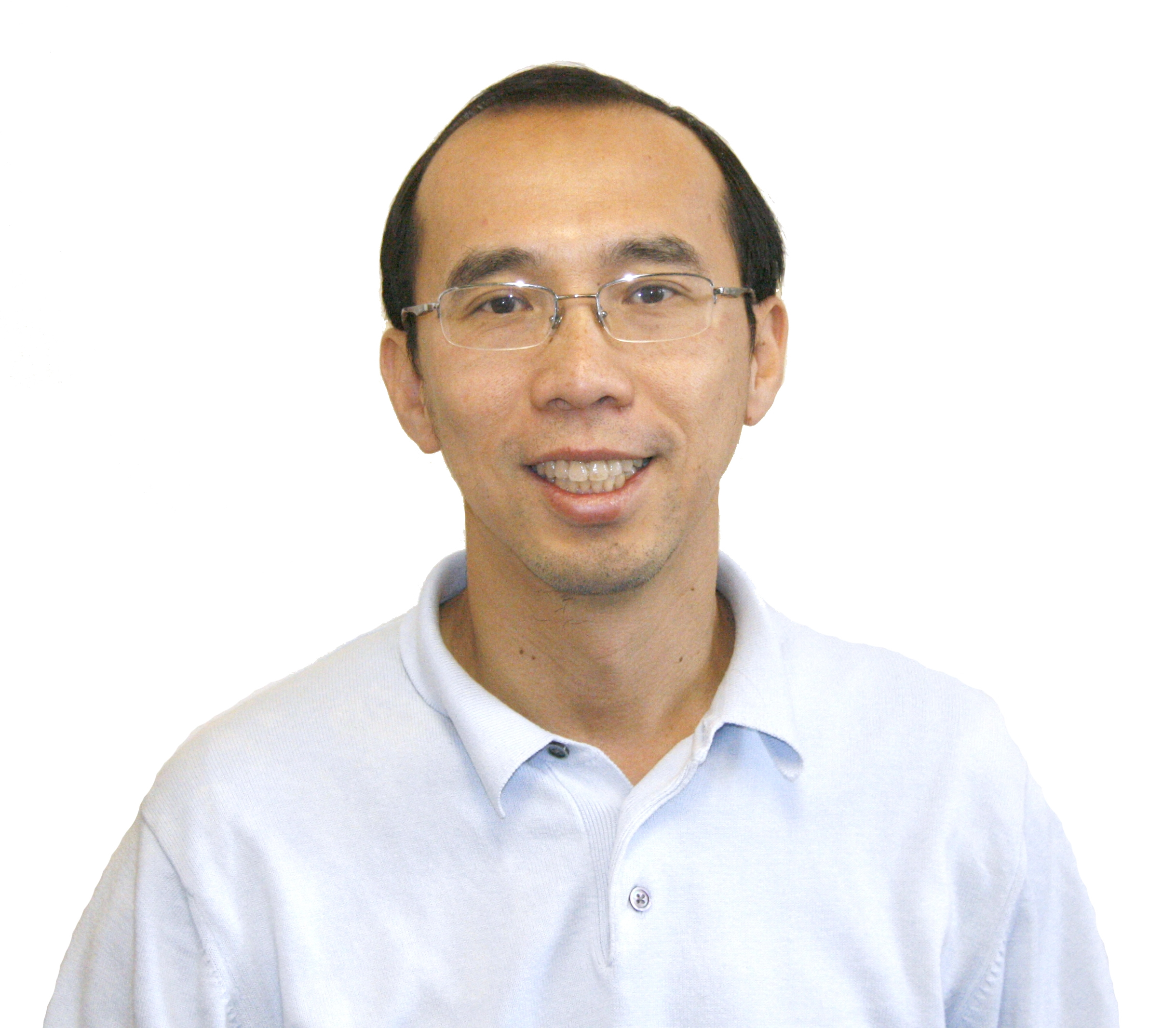
Professor Yue Rong is a Full Professor at Curtin University's Department of Electrical and Computer Engineering, within the School of Electrical Engineering, Computing and Mathematical Sciences. He holds editorial roles at IEEE Transactions on Signal Processing and IEEE Wireless Communications Letters. His research focuses on signal processing for communications, underwater acoustic systems, wireless networks, and healthcare IoT. Rong has authored over 140 journal and conference papers and received multiple awards, including the 2010 Young Researcher of the Year Award. Education: B.E. (Electrical Engineering), Shanghai Jiao Tong University (1999) M.Sc. (Electrical Engineering), University of Duisburg-Essen (2002) Ph.D. (Electrical Engineering), Darmstadt University of Technology (2005) Research Interests: Rong's work spans cooperative MIMO communications, underwater acoustic systems, OFDM modulation, radar-based healthcare monitoring, and secure wireless protocols. His innovations include adaptive modulation schemes for underwater environments and radar-based vital signs detection. Recent trends in his publications emphasize AI-driven signal processing for healthcare IoT and underwater optical communication systems. Awards: Best Paper Awards (WCSP 2011, APCOMM 2010) Chinese Government Award (2004) DAAD/ABB Fellowship (2001-2002) Grants & Labs: His research is supported by grants focusing on UAV-enabled data collection and underwater network optimization. He leads projects in the Distributed Data Fusion and Emerging Technologies (DDFE) lab, advancing radar-cardiography and wearable health monitoring systems.
Hesham ElSawy is an Assistant Professor in the Department of Systems and Networks at the School of Computing, Faculty of Arts and Science, Queen's University. His work focuses on advancing next-generation wireless systems, with particular emphasis on federated learning, IoT networks, and edge computing. He is affiliated with Ingenuity Labs Research Institute, Queen's University, and contributes to interdisciplinary research at the intersection of communication theory and network optimization. His research interests span stochastic geometry modeling, energy-efficient protocols for massive IoT deployments, and resilient federated learning frameworks. ElSawy explores novel paradigms in aerial wireless networks, UAV-assisted communication, and network security through percolation theory applications. Recent publications highlight his contributions to system-level analysis of parallel computing at extreme edges, UAV-enabled federated learning architectures, and energy-as-a-service models for RF-powered networks. His work emphasizes practical implementations and large-scale network validation. ElSawy holds no listed awards or grants in the provided text but maintains active collaborations through Ingenuity Labs. His research addresses critical challenges in 5G/6G networks, including latency optimization, resource allocation, and heterogeneous network integration.