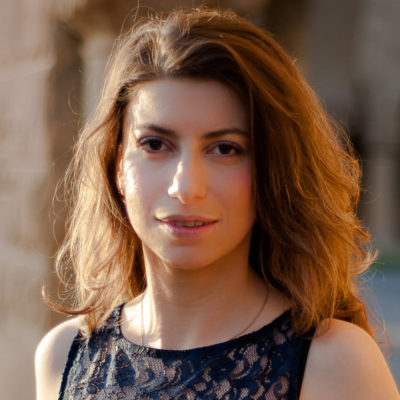
Dr. Cathy Oke OAM is an Associate Professor and Melbourne Enterprise Principal Fellow in Informed Cities at the Melbourne School of Design, University of Melbourne. She serves as Director of the Melbourne Centre for Cities and holds roles as a Senior Advisor to the Global Covenant of Mayors for Climate and Energy. Her work bridges research, policy, and practice to advance nature and climate action in urban environments. Previously, she served as a Councillor for the City of Melbourne (2008–2020) and contributed to the Clean Air and Urban Landscapes Hub (CAUL) as a Knowledge Broker. Cathy holds a PhD in Genetics and over 20 years of experience in environmental communications and project management. Her research focuses on urban sustainability, climate resilience, and nature-based solutions. Key initiatives include Innovate4Cities, which drives city-led climate innovation, and projects on urban biodiversity restoration. Cathy’s work emphasizes interdisciplinary collaboration and the integration of scientific evidence into actionable policies. Educations: PhD in Genetics RMIT University affiliation as a former research fellow Awards: 2023 Order of Australia Medal for service to Local Government and the Environment Her articles highlight themes such as urban climate governance, nature-based solutions, and global city networks. She collaborates with international bodies to enhance city diplomacy and accelerate climate action. Cathy leads the Melbourne Centre for Cities, a hub for urban research and policy engagement.
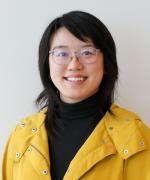
Helen Xu is an Assistant Professor at Georgia Tech's School of Computational Science and Engineering (College of Computing). She holds a Ph.D. from MIT (2022) under Charles E. Leiserson and was a Grace Hopper Postdoctoral Fellow at Lawrence Berkeley National Lab (2022). Her research focuses on parallel algorithms, cache-efficient data structures, and high-performance computing. Xu has interned at Microsoft Research, NVIDIA Research, and Sandia National Laboratories, and her work has been supported by prestigious fellowships including the National Physical Sciences Consortium and Chateaubriand awards. **Education**: Ph.D., Computer Science, MIT, 2022 Postdoctoral Research, Lawrence Berkeley National Lab (2022) **Research Interests**: Parallel and cache-friendly algorithms Dynamic graph and data structure optimization Algorithm performance engineering Sparse matrix/tensor operations **Awards**: Grace Hopper Postdoctoral Scholar (2022), Best Artifact Award (PPoPP 2024), National Physical Sciences Consortium Fellowship, Chateaubriand Fellowship. **Advising & Teaching**: Advises PhD/M.S. students in parallel computing and high-performance systems. Teaches courses like CSE 6220 (Introduction to HPC) and CSE 6230 (HPC Tools). Supervised MIT M.Eng. projects on BP-Trees and parallel prefix sums. **Labs/Teams**: Active in Georgia Tech's High-Performance Computing community, collaborating with researchers like Aydın Buluç and Prashant Pandey on graph containers and dynamic data structures.
Kari Ingstad is a Professor of Sociology at the Faculty of Nursing and Health Sciences, Nord University, and currently serves as Vice-Dean for Research. Her work bridges academia, clinical practice, and policy, focusing on healthcare organization, leadership, and innovation in Norway's health sector. She holds a PhD in Sociology from NTNU (2011) and has extensive clinical experience in municipal and specialist healthcare. Education: PhD in Sociology, NTNU, 2011 Nursing background from municipal and specialist healthcare sectors Research Interests: Workforce planning and staffing strategies in healthcare Impact of shift scheduling on employee well-being and patient safety Integration of artificial intelligence in healthcare operations Cross-sectoral collaboration and innovation in health services Recent Research Trends: Her 2024 publications emphasize strategic staffing solutions, AI-driven shift planning, and long-shift work-life balance. Key projects include the OptiCare-AI initiative (Norwegian Research Council-funded), exploring AI applications for optimizing healthcare resource allocation. Leadership & Grants: Leads the Acute Care, Innovation and Patient Safety (AKIP) research group Principal Investigator on OptiCare-AI (2023–present) Labs/Teams: Active collaborations with the AKIP group and national/international networks on healthcare workforce issues.
Simen Grung is a Doctoral Research Fellow at the Department of Teacher Education and School Research, Faculty of Educational Sciences, University of Oslo. His work focuses on assessment practices and English language pedagogy. Current projects: EDUCATE (Subject Renewal Evaluation), LANGUAGES (Language Instruction Contexts), NAVIKO-LU (Video-based Teacher Training), VIST (Video Excellence in Teaching) Research Groups: SISCO (Studies of Instruction across Subjects and Competences) His research explores feedback mechanisms in international classroom contexts, formative assessment challenges, and the use of video representations to enhance teacher training programs across Norway, England, and France. Recent publications demonstrate expertise in comparative education studies, language proficiency analysis, and assessment research methodologies. Key themes include cross-cultural pedagogical practices, assessment literacy, and video-based professional development. Active in academic collaborations, he works with researchers like Lisbeth M. Brevik, Eva Thue Vold, and Kirsti Klette on projects examining instructional quality and student experiences in teacher education.
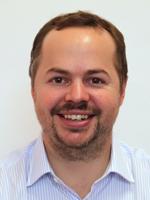
Dr James Herbert-Read is an Associate Professor and Whitten Lecturer in Marine Biology at the Department of Zoology, University of Cambridge. He serves as Deputy Head of Department (Postgraduate Education) and leads the Marine Behavioural Ecology Group. His research focuses on understanding how animals, particularly marine organisms, collect and process information from their environments to make behavioral decisions, with emphasis on social interactions, adaptation mechanisms, and ecological constraints. His group employs theoretical frameworks, controlled experiments, and quantitative field studies to investigate behavioral diversity in marine species. Key themes include collective behavior, predator-prey dynamics, camouflage strategies, and the impacts of environmental stressors on animal decision-making. Recent publications highlight work on lionfish vocalization mechanisms, cuttlefish camouflage, citizen science applications in marine research, and behavioral responses to visual and acoustic noise. Scientific awards and affiliations include: Whitten Lecturer in Marine Biology Associate Professor, University of Cambridge He has supervised research projects on topics such as: Social attraction in invasive fish species Evolution of coordinated movement Neurophysiological basis for leadership in shoals Maternal effects on offspring exploration
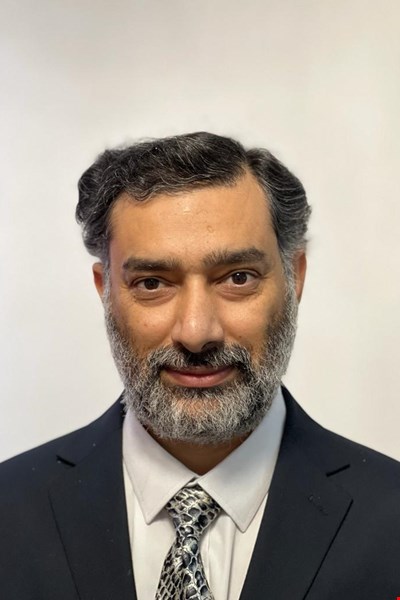
Dr. Matloob Khushi serves as a Senior Lecturer in Computer Science at Brunel University London's College of Engineering, Design and Physical Sciences. With over 25 years of combined academic and industry experience, his work bridges theoretical AI advancements with practical applications in finance, healthcare, and public health domains. His research has established significant collaborations with international banks, healthcare institutions, and technology startups. Dr. Khushi earned his PhD in AI and Data Science from the University of Sydney, developing novel algorithms for genomic data analysis. His postdoctoral research at the Children's Medical Research Institute (2014-2017) pioneered AI-based diagnostic tools for medical condition detection. More recently, he developed bioinformatics tools for environmental assessment under a UKRI NEC grant. Research Focus FinTech Innovation : Creator of the SS Ratio (incorporating volatility and drawdown sensitivities), advanced portfolio optimization models, and synthetic data generation techniques for fraud detection and credit risk assessment Bioinformatics Leadership : Developer of AI tools for genomic analysis and early cancer detection, featured in SBS News and The Daily Telegraph Public Health NLP : Architect of systems for vaccine misinformation detection, mental health monitoring, and health surveillance on social media His publication portfolio shows consistent growth from foundational bioinformatics work to current multimodal AI applications, with increasing interdisciplinary collaboration across finance and healthcare sectors. Awards and Recognition Ranked among Stanford/Elsevier's top 2% of global AI scientists Recipient of Best Paper Awards from IEEE Transactions on Computational Social Systems and PeerJ Media recognition for cancer detection research by major news outlets Mentorship and Teaching Dr. Khushi has supervised six PhD candidates to completion and over 100 postgraduate dissertations. He teaches CS3002 Artificial Intelligence and mentors students in Final Year Projects. His supervision focuses on Deep Learning/NLP for FinTech prediction and Public Health Surveillance applications, emphasizing practical implementation of theoretical concepts.
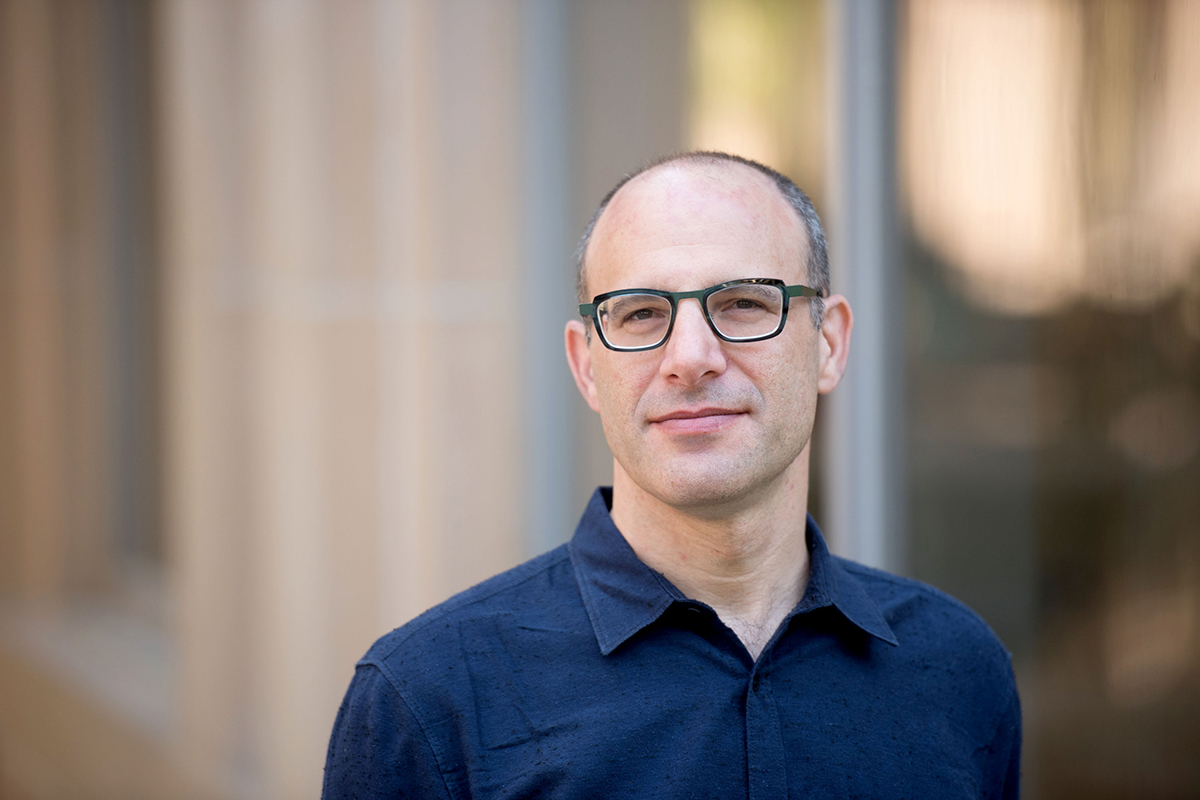
Michael Knap is an Associate Professor of Collective Quantum Dynamics at the Technical University of Munich (TUM), within the Department of Physics at the TUM School of Natural Sciences. His research group focuses on condensed matter theory, quantum many-body systems, and quantum simulation. Knap holds office in room 5101.01.037 at James-Franck-Str. 1, 85748 Garching b. München, and can be reached at michael.knap@ph.tum.de or +49 (89) 289 - 53777. Prof. Knap's research delves into the rich physics of quantum many-body systems, particularly exploring non-equilibrium dynamics and transport phenomena in ultracold quantum gases, interacting light-matter systems, and correlated quantum materials. His work spans multiple subfields including topological phases of matter, quantum simulation with trapped ions, fracton physics, and quantum computation. He develops novel numerical approaches based on quantum information theory and utilizes artificial intelligence and machine learning to tackle challenging problems in condensed matter physics. His group's research connects fundamental theoretical questions with experimental implementations in quantum simulators. The analysis of Prof. Knap's recent publications (2023-2025) reveals a strong focus on topological quantum matter, quantum simulation, and emergent phenomena in constrained quantum systems. His work frequently bridges condensed matter theory with quantum information science, as evidenced by publications on fracton hydrodynamics, higher-form symmetries, and quantum error correction. There's a clear progression toward increasingly complex quantum systems and connections to experimental implementations on quantum processors. His research shows significant interdisciplinary reach, connecting condensed matter physics with quantum computing and quantum information theory. ERC Consolidator Grant (2025) ERC Starting Grant (2019) Supervisory Award, TUM Department of Physics (2018) Promotio sub auspiciis Praesidentis rei publicae, Austria (2013) Prof. Knap has established a robust research program supported by prestigious European Research Council grants. His group actively collaborates with both theoretical and experimental groups worldwide, particularly in the quantum simulation community. He has supervised numerous students through Master's Seminars on Collective Quantum Dynamics covering topics like quantum simulation with trapped ions and theoretical quantum computation. His research has received significant attention, with several publications featured as Editors' suggestions and Research Highlights in leading journals. The Collective Quantum Dynamics group maintains strong connections with experimental quantum simulation efforts, particularly in the areas of ultracold atoms and trapped ion systems. Knap's theoretical work often provides frameworks for interpreting experimental results in quantum simulators, creating a productive feedback loop between theory and experiment. His group participates in collaborative research networks focused on advancing quantum simulation capabilities and understanding fundamental aspects of quantum many-body physics.
Jeffrey T. Jensen, M.D., M.P.H., is the Leon Speroff Professor and Vice Chair for Research in the Department of Obstetrics and Gynecology at Oregon Health & Science University (OHSU). He holds joint appointments as Professor of Public Health and Preventive Medicine and serves as a Core Scientist at the Oregon National Primate Research Center (ONPRC). Dr. Jensen completed his medical degree at Emory University, a Master of Public Health at the University of Washington, and residency training at OHSU. Research Focus: Dr. Jensen leads translational and clinical research programs focused on contraceptive innovation. His work emphasizes nonhuman primate models to develop: Novel contraceptive agents targeting oocyte-specific pathways Non-surgical permanent contraception methods Optimized emergency contraception for diverse populations He directs OHSU's Women’s Health Research Unit and the Gates Foundation-funded Oregon Permanent Contraception Research Center (OPERM). Recent Publications: His 15 most recent articles (2023-2025) demonstrate concentrated expertise in: Advanced hormonal contraceptive formulations (IUDs, vaginal rings, oral agents) Weight-adjusted dosing strategies for emergency contraception Biomarker validation for contraceptive efficacy monitoring Real-world assessment of bleeding pattern management Leadership & Collaboration: Dr. Jensen is Principal Investigator of the NICHD Contraception Clinical Trials Network and collaborates with global health organizations (CONRAD, FHI360, Population Council). He serves as Deputy Editor for the journal Contraception and consults for multiple pharmaceutical companies on product development.
Emmett Witchel is a Professor of Computer Science at the University of Texas at Austin , with research spanning computer architecture, systems, networking, security, and privacy . His work focuses on low-level systems optimization and secure concurrent execution. Research Interests: Concurrent systems, secure execution environments, GPU integration, distributed systems. Teaching: CS 380L (Advanced Operating Systems), CS 371M (Mobile Computing). Scientific Awards: Runner-up Best Paper, ASPLOS 2013 Runner-up Award for Outstanding Research, USENIX Symposium 2012 IEEE Micro Top Pick Award 2007 ACM Honorable Mention 2004 George M. Sprowls Award, MIT EECS 2004 Recent Publications demonstrate leadership in CXL pod databases ( Tigon ), stateful serverless computing ( Boki ), SmartNIC-accelerated file systems ( LineFS ), and GPU security ( Telekine ). His work bridges hardware-software co-design and practical systems implementation.
Sarah Shirazyan is a Lecturer in Law at Stanford Law School , where she designed the Interpol-Stanford Policy Lab. She also serves as Director and Head of Meta's GenAI Product Policy work, overseeing responsible AI development across Meta's platforms. Doctor of Juridical Sciences (J.S.D.) from Stanford Law School LL.M. from SOAS/UCL, University of London Her research focuses on the intersection of national security , public policy , and international law , particularly examining: Effectiveness of UN Security Council responses to WMD terrorism Framework for regional organization collaboration in WMD prevention Platform content policy development and misinformation governance Responsible AI implementation under legal frameworks Key publication themes include: Platform algorithmic accountability Media capture in digital domains Content policy development during crises UN Security Council institutional limitations Regional organization synergies in security Recipient of Gerald J. Lieberman Award for research, teaching, and community service Professional affiliations: Stanford Law School Stanford Center for International Security and Cooperation (CISAC) INTERPOL European Court of Human Rights Council of Europe United Nations
Melanie Molina, MD, MAS is an Assistant Professor of Emergency Medicine at the University of California, San Francisco (UCSF) and Affiliate Faculty of the Philip R. Lee Institute for Health Policy Studies. She serves as Co-Director of the Social Emergency Medicine and Health Equity Section and holds a secondary appointment in the Department of Medicine’s Division of Clinical Informatics and Digital Transformation. Clinically, she works at Zuckerberg San Francisco General Hospital and UCSF Medical Center. National Clinician Scholars Program Fellowship (2023) MAS in Clinical Research, UCSF (2023) Residency in Emergency Medicine, Harvard Medical School (2021) MD in Medicine, The University of Texas at Austin (2017) BS/BA in Biology and Hispanic Studies, The University of Texas at Austin (2012) Dr. Molina’s research centers on leveraging technology to address social determinants of health in emergency settings, with a focus on vulnerable populations. Her work spans health equity, opioid use disorder interventions, microaggressions in healthcare, and clinical informatics. She pioneers EHR-enabled tools to integrate social care into emergency clinical workflows while minimizing clinician burden. Her NIH-funded projects emphasize practical solutions for racial and ethnic health disparities, particularly in vaccine delivery and social risk documentation. Her recent publications (2024-2025) reveal three dominant trends: (1) Integration of AI and informatics for social risk screening and clinical decision support, (2) Health equity interventions targeting vaccine hesitancy and long COVID disparities, and (3) Critical analysis of DEI implementation challenges in academic emergency medicine. The work consistently bridges technical innovation with community-centered approaches to address systemic inequities. National Institutes of Health NIDA Loan Repayment Award (2024-2025) National Hispanic Medical Association Top 40 Under 40 (2024) UCSF John A. Watson Faculty Scholar (2023) National Institutes of Health NIAID Loan Repayment Award (2022-2024) Academy for Women in Academic Emergency Medicine Outstanding Research Publication Award (2021) Harvard Medical School Presidential Scholars Public Service Initiative Award (2017) Dr. Molina actively mentors medical students, residents, and fellows in health equity research. As Principal Investigator on multiple NIH and foundation grants—including the Harold Amos Medical Faculty Development Program grant ($825,575, 2024-2028) and an NIH/NIDA K23 award (2024-2029)—she leads projects developing EHR-integrated interventions for social risk documentation and opioid use disorder treatment. Her PROBOOSTVAXED trial addresses vaccine hesitancy through ED-based delivery across eight U.S. cities. She co-directs the Social Emergency Medicine and Health Equity Section within UCSF’s Department of Emergency Medicine, collaborating closely with the Action Research Center for Health Equity and the Philip R. Lee Institute for Health Policy Studies. Her team integrates clinical informatics expertise with community health workers to develop scalable solutions for social risk mitigation in safety-net emergency departments.
Gautam Kamath is an Assistant Professor at the University of Waterloo's Cheriton School of Computer Science, a Faculty Member at the Vector Institute, and a Canada CIFAR AI Chair. He leads The Salon, a research group focused on statistics, algorithms, machine learning, and optimization. His work bridges theoretical foundations with practical applications in data privacy and robustness, contributing to both academic research and real-world deployments that impact millions of users. Dr. Kamath earned his PhD and SM degrees in Electrical Engineering and Computer Science at MIT, where he was advised by Costis Daskalakis. Prior to MIT, he graduated from Cornell University in May 2012 with a degree in Computer Science and Electrical and Computer Engineering, where he worked with Bobby Kleinberg. His academic journey reflects a strong foundation in both theoretical computer science and practical applications. His research focuses on developing solutions for trustworthy and reliable machine learning and statistics, with particular emphasis on data privacy and robustness. He addresses fundamental problems in these areas, revitalizing statistical toolkits for the modern data era where privacy preservation is paramount. His work spans theoretical foundations of differential privacy to practical applications that have been deployed at scale, including contributions to systems that protect the sensitive information of hundreds of millions of individuals. Analysis of his recent publications reveals a strong trend toward addressing the interplay between privacy, robustness, and machine learning performance. His work increasingly examines practical deployment challenges while maintaining theoretical rigor, with growing emphasis on diffusion models, generative AI, and the legal implications of AI systems. There's a clear trajectory from foundational privacy theory toward addressing real-world implementation challenges across diverse application domains. Canada CIFAR AI Chair Ontario Early Researcher Award 2024 Caspar Bowden Award for Outstanding Research in Privacy Enhancing Technologies STOC Best Student Presentation Award ICML 2024 Best Paper Award Microsoft Research Fellow at the Simons Institute for the Theory of Computing Dr. Kamath actively mentors students, with notable successes including Valentio Iverson winning the Germain-Erdős Undergraduate Award and Chris Trevisan receiving the CRA Outstanding Undergraduate Researcher Award. His service to the research community is extensive, serving as Editor-in-Chief of TMLR, on the Executive Committee of the Learning Theory Alliance, and on steering committees for major conferences including ICML, COLT, and ALT. He has organized numerous workshops focused on privacy-preserving machine learning and differential privacy. Through The Salon research group, Dr. Kamath fosters a collaborative environment where postdoctoral fellows, graduate students, and undergraduates work together on cutting-edge problems at the intersection of statistics, algorithms, machine learning, and optimization. The group maintains strong connections with industry partners and participates in major research initiatives, including the Vector Institute's privacy and security research efforts. Looking forward, Dr. Kamath will be moving to the Computer Science department at NYU's Courant Institute of Mathematical Sciences in September 2026, where he plans to expand his research program.
Thomas Peyrin is a Full Professor at Nanyang Technological University (NTU) in Singapore, leading the Symmetric Key and Lightweight Cryptography Lab (SyLLab) since 2012. He co-founded TT-logic.ai, focusing on cryptographic innovations. His academic journey includes a Ph.D. in Cryptology from Orange Labs and University of Versailles (2008), a Master in Computer Science from MPRI (2005), and engineering training at CPE Lyon (2004). Education : Ph.D. (2008), MPRI Master (2005), EPFL Exchange (2003-2004), CPE Lyon (1999-2004) Career : Full Professor at NTU (2022-present), Associate Professor (2017-2022), Nanyang Assistant Professor and NRF Fellow (2012-2017), Research Fellow at NTU (2010-2012), Cryptography Expert at Ingenico (2008-2010) Thomas specializes in symmetric cryptography, cryptanalysis of hash functions and block ciphers, and machine learning applications to security. His work includes groundbreaking research on SHA-1 collisions, lightweight cryptographic primitives (e.g., GIFT, PHOTON), and automated cryptanalysis frameworks. Recent projects explore integrating AI with cryptographic verification and fault attack resistance. His publications span top conferences like CRYPTO, EUROCRYPT, and CHES, with awards including the FSE Test of Time Award (2025), FSE Best Paper (2023), and NRF Investigatorship (2022). He has advised numerous students in cryptographic research and co-founded SyLLab, a leading lab for symmetric cryptography innovation. Scientific Awards : Test of Time Award at FSE 2025 Best Paper Award at FSE 2023/ToSC NRF Investigatorship (2022) Lee Kuan Yew Postdoctoral Fellowship Best Paper Awards at FSE 2012 and ASIACRYPT 2007
Steffi Haag is a Professor of Digital Innovation and Entrepreneurship at the Institute of Computer Science , Heinrich Heine University Düsseldorf (HHU) . She bridges the Faculty of Mathematics and Natural Sciences and Faculty of Business Administration and Economics , collaborating with the Center for Entrepreneurship Düsseldorf (CEDUS) to inspire tech startups. Her research focuses on sustainable information systems, digital experiences, and business models. Steffi Haag’s research integrates Shadow IT , Usable Cybersecurity , and Digital Idea Management . Her work emphasizes theoretical , quantitative , qualitative , and mixed-methods research , including experimental and survey methodologies. Steffi Haag’s publications (2018–2024) span Information Systems , Cybersecurity , Digital Twins , and Sustainable Design . Common themes include Shadow IT dynamics , user behavior in security , and innovation management . Hermann Gutmann Award for special scientific achievements (2023) Schöller Fellow (2020) HMD Best Paper Award (2018) Research Award in Data Protection and Data Security (2017) Dissertation Prize (2017) Steffi Haag has secured grants such as the TU Darmstadt Postdoctoral Fellowship for Female Researchers (2016–2018) and Deloitte Foundation Fellowship (2009–2011). She actively moderates conferences and serves as Associate Editor of Business & Information Systems Engineering .
Fulong Wu holds the prestigious Bartlett Chair of Planning at University College London's Bartlett School of Planning since 2011. This distinguished position has previously been held by notable figures including Sir Patrick Abercrombie, Sir William Holford, Lord Richard Llewelyn-Davies, Sir Peter Hall, and Mike Batty FRS. Professor Wu's appointment represents a significant moment for the school to redefine planning discipline in global terms for a new generation. Wu received his BSc and MSc degrees from Nanjing University and completed his PhD at the University of Hong Kong. Prior to joining UCL, he taught at the Universities of Southampton and Cardiff. His academic journey reflects a deep commitment to urban planning scholarship with a specific focus on Chinese urban contexts. BSc, Nanjing University MSc, Nanjing University PhD, University of Hong Kong Professor Wu's research centers on urban development in China and its social and sustainable challenges. His work critically examines the Chinese model of urban governance, state entrepreneurialism, and the financialization of Chinese cities. He has made significant contributions to understanding migration patterns, spatial inequalities, suburbanization, neighborhood governance, and urban poverty in Chinese cities. His research provides valuable insights that challenge Western-centric planning theories while enriching global urban studies with Chinese perspectives. His recent publications reveal a clear trend toward analyzing the evolving relationship between statecraft and urban governance in China, particularly in the context of post-pandemic recovery and financialization processes. A significant portion of his recent work examines how Chinese cities manage crises, with several studies focusing on the Shanghai lockdown experience. His ERC-funded project on rethinking China's model of governance serves as an intellectual anchor for much of this research, demonstrating how Chinese urban governance represents both a distinctive model and a critical lens for understanding global urban transformations. Professor Wu's scholarly recognition includes: Fellow of the Academy of Social Sciences (2016) ESRC 2013 Outstanding International Impact Award Fellow of the Higher Education Academy (2002) British Academy Fellow As Principal Investigator of a European Research Council (ERC) Advanced Grant project titled 'Rethinking China's Model of Governance,' Professor Wu leads significant research funding that supports his team's work. He co-founded and coordinates the China Planning Research Group (CPRG) at UCL with Professor Fangzhu Zhang, which has become an influential research cluster generating substantial impact within and beyond the university. His mentorship extends to supervising PhD students and collaborating with early-career researchers on China-focused urban studies. The China Planning Research Group (CPRG), jointly coordinated by Professor Wu and Professor Zhang, serves as a vital hub for research on Chinese urban development. This group has produced influential work on topics including rural migrants in urban China, Chinese land and housing development, urban neighborhoods, and regional governance systems. The CPRG's research output has significant policy implications and contributes to global debates about alternative urban development models beyond neoliberal paradigms.