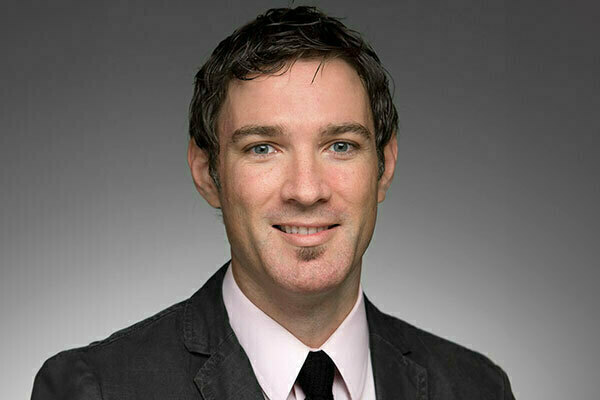
Matthew Thomas Payne is an Associate Professor in the Department of Film, Television, and Theatre at the University of Notre Dame. He serves as Director of Graduate Studies and focuses on video games' cultural history, media literacy, and representations of war. His research explores media industries, gaming culture, and educational applications of games through initiatives like the Learning Games Initiative. Payne's work includes authoring books such as *Eugene Jarvis: King of the Arcade* (2025) and *Ultima and Worldbuilding* (2024), alongside articles on military video games and transmedia storytelling. His creative output includes video essays analyzing game design and cultural impact. Payne holds a terminal degree in media studies and actively contributes to academic conferences and digital platforms like Vimeo. Education: Ph.D. in Media Studies (assumed based on faculty role). Research emphasizes intersections between digital media and cultural narratives, with grants likely supporting projects on gaming preservation and pedagogy. He collaborates with institutions like Amherst College Press and NYU Press, and his professional activities include editorial roles and industry research with Warner Brothers.
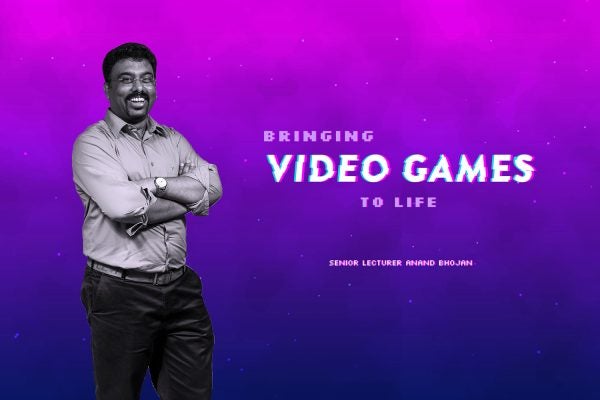
Anand Bhojan is an Associate Professor (Educator Track) at the Department of Computer Science, School of Computing, National University of Singapore (NUS). He is a member of the Communication and Internet Research Lab and serves on the Graduate Studies Committee. Dr. Bhojan is also the founder of Anuflora Systems and Virtual and Augmented Reality Labs (www.varlabs.org), and serves as Associate Editor of Computers and Electrical Engineering Journal, Elsevier, and Vice President of International Researchers Club, Singapore. Dr. Bhojan earned his Ph.D. in Computer Science & Engineering from NUS in 2011, where his thesis was nominated for the Best PhD Thesis Award. He also holds a Professional Master's in Computer Applications from Bharathidasan University (1999), a Bachelor's degree in Computing with Gold Medal (University topper) from Bharathiar University (1994), and a Postgraduate Certificate in Teaching Higher Education from University of Sheffield, UK (2003). His research spans multiple domains including Distributed Computing and Wireless Networks (IoT, Security, Blockchain), Artificial Intelligence (Generative AI, FinTech), and Entertainment Computing with focus on Games, VR/AR/Metaverse technologies. Dr. Bhojan leads the Metaverse Foundry research group which focuses on content generation for games & XR simulations across multiple domains including entertainment, healthcare, and architecture, while also experimenting with innovative teaching methods for entertainment media technologies. Dr. Bhojan's recent research has pioneered hybrid rendering techniques that strategically combine ray tracing and rasterization to create more realistic video game graphics without compromising performance. His work addresses critical challenges in real-time rendering, particularly in depth of field and motion blur effects, with the goal of making Hollywood-quality graphics accessible on a wider range of hardware. Earlier work focused on energy efficiency in mobile gaming, including power management techniques and latency optimization for cloud gaming. Among his notable achievements: 2012 Nominated for Best PhD Thesis Award (Wang Gungwu Medal & Prize), NUS 2011 Dean's Graduate Research Achievement Award (PhD), SoC, NUS 2006 Best R&D Project award from TOTE Board, Singapore 1995 Gold medal for first Rank (out of 4000) in Computing, Bharathiar University Dr. Bhojan has served as Organizing Chair and Program Chair for multiple international conferences and has delivered keynote talks at IEEE/ACM International Conferences. He teaches courses including Computer Networks Practice, Game Development, Interaction Design for Virtual and Augmented Reality, and Game Development Project. He leads the Metaverse Foundry research group and the Virtual and Augmented Reality Labs, where undergraduate and graduate students have won multiple research and innovation awards. His research bridges entertainment, education, and emerging technologies with practical applications in making immersive experiences more accessible across different hardware capabilities while maintaining energy efficiency.
Matthew Payne is an Associate Professor in the Department of Film, Television, and Theatre at the University of Notre Dame. His affiliations include roles as Director of Graduate Studies and regional director for the Learning Games Initiative, a multi-institute research collective focused on game archiving and education. His research spans video game studies, media literacy, military entertainment, and the cultural history of video games. He explores play theory, media and war, and the intersection of media production with new technologies. The 15 most recent articles highlight his focus on video game studies, transmedia narratives, and the cultural implications of gaming. These works cover topics from Nintendo Amiibo to slow game time mechanics in Red Dead Redemption 2, with recurring themes of military representation and ludic storytelling. Matthew Payne has co-edited notable works including How to Play Video Games and Joystick Soldiers , emphasizing collaborative approaches to game studies and critical analysis of military gaming.
Dr. Andrew Hines is a Researcher at the School of Computer Science, University College Dublin, specializing in machine learning applications for signal processing in speech, audio, and video domains. His work focuses on Quality of Experience (QoE) modeling, speech quality assessment, and immersive media analysis. He has held leadership roles in European COST Actions like Qualinet and CryptoAction, and previously worked in industry as a Director of Engineering. University: University College Dublin Role: Director of Research, Innovation and Impact Key Collaborations: IEEE (Senior Member), Audio Engineering Society (Ireland) Research interests center on machine learning for QoE optimization, audio-visual integration, and healthcare applications like heart sound classification and stroke rehabilitation. His recent publications explore self-supervised learning, neural speech codecs, and contextual factors in speech/audio quality assessment. Scientific contributions include awards like IEEE Senior Membership, and his work spans both academic research and industrial engineering in finance and aviation sectors. He leads the QxLab research team at UCD and develops open-source platforms such as WARP-Q and AQP for quality metrics.
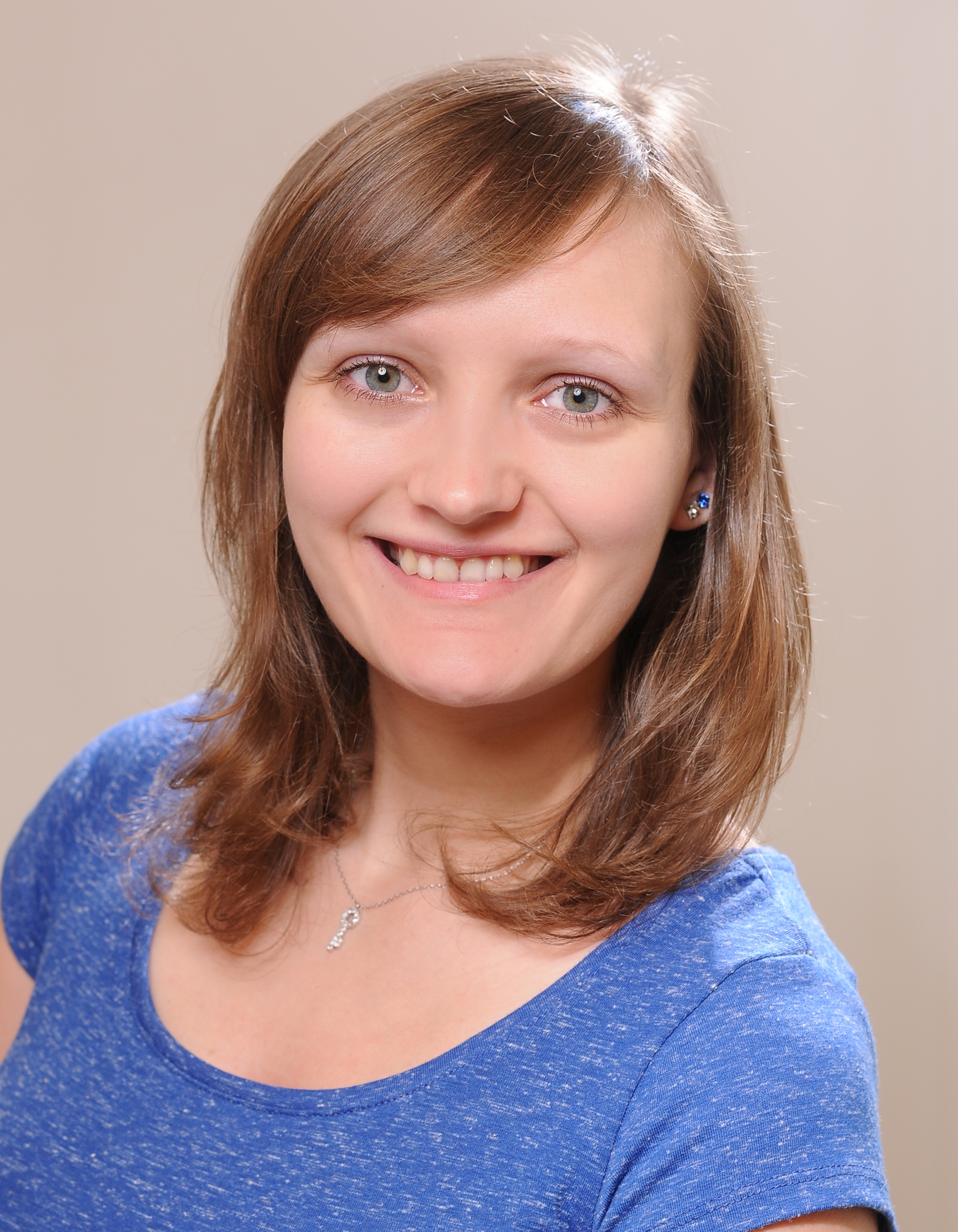
Franziska Mueller is a Research Scientist at Google Zurich , specializing in Augmented Perception . Prior to joining Google, she earned her Ph.D. in Computer Science at Saarland University under the supervision of Prof. Dr. Christian Theobalt, focusing on real-time hand reconstruction from RGB and depth images. Ph.D. in Computer Science (2016-2020) at Saarland University Master’s and Bachelor’s in Computer Science at Saarland University Research visits at Stanford University (2018) and Reality Labs Research (2019) Her research emphasizes the integration of model-based techniques and machine learning components for real-time 3D hand pose estimation, occlusion handling, and hand-object interaction tracking. Key contributions include methods for single-camera reconstruction and datasets like HandSeg. Scientific Awards : Dr. Eduard Martin Award (2021) Google PhD Fellowship (2017) Günter-Hotz-Medal (2016) Bachelor Award (2015) Völklinger Abiturpreis (2012)
Jiro Katto is a Professor at Waseda University's School of Fundamental Science and Engineering, where he has been conducting research and teaching since 1999. He received his Ph.D. from the University of Tokyo and has established himself as a leading researcher in multimedia signal processing and computer networks. His academic journey includes positions as Associate Professor (1999-2004), Professor (2004-present), and Director at NEDO (2004-2008), along with research experience at NEC C&C Laboratories (1992-1999) and a Visiting Scholar position at Princeton University (1996-1997). Professor Katto's research interests focus on Multimedia Signal Processing and Computer Networks, with particular expertise in video compression, 5G network performance, and learned image compression techniques. His work bridges theoretical advancements with practical implementations, as evidenced by his extensive publications in top-tier conferences and journals. His research group has made significant contributions to point cloud compression, latency compensation in remote systems, and hardware-accelerated video encoding for UHD streaming. His publication record is impressive, with 276 papers cited 3,323 times in Scopus and 6,169 times in Google Scholar, reflecting his substantial impact in the field. His recent work shows a strong trend toward applying deep learning techniques to traditional signal processing problems, particularly in the areas of image and video compression, where his team has developed novel approaches to improve compression efficiency while reducing computational complexity. Electric Telecommunications Promotion Foundation Telecommunications System Technology Award (2023) Takayanagi Kenjiro Foundation Takayanagi Kenjiro Achievement Award (2020) Institute of Image Information and Television Engineers Fellow (2020) Institute of Electronics, Information and Communication Engineers Fellow (2015) IEICE Communications Society Activity Contribution Award (2006) IEICE Academic Encouragement Award (1995) SPIE VCIP 1991, Best Student Paper Award (1991) Professor Katto has served on numerous prestigious committees including IEEE ComSoC Tech News Editorial Board, IEEE Technical Program Committees for major conferences (Globecom, ICC, ICIP), and editorial boards for several academic journals. His leadership in the academic community extends to chairing conferences like IWAIT 2011 and serving as Editor-in-Chief for journals in his field. His research has practical applications in commercial 5G networks, video streaming services, and remote monitoring systems, demonstrating the real-world impact of his work.
Dr. Abdelhak Bentaleb is an Assistant Professor in the Department of Computer Science and Software Engineering at Concordia University and founder/director of the IN2GM Lab. His research focuses on optimizing networked multimedia systems using machine learning, with emphasis on video streaming, edge computing, and 5G/6G networks. He holds a PhD from the National University of Singapore (awarded SIGMM and DASH-IF Best Thesis prizes) and completed a postdoctoral fellowship there. Education: PhD in Computer Science, National University of Singapore (2019) Postdoctoral Research Fellowship, National University of Singapore (2019-2022) Research Interests: AI-driven video streaming optimization, low-latency media delivery, network protocols, immersive media technologies, and IoT systems. Current projects explore end-to-end AI-enabled systems for QoE optimization in video delivery using reinforcement learning and deep learning techniques. Awards: SIGMM Award for Outstanding PhD Thesis DASH Industry Forum Best PhD Dissertation Award Multiple DASH-IF Excellence Awards His work includes over 50 publications in top venues (e.g., ACM MMSys, IEEE INFOCOM, USNIX NSDI) and 3 patents. The IN2GM Lab focuses on applied AI/ML solutions for networked systems challenges.
Siyu Tang is an Assistant Professor in the Department of Computer Science at ETH Zürich, where she leads the Computer Vision and Learning Group (VLG) at the Institute of Visual Computing. Her research focuses on computational models for human perception and digitalization through computer vision and machine learning. Her educational background includes: PhD in Computer Science, Max Planck Institute for Informatics (2017), supervised by Prof. Bernt Schiele Master of Science in Media Informatics, RWTH Aachen University Bachelor of Science in Computer Science, Zhejiang University, China Dr. Tang specializes in human-centric computer vision, developing statistical models for motion analysis, pose estimation, and digital human creation. Her work integrates machine learning with optimization techniques to enable machines to interpret human activities from visual data, with applications spanning virtual reality, healthcare, and human-computer interaction. Key research thrusts include generative models for content creation, egocentric vision, and human motion synthesis. Her recent publications (2024-2025) demonstrate intense focus on 3D human modeling and neural rendering, with Gaussian splatting emerging as a dominant technique for efficient avatar creation and scene reconstruction. Significant themes include text-driven motion synthesis using diffusion models, relightable avatars, surgical training applications, and egocentric multimodal pretraining. This work bridges computer vision, graphics, and machine learning to advance human digitalization. No scientific awards were mentioned in the provided text. Dr. Tang leads the VLG research group at ETH Zürich, mentoring PhD and Master's students in human-centric AI. She previously secured an early career research grant from the Max Planck Institute for Intelligent Systems to establish her independent research program. Her group actively pursues funding for projects in human motion analysis, 3D reconstruction, and generative modeling, with strong industry and clinical collaborations. The Computer Vision and Learning Group (VLG) operates within ETH's Institute of Visual Computing, maintaining dedicated facilities for motion capture, 3D scanning, and high-performance computing. The team collaborates internationally with institutions like the Max Planck Society and focuses on scalable solutions for real-world human digitalization challenges, including surgical training systems and immersive virtual environments.
Steve Whittaker is Professor of Human-Computer Interaction at the University of California at Santa Cruz. He conducts interdisciplinary research at the intersection of social science and computer science, focusing on how technology affects human memory, communication, and personal information management. His current research explores human-centric AI systems, mental health technologies, and digital identity. His research interests center on designing interactive systems that support human needs in digital environments. He investigates how people manage digital information, remember personal experiences through lifelogging, and interact with conversational agents and social robots. His work emphasizes computational well-being, affective computing, and the social implications of technology use. He has made foundational contributions to the fields of personal information management (PIM), computer-mediated communication (CMC), and human-robot interaction. The recent publications reflect a strong trend toward mental health technology, human-AI interaction, and digital well-being. His work spans from theoretical models of emotion and memory to practical systems for mental health apps, chatbots, and immersive visualization. He frequently publishes in top-tier venues such as CHI, CSCW, and IUI, often in collaboration with researchers across disciplines. Lifetime Research Achievement Award from SIGCHI Fellow of the Association for Computational Machinery (ACM) Member of the CHI Academy Lasting Impact Award from ACM CSCW Best Paper Award at CSCW10 Best Paper Award at CHI07 Honourable Mention at ACM CHI 2020 Multiple best paper nominations at CHI, CSCW, and IUI MIT Siegel Prize Steve Whittaker has supervised numerous PhD and Master’s students, though specific names are not listed in the provided text. His research has been funded by major grants from NSF, NIH, and industry partners, enabling long-term studies on digital behavior and system development. He is Editor of the journal Human Computer Interaction and has authored over 200 peer-reviewed publications. His most recent book, The Science of Managing Our Digital Stuff (MIT Press), co-authored with Ofer Bergman, synthesizes decades of research on personal information management. He leads a vibrant research lab at UC Santa Cruz that focuses on human-centered computing, where students and collaborators work on projects involving AI, mental health, digital memory, and social interaction. The lab has produced influential work on lifelogging, email management, telepresence robots, and algorithmic transparency. The team employs mixed methods, combining qualitative studies with system design and evaluation.
Dongwook Yoon is an Associate Professor at the Department of Computer Science , University of British Columbia , and serves as Director of the SOCIUS Lab . He actively contributes to research in Human-Computer Interaction, Human-AI Interaction, and Virtual/Augmented Reality as a member of the Designing for People (DFP) and CAIDA research clusters. Education : PhD in Computer Science from Cornell University (2017), MS (2009) and BS (2007) in Computer Science from Seoul National University Research Focus : Designing socio-technical systems that bridge the gap between technology and human social processes, with innovations in AR/VR, multimodal interaction, and inclusive design Article Trends show his work spans: Temporal and bichronous learning environments AI self-clones and ethical implications Income inequality in virtual platforms Enhanced multimodal collaboration in VR Eyes-reduced interfaces for situational impairments Speculative participatory design for gig economy challenges Scientific Awards include: Google Academic Research Award (2024) Best Paper Award at CHI 2024 High Impact Award in Educational Technology (2024) CHCCS/SCDHM Graphics Interface Early Career Award (2023) Multiple Honorable Mentions at CHI, DIS, and CSCW Students & Collaborators range from active PhD candidates (Anika Sayara, Yuri Kim) to notable alumni (Thitaree Tanprasert, Ashish Chopra) across his SOCIUS Lab projects. His research receives funding from NSERC , KIST , Adobe , Microsoft , and Google grants.
Bo Chen is a postdoctoral researcher at the Siebel School of Computing and Data Science and the Coordinated Science Laboratory at the University of Illinois at Urbana-Champaign. His work focuses on AI-system co-design for immersive computing, particularly in extended reality (XR) and multi-modal content delivery over wireless networks. Ph.D. in Computer Science (2022), advised by Klara Nahrstedt B.S. in Computer Science from Shanghai Jiao Tong University (2016) His research integrates AI techniques with system-level optimizations to address challenges in XR infrastructure , including multi-view video streaming , NeRF-based content delivery , and uncertainty management in video transmission . He has pioneered methods like Loose Frame Referencing for learned codecs and Context-Aware NeRF Serving for mobile XR applications. Bo Chen's recent publications span top venues like ACM MobiSys, ACM SenSys, and USENIX NSDI. Key themes include AI-driven compression , dynamic 3D rendering , and reliable streaming over mobile networks . He has received recognition including the Rising Star Best Presentation Award (ACM MobiSys 2025) and Best Student Paper Award (ACM MMSys 2022). Bayesian optimization for XR systems Multi-view video aggregation at edge networks 3D Gaussian Splatting for immersive media
Professor David Taubman is a distinguished academic serving as Professor and Deputy Head of School (Research) at the School of Electrical Engineering and Telecommunications (EE&T) at the University of New South Wales (UNSW) in Sydney, Australia. He is also co-director of Kakadu Software Pty. Ltd. and its affiliates Kakadu R&D and Kakadu GPU. With a career spanning over three decades, Professor Taubman has made significant contributions to the field of image and video compression, most notably as the author of the EBCOT coding algorithm adopted in the JPEG2000 international standard. Professor Taubman earned his B.Sc. in Mathematics and Computer Science (1986) and B.E. (Medal) in Electrical Engineering (1988) from the University of Sydney, followed by an M.Sc. (1992) and Ph.D. (1994) in Electrical Engineering from the University of California at Berkeley. His professional journey includes engineering work at the Electricity Commission of N.S.W. (1988-1990), research positions at Hewlett-Packard Laboratories in Palo Alto (1994-1998), and an academic career at UNSW where he progressed from Senior Lecturer (1998-2003) to Associate Professor (2004-2009) and finally to Professor (2009-present). He has held various leadership roles including Head of the EE&T Telecommunications Research Group (2003-2014), Head of the EE&T Signal Processing Research Group (2014-present), Director of Research for the School of EE&T (2011-2016), and Deputy Head of School (Research) since 2017. Professor Taubman's research interests center on image and video compression, with particular expertise in JPEG2000 standards and implementations. His work spans signal processing, wavelet transforms, scalable video coding, motion modeling, and multimedia systems. He has pioneered numerous compression algorithms and frameworks, including the EBCOT coding algorithm that became central to the JPEG2000 standard. His recent research focuses on efficient motion modeling with cuboidal partitioning, learned lifting-based transform structures, and high-throughput implementations of JPEG2000 for video applications. His work bridges theoretical foundations with practical implementations, as evidenced by the commercially successful Kakadu Software tools that have garnered around 500 commercial licensees. Analysis of Professor Taubman's recent publications reveals a consistent focus on advancing compression technologies with particular emphasis on scalability, efficiency, and adaptability. His work spans traditional image compression (JPEG2000 extensions), video coding (cuboid-based partitioning for UHD/360-degree video), and emerging applications (nanopore sequencing data compression). A notable trend is the integration of machine learning techniques with traditional compression frameworks, as seen in his work on learned lifting-based transform structures. His research maintains strong connections to real-world applications across diverse domains including medical imaging, astronomical data processing, and genomic sequencing. IEEE Fellow Engineers Australia Fellow (by invitation) Professor Taubman has served as Associate Editor for the IEEE Transactions on Image Processing for two four-year appointments (2003-2005 and 2010-2013). He has been actively involved in numerous research grants focused on image and video compression technologies, particularly those related to the JPEG2000 standard and its extensions. His work has received significant industry support, reflected in his consultancy with various U.S., Japanese, and Australian corporations. He has also contributed to international standards development as a member of Standards Australia Technical Committee MS-065 (mirroring ISO TC42 on Digital Photography) and as a constitutional member of Standards Australia Technical Committee IT-029 (Coded Representation of Picture, Audio and Multimedia/Hypermedia Information). Professor Taubman co-directs Kakadu Software Pty. Ltd. and its research affiliates Kakadu R&D and Kakadu GPU, which have developed the commercially successful Kakadu Software tools for JPEG2000. His research group at UNSW focuses on advanced image and video compression techniques, with particular expertise in wavelet-based methods, scalable coding, and motion modeling. The group maintains strong industry connections and has contributed significantly to the development and standardization of image compression technologies worldwide.
George Kesidis is a Professor in Computer Science and Engineering and Electrical Engineering at Penn State University. His research spans deep learning security, virtual reality optimization, and cloud computing. College of Engineering (Penn State University) Research Focus: Backdoor Attacks, DNN Robustness, Edge Caching Active in NSF and U.S. Navy-funded projects (2022-2026) His work addresses backdoor data poisoning , test-time evasion attacks , and DNN overfitting mitigation . He develops techniques like activation clipping, perturbation analysis, and statistical defense models. Recent projects include edge caching systems for VR and security-driven AI frameworks. Key article trends reveal expertise in adversarial deep learning, immersive media delivery, and cloud resource optimization. Current grants focus on multi-user VR, GPU scheduling, and serverless-cloud hybrid architectures. He collaborates extensively with researchers like David J. Miller and Xinyu Li, particularly on cloud-based adversarial defense mechanisms and VR streaming benchmarks.
Dr. Bill Hamilton is an Assistant Professor in the Department of Computer Science at New Mexico State University. His research focuses on live media design, online communities, and digital game culture. He holds a Ph.D. in Human Computer Interaction from Texas A&M University (2018), and has collaborated with industry partners like Microsoft Research and Motorola Mobility. Education: Ph.D. in Human Computer Interaction, Texas A&M University (2018) Bachelor’s degree in Computer Science, Texas A&M University Research Interests: Bill explores how live media supports societal participation in education, politics, work, and play. His work employs qualitative methods like ethnographic inquiry to study collaborative digital environments. Recent projects include designing wearable interfaces for human-drone teams and analyzing YouTube’s content policies' impact on free speech. Awards: 2018 Texas A&M Distinguished Graduate Research Award 2016 Best Paper at ACM Interactive Experiences for TV/Online Video Advising & Grants: Mentors students like Preeti De Maurya and Cassandra Palmer, with a focus on inclusive education technologies and collaborative tools for emergency response. Active in conference organization including ACM CHI’s Games and Play Subcommittee (2019). Labs: His research is conducted through the PlexLab, exploring playful interactions and live media systems.
Heiko Schuldt is a Full Professor of Computer Science at the University of Basel and leads the Databases and Information Systems (DBIS) group. His research spans databases, transaction management, cloud data systems, digital libraries, and multimedia retrieval, with a focus on distributed systems, data streams, and service-oriented architectures. He studied at the University of Karlsruhe (KIT) and received his PhD from ETH Zurich in 2001. From 2003-2006, he served as an associate professor at UMIT, Austria. Education: University of Karlsruhe (Computer Science), ETH Zurich (PhD, 2001) Research Interests: His work integrates databases, cloud computing, and multimedia retrieval, emphasizing scalable systems for lifelog data, sports analysis, and VR/AR environments. Projects include vitrivr, Polypheny-DB, and StreamTeam. Recent Publications: Trends focus on VR/AR multimedia retrieval, cross-modal analysis, and polystore systems. Key contributions include open-source frameworks for video/image retrieval and immersive analytics. Advising: Supervised over 50 theses in areas like mixed reality, polystore optimization, and gesture-based interfaces.