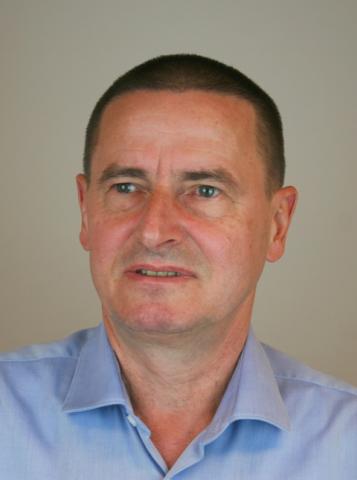
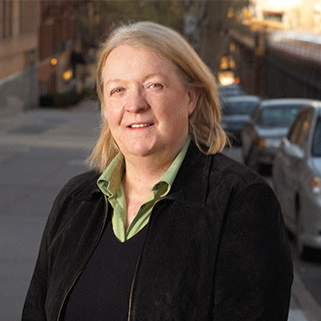
Hassan Shirvani is a Professor of Engineering Design and Simulation at the School of Engineering and the Built Environment, Anglia Ruskin University. He serves as Director of the Engineering Analysis Simulation and Tribology (EAST) Research Group, focusing on industry collaborations to solve engineering challenges. PhD in Mechanical Engineering, University of Bath MSc in Mechanical Engineering, University of Birmingham Member, Institute of Mechanical Engineers (IMechE) His research spans mechanical engineering, artificial intelligence, and biomedical applications, including: Thermal system optimization Machine learning in clinical decision-making Composite metal foil manufacturing Virtual reality medical training systems Flow dynamics in heat exchangers and nozzles AI-assisted diagnostics Hybrid manufacturing processes Hassan's publications reflect expertise in computational modeling, multi-physics simulations, and industrial applications. Notable areas include deep learning for suicide prediction, thermodynamic analysis of sustainable energy systems, and tribology in mechanical components.
Mahanth Gowda is an Associate Professor in the Department of Computer Science and Engineering, leading a prolific research program at the intersection of mobile systems, wireless sensing, and human-computer interaction. His work has been continuously funded by the U.S. National Science Foundation since 2019, serving as Principal Investigator on four awards and Co-PI on two others, collectively spanning edge computing for XR, sign-language recognition, next-generation wireless networking, and healthcare-oriented wearables. Research Interests Millimetre-wave and ultra-wideband sensing for 3-D finger motion tracking and speech eavesdropping Edge-IoT platforms for real-time sign-language recognition and translation Neural-augmented game streaming and super-resolution on commodity mobile devices Open-source wearable systems for sports analytics and rehabilitative healthcare Security and privacy implications of motion sensors in smartphones and IoT devices Over the past five years his publication trajectory has concentrated on leveraging emerging radio modalities—especially millimetre-wave radar, Wi-Fi, and UWB—to extract fine-grained human-centric information such as finger gestures, facial micro-motions, and spoken content. A complementary thread develops edge-native machine-learning frameworks that push intelligence to resource-constrained devices, enabling immersive AR/VR experiences and assistive technologies for the Deaf and hard-of-hearing communities. Grants & Projects CAREER: Sign-to-Speech – NSF, $500k, 2021-2026; Edge-IoT platform for real-time ASL recognition. SHF: Medium: Next-Gen XR Edge Platform – NSF, $1.2M, 2022-2025; Co-PI with Das, Sivasubramaniam, Kandemir. CNS Core: IoTScope – NSF, $450k, 2020-2025; Sensing physical materials via low-cost IoT radios. CNS Core: Medium: ML-driven Next-G Wireless – NSF, $800k, 2020-2024; Co-PI with Yang and Mahdavi. I-Corps: Smart Ring for Healthcare Analytics – NSF, $50k, 2023-2025; Commercialization of finger-motion wearables. Labs & Teams Gowda directs a research group that operates at the confluence of wireless networking, embedded systems, and applied machine learning. The lab maintains active collaborations with faculty in computer architecture, augmented reality, and accessibility studies, and routinely mentors graduate researchers whose work appears in top-tier venues such as ACM MobiCom, IEEE INFOCOM, ISCA, and ACM IoTDI.
Hossein Shahi serves as an Instructor in the Art & Design program at Southeast Missouri State University, leveraging dual expertise from his Master of Architecture (M.Arch) and Master of Science (M.S.) degrees to bridge creative design and computational disciplines. His research spans interdisciplinary domains at the intersection of art, technology, and science, with primary focus areas: Digital Design and Immersive Technologies (Virtual Reality, Real-time Rendering) Human-Computer Interaction (UI/UX Design) Artificial Intelligence Systems (Machine Learning, Deep Learning) Computational Methods (Data Science, Programming Languages) As an active scholar, Dr. Shahi contributes to STEAD (Science, Technology, Engineering, Art, and Design) discourse through publications and peer review. He emphasizes experiential learning with his guiding principle: "Curiosity fuels learning," and defines success as "the journey toward growth" rather than a destination.
Peter Mayer is an Assistant Professor at the University of Southern Denmark's Department of Mathematics and Computer Science. His research focuses on end-user viable security and privacy solutions, emphasizing usability for diverse audiences, including laypersons, administrators, and developers. He coordinates the Human and Societal Factors research group within the Helmholtz Association's Engineering Secure Systems initiative at Karlsruhe Institute of Technology (KIT), where he is a KASTEL Fellow. Research Areas: User-Centred Security Email and Password Security Security Awareness and Training Cybersecurity in SMEs Phishing Detection and Prevention Key Projects: Cybersecurity and Business Continuity in Danish SMEs (Industriensfond-funded) INSPECTION: Website Hacks in Fake Shops Mapping the Cybersecurity Landscape in Danish SMEs His work bridges technical security mechanisms with human-centric design, addressing challenges like phishing mitigation, password manager adoption, and cross-cultural privacy awareness. He collaborates internationally and publishes extensively in top venues like CHI and CCS.
Eduard Gröller is a Full Professor of Visualization at the Vienna University of Technology (TU Wien), leading the Research Unit of Computer Graphics and the Visualization Group within the Institute of Visual Computing & Human-Centered Technology (VC&HCT). He holds adjunct professorships at the University of Bergen, Norway, and chairs several academic committees. His academic journey began with a PhD in 1993 from TU Wien, followed by extensive contributions to visualization research. His research focuses on visual computing, scientific visualization, and medical imaging, with applications in energy modeling, climate analysis, and molecular biology. Gröller has pioneered methods like BEMTrace for BIM-based energy models and HORA 3D for flood risk visualization. He co-authored over 300 publications, including foundational work in IEEE Transactions on Visualization and Computer Graphics and Computer Graphics Forum . Gröller's awards include the IEEE VGTC Technical Achievement Award (2019), Eurographics 2015 Outstanding Technical Contributions Award, and Fellow of the Eurographics Association (2009). He actively contributes to conferences like EuroVis and IEEE Visualization as program chair and reviewer. His educational efforts span courses in visual computing, graphics, and data analysis, with a focus on immersive tools like ImNDT for material data exploration. Current projects include Climate-Sensitive Adaptive Planning for Resilient Cities, Visual Analytics in Radiation Therapy, and scalable web-based visualization techniques. He leads teams in VRVis, a research center for applied visualization, and collaborates internationally on medical imaging and environmental data challenges.
Demetri Psaltis is a **Professor honoraire** at the École Polytechnique Fédérale de Lausanne (EPFL), affiliated with the School of Basic Sciences (STI) and the Department of Physics (PH-STI). He holds roles as **Chargé de cours** (Lecturer) across multiple departments including Microengineering (SMT-ENS), Electrical and Electronics Engineering (SEL-ENS), and serves as **Professeur hôte** (Host Professor) at the Laboratoire d'hémodynamique et de technologie cardiovasculaire (LHTC). His research focuses on advanced optical systems, biomedical imaging, nonlinear optics, and the integration of machine learning with optical technologies. Key affiliations include the Institute of Bioengineering (IBI-STI) and administrative roles in the IBI-STI-GE management unit. He has advised over 20 PhD students at EPFL, contributing significantly to their thesis work. His laboratories develop cutting-edge tools for applications in medical diagnostics, energy systems, and optical computing. Research interests span computational optical imaging, optical computing architectures, 3D printing with light, and AI-driven wavefront shaping. Recent publications emphasize innovations in hybrid neural networks, optical diffusion models, and scalable optical circuit switching. His work bridges fundamental physics with practical applications in healthcare and renewable energy sectors. Labs: Laboratoire d'hémodynamique et de technologie cardiovasculaire (LHTC), IBI-STI Institute Teaching:** Courses include Computational Optical Imaging, Optical Computing, and 3D Printing with Light.
Ruth Vinz is the Enid & Lester Morse Professor in Teacher Education and Professor of English Education at Teachers College, Columbia University. She founded and directs the Center for the Professional Education of Teachers (CPET), which develops pedagogical initiatives like Literacy Unbound and the Global Learning Alliance. A former high school literature teacher, her work bridges curriculum theory, narrative inquiry, and critical pedagogy. Educational Background: B.S. in Secondary Education (English and Social Sciences), Montana State University M.A. in Secondary Education (History and Russian Literatures), Boise State University Ph.D. in English Education, New York University Ruth Vinz’s research focuses on rethinking literature education for transnational contexts, cultivating post-qualitative research practices, co-creating professional learning environments with teachers, and nurturing critical consciousness through pedagogies of possibility. Her narrative inquiry frameworks emphasize curiosity and ethical engagement. The latest 15 publications reflect her expertise in English education, curriculum theory, multicultural pedagogy, and qualitative research. They explore teacher identity, transnational literacies, and innovative practices like poetry immersion. Scientific Awards: CEE Richard Meade Award for Outstanding Research in English Education NCTE’s most highly recommended writing pedagogy book (1988) Outstanding Article Award for 'Intricate corridors within a barren world' (1983) Vinz has co-edited the journal English Education and held leadership roles at Teachers College, including English Education Program Director and Interim Vice President of Academic Affairs. Her initiatives like the Student Press Initiative and Secondary Literacy Institute empower teachers and students through project-based learning and alternative assessment.
Yu Chen is a researcher affiliated with Binghamton University (College of Engineering and Applied Sciences, Department of Computer Science) and University of Southern California , with additional ties to institutions like Chinese Academy of Sciences and Tsinghua University. Their work spans cybersecurity, blockchain technology, edge computing, and IoT systems , focusing on decentralized architectures for public safety, privacy-preserving surveillance, and defense against deepfake attacks. Primary Affiliation: Binghamton University, NY, USA Previous Affiliation: University of Southern California, CA, USA Yu Chen’s research explores blockchain-enabled security frameworks for IoT networks, UAV systems, and smart cities. Recent projects include the Microverse metaverse model and ELOCESS smart grid management. They specialize in real-time data authentication using Electrical Network Frequency (ENF) signals and edge-based privacy solutions for video surveillance and personal drones. Their 15 most recent publications address digital twin security , decentralized data marketplaces, and lightweight protocols for IoT devices. Key areas include UAV network resilience , smart city surveillance , and metaverse classroom models . Yu Chen collaborates with researchers such as Erik Blasch , Ronghua Xu , and Genshe Chen . No student names or specific awards are listed in the provided data.
Atanas Gotchev is a Professor of Signal Processing at Tampere University, Finland, where he leads the 3D Media Group and directs the Centre for Immersive Visual Technologies (CIVIT). He also serves as Chair of the Erasmus Mundus Joint Master Programme in Imaging and Deputy Director of the TAU Imaging Research Platform. Gotchev holds degrees from Technical University Sofia (M.Sc. in Electronics and Automation Engineering and M.Sc. in Applied Mathematics), the Bulgarian Academy of Sciences (PhD in Information Technologies), and Tampere University of Technology (D. Tech.). His research focuses on immersive imaging, 3D/light field imaging, computational optics, and image quality assessment. He has coordinated three Marie Sklodowska-Curie networks in light field imaging and serves as Senior Editor for IEEE Transactions on Image Processing and the Journal of Electronic Imaging. Gotchev has organized major conferences like the IEEE International Conference on Image Processing (2026) and chaired workshops on multimedia signal processing. Recent research emphasizes computational cameras, diffractive optics, and end-to-end design for metaoptics. He has a visiting professorship at the University of Utah (2023-2024) supported by Fulbright and Nokia Foundation grants. His work spans datasets like CIVIT and contributions to safety-critical applications in robotics and ITER projects.
Nicole Riemer is a Professor at the University of Illinois Urbana-Champaign, affiliated with the Department of Climate, Meteorology and Atmospheric Sciences, Civil and Environmental Engineering, and the National Center for Supercomputing Applications (NCSA). Her research focuses on aerosol particles' creation, transport, and transformation, with applications to climate, health, and pollution mitigation. She develops advanced simulations to study aerosol impacts on weather patterns, climate change, and human health. Education : Not explicitly stated in the provided texts. Affiliations : Multiple roles across climate, engineering, and supercomputing departments. Her work integrates observational data, satellite information, and computational models to address global challenges like air pollution and climate feedback loops. Key areas include aerosol mixing state, black carbon dynamics, and aerosol-cloud interactions. Dr. Riemer has received prestigious awards, including the Atmospheric Sciences Ascent Award (2021) and the NSF CAREER Award (2013). Her research outputs span aerosol chemistry, climate modeling, and computational methods. Notable datasets include work on particle-resolved modeling and machine learning applications in environmental science. She actively mentors graduate students and collaborates internationally on climate and atmospheric science projects.
Marco Carli is a Full Professor at the Department of Industrial, Electronic, and Mechanical Engineering, Roma Tre University, Italy. He holds a Laurea in Telecommunication Engineering from Università degli Studi di Roma 'La Sapienza' and a Ph.D. from Tampere University of Technology. His research focuses on digital signal and image processing applied to multimedia communications, including digital watermarking, multimedia quality evaluation, and information security. He has led projects such as EHEM (medieval architecture modeling), ISEEYOO (AI-based anomaly detection), and INSECTT (secure IoT-AI systems). Carli serves as an Associate Editor for IEEE Transactions on Image Processing and Area Editor for Signal Processing: Image Communication. He is an IEEE Senior Member. His work spans over 55 journal publications and numerous conferences, addressing topics like immersive VR applications, cybersecurity, and perceptual quality metrics. Education: Laurea in Telecommunication Engineering, Università di Roma 'La Sapienza', 1990s Ph.D. in Telecommunication Engineering, Tampere University of Technology, Finland Projects: EHEM: Digital modeling of medieval architecture and art ISEEYOO: Anomaly detection in Cyber-Physical Systems INSECTT: Secure IoT systems with AI Research Interests: Signal/image processing for multimedia Quality evaluation and watermarking Cybersecurity and IoT applications Awards: None explicitly listed Grants/Advising: Multiple EU-funded projects (e.g., ImmerSAFE, RESISTO, ATENA) and collaborations with industry partners like Thales Alenia Space.
Niall O'Leary is a Senior Lecturer and Principal Investigator in the School of Microbiology at University College Cork (UCC), with affiliations to the Environmental Research Institute and the SUSFERM biotechnology centre. His research focuses on microbial community ecology for wastewater treatment and circular economy solutions in the agri-food sector, alongside innovations in technology-enhanced education. He holds an MA in Teaching and Learning in Higher Education (2014) and has secured significant grants, including SFI funding for wastewater-based epidemiology and EPA support for dairy wastewater valorization. Education: BSc (Hons) Microbiology (1996), PhD Microbiology (2001) from UCC, followed by postdoctoral research. Advanced teaching qualifications include a Postgraduate Diploma (2009) and MA in Teaching and Learning (2014). Research Interests: Microbial bioreactor systems, dairy/meat wastewater treatment, bioconversion to biodegradable plastics, and Lemna cultivation. Recent work includes SARS-CoV-2 wastewater epidemiology and precision fermentation via SUSFERM. Teaching innovations include VR simulations for molecular biology and 360° virtual industrial site visits. Notable Grants: SFI Rapid Response (€44,876), UniCov Study (€188,770), NEWTRIENTS (€650,000), and DAFF-funded projects on duckweed protein and dairy wastewater. Awards: DELTA National Award (2021), UCC President’s Teaching Excellence (2015). Active in outreach, including public workshops on plastic pollution and collaborations with secondary schools via VR biology tools.
Professor John Morrison is the founder and director of the Centre for Unified Computing and co-founder of the Boole Centre for Research in Informatics at University College Cork. With qualifications including BSc, MSc, PhD, and DipTLHE, his research focuses on parallel distributed computing, grid technologies, and cloud architectures. His primary research explores: Self-organizing cloud management systems Heterogeneous computing environments Energy-efficient cloud infrastructure Grid computing middleware Professor Morrison's publications demonstrate strong focus on cloud computing optimization, distributed systems, and virtual reality applications in healthcare and education. Recent work emphasizes scalable resource management and trust systems in cloud environments. Honors include: Senior Member of ACM Senior Member of IEEE He has secured significant research funding including: €883,226 from Horizon 2020 for CloudLightning Project €379,111 from Enterprise Ireland for Cloud Computing Centre €646,604 from Higher Education Authority for Biophotonics Platform He leads the MAVRIC Research Lab focusing on immersive computing technologies and serves on editorial boards for multiple journals including Journal of SuperComputing.
Dr Alison Wilde is an Assistant Professor in the Department of Social Sciences at Northumbria University. Her work focuses on disability representation in media, public health communication, and gender studies. She has contributed to critical analyses of disability narratives in film, television, and policy contexts. Key areas of research include media accessibility for marginalized groups, the sociopolitical dimensions of disability advocacy, and intersectional approaches to gender and disability. Dr. Wilde has been recognized for her contributions, including being shortlisted for the British Forces in Business Awards 2025. Her interdisciplinary approach bridges academic theory and practical advocacy, emphasizing inclusive practices in education and cultural sectors. Her research explores how media portrayals shape societal attitudes toward disability, with particular attention to autism, learning disabilities, and the experiences of disabled women. Recent work includes studies on pandemic-era communication strategies for vulnerable populations and the evolution of disability content in mainstream media. Dr. Wilde is also involved in evaluating policies related to healthcare accessibility and home-care re-ablement services, contributing to evidence-based reforms. Education Policy: Investigates barriers to inclusion in education systems, particularly in rural Welsh communities. Arts Accessibility: Advocates for disability access in cultural events, such as the Venice Biennale Fellowships. Advocacy Work: Highlights systemic issues in disability welfare through projects like ' Digital threads ' and ' Never leave anybody behind '. Dr. Wilde’s publications span journals, book reviews, and collaborative research reports, often emphasizing participatory methodologies and intersectional frameworks. She has collaborated on initiatives like the REAP project in Wales and contributed to understanding the impact of home-care reforms on independent living.
Vinicius Dutra, DDS, PhD, MBA is a Clinical Associate Professor at the Department of Oral Pathology, Medicine and Radiology within the Indiana University School of Dentistry. His work focuses on innovative applications of 3D printing, virtual reality, and artificial intelligence in dental education and clinical practice. He specializes in oral radiology, implantology, and orthodontics, with a strong emphasis on improving diagnostic accuracy and surgical precision through advanced imaging and digital tools. Dr. Dutra holds a Doctor of Dental Surgery (DDS), a PhD, and an MBA, reflecting his interdisciplinary expertise in clinical practice, research, and healthcare management. His research explores topics such as guided implant surgery, 3D-printed anatomical models for training, and the integration of machine learning into dental diagnostics. His recent studies include evaluations of virtual reality in dental education, the accuracy of guided implant placement techniques, and comparisons between cone-beam CT scans and histological analyses. He has also contributed to advancements in complete denture fabrication workflows and bone thickness measurement methodologies. Despite his extensive publication record, no scientific awards were explicitly mentioned in the provided materials. Dr. Dutra’s clinical and educational roles involve mentoring students and contributing to the development of cutting-edge dental technologies. His work bridges traditional dental practices with modern digital innovations, aiming to enhance patient outcomes and streamline clinical workflows.