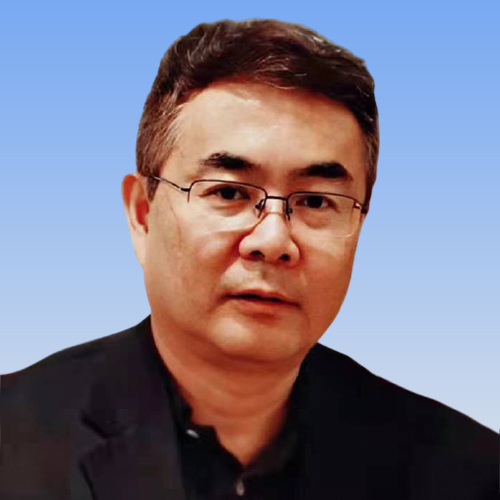
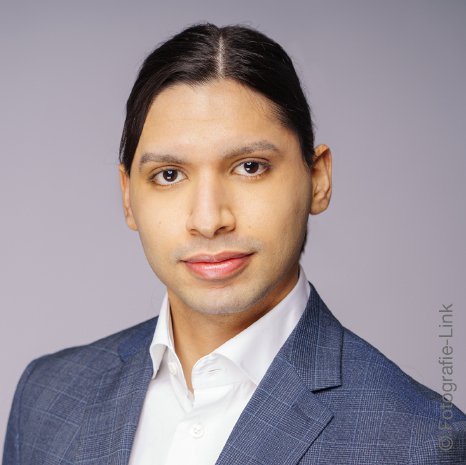
Jiebo Luo is a Professor of Computer Science at the University of Rochester, where he has held this position since 2014. He earned his BS and MS in Electrical Engineering from the University of Science and Technology of China (1989 and 1992) and a PhD in Electrical Engineering from the University of Rochester (1995). Prior to academia, he spent 15+ years at Kodak Research Laboratories as a Senior Principal Scientist. His research focuses on computational social science, natural language processing, digital health, computer vision, data mining, and multimedia. Dr. Luo’s work has been recognized through numerous awards, including the ACM SIGMM Technical Achievement Award (2021), Fellowships from ACM, AAAI, IEEE, IAPR, and SPIE. He has authored over 500 peer-reviewed papers, holds 90+ patents, and serves as Editor-in-Chief of the IEEE Transactions on Multimedia. He actively contributes to conference organization (e.g., ACM Multimedia, CVPR) and editorial roles for top journals. Key contributions include pioneering work in social media analytics, sentiment analysis, and digital health, as well as foundational research in multi-label classification and action recognition datasets like UCF 101. His labs and collaborations span the Goergen Institute for Data Science and the Greater Rochester Data Science Industry Consortium.
Andreas Uhl is a University Professor in Artificial Intelligence and Human Interfaces at the Department of Computer Science, University of Salzburg. With a prolific research career spanning from 1996 to present, he has authored or co-authored 534 publications and led or participated in 59 research projects. His work demonstrates sustained academic productivity with recent publications and projects extending through 2025. Professor Uhl's research interests span multiple domains at the intersection of artificial intelligence and practical applications. His primary focus areas include computer vision, biometrics, biomedical imaging, and digital forensics, with significant contributions to pattern recognition and image analysis. His work bridges theoretical computer science with practical applications in cultural heritage preservation, medical diagnostics, and security systems, demonstrating a versatile research portfolio that addresses both fundamental challenges and real-world problems. His recent publications reveal a strong emphasis on temporal image forensics, biomedical image analysis, and biometric security. The research shows a clear trajectory toward increasingly sophisticated applications of AI in specialized domains, with particular attention to validation methodologies and limitations of current approaches. His work on cultural heritage applications demonstrates an innovative application of computer vision techniques to historical artifacts. Best paper award @ 25th ACM Symposium on Applied Computing (Applications Track), 2010 Best Paper award @ 2nd European Workshop on Visual Information Processing (EUVIP'10), 2010 IEEE Biometrics Council Best Paper Award (TBIOM), 2022 Kurt Zopf Preis, 2023 Professor Uhl actively leads multiple significant research initiatives, including the CDL-POSA project on People and Object Surface Authentication (2025-2032), Artificial Intelligence driven Biomedical Imaging Innovation (2025-2029), and the AIBIA Research and Transfer Junior Lab (2023-2025). His research group maintains active collaborations with institutions like Carnegie Mellon University, as evidenced by his recent research stay there in September 2024. The scope and duration of his current projects indicate substantial grant funding and institutional support for his research agenda. His laboratory activities focus on AI applications in biomedical imaging, border security through vehicle-integrated technologies (AutoBorder project), and cultural heritage analysis. The research environment appears to integrate academic inquiry with practical transfer through initiatives like the FFG Student Internships program, suggesting a strong commitment to both fundamental research and real-world implementation.
Michael Rauter serves as a Research Associate at the University of Applied Sciences Wiener Neustadt (FHWN) within the Faculty of Health and the Competence Center for Preclinical Imaging and Medical Technology. His work bridges computer science and medical applications, focusing on advanced imaging techniques for radiotherapy and assisted living technologies. Dr. Rauter's research interests include: Medical imaging for precision radiotherapy GPU-accelerated image processing Virtual and mixed reality applications in healthcare Computer vision for medical diagnostics Assisted living technologies and home care systems His recent publications show a clear evolution from computer vision applications in security systems toward medical applications. The 2024 paper on accelerating transfer function updates for volume rendering represents the current focus on optimizing medical visualization techniques, while earlier works from 2013 demonstrate foundational expertise in GPU-accelerated computer vision. Dr. Rauter is actively involved in multiple research projects funded by organizations including FFG (Austrian Research Promotion Agency) through the Active Assisted Living Programme. His current projects include PAIR (2022-2026) and Applied Molecular Imaging (2021-2026), with previous contributions to Care about Care (2021-2023) and CARU Cares (2019-2022). As a member of the Competence Center for Preclinical Imaging and Medical Technology, Dr. Rauter contributes to research that integrates advanced imaging modalities with radiotherapy, aiming to improve cancer treatment through personalized precision approaches. His work combines technical expertise in computer vision and GPU programming with medical applications to advance healthcare technologies.
Armin Dadras serves as a Junior Researcher at the University of Applied Sciences St. Pölten within the Media Computing Research Group of the Institute of Creative Media Technologies and Department of Media and Digital Technologies. His academic qualifications include: Bachelor of Arts (BA) Bachelor of Science (BSc) Master of Science (MSc) His research bridges computer vision and biomedical engineering, specializing in interpretable geometric feature extraction for photography composition analysis and deep learning applications in medical imaging. Current work focuses on rule-of-thirds detection algorithms and glottis segmentation failure identification in endoscopic videos. Publications reveal a strong interdisciplinary trajectory merging media technologies with healthcare solutions, particularly through computational photography and speech pathology diagnostics. Dadras actively contributes to the Media Computing Research Group, driving innovation in media technology applications through advanced computing methodologies. No documented information exists regarding student supervision or research grant acquisitions.
Siavash Arjomand Bigdeli serves as an Associate Professor of Computer Vision at the Technical University of Denmark, following prior employment as a scientist at the Swiss Center for Electronics and Microtechnologies (CSEM). His research focuses on: Ante-/Post-Hoc explainability of machine learning models Integration of statistical models in learning/inference processes Philosophical methodologies in artificial intelligence development Advanced computer vision techniques for visual understanding Recent publications reveal consistent specialization in image restoration and stereo vision, employing deep learning architectures and probabilistic graphical models to solve core challenges in visual data reconstruction and temporal coherence. His work demonstrates strong interdisciplinary connections between theoretical machine learning, practical computer vision applications, and epistemological considerations in AI systems.
Md Atiqur Rahman Ahad is a Professor at the University of Dhaka (DU) and a Specially Appointed Associate Professor at Osaka University. His academic career spans multiple institutions across Bangladesh, Australia, and Japan. His educational background includes: B.Sc.(Honors) and Masters from University of Dhaka Masters from University of New South Wales PhD from Kyushu Institute of Technology Professor Ahad is a recognized expert in computer vision and activity analysis. His research focuses on: Computer Vision and Image Processing Sensor-based Activity Analysis Human-Media Interaction Gesture and Activity Recognition Imaging Technologies His recent publication trends show a strong emphasis on activity recognition using various sensor modalities and computer vision techniques. He has published extensively on packaging activity recognition, gait analysis, and hand gesture recognition, demonstrating expertise in both theoretical foundations and practical applications of vision-based activity understanding. Professor Ahad serves in editorial roles for academic journals: Associate Editor for Human-Media Interaction, Frontiers in Computer Science Guest Associate Editor for Big Data Networks, Frontiers in Big Data