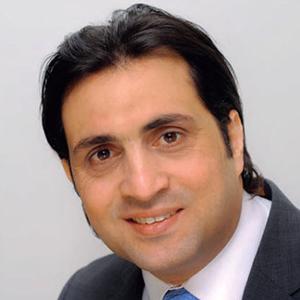
JESUS GARCIA HERRERO is a Full Professor at the Department of Computer Science , Carlos III University of Madrid , and serves as Director of the Postgraduate School of Engineering and Basic Sciences and the Master's Degree in Applied Artificial Intelligence. His research focuses on Artificial Intelligence , Data Fusion , and Maritime Surveillance , with applications in UAV navigation , sensor integration , and fuzzy systems . Key Research Areas: Machine Learning, Trajectory Analysis, Contextual Data Fusion, Robotics, Maritime Security, and Smart Grids. Notable Projects: ASPID (2024-2027), MARVISION (2024-2025), SIMBAT (2021-2024), and HADA (2023-2024). Contact: jesus.garcia@uc3m.es , jgherrer@inf.uc3m.es
David A. Robb is a Research Fellow in the School of Mathematical and Computer Sciences at Heriot-Watt University, where he has been actively contributing to academic research since completing his PhD in 2015. His career progression shows a clear trajectory from PhD student (2011-2015) to Research Associate (2015-2020) to his current Research Fellow position. Robb is currently leading research efforts across three major EPSRC/UKRI projects: DeMILO (studying expert laser aligners' thinking and strategies), @tas_trust (investigating trust in autonomous systems), and HUME (focusing on human-machine teaming for AUVs). Robb's research interests span multiple interconnected domains within human-centered computing. His primary focus areas include Human-Computer Interaction (HCI) and Human-Robot Interaction (HRI), where he investigates how humans interact with and trust autonomous systems. Additional interests include image-based emotion feedback mechanisms, image summarization techniques, cognitive aspects of human-computer interaction, computer-supported cooperative work (CSCW), and visualization of complex data. His work often bridges theoretical understanding with practical applications in industrial and service environments. Analysis of Robb's publication record reveals a strong trajectory of scholarly contribution with 54 publications to date. His recent work demonstrates a clear focus on practical applications of human-robot interaction in real-world settings, particularly in industrial automation (laser alignment systems) and service robotics (robo-barista studies). A notable trend is his increasing focus on understanding human factors in automation adoption, trust dynamics in human-machine teams, and the practical implementation challenges of deploying autonomous systems in complex environments. His publications span top-tier venues in HCI, HRI, and robotics, demonstrating both breadth and depth in his scholarly contributions. ACM ICMI2021 Best Reviewer Awards (Top 5%) ACM ICMI 2023 Outstanding Reviewer Award ACM ICMI 2024 Outstanding Reviewer Award Honourable Mention ACM CHI 2017 Research Papers and Notes Honourable Mention ACM DIS 2017 Research Papers and Notes Robb has been instrumental in securing and executing multiple significant research grants, particularly through EPSRC/UKRI funding mechanisms. His current role as Experimental Lead for the HRI theme of the ORCA Hub project (a major £5.7 million EPSRC-funded initiative) demonstrates his capability in managing substantial research programs. While specific details about student supervision aren't prominently featured in the provided materials, his active research program and teaching responsibilities (Experimental Design and Web Design and Databases) suggest engagement with graduate students. His work extends beyond pure research to practical implementation, as evidenced by projects like the MIRIAM multimodal interface for autonomous systems and the robo-barista field studies. Robb is affiliated with the Strategic Futures Lab at Heriot-Watt University and has been involved with the ORCA Hub (Offshore Robotics for Certification of Assets), a major UK Robotics and Artificial Intelligence Hub. His collaborative network is extensive, with co-authors from multiple departments at Heriot-Watt as well as international collaborators. Recent projects like the DeMILO study of laser alignment expertise and the @tas_trust project on human trust in autonomous systems indicate his work is increasingly focused on translating fundamental HRI research into practical industrial applications.
Andreas Henrici is a research-focused academic at the Zurich University of Applied Sciences (ZHAW), School of Engineering, within the Applied Complex Systems Science research centre. His core activities revolve around NMR spectroscopy, dynamical systems theory, and the development of machine-learning methods for automated spectral analysis. Education & professional development: Certificate of Completion, ZHAW Life Sciences and Facility Management, 02/2019 Doctorate (Dr.) – exact discipline and institution not specified in the source Research interests: Henrici combines analytical mathematics with practical spectroscopy. Early work concentrated on stability and symmetry analyses of nonlinear lattices (Toda lattice). More recently he leverages deep-learning architectures (CNNs, DETR-style networks) to deconvolute and classify 1D/2D-NMR data, pushing automation in metabolomics and fragment-based drug discovery. Bayesian inference, image-processing techniques, and trustworthy AI are recurring themes. Recent publication trends (2022-2025): Over 15 peer-reviewed articles and conference posters illustrate a clear shift toward AI-driven NMR: deconvolution networks, automated multiplet segmentation, spin-system identification, and uncertainty-aware classification. Collaborative projects yield open data, open code, and cross-disciplinary authorship with chemists, computer scientists, and industry partners. Editorial & organisational service: Guest editor for Frontiers in Artificial Intelligence volumes summarising European COST conferences on AI in Industry & Finance (2022, 2023) Project leader for the European conference series AI in Industry and Finance (completed) Current projects & funding: Smart Acquisition for Ultra-High field NMR Spectroscopy – project leader (ongoing) NMR-based drug discovery – co-project leader (ongoing) Several completed COST and ZHAW-internal grants on machine-learning for spectroscopy and mathematics-for-industry Labs & teams: Henrici is embedded in the ZHAW Applied Complex Systems Science focus area, working closely with the NMR, metabolomics, and data-science groups. Shared facilities include high-field NMR spectrometers and GPU clusters for deep-learning experiments.
Professor Mohamed Sedky holds the position of Professor of Cyber-Physical Systems at Staffordshire University. He previously founded SKM Communication Systems and served as a lecturer at the Arab Academy for Science and Technology before joining Staffordshire in 2003. His roles include MSc Computer Science Deputy Award Leader and BSc Internet of Things Award Leader. He leads research at AVA Technologies Ltd, focusing on real-time video analytics algorithms such as Spectral-360®, which addresses security, safety, and business intelligence applications. His patented work in object detection and change detection has been globally recognized. He teaches modules like Fundamentals of Computer Networks and Router Security Technologies. Education: BEng (Hons) Electro-Physics and Communications, Alexandria University (1996) MSc Communications and Electronics, Arab Academy for Science and Technology (2002) PhD Computer Vision, Staffordshire University (2009) PGC Research Supervision, Staffordshire University PGC Higher and Professional Education, Staffordshire University Research Interests: Object recognition/segmentation Video surveillance systems IoT forensic processes AI in healthcare and smart environments Commercial Ventures: Founder of Spectral-360® technology Lead Researcher at AVA Technologies Ltd Consultant for Serco, Centralweighing, and WMTN Labs & Projects: Developed AVA Technologies' Detect/Protect/Count/Summarise solutions Designed OpenSHS (Open Smart Home Simulator) Conducted feasibility studies for buried utility detection and industrial inspection His research bridges academia and industry through patented innovations in video analytics and IoT systems, addressing challenges in security, healthcare, and smart infrastructure.