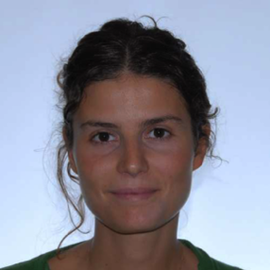
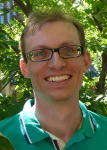
Peter H.N. de With is a Full Professor at the Video Coding & Architectures group within the Department of Electrical Engineering at Eindhoven University of Technology (TU/e). He is an international expert in video compression and image analysis for health, surveillance, and automotive applications, with over 35 years of R&D experience. He leads the Video Coding & Architectures Group (SPS-VCA) and contributes to initiatives like the Center for Care & Cure Technology Eindhoven and Eindhoven MedTech Innovation Center. De With's research focuses on video/image signal processing, machine learning, and their applications in healthcare (e.g., esophageal cancer detection), security, and automotive systems. His work includes collaborations with hospitals, EU projects, and industry leaders like Bosch Security Systems and ASML. His recent publications emphasize real-time 3D processing, assembly state recognition, driver action analysis, and medical imaging advancements, reflecting his expertise in computer vision and AI. Notable scientific awards include IEEE Fellowship and multiple paper awards (CE Chester Sall, SPIE, Elsevier). Scientific Awards IEEE Fellow CE Chester Sall Award SPIE Paper Award Elsevier Journal Award Best Paper Award (2017) Second Place in CAMELYON17 Challenge De With has supervised numerous research projects and contributed to datasets in noise reduction, augmented reality, and medical imaging. He actively collaborates on AI-driven innovations for healthcare and industrial applications.
Laura Toni is an Associate Professor in the Department of Electronic & Electrical Engineering at University College London (UCL). She serves as Director of the MSc in Telecommunications and Internet Engineering and the MRes in Telecommunications. Additionally, she is a Turing Fellow at the Alan Turing Institute and a member of ELLIS (European Lab for Learning and Intelligent Systems). Her research focuses on coding, streaming technologies, machine learning for immersive communications, decision-making under uncertainty, and large-scale signal processing. She leads the LASP (Learning And Signal Processing) group at UCL. Education: MSc (2005) and PhD (2009) from the University of Bologna, followed by postdoctoral research at UC San Diego and EPFL under Professors L. Milstein, P. Cosman, and P. Frossard. Key roles include Technical Program Chair at ACM MM 2022, Keynote Co-Chair at ACM MMSys 2022, and leadership in organizing workshops on graph-based machine learning and emerging technologies in performing arts. She is a Senior IEEE Member and holds editorial roles in IEEE Multimedia Magazine and EURASIP Journal on Signal Processing. Her work bridges communication systems and machine learning, with contributions to adaptive streaming, network optimization, and graph signal processing. She actively promotes diversity and inclusion in technical conferences, including roles as Diversity Chair at MMSys 2021 and PIMRC 2020.
Fons van der Sommen is an Associate Professor in Electrical Engineering at Eindhoven University of Technology, specializing in Video Coding & Architectures. He leads research on computer-aided detection systems for early cancer diagnosis, particularly focusing on esophageal and colorectal neoplasia through advanced AI and computer vision techniques. His research interests span medical image analysis, AI-assisted diagnostics, and developing robust systems for clinical deployment. Recent publications focus on overcoming real-world implementation challenges of AI in endoscopy and enhancing the trustworthiness of diagnostic systems. Recent research trends show strong emphasis on surgical AI applications (robot-assisted procedures), generative models for medical data augmentation, and quality assurance frameworks for clinical AI deployment. His work integrates deep learning with clinical validation across gastrointestinal and pulmonary oncology. TU/e Best PhD Thesis Award (2018) Best Poster Presentation (2017, 2013) He coordinates multiple research projects including TASTI-XECS221002 (Advanced AR for AI-based Servitization) and XL-ARGOS (extended reality solutions). Manages collaborations with medical centers on AI implementation for cancer screening.
Syed Muhammad Anwar serves as an Associate Professor in Software Engineering at the University of Engineering and Technology (UET) Taxila, Pakistan. He maintains a significant dual affiliation with the Sheikh Zayed Institute at Children's National Hospital in Washington, DC, USA. Additionally, he holds leadership roles as Co-founder and CTO of Sense Digital PVT. Ltd. and Director of both the Virtual Reality and Machine Learning Lab and the Signal Image Multimedia Processing and Learning (SIMPLE) Group at UET Taxila. Dr. Anwar's research spans multiple cutting-edge domains at the intersection of signal processing, machine learning, and medical applications. His primary research interests include: Multimedia Communication and Signal Processing Image and Video Coding and Quality Assessment Biomedical Signal Processing and Brain-Computer Interfaces Medical Imaging including Segmentation, Detection, and Diagnosis Deep Learning applications in healthcare diagnostics Emotion Classification and Human Behavior Modeling His recent scholarly output demonstrates a strong emphasis on applying deep learning techniques to medical image analysis challenges, particularly in brain tumor segmentation, liver tumor detection, and Alzheimer's disease classification. There's also significant work in EEG-based applications including emotion recognition, stress quantification, and game expertise classification. His research effectively bridges theoretical machine learning advances with practical healthcare applications, showing particular strength in adapting deep learning architectures to medical imaging challenges across multiple organ systems. Dr. Anwar actively mentors the next generation of researchers through his leadership of the SIMPLE research group. His current advisees include: PhD Students: Sanay Muhammad Umar Saeed (Quantification of human stress), Romana Farhan (Security in body area networks), Nosheen Sohail (Medical Image Analysis), Amin Ullah (Knowledge extraction), and Saqib Mehboob (Structural health monitoring) MS Students: Haseeb Iftikhar (Doctor recommender system), Faizah Malik (Sentiment analysis), Samreena Aslam (Fashion image retrieval), Huma Shabbir (Fashion image tagging), Khola Rafiq (Ischemic stroke detection), and Saba Naseem (Blood vessel segmentation) As Director of the Virtual Reality and Machine Learning Lab and the SIMPLE research group, Dr. Anwar oversees a dynamic research environment focused on advancing signal processing, multimedia analysis, and machine learning applications, particularly in healthcare contexts. His lab maintains strong collaborations between UET Taxila and international institutions, including Children's National Hospital in Washington DC, facilitating technology transfer between academic research and clinical practice.
Coralie Vogelaar is an interdisciplinary artist and lecturer at the ArtScience Interfaculty , affiliated with Leiden University . Her work bridges behavioral science with artistic practice, focusing on human-machine relationships through algorithmic systems and biometric data. 2021 Prix de Rome nominee Collaborates with experts in data analysis, choreography, and sound design Exhibited at Stedelijk Museum Amsterdam, ZKM Karlsruhe, and Science Gallery Dublin Her research explores: Power dynamics in responsive technologies Biometric data translation into sensory experiences Algorithmic biases in image recognition systems Human compliance with fitness-machine hybrids Technical collaborations with V2_Lab , TU/e Innovation Space , and Digital Methods Initiative demonstrate her cross-disciplinary approach. Works utilize Teachable Machine , SuperCollider , and facial action coding systems to interrogate digital-physical interfaces. Scientific Recognition: Nominated for Prix de Rome (2021) Featured in V2_ Lab's 40-year retrospective
Patrick P.J.H. Langenhuizen is an Assistant Professor in the Department of Electrical Engineering at Eindhoven University of Technology (TU/e). His research focuses on medical imaging technologies, particularly applying artificial intelligence and computer vision to neurology and oncology challenges. He has contributed to projects involving automated tumor analysis, 3D medical shape datasets, and livestock phenotyping systems. Education: Master’s thesis on optical coherence tomography for biological tissue imaging (2015) under supervisors E.A.J.M. Bente and S. Zinger. Research Interests: Specializes in medical imaging applications including vestibular schwannoma growth prediction, automated segmentation reliability, and AI-driven diagnostics. Explores computer vision techniques for both clinical and agricultural contexts. Key Projects: Leads the SMART TURKEYS VCA project for automated livestock monitoring and the personalized brain tumor care pathway initiative. Collaborates on radiomics and MRI-based tumor progression studies. Advising & Grants: Participates in two funded projects (2019-2025) involving €1.7M+ in research funding. Advises on interdisciplinary teams combining engineering and medical expertise. Labs/Teams: Works within TU/e’s Video Coding & Architectures group and collaborates with medical imaging research teams across disciplines.
Sander Stuijk is an associate professor at the Department of Electrical Engineering of Eindhoven University of Technology, chairing the Electronic Systems (ES) group. His research focuses on design methodologies for embedded signal processing applications in high-tech systems like industrial manufacturing, automotive, and healthcare. He develops high-level compilation strategies for heterogeneous multi-core platforms, with interests in efficient code generation and resource allocation. Prof. Stuijk holds leadership roles including chairing the ES group, serving on the board of 4TU.NIRICT (a Dutch ICT research consortium), and coordinating the Embedded Systems master program. He contributes to national ICT initiatives through ICT Next Generation, a network for mid-career academics. He also chaired the Department Council (2016-2018) and participates in TPC activities. His research spans streaming applications, real-time systems, and multi-processor architectures. Notable projects include the PROMES initiative (programming embedded multi-media systems) and the MNEMEE project (automated MPSoC design). His work emphasizes predictable and energy-efficient computing, with applications in healthcare monitoring (e.g., remote PPG, thermal imaging) and reconfigurable systems. Prof. Stuijk has advised numerous PhD/Master students and led projects like FORSEE, VSM, and SenSafety. His publications include over 70 journal/conference papers, covering topics like neuromorphic computing, GPU optimization, and medical signal processing. He actively engages in academic service, including organizing SCOPES workshops and serving on editorial boards.
Dr. Ronald Poppe is an Associate Professor at Utrecht University's Faculty of Science within the Department of Social and Affective Computing. His research focuses on behavioral analysis, computer vision, human-computer interaction, and non-verbal behavior. Key themes include applied data science, dynamics of youth, game research, and human-centered AI. Recent work emphasizes automated analysis of parent-child interactions, gaze dynamics, and multimodal interaction modeling. He has received a 2023 fellowship for studying early life stress and parent-child interaction. His research also explores deception detection, egocentric vision, and gesture recognition, leveraging deep learning and transformer architectures. Poppe collaborates on projects like the 'Interactive Tag Playground' and contributes to datasets such as the Corpus of Social Touch (CoST). His work bridges computational methods with psychological and social science applications. Research Themes: Applied Data Science, Dynamics of Youth, Game Research, Human-Centered AI Expertise: Behavioral Analysis, Computer Vision, Pattern Recognition Publications span action understanding, multimodal interaction analysis, and social robotics. His work emphasizes translating computational insights into real-world applications for child development, human-robot interaction, and forensic analysis.
Eliya Buyukkaya is a researcher active in the fields of Computer Science , Big Data , and Distributed Computing . Their work focuses on scalable systems, environmental informatics, and data compression techniques. 2025: Crop growth simulations using big data 2021: Bit Plane Slicing for clustering 2018: Video streaming optimization for games 2017: Clustering anomaly detection 2015: Cloud resource selection for HPC Research spans Big Data Analytics , Collaborative Algorithms , and Latency Optimization , emphasizing scalability and efficiency. Their work impacts Environmental Informatics , Game Networking , and High-Performance Computing . Collaborations include experts in Earth Observation and Computer Science , with publications in top-tier venues like Computers and Electronics in Agriculture and PLoS ONE .
Peter Vangorp is an Assistant Professor in the Visualization and Graphics group of the Department of Information and Computing Sciences at Utrecht University in the Netherlands. He leads research in computer graphics, visual perception, and virtual reality, with a particular focus on material perception and realistic rendering techniques. Dr. Vangorp obtained his Ph.D. in Computer Science at the University of Leuven (Belgium) in 2009. His doctoral research focused on "Human Visual Perception of Materials in Realistic Computer Graphics." Prior to his current position, he held postdoctoral positions at REVES/Inria Sophia-Antipolis (France), Giessen University (Germany), Max Planck Institute for Informatics (Germany), and Bangor University (UK). He also served as a Senior Lecturer at Edge Hill University (UK) from 2016 to 2022. Dr. Vangorp's research interests span several interconnected domains within computer graphics and visual perception. His primary focus is on understanding how humans perceive materials and gloss in computer-generated imagery, which has direct applications in realistic rendering. He has made significant contributions to the study of hazy gloss perception, BRDF modeling, and material editing techniques. His work bridges the gap between computer graphics and human visual perception, using rigorous experimental methods to inform rendering techniques. More recently, his research has expanded into virtual reality applications, particularly in medical visualization and rehabilitation. Analysis of Dr. Vangorp's recent publications reveals a consistent focus on material perception and realistic rendering, with increasing attention to virtual reality applications. His work often combines computer graphics techniques with psychophysical experiments to understand human visual perception. Recent publications show expansion into medical applications of VR, 3D point cloud processing, and gamification in educational contexts. The interdisciplinary nature of his research is evident in collaborations with researchers from computer science, psychology, medicine, and education fields. Dr. Vangorp has received research funding through an NWO grant for the VR4eVR project (Virtual Reality for enhanced Visual Rehabilitation), which runs from 2024 to 2030. This project involves collaboration with multiple institutions including UMCG, Royal Visio, RUG, and UT. Dr. Vangorp has supervised numerous graduate students, including PhD candidate Vanderfeesten (2025) and multiple Master's students in Game & Media Technology and Artificial Intelligence programs. His students have worked on diverse topics including real-time rendering techniques, neural denoising, 3D Gaussian splatting, and volumetric sampling methods. He serves as a PhD supervisor and researcher in the VR4eVR project, mentoring students working at the intersection of computer graphics and medical applications. Dr. Vangorp is actively involved in the Visualization and Graphics research group at Utrecht University, where he contributes to research on advanced rendering techniques, material perception, and virtual reality applications. His work on the VR4eVR project demonstrates his commitment to applying computer graphics research to real-world medical challenges, particularly in visual rehabilitation.
Dennis Koelma is a researcher at the Informatics Institute within the Faculty of Science at the University of Amsterdam (UvA), actively contributing to the ISIS (Image Sciences, Systems and Imaging) research group. His work focuses on developing software architectures for multimedia research, particularly through the Horus project which enables cross-platform image and video analysis. His research spans Computer Vision, Image Processing, and Multimedia Systems, with emphasis on efficient C++-based libraries leveraging template mechanisms for performance. The Horus architecture integrates CORBA for multi-language access, Oracle database storage of analysis results, and hardware resource management (e.g., image acquisition boards), forming a unified platform for multimedia research and application development. Koelma operates within the ISIS group's framework at Science Park 900 (Room L4.50), where the Horus project serves as a foundational tool for image science research. The system's design prioritizes broad functionality with minimal code footprint while enabling collaborative research through standardized interfaces and resource sharing.
Patrick Le Callet is a full professor at Polytech Nantes (University of Nantes), leading the Image & Video Communication (IVC) group at the CNRS IRCCyN lab. His academic journey includes roles as an assistant professor (1997–1999) and lecturer (1999–2003) at the University of Nantes. He earned credentials in electronics from École Normale Supérieure de Cachan. His research focuses on human vision modeling applied to image/video processing, including 3D quality assessment, visual attention modeling, watermarking, and medical imaging. He coordinates major projects (e.g., EU Marie Curie ITN PROVISION, UHD4U) totaling over $5M in grants. He co-chairs VQEG’s HDR and 3DTV initiatives and serves on editorial boards for IEEE Transactions and EURASIP journals. Key contributions include databases like IRCCyN/IVC-Toyama and Eyetracker SD 2009, advancing standards in 3DTV and QoE. Over 20 students have been advised, with notable alumni working on topics like medical imaging and 3DTV discomfort metrics. Projects involve collaborations with Orange Labs, Thomson, and cultural heritage institutions. Labs/teams: IVC group at IRCCyN, managing a 3D visualization platform and eyetracking facilities. Research emphasizes interdisciplinary applications in consumer electronics, healthcare, and cultural preservation.
Yue Sun serves as a University Researcher in the Department of Electrical Engineering at Eindhoven University of Technology (TU/e), affiliated with both the Center for Care & Cure Technology Eindhoven and the Eindhoven MedTech Innovation Center (EMTE). Holding an MSc degree, Sun specializes in computer vision and AI applications spanning medical imaging and agricultural technology. Research interests focus on video-based monitoring systems for clinical and agricultural environments, including premature infant discomfort detection and smart livestock management. Key methodologies involve deep learning, multi-object tracking, and sensor fusion techniques applied to real-world healthcare and farming challenges. Recent work demonstrates strong translational impact through partnerships with clinical and agricultural stakeholders. Publications reveal evolving expertise from foundational work in convex optimization and GPU computing (2011-2015) toward applied computer vision solutions in medical diagnostics and precision farming (2017-2025). Current research emphasizes practical implementations like pig pose estimation systems and breast MRI segmentation tools with direct clinical applications. Professional activities include multiple conference presentations on neonatal monitoring systems and press coverage of agricultural technology implementations. The researcher actively contributes to TU/e's Sustainable Development Goals initiatives, particularly in healthcare technology advancement. Supervision activities and grant details are not explicitly documented in available materials, though collaborative project involvement is evident through multi-institutional publications and the completed EU-funded project 'Advancing Smart Optical Imaging and Sensing for Health' (2016-2019).
Joost A. van der Putten is a Researcher at Eindhoven University of Technology's Electrical Engineering department, affiliated with the Center for Care & Cure Technology Eindhoven and specializing in Video Coding & Architectures. His work bridges electrical engineering and medical applications through advanced AI development. His research expertise spans critical areas in medical AI: Computer-Aided Detection systems for gastrointestinal conditions Neural network applications in endoscopic imaging Early cancer detection in Barrett's esophagus Foundation models for medical image analysis Real-world implementation of AI in clinical settings Van der Putten's recent publications reveal a strategic focus on developing robust AI solutions that address practical challenges in endoscopic imaging, particularly improving detection accuracy under varying real-world conditions while optimizing human-AI interaction through thoughtful interface design. His work demonstrates strong translational potential from laboratory to clinical practice. His notable recognition includes: Second place in the GIANA challenge for Angiodysplasia detection (2017) He actively contributes to major research initiatives including XL-ARGOS (through June 2025) focused on automatic recognition of esophageal irregularities, and PATIENCE 2 (completed November 2023) developing patient-centric healthcare technologies. His research has garnered significant media attention, particularly regarding algorithms that detect early-stage esophageal cancer, potentially preventing invasive surgery and reducing mortality.
Egor Bondarau is an Associate Professor at Eindhoven University of Technology (TU/e), leading the Video Coding & Architectures group. His primary research focuses on multi-modal sensor fusion, smart surveillance systems, and photorealistic 3D reconstruction. He leads a research cluster on real-time data fusion from thermal, depth, laser, and RGB sensors, supervising five PhD students and multiple MSc students. Bondarau is a project leader in EU initiatives like PaSSANT, PS-CRIMSON, and APPS, addressing multi-camera surveillance challenges. Education: MSc in Robotics and Informatics from Belarus Polytechnic University (1997); PhD in Computer Science from TU/e (2009). Academic roles include teaching Computation I (BSc) and Computer Vision AI & 3D Data Analysis (MSc). Research interests span real-time computer vision, algorithm valorization (deployed at ST Microelectronics, ViNotion, etc.), and smart surveillance innovations. His work contributes to UN Sustainable Development Goals, particularly through traffic analysis and urban monitoring. Scientific Awards: ITEA Award of Excellence 2020, Best Lecturer EE Department 2017, ITEA 2024 Excellence Award. Advising & Grants: Supervised 21 academic works. Led 9 EU-funded projects, including SMART ITEA and Interreg initiatives. Labs/Teams: Coordinates TU/e’s internal multi-modal sensor fusion cluster and collaborates with global tech partners.