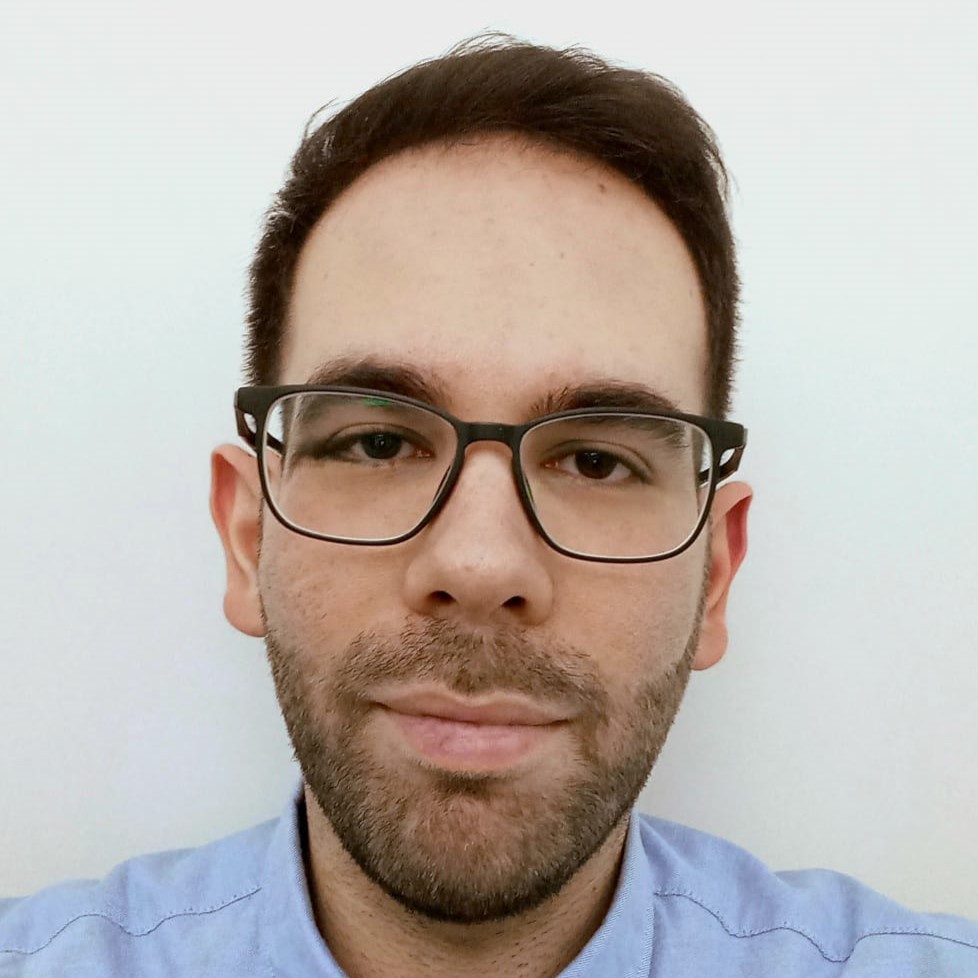
Olasunkanmi Kehinde is an Assistant Professor in the Department of Health and Human Studies at Elizabeth City State University. Their research spans medical imaging applications in cardiology, pediatric health outcomes, and educational assessment methodologies. They hold an office in the STEM Complex Building, Room 326. Research focuses include cardiac MRI viability assessment, preterm infant mortality risk analysis, and innovative teaching strategies in STEM education. Their work integrates quantitative methods like item response theory and multilevel modeling with practical applications in healthcare and education systems. Recent publications (2021-2025) emphasize methodological advancements in educational measurement, cognitive assessment frameworks, and healthcare outcome analysis. No formal awards or grants are explicitly noted in the provided materials.
Salvatore Ivan Trapasso is a Fixed-term Assistant Professor at the Department of Mathematical Sciences "GL Lagrange" (DISMA) , Polytechnic University of Turin , and a member of the SmartData@PoliTO - Big Data and Data Science Laboratory . His research focuses on Applied Harmonic Analysis , Fourier Analysis , Machine Learning , and Quantum Theory , with expertise in Mathematical Analysis (MATH-03/A) and Theoretical PDEs (PE1_11). Education : Implied PhD in Mathematics. Research Areas : Phase Space Analysis, Time-Frequency Methods, and Applications to Quantum Mechanics. His recent publications investigate phase space techniques for Feynman Path Integrals , Twisted Laplacian , Compressed Sensing , and Stability of Scattering Transforms . His work bridges Harmonic Analysis with Machine Learning and Quantum Dynamics . Notable scientific awards include the Axioms Young Investigator Award (2022) , Best Paper Award (ICGF 2020) , and the Quality Award 2019 from Polytechnic University of Turin. He serves on the Editorial Board of Advances in Operator Theory and as Associate Editor for University Texts in the Mathematical Sciences . Teaching roles include Lecturer for Mathematical Principles in the College of Architecture and Design , Collaborator for Mathematical Analysis I/II in Biomedical and Aerospace Engineering, and Contributor to advanced mathematical methods in Computer Science Engineering.
Dr. Mingjun Zhong is a Lecturer in the School of Natural and Computing Sciences at the University of Aberdeen. His research focuses on machine learning and computational statistics with applications in healthcare, energy systems, and medical imaging. He is actively engaged in teaching and academic service, including editorial roles in prominent journals. Position: Lecturer Institution: University of Aberdeen School: School of Natural and Computing Sciences Email: mingjun.zhong@abdn.ac.uk Dr. Zhong's research interests center on probabilistic and statistical machine learning methodologies applied to real-world data. He works on healthcare data analysis, non-intrusive load monitoring (NILM), spectroscopy, EEG/fMRI, and energy disaggregation. His methodological expertise includes variational inference, Markov chain Monte Carlo, Bayesian matrix factorization, and deep learning. He has developed lightweight and efficient neural network models for applications in medical imaging and smart grids. The most recent publications reflect a strong trend in applying advanced machine learning techniques—particularly deep learning, self-supervised learning, and capsule networks—to diverse domains such as medical diagnostics, energy disaggregation, and clinical decision support. There is a clear emphasis on developing efficient, interpretable, and robust models for real-world deployment, often addressing challenges like class imbalance, domain adaptation, and data scarcity. Scientific recognition includes: Fellow of the Higher Education Academy (FHEA) Associate Editor, Neural Processing Letters Review Editor, Frontiers in Applied Mathematics and Statistics Regular reviewer for top-tier journals and conferences in AI and machine learning Grant reviewer for multiple funding bodies Dr. Zhong advises a number of students, as evidenced by co-authorships on numerous publications. His research is supported by academic collaborations and likely external grants, though specific funding details are not mentioned. He teaches courses in Robotics, Machine Learning, and Knowledge Representation and Reasoning, contributing significantly to the curriculum in computing sciences. He is involved in interdisciplinary research, particularly through projects like ARCHERY (Artificial intelligence to Revolutionise the patient Care pathway in Hip and knEe aRthroplastY), which integrates AI into orthopaedic care. His work bridges computer science, statistics, and domain-specific applications, demonstrating a strong commitment to impactful, application-driven research.
Alfredo Benso is a Full Professor in the Department of Control and Computer Science (DAUIN) at the Polytechnic University of Turin, where he is also a member of the Interdepartmental Center PolitoBIOMed Lab - Biomedical Engineering Lab. He has been continuously involved in the Doctoral College for Computer and Systems Engineering since 2008, guiding PhD education across numerous cycles. His academic roles span teaching and research leadership in bioinformatics, systems biology, and computer engineering. Research interests: Bioinformatics and computational biology Systems biology and gene regulatory networks Artificial intelligence and machine learning in biomedicine Molecular modeling and multiscale simulation Biological database systems and data integration Health informatics and public health modeling His recent publications reflect a strong trend in applying AI and machine learning to biological and medical challenges, including protein function prediction, Alzheimer’s and Multiple Sclerosis modeling, food fraud detection, and viral genome analysis. These works span journals and conferences in bioinformatics, computational biology, and biomedical engineering, demonstrating interdisciplinary innovation. Scientific Awards: BIOINFORMATICS 2014 BEST PAPER AWARD (INSTICC, United Kingdom) Advising and Grants: He supervises PhD students, including Sofia Ostellino, and leads major research initiatives such as the BIGMECH (2023–2025) and FISHUB (2016–2018) projects. He has served as Scientific Director for collaborative agreements with public administrations and as Principal Investigator on EU, national (PRIN), and regional research grants focused on bioinformatics, space systems, and reliable digital technologies. Labs and Teams: He is a key member of the SBG - System Biology Group (DAUIN) and contributes to PolitoBIOMed Lab, fostering collaborative research in biomedical engineering and computational biology.
Javier Cabrera is a Professor in the Department of Statistics at Rutgers University with a joint affiliation at the Cardiovascular Institute. He holds a Ph.D. from Princeton University and is recognized as a Fulbright Scholar. His office is located at Hill Center 471, 110 Frelinghuysen Road, Piscataway, NJ. His research focuses on: Biostatistics and clinical trial methodology Data mining for functional genomics and DNA/protein arrays Statistical computing, machine vision, and high-dimensional data analysis Cardiovascular health applications using statistical modeling Recent publications (2022-2025) demonstrate strong emphasis on: Novel statistical methods for medical/biological data Machine learning applications in diagnostics and genomics Clinical risk modeling and epidemiological studies Big data reduction techniques and computational efficiency He frequently publishes in interdisciplinary collaborations at the intersection of statistics, biomedicine, and computational science. Awards: Fulbright Scholar He collaborates extensively with the Cardiovascular Institute, contributing statistical expertise to research on cardiovascular outcomes, disease risk modeling, and clinical data analysis.
Attila Bekkvik Szentirmai is an Assistant Professor and Ph.D. research fellow at the Department of Design, Norwegian University of Science and Technology (NTNU), focusing on Universal Design of ICT, Human-Computer Interaction, and Augmented Reality (AR) development. With prior academic roles at the University of Agder and Oslo Metropolitan University, his interdisciplinary background bridges Social Science, Art, Software Engineering, and Digital Health. He teaches Web of Things (IDG3006) and leads innovative AR projects like AReader (AR screen reader), ARachnoAID (phobia treatment), and guARdian (daily decision support). Current role: Assistant Professor at NTNU Research focus: Universal Design, AR/VR accessibility, e-Learning/e-Health Teaching: Web of Things (IDG3006) course coordinator Previous roles: Assistant Professor at University of Agder and OsloMet His recent publications emphasize accessible AR/VR design, including humor/ethics in technology, sustainable AR solutions, and critical analysis of accessibility paradoxes. Projects span education (SlidAR classroom presentations), health (CybAR sickness, ARachnoAID), and sustainability (HoloWatch, E-Waste gaming). All work aligns with universal design principles to ensure inclusivity across diverse user needs. Scientific contributions include developing new accessibility heuristics for AR, analyzing AI-AR integration for decision-making, and creating prototypes for banknote recognition and indoor navigation. His publications bridge theoretical research with practical implementations, often using Unity/Vuforia for development and cross-disciplinary collaboration. His XR Research & Development timeline highlights innovations such as Deadliest Animals (2017, first universally designed WebVR), UndARtheSkull (2019, brain anatomy education), and 2023 projects like Jedi fARt Pro (humorous AR), Meta IntARaction (Quest3 AR), and XR Portal (AR-VR integration). Current Ph.D. work focuses on evidence-based accessibility guidelines for AR, aiming to impact social inclusion, academic research, and industry UX practices.
Simona Gauduseviciene is a Clinical Instructor at the Department of Clinical Medicine, Faculty of Medicine, Aalborg University, Denmark. She is also affiliated with Aalborg University Hospital, specifically the Medicinsk Afdeling in Farsø/Hobro/Thisted, where she serves as an Overlæge (senior physician), indicating a strong clinical and academic role in endocrinology and internal medicine. Her research interests center on endocrine pathology, particularly rare forms of parathyroid tumors such as water clear cell giant parathyroid adenomas. She investigates diagnostic challenges and imaging techniques for preoperative localization, with a focus on advanced modalities like methionine-based positron emission tomography-computed tomography (PET-CT). The single recent publication highlights her work in diagnosing and managing primary hyperparathyroidism using nuclear imaging, reflecting a clinical research trajectory focused on improving surgical outcomes through precise tumor localization. Her work intersects clinical medicine, endocrinology, and molecular imaging. Scientific Awards: No awards listed in the provided text. Advising and Grants: No information available regarding student supervision, grant funding, or research mentoring. Labs and Research Teams: She collaborates within the Department of Clinical Medicine at Aalborg University and the clinical teams at Aalborg University Hospital, particularly in endocrine and nuclear medicine services. While no formal lab is mentioned, her work appears to be integrated into clinical research networks focusing on endocrine tumors and imaging diagnostics.
Karen Hannigan, Ph.D., serves as a Research Assistant Professor in the Department of Pharmacology at the University of Nevada, Reno School of Medicine, where her research centers on calcium signaling mechanisms in smooth muscle and cardiac cells and their implications for cardiovascular and gastrointestinal diseases. Her academic credentials include: B.S. in Anatomy from Queen's University Belfast, Northern Ireland Ph.D. in Physiology from Dundalk Institute of Technology, Ireland Dr. Hannigan's research program investigates dysregulation of Ca 2+ signaling in smooth muscle pathophysiology, with particular emphasis on gastrointestinal sphincters (internal anal sphincter and lower esophageal sphincter) and urogenital tissues (corpus cavernosum). Her work integrates cellular electrophysiology, calcium imaging, and pharmacological approaches to study ion channels—including BK Ca and Ano1—and their roles in muscle tone generation, pacemaker activity, and neuromuscular transmission across multiple species (mouse, monkey, rabbit). Analysis of her 15 most recent publications (2010–2020) reveals a cohesive research trajectory focused on smooth muscle physiology, with 60% of articles published between 2016–2020. Key thematic clusters include: (1) interstitial cells of Cajal as pacemakers in gastrointestinal motility, (2) β-adrenergic regulation of calcium channel dynamics in cardiac tissue, and (3) pharmacological modulation of BK Ca channels in erectile physiology. Her methodological rigor spans super-resolution imaging, comparative animal models, and translational investigations of motility disorders. No major scientific awards were documented in the source materials. Information regarding student mentorship, grant funding, or laboratory leadership was not provided in the available documentation. Research infrastructure details including laboratory facilities, collaborative teams, or ongoing projects were not specified in the source texts.
Hegang Chen, PhD, serves as Professor in the Department of Epidemiology and Public Health at the University of Maryland School of Medicine. He is a lead statistician for the General Clinical Research Center (GCRC) and member of the Hormone Responsive Cancers Program within the Marlene and Stewart Greenebaum Cancer Center, with extensive collaborative experience in clinical trials and epidemiological research since joining in 2002. His academic credentials include: Ph.D. in Statistics from the University of Illinois M.S. in Mathematics from the University of Mississippi Dr. Chen's research centers on statistical methodology development—including optimal experimental design, generalized mixed linear models, and machine learning applications for molecular biology and real-time clinical decision support (e.g., predicting blood transfusion needs)—and biomedical collaborations spanning cancer, infectious diseases, trauma, public health, and pharmacogenomics. His work has been published in premier journals like Nature, JAMA, and Annals of Statistics. Analysis of his recent publications (2020-2025) reveals a dominant focus on predictive analytics for traumatic brain injury outcomes, blood transfusion prediction, and lung cancer diagnosis using real-time physiological monitoring and machine learning. This trend demonstrates a translational shift toward operationalizing statistical methods in critical care decision support systems. No scientific awards were mentioned in the provided text. While no specific advisees are listed, Dr. Chen's leadership in the GCRC and extensive collaborative network across trauma, oncology, and global health indicate active mentorship within multidisciplinary teams. His grant involvement is evidenced by NIH-funded GCRC work and high-impact publications in clinical domains. Dr. Chen maintains key affiliations with the General Clinical Research Center as lead statistician and the Hormone Responsive Cancers Program, where he integrates advanced statistical methodologies into translational cancer research and clinical trial design.
Elisa Modolo is an Instructional Associate Professor of Italian in the Department of Modern Languages at the University of Mississippi , where she also directs the Basic Italian Language Program and the Italian Program. She holds a Ph.D. in Italian Studies from the University of Pennsylvania (2015) and has previously served as an Adjunct in Italian Studies at both the University of Pennsylvania and Temple University. Research Interests include Renaissance and Baroque Italian culture, translation theory, Venetian literature and language, comparative literature, cinema studies, and women and gender studies. Her work explores intersections between text and image in Ovidian rewritings, feminist critiques of convent culture, and intercultural dimensions of Italian language pedagogy. Publications and Grants demonstrate her expertise in Venetian literary traditions, multilingual poetry, and interdisciplinary analysis. She has received fellowships such as the Salvatori Graduate Research Grant and School of Arts and Sciences Dissertation Completion Fellowship . Her scientific awards also include the Apple Award for Outstanding Teaching . Teaching focuses on Italian language instruction (from elementary to advanced levels) and cultural studies, integrating pop culture artifacts to enhance cross-cultural understanding. Her academic work bridges historical Italian debates (e.g., language standardization, gender roles) with contemporary issues.
Nafiseh Mousavi is a Senior Lecturer at Lund University's Department of Arts and Cultural Sciences within the Faculty of Humanities and Theology. With a PhD in Comparative Literature specializing in Intermedial Studies (2021), she brings expertise in literature, languages, and anthropology to her academic work. Her institutional affiliation includes active participation in intermedial studies, publishing studies, fashion studies, film studies, and digital cultures. Her research operates under the umbrella framework of "media, difference, interaction," focusing on zones where politics of difference are amplified in artistic and daily communication. Mousavi has a particular interest in autobiographical narratives, documentary media, and activist authorships, examining diverse media forms including comics, literary fiction, social media, and film. Her work spans intermedial processes in intercultural contexts, migratory authorships, neurodivergence across media, memory activism, and feminist comics. Analysis of her publication record reveals strong engagement with cultural memory, particularly examining Iranian contexts through the lens of neurodiversity, imprisonment narratives, and activist memory work. Her research demonstrates a consistent focus on how marginalized communities use various media forms to articulate experiences of difference and create counter-narratives. Research Fellow (2025) Mousavi actively contributes to academic discourse through teaching courses such as Digital Cultures: Project Work, Digital Cultures: Project Management, and Fashion Studies. She participates in the Aesthetic Studies Reading Group as a researcher and regularly presents at conferences on topics related to documentary filmmaking, memory work, and intermedial interventions in urban contexts.
Dr. Ioanna Lykourentzou is an Associate Professor in the Software Technology for Learning and Teaching department at Utrecht University's Faculty of Science. She leads the Collaborative Technologies Lab and coordinates the Computing Science Master's and Information Sciences Honors Bachelor's programs. Additionally, she serves as a Fair Data and Software fellow within the Open Science Team of the Faculty of Science and as a member of the Ethics Review Board for the Faculties of Science and Geosciences. Her research focuses on collaborative and crowd systems, developing methods that help people work together, coordinate efforts, and innovate at scale, both online and in physical spaces. Her interdisciplinary approach combines computational science (machine learning, agent-based modeling, mathematical optimization) with social sciences (personality testing, team building). Her expertise spans Human-Computer Interaction, Algorithms, Agent-Based Modelling, Telecollaboration, Creativity, and Innovation. Her recent publications (2021-2025) demonstrate a strong focus on human-AI interaction, generative models, and applications in cultural heritage and education. She examines how technology can facilitate collaboration, with particular attention to team formation, personality factors, and digital nudging techniques. Her work bridges theoretical research with practical applications in digital humanities, cultural heritage, and computing education. Dr. Lykourentzou has received significant recognition for her research, with multiple publications garnering substantial citations and reader attention across platforms like Mendeley and social media. Her work on personality-based team formation (2016) has been particularly influential with over 90 citations. Prior to joining Utrecht University, she worked as a Senior Researcher at the Luxembourg Institute of Science and Technology (LIST), where she coordinated the European H2020 project CROSSCULT. She has also collaborated with the Human-Computer Interaction Institute of Carnegie Mellon University as a visiting researcher and with INRIA Nancy-Grand Est and the Public Research Center Henri Tudor as a postdoctoral fellow.
Bjørn Magne Arntsen is a visual anthropologist and researcher at the Department of Social Sciences, UiT The Arctic University of Norway. His work integrates ethnographic filmmaking with long-term field studies on natural-resource use, fisheries governance, and forced migration around Lake Chad and in the Sahel. Research interests Arntsen’s core interests span visual anthropology, ethnographic film, natural-resource management, and fisheries. He explores how audiovisual methods can deepen anthropological understanding, particularly in poly-ethnic societies under environmental and political stress. He is an active member of the university’s Visual Anthropology research group and the Sahel on Sahel project, initiatives that investigate viability and crisis adaptation in northern and southern poly-ethnic communities. Publications trend Across 40+ outputs since 2000, his recent articles (2017-2023) foreground situated knowledge, observational cinema, and the socio-ecological impacts of management regimes on Lake Chad fisheries, often combining textual analysis with documentary film. Awards & funding No specific awards or major grants are listed in the supplied text; however, his continuous film production and editorial roles indicate ongoing external support. Advising & collaboration Arntsen regularly supervises master students in Visual Cultural Studies, as evidenced by co-edited film anthologies and premiere events at UiT. He collaborates with scholars in Cameroon, Mali, and Norway, and his works appear in English, French, and Norwegian, reflecting wide international engagement.
Patrizia Paggio serves as an Associate Professor and Senior Researcher within the Department of Nordic Studies and Linguistics at the University of Copenhagen's Faculty of Humanities, concurrently holding a full professorship at the University of Malta's Institute of Linguistics and Language Technology since September 2011. Her scholarly work centers on the intricate relationship between verbal and nonverbal communication modalities, with international recognition for advancing methodologies in multimodal analysis. Academic Background: PhD in Computational Linguistics from the University of Copenhagen (1997), dissertation: "The Treatment of Information Structure in Machine Translation" Professor Paggio's research program investigates how gestures, head movements, and other nonverbal cues interact with spoken language to construct meaning in natural communication. She has pioneered methodologies for constructing and analyzing multimodal corpora, while maintaining technical expertise in machine translation systems, grammar engineering, and content-based querying frameworks. Her theoretical work spans formal syntactic structures, discourse phenomena, information packaging, and ontological representations for linguistic data, consistently bridging computational methods with linguistic theory. Analysis of her recent publications (2020-2025) reveals a sustained focus on computational approaches to nonverbal communication, particularly the automatic detection and annotation of head movements and gestures in both physical and digital environments. Key contributions include the GEHM Zoom corpus for online interaction analysis, eye-tracking studies of emoji processing, and diachronic modeling of historical language change. Her work strategically integrates eye-tracking, corpus linguistics, and machine learning techniques, establishing her at the convergence of linguistic theory, cognitive science, and artificial intelligence applications. Professional Leadership: Coordinator of the international GEHM (Gestures and Head Movements in Language) research network Organizer of MULTIMODAL CORPORA 2018, 4th European/Nordic Symposium on Multimodal Communication, and LREC2022 Workshop on People in Vision, Language and the Mind
Caius Radu, M.D., is a full Professor in the Departments of Molecular and Medical Pharmacology and Surgery at the University of California, Los Angeles (UCLA). He also serves as Vice-Chairman of the Department of Molecular and Medical Pharmacology and as Co-Director of the Cancer Molecular Imaging, Nanotechnology, and Theranostics Research Program (CMINT) within the Jonsson Comprehensive Cancer Center. Education: M.D., University of Medicine, Craiova, Romania Postdoctoral training in immunology and cancer biology, University of Texas Southwestern Medical Center (Dallas) Postdoctoral training at UCLA under the mentorship of Dr. Owen Witte Research Interests: Dr. Radu's laboratory investigates the intersection of metabolic signaling , nucleotide metabolism , and immune networks in cancer, with a translational focus on molecular imaging and theranostic applications. Key efforts include elucidating novel mechanisms regulating nucleotide metabolism in pancreatic and prostate cancers, identifying actionable co-dependencies, and developing non-invasive imaging probes that predict therapeutic response. The group integrates rigorous pre-clinical mouse models with cutting-edge PET imaging to accelerate bench-to-bedside translation. Current projects revolve around STING pathway activation , PSMA-targeted radioligand therapy , CD73 adenosine blockade , mutant KRAS inhibition , and mRNA cancer vaccines . These multi-pronged strategies aim to overcome tumor immune evasion, enhance cytotoxic therapies, and personalize treatment selection. Recent Publication Trends: From 2020-2025, the Radu group has published extensively on synergistic combination therapies that pair immune checkpoint modulation with targeted metabolic inhibition. A dominant theme is leveraging nucleoside analog PET tracers (e.g., 18F-FAC, 18F-CFA) to visualize immune activation and metabolic stress in real time. Parallel studies dissect resistance mechanisms to PSMA-targeted alpha therapy and explore STING agonism as a strategy to sensitize otherwise refractory pancreatic and prostate tumors. Scientific Awards & Honors: While the provided text does not enumerate specific awards, Dr. Radu’s leadership roles at UCLA and the Jonsson Comprehensive Cancer Center, along with continuous high-impact publications, attest to sustained recognition in cancer research. Advising & Team: Dr. Radu mentors an active bench-to-bedside team comprising: Graduate Students: Amanda Creech, Hailey Lee Postdoctoral Scholar: Khalid Rashid Staff Research Associate: Weihang Zhao Lab Manager: Nanping Wu Laboratory & Core Affiliations: The Radu laboratory operates within the CMINT program at the Jonsson Comprehensive Cancer Center, with ready access to UCLA’s preclinical imaging cores, flow cytometry facilities, and translational pathology resources. Collaborative ties span the departments of Molecular and Medical Pharmacology, Surgery, Radiological Sciences, and the Institute for Molecular Medicine.