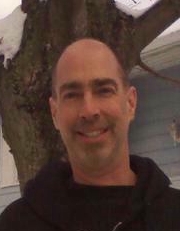
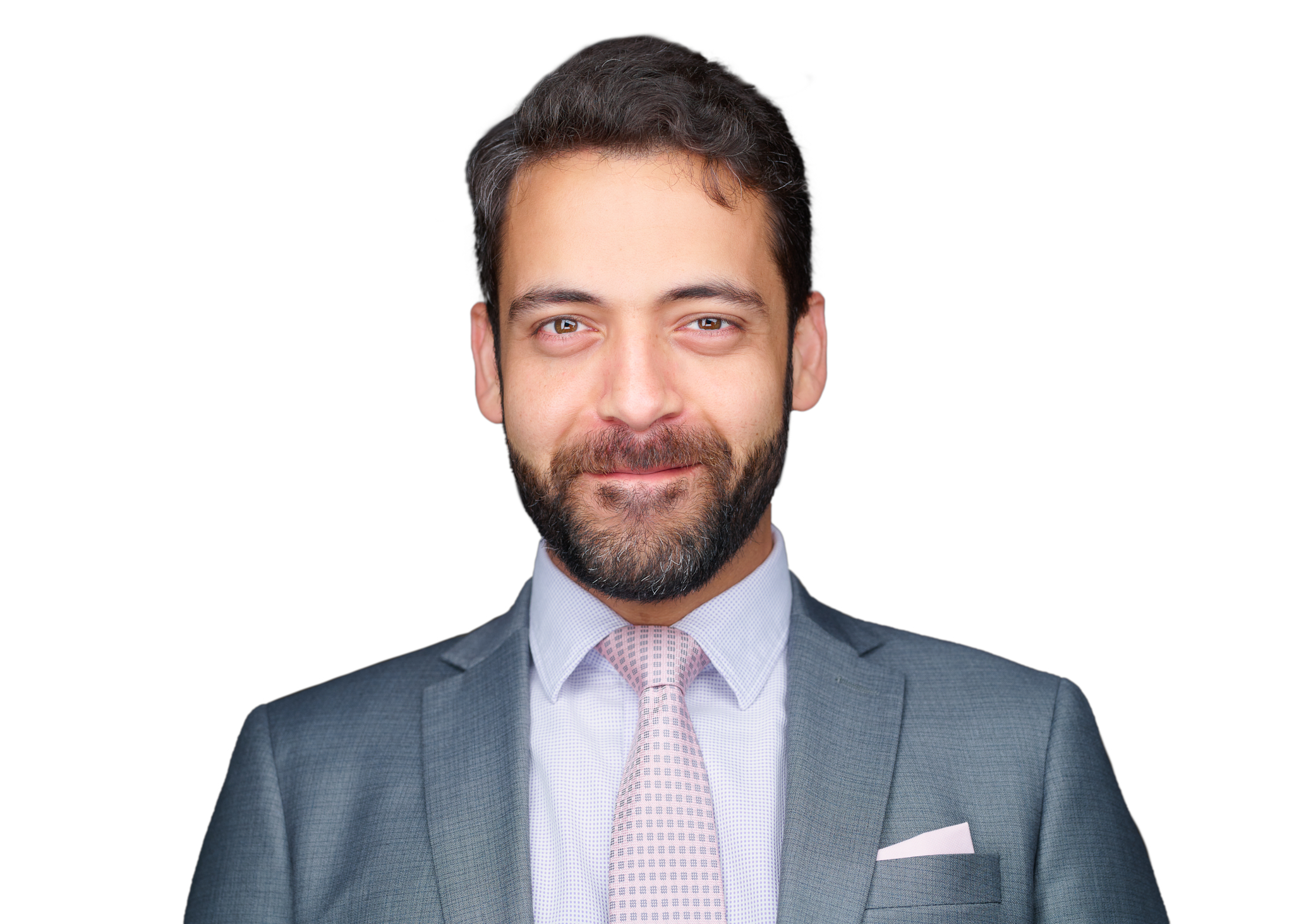
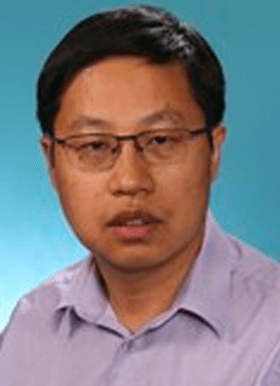
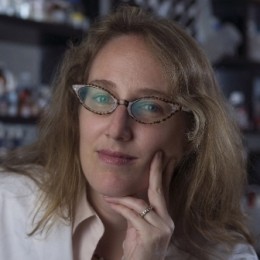
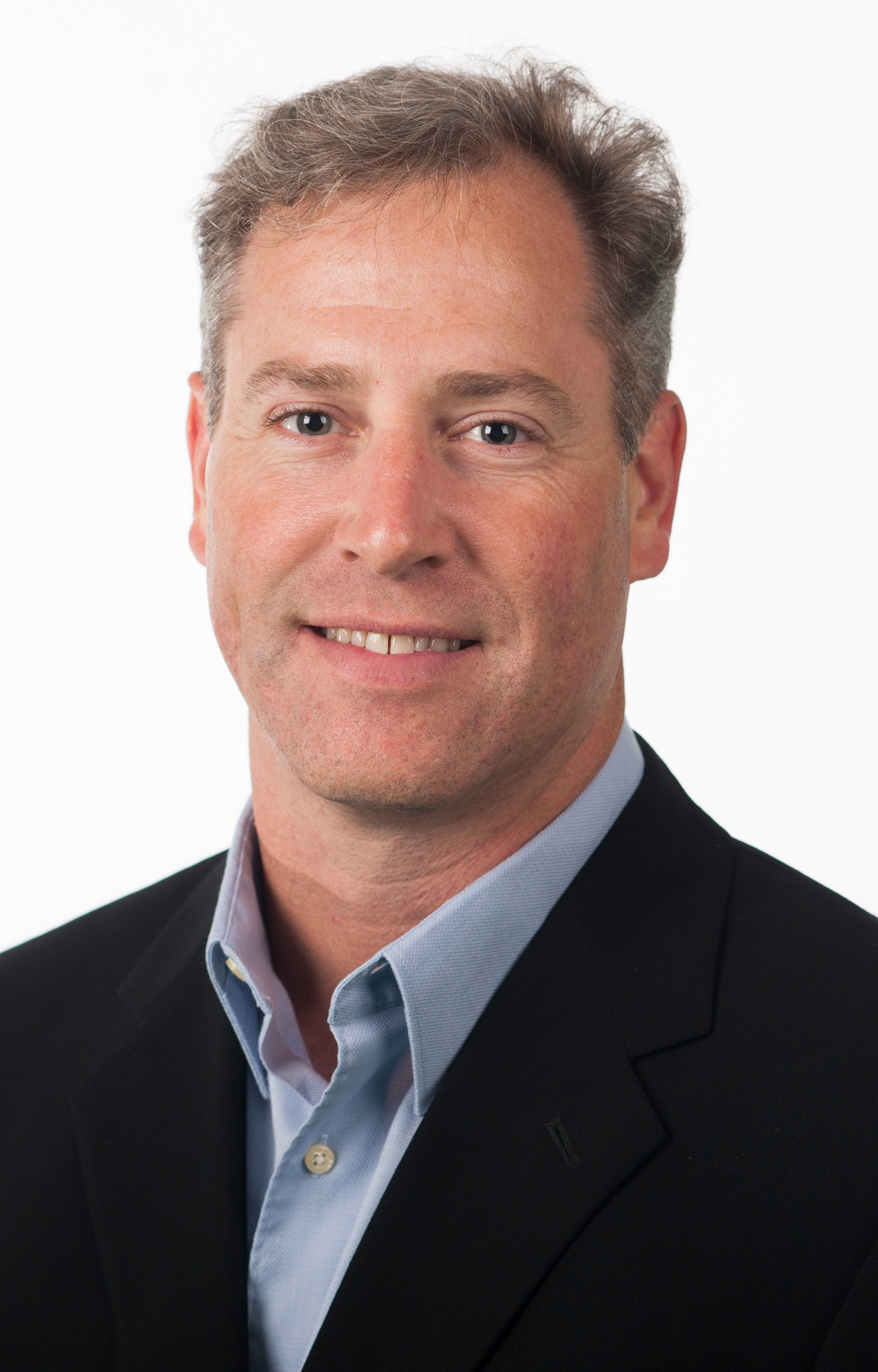
Assoc. Professor Enbang Li is a Senior Lecturer at the School of Physics within the Faculty of Engineering and Information Sciences at the University of Wollongong. His research focuses on photonics, medical physics, and optical sensor technologies with applications in radiation dosimetry, biomedical engineering, and wearable devices. He has supervised numerous PhD and Master’s students in areas such as fiber-optic dosimetry for radiotherapy, blood glucose sensing, and microfluidics. His work includes advancements in fiber-optic dosimeters for MRI-LINAC systems, polymer-based biosensors for glucose monitoring, and integrated photonic sensors for temperature and pressure measurements. He has secured funding from organizations like the Australian Synchrotron Research Program and the University of Wollongong for projects related to dosimetry and photonic integration. Recent publications highlight innovations in HDR brachytherapy dosimetry, flexible electro-optic modulators for ECG signals, and lab-on-a-chip systems. His research also extends to material science, including corrosion studies of Al-Mg alloys and the dynamic behavior of sunscreens under in-service conditions.
Laura Sanchez is an Associate Professor in the Department of Chemistry and Biochemistry at the University of California, Santa Cruz (UCSC). She leads a research lab focused on imaging mass spectrometry and natural products discovery, with a particular emphasis on microbial interactions, metabolomics, and applications in women’s health. Previously, she was at the University of Illinois at Chicago (UIC) before relocating to UCSC in 2021. Education: B.A. in Chemistry from Whitman College (Walla Walla, WA) followed by a Ph.D. in Chemistry at UCSC under Professor Phil Crews. Postdoctoral training included work under Professors Roger Linington (UCSC) and Pieter Dorrestein (UC San Diego as an NIH IRACDA Fellow). Her research integrates advanced mass spectrometry techniques with biological systems to study small molecule communication in microbial communities and cancer metabolism. Research Interests : Specialization in imaging mass spectrometry (MALDI-TIMS-MS2), microbial metabolomics, and development of novel techniques like SICRIT (Soft Ionization by Chemical Reaction in-Transfer). Her lab investigates how microbial interactions influence metabolite production and explores metabolomic signatures in ovarian cancer progression. Recent work includes spatial quantification of signaling molecules (e.g., c-di-GMP in biofilms) and the role of neurotransmitters like norepinephrine in cancer cell survival. Awards : K12 BIRCWH Scholar (2016–2017) 2019 UIC Rising Star in the Life Sciences 2022 ACS Infectious Diseases Young Investigator Award 2022 American Society for Pharmacognosy Matt Suffness Young Investigator Award Grants & Collaboration : Developed the Natural Products Atlas (open-access knowledge base) and contributed to workflows like TIMSCONVERT. Collaborations span microbiology, oncology, and bioinformatics, with a focus on translational research in women’s health. Current projects include analyzing fallopian tube-ovary cross-talk in high-grade serous ovarian cancer and optimizing mass spectrometry for high-throughput screening. Labs & Teams : Directs an interdisciplinary lab at UCSC, emphasizing open-source method development and collaborative microbiome research. Her team includes graduate students and postdocs working on microbial communication, cancer metabolomics, and imaging technology innovation.
Matthew Libera is a Professor of Material Science and Engineering at Stevens Institute of Technology, affiliated with the Charles V. Schaefer, Jr. School of Engineering and Science. He leads the Laboratory for Multiscale Imaging (LMSI), a shared facility for advanced imaging and analysis. His work focuses on biomaterials, hydrogels, infection-resistant surfaces, and electron microscopy techniques. Libera has held roles including Associate Dean of Engineering and Science (2013–2018) and has been a visiting professor at institutions like the University of Rhode Island (2021–2022). He chairs the Stevens Conference on Bacteria-Material Interactions and has authored numerous publications on antimicrobial surfaces and material characterization. His research interests span biomaterials-associated infections, directed self-assembly of polymers, and cryo-electron microscopy applications. He pioneered microgel-based antimicrobial coatings and developed molecular beacon technologies for diagnostics. Libera’s awards include the Morton Professorship for Teaching Excellence (2010–2011) and the Jess N. Davis Award for Research (1998). His work integrates nanotechnology, material science, and biomedicine to address challenges in infection prevention and biomaterial design. Libera’s publications highlight advancements in microgel functionality, surface patterning via electron-beam lithography, and antimicrobial delivery systems. His lab’s capabilities in multiscale imaging enable detailed studies of biomaterial-bacteria interactions. Ongoing efforts aim to optimize self-defensive materials for medical implants and diagnostic tools.
Donald French is a Full Professor in the Department of Mathematical Sciences at the University of Cincinnati, holding this position since 1999. Additionally, he has been a Contractor/Consultant at Wright-Patterson Air Force Base since 2010. He earned a PhD in Applied Mathematics from Cornell University (1985), an MS in Applied Mathematics from Cornell (1983), and a BA in Mathematics and Physics from the State University of New York at Oswego (1980). His research focuses on interdisciplinary mathematical modeling, particularly in Cellular Physiology and Neuroscience. Key areas include inverse problems in olfactory cilia dynamics, neuronal networks, and biofilms. He has also contributed extensively to numerical analysis, specializing in error analysis for finite element methods, meshfree techniques, and discontinuous Galerkin methods. Research Highlights: Development of energy-preserving numerical schemes for time-dependent PDEs in phase transitions and viscoelasticity. Analysis of meshfree and discontinuous Galerkin methods for diffusion problems. Collaboration with Steven Kleene on olfactory cilia modeling since 2001. His work spans computational neuroscience, fluid dynamics, and aerospace engineering, with recent advancements in trajectory planning for unmanned vehicles using PDE-based models. French has secured over $600,000 in NSF grants for projects like ion channel distribution modeling (2005–2009) and mathematical physiology career development (2002–2004). French has held leadership roles, including Graduate Program Director at UC (2015–2017 and 1999–2001), and served on Taft Research and departmental committees. His teaching includes advanced courses in numerical analysis, PDEs, and mathematical biology, which he helped pioneer at UC.
Mohammad Samie Tootooni is an Assistant Professor in the Department of Health Informatics and Data Science at Loyola University Chicago, with a secondary appointment in the Center for Health Outcomes and Informatics Research. He holds a PhD in Industrial and Systems Engineering from Binghamton University (2016) and completed a postdoctoral fellowship at Mayo Clinic's Department of Health Sciences Research (2016-2018). His research focuses on applying artificial intelligence, machine learning, and systems engineering principles to improve healthcare outcomes. Core areas include clinical decision support systems, predictive analytics for complex healthcare systems, and natural language processing (NLP). He also explores quality assurance, optimization, and systems thinking to address challenges in healthcare delivery and patient care. Recent work emphasizes AI-driven solutions for medication management in ICUs, ECG-based disease prediction (e.g., coronary heart disease, preeclampsia), and addressing therapeutic inertia in hypertension treatment. His methodologies combine machine learning with clinical data analysis to bridge gaps between engineering and medical practice. Teaching responsibilities include courses on health informatics ontologies and NLP applications in healthcare. His interdisciplinary collaborations span clinicians, data scientists, and engineers to tackle real-world healthcare problems.
Lei Liu, PhD, is a Professor of Biostatistics, Medicine, and Statistics and Data Science at Washington University in St. Louis. He holds positions in the Roy and Diana Vagelos Division of Biology & Biomedical Sciences (DBBS), the Institute for Informatics, Data Science and Biostatistics (I2DB), and the Center for Biostatistics and Data Science (CBDS). His research focuses on biostatistical and data science methods, including survival analysis, longitudinal data modeling, and machine learning applications in healthcare. He collaborates with clinicians across disciplines like cardiology, ophthalmology, and addiction medicine. Dr. Liu’s work emphasizes high-dimensional omics data analysis, medical cost modeling, and joint multi-outcome models. He is an Associate Editor of Biometrics and a former member of the NIH Biostatistical Methods and Research Design Study Section. He mentors underrepresented minority researchers through the NHLBI PRIDE program.
Virginia W. Cornish is the Helena Rubinstein Professor in the Departments of Chemistry and Systems Biology at Columbia University. She is a pioneer in synthetic biology, focusing on engineering yeast for diagnostic and therapeutic applications. Her research integrates chemical synthesis and genetic tools to expand cellular capabilities, including yeast biosensors and protein engineering. Education: B.A. in Biochemistry, Columbia University (1991) Ph.D. in Chemistry, University of California, Berkeley (1996) Postdoctoral Fellow, MIT (1996–1999) Research Interests: Her work spans synthetic biology, directed evolution, and live-cell imaging. Key areas include: Development of yeast biosensors for pathogen detection Engineering yeast communities for therapeutic applications Expanding the genetic code for noncanonical amino acid incorporation Chemical tagging for protein visualization and manipulation Recent Article Trends: Recent work emphasizes yeast-based biosensors for clinical diagnostics, scalable peptide-GPCR communication systems, and advances in fluorescent tagging for multiplex imaging. Her group also explores genetic code expansion to study protein dynamics and function. Awards: NSF Career Award (2000) Sloan Fellowship (2003) Protein Society Sigal Award (2009) ACS Pfizer Enzyme Chemistry Award (2009) HHMI Gilliam Adviser (2021) Advising & Grants: She advises a dynamic lab of ~20 students/postdocs. Active grants include NIH, NSF, and DARPA funding for synthetic biology and therapeutics. Her team collaborates on projects like vaccine development and metabolic engineering. Labs & Teams: Her lab at Columbia focuses on translational synthetic biology, with facilities for genetic engineering, imaging, and bioassays. Collaborations include projects on yeast-based diagnostics and protein engineering with groups at Harvard, MIT, and Memorial Sloan Kettering.
California Institute of Technology (Caltech)United States
Zachary E. Ross is a Professor of Geophysics at the California Institute of Technology (Caltech) and holds the William H. Hurt Scholar distinction since 2021. His research integrates machine learning, computational mathematics, and seismology to analyze earthquakes and fault zones using large seismic datasets. Education B.S., University of California, Davis (2009) M.S., California Polytechnic State University, San Luis Obispo (2011) Ph.D., University of Southern California (2016) His research focuses on high-resolution imaging of fault zones, understanding earthquake sequences in space and time, and applying artificial intelligence to seismic data analysis. He develops scalable algorithms for waveform inversion, ground-motion synthesis, and real-time seismic monitoring. Recent publications highlight his work on neural operators for wave propagation, AI-driven seismicity analysis, and induced earthquake dynamics. He teaches advanced courses including Ge 264 – Machine Learning in Geophysics and Ge 271 – Dynamics of Seismicity . Scientific Awards William H. Hurt Scholar (2021–present)
Professor Xue Li is a faculty member in the School of Electrical Engineering and Computer Science at the University of Queensland. His research focuses on machine learning, data mining, and their applications in healthcare, materials science, and computer vision. He has authored over 300 publications, including seminal works on knowledge graph completion, video quality enhancement, and alloy design using machine learning. His work bridges theoretical advancements with real-world applications, such as clinical diagnosis andTinyML systems. Key research interests include graph representation learning, medical informatics, and efficient algorithms for multimedia data. Notable contributions include developing commonsense-enhanced relation extraction models and frameworks for compressed video reconstruction. His research also addresses challenges in federated learning and privacy-preserving genomics. Prof. Li has collaborated extensively with industry and academia, contributing to projects in RFID systems, electronic nose pattern recognition, and cybersecurity. His work is published in top-tier venues like IEEE Transactions and ACM conferences. Despite no listed awards, his prolific output underscores academic impact.
Professor Bruce N. Walker holds a joint appointment in the School of Psychology and School of Interactive Computing at Georgia Institute of Technology, within the College of Sciences. His research focuses on human-centered technology design, emphasizing accessibility, auditory displays, and human-AI interaction. He leads the Sonification Lab, pioneering multimodal interfaces and inclusive technology solutions. He earned his Ph.D. in Human Factors and Human-Computer Interaction from Rice University in 2001. Research Interests: Trust in technology, accessible interfaces, sonification, AI-human collaboration, and HCI in non-traditional environments. Current projects include the AccessCORPS VIP initiative to enhance course accessibility and studies on automated vehicle interaction. Awards: Best Paper Award at AudioMostly 2014 for auditory weather reports research. Active in professional organizations like the International Community for Auditory Display and Human Factors and Ergonomics Society. Teaching: Courses include Research Methods for Human Factors, Sensation and Perception, and HCI Foundations. Supervises interdisciplinary teams in the Sonification Lab R&D Studio and AccessCORPS VIP. Labs/Teams: Sonification Lab (multimodal data exploration) and AccessCORPS (disability-inclusive course design). Collaborates on international projects like the Mwangaza initiative for learners with vision impairment in Kenya.
Shujun Li is a Professor of Cyber Security and Head of the Cyber Security Research Group at the School of Computing, University of Kent. He also holds a Visiting Professorship at the Department of Computer Science, University of Surrey. His research focuses on cyber security, privacy, AI applications, and human-centric computing. He leads the Institute of Cyber Security for Society (iCSS), a university-wide interdisciplinary research centre. Education: PhD in Information and Communication Engineering (Xi'an Jiaotong University, 2003), followed by postdoctoral research at City University of Hong Kong, Humboldt Research Fellowship at FernUniversität in Hagen, and a 5-year Zukunftskolleg Research Fellowship at Universität Konstanz. Research interests include cyber security (usable security, digital forensics, misinformation), AI safety, human factors, and socio-technical systems. He has published over 100 papers, with awards including the IEEE Guillemin-Cauer Best Paper Award and EPSRC recognition. Awards: Includes IEEE Transactions Best Paper Awards, EPSRC peer review recognition, and multiple conference best paper awards. Active in interdisciplinary projects like MACRO (cyber risks in mobility systems) and ACCEPT (reducing human-related cyber risks). Labs/Teams: Directs iCSS, co-founded Kent & Medway Cyber Cluster, and leads the Kent Interdisciplinary Research Centre in Cyber Security (KirCCS). Collaborates with industry and government agencies on cyber resilience and AI ethics.
Professor Glen Tian is a Professor at the School of Computer Science , Queensland University of Technology . He holds two PhDs: one in computer and software engineering from the University of Sydney (2009) and another in industrial automation from Zhejiang University (1993) . His academic career spans institutions including Hong Kong University of Science and Technology, Curtin University, and the University of Maryland at College Park. Editor-in-Chief of the Handbook of Real-Time Computing (Springer) Associate Editor for Information Sciences (Elsevier) and Asia-Pacific Journal of Chemical Engineering (Wiley) His research focuses on big data computing , cloud computing , computer networks , smart grid communication and control , networked control systems , and cyber-physical system security . Applications include power systems , medical big data , vehicular networks , and transport systems . Recent publications highlight advancements in smart grid communications , distributed optimization , secure multi-agent systems , and medical imaging analysis . He has led QUT's Big Data Lab and served as Leader of QUT's Networks and Communications Discipline . Scientific achievements include Over 20 research grants totaling >$6M 6 Australian Research Council (ARC) grants 1 MRFF-TTRA grant ($745,623) 1 ATN-DAAD Australia-Germany Collaborative Grant 1 DEST International Science Linkage grant He supervises PhD students in big data bioinformatics , smart grid optimization , and cyber-physical security , while mentoring 30+ postdocs and research fellows. Current projects include mitigating cyberattacks on power systems and developing AI-based atheroma diagnostic tools .
Siddharth Garg is the Institute Associate Professor of Electrical and Computer Engineering at NYU Tandon School of Engineering, leading the EnSuRe Research Group. He holds a Ph.D. from Carnegie Mellon University (2009) and a B.Tech. from IIT Madras. His research focuses on secure and energy-efficient computing systems, integrating machine learning, cybersecurity, and hardware design. He previously held roles as Assistant Professor at NYU Tandon (2014-2020) and the University of Waterloo (2010-2014). Key affiliations include NYU Center for Cybersecurity (CCS), NYU Wireless, and the Center for Advanced Technology in Telecommunications. His work has been recognized with prestigious awards like the NSF CAREER Award (2015) and inclusion in Popular Science’s 'Brilliant 10' (2016). Notable research includes private inference optimization, secure hardware IP protection, and adversarial machine learning defenses. Publications highlight advancements in zero-knowledge proofs, AI-driven chip design, and mitigating backdoor attacks in neural networks. His grants include funding from NYU Wireless and NSF initiatives like the Chips4All project. The EnSuRe group emphasizes bridging software and hardware design gaps using AI and fostering cybersecurity education.
Dr. Kenneth Edwin Barker is a Professor in the Department of Computer Science within the Faculty of Science at the University of Calgary, where he also serves as Director of the Institute for Security, Privacy and Information Assurance (ISPIA). His academic career spans several decades with significant contributions to database systems and privacy research. Dr. Barker earned his B.S. and M.S. in Computer Science from the University of Calgary in 1982 and 1984 respectively, followed by a Ph.D. in Computer Science from the University of Alberta in 1990. His educational background established the foundation for his extensive research career in database systems and information security. His primary research interests focus on Privacy Preserving Data Repositories , with specific attention to protecting privacy in mobile applications, understanding privacy's impact on data analytics, and architecting database management systems that inherently respect user privacy. His work also extends to distributed database environments, integration of legacy systems, and multidatabase environments. Dr. Barker's research bridges theoretical foundations with practical applications, making significant contributions to how privacy is implemented in real-world systems. An analysis of his recent publications reveals a strong trend toward practical privacy-preserving techniques for cloud data, social networks, and location-based services. His work consistently addresses the tension between data utility and privacy protection, developing innovative methods to maintain data value while safeguarding personal information. The publications span multiple subfields including encrypted search, graph privacy, high-dimensional data privacy, and privacy metrics. Best Paper Award at DBSec 2012 Best Paper Award at CODASPY 2012 Best Paper at BNCOD 2009 Dr. Barker has been instrumental in establishing privacy research infrastructure at the University of Calgary through his leadership of ISPIA. His research has attracted significant funding from various sources supporting privacy and security initiatives. While specific grant details aren't provided in the text, his extensive publication record indicates sustained research funding throughout his career. He has collaborated extensively with researchers both within and outside the University of Calgary, particularly with R. Alhajj and other colleagues on numerous projects. As Director of ISPIA, Dr. Barker oversees a research environment focused on advancing security and privacy technologies. The institute serves as a hub for interdisciplinary research, bringing together computer scientists, social scientists, and legal experts to address complex privacy challenges. His leadership has positioned the University of Calgary as a significant player in privacy research within Canada.
Suresh Venkatesh is an Assistant Professor in the Department of Electrical and Computer Engineering at North Carolina State University. He previously served as a postdoctoral research associate at Princeton University (2018–2022) and earned his Ph.D. in Electrical Engineering from the University of Utah in 2017. His academic journey also includes a Master's degree in Electrical Engineering from NC State in 2010. Education: Ph.D. in Electrical Engineering, University of Utah, 2017 Master's in Electrical Engineering, North Carolina State University, 2010 Research Interests: His work focuses on metamaterials and surfaces at GHz-THz frequencies, millimeter-wave phased arrays, and innovative applications in 5G/6G communication systems. Key areas include antenna design, physical layer security, advanced electromagnetic simulations, and reconfigurable systems using CMOS integration. He explores origami-based platforms for adaptive RF imaging and employs spatio-temporal modulation techniques to enhance wireless security and efficiency. Publications Trends: Recent work emphasizes mmWave and THz communication, with a focus on reconfigurable intelligent surfaces, secure low-latency links, and CMOS-based designs for direct detection receivers and cytometers. His research bridges theoretical concepts with experimental validation, particularly in wavefront manipulation and sparse imaging techniques. Awards and Honors: Mistletoe Research Fellowship (2021) Advising and Grants: Venkatesh contributes to research teams like the NC State 6GNC initiative, which spans 6G technologies. He actively organizes conferences such as the World Microwave Congress 2024 as TPC Co-Chair and participates in IEEE technical committees. His grants and collaborations drive advancements in metamaterials, secure wireless systems, and CMOS-integrated solutions. Labs and Teams: He leads efforts in the NC State ECE Department, focusing on labs involving reconfigurable antennas, computational imaging, and integrated systems. His work intersects with the 6GNC team to develop future communication technologies and secure mmWave/THz systems.