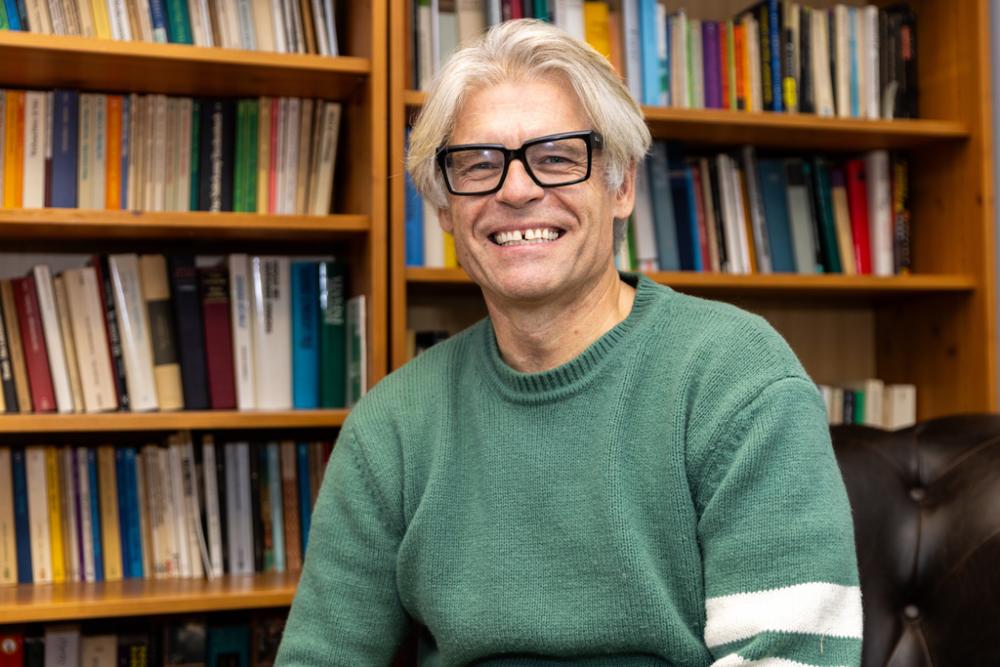
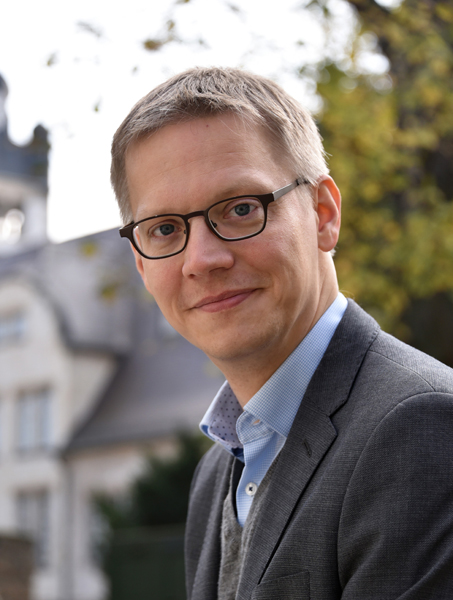
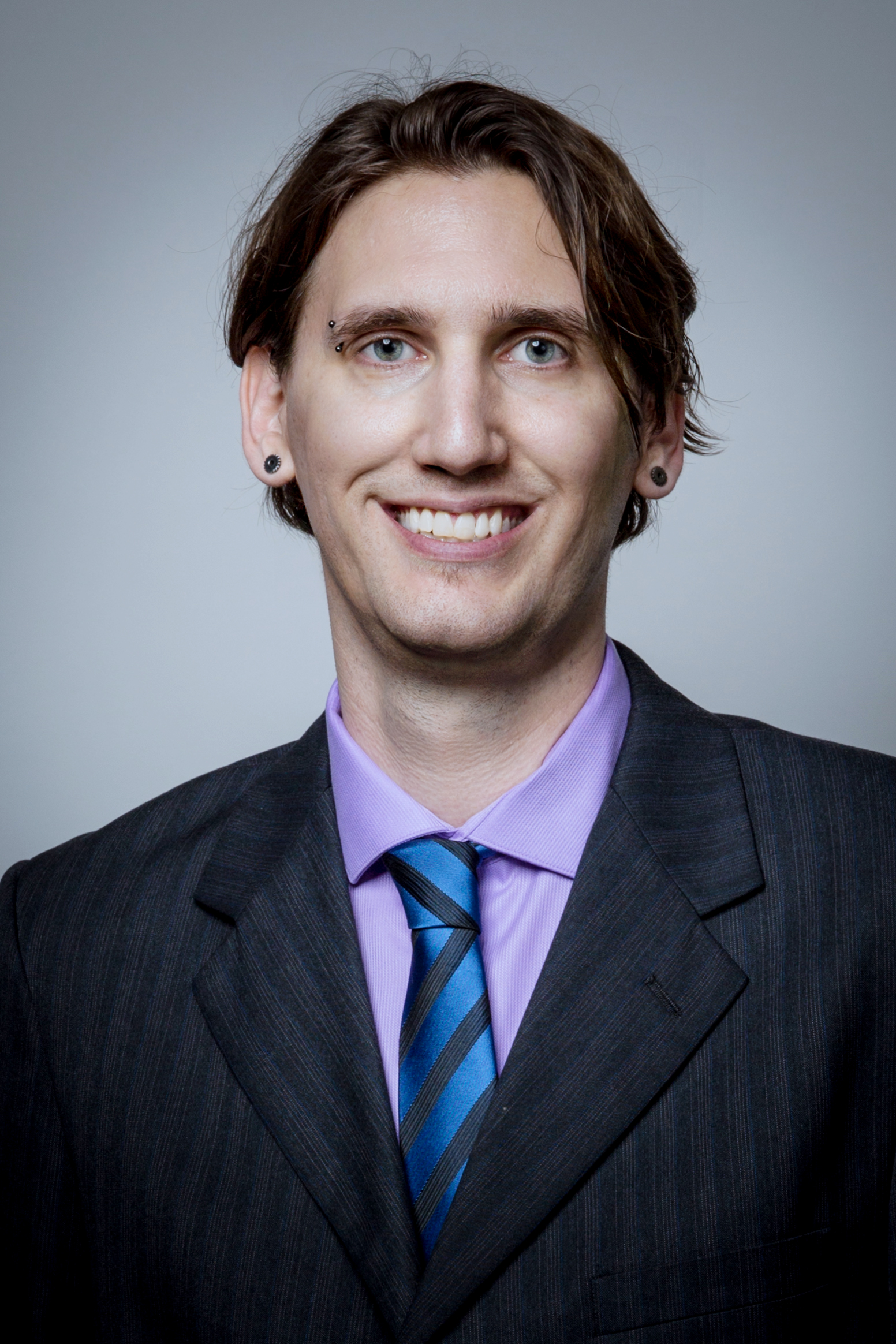
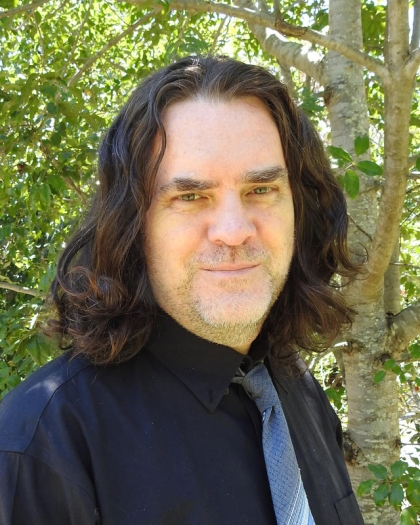
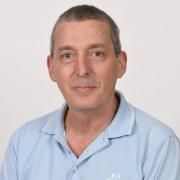
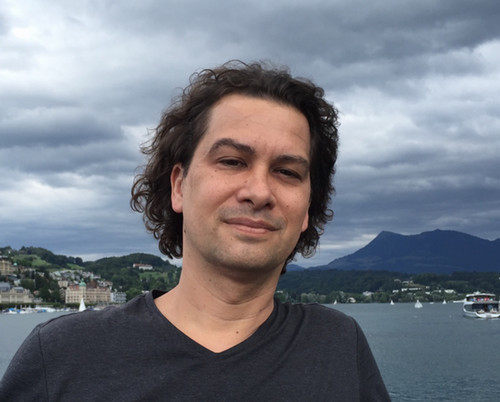
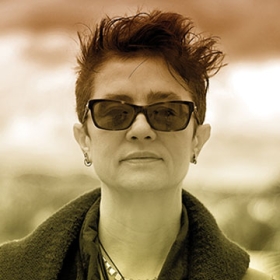
Carsten Strathausen is a Professor of German and English at the University of Missouri's College of Arts and Science. He holds appointments in both the Departments of German and English, bridging interdisciplinary research and teaching. His work spans literary theory, visual culture, digital humanities, and bioaesthetics, with a focus on Kafka adaptations and evolutionary theory's influence on aesthetics. Research Interests: Dr. Strathausen’s interdisciplinary research explores the interplay of science, art, and media. Central themes include the word-image relationship in literature, posthumanism, and the digital humanities. His current projects include a global database analyzing Kafka adaptations (Adapting Kafka) and a monograph on Kafka’s adaptations through evolutionary and media frameworks. Earlier works like Bioaesthetics and The Look of Things established his reputation in interdisciplinary cultural studies. Teaching: In German studies, he teaches graduate seminars on 20th-century literature and Kafka. In English, he offers courses on contemporary literary theory, posthumanism, and digital humanities. He also mentors undergraduate and graduate students in digital humanities research. Collaborations: Collaborations include work with Dr. Verena Kick on the Adapting Kafka project. His research often intersects with film, visual arts, and science studies, reflecting his commitment to cross-disciplinary inquiry.
Erik Waaler is a Professor of Theology, Religion and Philosophy at NLA University College in Sandviken, Bergen, Norway. He holds a prominent position in biblical studies with a particular focus on the New Testament, intertextuality, and the intersection of biblical scholarship with archaeology and historical context. His educational background includes: 1984: Cand. Theol. from Det teologiske Menighetsfakultet (MF) 1997: Master in Missiology from Fuller Theological Seminary - School of World Mission 2005: Dr. Theol. in New Testament from Det teologiske Menighetsfakultet (MF) Professor Waaler's primary research interests center on New Testament studies, particularly intertextuality and re-contextualization in First Corinthians and the Gospel of Matthew. His work bridges biblical scholarship with archaeological evidence, especially regarding Hebrew inscriptions from sites like Ketef Hinnom and Khirbet Qeiyafa. He has made significant contributions to understanding Pauline theology, particularly how Paul reinterprets Old Testament texts in his writings. His secondary expertise lies in applied Jewish studies, history, archaeology, and paleography related to the Levant. This interdisciplinary approach allows him to examine biblical texts within their historical and cultural contexts, providing fresh insights into early Christian interpretation of Jewish scripture. Waaler's scholarly output demonstrates a consistent focus on how New Testament authors, particularly Paul, engage with and reinterpret earlier biblical texts. His work spans from detailed analysis of specific passages like the Shema in Deuteronomy 6:4 as reinterpreted in 1 Corinthians, to broader studies of intertextual methods. More recently, he has collaborated on technical archaeological projects using spectral imaging to analyze ancient inscriptions, showing his willingness to engage with cutting-edge methodologies to illuminate ancient texts. His research bridges the gap between traditional biblical scholarship and archaeological evidence, creating a more robust historical understanding of early Christian interpretation. Professor Waaler has been actively involved in projects examining Matthew's use of the Old Testament, Jewish use of the Old Testament with focus on Qumran and Josephus, inscriptions from Khirbet Qeiyafa, and Pauline Theology. His work demonstrates a sustained commitment to understanding the historical and textual foundations of early Christianity through meticulous analysis of both textual and archaeological evidence.
Marat I. Latypov serves as Assistant Professor in the Department of Materials Science and Engineering at the University of Arizona's College of Engineering. He is also a member of the Applied Mathematics Graduate Interdisciplinary Program and leads the Materials Informatics Lab. His research spans computational materials science, sustainable alloy design, and machine learning applications for materials development. Dr. Latypov holds a PhD in Materials Science and Engineering from Pohang University of Science and Technology (POSTECH, South Korea, 2014) and a Dipl.-Ing. in Engineering Physics from Ufa State Aviation Technical University (Russia, 2011). His postdoctoral training included appointments at Georgia Tech/CNRS in France and the University of California, Santa Barbara. His research focuses on materials informatics , physics-informed machine learning , and sustainable structural alloys . Key methodologies include graph neural networks for polycrystal mechanics, vision transformers for microstructure representation, and adaptive experimental design for materials optimization. Recent work emphasizes circular economy applications through construction waste recycling and copper mine tailings valorization. Analysis of his publication record reveals strong emphasis on computational microstructure-property linkages (35% of recent work), machine learning for materials design (30%), and sustainable materials processing (25%), with growing integration of large language models for materials knowledge extraction. NSF CAREER Award (2025) : For damage control in recycled aluminum alloys ISTI Distinguished Faculty Scholar (2024) : At Los Alamos National Laboratory Novelis Hackathon First Prize (2021) : Computer vision application Acta Materialia Outstanding Reviewer (2018) Young Researcher Award (2017) : NanoSPD7 Conference Dr. Latypov advises PhD students including Herbold Fellow Zhuocheng Huang and leads projects funded by NSF and the Grantham Foundation. Current initiatives include chalcopyrite leaching optimization for copper mining and graph neural network development for fatigue prediction. His Materials Informatics Lab maintains collaborations with Los Alamos National Laboratory, MIT, and industry partners including Novelis. The lab operates at the intersection of metallurgy , machine learning , and high-performance computing , with capabilities spanning deep learning, Bayesian inference, and cloud-based computational infrastructure. Recent news highlights participation in CODAS-HEP summer school and publication of vision transformer work in Acta Materialia.
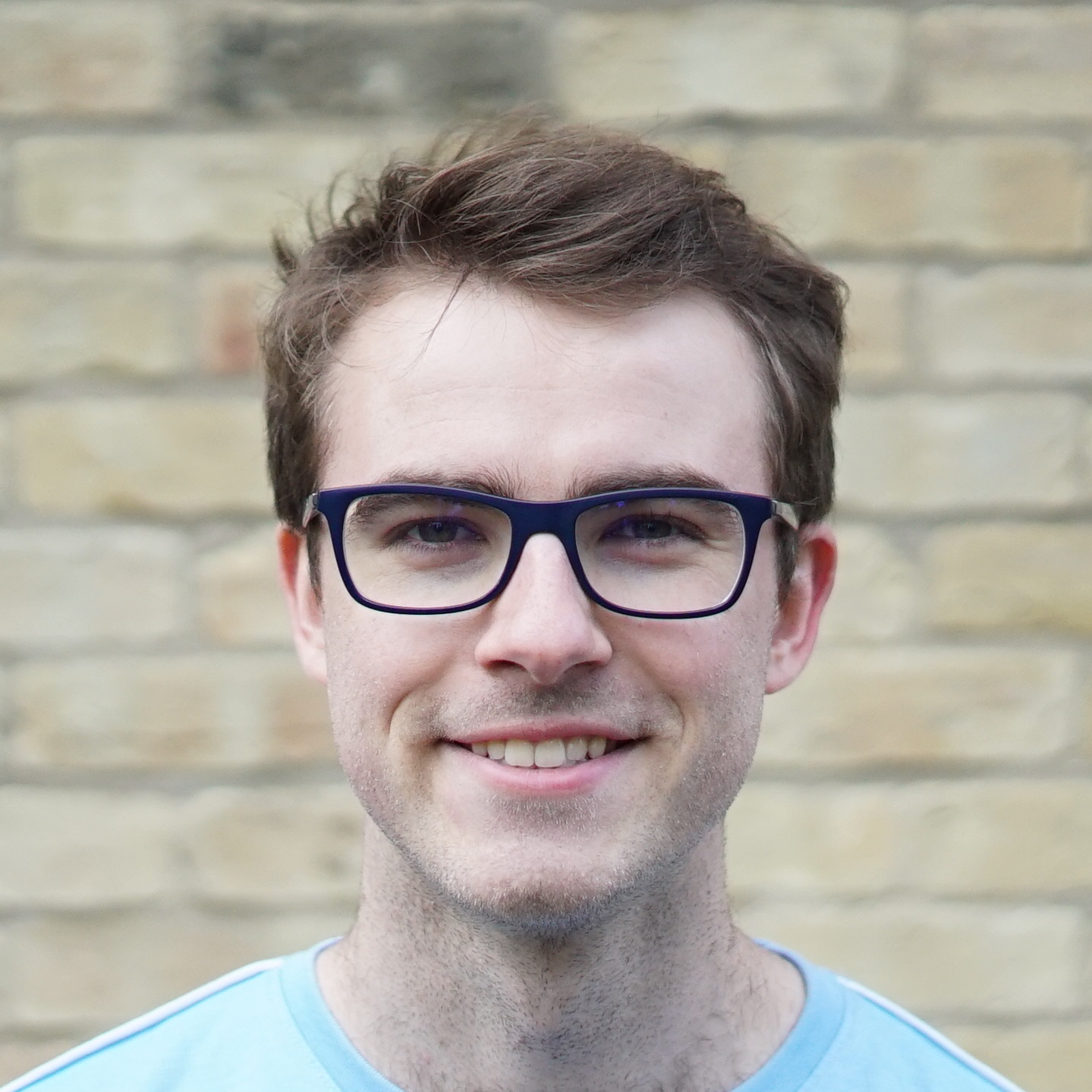
James Urquhart Allingham is a Research Scientist at Google DeepMind , working on the Gemini project. He completed his PhD in the Machine Learning Group at the University of Cambridge under the supervision of José Miguel Hernández-Lobato, with funding from EPSRC, the Michael E. Fisher Studentship in Machine Learning, and the Qualcomm Innovation Fellowship. He was also part of the ELLIS PhD program, advised by Eric Nalisnick at AMLab UvA. Current affiliation: Google DeepMind (Research Scientist) PhD: University of Cambridge (Machine Learning Group) Academic networks: ELLIS PhD program, Darwin College His research focuses on the intersection of Bayesian deep learning and probabilistic methods in deep learning. Key areas include deep generative models , zero-shot classification , prompt engineering , Monte Carlo gradient estimation , and applications to sustainability and climate change . His work has explored energy-based models , neural architecture search , and equivariance in convolutional networks . Selected scientific awards and grants include the Michael E. Fisher Studentship , Qualcomm Innovation Fellowship , and MPhil in Advanced Computer Science with Distinction . He has collaborated with institutions such as the Amsterdam Machine Learning Group (AMLAB) and University of the Witwatersrand .
Sean L. Field is a Professor of History at the University of Vermont's College of Arts and Sciences, specializing in Medieval Europe with particular focus on religious movements, royal dynasties, and women's roles in medieval society. He holds prestigious fellowships from the Medieval Academy of America and the Académie des Inscriptions et Belles-Lettres, and has been a Fulbright Fellow and UVM University Scholar. His research bridges historiography, hagiography, and textual analysis, emphasizing interdisciplinary approaches to medieval political theology and gender studies. Field earned his Ph.D. from Northwestern University (2002) after completing a B.A. at the University of Michigan (1992) and M.A. at Northwestern (1997). His career includes residential fellowships at the Camargo Foundation (France) and the National Humanities Center (North Carolina). Notable works include A Female Apostle in Medieval Italy (2022) and translations of Rigord’s Gesta Philippi Augusti (2022) and Jean Gerson’s tract on Joan of Arc (2012). He is especially recognized for his 2023 translation of Jacques Dalarun’s To Govern is to Serve , exploring medieval democracy. His research interests center on the intersections of royal power, religious institutions, and women’s contributions to medieval intellectual and spiritual life. Key themes include the Capetian dynasty’s engagement with sanctity, the circulation of vernacular religious texts, and the dynamics of medieval heresy trials. Field has contributed 16 authored or edited books and over 50 articles, frequently addressing marginalized voices like beguines and female mystics. Awarded the CARA Excellence in Teaching Award (Medieval Academy of America), Field emphasizes pedagogical innovation while maintaining rigorous scholarly output. His work often involves recovering overlooked sources, such as unpublished prefaces to hagiographies or royal chronicles, to reconstruct nuanced historical narratives.
Dr. Harry M. Benshoff serves as Media Theory Chair and Professor at the University of North Texas, where he teaches diverse film studies courses including Film and Television Analysis , African American Film , and specialized seminars on horror cinema and queer theory. His academic home resides within UNT's film program, though specific school/departmental affiliations remain unstated in source materials. His educational journey began with a BA in English from Franklin and Marshall College (1985), followed by graduate work at the University of Southern California's School of Cinema-Television where he earned MA and PhD degrees in Critical Studies after leaving Jefferson Medical College. Prior to UNT, he taught at UC Santa Cruz for three years. Benshoff's research critically examines intersections of identity and media through lenses of film genres, history, and theory. He pioneers scholarship on marginalized representations—particularly homosexuality in horror films ( Monsters in the Closet ), race/class/gender dynamics ( America on Film ), and LGBTQ+ cinema history ( Queer Images ). His work consistently bridges academic theory with cultural analysis of fan communities and cinematic trends. Publication trends reveal enduring focus on horror and queer cinema since 1997, evolving toward comprehensive analytical frameworks in recent works like Film and Television Analysis (2015). These texts establish recurring themes: deconstruction of identity tropes, historical contextualization of marginalized voices, and methodological innovations in media criticism. Scientific Awards: No awards documented in source materials. As an educator, Benshoff mentors students through graduate seminars in qualitative media theory and specialized film author courses examining directors like Cronenberg and Fellini. His collaborative scholarship with Sean Griffin—including co-authored books and edited collections—demonstrates sustained academic partnerships, though specific grant funding remains unmentioned. No dedicated research laboratories or formal teams are referenced in the provided text.
Johannes Grave is Professor of Early Modern Art History at Friedrich Schiller University Jena (since 2019), having previously held professorships at Bielefeld University (2012-2019) and deputy directorship at the Centre allemand d'histoire de l'art in Paris (2009-2012). He earned his PhD from the University of Jena with a dissertation on Goethe's print collection. His research explores art theory, European Romanticism, and historical image studies, with emphasis on: Temporality in visual perception Comparative practices in art analysis German/French/Italian painting traditions The intersection of aesthetics and social imagination His publications demonstrate consistent focus on Romantic landscapes (especially Caspar David Friedrich), Renaissance aesthetics, and redefinitions of the sublime. Recent works critically engage with art historiography, copyright debates, and exhibition politics. Notable scientific recognition includes: Gottfried Wilhelm Leibniz Prize (2020) Hans Janssen Prize for European Art History (2012) Fellowships at DFG research groups in Berlin, Bielefeld, and Greifswald He leads doctoral projects on Romantic art, image comparison, and museology, supervising 18+ PhD candidates. As speaker for the cluster initiative Imaginamics and CRC 1288 'Practices of Comparing', he coordinates interdisciplinary teams exploring social imagination dynamics.
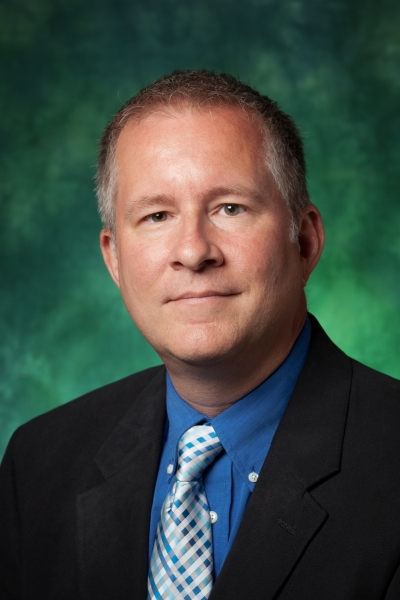
Bryce Westlake is an Associate Professor in the Department of Justice Studies within the College of Social Sciences at San Jose State University. He is a leading researcher in digital forensics and child sexual abuse material detection, with significant contributions to both forensic science education and alternative sexuality studies. Education: Ph.D. in Criminology from Simon Fraser University (2015) Master's degree in Criminology from Simon Fraser University Bachelor of Arts degree in Psychology and Sociology (double major) from University of British Columbia Dr. Westlake's research spans two primary areas with significant societal impact. In digital forensics, he focuses on developing automated tools to detect, collect, analyze, and match child sexual abuse material disseminated online. His work involves international collaboration with researchers, law enforcement agencies, and government partnerships to create more effective detection systems. In his secondary research area, he explores alternative sexuality, particularly BDSM communities, conducting multi-phasic, kink-positive studies examining health and safety within these communities. His research aims to destigmatize participation through a deeper understanding of the social and emotional enrichment practitioners receive from activities. His recent publications demonstrate a clear trend toward increasingly sophisticated technical approaches to combating child sexual exploitation while simultaneously advancing understanding of alternative sexual practices. The technical publications focus on biometric identification, file structure analysis, and ethical web scraping methods, while his BDSM-related work emphasizes community safety, education pathways, and mental health benefits. This dual focus positions him uniquely at the intersection of technology, law enforcement, and human sexuality research. Scientific Awards: The Storytellers Award (Social Sciences and Humanities Research Council) - April 2014 Canadian Graduate Scholarship (Social Science and Humanities Research Council) - May 2012 Dr. Westlake has been heavily involved in developing the forensic science program at SJSU, creating six undergraduate courses, revising two graduate courses, and introducing one graduate course. In Fall 2020, he created and implemented a new concentration in digital evidence (computer forensics) for forensic science majors - one of the first in-person digital forensic bachelor of science degrees in the United States meeting FEPAC standards. He has developed and directs the Silicon Valley Digital Forensics Laboratory, which began accepting students for internships in Fall 2024. He was awarded a three-year $497,948 grant from the National Science Foundation in 2023 to study 'Training digital forensics examiners through hands-on education investigating live criminal investigations.' Through the Silicon Valley Digital Forensics Laboratory and partnerships with criminal justice agencies (district attorneys offices, law enforcement agencies, etc.), Dr. Westlake provides students with training and practical experience conducting digital forensic investigations from start (evidence collection) to finish (report writing and testimony). He also co-hosted the first annual Child Sexual Abuse Reduction Research Network workshop in Adelaide Australia in December 2023.
Martin Rajman is a Senior Scientist at École Polytechnique Fédérale de Lausanne (EPFL) with multiple affiliations across the institution. He holds positions in the School of Computer and Communication Sciences (SIN - Teaching, SCI IC MR Group, SSC - Teaching) as well as in the Vice Presidency for Strategic Development (VPS Artificial Intelligence) and the Vice Presidency for Academic Affairs (SNAI Administration). He serves as the Executive Director of Nano-tera.ch, a large Swiss Research Program funding collaborative multi-disciplinary projects in Health and the Environment. Rajman's research spans the intersection of artificial intelligence, natural language processing, and information retrieval. His work demonstrates a consistent focus on developing practical applications of computational linguistics and machine learning techniques. Early in his career, he contributed significantly to syntactic parsing, stochastic language models, and vector space representations for text. More recently, his research has expanded into deep learning applications for 3D reconstruction, empathetic conversational agents, and distributed analytics systems. His publications reveal a trajectory from foundational NLP research toward increasingly applied and interdisciplinary work connecting AI with healthcare, environmental monitoring, and human-computer interaction. Analysis of his recent publications (2015-2024) shows a clear evolution toward more applied AI research with strong interdisciplinary connections. While maintaining his core expertise in natural language processing and information retrieval, his work has expanded into computer vision, healthcare applications, and sustainable computing. The publications demonstrate increasing collaboration across disciplines, with applications in medical imaging, mental health support systems, environmental monitoring, and human-centered AI. His leadership role in the Nano-tera.ch program reflects this interdisciplinary approach, connecting computing research with real-world challenges in health and environmental contexts. Rajman has mentored several PhD students including Ailomaa Marita, Eckard Emmanuel, Melichar Miroslav, and Veselý Martin. His research has been supported through the Nano-tera.ch program, which has funded more than 100 research projects with over 95 million CHF in public funding. He has also managed more than 20 European projects during his tenure as Director of the EPFL Global Computing Center. As Executive Director of Nano-tera.ch, Rajman leads a significant research initiative connecting EPFL with national and international partners. His work bridges academic research with industry applications, notably through collaborations with eBay on product ranking technology and with Elsevier on article recommendation systems. His leadership extends to managing large-scale research programs while maintaining an active research agenda and mentoring the next generation of computer scientists.
Christian Wolff is a University Professor and Chair of Media Informatics at the Institute for Information and Media, Language and Culture at the University of Regensburg. Since April 2022, he has served as the founding Dean of the Faculty of Computer Science and Data Science, while maintaining secondary membership in the Faculty of Languages, Literature and Cultural Studies (SLK). His academic career spans over three decades with significant contributions to multiple disciplines at the intersection of computer science and humanities. Wolff's research interests center around multimedia and multimodal information systems, electronic publishing, and text technology, particularly text mining. His work bridges computer science with digital humanities, legal informatics, and social media analysis. Recent publications demonstrate a strong focus on large language models, sentiment analysis applications across various domains, legal technology innovations, and virtual reality research for cognitive studies. His interdisciplinary approach has produced significant contributions in both technical and humanities domains. His recent publication trends reveal a strategic shift toward applied AI research, particularly in legal technology (LegalTech), social media analysis, and sentiment analysis using large language models. The publications show increasing collaboration across disciplines, connecting computer science with law, political science, literature, and psychology. His work on the digital basis document for legal proceedings represents a major practical application of his research in the German justice system. East Bavarian Cultural Prize Doctoral Award of the University of Regensburg Wolff has led numerous interdisciplinary research projects connecting computer science with humanities and legal studies. His leadership extends to institutional roles including Dean of Research, Vice Dean, and Dean of Faculty positions. He has been instrumental in establishing the new Faculty of Computer Science and Data Science at the University of Regensburg, demonstrating significant impact on institutional development and research infrastructure. Wolff directs research initiatives focused on text technology, digital humanities, and legal informatics. His work with the INDIGO - Internet and Digitization Eastern Bavaria initiative and the TRIO project demonstrates commitment to regional technology transfer and innovation. The interdisciplinary nature of his research groups connects computer scientists with legal scholars, linguists, and social scientists to address complex digital transformation challenges.
Jason Nelson is a Professor of Digital Culture in the Department of Linguistic, Literary and Aesthetic Studies at the University of Bergen, Norway. He is a creator of digital poems and fictions, builder of surrealist and politically focused art games and digital creatures. His work is exhibited widely in galleries and journals around the globe at FILE, ACM, LEA, ISEA, SIGGRAPH, ELO and numerous other venues. Nelson serves on organizational boards including the Australia Council Literature Board and the Electronic Literature Organization. Nelson's research focuses on the intersection of digital technology, creative writing, and artistic expression. He explores how AI and machine learning can be harnessed for creative purposes, developing new forms of digital literature and interactive art. His work often involves building expansive visual worlds through collaborative AI processes, creating interactive digital poetry, and developing novel approaches to digital narrative. Nelson's research spans digital humanities, electronic literature, AI-generated art, and interactive media, with particular emphasis on how these technologies transform creative processes and experiences. Over the past decade, Nelson's work has increasingly focused on the creative potential of AI technologies, especially in the areas of text-to-image generation and multimodal authorship. His projects often blend game engines with poetic expression, creating immersive experiences that challenge traditional boundaries between human and machine creativity. Recent works explore themes of multispecies futures, time perception, and the transformation of physical spaces through augmented reality. Nelson has received numerous scientific awards and fellowships including: Fulbright Fellowship at the University of Bergen Moore Fellowship at the National University of Ireland Winner of the Digital Writing Prize, Queensland Literary Awards (15,000 AUD) Winner of the Woollahra Library Digital Poetry Prize (5,000 AUD) Runner-Up Prize at the Videomedeja digital art exhibition Finalist for the Turn-on Literature Prize Finalist for the Queensland Literary Awards, Digital Writing Category Multiple finalist nominations for the New Media Writing Prize Nelson actively participates in academic advising and has secured significant research funding, including a 125,000 AUD grant from the Australia Council of the Arts, Literature Board for his project "Cube Cryptext and Nomencluster," which was recognized as the world's largest interactive art-game. His work "Nine Billion Branches" received multiple awards including the Digital Writing Prize from the Queensland Literary Awards. He has also received a 75,000 NOK grant for the "Flood Mosaic Artwork" project featured in the Floodlines Exhibition at the State Library of Queensland. Nelson is affiliated with the Center for Digital Narrative at the University of Bergen, where he collaborates with researchers like Scott Robert Rettberg and Alinta Krauth. Together they form EphemerLab, exploring new creative processes that move beyond simple "ask and generate" AI methods. Their work involves stitching together hundreds of individual image fragments and components into cohesive visual and narrative concepts, pushing the boundaries of what's possible with current AI technologies.
Prof. Ady Arie is a Professor of Electrical Engineering at Tel Aviv University, where he serves as the Head of the Tel Aviv University Center for Light-Matter Interaction and holds the Marko and Lucie Chaoul Chair in Nano-Photonics. He has been a faculty member at the Iby and Aladar Fleischman Faculty of Engineering since 1993, previously serving as Head of the School of Electrical Engineering (2013-2017) and Vice Dean of Research (2011-2013). His educational background includes: B.Sc. in Mathematics and Physics from Hebrew University of Jerusalem (1983) M.Sc. in Physics from Tel-Aviv University (1986) Ph.D. in Engineering from Tel-Aviv University (1992) Prof. Arie's research spans multiple frontiers of optics and photonics. His work in nonlinear optics focuses on advanced frequency conversion techniques and shaping of light parameters using nonlinear photonic crystals. In quantum optics , he develops quantum light sources based on spontaneous parametric down conversion and explores applications in quantum sensing and communication. His plasmonics research investigates manipulation of surface plasmon polaritons on metal surfaces. In electron optics , he studies electron-matter-light interactions and techniques for sculpting electron wave functions. His lab also explores hydrodynamics through quantum simulations with water waves, creating analogies to quantum mechanical phenomena. Analysis of Prof. Arie's recent publications (2023-2025) reveals a strong focus on quantum technologies, particularly in quantum light generation, quantum sensing, and quantum information processing. His work increasingly integrates concepts from nonlinear optics, electron microscopy, and quantum physics, with growing emphasis on practical applications in quantum communication and computation. The research shows sophisticated manipulation of light-matter interactions across multiple platforms including nonlinear photonic crystals, plasmonic structures, and electron beams. Prof. Arie has received significant recognition for his work: Kadar Foundation Award for Excellence in Research (2016) Fellow of the Optical Society of America Editorial roles including Topical Editor of Optics Letters (2008-2014) and Associate Editor of Optica (since 2018) Prof. Arie leads the Nonlinear Optics and Wave Propagation Laboratory at Tel Aviv University, where his team investigates diverse wave phenomena from light frequency conversion to electron beam manipulation. He has served as chair of the national steering committee of the Israeli Planning and Budgeting Committee on Quantum Science and Technology. His research has been supported by various grants enabling the development of novel optical technologies and quantum systems. While specific grant details aren't provided in the text, his extensive publication record and leadership positions suggest substantial research funding. Prof. Arie's laboratory focuses on the intersection of classical and quantum wave phenomena. The lab investigates light manipulation through nonlinear optical processes, plasmonic structures, and electron microscopy techniques. Current research directions include quantum light generation, electron-photon interactions, and hydrodynamic analogs to quantum systems. The lab appears well-equipped for advanced optical experimentation with capabilities spanning visible to infrared wavelengths, nonlinear crystal engineering, and electron beam characterization.
Christopher Lukasik is an Associate Professor in the Department of English at Purdue University, with affiliations in American Studies and the School of Interdisciplinary Studies (SIS). His research focuses on the intersection of American literature, visual culture, and illustration studies in the 18th and 19th centuries, with a particular interest in intermediality and cultural history. Ph.D., English, Johns Hopkins University, 2002 His scholarly work examines how visual practices shaped social and political identities, as seen in his monograph Discerning Characters: The Culture of Appearance in Early America (2011). Current research includes The Image in the Text: Intermediality, Illustration, and Nineteenth-Century American Literature , exploring literary annuals' role in developing mass visual culture. His publications span topics like biometric surveillance in early America, abolitionist visual media, and the pedagogy of drawing books. Articles highlight intermedial relationships between text and image, racial visuality, and the cultural capital of illustration. Scientific honors include: Rockwell Center Society of Fellows (2017-2019) Fulbright Specialist Grant (2018) NEH Summer Stipend (2016) Lillian Gary Taylor Fellowship (2013-14) Fulbright Scholar Grant (2009-10) NEH Long-Term Research Grant (2004-05) Lukasik actively participates in academic conferences, including upcoming presentations at SHARP 2025 and SEA 2025. He has also led Fulbright liaison training sessions and symposiums on illustration research.
Katarzyna Marciniak is Professor and Department Chair of Media Arts & Culture at Occidental College, appointed in 2019 after serving as Distinguished Visiting Professor during the 2019-20 academic year. Her office is located in Weingart 112 with regular office hours on Tuesdays and Thursdays. Her academic credentials include: Master of Arts from the University of Lodz Master of Arts from the University of Montana Doctor of Philosophy from the University of Oregon Professor Marciniak's research interrogates the aesthetics and politics of transnational visual cultures, with rigorous focus on representations of foreignness, immigration, national (un)belonging, and border zones as sites of contention. She integrates feminist theory, refugee studies, and postsocialist media analysis—particularly regarding Eastern European cultures—to examine how visual media construct identities in contexts of displacement. Her pedagogical innovations emphasize ethics in teaching trauma cinema and creating transnational classrooms that engage critically with migration narratives. Analysis of her recent publications reveals a cohesive scholarly trajectory centered on refugee cinema, transnational visual representation, and socialist/post-socialist cultural studies. Her work consistently applies feminist and ethical frameworks to dissect cinematic mediation of migration, border politics, and cultural alienation, while pioneering pedagogical approaches for teaching difficult subjects through film. Her distinguished recognition includes: 2025 Linda and Todd White Teaching Prize Modern Language Association Florence Howe Award for Outstanding Feminist Scholarship (2010) for her article 'Pedagogy of Anxiety' in Signs While the source text does not specify graduate student mentorship or research grants, Professor Marciniak's prolific scholarly output and editorial leadership demonstrate active academic community engagement. She serves as Lead Editor for Palgrave's Global Cinema series and has co-edited five major volumes including The Oxford Handbook of Communist Visual Cultures (Oxford University Press). Her authored monographs include Alienhood: Citizenship, Exile, and The Logic of Difference (University of Minnesota Press) and Streets of Crocodiles: Photography, Media, and Postsocialist Landscapes in Poland (Intellect/University of Chicago Press). Her forthcoming co-authored book Refugee Cinema with Bruce Bennett (Lancaster University) is scheduled for Oxford University Press publication in 2025.
Professor Joshua S. Mostow is a scholar of pre-modern Japanese literature and art, specializing in text-image relationships, Heian-period studies, and gendered cultural constructions. He holds a professorship at the University of British Columbia’s Department of Asian Studies (Faculty of Arts), where he also serves as Acting Director of Language Programs. Mostow earned his doctorate in Comparative Literature and Literary Theory from the University of Pennsylvania, with additional studies at International Christian University (Tokyo), Université de Paris, and Gakushuin University. His career includes visiting roles at institutions like Heidelberg University and the University of California, Berkeley. His research focuses on intersections of literature and visual arts, particularly in Japanese pre-modern contexts. Key interests include the ideological construction of the Heian period, women’s writing traditions, and the role of sexuality in cultural identity. Major works include *Courtly Visions: The Ise Stories and the Politics of Cultural Appropriation* (2014) and *Pictures of the Heart: The Hyakunin Isshu in Word and Image* (1996). He has received prestigious awards such as the Japan Foreign Minister’s Commendation (2017) and induction into the Royal Society of Canada (2015). Mostow has authored/co-authored over 20 books, edited volumes, and numerous articles across Japanese literature, art history, and cultural studies. His work spans medieval commentaries, Edo-period print culture, and modern reception histories. He frequently lectures internationally on topics like gender representation in classical texts and the visual legacy of *The Tale of Genji*. Grants and fellowships include support from the Sainsbury Institute, Japan Foundation, and SSHRC (Canada). His contributions to Japanese studies include co-editing *The Columbia Companion to Modern East Asian Literature* (2003) and curating exhibitions on Rinpa aesthetics and Edo-period shunga. Scholarly activities further include invited lectures at institutions worldwide and participation in major international conferences.