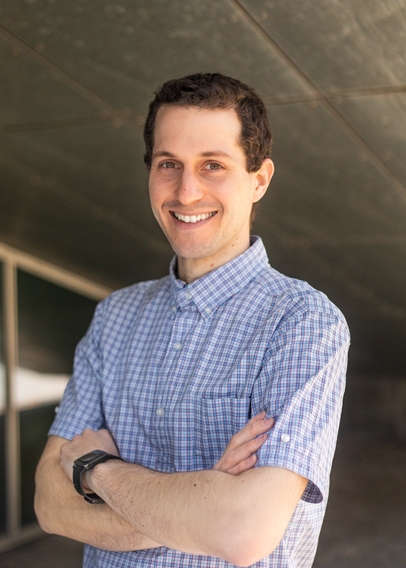
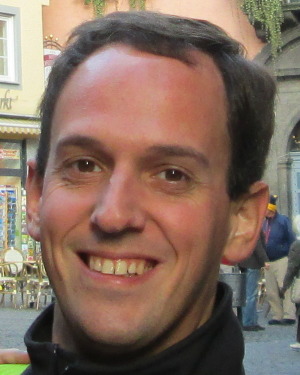
Daniel Hershcovich is a Tenure-Track Assistant Professor at the Natural Language Processing section of the Department of Computer Science, University of Copenhagen. His research focuses on cross-cultural adaptation of language models, integrating human values into AI systems, and evaluating AI's real-world impact in domains like law, literature, and food culture. Research Themes Cultural value alignment in LLMs Multimodal models for accessibility Cross-cultural recipe and food knowledge Historical Scandinavian text analysis Ethical AI and bias mitigation Scientific Recognition SAC Highlight Award (ACL 2025) Outstanding Paper Award (ACL 2017) Advising & Grants : Mentions collaborations on multiple EMNLP/ACL/CoNLL papers. Leads Independent Research Fund Denmark project ALIKE (2025-2027) and contributes to Innovation Fund Denmark's XHAILe (2025-2028). Co-organized SemEval 2019 and CoNLL 2019/2020 shared tasks. Labs & Teams : Leads the CoAStaL research group. Collaborates with teams at IBM Research Haifa, University of Manchester, and Wuhan University of Science and Technology.
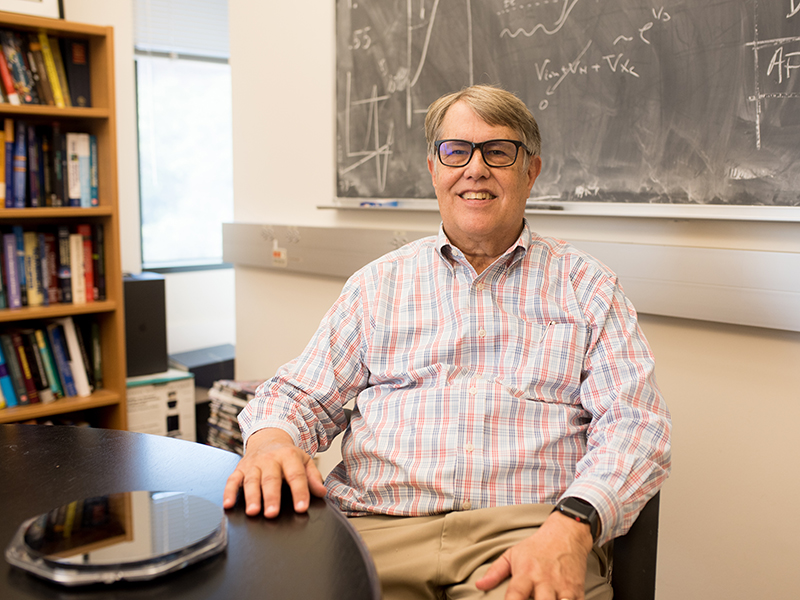
James Chelikowsky is Professor and W. A. "Tex" Moncrief, Jr. Chair in Computational Materials at The University of Texas at Austin's Oden Institute for Computational Engineering and Sciences (ICES). His research pioneers quantum mechanical simulations for materials design and discovery across multiple domains. His educational background includes: B.S. in Physics from Kansas State University (1970) Ph.D. in Physics from University of California at Berkeley (1975) Chelikowsky's research spans computational materials science with focus on quantum models for functionalized nanostructures, simulations of liquids and crystal growth, "green magnetism" in dilute magnetic semiconductors, oxide defects, materials informatics, and high-performance electronic structure algorithms. His work bridges theoretical physics with practical materials engineering to solve complex problems in energy and electronics. Analysis of his 2012-2022 publications reveals evolving focus from fundamental quantum simulations toward machine learning integration for magnetic materials discovery, while maintaining strong contributions to two-dimensional materials and interfacial phenomena. Key trends include increased computational complexity and interdisciplinary collaboration with experimental groups. His distinguished honors include: Feynman Prize for Theory (2022) FMD John Bardeen Award (2021) Aneesur Rahman Prize (2013) Multiple society fellowships (MRS, AAAS, APS) Guggenheim Fellowship (1996) As leader of an active research group, Chelikowsky mentors graduate students in computational methods development. While specific grant details aren't provided, his sustained publication record and named chair position indicate substantial ongoing research funding. His group maintains strong industry and national laboratory collaborations evident in co-authorship patterns. The Computational Materials Group operates through ICES with research facilities supporting high-performance computing for materials simulations. Current projects focus on machine learning-guided materials discovery and quantum mechanical modeling of novel electronic materials.
Timothy G. Strein is a Professor of Analytical Chemistry at Bucknell University, where he also held a Presidential Professorship from 2014-2017. He earned his B.S. from North Carolina State University in 1988 and his Ph.D. from Penn State University in 1992, working on electrochemistry at microvoltammetric electrodes with Dr. Andrew G. Ewing. Following a Camille and Henry Dreyfus Postdoctoral Fellowship at Bucknell (1992-1994), he joined the chemistry faculty where he has served as Department Chair (2010-2014), Acting Chair (2006-2007), and Graduate Coordinator (1998-2006, 2015-). His educational background includes: B.S. in Chemistry from North Carolina State University (1988) Ph.D. in Chemistry from Penn State University (1992) Camille and Henry Dreyfus Postdoctoral Fellowship at Bucknell University (1992-1994) Professor Strein's research focuses on bioanalytical chemistry, with particular expertise in capillary electrophoresis (CE), bile salt micelle structure, chiral separations, aqueous NMR spectroscopy, and isothermal titration calorimetry (ITC). His current work (2025) centers on developing rapid, inexpensive methods for chiral separations using CE, investigating the mechanisms that give rise to chiral separations with bile salt micelles by MEKC-CE, and the underlying thermodynamics driving chiral selection. He also conducts collaborative research using NMR to study bile micelle structure and ICP-MS to determine lithium ion concentrations in human blood, correlating endogenous Li levels with neurological health issues. Analysis of his recent publications (2005-2023) reveals a strong focus on chiral separations using bile salt micelles, with particular emphasis on understanding the molecular mechanisms of chiral recognition. His work spans analytical methodology development, fundamental studies of micellar structure, and applications in bioanalysis. The interdisciplinary nature of his research is evident in publications spanning chemistry, biochemistry, materials science, and medical applications. His scientific recognition includes the Henry Dreyfus Teacher/Scholar Award (TH-98-025). His external funding portfolio demonstrates sustained research support: George I. Alden Trust (2025-2030): $150,000 for HPLC instrumentation Bucknell-Geisinger Research Initiative (2024-2025): $20,000 for lithium concentration studies NSF-ROA Supplement (2021-2022): $29,600 for CE-MS interface development NSF-RUI Grant (2018-2021): $211,552 for chiral separation mechanisms Multiple previous NSF, NIH, and private foundation grants totaling over $1.5 million Professor Strein has mentored numerous undergraduate and MS students, many of whom have gone on to successful careers in academia, industry, medicine, and government. His teaching encompasses analytical chemistry, chemical equilibria, instrumental analysis, forensic chemistry, and general chemistry. He has served the department in various leadership roles and promotes undergraduate research as a central component of his scholarly activities.
Matthew R. Edwards is an Assistant Professor of Mechanical Engineering at Stanford University, affiliated with the School of Engineering. His research focuses on high-power lasers and plasma physics, developing optical diagnostics for fluids and plasmas, and exploring light-matter interactions. He holds a PhD and prior degrees from Princeton University in Mechanical and Aerospace Engineering, followed by a Lawrence Fellowship at Lawrence Livermore National Laboratory. Education : PhD in Mechanical and Aerospace Engineering, Princeton University (2019) MA in Mechanical and Aerospace Engineering, Princeton University (2015) BSE in Mechanical and Aerospace Engineering, Princeton University (2012) Research Interests : Edwards' work bridges mechanical engineering and plasma physics, emphasizing ultrafast laser-plasma interactions, plasma-based optical components, and applications in energy science. His lab, the SAPPHIRE Laser Laboratory, explores femtosecond laser technologies for creating novel optical elements (e.g., plasma gratings, holographic lenses) and advancing laser-driven particle acceleration, fusion research, and diagnostic tools. Key areas include: Design of plasma-based optical components for high-power laser control Simulation of laser-matter interactions at relativistic intensities Development of compact light and particle sources Research Trends : His recent articles (2024–2025) highlight advancements in plasma gratings, relativistic birefringence, and laser wakefield acceleration. Notable contributions include ionization-based compression of ultrafast laser pulses and polarization control in underdense plasmas. Awards/Grants : No awards explicitly listed, but his Lawrence Fellowship indicates prior recognition. His work aligns with grants in plasma physics and laser technology. Labs/Teams : He leads the SAPPHIRE Laser Laboratory , collaborating with the PULSE Institute and National Ignition Facility (NIF) on plasma optics and high-energy laser applications.
Gabriella Casalino is an Assistant Professor at the University of Bari Aldo Moro, Department of Computer Science, and a key researcher at CILAB - Computational Intelligence Lab. Her work focuses on Computational Intelligence methods for interpretable data analysis, particularly in eHealth, Data Stream Mining, and eXplainable Artificial Intelligence (XAI) within medical and educational domains. She has contributed to innovative approaches in smartphone-based health monitoring, fuzzy logic applications, and remote vital sign detection via photoplethysmography. Education : Ph.D. in Computer Science, with advanced training at institutions like Universitat de Girona and Université de Mons. Research Trends : Recent publications highlight applications of evolving granular computing, neuro-fuzzy systems, and explainable AI in hypertension prediction, bipolar disorder monitoring, and educational data analysis. Key subfields include remote health monitoring, medical data streams, and hybrid AI models. Grants : Research funded by AIRC (Italian Cancer Research Foundation), focusing on computational methods for healthcare challenges. Labs & Collaborations : Active in CILAB, collaborating on projects involving mHealth solutions, cardiovascular risk assessment, and intelligent educational systems.
Dr. Shakhawat Hossain is a Professor of Statistics at the University of Winnipeg, serving as Chair starting July 2025. He holds adjunct positions at the University of Manitoba and University of Regina. His academic journey includes a PhD from the University of Windsor (2008), postdoctoral training at the University of Alberta's School of Public Health (2008–2010), and prior faculty roles at Alabama A & M University. He specializes in advanced statistical methodologies with applications in health sciences and epidemiology. Dr. Hossain's education includes: Ph.D. in Statistics, University of Windsor M.Sc. in Statistics, University of Alberta M.Sc. in Mathematics, Jahangirnagar University, Bangladesh B.Sc. (Hons.) in Mathematics, Jahangirnagar University, Bangladesh His research focuses on shrinkage estimation techniques , longitudinal data analysis , survival analysis , and health services research . He actively applies these methods to study dengue transmission dynamics, neuroimaging correlates of developmental disorders, and clinical outcomes in pediatric populations. His work bridges theoretical statistical innovation with real-world public health challenges. Dr. Hossain currently holds an NSERC Discovery Grant supporting student research. His 2023-2024 publications emphasize spatial epidemiology, advanced survival models, and dengue fever dynamics. He serves as Associate Editor of the Journal of Statistical Computation and Simulation . His advisory and grant activities include mentoring students in statistical modeling and securing funding for interdisciplinary health projects. While specific lab affiliations are not explicitly stated, his collaborations span departments in statistics, public health, and biomedical sciences.
Igor Francetic is a Research Fellow at the Division of Population Health, Health Services Research & Primary Care at the University of Bristol. He holds a PhD in Public Health from the University of Basel (2019) and has expertise in health economics, applied microeconomics, and econometric analysis. His research focuses on healthcare organization, health behaviors, and policy evaluation, with a particular emphasis on emergency care prioritization, primary care workforce dynamics, and health inequalities. He has contributed to policy-oriented projects in Switzerland and Tanzania, including studies on hospital networks, patient safety, and health systems governance. **Education**: PhD in Public Health (University of Basel, 2019) MSc in Economics (University of Lausanne, 2016) BA in Economics (University of Lugano, 2012) BSc in Business Administration (SUPSI, 2011) **Research Interests**: His work explores cancer screening, spillover effects in healthcare, emergency care disparities, and primary care networks. He employs microeconometric and network analysis tools, leveraging platforms like R and Stata. Recent studies include evaluating skill-mix changes in primary care (England), socioeconomic disparities in emergency care access, and the impact of social accountability monitoring in Tanzania. **Awards & Fellowships**: SSPH+ Fellow, Swiss School of Public Health (2024–) SNSF Ambizione Fellow, SUPSI (2024–) **Teaching**: Co-lecturer for the Health Economics unit (ECON 32202) at the University of Bristol. **Professional Memberships**: Health Economists' Study Group UK (HESG) Royal Economic Society (RES) Swiss Society of Health Economics (sggö) Croatian Health Economics Association (CHEA) – Co-founder and board member
Ares Rosakis is the Theodore von Kármán Professor of Aeronautics and Mechanical Engineering at the California Institute of Technology (Caltech). He has served as Chair of the Division of Engineering and Applied Science (2009–2015) and Director of the Graduate Aeronautical Laboratories (GALCIT) (2004–2009). Rosakis holds visiting professorships at Nanyang Technological University (2018–2023) and Northwestern University (2018). Education : B.A. and M.A. in Engineering Science (Oxford, 1978); Sc.M. and Ph.D. in Engineering (Solid Mechanics, Brown University, 1980–1982) Academic Career : Caltech faculty since 1982 (Assistant, 1982; Associate, 1988; Full Professor, 1993) As a world-leading expert in dynamic failure mechanics of solid materials, Rosakis has pioneered research in dynamic ductile failure of metals, intersonic/supershear ruptures in composites and earthquakes, and Coherent Gradient Sensing (CGS) interferometry . His work spans experimental mechanics, solid mechanics, geophysics, and thin film stress measurement. His 15 most recent articles (2010–2014) focus on dynamic shear ruptures , fault mechanics , brittle failure , high-strain-rate deformation , and laboratory earthquake simulations , reflecting his cross-disciplinary expertise in materials science, geophysics, and mechanics. Scientific Awards & Recognitions Foreign Member of the Royal Society (2024) Two Honorary Doctorates (2023) U.S. National Academy of Engineering (2011) NASA Group Achievement Award (2009) Timoshenko Medal (2018) Multiple SEM and ASME awards (1989–2013) Research Leadership includes directing GALCIT and developing advanced optical and infrared diagnostic methods for real-time crack propagation and temperature measurement. His work bridges fundamental mechanics with applied material failure analysis , influencing aerospace, seismology, and nanotechnology.
Dr. Craig Hancock is a Research Professor in Geospatial Engineering with 15 years of research experience in Surveying and Geodesy. His expertise spans GNSS error mitigation, structural monitoring, and geospatial techniques for digital construction. He has supervised 10 PhD students and published over 80 academic papers. Education: BSc and PhD in Surveying/Geomatics Key Projects: Principal Investigator for projects on GNSS error mitigation, structural health monitoring, and marine economy technology. His research focuses on three core areas: GNSS error categorization and mitigation (particularly ionospheric effects), structural and environmental change monitoring, and geospatial data acquisition for BIM and digital construction. Recent work includes improving 3D modeling accuracy, UAV-based GNSS spoofing detection, and BIM-enabled facility management in healthcare infrastructure. His articles explore topics like sensor optimization, structural dynamics, and geospatial data fusion. Grants include £150k for bridge deformation studies and £9k for ionospheric error analysis. He actively contributes to teaching and enterprise initiatives, integrating geospatial technologies with industry needs.
Thomas Ploetz is an Adjunct Professor in the School of Electrical and Computer Engineering at Georgia Institute of Technology. His work focuses on sensor-based human activity recognition, wearable computing, and computational behavior analysis with applications in healthcare, smart homes, and education. He leads interdisciplinary research integrating machine learning, IoT systems, and human-centered design. His research interests include improving activity recognition robustness through synthetic data generation, developing explainable AI for time-series analysis, and advancing healthcare technologies like diabetic foot ulcer monitoring systems. He explores ethical implications of wearable sensing in diverse populations, including underrepresented groups. Key contributions include IMUTube (virtual sensor data generation), ProxiCycle (cyclist safety monitoring), and DISCOVER (smart home activity recognition framework). His work addresses challenges in data scarcity, domain adaptation, and long-term system maintenance in pervasive computing environments. He has been awarded grants such as the GVU/IPaT Research and Engagement Grant (2020), and his research appears in top venues like UbiComp and ISWC. He actively contributes to the wearable computing community through conference organization and editorial work.
Wout Joseph is a Professor in the domain of Experimental Characterization of wireless communication systems at Ghent University (Belgium), where he has been working since October 2009. He is also an IMEC Principal Investigator since 2017. His research is conducted within the wireless, acoustics, environment & expert systems (WAVES) research unit at the Department of Information Technology (INTEC). Dr. Joseph was born in Ostend, Belgium on October 21, 1977. He received his M.Sc. degree in electrical engineering from Ghent University in July 2000. From September 2000 to March 2005 he was a research assistant at the Department of Information Technology (INTEC), where his scientific work focused on electromagnetic exposure assessment around base stations for mobile communications related to health effects. This work led to his Ph.D. degree in March 2005. Professor Joseph's research expertise spans multiple domains within wireless communications and bioelectromagnetics. His primary research interests include electromagnetic field exposure assessment, in-body electromagnetic field modeling, electromagnetic medical applications, propagation for wireless communication systems, IoT, antennas and calibration. He also specializes in wireless performance analysis, industry 4.0 applications, wireless localization, and Quality of Experience metrics. His work is particularly notable for its focus on dosimetric studies in the radiofrequency range, where his research is ranked first in number of peer-reviewed studies. His research has practical applications in wireless network planning, occupational safety, and public health policy related to electromagnetic fields. His extensive publication record (over 886 publications with an h-index of 45 in ISI Web of Science and 66 in Google Scholar) demonstrates a clear trajectory from fundamental electromagnetic field measurements to applied research in industrial wireless networks and bioelectromagnetic applications. Recent work shows a strong emphasis on 5G exposure assessment across multiple European countries, millimeter-wave channel modeling, and the application of machine learning techniques to exposure assessment and wireless localization. EBEA council board member (2015-2018) EBEA board member at large (2019) Bioelectromagnetics Society board member (2022) Bioelectromagnetics Society board member (2024) 24 research awards Professor Joseph leads significant research efforts in electromagnetic field exposure assessment, with particular emphasis on developing measurement methodologies and computational models for real-world exposure scenarios. His work bridges theoretical electromagnetic modeling with practical applications in wireless communications and bioelectromagnetics. His research group within the WAVES unit is highly active in both theoretical and experimental aspects of wireless communications and bioelectromagnetics, with current projects focusing on 5G exposure assessment across Europe, millimeter-wave channel modeling for data centers and industrial environments, and the development of novel exposure assessment methodologies using advanced signal processing and machine learning techniques.
Sule Ozev is a Professor in the School of Electrical, Computer and Energy Engineering at Arizona State University (ASU). She holds a Ph.D. in Computer Science and Engineering from the University of California, San Diego (2002), and has been a faculty member since 2008. Her research focuses on analog and mixed-signal circuit testing, fault-tolerant systems, and RF circuit reliability. She has published over 100 papers and holds a U.S. patent. Notable awards include the NSF CAREER Award (2006) and the ASU Joseph Palais Distinguished Faculty Scholar Award (2023-2024). Her education includes: Ph.D., Computer Science and Engineering, UC San Diego (2002) M.S., Computer Science and Engineering, UC San Diego (1998) B.S., Electrical Engineering, Bogazici University, Turkey (1995) Research Interests: Self-test and calibration techniques for analog/RF circuits, fault simulation, and reliability enhancement. Recent work includes BIST solutions for power management units, MEMS sensor calibration, and IoT security. Publications span RF impedance measurement, low-power systems, and marine sensor applications. Awards also include best paper recognitions at IEEE VLSI Test Symposium (2022) and European Test Symposium (2019). Grants include NSF-funded projects on adaptive test strategies and collaborative research on sensor networks. Service roles include associate editor for IEEE Transactions on VLSI Systems and program chairs for major conferences.
Dr. Patrick W. C. Ho is a Lecturer in the Department of Electrical & Computer Systems Engineering (ECSE) at Monash University Malaysia School of Engineering. He holds a PhD in Electronics Engineering from the University of Nottingham Malaysia Campus (2016), with research focusing on non-volatile FPGA architectures using memristors. His academic journey includes roles as a Scholarly Teaching Fellow and unit coordinator for courses like ECE2131 Electrical Circuits and ECE4063 Large Scale Digital Design. He has industry experience with Intel Microelectronics and Altera Corporation, alongside teaching A-level Physics at Methodist College Kuala Lumpur. Education: BEng (First Class Honours) in Engineering (2009) MSc in Science (2012) PhD in Electronics Engineering (2016) Research Interests: Dr. Ho specializes in memristor-based non-volatile memory systems, VLSI design, and FPGA architectures. His work bridges hardware design with emerging materials, as seen in his Q1 journal article on memristive LUTs. Collaborations with CAD-IT expand his focus into AI, image processing, and object recognition. Recent projects include studies on memristor substrate performance (2023–2026) and UAV communication reliability (2021–2024). Teaching and Industry Engagement: As ECSE’s Industrial Training Advisor and IAP representative, he actively connects academic curricula with industry needs. His teaching spans foundational engineering courses and advanced digital design modules. Labs and Collaborations: Active in CAD-IT partnerships for student FYP co-sponsorship. Research groups focus on nanotechnology, machine learning integration in UAV systems, and memristor material analysis.
Professor Wang Li-Lian is a faculty member in the Division of Mathematical Sciences at Nanyang Technological University (NTU), Singapore. He holds the rank of Professor of Applied Mathematics and has been affiliated with NTU since 2006, progressing through roles including Assistant and Associate Professor before his current position. His research focuses on spectral methods, computational acoustics/electromagnetics, and PDE-based image processing. He has supervised multiple PhD and Master's students, including Zhang Jing, Gu Ying, Yang Zhiguo, and others. Education and career highlights include a Postdoctoral Research Associate at Purdue University (2002-2003), followed by a Visiting Assistant Professorship (2003-2005). His academic work spans spectral element methods, fractional differential equations, and high-order numerical techniques for wave scattering problems. Notable contributions include advancements in spectral-Galerkin methods for nonlocal operators and exact nonreflecting boundary conditions for Maxwell's equations. Research interests emphasize high-accuracy numerical schemes, with applications to fractional PDEs, metamaterial simulations, and image processing. His publications (over 100+ articles) reflect expertise in spectral methods, computational physics, and mathematical modeling. Teaching responsibilities include courses on partial differential equations, numerical analysis, and scientific computing.
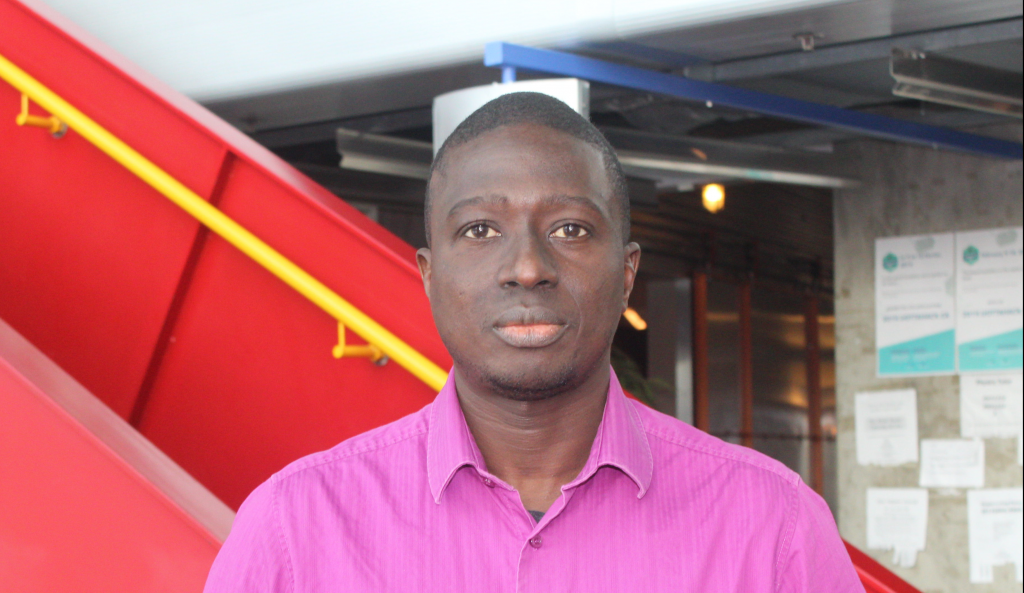
Dr. Ousmane Seidou is a Full Professor in the Department of Civil Engineering at the University of Ottawa, where he has served since 2007. He leads the Hydraulics Lab and holds affiliations with the Faculty of Engineering's Centre for Indigenous Community Infrastructure. His academic journey includes a PhD from École Polytechnique de Montréal (2002) and postdoctoral research at the Institut National de la Recherche Scientifique, Quebec. Dr. Seidou specializes in climate change impacts on water resources, hydrological modeling, and transboundary water management. Education: Ph.D. in Civil Engineering (Hydraulics), École Polytechnique de Montréal (2002) M.Sc. in Water Resources Engineering, École Polytechnique de Montréal (2002) Postgraduate Diploma in Hydroinformatics, École Inter-États des Ingénieurs de l'Équipement Rural (1998) Undergraduate Degree in Civil Engineering, École Mohammadia d'Ingénieurs (1996) Research Focus: Dr. Seidou’s work integrates hydrological modeling with climate adaptation strategies, emphasizing Africa’s water security. Key areas include: Climate change impacts on river basins (e.g., Niger, Congo) Development of flood early warning systems in West Africa Water-Energy-Food-Environment (WEFE) nexus frameworks Environmental flow estimation in wetland ecosystems He leads international projects involving multi-country collaborations and agencies like the United Nations Development Programme and the World Bank. Recent Projects: Principal Investigator for the Niger Basin Authority’s WEFE Nexus initiative Technical leadership in the Dutch-funded BAM-GIRE project (Mali/Guinea wetlands) Development of flood early warning systems for Niamey and Gaya (Niger) Teaching: Courses include Climate Change Impacts on Water Resources, Advanced Hydrological Modeling, and Water Resources Management. He mentors PhD students in hydrology and climate adaptation. Grants & Funding: Secured multi-million-dollar projects with organizations like Wetlands International and the UAE-BELEM Programme. Recent funding includes $135,000 for hydrological modeling tools in the Niger Basin. Labs/Teams: Director of the Hydraulics Lab at the University of Ottawa. Active in global initiatives like the Global Goal on Adaptation (GGA) indicator development under the Paris Agreement.