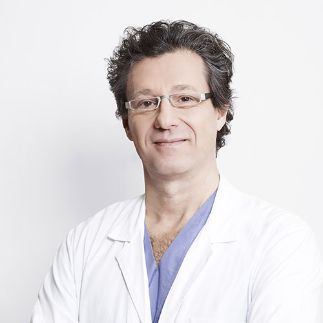
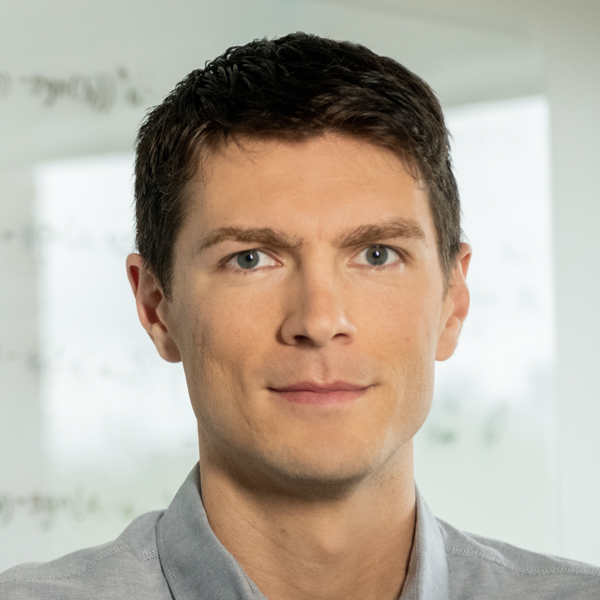
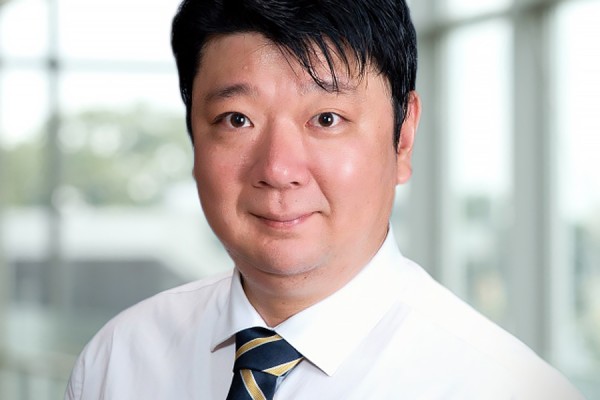
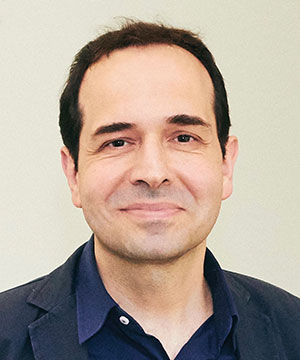
Greg Zaharchuk is a Professor of Radiology specializing in Neuroimaging and Neurointervention at Stanford University's School of Medicine. His academic roles include leadership in clinical and translational imaging research. He holds an MD from Harvard Medical School, a PhD in Applied Physics from Harvard/MIT, and dual undergraduate degrees in Materials Science & Engineering and German Studies from Stanford. Education: MD, Harvard Medical School (2000) PhD, Harvard/MIT (1999) BS & BA, Stanford (1990) Research Focus: Dr. Zaharchuk's work centers on advancing neuroimaging techniques for cerebrovascular diseases, stroke, and neurodegenerative disorders. He pioneers AI-driven innovations in MRI/PET fusion, low-dose imaging, and deep learning models to enhance diagnostic accuracy and clinical decision-making. Key areas include stroke outcome prediction, amyloid PET reconstruction, and cross-modality imaging integration. Research Trends: His recent articles emphasize AI applications in neuroimaging, such as improving low-field MRI quality and PET reconstruction using MRI priors. He also explores stroke lesion segmentation, CBF quantification, and the ethical implications of AI in neuroradiology. Affiliations & Labs: He leads the Center for Advanced Functional Neuroimaging at Stanford, advancing cutting-edge imaging technologies. His research bridges clinical practice and innovation, addressing challenges in ischemic stroke, Alzheimer's imaging, and radiation dose reduction. Grants & Collaborations: His work is supported by NIH grants and industry partnerships, focusing on multimodal imaging systems and AI-driven diagnostics. Collaborations include international neuroradiology societies and interdisciplinary teams in neurology and computer science.