Pierre Duhamel is a researcher affiliated with the Signals and Systems Laboratory, focusing on digital signal processing, communication systems, and multimedia security. His work spans theoretical and applied research in network coding, image compression, and channel coding. Primary affiliation: Signals and Systems Laboratory Research roles: Academic researcher, inventor (patents in image coding) Research interests: Duhamel's work addresses challenges in signal processing (e.g., wavelet transforms, L∞ norm compression), communication systems (e.g., robust decoding, WiMAX MAC protocols), and multimedia security (asymmetric watermarking, screen content coding). He explores optimization techniques for wireless networks and error resilience in multimedia transmission. Recent publications (2024–2025) reflect trends in image and signal processing , network optimization , and communication security , with applications to hyperspectral imaging, turbo coding, and cooperative wireless systems.
Dr. Manuel Desco Menéndez is a Full Professor at the Department of Bioengineering , Carlos III University of Madrid , focusing on biomedical imaging and instrumentation. He leads the Biomedical Imaging and Instrumentation Group. Key research domains: Medical Imaging , Neuroimaging , Biomedical Instrumentation Primary publication areas: Computed Tomography , PET Imaging , MRI , Biomaterials His scientific contributions (2022-2025) include: Neuroanatomical changes in pregnancy/postpartum and psychiatric disorders Advanced CT reconstruction algorithms with beam-hardening compensation Innovative biomedical nanoplatforms using milk exosomes Preclinical bone regeneration scaffolds in animal models Current technical developments focus on GPU-accelerated image processing and deep learning applications in tomographic reconstruction.
Jennifer Burgain is a Lecturer at the University of Lorraine, France, specializing in physical chemistry and food process engineering. Her research focuses on food powder characterization, microencapsulation of probiotics, and the impact of processing/storage on technofunctional properties. Research Interests: Multi-scale analysis of food powders (agro-resources/co-products) Atomic Force Microscopy (AFM) for nanoscale particle characterization Glass transition effects on powder stability Microencapsulation of probiotics using dairy matrices Optimization of dairy powder processing parameters Scientific Awards: FIL France grant (2011) for probiotic encapsulation research Publications & Projects: Author of ~50 peer-reviewed articles, 6 book chapters, and 2 patents. Principal investigator for the ANR-funded ExPowSE project (2022-2026) analyzing plant-origin food powders. Teaching: Heads the Master 2 MILQ program on dairy industries and quality. Supervises practical process engineering work and teaches physicochemistry/biochemistry of milk proteins.
Marco Buzzelli is an Assistant Professor at the Department of Informatics, Systems and Communication (DISCo) at the University of Milan-Bicocca, where he also obtained his PhD in Computer Science in 2019. His academic career is centered around cutting-edge research in signal, image, and video processing with a specialized focus on color imaging and machine learning applications. Dr. Buzzelli's research interests span multiple interconnected domains within computer vision and image processing. He has established himself as a leading researcher in color constancy, with numerous publications exploring illuminant estimation, white balance algorithms, and perceptual aspects of color imaging. His work extends to video restoration, particularly addressing challenges in low-light conditions and HEVC-compressed video processing. Additional research areas include hyperspectral imaging applications for historical document analysis, food authentication technologies, and neural architecture search for various computer vision tasks. His publication record demonstrates a clear evolution from foundational work in logo recognition and saliency detection toward increasingly sophisticated approaches to color science and video processing. Recent work shows strong emphasis on uncertainty estimation in color constancy, Bayesian optimization for night photography, and multimodal approaches combining spectral information with traditional RGB imaging. His research often bridges theoretical advances with practical applications across diverse domains including cultural heritage preservation, food safety, and computational photography. As an active ELLIS member, Dr. Buzzelli maintains significant European collaborations with institutions including Universitat Autònoma de Barcelona, Universidade Nova de Lisboa, Université Jean Monnet, and Universidad de Granada. His research group participates in major challenges such as the NTIRE series on night photography rendering and spectral recovery, contributing both methodological innovations and comprehensive surveys of the field. His laboratory work focuses on developing practical imaging solutions with real-world applications, particularly evident in projects addressing food authentication, historical document analysis, and vision-based monitoring systems. The integration of traditional image processing techniques with modern deep learning approaches characterizes his methodological approach across multiple research domains.
Dr. José Luis Calvo Rolle serves as a Professor in the Department of Industrial Engineering at the School of Engineering, Universidade da Coruña (UDC), specializing in Systems Engineering and Automation. His research focuses on intelligent control systems, fault detection, and virtual instrumentation within the Cybernetic Science and Technology Research Group. Teaches across multiple programs including Master's in Industrial Computing and Robotics, Textile Technology, and Occupational Risk Prevention Coordinates thesis supervision across Industrial Engineering and related disciplines His research spans intelligent control systems and optimization, with significant contributions in virtual sensors, fault detection, and AI-driven modeling for industrial applications. Current projects integrate machine learning with industrial processes for naval construction, wastewater treatment, and precision livestock farming, demonstrating cross-disciplinary impact from energy systems to agricultural technology. Recent publications reveal strong trends in applying deep learning to industrial metaverse frameworks, wastewater optimization, and livestock monitoring systems. His work bridges theoretical control engineering with practical implementations in energy management, naval manufacturing, and sustainable agriculture, frequently utilizing dimensionality reduction and one-class classification techniques. Dr. Calvo Rolle actively mentors students through thesis supervision across multiple engineering disciplines and coordinates research projects with diverse funding sources including the European Commission, Spanish National Research Agency, and industrial partners like Navantia and Telefónica. His laboratory work centers on the Cybernetic Science and Technology Research Group, developing testbeds for industrial automation, virtual instrumentation, and AI-driven monitoring systems. Current initiatives include digital twin implementations for naval manufacturing and smart energy management systems.
Professor Catherine Hawke is a faculty member at the University of Sydney within the School of Rural Health (Dubbo/Orange) under the Faculty of Medicine and Health. She serves as Head of Clinical School and specializes in Population Health , evidence-based medicine , and research methods . Her research focuses on Adolescent Health , Epidemiology , and Public Health , with particular attention to Obesity , Diabetes , Cardiovascular Disease , and Healthy Ageing . Recent work includes rural STEMI care optimization and mental health impacts of climate change. Key Themes : Rural health disparities Hormonal influences on adolescent development Health system navigation Climate change resilience Articles Trends : Her publications emphasize adolescent endocrinology , rural healthcare innovation , and public health policy , often employing longitudinal studies and mixed-methods research .
Jing Wang, Ph.D., is a Professor of Radiation Oncology at UT Southwestern Medical Center, affiliated with the Department of Radiation Oncology’s Division of Medical Physics and Engineering. His research bridges medical imaging, machine learning, and radiation therapy optimization. B.Sc. in Material Physics, University of Science and Technology of China M.A. and Ph.D. in Physics, Stony Brook University Postdoctoral training in Radiology (Stony Brook) and Radiation Physics (Stanford) Dr. Wang’s work focuses on enhancing medical imaging quality for quantitative applications in image-guided radiation therapy (IGRT) and adaptive radiation therapy (ART) . Key areas include CT/MRI/PET reconstruction , deep learning for tumor localization , and radiomics-based survival prediction . His AIRT Lab develops AI algorithms for treatment outcome modeling and real-time imaging. Recent publications highlight advancements in transformer networks for anatomy prediction, uncertainty-aware segmentation , and delta radiomics for surgical margin analysis. Journals span Medical Physics , Physics in Medicine and Biology , and International Journal of Radiation Oncology .
Gerard de Haan is a Professor of Electronic Systems at the Department of Electrical Engineering , Eindhoven University of Technology (TU/e). His research focuses on video signal processing, particularly in multimedia systems and video health monitoring , aiming to enhance image quality and enable accurate sensing of vital signals amidst motion artifacts. He has documented his research in 4 books, 3 book chapters, approximately 200 papers, and over 200 patent applications, leading to commercially available ICs. De Haan has served on program committees of international conferences and as a guest editor for journals including Elsevier, IEEE, and Springer. Education : BSc, MSc, PhD in Electrical Engineering from Delft University of Technology (1977, 1979, 1992) Professional Roles : Lead researcher at Philips Research (1979–present), Full Professor at TU/e (2000–present) His research interests span noise and artifact reduction , video format conversion , display-specific processing , and enabling technologies like motion estimation and object detection . Articles highlight advancements in rPPG motion robustness , blood volume pulse signature analysis , and remote SpO2 monitoring . Scientific awards include his appointment as Fellow at Philips Research Eindhoven in 2000.
Gregg Trahey is the Robert Plonsey Distinguished Professor of Biomedical Engineering at Duke University, with additional appointments in Radiology. He leads pioneering research in medical ultrasound imaging and serves as a Bass Fellow, reflecting his significant contributions to both research and education. B.S. from University of Michigan, Ann Arbor (1975) M.S. from University of Michigan, Ann Arbor (1979) Ph.D. from Duke University (1985) Dr. Trahey's research focuses on medical ultrasound, image guided surgery, adaptive imaging, imaging of tissue's mechanical properties, and radiation force imaging . His laboratory develops and evaluates novel ultrasonic imaging methods with current projects involving high resolution imaging of the breast and mechanical characterization of both breast and cardiovascular systems. They conduct comprehensive testing through phantom models, animal trials, ex vivo experiments, and human clinical trials, with current clinical applications focusing on vascular plaque imaging and breast lesion characterization. Analysis of Dr. Trahey's recent publications (2022-2025) reveals a strong emphasis on spatial coherence techniques, adaptive ultrasound imaging systems, and quantitative tissue characterization. His work bridges engineering innovation with clinical applications, particularly in cardiac and breast imaging, with key themes including clutter reduction, real-time adaptive systems, and mechanical property assessment of tissues. Fellow, Institute of Electrical and Electronics Engineers (IEEE), 2022 MERIT Award, National Institutes of Health, 2009 Fellows, American Institute for Medical and Biological Engineering, 1999 Dr. Trahey has taught courses including MEDPHY 738: Radiology in Practice, ECE 392: Projects in Electrical and Computer Engineering, and BME 848L: Radiology in Practice. His research is supported by significant funding, particularly from the National Institutes of Health as evidenced by his prestigious MERIT Award, which provides extended grant support to researchers with exceptional performance. Dr. Trahey leads an active research laboratory that conducts comprehensive studies from phantom development through clinical trials. His team collaborates extensively with clinicians for translational research applications, particularly in cardiology and radiology. Current projects focus on high-resolution imaging techniques, mechanical tissue characterization, and development of novel ultrasound methods for improved diagnostic capabilities while maintaining patient safety.
Anders Behndig is a Professor and senior consultant (attending) physician at the Department of Clinical Sciences, Section of Ophthalmology , Umeå University. His clinical and research work focuses on cataract surgery, corneal crosslinking for keratoconus, intraocular lens complications, and surgical outcomes analysis. Position: Professor, Senior Consultant Ophthalmologist Institution: Umeå University, Sweden Department: Clinical Sciences/Ophthalmology Behndig’s research spans cataract surgery optimization (e.g., prioritization during pandemics, bilateral surgery trends), corneal crosslinking (epi-on vs. epi-off protocols), and intraocular lens stability . His work often leverages large-scale registries like the Swedish National Cataract Register and EUREQUO to analyze complication risks and surgical outcomes. Recent publications highlight trends in refractive surgery (customized crosslinking for myopia), uveitis and diabetic retinopathy in cataract outcomes, and machine learning applications for predicting posterior capsule rupture. Collaborative efforts include multinational registry studies and evaluations of anesthesia techniques in cataract procedures.
Sotiris Christodoulou is an Associate Professor at the Department of Electrical and Computer Engineering within the College of Engineering at the University of Peloponnese. He also serves as a research associate at the 'Diofantos' Institute of Computer Technology and Publishing. His academic career spans multiple institutions where he has taught graduate and undergraduate courses across seven different universities since 2004. Dr. Christodoulou earned his B.A. in Computer Engineering and Informatics from the University of Patras in 1994 and completed his PhD in Web Engineering from the same institution in 2004. His educational background established the foundation for his extensive research career focused on web technologies and applications. His primary research interests include Web Engineering, Web Application Performance Optimization, Web Code Quality, Semantic Web technologies, Hypermedia Systems, and emerging Web 2.0 and Web 3.0 technologies. His work extends to Virtual Interactive Environments, 3D and Augmented Reality applications, and Spatial Hypertext systems. Christodoulou's research bridges theoretical web engineering principles with practical applications in cultural heritage, education, and urban infrastructure systems. His research output comprises over 45 publications in international journals, book chapters, and conferences, accumulating more than 450 citations. He has participated in over 23 European and National Research and Development Projects focused on web software technology, hypermedia applications, and 3D educational and cultural applications. Professional member of ACM Professional member of IEEE Member of organizing committees for over 15 international scientific conferences Reviewer for recognized international journals (ACM, IEEE, etc.) Christodoulou has extensive teaching experience across seven universities, specializing in programming languages, web software engineering, software quality, and data management. His research projects typically combine applied research with cutting-edge technology implementation for real-world problems in large organizational information systems. He maintains regular office hours at Building K, Office K2.02 at the University of Peloponnese, with appointments available on Mondays and Thursdays.
Ragnvald Mathiesen serves as Professor in the Department of Physics at the Norwegian University of Science and Technology (NTNU), Trondheim. His research leverages advanced synchrotron-based X-ray and neutron imaging techniques to investigate dynamic solidification processes in metallic alloys and geomaterials, with significant contributions to understanding microstructure evolution under varied conditions including microgravity. His primary research interests focus on solidification physics , in-situ X-ray radiography/tomography , and microstructure characterization of metallic systems. Key specialties include dendrite growth kinetics, phase transformation dynamics, grain refinement mechanisms in aluminum alloys, and the application of 4D imaging to capture transient phenomena in materials processing. His work bridges fundamental physics with industrial metallurgy applications, particularly in aluminum and magnesium alloy systems. Analysis of his 15 most recent publications (2019-2025) reveals a consistent emphasis on time-resolved imaging methodologies applied to solidification phenomena. His research demonstrates increasing sophistication in multi-modal imaging (X-ray/neutron), with growing applications in geomaterials and electro-active systems. The publications show strong international collaboration patterns, particularly with European synchrotron facilities like ESRF, and address both fundamental questions in solidification physics and practical challenges in materials processing. Professor Mathiesen actively contributes to the development of advanced X-ray microscopy techniques, as evidenced by his 2017 doctoral dissertation on high-energy X-ray transmission microscopy and recent publications on dark-field imaging and diamond lens optimization. His laboratory work utilizes NTNU's materials characterization infrastructure alongside major international facilities including the European Synchrotron Radiation Facility.
Sinead O'Keeffe is a Research Fellow at the University of Limerick in the Faculty of Science and Engineering , specifically within the Department of Electronic and Computer Engineering . Her research bridges the technical domain of optical fiber sensor development with critical applications in radiation therapy and sports medicine. Primary Research Themes Medical radiation dosimetry using optical fiber sensors Brachytherapy dose monitoring systems Sports injury prevention in Gaelic football and running Mental health literacy in rural farming communities Key Technical Contributions Development of scintillation-based dosimeters Characterization of perfluorinated polymer fibers 3D printed sensor systems for clinical and rehabilitation applications Interdisciplinary Applications Prostate cancer radiotherapy dose measurement Mental health intervention programs for athletes Work-family conflict analysis in Irish farming Email: sinead.okeeffe@ul.ie
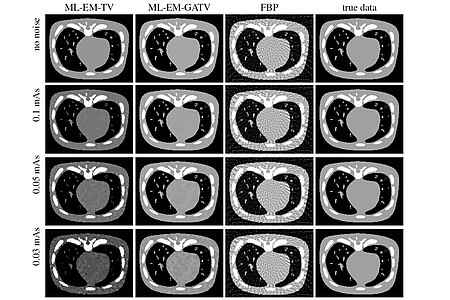
Jürgen Hesser is a Professor at the Mannheim Medical Faculty , Heidelberg University, specializing in Experimental Radiotherapy and Medical Imaging . His research focuses on solving inverse problems in imaging, particularly for CT reconstruction , brachytherapy planning , and low-dose imaging . Current affiliations: Clinic for Radiotherapy and Radiooncology, Mannheim University Hospital Collaborative ties: Interdisciplinary Center for Scientific Computing (IWR) and Center for Bioinformatics (ZITI) at Heidelberg University Research interests center on anisotropic total variation techniques for medical and industrial applications, including MR-guided interventions and real-time radiation therapy . His work has led to a 1000x speed improvement in brachytherapy planning algorithms. Recent publications highlight expertise in image reconstruction (CT/X-ray), noise optimization , machine learning for cancer classification, and big data management solutions. His methods are applied to both clinical and industrial imaging challenges. Additional contributions include scientific data infrastructure development and variance stabilization techniques for medical sensors. The research group maintains strong interdisciplinary links with Physics, Mathematics, and Computer Science faculties.
Prof. Dr. Bilge Günsel is a distinguished Professor at the Electronics and Communication Engineering Department of Istanbul Technical University . With a career spanning over three decades, she has served in academic and administrative roles including Department Head (2007-2010) and Deputy Head (2005-2006). Her research focuses on Signal Processing , Image Processing , and Machine Learning , with recent work on dynamic convolutional neural networks and video object tracking. Education : PhD (1994) and BS (1985) from Istanbul Technical University in Electronics & Communication Engineering. Research Interests include: Dynamic CNNs for scene classification Video object tracking with deep learning Meta-learning approaches in object verification Transfer learning for crowd density estimation Recent Publications (2021-2024) demonstrate expertise in: Target-driven inference in video tracking Dynamic convolution techniques Instance segmentation integration Scientific Achievements : Scopus h-index of 18 Over 1252 citations Principal Investigator (PI) for two major BAP projects (2016-2019) Collaborations span Turkey and international institutions, with research outputs in partnership with IEEE and academic peers like Furkan Gurkan and Yavuz K. Hanoglu. She continues to lead cutting-edge research while maintaining active teaching and administrative duties.