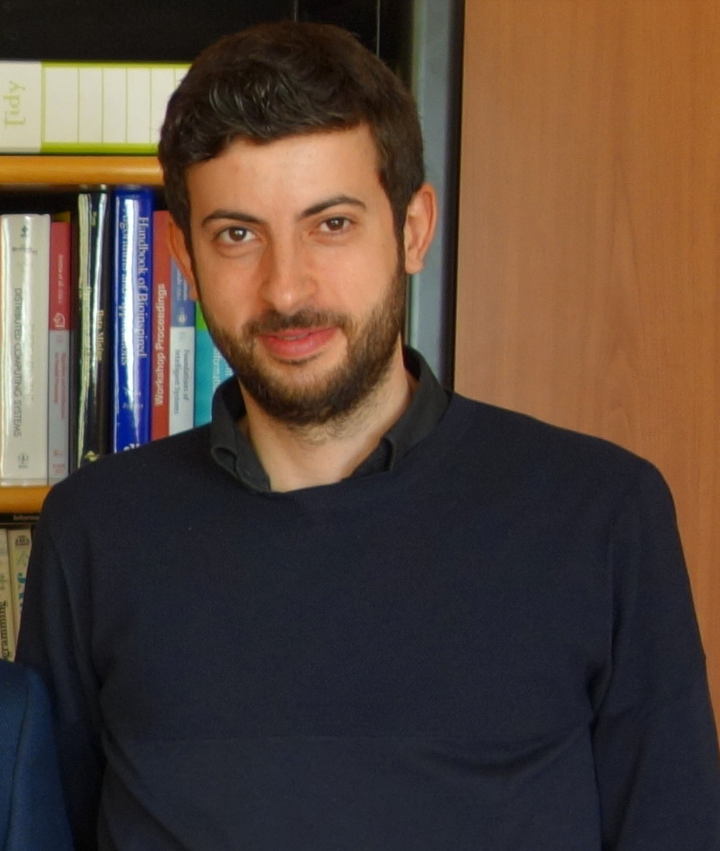
Dr. Cigdem Beyan is an Associate Professor in the Department of Computer Science at the University of Verona, with office located at Ca' Vignal 2, Floor 1, Room 87. She coordinates the Vision, Images, Patterns and Signals (VIPS) research group and serves on several departmental committees including the Faculty Board of PhD in Computer Science, Computer Science Teaching Committee, and Department Council. Her research spans artificial intelligence, computer vision, and machine learning, with specialized focus on: Multimodal learning (audio/text/video integration) Domain adaptation/generalization Active/semi-supervised learning Affective computing (emotion recognition) Social AI and biometrics Medical image analysis Video surveillance systems She leads the project TRANSFER AND ADAPTIVE LEARNING IN IMPERFECT MULTIMODAL DATA SCENARIOS (TALIM) and regularly publishes in top-tier computer vision and HCI conferences, serving as Area Chair. She mentors Master's students in computer vision and multimodal analysis topics.
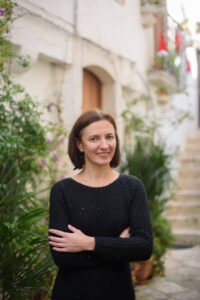
Lorenza Brusini is a Temporary Assistant Professor at the Department of Engineering for Innovation Medicine, University of Verona, specializing in Bioengineering (IBIO-01/A). Her work integrates Machine Learning , Neuroimaging , and Computer Vision to develop numerical biomarkers for neurological conditions. Research Focus: Multi-modal neuroimaging (diffusion MRI, EEG, fNIRS), computational neuroscience, and AI-driven medical data analysis. Teaching: Offers courses in Biomedical Image Analysis, Neurohealth Data Modeling, and Intelligent Healthcare Systems for both bachelor's and master's programs. Labs: Active in INTELLIGO Labs and ALTAIR Laboratory, with expertise in Electronic Systems Design and Parallel Computing. Her recent publications emphasize explainable AI in neuroimaging, systems neuroscience , and medical signal processing . She serves on academic committees including the Information Engineering Teaching Committee and Department Council.
Vittorio Murino is a Full Professor and Department Director at the Department of Computer Science, University of Verona. His academic work spans computer vision, machine learning, and biomedical applications, with significant contributions to both theoretical and applied research across multiple domains. His primary research focuses include: Computer vision and deep learning with emphasis on domain adaptation and generalization Multi-modal deep learning models for human behavior analysis Neuroimaging data analysis using connectomics approaches Industrial applications including visual inspection and automation Underwater vision (acoustical and optical) systems Professor Murino leads the Vision, Image Processing & Sound (VIPS) Laboratory which specializes in analyzing multivariate multidimensional signals through artificial intelligence techniques. His research portfolio spans theoretical machine learning advancements to practical implementations in healthcare, security, and industrial settings. He has secured funding for numerous research projects including: Multimodal Elder Care (MEC) TRANSFER AND ADAPTIVE LEARNING IN IMPERFECT MULTIMODAL DATA SCENARIOS (TALIM) Tecnologie di Intelligenza Artificiale per il Monitoraggio del Comportamento di Pazienti Allettati (TIAMoPA) Studio di tecniche di apprendimento profondo per la segmentazione semantica di immagini As an educator, Professor Murino teaches advanced courses including Computer Vision & Deep Learning and Machine Learning & Deep Learning for the Master's degree in Artificial Intelligence. He has developed curriculum for multiple programs spanning from Digital Image Processing to specialized deep learning applications in medical imaging.
Andrea Giachetti is a Full Professor at the Department of Engineering for Innovation Medicine, University of Verona. His research focuses on Visual Computing, including image processing, computer vision, 3D shape analysis, and human-computer interaction in mixed reality environments. Academic Rank: Full Professor Department: Engineering for Innovation Medicine Research interests include: Medical image processing (segmentation, feature extraction) 3D modeling (shape descriptors, curve skeletons) Mixed reality interaction methods Material appearance modeling via multi-light imaging He coordinates teaching modules in: Human-Computer Interaction Computer Graphics Data Visualization Extended Reality Current research projects span applications in: Cultural heritage digitization (Scan4Reco) Industry 4.0 (Computer Engineering for Intelligent Systems) Biomedical data analysis (SANDMED)
Marco Cristani is a Full Professor at the Department of Engineering for Innovation in Medicine , University of Verona. His research focuses on prediction/forecasting of multimodal signals (images, videos, social behavior), computer vision, pattern recognition, and human behavior analysis in unsupervised environments. Key research areas include: Multimodal prediction and latent representations Social signal processing for surveillance and retail applications Intelligent systems for biomedical/neuroscience data analysis Human-machine interaction and embedded systems He actively participates in governance and committees across academic institutions, including roles in PhD Councils and teaching boards.
Giancarlo Fortino is a Full Professor of Computer Engineering at the University of Calabria, where he directs the SPEME lab and serves as Rector's delegate to International Relations. He holds a PhD in Computer Engineering from the University of Calabria and has held distinguished positions at Wuhan University of Technology and Huazhong Agricultural University. His research spans wearable computing systems, Internet of Things, e-Health, and distributed systems. He leads development of open-source frameworks including SPINE for body sensor networks and BodyCloud for cloud-assisted healthcare systems. His work consistently addresses real-world challenges in IoT and edge computing. Professor Fortino has received numerous honors including IEEE Fellow (2022), Highly Cited Researcher recognition (2020-2022), and best paper awards at premier conferences. He has authored over 600 publications and leads multiple EU-funded projects on IoT systems. He co-founded SenSysCal and BigTech spin-offs, serves on editorial boards of premier journals, and has graduated 10 PhD students who now hold academic and industry positions worldwide.
Fabrizio Marozzo is an Associate Professor in Computer Engineering at the University of Calabria, Italy, since 2019. He is also co-founder of DtoK Lab S.r.l., an academic spin-off established in 2014. His research focuses on big data analysis, social media analysis, high-performance computing, cloud and edge computing, and machine learning. He is an IEEE Senior member and serves as associate editor for multiple journals including IEEE Transactions on Big Data and SN Computer Science. In 2022, he obtained the Italian National Academic Qualification as Full Professor in Computer Engineering. Marozzo has authored over 100 scientific papers and co-authored several books, including Data Analysis in the Cloud (Elsevier, 2015) and Programming Big Data Applications (World Scientific, 2024). His research interests span edge-cloud continuum systems, distributed data analysis frameworks, and AI-driven solutions for social media and healthcare applications. He actively contributes to interdisciplinary projects, such as surgical documentation enhancement using multimodal AI and disaster monitoring through LLMs. Marozzo's work emphasizes scalable tools and frameworks to address challenges in distributed computing environments. Education: PhD in Computer Engineering (not explicitly detailed) Affiliations: University of Calabria, DtoK Lab S.r.l. His articles reflect a strong focus on edge-cloud integration, efficient machine learning techniques, and practical AI applications. Key themes include optimizing distributed systems, reducing latency, and leveraging LLMs for real-world problems in healthcare, smart cities, and agriculture. Scientific Awards: 2024 Top Scholar in Big Data (ScholarGPS) Abilitazione Scientifica Nazionale as Full Professor (2022) Marozzo supervises research projects and advises students, contributing to academic-industry collaborations through DtoK Lab. His work bridges theoretical advancements with practical implementations in distributed systems and AI.
Piergiuseppe Colombo is an Associate Professor of Pathological Anatomy at Humanitas University (Milan, Italy), specializing in urological oncopathology and sarcomas. He holds roles in academic training, including Adjunct Teaching Professor roles in specialized programs. His research focuses on diagnostic advancements in prostate and bladder cancers, molecular pathology, and imaging techniques like PSMA PET/CT and HIFU. Education: Graduated in Medicine from the University of Milan (1995), specialized in Pathological Anatomy (1999). He has held leadership roles, including Head of Surgical Diagnostics in Pathological Anatomy (2009), and sits on national panels for histological review of prostatic biopsies (PRIAS) and the Genitourinary Pathology Society (GUPS). Research Interests: Urological cancers (prostate/bladder), sarcomas, molecular diagnostics, tumor immune microenvironment, imaging innovations (PSMA PET/CT, micro-ultrasound), and clinical trials for focal therapies. Publications highlight studies on tumor biology, diagnostic accuracy, and clinical outcomes in cancer management. His work bridges laboratory research (e.g., immune profiling) with clinical applications (e.g., HIFU focal therapy for prostate cancer). Teaching: Lectured in oncological pharmacology, urology, and pathological anatomy at Humanitas University and the University of Milan. Active in mentoring through specialization programs.
Nicola Vanello is Assistant Professor at University of Pisa's Department of Information Engineering and Research Center 'E. Piaggio', specializing in biomedical signal/image processing for neuroscience applications. Research combines multimodal approaches: fMRI/EEG integration for cognitive studies MRI-compatible mechatronic devices Speech-based emotion recognition Wearable sensor development
Robert René Maria Birke is a tenured assistant professor in the Department of Computer Science at the University of Turin, leading research in the Parallel Computing group. His expertise spans virtual resource management, network design, workload characterization, and optimization of AI/big-data applications. Previously, he served as a visiting researcher at IBM Research Zurich and Principal Scientist at ABB Corporate Research, combining industry experience with academic rigor since earning his Ph.D. from Politecnico di Torino in 2009. His educational background includes: Ph.D. in Electronics and Communications Engineering, Politecnico di Torino (2009) Dr. Birke's research centers on systems-level challenges in distributed AI, with current projects investigating federated learning architectures, confidential computing via Trusted Execution Environments, and RISC-V processor optimizations for decentralized machine learning. His work bridges theoretical foundations with practical deployments, particularly in edge computing scenarios and high-performance data synthesis applications. Recent publications reveal growing emphasis on securing generative models against forgery attacks and optimizing tabular data synthesis techniques. Analysis of his 15 most recent publications (2024-2026) shows dominant themes in confidential federated learning (33% of works), RISC-V system optimizations (27%), and generative model security/synthesis (40%). This output spans premier venues including IEEE Transactions, ACM Computing Surveys, and SIGCOMM-affiliated conferences, demonstrating consistent contributions to systems-AI intersection research. Professional recognition includes: IEEE Senior Member While the text confirms extensive collaboration through co-authorships (notably with Marco Aldinucci, Lydia Chen, and Giulio Malenza), no specific student advisees or grant details are provided. His work appears embedded within European initiatives like ICS and EUPilot projects, focusing on compute continuum challenges. Dr. Birke actively contributes to the Parallel Computing group's mission through projects including HPC4AI@UNITO (datacenter digital twins) and Cross-Facility Federated Learning frameworks. His research ecosystem involves multi-institutional teams across Italy, Switzerland, and the EU, with recent talks addressing FLaaS implementations and generative model impacts on system design.
Attilio Fiandrotti is an Associate Professor at the University of Turin, specializing in Computer Science. His academic journey began at Politecnico di Torino, where he earned both his M.Sc. and PhD in Computer Science in 2005 and 2010, respectively. His research spans Video Coding and Video Streaming over Wireless Networks , with a focus on Peer-to-Peer Distribution enhanced by Network Coding . He also contributes to Image Analysis using traditional and deep machine learning techniques, particularly in Lung Nodules Segmentation and Colorectal Polyps Classification . Fiandrotti's work intersects Computer Science and Medical Imaging , addressing challenges in Neural Network Compression and Structured Sparsity . Notable contributions include the UniToChest and UniToPatho datasets, which support research in lung cancer detection and histopathological analysis. He has developed innovative methods like Entropy-based Pruning for transfer learning under resource constraints and the Serene framework for sensitivity-driven neural network regularization. His technical expertise extends to Hardware Architectures and Deep Learning applications in healthcare and signal processing.
Maurizio Lucenteforte is an Assistant Professor at the Department of Computer Science, University of Turin. His research focuses on image processing, 3D representation, and virtual/augmented reality technologies. Key research themes include: 3D geographic information modeling Virtual simulation of hostile environments Reversible watermarking for medical imaging Video plus depth-based stereo/multiview television signals His technical expertise intersects computer vision, computer graphics, and applied deep learning frameworks.
Angela Lombardi is an Assistant Professor (tenure-track) at Polytechnic University of Bari, Italy, with expertise in eXplainable Artificial Intelligence (XAI), Complex Networks, and e-Health. She holds a Telecommunications Engineering degree (2014) and a PhD in Signal Processing & Computational Neuroscience (2018, cum laude) from Polytechnic University of Bari. Previously, she worked as a post-doctoral researcher at Istituto Nazionale di Fisica Nucleare (2018–2020) and as an Assistant Professor at the University of Bari (2020–2022). Her research focuses on developing novel algorithms for neurodegenerative disease diagnosis using AI in distributed computing environments. She is affiliated with SisinfLab and part of the CLAIRE Research Network. Education: BEng (Telecommunications Engineering), Polytechnic University of Bari, 2014 PhD (Signal Processing & Computational Neuroscience), Polytechnic University of Bari, 2018 Research Interests: XAI for healthcare decision support Complex network modeling of biological systems Big data analytics for personalized medicine Neuroimaging and EEG-based emotion recognition Publications Trends: Her recent work emphasizes XAI applications in neurological diagnostics, brain age prediction using CNN models, emotion recognition via EEG, and wearable BCI systems. Key themes include interpretability of AI models, clinical validation of algorithms, and interdisciplinary healthcare solutions. Labs & Affiliations: Active in SisinfLab (Polytechnic University of Bari), contributing to projects like CyberChallenge2025@PoliBa and the 22nd International Conference on Web Engineering (ICWE 2022).
Olha Pohudina is a Researcher at the Department of Electrical and Information Engineering, Politecnico di Bari. She holds a PhD in Inter-disciplinary Information and Communication Technologies from the National Aerospace University "Khai" (Kharkiv, Ukraine), preceded by a Master's (summa cum laude) and Bachelor's in Computer Science. Previously, she served as Assistant Professor at the National Aerospace University from 2008 to 2021. Her research focuses on multi-agent systems, indoor localization, machine learning, and embedded control of UAVs using AI. Education: PhD in ICT Interdisciplinary (National Aerospace University Khai) MSc Information Management Systems (summa cum laude) BSc Computer Science Research Interests: She explores advanced topics including signal/image/video processing, AI-driven UAV control, and wireless communication protocols. Her recent work involves optimizing IEEE802.11be networks through queue simulation analysis. Publications: Her 2024 study on IEEE802.11be multi-link operation demonstrates expertise in next-gen wireless systems.
Ciro Castiello is an Associate Professor at the Department of Informatics, University of Bari Aldo Moro, Italy. His research focuses on soft computing, inductive learning, fuzzy systems, and explainable AI. He has published over seventy peer-reviewed papers and actively contributes to research projects in image segmentation, drone technology, and medical decision support systems. Teaching: Architettura degli Elaboratori e Sistemi Operativi (AdESO-BA) for the Laurea in Informatica e Tecnologie per la Produzione del Software (L-31) Architettura degli Elaboratori e Sistemi Operativi (AdESO-TA) for the Laurea in Informatica e Comunicazione Digitale (L-31) Informatica (Inf@Mat) for the Laurea in Matematica (L-35) Pensiero Computazionale e Programmazione (PC&P) for the Laurea Magistrale in Patrimonio Digitale (LM5-LM43) Research Interests: Castiello's work emphasizes interpretability in fuzzy systems, with applications in image processing, drone navigation, and medical diagnostics. He explores techniques like nonnegative matrix factorization (NMF) and neuro-fuzzy systems to enhance AI transparency. Professional Roles: He manages student guidance and tutoring activities at the Department of Informatics. He is a member of EUSFLAT and the INdAM Research Group GNCS (Italian National Group of Scientific Computing).