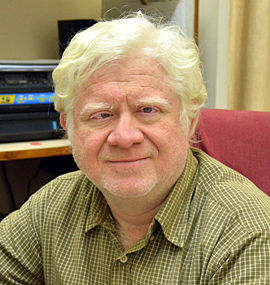
Dr. Deepak Dhingra is an Associate Professor in the Department of Earth Sciences at the Indian Institute of Technology Kanpur. He holds a Ph.D. from Brown University (2014) and specializes in planetary geology. His research leverages remote sensing data to study surface morphology and composition of extraterrestrial bodies, including the Moon, Mars, Mercury, and Saturn's moon Enceladus. Research Focus His work integrates spectral, imaging, and topographic data to address fundamental questions in planetary evolution. Key themes include: Lunar Geology: Mg-spinel distribution, impact crater processes, polar volatiles. Planetary Surface Dynamics: Boulder falls, granular segregation on asteroids. Methodological Innovation: Machine learning applications for mineral mapping and data filtering. Mission Involvement Chandrayaan-1: Scientist at Physical Research Laboratory (PRL), Ahmedabad. Chandrayaan-2: Science team member for NASA/JPL/Brown University's Moon Mineralogy Mapper (M³). Academic Activities He actively recruits PhD students and postdoctoral researchers for planetary science projects. His interdisciplinary approach bridges geology, data science, and space mission operations. Additional Contributions Beyond research, he engages in science communication through articles, blogs, and outreach initiatives focused on lunar exploration.
Chandraprakash Chindam is an Associate Professor in the Department of Mechanical Engineering at the Indian Institute of Technology (IIT) Kanpur. He joined IIT Kanpur as a Visiting Assistant Professor in 2017, became an Assistant Professor from 2018-2024, and was promoted to Associate Professor in 2024. His academic journey includes a PhD in Engineering Science and Mechanics from Pennsylvania State University, an M.Tech in Product Design from IIT Madras, and a B.Tech in Mechanical Engineering also from IIT Madras. Prior to his academic career, he worked as a Project Officer at the Centre for Non-Destructive Evaluation at IIT Madras and as a Technical Manager at TATA Motors' Engineering Research Centre. Education: 2017: PhD in Engineering Science and Mechanics, Pennsylvania State University 2010: M.Tech in Product Design, Mechanical Engineering, IIT Madras 2008: B.Tech in Mechanical Engineering, IIT Madras Dr. Chindam's research focuses on the intersection of wave mechanics, thermal diffusion, and material characterization. His primary research interests include acoustic metamaterials, thermal nondestructive evaluation, soft robotics, multifunctional materials, instrumentation, and computer vision. His work combines computational approaches with experimental techniques to develop innovative materials and characterization methods. He has pioneered research in phononic crystals, acoustic foams, and advanced surface characterization techniques, with applications in noise control, structural health monitoring, and sustainable materials development. His recent publications demonstrate a strong trend toward interdisciplinary research combining materials science, acoustics, computer vision, and sustainable engineering. He has made significant contributions to the understanding of phononic crystals for sound absorption, development of biodegradable acoustic materials from agricultural waste, and computer vision applications for non-destructive evaluation. His work bridges fundamental material properties with practical engineering applications, particularly in the areas of noise control and structural health monitoring. Scientific Awards: Best PhD thesis award 2017 Distinguished Teaching Fellow 2015-16 during PhD Dr. Chindam teaches several courses at IIT Kanpur including ME222A (Nature and properties of materials), ME321A (Advanced mechanics of solids), ME698E (Fabrication and mechanics of thin films), ME621A (Introduction to solid mechanics), ME683A (Techniques in non-destructive evaluation), and ME723A (Wave propagation in solids). His teaching approach integrates theoretical concepts with practical applications, particularly in the areas of material characterization and wave mechanics. While specific grant information isn't detailed in the provided text, his research output suggests involvement in projects related to acoustic metamaterials, non-destructive evaluation techniques, and sustainable material development. His laboratory work focuses on developing advanced characterization techniques for materials, particularly in the areas of acoustic metamaterials and thermal nondestructive evaluation. His team appears to work at the intersection of computational mechanics, experimental characterization, and sustainable materials development, with emphasis on practical applications for noise control and structural health monitoring.
Chandrima Banerjee is an Assistant Professor in the Department of Physics at the Indian Institute of Technology Kanpur. She joined the faculty after completing postdoctoral research at Trinity College Dublin and Technion, Israel. Education: PhD from S. N. Bose National Centre for Basic Sciences (2017) Post Graduate from IIT Delhi (2012) Undergraduate from Bethune College, University of Calcutta (2010) Dr. Banerjee's research focuses on experimental condensed matter physics with special emphasis on magneto-optics and ultrafast phenomena. Her work explores the interaction of light with magnetic materials at extremely short timescales, which has significant implications for next-generation data storage and processing technologies. Her laboratory employs advanced techniques such as optical pump-probe spectroscopy and magneto-optic imaging to investigate femtomagnetism and ultrafast light-matter interactions. This research intersects with fields like quantum materials, spintronics, and nanophotonics. Dr. Banerjee maintains an active research program that bridges fundamental physics with potential technological applications in information storage and processing. Previous Work Experience: November 2018 - October 2020: Postdoctoral researcher at Trinity College Dublin, Ireland November 2020 - May 2023: Postdoctoral researcher at Technion, Israel
Dr. Prashant Pathak serves as an Assistant Professor in the Department of Space, Planetary & Astronomical Sciences & Engineering at the Indian Institute of Technology Kanpur. He earned his PhD from SOKENDAI University in 2017 and completed his BS-MS from IISER Thiruvananthapuram in 2013. Prior to joining IIT Kanpur, he held research positions as a PostDoc Fellow at the University of Liege, Belgium (2021-2023) and as an Engineering and Technology Research Fellow at the European Southern Observatory (ESO), Germany (2018-2021). PhD (SOKENDAI University, 2017) BS-MS (IISER Thiruvananthapuram, 2013) Dr. Pathak's research focuses on the direct imaging and characterization of exoplanets, with specialized expertise in adaptive optics and wavefront control techniques for both ground and space-based astronomical instrumentation. His work bridges theoretical astrophysics with practical instrument development, addressing fundamental challenges in high-contrast imaging systems. His research encompasses atmospheric dispersion correction, coronagraphic techniques, and precision astrometry methods essential for detecting and characterizing exoplanets. His publication record demonstrates a clear progression from foundational work on wavefront control systems to sophisticated applications in major observatories. Recent publications (2020-2024) show increasing involvement with next-generation instrumentation including JWST and ELT-METIS, reflecting his position at the forefront of exoplanet imaging technology. The research spans multiple disciplines including optical engineering, atmospheric science, and planetary astrophysics, with a consistent focus on overcoming technical barriers to exoplanet detection. Dr. Pathak has made significant technical contributions to astronomical instrumentation, particularly in atmospheric dispersion correction and high-contrast imaging systems. His work on SCExAO, METIS, and JWST observations demonstrates his involvement in major international collaborations pushing the boundaries of what's possible in direct exoplanet imaging. His laboratory work likely involves optical testing, wavefront control systems, and data analysis techniques for high-contrast imaging. While specific details about current students are not provided, his publication record suggests an active research program focused on advancing astronomical instrumentation capabilities for exoplanet discovery and characterization.
K S Venkatesh is a Professor in the Department of Electrical Engineering at Indian Institute of Technology Kanpur (IIT Kanpur). His research spans multiple areas of signal and image processing with applications in computer vision and robotics. Education: PhD from IIT Kanpur M.Tech from IIT Kanpur B.E. from Bangalore University Professor Venkatesh's research focuses on signal processing, image and video processing, computer vision with applications in robotics, and signal and system theory . His work bridges theoretical foundations with practical applications, particularly in the domain of visual perception systems. He has made significant contributions to areas such as object occlusion handling, gesture recognition under challenging lighting conditions, image enhancement techniques, and efficient stereo depth computation. His recent publications demonstrate a strong focus on computer vision problems with practical applications. The research shows progression from fundamental signal processing techniques to more complex vision systems capable of operating in real-world conditions. Several of his papers have received recognition, including Best Paper Awards at prominent conferences. Scientific Awards: Best Paper Award at Second Michael Faraday IET India Summit 2013 Best Paper Award at IEEE INDICON, IIT Bombay, December 2013 Professor Venkatesh maintains active research collaborations, as evidenced by his co-authored publications with researchers from various institutions. His work appears in prestigious international conferences including IJCAI, IEEE INDICON, and specialized computer vision conferences. His office is located in room 207-A/ACES at the Department of Electrical Engineering, IIT Kanpur, where he leads research activities in signal and image processing.
Kunal Narayan Chaudhury serves as an Associate Professor in the Department of Electrical Engineering at the Indian Institute of Science (IISc), Bangalore, specializing in Computational Imaging, Convex Optimization, and Machine Learning. His educational journey includes: Postdoc from Princeton University (2011-2014) PhD from Swiss Federal Institute of Technology Lausanne (EPFL), 2011 ME from Indian Institute of Science, India, 2005 BE from Jadavpur University, Kolkata, India, 2003 Chaudhury's research integrates algorithmic innovation with practical applications: Computational Imaging focuses on image reconstruction techniques; Convex Optimization develops scalable solvers for complex systems; and Machine Learning leverages optimization frameworks for model training. His work bridges theoretical foundations and real-world implementation in signal processing domains. Notable honors include: SERB-STAR Research Award (2021) from DST, Government of India Swiss National Science Foundation Postdoctoral Fellowship Gold medal for M.E. in System Science and Automation at IISc He actively contributes to academia through teaching core courses like Linear Algebra, Advanced Convex Optimization, and Computational Linear Algebra, while leading the Lab for Imaging Sciences and Algorithms (LISA) which drives interdisciplinary projects in imaging algorithm development.