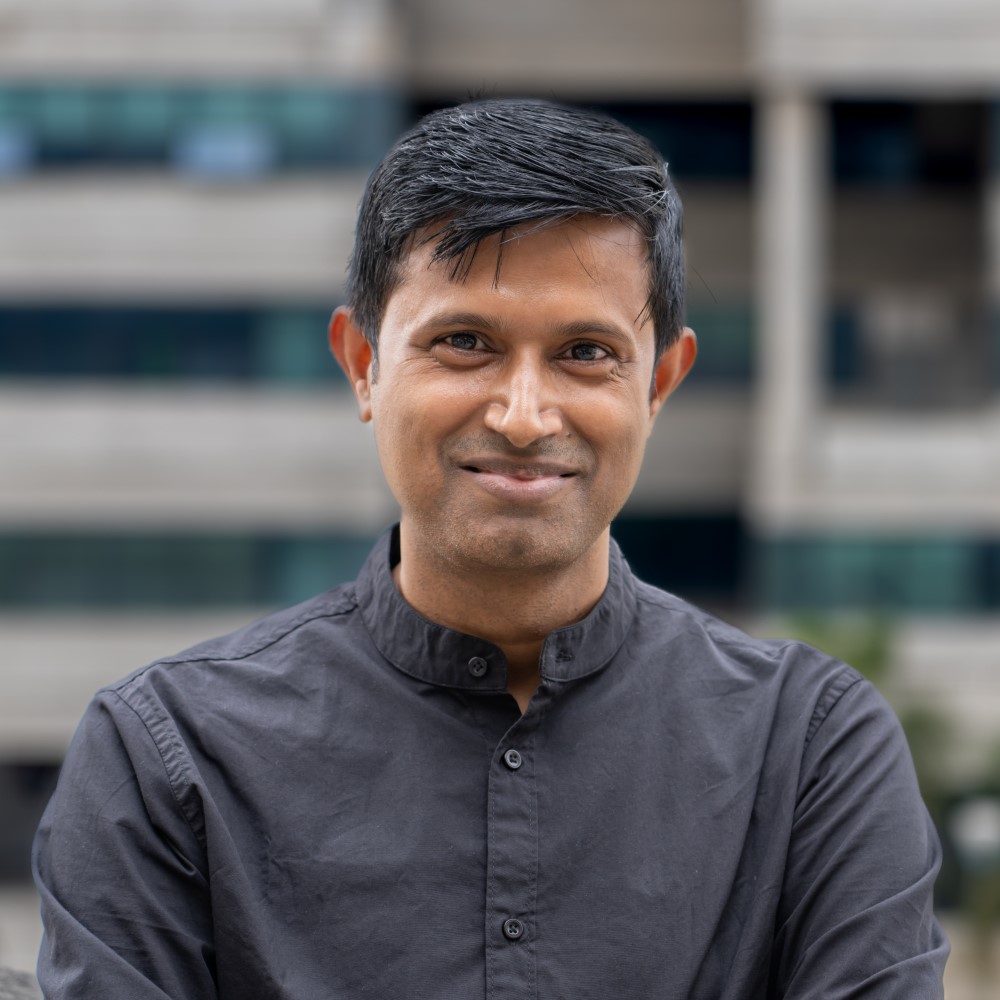
Dr. Martin J. Montag is an Assistant Professor at the Amrita Center for Wireless Networks & Applications (Amrita WNA) , Amritapuri Campus, focusing on interdisciplinary research at the intersection of mathematics and applied technologies. BA in Mathematics from Cambridge University MSc in Mathematics from University of Bonn PhD in Mathematics (Optimization, Image Processing, Manifolds, Calculus of Variations) from University of Kaiserslautern His research spans applied mathematical disciplines including: Convex Analysis Partial Differential Equations Gamma Convergence Hyperspectral Image Processing High-dimensional Optimization He contributes to technology-driven infrastructure projects through the Machine Learning & Artificial Intelligence and Intelligent Infrastructure research groups, working on: Smart Energy Systems Rural Electrification Water Quality Monitoring Communication Systems for Extreme Environments (e.g., Landslide & Oceannet)
Suyash P. Awate serves as the Asha and Keshav Bhide Chair Professor in the Department of Computer Science and Engineering at the Indian Institute of Technology (IIT) Bombay, Mumbai, India. His research spans medical image computing, machine learning, image analysis, computer vision, and statistical modeling and inference. His work focuses on developing novel computational methods for medical image analysis, reconstruction, and quality enhancement. Prof. Awate's research interests center on medical image computing, where he develops advanced machine learning techniques for medical image reconstruction, segmentation, and quality enhancement. His work addresses critical challenges in medical imaging such as low-dose PET/CT imaging, uncertainty quantification in segmentation, robustness to out-of-distribution data, and accelerated MRI/fMRI acquisition. He has pioneered methods combining variational inference, expectation maximization, and deep learning to improve medical image quality while reducing radiation exposure and scan times. His research has significant clinical applications in neuroimaging, tumor analysis, and brain function mapping. His recent publications demonstrate a strong trend toward integrating deep learning with classical statistical methods, particularly focusing on uncertainty-aware models for medical image analysis. His work consistently addresses the challenge of robustness in medical imaging, developing methods that maintain performance even with degraded input data or distribution shifts. A significant portion of his research targets clinical applications, particularly in neuroimaging and oncology, with emphasis on practical implementation for real-world medical settings. Prof. Awate actively mentors PhD, MTech, and BTech students at IIT Bombay. His current PhD students include Vatsala Sharma (awarded Microsoft Research India PhD Award), Jimut Bahan Pal (CMInDS Fellow, Prime Minister's Research Fellow), Tejomay Padole (TCS Research Fellow), Subhankar Nag, and Koustav Pal. He also guides MTech/MS students Soumya Mukherjee, Jay Gorakhiya, and Russel Abreo, along with BTech student Varshith Anumalasetty. He teaches several courses including CS 736: Medical Image Computing (inaugurated in 2014), CS 663: Fundamentals of Digital Image Processing, CS 215: Data Analysis and Interpretation, CS 740: Mathematics for Visual Computing, and CS 101: Computer Programming and Utilization. His laboratory focuses on developing computational methods for medical image analysis, with particular emphasis on uncertainty quantification, robust deep learning for medical imaging, and accelerated acquisition techniques. The research group maintains strong collaborations with medical institutions to ensure clinical relevance of their computational methods.
Chandra Sekhar Seelamantula is a Professor in the Department of Electrical Communication Engineering at the Indian Institute of Science (IISc), Bangalore, leading the SPECTRUM LAB. His research spans signal and image processing, computational imaging, and AI applications in healthcare, with expertise in Speech Processing, Biomedical Image Processing, Compressed Sensing, and Neuromorphic Imaging. He teaches core courses including Digital Signal Processing and Time-Frequency Analysis. His educational background includes: Postdoctoral fellow, Ecole polytechnique fédérale de Lausanne (2006-2009) Ph.D., Indian Institute of Science, Bangalore (2005) B.E., Osmania University College of Engineering, Hyderabad (1999) Professor Seelamantula's work focuses on advancing Sampling Theory and solving Inverse Problems in Computational Imaging through AI-driven approaches. His research bridges theoretical foundations with practical applications in Digital Healthcare, particularly in Biomedical Image Analysis and Neural Signal Processing, contributing to innovations in medical diagnostics and assistive technologies. His scientific awards and honors include: Outstanding Editorial Board Member Award 2022, IEEE Transactions on Image Processing Digital Health prize at NBEC 2018 Prof. Priti Shankar Teaching Award 2013 Intellectual Ventures Invention Awards (2010, 2011) IBM India Research Labs Research Student Fellowship Award (2001-2004) Multiple IEEE student paper contest prizes Undergraduate honors including Srinivasa Ramanujam Gold Medal (1997-1999) He has advised graduate students and secured research support through prestigious fellowships. His professional service includes leadership roles in IEEE Signal Processing Society chapters and technical committees. He directs the SPECTRUM LAB at IISc, which pioneers research in computational imaging, neuromorphic systems, and AI-driven healthcare solutions.
Amit Mitra is a Professor in the Department of Mathematics & Statistics at the Indian Institute of Technology Kanpur (IIT Kanpur), India. He has held academic positions at IIT Kanpur since 2005, progressing from Assistant Professor (2005-2007) to Associate Professor (2008-2012) and Professor (2012-present). Prior to this, he served as an Assistant Professor at IIT Bombay (2002-2005) and held research roles at the Reserve Bank of India (1996-2002). His international collaborations include visiting positions at Uppsala University (Sweden) and universities in Australia and Cyprus. His educational qualifications include: Ph.D. in Statistics from IIT Kanpur (1996) M.Sc. in Statistics from IIT Kanpur (1991) B.Sc. (Honors) in Statistics from the University of Calcutta (1988) Professor Mitra's research centers on statistical signal processing with emphasis on parameter estimation for nonlinear time series models, particularly chirp signals, and data mining of financial/economic time series. His work develops robust algorithms for signal model estimation using techniques like genetic algorithms, M-estimators, and wavelet filtering, with applications in radar, sonar, finance, and image processing. He has pioneered methods for 1D/2D chirp signal analysis and volatility modeling in econometrics. His 15 most recent publications (2018-2023) reveal a sustained focus on advanced parameter estimation for chirp and sinusoidal models, with increasing attention to computational efficiency and real-world applicability. Key trends include the development of robust M-periodogram approaches, asymptotic analysis of quantile estimators, and extensions to multidimensional signal processing—particularly for image applications through nonnegative matrix factorization. His scientific awards include: Excellence in Teaching Award (2019, IIT Kanpur) Distinguished Teacher Award (2010, IIT Kanpur) M. N. Murthy Award from the Indian Statistical Institute (2002) Postdoctoral award from Swedish Foundation for Strategic Research (2000) Research award from National Board for Higher Mathematics (1992) Professor Mitra has supervised 67 students including 3 PhD candidates (1 completed), 4 M.Tech students, and 59 Masters students across Mathematics, Economics, and Statistics programs. His applied work includes consultancy projects with Politis (Cyprus) on market data modeling, Retailzoom (Cyprus) on retail analytics, and QuantLink Solutions (USA) on data mining software development for financial applications. No specific research labs or teams are mentioned in the provided text, though his patent in image processing (US Patent 9,940,868) indicates collaborative work with engineers on real-time display systems.
Soumyashree is an Assistant Professor at the School of Computer Engineering, Manipal University, with 8 years of experience in academic and research domains. Her work bridges theoretical and applied aspects of Machine Learning, Artificial Intelligence, and Wireless Networks, focusing on solving complex problems in industrial and computational systems. Education: B.E., M.Tech, Ph.D. Research Interests: Machine Learning, AI, 5G Wireless Networks, Energy Efficiency Optimization, and Industrial Monitoring Systems. She has published extensively on topics like graph convolutional networks for resource allocation in 5G, AI-driven energy management in HPC, neural network-based tool wear monitoring, and deep learning architectures for agricultural disease detection. Recent Research Trends: Her publications emphasize applying ML/AI to diverse domains: optimizing wireless networks, enhancing energy efficiency in computing systems, predictive maintenance in manufacturing, plant disease classification, and digital forensics. Keywords include graphs , resources , neural networks , and computer vision . Email: soumya.shree@manipal.edu ORCID: 0000-0001-8988-0021
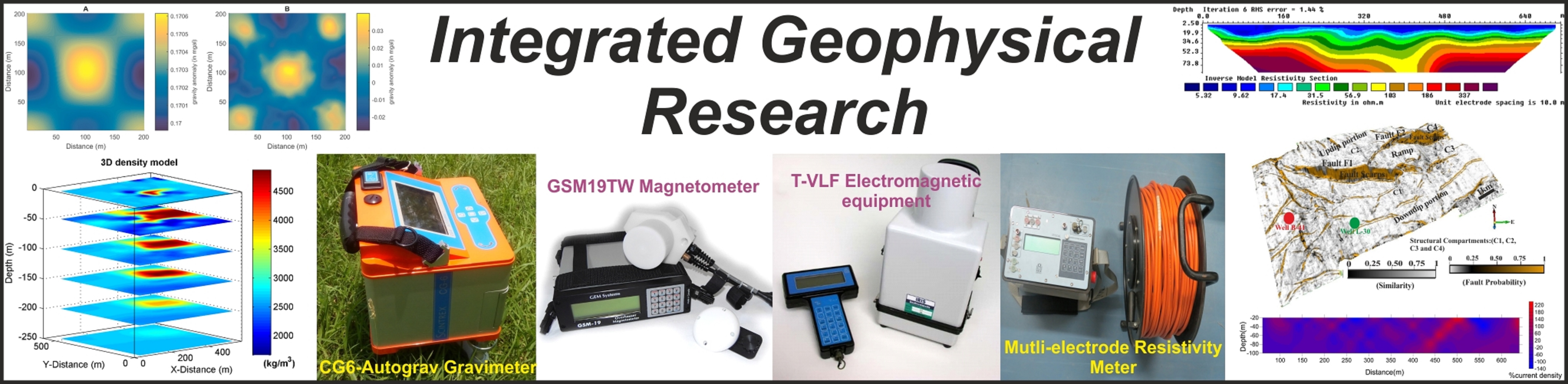
Animesh Mandal serves as an Associate Professor in the Department of Earth Sciences at Indian Institute of Technology Kanpur (IITK) , where he has been a faculty member since April 2015. His academic journey includes a B.Sc. in Physics from University of Calcutta (2005), M.Sc. in Physics from IIT Delhi (2007), and Ph.D. in Geophysics from IIT Kharagpur (2013). Prior to joining IITK, he worked as a Project Scientist at the National Geophysical Research Institute (NGRI). Research Interests : Dr. Mandal specializes in near-surface geophysical studies , geophysical data enhancement , and subsurface modeling . His work focuses on integrated geophysical approaches to understand shallow crustal configuration and delineate natural resources, utilizing gravimeter, magnetometer, electrical, and EM equipment. He has pioneered research in machine learning-assisted interpretation of geophysical data, particularly in seismic impedance inversion, reservoir characterization, and geothermal system analysis. His recent publications demonstrate expertise in applying deep learning techniques to solve complex geophysical problems. Research Trends : Analysis of his recent publications reveals a strong focus on geothermal energy systems , particularly non-volcanic hot springs in the Eastern Ghats Mobile Belt. His work combines gravity-magnetic studies with advanced computational methods to understand crustal configuration and thermal structure. Another major trend involves machine learning applications in seismic data processing, where he develops novel deep learning architectures for impedance inversion and reservoir characterization. His research bridges traditional geophysical methods with cutting-edge AI techniques, creating innovative approaches to subsurface imaging. Scientific Awards : Supervised students who received Prime Minister's Research Fellowship (PMRF) Advisees awarded FARE Fellowship, ONGC-IGU Best Poster Presentation Award, and EAGE PACE grants Students received FULL sponsorship to attend major international conferences like IMAGE 2024 Mentored students who secured postdoctoral positions at prestigious institutions including KAUST and University College Dublin Academic Leadership : Dr. Mandal has successfully supervised multiple Ph.D. and M.Tech. students to completion, with recent graduates securing positions at institutions like University College Dublin, Queen's University, and industry roles at companies including Verisk Analytics and ONGC. His research group maintains active collaborations with international institutions and regularly presents at major geoscience conferences including EAGE, SEG, and AOGS. The group has secured competitive research funding that supports field studies, laboratory work, and student training in advanced geophysical techniques.
Ishwar Kumar C. serves as an Assistant Professor in the Department of Earth Sciences at the Indian Institute of Technology Kanpur (IIT Kanpur), where he has been a faculty member since January 2018. His academic journey includes postdoctoral research at the Indian Institute of Science (IISc) and the Indian Institute of Space Science and Technology (IIST), establishing him as a prominent researcher in Precambrian geology. Education: Ph.D. in Earth Sciences, Indian Institute of Science, Bangalore (2015) M.Sc. in Geology, Kuvempu University, Shivamogga (2008) - First rank with Gold medal B.Sc. in Geology, Mangalore University, Mangalore (2006) Dr. Kumar's research focuses on the tectonics and evolution of shear/suture zones, Archean crustal domains, and the paleogeography of Eastern Gondwana with emphasis on India-Madagascar-Sri Lanka-Antarctica correlations. His multidisciplinary approach integrates image-based studies (remote sensing, GIS), extensive field investigations, and sophisticated laboratory analyses including petrological, geochemical, and geochronological techniques to unravel complex geological histories. His publication record demonstrates a consistent focus on Precambrian crustal evolution in the Indian subcontinent, with particular attention to the Dharwar Craton, Karwar block, and connections to other Gondwanan landmasses. Recent work (2021-2022) has advanced understanding of crustal growth processes and metamorphic histories through innovative analytical approaches. Awards and Recognition: National Post-Doctoral Fellowship from SERB-DST (2017) Research Associate Fellowship from IISc Bangalore (2015) First rank with Gold medal in M.Sc. (2008) Dr. Kumar teaches key courses including Igneous and Metamorphic Petrology, Economic Geology, Field Geology, and Geological Remote Sensing and GIS. His research has significant implications for understanding early Earth processes, mineral resource exploration, and paleogeographic reconstructions of ancient supercontinents. He maintains active collaborations with international researchers, as evidenced by his co-authored publications across multiple continents.
Onkar Dikshit is a Professor in the Department of Civil Engineering at the Indian Institute of Technology Kanpur. He specializes in Geoinformatics and has made significant contributions to the field of remote sensing and geospatial technologies. His research interests include Remote Sensing Applications, SAR, Photogrammetry, GIS, GPS and Digital Image Processing for Engineering and Natural Resource Management Problems. Dr. Dikshit's work focuses on applying geospatial technologies to solve real-world problems in environmental monitoring, urban planning, and natural resource management. Dr. Dikshit has received the prestigious Professor B. B. Lal Chair Professor award, recognizing his contributions to the field. His research group consists of talented researchers including Sumanta Pasari, Saurabh Srivastava, Anand Mehta, Brajesh Kumar, Divyesh Varade, Jagadish B, and Naveen R. His work spans multiple disciplines including environmental science, geology, and engineering, with applications in air pollution monitoring, earthquake analysis, and urban environment management. Dr. Dikshit collaborates with researchers across various institutions and has published in high-impact journals across these fields.
Manas Khan is an Assistant Professor in the Department of Physics at the Indian Institute of Technology Kanpur (IIT Kanpur), specializing in Soft Matter and Biophysics, Optical Trapping and Micromanipulations, and Modeling and Simulations. Education: Ph.D. (2011): Indian Institute of Science, India M.S. (2003): Indian Institute of Science, India B.Sc. (2000): Presidency College, Kolkata, India Dr. Khan's research focuses on studying statistical physics of soft and active matters employing various experimental tools, principally optical tweezers, and Brownian dynamics simulations. His work bridges experimental physics with theoretical modeling to understand complex systems at microscopic scales. He has made significant contributions to microrheology, particle dynamics in complex fluids, and cellular biomechanics. His publication record demonstrates a consistent focus on using optical tweezers to probe material properties and biological systems. Key themes include non-equilibrium statistical mechanics, viscoelastic properties of complex fluids, and the mechanical behavior of biological membranes. His collaborative work with researchers like A.K. Sood and Thomas G. Mason has resulted in publications in high-impact journals such as Physical Review E, Europhysics Letters, and Soft Matter. Dr. Khan has held postdoctoral positions at the University of Konstanz (2011-2012), University of California - Los Angeles (2013-2016), and University of San Diego (2016-2017) before joining IIT Kanpur as faculty. His research program at IIT Kanpur likely involves an experimental laboratory with optical trapping capabilities and computational resources for simulations.
Parag Chaudhuri is a Professor in the Department of Computer Science and Engineering at the Indian Institute of Technology Bombay. His research centers on computer graphics, animation, and virtual reality, developing computational models to replicate real-world phenomena for enriched virtual experiences. His educational background includes: Ph.D. from IIT Delhi under Prem Kalra and Subhashis Banerjee Postdoctoral research at MIRALab, University of Geneva with Nadia Magnenat Thalmann Bachelor's degree in Civil Engineering from Delhi College of Engineering Professor Chaudhuri's research spans Computer Graphics with core focus areas in character/natural phenomena animation, visual data understanding, and 2D/3D content generation. His work integrates computer vision, physics simulation, and machine learning to address challenges in virtual worlds. Specific interests include rendering, modeling, VR/AR systems, and vision-based graphics. Applications extend to medical simulation, entertainment, industrial processes, and digital heritage preservation through physics-driven approaches. Recent publications (2022-2025) reveal strong trends in document analysis for multilingual text recognition (especially Indic scripts), real-time hand/character animation in AR environments, and physics-based fracture/deformation systems. His work bridges graphics with machine learning for practical solutions in visual data processing. At IIT Bombay, he mentors graduate students requiring foundational courses CS675 and CS775. He accepts Ph.D./M.S. candidates through official CSE department procedures but does not offer internships to non-IITB students. He leads a research group advancing computational techniques for virtual world creation, focusing on interactive animation systems and visual data synthesis.
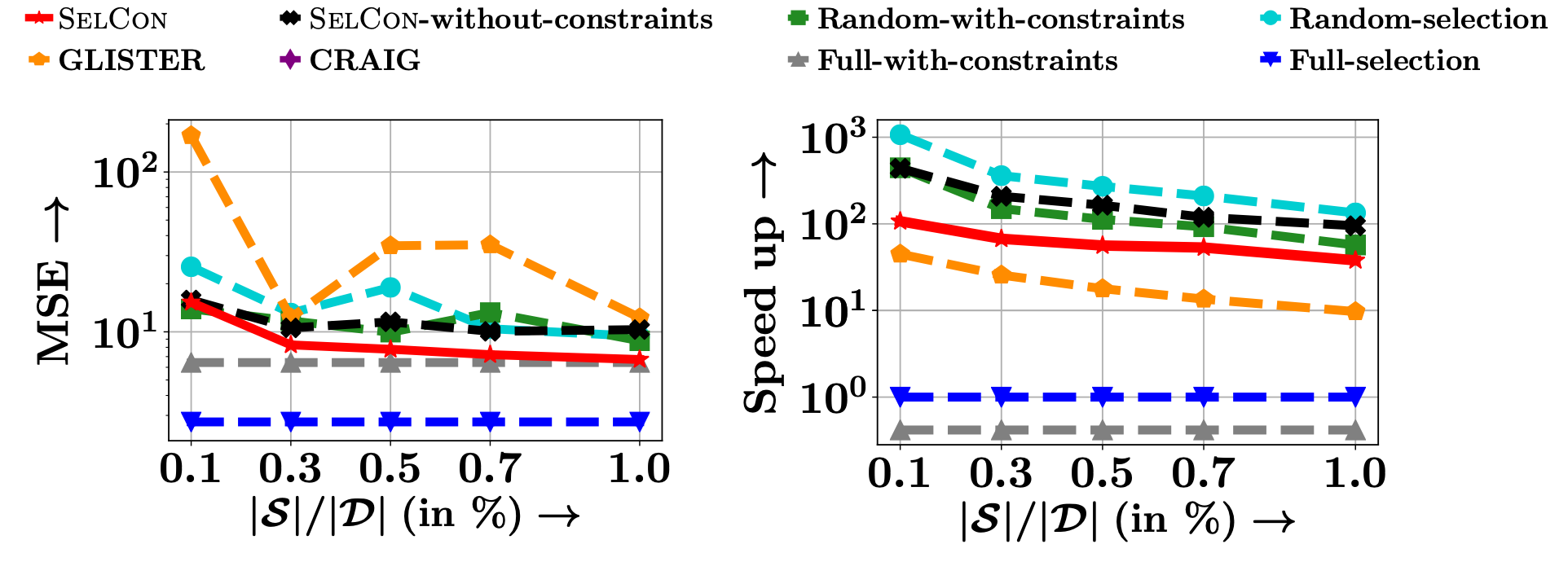
Abir De is an Assistant Professor at the Department of Computer Science and Engineering, Indian Institute of Technology Bombay. His research focuses on designing machine learning models for structured objects like graphs and sets, emphasizing data-efficient learning and human-machine collaboration. Academic Rank: Assistant Professor Institution: Indian Institute of Technology Bombay Department: Computer Science and Engineering Research Interests : Differentiable surrogates for combinatorial graph algorithms (e.g., subgraph isomorphism detection) Data-efficient machine learning through strategic subset selection Neural models for submodular set functions Human-in-the-loop machine learning Information diffusion with capacity constraints Scientific Awards : Qualcomm Innovation Fellowship Winner (2022) and Superwinner (2023) Indian National Academy of Engineering Young Engineer Award (2021) Prof. Krithi Ramamritham Award for Creative Research (2020) Google India PhD Fellowship (2013) Advising and Community Contributions : Co-advising PhD students Indradyumna Roy and N Lokesh Program Co-chair of IndoML 2023 Co-organizer of CSE Research Symposium (2023) and SubSetML workshop (2021) Tutorial creator at AIML Systems Conference (2021) and AAAI (2022) Serving on Senior PC at AAAI (2022-2024), PC member at NeurIPS (2016-2023), and ICLR (2018-2023)
Dr. Maunendra Sankar Desarkar is an Associate Professor at the Computer Science and Engineering Department of Indian Institute of Technology Hyderabad , India, with affiliations to the AI Department. His research spans Natural Language Processing , Information Retrieval , and Machine Learning , focusing on robust, responsible, and culturally-aware AI systems. Education: B.E. (University of Burdwan), M.Tech (IIT Kanpur), Ph.D. (IIT Kharagpur, 2014) Current work emphasizes zero-shot cross-lingual transfer , dialogue interpretability , and ethical NLP (non-toxicity, empathy). Recent articles explore large language model evaluation , hallucination detection , and tokenization for Indic languages . Collaborations include Microsoft and JICA-funded projects. Scientific contributions include: Microsoft India Ph.D. Fellowship Award Yahoo Key Scientific Challenges Honorable Mention (2012) Students include Suvodip Dey (Ph.D. in Dialogue Systems), Aishwarya Maheswaran , Debolena Basak , Kaushal Kumar Maurya , and Maharaj Brahma . Advises on projects involving disaster response systems , generative AI , and multilingual NLP .
Virkeshwar Kumar is an Assistant Professor in the Department of Mechanical Engineering at the Indian Institute of Technology Kanpur. His research focuses on experimental fluid dynamics, heat transfer, and phase change phenomena in manufacturing processes. His educational background includes: PhD in Mechanical Engineering from Indian Institute of Technology Bombay (2020) B.Tech in Manufacturing Engineering from National Institute of Foundry and Forge Technology, Ranchi (2014) Dr. Kumar's research interests span a wide range of topics in thermal-fluid sciences and manufacturing. His work primarily investigates solidification, melting, casting, welding, and other phase change processes with emphasis on transport phenomena, interfacial interactions, and fluid dynamics. He has made significant contributions to understanding evaporative crystallization, boiling phenomena, and natural convection during solidification processes. His experimental approach combines advanced visualization techniques with quantitative measurements to unravel complex thermal-fluid phenomena in manufacturing contexts. His publication record demonstrates a strong focus on phase change phenomena, particularly in the areas of solidification, evaporation, and crystallization. His recent work has explored evaporative crystallization of saline droplets, convection-induced bridging during alloy solidification, and evaporation-based detection methods for milk adulteration. His research bridges fundamental thermal-fluid sciences with practical applications in manufacturing and materials processing. Dr. Kumar has received several prestigious awards and fellowships: Excellence in Ph.D. Research Award for 2018-2020 from IIT Bombay C V Raman Post-Doc Fellowship from IISc Bangalore (2020) 2nd Prize in image contest at Mechanical Department Annual Research Student Symposium, IISc Bangalore (2021) Ph.D. Annual Progress Seminar Award from Department of Mechanical Engineering, IIT Bombay (2017-18) International Travel Support grant to attend ICASP-5 & CSSCR-5 conference at Salzburg, Austria (2019) Dr. Kumar has supervised multiple research students and has been involved in several collaborative research projects. His work on evaporation-based detection of milk adulterants received significant media coverage from major outlets including The Hindu, Indian Express, and Times of India. His research on double-diffusive layers during solidification was featured as a journal article with AIP media coverage. He maintains active research in the Manufacturing Science Lab at IIT Kanpur, where he conducts experimental investigations of thermal-fluid phenomena using advanced visualization and measurement techniques.
Professor Animesh Das is a distinguished faculty member in the Department of Civil Engineering at the Indian Institute of Technology Kanpur. His academic career spans over two decades with significant contributions to transportation engineering, particularly in pavement technology. His research has established him as a leading expert in pavement materials characterization, design methodologies, and maintenance strategies for road infrastructure. Education: PhD, IIT Kharagpur, India, 1998 M.Tech, IIT Kharagpur, India, 1993 B.E., REC Durgapur, India, 1991 Professor Das's research interests center on transportation engineering with specialized focus on pavement materials science, innovative pavement design methodologies, advanced evaluation techniques, and sustainable maintenance strategies for road infrastructure. His work bridges theoretical advancements with practical applications, addressing critical challenges in India's rapidly expanding transportation network. His research spans material characterization at micro and macro levels, computational modeling of pavement behavior, and development of cost-effective maintenance frameworks that consider both performance and economic factors. His publication record reveals a consistent research trajectory focused on pavement engineering, with increasing sophistication in analytical approaches over time. Early work concentrated on fundamental material properties and basic design principles, while more recent publications demonstrate advanced computational techniques, optimization methodologies, and sustainability considerations. His research shows strong alignment with national infrastructure development needs while maintaining international scientific rigor. Major Awards: Fulbright-Nehru Senior Research Fellow (2012-13) Batch of 1970 Research Fellowship, IIT Kanpur (2009-2012) IRC-Pt. Jawaharlal Nehru Birth Centenary Award (2005) INAE Young Engineer Award (2004) AICTE Career Award for Young Teachers (2002-2003) Professor Das has secured significant research funding through various national programs and industry collaborations, supporting both fundamental research and applied projects addressing real-world pavement engineering challenges. His work has influenced pavement design practices in India through collaboration with national transportation agencies and professional organizations.
Gannavarpu Rajshekhar is a Professor in the Department of Electrical Engineering at the Indian Institute of Technology Kanpur (IIT Kanpur), specializing in Photonics. His academic journey includes a PhD from the Swiss Federal Institute of Technology Lausanne (EPFL), an M.Tech from IIT Kanpur, and a B.E. from Pt. Ravishankar Shukla University. PhD: Swiss Federal Institute of Technology Lausanne (EPFL) M.Tech: Indian Institute of Technology Kanpur B.E.: Pt. Ravishankar Shukla University Professor Rajshekhar's research focuses on advanced optical techniques and imaging methodologies. His work spans quantitative phase imaging, optical metrology, applied signal processing, fringe analysis, and biophotonics, with particular emphasis on biomedical applications. His expertise lies at the intersection of photonics, signal processing, and biomedical engineering, developing innovative solutions for precise optical measurement and imaging systems. His research has significant implications for medical diagnostics and precision measurement technologies. Dr. Rajshekhar has received notable recognition including the SERB Early Career Research Award, the prestigious Swiss National Science Foundation Postdoctoral Fellowship, and the Academic Excellence Award at IIT Kanpur. His professional journey includes serving as an Assistant Professor at IIT Kanpur (2014-2018), followed by postdoctoral positions at the University of Illinois, Urbana-Champaign and the Swiss Federal Institute of Technology Lausanne. Based in office ACES 325B at IIT Kanpur, Professor Rajshekhar continues to contribute to the advancement of photonics research and education at one of India's premier technical institutions.