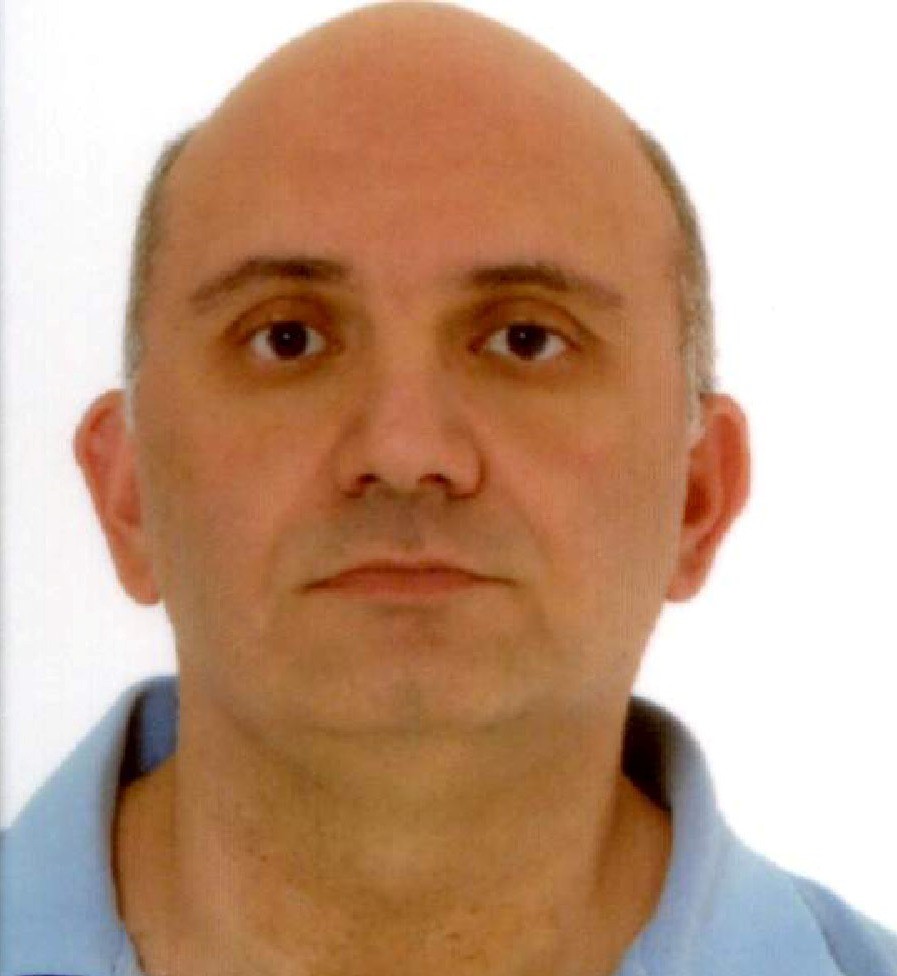
Paschalis Antonis is a Professor at the Department of Informatics and Telecommunications, National and Kapodistrian University of Athens. His research focuses on hardware architectures for space systems, embedded systems, and image compression standards such as CCSDS. He specializes in FPGA implementations, radiation-hardened electronics, and biomarker development for immunogenic responses to cancer therapies. Research Interests: High-performance FPGA-based hardware accelerators Space-grade embedded systems and data compression CCSDS standard implementations for aerospace applications Molecular biomarkers for immunotherapy response prediction Recent Trends: His work emphasizes resilient systems against radiation effects (e.g., SEUs in FPGAs), high-throughput image compression cores for space missions, and interdisciplinary research linking computational hardware with medical diagnostics via prothymosin α analysis. Grants & Labs: Leads the ASPIICS coronagraph project for ESA's Proba-3 mission, involving advanced optical instrumentation and formation flying systems. Collaborates on COTS FPGA utilization in extreme environments.
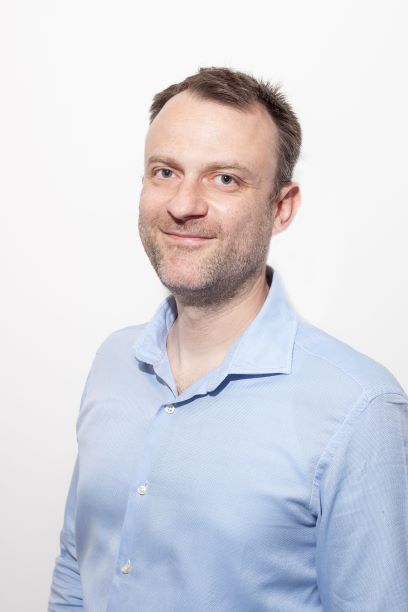
Sotiris Christodoulou is an Associate Professor at the Department of Electrical and Computer Engineering within the College of Engineering at the University of Peloponnese. He also serves as a research associate at the 'Diofantos' Institute of Computer Technology and Publishing. His academic career spans multiple institutions where he has taught graduate and undergraduate courses across seven different universities since 2004. Dr. Christodoulou earned his B.A. in Computer Engineering and Informatics from the University of Patras in 1994 and completed his PhD in Web Engineering from the same institution in 2004. His educational background established the foundation for his extensive research career focused on web technologies and applications. His primary research interests include Web Engineering, Web Application Performance Optimization, Web Code Quality, Semantic Web technologies, Hypermedia Systems, and emerging Web 2.0 and Web 3.0 technologies. His work extends to Virtual Interactive Environments, 3D and Augmented Reality applications, and Spatial Hypertext systems. Christodoulou's research bridges theoretical web engineering principles with practical applications in cultural heritage, education, and urban infrastructure systems. His research output comprises over 45 publications in international journals, book chapters, and conferences, accumulating more than 450 citations. He has participated in over 23 European and National Research and Development Projects focused on web software technology, hypermedia applications, and 3D educational and cultural applications. Professional member of ACM Professional member of IEEE Member of organizing committees for over 15 international scientific conferences Reviewer for recognized international journals (ACM, IEEE, etc.) Christodoulou has extensive teaching experience across seven universities, specializing in programming languages, web software engineering, software quality, and data management. His research projects typically combine applied research with cutting-edge technology implementation for real-world problems in large organizational information systems. He maintains regular office hours at Building K, Office K2.02 at the University of Peloponnese, with appointments available on Mondays and Thursdays.
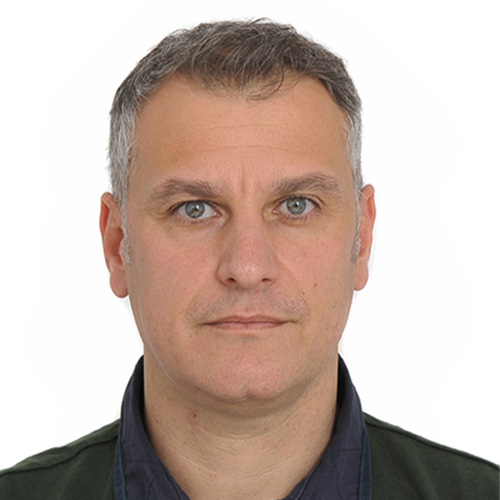
Georgios Bardis is a permanent Assistant Professor at the Department of Informatics and Computer Engineering , School of Engineering , University of West Attica . He holds a PhD in Informatics from University of Limoges (2006), an MSc in Software Systems from University of California, Santa Barbara (1994), and a Diploma in Computer Engineering & Informatics from University of Patras (1992). His career spans multiple academic roles, including Lecturer at University of West Attica (2018-2021) and Professor of Applications at TEI of Athens (2010-2018). Research Interests : Focus on Intelligent Computer Graphics , Declarative Modeling , and Multicriteria Decision Analysis . His work integrates AI into 3D scene synthesis, urban planning, and semantic decision systems. Awards : Master Microsoft Office Specialist (MOS), 2003 NAT Scholarships for Academic Excellence (1989-1992) 1984 Monetary Prize from Hellenic Mathematical Society Leadership : Member of AKIIS Research Lab (University of West Attica), Editorial Board of International Journal of Systems Biology and Biomedical Technologies , and Reviewer for International Journal of Digital Earth . Publications : 5 peer-reviewed journals, 2 books, 8 book chapters, and 22 conference papers. Key areas include WebGL avatars, urban data analysis, and 3D modeling with AI.
Emmanouil Z. Psarakis is an Associate Professor at the Department of Computer Engineering & Informatics , University of Patras, Greece. Born in 1963, he has been affiliated with the university since 2005 and is a member of the Signal Processing and Communications Lab . His academic journey includes teaching courses such as Signals and Systems Theory , Digital Signal Processing , and Computer Vision and Graphics . PhD in Computer Engineering and Informatics, University of Patras (1991) Dr. Psarakis is renowned for his research in image processing , computer vision , and signal processing , with applications in biomedical imaging , seismology , and robotics . His work spans deep learning , filter design , and 3D reconstruction , reflecting a multidisciplinary approach. His 15 most recent publications (2020–2025) focus on sign language recognition , adversarial defense , 3D shape analysis , and medical imaging . These works integrate machine learning , stochastic modeling , and computer vision to address challenges in video summarization , image inpainting , and seismic signal analysis . Dr. Psarakis has supervised over 10 PhD students , including Fotini Fotopoulou (2016–2019) and Panagiotis Georgantopoulos (2020–2023). He has participated in EU-funded , Hellenic , and bilateral R&D projects related to biomedical signal processing , robot vision , and forest fire monitoring . He leads the Signal Processing and Communications Lab , which collaborates with institutions like the Computer Technology Institute and international universities. His contributions include filter design , image alignment , and stereopsis techniques , with a focus on practical implementations in telecommunications and medical diagnostics .
Athanasios G. Kanatas is a Professor at the Department of Digital Systems, University of Piraeus, Greece, and Director of the Telecommunication Systems Laboratory. He holds a Ph.D. in Mobile Satellite Communications from NTUA (1997), and has held roles such as Dean of the School of Information & Communication Technologies (2013–2017) and IEEE Communications Society Chairperson (1999). Education: Diploma in Electrical Engineering (NTUA, 1991), M.Sc. in Satellite Communication Engineering (University of Surrey, 1992), Ph.D. in Mobile Satellite Communications (NTUA, 1997). Research focuses on V2X communications, UAV-assisted networks, antenna design, stochastic geometry, and cybersecurity. He has published over 200 papers and authored 6 books, and leads projects in 5G/6G systems and integrated sensing-communication networks. His work includes pioneering contributions to aerial relay placement, fluid antenna systems, and hybrid beamforming techniques. He serves as Editor of IEEE Transactions on Wireless Communications, Associate Editor of IEEE Transactions on Antennas and Propagation, and is a Senior IEEE Member since 2002. Recent activities include extending the deadline for M.Sc. program applications and promoting internships for students. Labs/Teams: Directs the Telecommunication Systems Laboratory, collaborating on projects like ARGOS RFI monitoring and UAV corridor-assisted IoT networks. His research emphasizes practical implementation through prototyping and experimentation, with applications in aerospace, IoT, and intelligent transport systems.
Dr. Vivi Tornari is a Research Fellow and head of the Holography laboratory at IESL/FORTH, specializing in optical metrology and cultural heritage preservation. She has held this position since 1996 and has coordinated major EU projects such as E-RIHS and CHARISMA . Her work focuses on developing holographic interferometry techniques for structural diagnosis of artworks, fraud detection, and environmental impact assessment. She holds a PhD in Applied Science from the University of Sunderland and has authored over 70 scientific publications. Education: Postdoctoral Fellow in Optical Holography, Royal College of Art (RCA), London (1990) PhD in Applied Science, University of Sunderland, UK (2009) MSc in Chemical Engineering/Material Science, National Technical University of Athens (1996) Research interests include laser-based structural analysis, speckle interferometry, and the integration of optical methods for heritage preservation. She has pioneered non-invasive diagnostic tools such as the Applied Holography Metrology Laboratory and has advised on EC projects as an evaluator. Funding highlights include: Leadership in EU projects totaling over €20M Coordinator of SYDDARTA (FP7) and CLIMATE FOR CULTURE (FP7) PI for HOLOAUTHENTIC (FP5) and LASERACT (FP6) Her publications emphasize interdisciplinary collaboration, combining optical engineering with conservation science. Key innovations include: Development of DHSPI (Digital Holographic Speckle Pattern Interferometry) Integration of thermography with interferometry for defect analysis Laser ablation studies on polymer substrates Labs/Teams: Lead the Holography Lab at IESL, collaborating with international institutions like the V&A Museum and Imperial College London. Current projects focus on European research infrastructures (E-RIHS) and climate change impacts on heritage materials.
Dr. Zacharakis Giannis is a Research Professor and Research Director at the Institute of Electronic Structure and Laser (IESL) of the Foundation for Research and Technology (FORTH). He heads the Laboratory for Biophotonics and Molecular Imaging, focusing on developing advanced imaging technologies for biomedical and cultural heritage applications. He served as Vice President and President of the European Society for Molecular Imaging (ESMI) and holds leadership roles at FORTH. Education: BSc in Physics (1997), PhD in Biomedical Imaging (2002), both from the University of Crete. Postdoctoral Research Fellow at Harvard University (2003-2004). Research Interests: Biophotonics, optoacoustic imaging, biomedical optics, and non-invasive diagnostic tools. His work spans label-free imaging techniques, hybrid microscopy systems, and applications in healthcare, art conservation, and plant biology. Key Achievements: Over 60 peer-reviewed journal articles, 48 conference papers, 2 book chapters, 2 patents, and an h-index of 19 (Google Scholar). Awards include 3 first prizes at international conferences and 20+ invited talks globally. Labs & Groups: Leads the Biophotonics and Molecular Imaging Lab at FORTH-IESL, collaborating on projects like optical projection tomography, adaptive light-sheet microscopy, and optoacoustic technologies for cultural heritage diagnostics.
Patrina Paraskevopoulou is a Professor of Inorganic Chemistry at the National and Kapodistrian University of Athens , where she has been affiliated since 2009. Her academic journey at the same institution includes roles as Lecturer (2009), Assistant Professor (2015), Associate Professor (2019), and Full Professor (2023). PhD in Inorganic Chemistry/Catalysis (2003, NKUA) MSc in Inorganic Chemistry/Catalysis (2000, NKUA) BSc in Chemistry (1998, NKUA) Her research spans three core areas: Synthetic Inorganic Chemistry : Transition metal clusters, redox-active ligands, and nanostructured materials Homogeneous Catalysis : Oxidation reactions, atom-transfer processes, and polymerization mechanisms Nanoporous Materials : Metal-doped aerogels for environmental, biomedical, and energy applications Recent publications highlight her work on: Alginate-based aerogels for nuclear waste removal Biopolymer aerogels for sustainable packaging Carbon aerogels for electrochemical energy storage Metathesis polymerization mechanisms Biomedical implant monitoring via ultrasound Scientific Recognition : CAS REGISTRY Innovator (2023) DAAD Research Stay Scholarship (2017-2018) Multiple Greek State Scholarships (academic excellence) She has supervised numerous PhD, MSc, and undergraduate theses while serving as Guest Editor for Polymers and Frontiers in Chemistry . Her laboratory has received funding exceeding €1,000,000 through national and European projects.
Ioannis Andreadis is a Professor in the Department of Electrical and Computer Engineering at the School of Engineering, Democritus University of Thrace. He has been a faculty member since 1993, following his appointment as a Visiting Professor at the School of Technological Applications of TEI Kavala (1991-1992). His academic journey began with a Diploma in Electrical Engineering from Democritus University of Thrace (1983), followed by an M.Sc. in Electrical Engineering & Electronics (1985) and a Ph.D. in Instrumentation & Analytical Science (1989), both from the University of Manchester. Professor Andreadis's research spans the Design and Implementation of Electronic Systems with particular emphasis on Intelligent Systems and Machine Vision . His work has resulted in over 230 publications in international journals, book chapters, and conference proceedings. He has made significant contributions to image processing, particularly in mathematical morphology, color image processing, and real-time implementation of image processing algorithms. His research has practical applications in seismic signal processing, crowd management systems, and 3D reconstruction technologies. The analysis of his recent publications reveals a strong focus on advanced image processing techniques, with increasing integration of deep learning approaches. His work spans both theoretical foundations (such as entropy estimation and moment calculations) and practical applications (including image stabilization, multi-focus image fusion, and crowd management systems). The interdisciplinary nature of his research connects electrical engineering, computer vision, and signal processing with applications in safety engineering, structural analysis, and robotics. Among his notable achievements are the IET Image Processing Premium Award (2009) , Best Paper Award at PSVIT 2007 , and Best Paper Award at EUREKA 2009 . He was elected Fellow of the Institute of Engineering & Technology (IET) in 2006 and Fellow of the Institute of Measurement & Control (InstMC) in 2021. He has also served as Subject Editor of the IET Electronics Letters and as Guest Editor for special issues of Pattern Recognition journal. Professor Andreadis has supervised 14 PhD theses , 21 Master's theses , and 88 Diploma works , demonstrating his commitment to academic mentoring. His research has been supported by significant grants including the EDUnet project (€280,000), wireless network implementation (€37,000), laboratory infrastructure development (€120,000), school information systems support (€478,000), the RESCUER project (€350,000 as Deputy P.I.), and the EDUSAFE project (Marie Curie Actions). He leads the Electronics Laboratory at Democritus University of Thrace, which has undergone significant infrastructure development through multiple funding sources. His work on the RESCUER project demonstrates collaboration with European partners on emergency risk management systems, while his EDUSAFE involvement shows commitment to advanced AR/VR safety systems development. His research group applies computational intelligence techniques to diverse challenges from seismic analysis to pedestrian evacuation modeling.
Konstantinos G. Arvanitis is a Professor in the Department of Natural Resources Management & Agricultural Engineering at the Agricultural University of Athens, affiliated with the Agricultural Engineering Laboratory. He holds a PhD in Electrical and Computer Engineering from the National Technical University of Athens and has held diverse research and teaching roles across Greek institutions. Teaches courses on electrical engineering, sensors, automation, and AI in agriculture Supervised 2 PhD, 9 MSc theses, and guides 6 ongoing PhD projects Member of FEANI, EurAgEng, and IFAC Technical Committee (2000-2017) His research integrates IoT, machine learning, and cyber-physical systems into agricultural practices, focusing on precision agriculture and sustainability. He contributes to editorial boards of journals like Sensors and Energy , and has published over 342 technical works with significant citation metrics. His recent work explores quantum technologies, edge computing, and 3D printing in agricultural systems, emphasizing energy efficiency and educational innovation. He actively reviews for 130+ journals and conferences.
Chrysanthos Maraveas is an Assistant Professor at the Department of Technology and Natural Resources Management & Agricultural Engineering in the School of Environment and Agricultural Engineering at the Agricultural University of Athens since 2022. He earned his PhD in Structural Engineering from the University of Manchester and has held postdoctoral research positions at the University of Liège (EU-funded) and the University of Patras (Greek Ministry of Development-funded). Research Interests : Applications of AI and quantum computing in agriculture Sustainable materials and biodegradable polymers from agricultural waste Internet of Things (IoT) for greenhouse optimization Structural durability and corrosion resistance in agricultural environments Plastic waste management in agrifood systems 4D printing for sustainable agricultural plastics Scientific Recognition : Ranked in the top 2% of scientists worldwide by Stanford University (based on citations and h-index) Publications focus on: Cybersecurity in Agriculture 4.0/5.0 Smart sensors and edge computing for resource management Biopolymer innovations and nanotechnology Structural analysis of agricultural systems Sustainable construction materials from agro-waste Fire resistance in steel and composite structures
Christos Diou is an Associate Professor of Artificial Intelligence and Machine Learning at the Department of Informatics and Telematics, Harokopio University of Athens, Greece. His academic career spans over 15 years of participation in national and international research projects, with a focus on machine learning algorithms, domain generalization, causal inference, and bias mitigation. He earned a BSc and Ph.D. in Electrical and Computer Engineering from Aristotle University of Thessaloniki. His research emphasizes the application of machine learning to healthcare, addressing challenges such as visual bias mitigation, causal effect estimation from observational data, and fairness-aware representation learning. Notable projects include REBECCA and RELEVIUM , both EU-funded, and MELIORA , targeting lifestyle interventions for breast cancer risk reduction. He has published extensively in top-tier venues like IEEE TPAMI, CVPR, and ICCV. Christos is a leading voice in AI ethics and healthcare innovation, with over 150 publications and best paper awards at IEEE Big Data Service 2023 and AIAI 2022. His work includes developing platforms like Effector for feature effects and Beam for behavior studies. He collaborates with institutions such as Karolinska Institutet and CERTH/ITI, and his students include PhD candidates Ioannis Sarridis and Aristotelis Ballas.
Panagiotis Hadjidoukas is an Associate Professor and Head of the Laboratory for Computing at the Computer Engineering and Informatics Department, University of Patras, within the School of Engineering. His work focuses on high-performance computing systems and parallel programming models. His research spans parallel and distributed computing , runtime support for parallel programming models , and automation of AI/ML workloads . Key contributions include developing the torc runtime system for task parallelism and pioneering work in extreme-scale scientific simulations. His interests bridge theoretical computer science with practical applications in scientific computing and AI acceleration. Notable achievements include the ACM Gordon Bell Prize Winner (2013) for 11 PFLOP/s cloud cavitation simulations and Finalist (2015) for in-silico lab-on-a-chip microfluidics. His software tools ( torc_lite , torcpy ) enable efficient parallelism across diverse architectures. Doctor of Philosophy (2003), University of Patras Master of Science (2001), University of Patras Diploma in Computer Engineering (1998), University of Patras As Head of the Laboratory for Computing, he leads infrastructure development while maintaining active research collaborations with IBM Research and ETH Zurich. His teaching portfolio includes graduate courses on high-performance computing for data sciences and parallel processing principles.
Varouchakis Emmanuel is an Assistant Professor at the Department of Mining Technology within the School of Mineral Resources Engineering at the Technical University of Crete . His research focuses on Geostatistics , Environmental Mining , and Sustainable Development , with expertise in Risk Analysis , Stochastic Processes , and Machine Learning . He contributes to the Research Units of Geostatistics and Environmental Mining and Sustainable Development ( https://www.envi-stat.tuc.gr/en/home ). Research Trends: His recent publications address critical challenges in hydrogeological modeling, environmental risk assessment, and sustainable mining practices. Key themes include groundwater level analysis , geostatistical inversion , pit lake hazard frameworks , and multi-criteria decision-making for SDG implementation in mining contexts. Grants & Projects: He leads the HFRI-funded project "Advanced geostatistical modeling for natural resources evaluation" (2023-2025) and participates in EU initiatives like IMMERSE (2023-2025) for critical mineral education and REECOL (2023-2026) focused on ecological rehabilitation of post-mining areas, employing machine learning and remote sensing. Teaching: He teaches undergraduate courses in Statistics and Probability for Engineers and Applied Geostatistics , as well as postgraduate courses on Time Series Analysis and Geostatistical Simulation Methods .
Dimitrios Karolidis is a Lecturer at the Department of Informatics and Computer Engineering within the School of Engineering at the University of West Attica (UniWA). He holds a Bachelor's degree in Physics from the University of Ioannina and a Master's in New Information and Communication Technologies from the National and Kapodistrian University of Athens (NKUA). Education: BSc in Physics, University of Ioannina MSc in New Information and Communication Technologies, NKUA His research focuses on Web Application Development , Internet Technologies , and Machine Learning . He has contributed to photovoltaic system optimization through projects like SmartPV , emphasizing fault detection, energy efficiency, and IoT integration. His publications highlight advancements in smart photovoltaic systems , including fault detection algorithms and communication protocols, aiming to reduce maintenance costs and improve energy output. He has also authored textbooks on programming languages like C and Python, widely used in academic settings. He has previously held academic positions at the Technological Educational Institute of Athens (2007-2018) and TEI Piraeus , working on laboratory and teaching roles related to computer systems and networks.