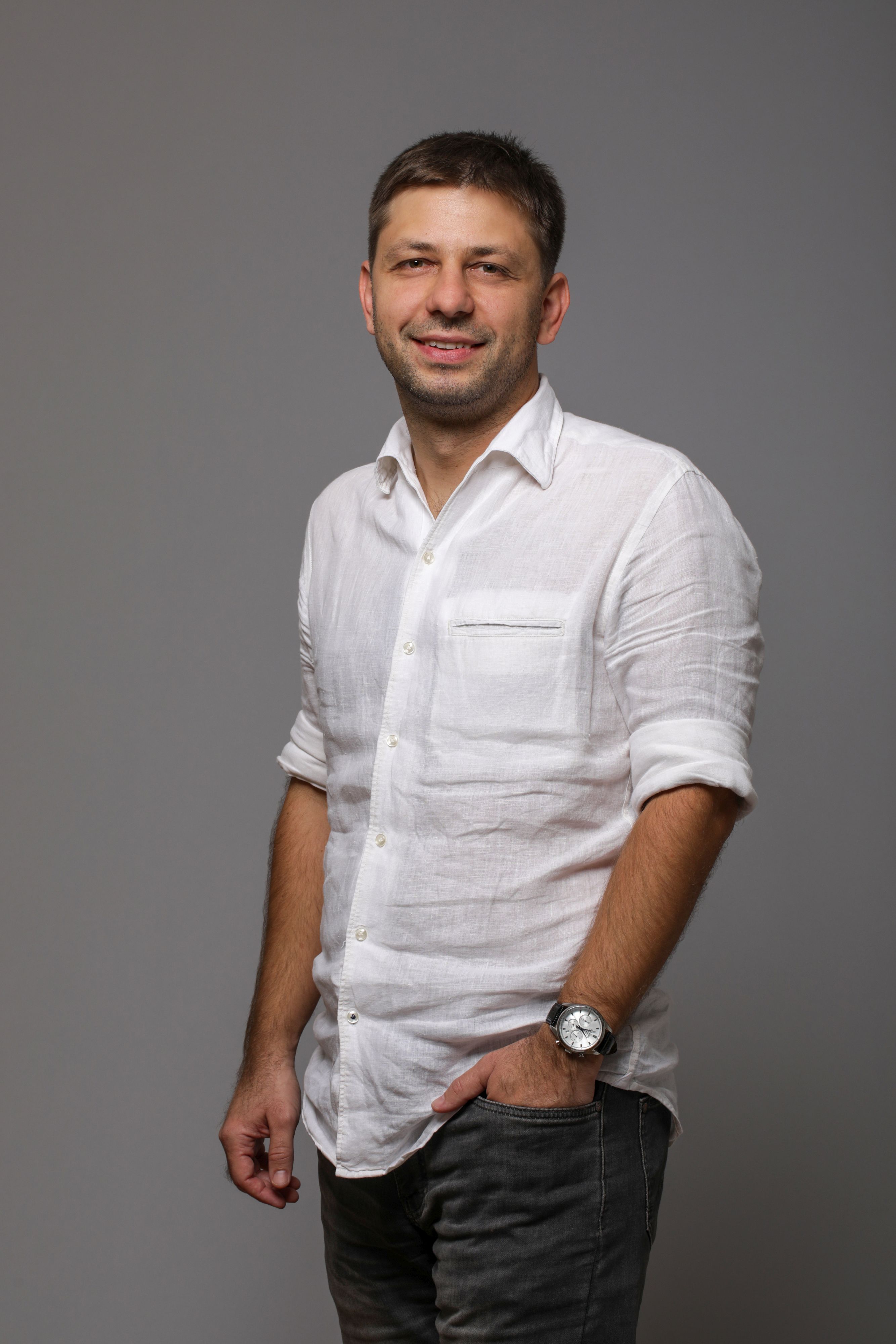
Zoran Kaliman is a full-time Professor at the Department of Physics, University of Rijeka. He holds a PhD in Natural Sciences (Physics) from the University of Zagreb and has been active in theoretical physics, nuclear physics, and mathematical physics since the 1970s. Education: PhD in Physics (1998), University of Zagreb; Master in Nuclear and Particle Physics (1986), University of Zagreb; Teaching Degree in Physics and Math (1974), University of Rijeka. Research: Focuses on Compton scattering, double ionization of helium, positronium interactions, geometric theorems, and radiation physics. His work spans theoretical physics, atomic physics, and medical physics applications. Grants: Participated in EU-funded STEM education projects and Croatian national grants on photon-atom interactions and nuclear decay processes. Leadership: Served as Deputy Head (2015–2017) and Head (2002–2008) of the Department of Physics.
Renata Martinec is a Full Professor at the University of Zagreb, Faculty of Education and Rehabilitation Sciences, within the Department of Motoric Disorders, Chronic Diseases and Art Therapies. She teaches undergraduate courses including Introduction to Complementary Therapies and Psychosomatics, and graduate courses in Creative Therapy and Clinical Evaluation across multiple program levels. Her academic role focuses on integrating expressive arts into rehabilitation frameworks for diverse clinical populations. Her research spans complementary and expressive arts therapies with emphasis on dance movement therapy, bibliotherapy, and art therapy applications. She investigates trauma treatment, psychosocial rehabilitation, and quality-of-life enhancement for individuals with disabilities, chronic illnesses, and cancer. Key interests include body image disturbances, mindfulness integration, and inclusive practices like therapeutic beekeeping that promote social participation and vocational opportunities. Analysis of her 2021-2025 publications reveals a strong interdisciplinary trajectory blending art therapies with conventional rehabilitation. Recurring themes include nature-based interventions for social inclusion, violence prevention for vulnerable populations, and psychosocial support in chronic disease management. Her work consistently targets innovative, accessible therapeutic approaches that address both clinical and existential dimensions of patient care. No scientific awards were documented in the available materials. Details regarding student advising, grant funding, or formal mentorship programs were not specified in the provided documentation. As a core faculty member in the Department of Motoric Disorders, Chronic Diseases and Art Therapies, she operates within the Faculty's research ecosystem including the Laboratory for Psycholinguistic Research and Laboratory for Prevention Research, which provide infrastructure for studies in expressive therapies, motor behavior, and rehabilitation science.
Petra Vukosav is a researcher at the Laboratory for Physical Chemistry of Traces within the Division for Marine and Environmental Research at the Ruđer Bošković Institute, Zagreb, Croatia. Her work focuses on trace metal speciation and electrochemical interactions in marine environments. PhD in Chemistry (University of Zagreb, 2011) BSc in Chemistry (University of Zagreb, 2005) Her research integrates voltammetry and UV/Vis spectrophotometry to study metal speciation in natural waters and model solutions. She explores interactions between metals, organic ligands, and nanoparticles, with recent work on nanoplastic impacts on microalgal systems and metal toxicity in aquatic environments. Notable publication trends include: Trace metal biogeochemistry in marine settings Ecotoxicological effects of metal-ligand complexes Applications of electrochemical methods to environmental problems Scientific awards : Ruđer Bošković Institute Annual Award (2015) for high-impact publications University of Zagreb Chemistry Department Award (2005) for academic excellence She has contributed to interdisciplinary projects involving nanotoxicology , environmental monitoring , and marine biotechnology , collaborating on studies related to nanoparticle-biopolymer interactions and trace metal pollution in protected ecosystems like Plitvice Lakes and Krka National Parks.
Associate Professor Vinko Lešić is affiliated with the University of Zagreb's Faculty of Electrical Engineering and Computing (FER), specifically within the Department of Control and Computer Engineering. His research focuses on advanced control systems, smart grids, renewable energy integration, IoT applications in agriculture, and optimization algorithms. Notable projects include predictive climate control systems for buildings, precision pest detection using hyperspectral imaging, and energy-efficient street lighting solutions. He has contributed to over 50 peer-reviewed articles and led initiatives like the AgroSPARC project for climate-resilient agriculture. His work bridges theoretical control theory with practical applications in smart cities and sustainable energy systems. Research interests span Model Predictive Control (MPC), distributed energy management, and machine learning integration with industrial automation. He collaborates on EU-funded projects addressing climate change impacts on agriculture and urban infrastructure. Teaching responsibilities include courses on automation fundamentals and process control, emphasizing hands-on IoT and PLC implementations. Current activities include developing zone climate control living labs and resilient energy management systems for buildings and microgrids. Publications highlight innovations such as coalitional MPC for building zones, data-driven thermal modeling, and adaptive battery charging for electric vehicles. He advises projects on renewable energy integration and has pioneered sensor-based systems for crop health monitoring. Though no formal awards are listed, his extensive publication record and industry collaborations reflect his academic and applied contributions.
Hrvoje Novak is a Leading Researcher at the Department of Control and Computer Engineering, University of Zagreb Faculty of Electrical Engineering and Computing. His work focuses on interdisciplinary research spanning energy systems optimization, precision agriculture, and advanced control methodologies. He has contributed to innovative solutions in predictive control for building energy management, railway traction systems, and water treatment infrastructure. His research integrates machine learning, IoT, and remote sensing technologies to address challenges in smart grids, crop health monitoring, and insect pest management. Key research areas include: Predictive control strategies for energy-efficient systems Machine learning applications in agricultural pest detection Data-driven modeling of urban traffic and infrastructure IoT-based plant development modeling systems Optimization of railway traction and energy storage systems His publications emphasize practical implementations such as hierarchical building energy management, flight mill analysis for invasive species, and grey-box modeling of water treatment plants. Novak collaborates across academic and industrial sectors to advance sustainable technologies.
Zvonimir Šipuš is a Full Professor at the Department of Communication and Space Technologies, Faculty of Electrical Engineering and Computing (FER), University of Zagreb. His research focuses on advanced antenna design, metamaterials, electromagnetic engineering, and biomedical applications. He leads projects on wearable and implantable antennas, metamaterial-based systems, and optical fiber sensors. He has authored numerous papers and contributed to international conferences such as ICECom 2023. Current work emphasizes medical device integration, robotic sensor systems, and high-frequency communication technologies. His team develops solutions for on-body communication, implantable antennas, and smart textile applications. Education details are not explicitly stated but inferred through his academic role. Research areas include antenna modeling, dielectric material characterization, and electromagnetic simulations. Recent projects involve glide-symmetric metasurfaces, spherical human phantoms for antenna testing, and 3D-printed sensor systems. Collaborations span biomedical engineering, robotics, and optical communication networks. No specific awards are listed, but his extensive publication record reflects recognition in the field. Key Projects: Implantable antenna design, wearable waveguide systems, metamaterial-based lens antennas. Grants & Funding: Not explicitly mentioned in the text. Labs/Teams: Department of Communication and Space Technologies research groups.
Janko Žufić, M.Sc.ing, is a Senior Lecturer at the Faculty of Educational Sciences, University of Pula, Croatia. He holds degrees in Electrical Engineering with a major in Automation from the Faculty of Electrical Engineering and Computing (FER) in Zagreb (1993) and pedagogical competences acquired in 2001. A certified computer science professor since 2002, he has dedicated his career to bridging technology and education, with particular emphasis on e-learning systems and computer science education. Employment History: Private sector work (1993-1999), teaching roles in primary/secondary schools (1998-2002), head of IT support at Faculty of Educational Sciences (2002-present), Senior Lecturer since 2007, and part-time teacher at Algebra Group. Research Focus: E-learning optimization, microlearning, educational technology design, programming pedagogy for elementary grades, and human factors in computing. His scholarly work spans 20+ publications, with recent studies exploring ChatGPT's educational implications (2025), video-based microlearning (2024), and gamification in computer science education (2022). He has also contributed to understanding the role of color and typography in digital learning environments (2009-2019). Žufić's practical expertise includes developing Web 2.0 tools for educators (2017), creating three books, and mentoring students in producing approximately 50 films. As an active project manager, he has coordinated two EU-funded initiatives and over 80 smaller projects focused on social and technical sciences, supported by organizations ranging from Zagreb Bank to Croatian employment agencies and Istrian municipalities. His academic rank was last renewed on January 24, 2018, within the field of Information and Communication Sciences, specializing in Information Systems.
Tomislav Sedlar is an associate professor at the Faculty of Forestry and Wood Technology, University of Zagreb, located at pavilion IV, room 142. He holds a PhD and has served in academic roles since 2009, progressing from assistant to his current rank. His work focuses on wood technology, material science, and non-destructive testing of wood properties. He teaches courses in special wood products and communicates in Croatian and English, with consultations available Tuesdays 10-11 AM. Professional Experience: 2024–current: Associate Professor 2019–2024: Assistant Professor 2015–2019: Postdoctorate 2009–current: Faculty of Forestry and Wood Technology, University of Zagreb Research interests include wood mechanical properties, composite reinforcement, defect detection via deep learning, and the application of novel testing methods. His work bridges traditional wood science with modern materials engineering, emphasizing sustainability and structural preservation of historical timber structures. Publications span over 15 years, with recent trends in assessing wood durability through steam treatment, fiber implant efficacy, and non-destructive evaluation techniques. His studies often explore juvenile/mature wood transitions and environmental impacts on material properties. No scientific awards are explicitly listed, though his extensive publication record reflects significant contributions. He advises no listed students but collaborates on interdisciplinary projects through the Faculty's institutes, including the Institute of Wood Science and the Institute for Materials Technology. Labs/Teams: Active in multiple university institutes focusing on wood technology, materials science, and forest engineering. His research often involves cross-departmental collaborations on cultural heritage preservation and sustainable forestry practices.
Andrej Novak is an Associate Professor at the Theoretical Physics Department , Faculty of Science, University of Zagreb. He holds a PhD in Mathematical Models of Flow in Porous and Mixed Media (2017) and a Master's in Mathematical Model of Piano String (2011), both from University of Zagreb. Research Interests span: (1) Partial Differential Equations & Mathematical Modeling, (2) Numerical Solutions of PDEs, (3) Data Analysis Algorithms (bioinformatics/medical applications). Current focus includes shock filter equations, medical image processing, and cardiovascular pharmacotherapy modeling. Key Projects include leading the 2024 HRZZ-funded 'From PDEs to Deep Learning: Advancing Medical Image Processing' and contributing to projects like 'Analysis of partial differential equations and shape optimization' (HRZZ, 2023). He has participated in international collaborations including Austrian-funded 'Vanishing Capillarity on Smooth Manifolds' (2019). Teaching responsibilities include courses like Computational Neuroscience, Introduction to Computer Science, and Numerical Mathematics. He advises on C++ programming, AI fundamentals, and mathematical modeling across undergraduate and graduate levels. Publications highlight contributions in journals like Archive for Rational Mechanics and Analysis (2024), Applied Soft Computing (2025), and Canadian Journal of Cardiology (2025), focusing on interdisciplinary applications of PDEs, machine learning in healthcare, and image processing techniques.
Assoc. Prof. Ante Seletković holds a PhD and serves as an Associate Professor at the Faculty of Forestry and Wood Technology, University of Zagreb , specifically in the Department of Wood Technology. His roles include teaching courses like Spatio-temporal analysis in GIS and Collection and processing of 3D data . Located in the Green Building (Room 317), he advises via email and Tuesdays 08:00-10:00. Professional Background: Associate Professor (2013–present) Assistant Professor (2009–2013) Senior Assistant (2008–2009) Junior Researcher (2000–2008) Research Focus: Specializing in remote sensing , LIDAR applications , and GIS integration , his work emphasizes spatial data analysis, aerial imagery interpretation, and forest inventory methodologies. He has pioneered studies on urban green spaces, forest health monitoring using hyperspectral imaging, and drone-based photogrammetry. Key Projects: 3D-FORINVENT photogrammetry project Urban heat island analysis in Zagreb Mistletoe infestation detection in fir forests LIDAR accuracy assessments in oak forests Awards: None explicitly listed, but his extensive publication record (over 50 articles since 2000) and sustained academic contributions indicate significant recognition in forestry technology. Teaching & Labs: Oversees labs focused on spatial technologies and leads graduate programs in Techniques, Technologies and Management in Forestry . Collaborates with institutions like the Croatian Forest Research Institute and the University's Wood Technology department.
Ivana Antol is a Senior Research Associate at the Ruđer Bošković Institute in Zagreb, Croatia. She is affiliated with the Division of Organic Chemistry and Biochemistry and leads research in the Laboratory for Physical-Organic Chemistry . Her work focuses on theoretical and computational studies of photochemical reactions, reaction mechanisms, and molecular dynamics in excited states. Education : PhD in Chemistry (2003), University of Zagreb MSc in Chemistry (2000), University of Zagreb BSc in Chemistry (1996), University of Zagreb Postdoctoral Research (2009–2010), Westfaelische Wilhelms University of Muenster Visiting Scholarships at University of Vienna, University of Wien, and other international institutions (2000–2008) Research Interests : Mechanisms of photochemical reactions Dynamic simulations of molecular systems (e.g., peptide bond photodissociation) Excited-state isomerism and twisted conformations in organic molecules Computational modeling of excited-state proton transfers and reactivity Key Projects : "Mehanizam [2+2] fotocikloadicije u norbornadienu" (Croatian Academy of Sciences, 2011) "Teorijski studij biološki relevantnih fotokemijskih reakcija" (Croatian Science Foundation, 2009–2010) Scientific Contributions : Over 60 peer-reviewed articles in journals such as Journal of the American Chemical Society , ACS Applied Materials & Interfaces , and Chemical Physics . Notable recognition includes the Best Poster Prize at the 2009 Symposium on Theoretical Chemistry. Lab & Outreach : Active in organizing international conferences (e.g., 3rd International Conference on Excited State Aromaticity and Antiaromaticity, 2024) and editorial work for conference proceedings. She has also contributed to educational outreach, including workshops on computational chemistry and theoretical methods.
Ivo Crnolatac serves as a Senior Research Associate at Croatia's Ruđer Bošković Institute within the Division of Organic Chemistry and Biochemistry, specifically the Laboratory for Biomolecular Interactions and Spectroscopy. His research integrates biochemical, biophysical, and spectroscopic methodologies to investigate fundamental biomolecular processes with applications in nucleic acid diagnostics and membrane biophysics. His educational foundation includes a PhD (2007) and Ms.Sci. (2003) in Pharmaceutical Sciences from Katholieke Universiteit Leuven, Belgium, and an Ms. in Chemical Engineering and Technology from the University of Zagreb (1995). These qualifications underpin his interdisciplinary approach to molecular science. Crnolatac's research program centers on biomolecular interactions and spectroscopic probe development , with particular emphasis on fluorescent dye design for nucleic acid structural recognition and lipid membrane phase behavior analysis . His laboratory employs circular dichroism, FTIR spectroscopy, and computational modeling to characterize protein-DNA binding, metalloregulatory mechanisms, and membrane-protein dynamics. This work reveals how molecular architecture governs biological function at the nanoscale. Analysis of his 15 most recent publications (2022-2025) shows persistent focus on DNA/RNA structural probes (33% of articles), lipid membrane biophysics (27%), and metalloprotein regulation (20%). Key trends include the development of selenium-substituted cyanine dyes for G-quadruplex detection, triarylborane systems for nucleic acid discrimination, and detailed mechanistic studies of bacterial transcription factors. As an academic mentor, Crnolatac supervises graduate students at the University of Zagreb's Faculty of Science, guiding six master's theses (2019-2025) on topics including DNA-binding nanopores, fluorescent probe characterization, and lipid membrane phase transitions. His collaborative projects span multiple research groups within the institute, particularly with teams specializing in computational chemistry and microbial genetics. The Laboratory for Biomolecular Interactions and Spectroscopy, where he conducts his research, maintains advanced instrumentation for fluorescence spectroscopy, calorimetry, and molecular dynamics simulations. Current initiatives focus on developing theranostic agents that combine diagnostic imaging with therapeutic functions through engineered nucleic acid interactions.
Romeo Šajina is a Lecturer at the Faculty of Informatics in Pula, Croatia, affiliated with the University of Pula . His work focuses on computer science, machine learning, and applied informatics, with publications in areas such as neural networks, time series forecasting, and image processing. University: University of Pula School: Faculty of Informatics His research spans disciplines like Artificial Intelligence , Data Science , and Imaging Technology , emphasizing practical applications in time series modeling and computer vision. Recent publications highlight advancements in deep learning architectures and hybrid data analysis techniques. Articles demonstrate expertise in Neural Networks , Predictive Analytics , and Computer Vision , often published in IEEE and Journal of Imaging . Collaborations with researchers like Marina Ivašić-Kos and Nikola Tanković appear in multiple works. No scientific awards or student advisement details are documented in the provided materials. Further inquiries may be directed via email at romeo.sajina@unipu.hr .
Klaudija Carović-Stanko is an Assistant Professor at the Department of Plant Biodiversity, Faculty of Agriculture, University of Zagreb. Her work focuses on seed science , genetic diversity assessment , and conservation of plant genetic resources , particularly in medicinal and aromatic plants and common bean landraces . Research Highlights: Advanced DNA marker techniques, GWAS for mineral content, multispectral imaging for stress detection, and biostimulant applications in crops. Projects: Coordinator of EU-funded initiatives like Centre of Excellence CroP-BioDiv and Croatian Science Foundation grants on bean genetics and plant stress responses. Editorial Roles: Section Editor for Agriculturae Conspectus Scientificus and Special Issue Editor for Plants on DNA markers in plant science. Academic Background: PhD (2009), MSc (2003) in Plant Sciences from University of Zagreb. Extensive international training in molecular genetics, plant phenotyping, and conservation techniques.
Filip Varga is a Postdoctoral Researcher at the Faculty of Agriculture, University of Zagreb , specializing in plant biodiversity and molecular genetics. He previously served as an assistant at the same institution from 2015 to 2021. PhD in Biology (2014), University of Zagreb, Faculty of Science MSc in Experimental Biology (2014), University of Zagreb BSc in Biology (2011), University of Zagreb His research focuses on DNA marker techniques , molecular phylogenetics , herbarium collections , and ethnobotany . He integrates GIS tools and bioinformatics to study genetic diversity, particularly in Dalmatian pyrethrum and medicinal plants. Filip employs advanced technologies like computer vision for seed analysis and next-generation sequencing for biodiversity conservation. The most recent publications highlight his expertise in chromatographic analysis of pyrethrins , ethnobotanical studies in Dalmatia , and innovative agricultural data methods . His work aligns with projects funded by the European Structural and Investment Funds and the Croatian Science Foundation . Key projects include: CroP-BioDiv: Coordinator (2018–2023) Genome-wide microsatellite identification: Partner (2020–2022) Twinning Open Data Operational: Partner (2019–2022) Genetic basis of insecticidal potential in Dalmatian pyrethrum: Coordinator (2017–2021) Filip is a member of the CroP-BioDiv center, the National Program for Conservation of Plant Genetic Resources , and the Croatian Botanical Society .