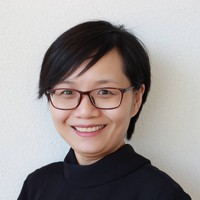
Fahad Khan is an Associate Professor (Docent) at Linköping University, affiliated with the Department of Electrical Engineering (ISY) and the Computer Vision Laboratory (CVL). He is a core faculty member within the Faculty of Science and Engineering, contributing to research and academic activities in computer vision and related domains. His research interests lie primarily in computer vision , machine learning , and image processing , with applications likely spanning robotics, automation, and intelligent systems. As a member of CVL, his work aligns with cutting-edge developments in visual data analysis and AI-driven perception. While specific scientific awards and publications are not detailed in the provided text, his position as Associate Professor and Docent indicates a strong research track record and academic recognition. He advises students and contributes to the academic community through research supervision and collaboration. Fahad Khan is actively involved in the research ecosystem at Linköping University, particularly in the field of computer vision. His work benefits from institutional support and infrastructure, including access to advanced computing resources and interdisciplinary networks. He collaborates within the Computer Vision Laboratory and contributes to the broader mission of the Department of Electrical Engineering in advancing intelligent systems and technologies.
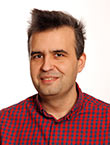
Beáta Megyesi is a Professor of Computational Linguistics at Uppsala University's Department of Linguistics and Philology, currently on leave from August 2023 to December 2025. She holds a PhD in Speech Communication from the Royal Institute of Technology (KTH) and has been a prominent figure in computational linguistics research and education at Uppsala University since at least 2000. Her academic background includes: PhD in Speech Communication, Department of Speech, Music and Hearing, KTH (2002) BA in Computational Linguistics, Department of Linguistics, Stockholm University (2000) Megyesi's research focuses on the intersection of computational methods and humanities, particularly historical cryptology and digital philology. She develops innovative tools that enable humanists and social scientists to obtain quantitative analyses of historical texts, with special emphasis on automatically cracking historical ciphers. Her work bridges linguistic analysis, computer science, and historical research, creating methodologies for processing and analyzing encoded historical documents. She has pioneered approaches to automatic transcription, key structure extraction, and deciphering techniques for historical manuscripts, making significant contributions to both computational linguistics and historical research. Analysis of her recent publications reveals a strong trend toward interdisciplinary research combining historical cryptology with advanced computational methods. Her work demonstrates increasing sophistication in handling historical ciphers through machine learning, image processing, and language modeling techniques. The research spans multiple languages and historical periods, with particular focus on early modern European diplomatic correspondence. Her publications show consistent contributions to both theoretical frameworks and practical tools for historical document analysis, with growing attention to privacy concerns in language learner data. Megyesi has held significant leadership roles including: President of Northern European Association for Language Technology (NEALT, 2020-2021) Head of Department, Department of Linguistics and Philology (2009-2018) Director of English Park Campus, Uppsala University (2017-2018) Member of Swedish Research Council's preparatory group for Linguistics (2021-2023) As an educator, Megyesi has supervised graduate students including Eva Pettersson and Mojgan Seraji, and has taught courses on language technology, digital philology, and computational linguistics at both undergraduate and graduate levels. She has received research funding from Vetenskapsrådet (Swedish Research Council) for multiple projects including DECRYPT (2018-2024) and DECODE (2015-2017), demonstrating sustained research productivity and external recognition of her work's significance. Megyesi leads the DECRYPT project focused on developing methods to automatically crack historical ciphers, working with interdisciplinary teams of linguists, computer scientists, and historians. Her research group has developed specialized tools for transcription of encrypted manuscripts and created important resources like the DECODE Database of Historical Ciphers and Keys. She is an active participant in the international historical cryptology community, frequently organizing and contributing to conferences in this specialized field.
Christopher Zach is a Research Professor at Chalmers University of Technology, affiliated with the Signal Processing and Medical Technology department within the Digital Image Systems and Image Analysis research group . His work focuses on 3D reconstruction , real-time computer vision , and numerical optimization for machine learning. Develops 3D image understanding techniques Specializes in robust optimization for vision systems Leads research in medical image analysis Recent publications demonstrate expertise in low-light text enhancement , out-of-distribution detection , and domain adaptation for industrial applications. Active in Chalmers' Wallenberg AI and ÅForsk funded projects. Collaborates with researchers from Volvo Group , Volvo Cars , and SAFER Vehicle Safety initiatives.
Axel Flinth is an Assistant Professor in the Department of Mathematics and Mathematical Statistics at Umeå University, focusing on mathematical foundations of machine learning for pattern recognition in large datasets. Education: PhD in Mathematics from Technische Universität Berlin (2018) His research centers on compressed sensing—reconstructing signals from incomplete data using structural assumptions—and equivariance in deep neural networks, investigating how data symmetries can be leveraged to enhance model performance. He actively contributes to geometric deep learning and statistical inference for spatio-temporal data through membership in specialized research groups. Recent publications (2022-2025) reveal a cohesive trajectory in mathematical optimization and symmetry-aware deep learning, with applications spanning computer vision (e.g., rotation-equivariant architectures for point clouds), wireless communication security, and signal reconstruction. His work consistently bridges theoretical mathematics with practical machine learning implementations. Scientific Awards: No awards documented in available sources Grants and Projects: Lead Researcher: Trade-offs in Nonconvex Learning (April 2022 - March 2027) Research Affiliations: Geometric Deep Learning Group Statistical Learning and Inference for Spatio-Temporal Data
Sina Sheikholeslami is a Researcher at the Division of Energy Systems, Department of Energy Technology at KTH Royal Institute of Technology. He works on leveraging AI for sustainability and climate action, focusing on projects like Beyond 2030 and OnStove. His affiliations include the KTH Climate Action Centre and Vinuesa Lab. He holds a PhD in Distributed Computing from KTH (2025), advised by Vladimir Vlassov, Amir Payberah, and Jim Dowling, with prior M.Sc. studies at Eindhoven University of Technology and KTH through the EIT Digital Master School. He also completed a B.Sc. in Computer Software Engineering at Amirkabir University of Technology. Research interests include distributed systems, machine learning, deep learning, and their applications in sustainable development. Notable work includes developing frameworks like AutoAblation for ablation studies and Importance-aware DPT for dataset partitioning, which earned the Best Artefact Award at DAIS 2023. His recent work explores using LLMs for ablation studies and weight initialization techniques from hyperparameter trials. Academic leadership roles include serving on the KTH PhD Chapter’s Board, EECS PhD Student Council, and committees such as the School Assembly and Third-Cycle Education Council. He is Sweden’s Local Representative for the EIT Digital Alumni Foundation. His teaching roles include assistant and teacher in courses like Data Mining and Data-Intensive Computing. He supervises multiple students, including those exploring topics like scalable model training with Ray and feature stores in Hopsworks. His research spans environmental monitoring (e.g., ExtremeEarth), public transit systems (DUGET), and interdisciplinary applications of ML in wood science and urban planning.
Satarupa Chakrabarti is a Digital Futures Postdoctoral Research Fellow at KTH Royal Institute of Technology, based in the Computational Brain Science group within the Division of Computational Science and Technology. She holds a PhD in Computer Science from KIIT Deemed to be University, India, and previously worked as a Junior Research Fellow with DST-SERB, India. Her research focuses on biomedical engineering, signal processing, machine learning, and space physics, with a particular emphasis on developing brain activity-based biomarkers for Parkinson’s disease diagnosis and prognosis. Her academic background includes interdisciplinary projects on biomedical signal analysis, pediatric epilepsy detection, and power system fault localization. She collaborated with multidisciplinary teams at KTH, contributing to innovations in healthcare technology and smart societal solutions. Her postdoc project (2020–2022), funded by Digital Futures, aimed to extract temporal features from brain activity to improve PD diagnosis, leveraging machine learning advancements. Supervised by Professors Arvind Kumar and Saikat Chatterjee, her work bridges computational science and clinical applications. Publications span biomedical engineering (e.g., pediatric seizure detection), electrical engineering (HVDC fault localization), and space physics (ionospheric plasma analysis). Her contributions highlight machine learning applications across diverse domains. No scientific awards were explicitly mentioned. She is affiliated with Digital Futures, a cross-disciplinary center jointly established by KTH, Stockholm University, and RISE.
Haibo Li is a Full Professor of Media Technology at KTH Royal Institute of Technology, affiliated with the School of Electrical Engineering and Computer Science and Digital Futures Faculty. His roles include leading the Media Lab in MID, directing Master’s programs in Media Technology, and teaching courses like Generative AI for Media Technology and Video Technology. He holds a Technical Doctorate from Linköping University (1993) and received the Nordic Best PhD Thesis Award (1994) and Docent title in Image Coding (1997). Research focuses on digital media technologies, including image/video compression, human-computer interaction, and AI-driven media systems. He pioneered the Digital Media Lab at Umeå University and co-founded UCIT. His work spans blind image deblurring, thermal comfort sensing, and multimodal emotion recognition. Over 250 publications and six patents highlight contributions to multimedia, AI, and signal processing. Key projects include developing contactless thermal measurement systems for smart buildings, real-time gesture recognition for wearable devices, and advanced neural networks for image restoration. Awards include the Nordic Best Thesis and leadership in EU projects. He chairs conferences and actively participates in MPEG standardization efforts.
Xiaogai Li is an Associate Professor in the Department of Neuronic Engineering at KTH Royal Institute of Technology, Sweden. He is affiliated with the School of Technology and Health (STH) and the Digital Futures interdisciplinary research center. His roles include Co-Principal Investigator (Co-PI) for projects like the AI-based Positioning and Personalization Platform for Human Body Models (HBMs) and Seed funding for large grant proposals. He leads the Rich and Healthy Life working group within Digital Futures. Li holds a PhD in Neuronic Engineering from KTH (2012) and is a Docent in Technology and Health. His research focuses on finite element modeling, neuroimaging, and clinical applications, particularly in traumatic brain injury mechanisms (with emphasis on pediatric cases), forensic diagnosis, and protective strategies. Key projects include the EU-funded PIPER and HEADS ITN initiatives, and collaborations with RISE and Stockholm University. His research integrates computational methods, neuroimaging, and clinical data to advance injury understanding and develop protective technologies. Notable contributions include biomechanical visualizations for child restraint system (CRS) awareness campaigns, which have been adopted by public health practitioners. He also investigates helmet safety standards through finite element simulations and leads efforts in personalizing human body models for accident reconstruction. Education: PhD in Neuronic Engineering, KTH Royal Institute of Technology (2012) Grants: Swedish Research Council (VR) BioLEAP/BioSAVE, Vinnova, STINT, KTH Innovation Labs/Teams: Neuronic Engineering Division, Digital Futures, PIPER EU Project Li teaches courses such as Biomechanics and Neuronics, Simulation Methods in Medical Engineering, and oversees the CRS Awareness initiative, which uses biomechanical visualizations to enhance child safety education. His work bridges engineering and clinical practice, with applications in forensic pathology and public health interventions.
Farzaneh Etminani is a Senior Lecturer at the School of Information Technology, Halmstad University. Her research focuses on Artificial Intelligence , Machine Learning , and Healthcare Informatics , with specific projects including CAISR Health , Evaluation of deep learning for LBD diagnosis , AIR – Artificially Intelligent use of Registers , and iMedA – Improving Medication Adherence . Her recent work includes explainable AI frameworks, synthetic electronic health records evaluation, and temporal modeling of clinical data. Key collaborations span neuroimaging, chronic disease prediction, and human-centered AI systems. She contributes to interdisciplinary research bridging computer science and clinical applications. Her publications cover topics such as: 3D deep learning for dementia diagnosis Transfer learning in neuroimaging Temporal fidelity in synthetic medical data Graph neural networks for clinical risk prediction Behavior change strategies in digital health interventions
Mazhar Hussain serves as a Lecturer in the Department of Computer and Electrical Engineering (DET) at Mid Sweden University, Sundsvall. He is affiliated with the STC Research Centre and actively contributes to research in deep learning, sensor systems, and educational technology. His research spans deep learning-based data fusion, sensor applications for industrial measurement (including molten glass gob viscosity analysis and hazardous gas detection), and generative AI's impact on engineering education. His work bridges theoretical AI advancements with practical industrial monitoring and pedagogical innovation, particularly in addressing ChatGPT's implications for academic integrity. Analysis of his 2021-2025 publications reveals a dual focus: multi-sensor data fusion for environmental/industrial applications (gas detection, fuel consumption prediction, glass manufacturing) and educational technology innovations. His recent shift toward AI ethics in academia demonstrates responsiveness to emerging technological disruptions in higher education. No information is available regarding his advisees or research grants. He operates within the STC Research Centre at Mid Sweden University, which facilitates interdisciplinary science and technology research with emphasis on practical sensor system implementations.
Magnus Borga is a Professor and Vice Dean at the Faculty of Engineering, Linköping University, affiliated with the Department of Medical Technology. His research focuses on Medical Image Analysis , particularly quantitative MRI for non-invasive biomarkers like fat infiltration in organs. He earned an MSc in Applied Physics and Electrical Engineering (1991) and a PhD in Computer Vision (1998), becoming a Professor in 2008. Research centers on automated methods for anatomical and functional imaging analysis, validated against invasive techniques. Key projects include Dixon MRI optimization, radiomics , and body composition profiling for metabolic disorders. Funding includes grants from the Swedish Research Council (VR), Vinnova, and LiU Cancer. Publications highlight trends in fat quantification across diseases, muscle composition in chronic pain, and AI-driven segmentation . Collaborations span the Dallas Heart Study , UK Biobank , and AMRA Medical AB , where he served as CTO. He teaches Neural Networks and Learning Systems at Linköping University.
Todor Stoyanov is a Senior Lecturer in Computer Science and an affiliated faculty member of the WASP program at Örebro University. He serves as the subject manager in computer science and is part of the Centre for Applied Autonomous Sensor Systems (AASS). His research focuses on autonomy for mobile robots, particularly perception algorithms and motion synthesis for manipulation. He holds a PhD in Computer Science from Örebro University (2012), specializing in autonomous robot navigation. Education: PhD in Computer Science, Örebro University, 2012 (Thesis: Reliable Autonomous Navigation in Semi-Structured Environments Using the 3D Normal Distributions Transform) Research Interests: Dr. Stoyanov's work spans autonomous mobile robots, robot perception, motion planning, and manipulation. Key areas include behavior trees for control, deformable object tracking, and reinforcement learning for knowledge transfer. His research often integrates advanced algorithms with real-world robotics applications in logistics, manufacturing, and environmental monitoring. Research Projects: Ongoing: Labour market effects of AI in knowledge-intensive services Ongoing: Dynamic Agile Production Robots (DARKO) Ongoing: TeamRob - Teams of Robots Working for and with Humans Completed: Action and Intention Recognition in Human-Robot Interaction (AIR) Completed: Autonomous Wheeled Loaders for Material Handling (ALL-4-eHam) Labs/Groups: He leads the Autonomous Mobile Manipulation Lab, focusing on full-body mobile manipulation and human-robot collaboration.
Jerker Westin is an Associate Professor and Senior Lecturer in Computer and Information Science at Dalarna University's School of Information and Engineering. His work focuses on developing sensor-based technologies and computational methods to improve Parkinson's disease management. He specializes in motor state quantification, algorithmic dosing optimization for levodopa treatment, and wearable sensor systems. His research integrates biomedical engineering, computer science, and clinical neuroscience. Notable contributions include devising motion sensor indices for motor fluctuations and creating algorithms for personalized levodopa administration. He collaborates across disciplines to advance telemedicine frameworks and home-based assessment tools for neurodegenerative disorders. Over 70+ publications demonstrate his expertise in sensor systems for movement analysis, pharmacokinetic modeling of levodopa, and digital biomarkers for Parkinson's progression. His work emphasizes translating technical innovations into clinical practice to enhance patient care.
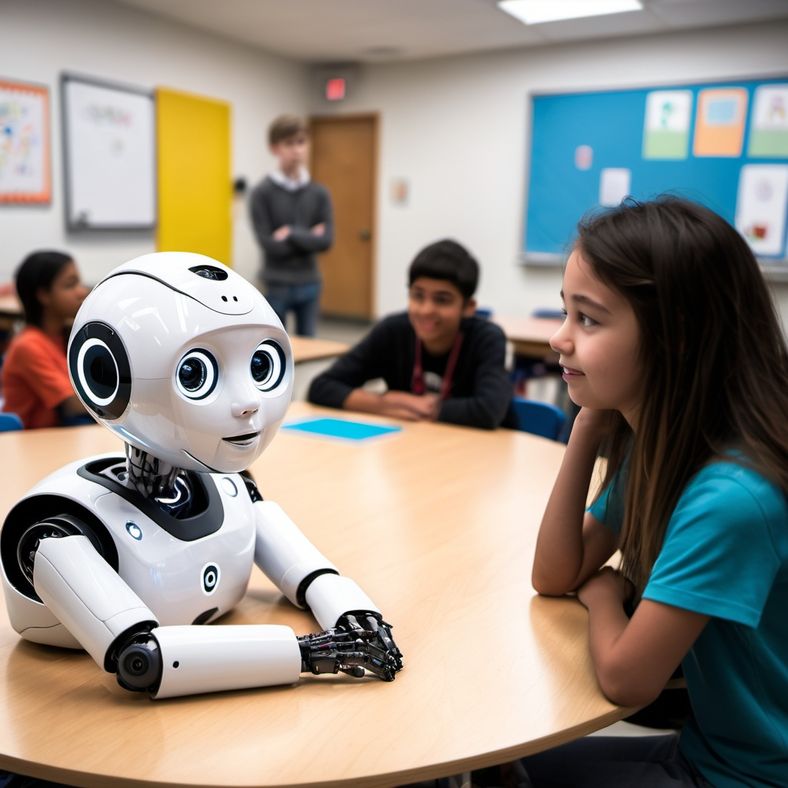
Olov Engwall is a Professor in Speech Communication at KTH Royal Institute of Technology, affiliated with the Division of Speech, Music, and Hearing within the Department of Intelligent Systems. He serves as Head of Studies for the Department and Track Director for the Computer Science specialization in the MSc program in Industrial Management and Engineering. His research focuses on social robotics, human-robot interaction, and robot-assisted language learning. Engwall holds a PhD in Speech Communication from KTH (2002) and an MSc in Engineering Physics (1998). He has conducted research visits at INPG Grenoble (1999) and LORIA Nancy (2006). His roles include organizing international conferences like SLaTE 2017 and serving on technical committees for IEEE Speech and Language Technical. Key research areas include culturally-aware robots (CIRILA project), NLP-based math tutoring, and robot-led second language conversation practice. He has pioneered projects like the ARTUR articulation tutor system and the ROBERT initiative for dyslexia support. His work bridges speech technology, education, and human-robot interaction with over 80 peer-reviewed publications. Engwall supervises doctoral students in areas like robot-mediated learning and serves as examiner for multiple MSc engineering projects. He is a guest editor for Frontiers in Robotics and AI, focusing on culturally-aware robotics, and has contributed to journals like Computer, Speech and Language.
Louise Rixon Fuchs is an Industry doctoral student at KTH Royal Institute of Technology's Division of Robotics, Perception and Learning. She specializes in advanced sonar imaging techniques, machine learning applications, and signal processing for robotics. Her research focuses on enhancing sonar data analysis through deep learning methodologies, optimization algorithms, and compressive sensing models. Her work bridges robotics and computer vision, addressing challenges in low-resolution sonar image processing, object detection, and beamforming optimization. Key contributions include GAN-based sonar image simulations and transfer learning for object recognition in sonar environments. Louise has published extensively on sonar technology advancements, with recent articles emphasizing dense point correspondence algorithms and wide-beam sonar system improvements. She currently holds no recorded scientific awards but is actively contributing to robotics and marine sensing research.