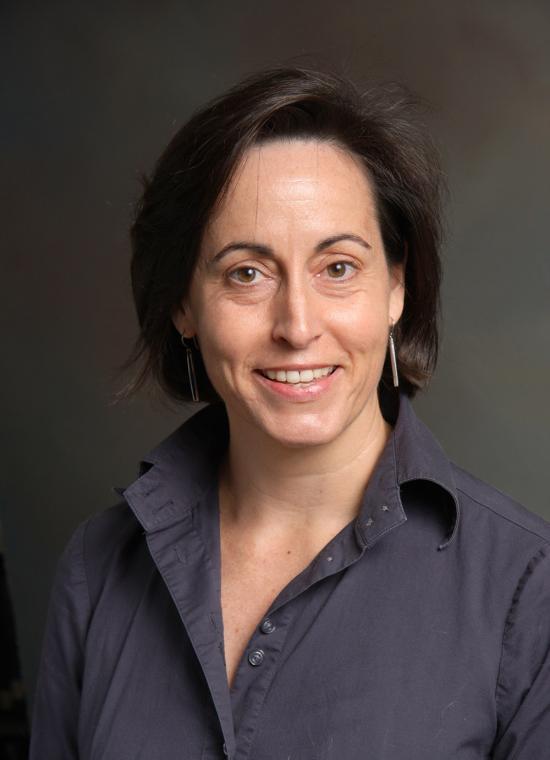
Laura T. Perini is an Associate Professor of Philosophy at Pomona College and serves as the Coordinator of the Science, Technology, and Society program. She has been a member of the faculty since 2007 and is on leave during Spring 2026. Her office is located in Pearsons Hall 204, and she can be reached at laura.perini@pomona.edu. Education: Ph.D., University of California, San Diego Master of Arts, University of California, San Diego Master of Arts, University of California, Los Angeles Bachelor of Science, University of California, Los Angeles Laura Perini's research centers on the philosophical analysis of visual representations in science. Her work explores how diagrams, graphs, photographs, and imaging technologies such as MRI contribute to scientific reasoning, education, and public communication. She investigates the epistemic and aesthetic dimensions of scientific visuals, addressing questions about truth, explanation, and confirmation in pictorial forms. Her interdisciplinary approach draws from philosophy of science, philosophy of biology, cognitive science, and aesthetics. Her publications reveal a sustained focus on the role of two-dimensional representations in scientific practice. Key themes include the semiotics of pictures, the cognitive function of diagrams, and the use of visual evidence in theory confirmation. Her work bridges abstract philosophical analysis with concrete examples from biological and medical sciences. Scientific Awards: Philosophy of Science Association prize for best paper published in Philosophy of Science by a recent Ph.D., 2006 Visiting Fellow, Dartmouth College Humanities Institute (2005–2006, Spring 2006) Virginia Tech Humanities Symposium Award, 2006 Fellow, Center for Philosophy of Science, University of Pittsburgh, Fall 2004 Virginia Tech Humanities Summer Stipend, Summer 2004 NEH Summer Institute “Art, Mind, and Cognitive Science”, Summer 2002 Laura Perini has taught a range of courses including Aesthetics, Logic, Philosophy of Science: Historical and Topical Surveys, and Philosophy of Biology. While there is no public information about graduate students she may have advised or research grants she has led, her contributions to the philosophy of scientific representation are significant and widely cited. She has held multiple prestigious fellowships, reflecting the impact and quality of her scholarly work.