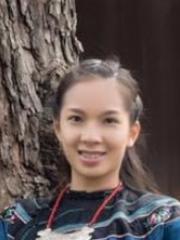
Dr. Dan He is a Postdoctoral Research Fellow at the School of Civil Engineering within the Faculty of Engineering, Architecture and Information Technology at The University of Queensland (UQ) . Holding a PhD in Data Science (2020) from UQ and prior degrees from Peking University and University of Science and Technology Beijing, her research focuses on Spatial-temporal Data Management , Data Mining , and Intelligent Transportation Systems . PhD: Data Science, University of Queensland (2016–2020) MSc: Computer Science, Peking University (2012–2015) BSc: Information Security, University of Science and Technology Beijing (2008–2012) Her work develops High-Performance Query Processing frameworks for spatial-temporal databases, with applications in Traffic Prediction and Incident Detection . Articles span 2015–2025, emphasizing Graph Neural Networks , Reinforcement Learning , and kNN Query Optimization in traffic networks. Scientific contributions include: CORE ACSW Student Travel Award Best Student Paper Honorable Mention (2020) Best Presentation in DKE Workshop (2018) Research High Degree Scholarship (2016–2019) As co-supervisor for PhD candidates Zichun Zhu and Thanh Vo Tran , she integrates Spatial-Temporal Analytics with Continual Learning in transport systems. Lab collaborations with Dr. Boyu Ruan and Prof. Jiwon Kim advance real-time traffic monitoring solutions.
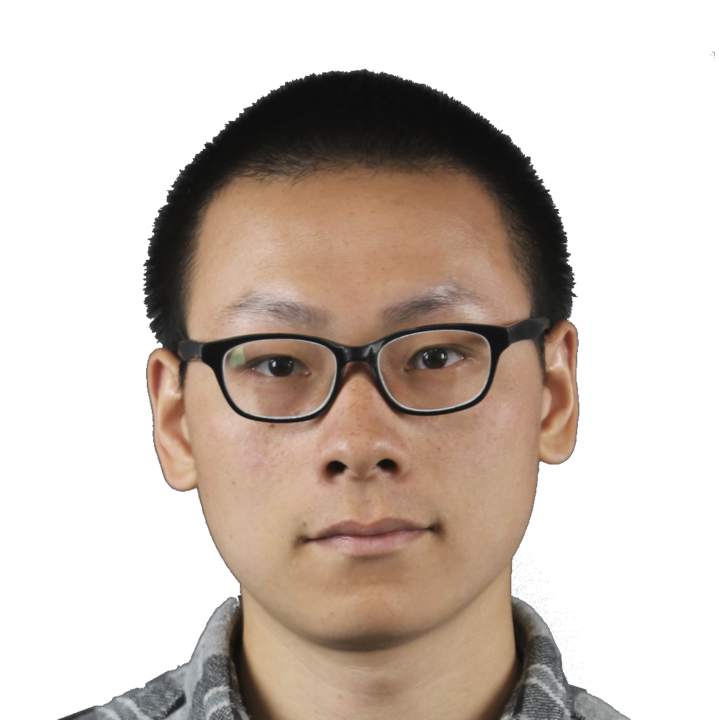
Zhenzhang Ye is a researcher affiliated with the Computer Vision Group at the Technical University of Munich (TUM) , part of the TUM School of Computation, Information and Technology. His work focuses on Photometry-Based Reconstruction , Optimization , and Geometry Processing , with additional interests in Visual SLAM , Deep Learning , and Biomedicine . Research Interests : Optimization techniques, Photometry-Based Reconstruction, and geometric processing for computer vision tasks. Publications : Active contributor to conferences like CVPR, AISTATS, AAAI, and ICCV, with recent works on 3D human motion prediction, hypergradient estimation, and photometric stereo. Contact: yez@in.tum.de
Professor Karen Ginn is a Professor of Musculoskeletal Anatomy in the School of Medical Sciences, Faculty of Medicine and Health at the University of Sydney. She teaches functional, applied anatomy to various health professional groups and maintains a part-time private practice as a musculoskeletal physiotherapist. Professor Ginn is regularly invited to present at national and international conferences and serves as a Visiting Lecturer at the University of Gothenburg, Sweden, where she has designed and teaches a subject entitled "Physiotherapy and Shoulder Rehabilitation" in the MSc program. Professor Ginn's research focuses on the assessment and treatment of shoulder dysfunction, with particular interest in evaluating the validity and reliability of components of the physical examination of the shoulder. Her work spans multiple areas including evidence-based medicine , musculoskeletal diseases , orthopaedics , physiotherapy , and shoulder function . She has developed a continuing education course for health professionals entitled "Functional rehabilitation of shoulder muscles - evidence & application" which she conducts in Australia and internationally. Professor Ginn's extensive publication record, with over 60 publications in prestigious journals such as Journal of Orthopaedic Research and Physical Therapy, demonstrates consistent contributions to understanding shoulder biomechanics, rehabilitation approaches, and clinical assessment methods. Her recent work shows increasing focus on diagnostic imaging for shoulder conditions, cross-cultural adaptation of assessment tools, and the application of electromyography to understand muscle activation patterns in both healthy subjects and patients with shoulder dysfunction. Professor Ginn has held significant leadership roles including Past President of Shoulder & Elbow Physiotherapists Australasia (SEPA) and SEPA representative on the Board of the International Congress of Shoulder & Elbow Therapists. She is also a member of the Australian Physiotherapy Association. 2020: Is online ergonomics training, with & without individual feedback on adherence, effective in reducing musculoskeletal upper limb pain & work performance in sonographers: a cluster randomised trial 2014: The BEST at Home pragmatic fall prevention program: effectiveness, cost effectiveness and implementation (NHMRC Partnership Project) 2005: A comparison of shoulder muscle function in patients with rotator cuff tears and age-matched control subjects 2004: A Randomised, Controlled, Clinical Trial To Evaluate The Efficacy Of Passive Joint Mobilisation Applied To The Shoulder Region Joints For The Treatment Of Shoulder Pain 2002: Rotator cuff muscle activity during shoulder rotation exercises Professor Ginn maintains strong international collaborations, serving as one of three invited international representatives on a project entitled "Shoulder pain in Europe: optimizing management across the lifespan" coordinated by Dr. Karen McCreesh from the University of Limerick, Ireland. She also collaborates with the Royal National Orthopaedic Hospital London on a randomized controlled clinical trial investigating the effectiveness of surgery in the treatment of atraumatic shoulder instability.
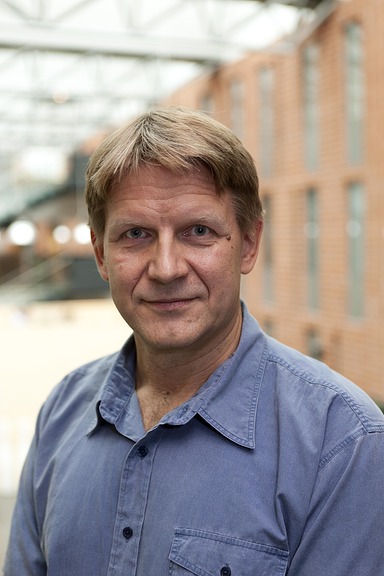
Jouko Lampinen serves as the Dean of the School of Science (SCI) at Aalto University, Finland, overseeing academic and research operations across the institution. His professional contact includes the dean-sci@aalto.fi email address and phone number +358505604827. Lampinen maintains an active research profile in computational information technology while fulfilling his administrative leadership role, with expertise grounded in advanced algorithmic and statistical methodologies. His research spans machine learning, Bayesian statistics, neural networks, and their applications in brain imaging (fMRI/MEG) and computer vision. Key interests include probabilistic modeling for emotion recognition, object detection in autonomous systems, and medical diagnostics. His work addresses critical challenges in reproducibility, scalability, and interpretation of complex models, bridging theoretical machine learning with practical neuroscience and robotics applications. This interdisciplinary focus demonstrates consistent innovation from the late 1990s through 2018. Analysis of his recent publications reveals a dominant trend in applying Bayesian methods and neural networks to neuroimaging data, with significant contributions to emotion processing algorithms, brain-computer interfaces, and point cloud analysis for autonomous vehicles. His scholarly output shows increasing emphasis on real-world validation of computational models, particularly in medical diagnostics and human-computer interaction contexts, while maintaining foundational work in statistical learning theory. No scientific awards or honors were documented in the provided information. Details regarding student mentorship, grant funding, or specific research teams/labs are absent from the source material, though his deanship implies strategic oversight of research infrastructure within Aalto University's School of Science.
Michael C. Bond, MD is a Professor of Emergency Medicine at the University of Maryland School of Medicine with administrative roles including Associate Designated Institutional Official and Director of Multimedia & Virtual Education. He maintains clinical practice at the University of Maryland Medical Center's Emergency Department and previously served as Residency Program Director until 2020. Board certified in both Emergency Medicine and Internal Medicine, he holds fellowships with the American College of Emergency Physicians (FACEP) and American Academy of Emergency Medicine (FAAEM). Dr. Bond's research focuses on: Orthopedic emergencies and high-risk injury management Technology integration in healthcare delivery Medical education reform and residency training Faculty development and educational methodologies His work emphasizes using technology to enhance clinical decision support, patient access to health information, and participatory care models. Publication analysis reveals three dominant themes across recent works: 1) Emergency medicine education systems (residency match processes, standardized evaluations), 2) Orthopedic emergency management (risk mitigation, surgical decision-making), and 3) Technology applications in clinical care (imaging diagnostics, virtual education). His scholarship consistently addresses practical improvements in training paradigms and emergency care delivery. Honors include: Fellow of the American College of Emergency Physicians Fellow of the American Academy of Emergency Medicine Emergency Medicine Foundation Teaching Fellowship Dr. Bond has developed significant educational infrastructure including departmental web portals and Epic EMR implementations. His leadership extends to multimedia education initiatives and institutional accreditation functions. While no active grants or laboratory affiliations are detailed, his administrative roles indicate substantial operational responsibilities.
Sophie Bots is an Assistant Professor at Utrecht University , affiliated with the Faculty of Science and the Pharmacoepidemiology & Clinical Pharmacology department. Her research focuses on methodological challenges in using observational real-world data for pharmacoepidemiology, particularly in cardiovascular medication safety and sex differences. Areas of Expertise: Epidemiology, Real World Evidence, Methods and Statistics, Cardiovascular Diseases, Gender-Specific Research Research Themes: Data Science, Cohort Studies, Vaccine Safety (e.g., COVID-19), Adverse Drug Reactions Recent publications highlight her work on self-controlled designs for vaccine safety analysis, sex differences in medication outcomes, and leveraging clinical care data for cardiovascular research. She collaborates across European institutions and contributes to methodological frameworks in observational studies. Her 2025 Pharmacoepidemiology and Drug Safety article introduces core concepts in self-controlled designs, while her 2022 Open Heart study explores statin efficacy in women. Current projects include optimizing coronary imaging decisions through machine learning and analyzing baseline risk impacts in diabetes patients. Although no specific scientific awards are listed in the provided texts, her work has been widely shared on academic platforms like Mendeley and social media. She has not been mentioned to have formal advisees or part-time status.
Tom Piraino serves as an Adjunct Lecturer in the Department of Anesthesia at McMaster University, specializing in critical care respiratory physiology and mechanical ventilation. His academic work focuses on optimizing ventilator management through advanced monitoring techniques. His primary research interests center on mechanical ventilation optimization , ventilator liberation protocols , and advanced respiratory monitoring . He has pioneered work in electrical impedance tomography applications for regional lung monitoring and extensively studied patient-ventilator asynchrony phenomena like reverse triggering. His research bridges physiological principles with clinical implementation in ICU settings. Analysis of his 15 most recent publications reveals a strong emphasis on quantitative respiratory monitoring , with 80% of recent work involving electrical impedance tomography or esophageal pressure measurements. His studies consistently address practical clinical challenges in mechanical ventilation weaning, ARDS management, and noninvasive ventilation optimization, often through multicenter collaborative research.
Frank Westad is a Professor at the Norwegian University of Science and Technology (NTNU), specializing in Chemometrics , Multivariate Data Analysis , and Near-Infrared Spectroscopy . His research spans environmental monitoring, biomedical applications, and machine learning for complex data systems. Recent publications highlight his work in Statistical extensions for ecosystem monitoring Non-linear chemometric methods Privacy risks in generative data synthesis Deep learning for geophysical data Model validation techniques He has presented at international workshops, including ACM and TUM Munich, and teaches advanced courses in multivariate analysis and machine learning (TK8117, TTK4260). No scientific awards or formal lab affiliations were explicitly mentioned in the provided texts.
Sebastian Dorl is a researcher at the Fachhochschule Oberösterreich (University of Applied Sciences Upper Austria) , affiliated with the Research Center Hagenberg and the ASiC (Applied Systems and Cybernetics) group. His work spans bioinformatics, machine learning, and data-driven modeling, with a focus on proteomics data analysis, spectral library search algorithms, and industrial process optimization.
Velibor Đalić serves as an Associate Professor in the Department of Automation at the Faculty of Electrical Engineering, University of Banja Luka. His academic career spans over 15 years with continuous research output in robotics and control systems. His research focuses on industrial robotics , computer vision applications , and advanced control systems . Key contributions include markerless calibration techniques for surgical robots, optimization of PI controllers for hydraulic systems, and computer vision solutions for industrial automation. His work bridges theoretical control algorithms with practical industrial implementations. Analysis of his 15 most recent publications reveals a strong emphasis on precision robotics (68% of works), particularly in calibration and vision systems, followed by industrial process control (25%) and educational robotics (7%). The research demonstrates consistent progression from fundamental control theory toward real-world surgical and manufacturing applications. Current research funding includes two active national projects: Razvoj STEM vjestina i interesovanja kod skolske djece (2025, BAM 3,000) and Metodi za analizu signala zasnovani na masinskom ucenju (2024-2025, BAM 4,000), where he serves as a key participant alongside senior researchers from the Faculty of Electrical Engineering.
Prof. Juan Manuel Górriz Sáez is a Full Professor at the University of Granada (Spain) in the Faculty of Science, Physics Section, and also serves as a Research Associate at the University of Cambridge (UK). He is the head of the SiPBA (Signal Processing and Biomedical Applications) research group and collaborates as principal investigator with top research centers worldwide including University of Regensburg, Northeastern University, University of Cambridge, LM University of Munich, University of Liege, University of Milan, and University of Aveiro. Dr. Górriz received his BSc degrees in Physics and Electronic Engineering from the University of Granada in 2000, followed by Ph.D. degrees from the Universities of Cádiz (2003) and Granada (2006). His research focuses on statistical signal processing in biomedical applications, with particular expertise in Voice Activity Detection, Distributed Speech Recognition, Blind Source Separation, and Independent Component Analysis. His work in image processing for biomedical applications includes anatomical/functional brain imaging (PET, SPECT, fMRI, MRI), development of computer-aided diagnosis systems, feature extraction algorithms, image registration algorithms, and supervised classification for neurological disease diagnosis. His research has significant applications in early detection of Alzheimer's disease and other neurological conditions. Analysis of his recent publications reveals a strong trend toward applying machine learning techniques, particularly support vector machines and random forests, to medical image analysis for Alzheimer's disease diagnosis. His work integrates advanced signal processing with clinical applications, focusing on feature extraction, dimensionality reduction, and pattern recognition in brain imaging data from SPECT, PET, and MRI modalities. ASI Award (2008) UGR Social Council Award (2010) Real Academia de Ingenieria Medal Award (2015) Dr. Górriz has supervised numerous PhD and Master's students through various funding mechanisms including FPI Grants, MICINN contracts, Excellence Grants, Erasmus Mundus programs, and DAAD Grants. His research has been supported by multiple competitive grants including PETRI DENCLASES (PET2006-0253), Proyecto de Excelencia TIC 2566, Proyecto de Excelencia TIC 4530, and Nuevas Técnicas de Reconstrucción, Procesado, Clasificación y Fusión de Imágenes Médicas para Diagnóstico Precoz de la Enfermedad de Alzheimer (TEC2008-02113/TEC). As head of the SiPBA research group, Dr. Górriz leads a multidisciplinary team of researchers focused on signal and image processing applications in biomedical contexts. The group maintains active collaborations with international research centers and has developed novel approaches for brain image analysis, particularly for early Alzheimer's disease detection.
Ingrid Scholl is a Professor at the University of Applied Sciences Aachen , specializing in computer science education. She teaches modules including Algorithms and Data Structures , Computer Graphics , Image Processing , and Virtual Reality/Augmented Reality . Her interdisciplinary project DataLake - Big Data Analysis and Visualizations focuses on extracting insights from large datasets using VR/AR technologies. Key Research Areas : Artificial Intelligence, Autonomous Systems, Virtual Reality, Medical Imaging, and Parallel Programming. Projects : Development of low-energy sensors for environmental monitoring, digital twin modeling of buildings for VR visualization, and collaborative VR experiences via HTC Vive. Publications highlight her work on autonomous mining vehicles, scene generation for AI training, and volume rendering in VR. Her recent contributions focus on operational design domains and mapping approaches in autonomous systems.
Dr. Emilio García Fidalgo is an Associate Professor at the University of the Balearic Islands (UIB) within the Department of Mathematics and Computer Science. He earned his B.Sc., M.Sc., and Ph.D. in Computer Science from UIB in 2007, 2011, and 2016 respectively. Ph.D. in Computer Science (2016), UIB M.Sc. in Computer Science (2011), UIB B.Sc. in Computer Science (2007), UIB His research focuses on mobile robotics , visual and LiDAR SLAM , appearance-based scene recognition , and unmanned aerial vehicles . He develops algorithms for robust loop closure detection, hierarchical topological mapping, and maritime inspection applications. The 15 most recent publications analyze frontier-based exploration strategies, trajectory planning for aerial robots, UWB calibration methods, and visual SLAM in low-textured environments. These works demonstrate his consistent contributions to Robotics , Computer Vision , and Autonomous Systems disciplines. Robust Loop Closure Detection (2020-2024) Visual Inspection Frameworks (2015-2021) Topological Mapping Solutions (2016-2022) LiDAR and Visual Odometry (2017-2023) He contributes to academic education through teaching roles in courses like Computer Structure I , Digital Systems , and Advanced Perception for Mobile Robotics . His work integrates with the Systems, Robotics, and Vision (SRV) research group.
Alexander Korotin is an Assistant Professor at the Skolkovo Institute of Science and Technology (Skoltech) where he heads the Generative AI research group. He is also a senior research scientist at the Artificial Intelligence Research Institute (AIRI), leading the "Foundations of Generative AI" group. His academic journey includes a PhD in Math & Physics from Skoltech (2023), an MSc in Computer Science from the Higher School of Economics (HSE), and a BSc in Mathematics also from HSE. Dr. Korotin's research focuses on generative modeling, with particular emphasis on developing novel algorithms based on Optimal Transport and Schrodinger Bridges. His work bridges theoretical mathematics with practical machine learning applications, contributing significantly to the field of generative artificial intelligence. He has pioneered approaches to make Schrodinger Bridge solvers more efficient and practical, most notably with his "Light Schrödinger Bridge" framework that simplifies complex computational procedures while maintaining theoretical rigor. His publication record shows a clear progression toward making advanced generative modeling techniques more accessible and computationally efficient. Recent work demonstrates increasing sophistication in handling complex distribution matching problems through physics-inspired approaches (like electrostatic field matching) and novel distillation techniques that accelerate inference. The research spans from theoretical foundations to practical applications in image processing, semi-supervised learning, and reinforcement learning. Dr. Korotin has received recognition for his contributions to neural optimal transport and Schrodinger Bridges, with his papers frequently appearing in premier machine learning venues. His work on efficient computational methods for optimal transport has established him as a rising expert in these specialized areas of machine learning. As an academic leader, Dr. Korotin advises research students and collaborates extensively with colleagues across institutions, contributing to the advancement of generative AI through both theoretical developments and practical implementations. His work continues to push the boundaries of what's possible in generative modeling, with recent publications focusing on making advanced mathematical approaches more computationally efficient for real-world AI applications.
Mininder Kocher is a Professor of Orthopedic Surgery at Harvard Medical School, Chief of the Sports Medicine Division, and Surgical Director of Satellites at Boston Children’s Hospital. He also serves as Director of the Orthopedic Sports Medicine Fellowship program. Education: Dartmouth College (Undergraduate, 1989) Duke University School of Medicine (MD, 1993) Harvard School of Public Health (MPH, 2000) Harvard Business School (Graduate, 2018) Research Interests: Dr. Kocher specializes in pediatric and adolescent sports medicine, focusing on anterior cruciate ligament (ACL) injuries, meniscal disorders, clavicle fractures, and biomechanical outcomes. His clinical research emphasizes evidence-based treatment protocols, surgical techniques, and health disparities in pediatric orthopedics. Publications: His recent work includes systematic reviews on ACL injury risk factors, comparative analyses of nonoperative versus operative clavicle fracture treatments, and multicenter studies on osteochondritis dissecans. He has developed clinical predictive models and classification systems for knee injuries and contributed to international consensus statements on youth athlete health.