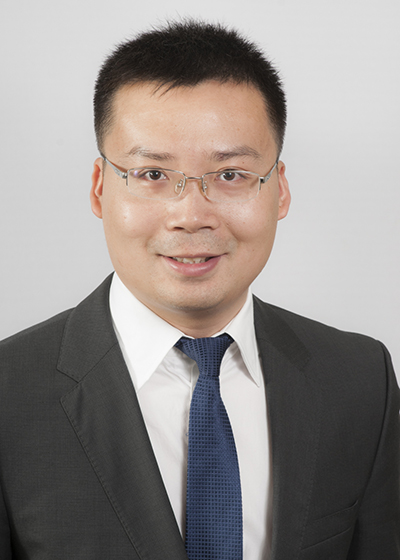
Dr. Zichun Zhong is an Associate Professor and Graduate Program Director in the Department of Computer Science at Wayne State University's James and Patricia Anderson College of Engineering. He earned his Ph.D. from the University of Texas at Dallas and completed postdoctoral training at UT Southwestern Medical Center. His research focuses on geometric modeling, computer graphics, medical image processing, and visualization technologies. Research encompasses: Geometric modeling of surfaces and volumes 3D computer vision and reconstruction Medical image segmentation and visualization Virtual/augmented reality applications GPU-accelerated algorithms Awards and honors include NSF CAREER and CRII awards, Faculty Research Excellence Award, and Excellence in Teaching recognition. He serves as Technical Paper Chair for Shape Modeling International conferences and associate editor for multiple journals. Current doctoral advisees: Shiman Zhou, Hongbo Li, Haikuan Zhu, and Sikai Zhong. Notable alumni include researchers at Samsung NEON, Skoltech, and General Motors.
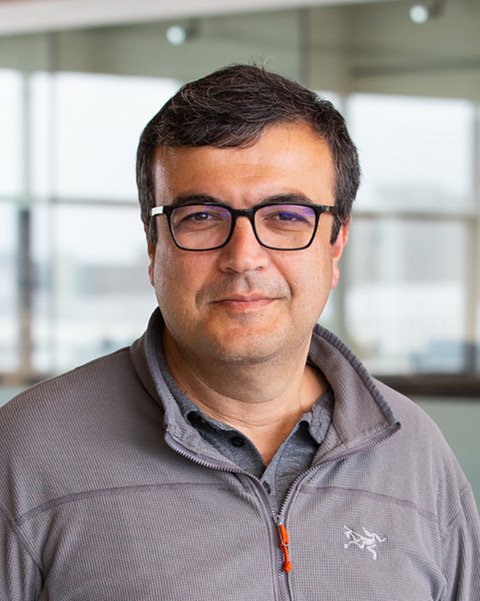
Dr. Andy Nguyen is a Senior Lecturer in Structural Engineering at the University of Southern Queensland, within the School of Engineering. He is an active researcher and educator, specializing in the Structural Health Monitoring (SHM) of critical civil infrastructure such as bridges, buildings, and transport tunnels. Bachelor of Engineering (BEng), NUCE, 1999 Master of Engineering (MEng), NUCE, 2003 Doctor of Philosophy (PhD), Queensland University of Technology (QUT), 2014 Dr. Nguyen's research is at the forefront of integrating advanced technologies into civil engineering. His primary focus is on developing and deploying sophisticated SHM systems that utilize sensors, data analytics, and machine learning to provide real-time insights into the structural integrity of ageing infrastructure. His work aims to enable proactive maintenance, extend the lifespan of structures, and enhance public safety. He has successfully implemented monitoring systems on major bridges and high-rise buildings in Queensland and New South Wales, with systems capable of even detecting distant earthquake events. His research interests span Structural Health Monitoring, Machine Learning for Engineering, Damage Detection, Finite Element Model Updating, Sustainable Building Materials like bamboo, and the application of AI for automated condition assessment of transport infrastructure. The analysis of his recent publications reveals a strong and consistent research trajectory centered on the application of data-driven and AI methods to solve practical problems in civil infrastructure. His work frequently combines signal processing techniques (like Stockwell Transform) with deep learning models for tasks such as crack detection in concrete and pavement. He also conducts significant research on model updating for complex structures like cable-stayed and arch bridges, using vibration data and optimization algorithms. The integration of machine learning for overload classification and the development of cost-effective, automated monitoring systems are key trends in his recent output. Advanced Queensland Fellow (2024-2027) Dr. Nguyen is actively involved in research supervision and collaboration. He is currently supervising several postgraduate students on projects related to AI-powered condition assessment, bamboo as a sustainable building material, and railway track design. He receives research funding from the Queensland Government through his Advanced Queensland Fellowship. His research has direct practical applications, as evidenced by his public engagement, such as writing for The Conversation on safeguarding ageing bridges, and his work with the Australian Network of Structural Health Monitoring. Dr. Nguyen's work embodies the development of a next-generation 'Living' Laboratory for engineering education, where research, teaching, and real-world infrastructure monitoring are integrated. His current projects involve creating smart, automated fault detection systems and advancing 'digital twin'-based monitoring platforms for infrastructure.
Dr. Zhenghao Chen is a Lecturer in Data Science at the University of Newcastle, affiliated with the School of Information and Physical Sciences. He earned his Ph.D. from the University of Sydney in 2022, following a B.Eng. H1 degree from the same institution in 2017. Prior to his current position, Dr. Chen served as a Postdoctoral Research Fellow at the University of Sydney (2022-2024), a Research Engineer at TikTok (2024), and as a Visiting Research Scientist at Microsoft Research and Disney Research (2022-2023). Dr. Chen's educational background includes: Doctor of Philosophy, University of Sydney (2022) Bachelor of Information Technology (B.Eng. H1), University of Sydney (2017) Dr. Chen's research spans multiple domains within artificial intelligence, with particular expertise in Computer Vision, Natural Language Processing, and Machine Learning. His work in Generative AI has garnered significant recognition, with applications in both academic and industrial settings. His research interests are reflected in his Fields of Research percentages: Deep Learning (30%), Computer Vision (30%), Natural Language Processing (20%), and Multimodal Analysis and Synthesis (20%). His publications in top-tier venues like CVPR, ICCV, ECCV, and journals like IEEE TPAMI demonstrate the breadth and impact of his work. Analysis of Dr. Chen's recent publications (2022-2025) reveals a consistent focus on neural compression techniques, 3D perception, and multimodal AI systems. His work spans medical imaging (CXR bone suppression), video compression, point cloud processing, and neural surface reconstruction. A notable trend is his exploration of efficient AI systems that work well under resource constraints, as evidenced by his involvement in the EMCLR workshop. His research often bridges theoretical advances with practical applications across multiple domains. Dr. Chen has received several prestigious awards: Microsoft Research Asia StarTrack Fellowship (2025) ACM SIGMM Award for Outstanding PhD Thesis in Multimedia Computing (2024) Australia Government Research Training Program (RTP) Fellowship (2019) Google Australia Prize for Excellence in Computer Science (2017) Dr. Chen is actively involved in the academic community, serving on the Program Committee for major AI conferences including CVPR, ICCV, ECCV, SIGGRAPH, AAAI, and others. He also organizes workshops in Multimedia and ICCV conferences, and serves as a reviewer for prestigious journals. His teaching responsibilities include courses on Intelligent Visual Signal Understanding, Video Intelligence and Compression, Database and Information Management, and Computing Fundamentals at both the University of Sydney and University of Newcastle.
Rob Gleasure is a Professor in the Department of Digitalization at Copenhagen Business School (CBS), Denmark. His research focuses on the intersection of information systems, digital technologies, and human behavior, with particular expertise in blockchain technology, crowdfunding, AI applications, and technology adaptation. Based at Solbjerg Square 3 in Frederiksberg, he contributes to CBS's mission of advancing knowledge in business and society through digital transformation. Professor Gleasure's research spans several key areas within information systems and digital innovation: Digital finance and blockchain technologies, including cryptocurrency and financial applications Crowdfunding platforms and digital fundraising mechanisms Artificial intelligence applications in various domains including healthcare and banking Human-computer interaction and the psychological aspects of technology adoption Digital collaboration and the affective dimensions of online work Quantum computing infrastructure and emerging technologies His recent publications reveal an evolving research trajectory that increasingly addresses the societal implications of digital technologies. Gleasure has moved from foundational work on crowdfunding and blockchain to more complex examinations of AI ethics, gender bias in technological systems, and the psychological impacts of digital media. His research demonstrates growing attention to sustainable development goals, particularly those related to responsible consumption and production, reduced inequalities, and climate action. The interdisciplinary nature of his work bridges business, technology, and social sciences, often employing both qualitative and experimental methodologies. Professor Gleasure has served as a supervisor for numerous students (21 supervisor tasks mentioned) and has been active in academic service including co-chairing the ACM Collective Intelligence Conference in 2021. His research has attracted media attention, with contributions to discussions on cryptocurrency, carbon offsetting in aviation, and AI applications.
Ozgur Yilmaz is a Professor in the Department of Mathematics at the University of British Columbia (UBC). He is the Director of the Pacific Institute for the Mathematical Sciences (PIMS) and has held roles such as Interim Deputy Director at PIMS and Deputy Director at the Banff International Research Station (BIRS). His research focuses on applied harmonic analysis, signal processing, compressed sensing, and seismic signal processing. Education: PhD in Applied and Computational Mathematics from Princeton University (2001), B.Sc. in Mathematics and Electrical Engineering from Boğaziçi University (1997). Research Interests: Mathematical problems in analog-to-digital conversion, blind source separation, sparse approximations, compressed sensing, and their applications in seismic exploration. He has contributed to advancements in sigma-delta quantization, low-rank matrix recovery, and compressed sensing algorithms. Funding: Recipient of NSERC Discovery Grants, UBC Data Science Institute grants, and leadership in collaborative research groups (CRGs) on high-dimensional data analysis and applied harmonic analysis. His work bridges theoretical mathematics with practical applications in signal processing and AI-driven medical imaging. Students and Postdocs: Supervised numerous PhD and MSc students in areas like compressed sensing, seismic data reconstruction, and machine learning. Current advisees include Aaron Berk and Xiaowei Li. Former students hold positions at academic institutions and tech companies. Labs and Collaborations: Affiliated with UBC’s Data Science Institute (DSI), Centre for Artificial Intelligence Decision-making and Action (CAIDA), and the Institute of Applied Mathematics (IAM). Collaborates on projects integrating AI with scientific discovery, such as retinal biomarker identification using deep learning.
Professor Jinho Choi is a Chair and Professor in Radio Frequency at the School of Electrical and Mechanical Engineering, University of Adelaide, Australia. He holds a B.E. (magna cum laude) from Sogang University, and M.S.E. and Ph.D. degrees from KAIST. His research focuses on advancing wireless communication and sensing technologies, particularly in IoT, 5G/6G, non-terrestrial networks, and cognitive satellite systems. He authored three books and has been recognized with the 1999 EURASIP Best Paper Award, IEEE Fellowship, and inclusion in Stanford's Top 2% Scientists list since 2020. He currently serves as a Senior Editor of IEEE Wireless Communications Letters and editorial roles in multiple journals. Education: B.E. (Electronics Engineering) - Sogang University, Seoul (1989) M.S.E. (Electrical Engineering) - KAIST (1991) Ph.D. (Electrical Engineering) - KAIST (1994) Research Interests: Professor Choi's work addresses connectivity challenges in non-terrestrial networks, leveraging statistical signal processing and machine learning. Current projects include UAV-assisted LEO satellite technologies, cognitive satellite radios, and semantic communication protocols. His research aims to enhance global connectivity and efficiency in terrestrial and satellite networks. Publications: His recent work spans semantic communication, satellite quantum key distribution, federated learning optimization, and coverage diversity in mega constellations. These studies reflect trends in 6G-ready technologies, AI-driven communication systems, and hybrid satellite-terrestrial networks. Awards: 1999 Best Paper Award for Signal Processing (EURASIP) IEEE Fellow (Leadership in technical excellence) World’s Top 2% Scientists (Stanford University, 2020–present) Grants & Supervision: As a senior academic, he oversees grants in wireless innovation and has advised numerous students on advanced communication systems. His lab focuses on next-generation networks, integrating theoretical insights with practical implementations. Labs/Teams: Active in interdisciplinary teams at the University of Adelaide, collaborating on projects funded by industry and government to bridge gaps between academic research and real-world applications.
Christian Timmerer is a Professor at the Institute of Information Technology, Alpen-Adria-Universität Klagenfurt. His research focuses on adaptive video streaming , energy efficiency , MPEG standardization , and quality of experience (QoE) , with significant contributions to HTTP Adaptive Streaming (HAS), multi-codec optimization, and immersive media systems. Email: christian.timmerer@aau.at Office Hours: Monday 3:00-4:00 PM (by appointment) Projects: CD-Labor ATHENA, GAIA, SPIRIT His research integrates machine learning and generative AI to enhance video encoding, super-resolution, and voice dubbing, while prioritizing sustainability through energy-aware algorithms and open-source tools like GREEM and VEED. Current work emphasizes latency reduction and dynamic bitrate adaptation in live streaming environments. Recent publications address VVC optimization , multi-resolution encoding , and perceptual quality modeling , reflecting interdisciplinary efforts in networking , computer vision , and human-computer interaction . Awards include leading funded projects on adaptive streaming and green video systems.
Ming Li is a Professor of Electrical and Computer Engineering at Duke Kunshan University's Division of Natural and Applied Science, and a Principal Research Scientist at the Digital Innovation Research Center. He holds an adjunct position as a Professor at Wuhan University's School of Computer Science. His research focuses on audio/speech processing, multimodal behavior signal analysis, and applications in autism spectrum disorder diagnosis. Li has over 200 publications and serves on editorial boards of journals like IEEE Transactions on Audio, Speech and Language Processing. Education: Ph.D. in Electrical Engineering from the University of Southern California (2013). Awards include the IBM Faculty Award (2016), ISCA 5-Year Best Paper Award (2018), and Youth Achievement Award (2020). He leads initiatives in anti-spoofing countermeasures, voice conversion, and speech synthesis. Recent Courses: Random Signals and Noise Speech Recognition Data Science Key Research Contributions: Development of datasets like KunquDB, TMCSpeech, and systems for speaker verification, deepfake detection, and autism diagnosis tools. His work bridges signal processing with clinical applications, leveraging AI for social interaction improvement in neurodiverse populations.
Markus Haltmeier is a Professor in the Department of Mathematics at the University of Innsbruck. His research focuses on inverse problems, image reconstruction, and deep learning with applications in medical imaging, photoacoustics, and computational mathematics. He leads a group dedicated to advancing theoretical and practical solutions for challenges in non-destructive testing and medical diagnostics. His work integrates mathematical analysis with machine learning, addressing issues such as high-resolution imaging in scattering media and automated segmentation of cardiac structures. Key research areas include regularization techniques for inverse problems, self-supervised learning approaches for limited data scenarios, and computational methods for photoacoustic tomography. His contributions span both theoretical developments (e.g., inversion formulas for Radon transforms) and applied solutions (e.g., algorithms for cylinder liner wear assessment and myocardial infarct segmentation). Publications highlight advancements in neural network-based regularization, 3D medical image synthesis, and unsupervised learning frameworks for segmentation and registration. His research emphasizes bridging the gap between mathematical theory and real-world applications in healthcare and engineering.
Dr. Wenjing Jia is an Associate Professor at the University of Technology Sydney (UTS), affiliated with the School of Electrical and Data Engineering within the Faculty of Engineering and IT. She holds a PhD in Computing Sciences (UTS, 2007), Master's in Communications and Information Systems (Fuzhou University, 2002), and a Bachelor's in Communications Engineering (Jilin University, 1999). Her research focuses on image analysis, computer vision, and AI applications in healthcare, transport, and defense. Key areas include text detection in challenging environments, medical image super-resolution, and crowd surveillance systems. She leads projects with industry partnerships, securing over $900K in funding. Dr. Jia is also a recognized educator with 12+ years of teaching experience, specializing in internetworking subjects. She organizes international conferences (e.g., ICDAR2019, TrustCom-2017) and serves as a Cisco Certified Instructor Trainer. Awards include the Science and Technology Award and a finalist spot in the Cisco Women in IT Academia Award. Education: PhD in Computing Sciences, UTS (2007) MSc in Communications and Information Systems, Fuzhou University (2002) BEng in Communications Engineering, Jilin University (1999) Research Highlights: Developed algorithms for low-light text detection and medical image enhancement Advanced crowd counting and violence detection in surveillance systems Contributions to OCT image super-resolution and LiDAR point cloud analysis Teaching & Leadership: Lead CI of Teaching & Learning grants Legal Main Contact for UTS Cisco Networking Academy Deputy Head - Teaching and Learning (secondee) Awards: Excellent Thesis Award, Science and Technology Award (2019), and recognition in Women in IT Academia. Her work bridges academia and industry, with over 130 publications and active roles in conference organization and technology transfer.
Dr. Elizabeth Behm-Morawitz is a Professor and Chair in the Department of Communication at the University of Missouri. Her research focuses on media effects, media psychology, and emerging technologies such as virtual reality, AI, and social media. She examines how media influences identity, health, and prosocial behavior, with a particular emphasis on marginalized groups and counter-narratives. Her academic background includes a Ph.D. in Communication from the University of Arizona. She teaches undergraduate and graduate courses on media theory, persuasion, and new technologies. Behm-Morawitz serves on editorial boards for Communication Monographs, Communication Studies, and Journal of Media Psychology, reflecting her leadership in the field. Her work spans multiple platforms, analyzing media's impact on body image, gender roles, and environmental attitudes through innovative frameworks like mediated counter-narratives. Her research highlights the intersection of technology and societal issues, such as using virtual reality for environmental advocacy or exploring how beauty filters affect self-perception. She also investigates media's role in shaping racial/ethnic identities and addressing diversity through education programs. Despite no listed awards or grants in the text, her prolific publication record and editorial roles underscore her significant contributions to media studies.
Francesco Fedele is an Associate Professor at Georgia Tech, concurrently affiliated with the School of Civil and Environmental Engineering and the School of Electrical and Computer Engineering. He holds a Ph.D. in Civil Engineering from the University of Vermont (2004) and a Laurea (magna cum laude) from the University Mediterranea, Italy (1998). His research spans nonlinear wave phenomena, coastal engineering, fluid mechanics, and sustainable ocean energy, with a focus on rogue waves, stereo imaging, and computational methods. His work has been published in high-impact journals like Physical Review Letters and IEEE Transactions series. Research Interests include wave turbulence, signal processing for biomedical and radar applications, and mathematical modeling of tidal energy systems. Notable contributions involve analyzing extreme waves in the Mediterranean and North Sea, contributing to maritime safety and hurricane impact studies. Publications reflect expertise in fluid dynamics, oceanography, and computational methods. Recent work addresses the geometrical phases of nonlinear systems and interval-based finite element analysis under uncertainty. His research has been featured in Georgia Tech news for applications in rogue wave prediction and structural engineering. Dr. Fedele’s academic positions and collaborations include postdoctoral research at NASA Goddard Space Flight Center (pre-Georgia Tech tenure). No specific awards are explicitly listed in the provided text, though his work has garnered media attention for its societal impact.
Olga Russakovsky is an Associate Professor in the Computer Science Department at Princeton University. She serves as Associate Director of the Princeton AI Lab and Chair of the Board of Directors at AI4ALL, a nonprofit dedicated to diversity in AI leadership. Her research focuses on computer vision, machine learning, human-computer interaction, and fairness in AI. She specializes in developing AI systems that reason about the visual world, emphasizing fairness, accountability, and transparency. Her work integrates computer vision with ethical AI frameworks, and she is affiliated with Princeton’s Center for Statistics and Machine Learning and Center for Information Technology Policy. Her publications address biases in datasets, explainable AI, and generative models. Her recent research trends include: Bias detection in datasets (e.g., CelebA, ImageNet) Interactive and explainable AI systems Generative models like diffusion and vision-language integration Deepfake detection and AI forensics Conceptual learning and few-shot training Scientific awards: NSF CAREER Award for fairer computer vision systems Co-founder of AI4ALL and Stanford AI4ALL outreach programs She advises students through AI4ALL initiatives and leads the Visual AI Lab, which focuses on robust, inclusive AI development. Her work bridges technical innovation with societal impact, particularly in diversity-focused education.
Timothy Baldwin is a Professor at the University of Melbourne, School of Computing and Information Systems, with additional affiliation at Mohamed bin Zayed University of Artificial Intelligence in UAE. His research spans natural language processing, large language models, and multilingual AI systems. His research interests focus on the safety, reliability, and ethical aspects of large language models. He investigates bias evaluation and debiasing techniques, uncertainty quantification methods, fact-checking systems, and multilingual model safety. His work addresses critical challenges in making AI systems more transparent, reliable, and culturally aware, with particular attention to low-resource languages and cross-cultural differences. Baldwin's recent publications demonstrate a strong focus on evaluating and improving the safety of language models across diverse linguistic contexts, developing tools for fact verification, and understanding the internal mechanisms of large language models. His research shows increasing emphasis on practical applications with real-world impact, particularly in multilingual settings and safety-critical domains. His scientific contributions include foundational work on multilingual NLP, bias mitigation techniques, and frameworks for evaluating LLM safety across different cultural contexts. His research has been published in top-tier venues including ACL, NAACL, EMNLP, and ICLR. Baldwin actively mentors students and junior researchers, with frequent collaborations with Haonan Li, Xudong Han, and Fajri Koto, among others. His research group appears to focus on practical applications of NLP with strong ethical considerations, particularly regarding model safety and cultural sensitivity.
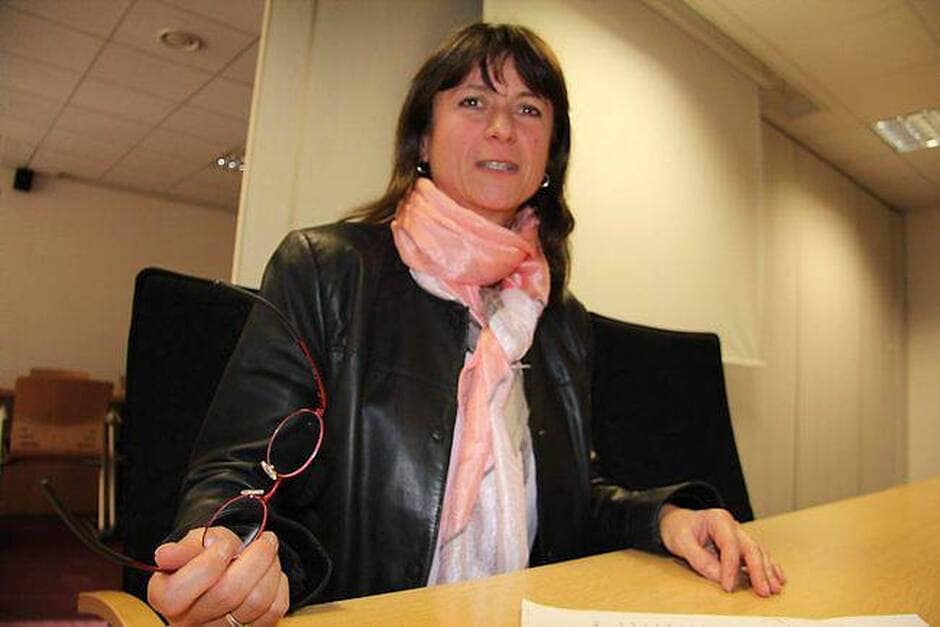
Marie-Christine Michaud is a Professor of American Studies at the University of South Brittany (Université de Bretagne Sud), affiliated with the Heritage and Creation in Text and Image research laboratory (HCTI-EA 4249). She specializes in Italian American studies, ethnicity, and immigration dynamics in the United States, with a focus on transnational identity formation and cultural recognition. Academic Background: Doctorate (1997, Paris-Sorbonne IV) Accreditation to Supervise Research (2010, University of Valenciennes and Hainaut-Cambresis) Her research explores the evolving identity of Italian Americans through literary analysis, urban studies, and historical frameworks, examining themes such as ethnic festivals, culinary adaptation, intergroup relations, and transnational connections. Michaud’s work frequently analyzes how Italian Americans navigate cultural assimilation while maintaining ethnic distinctiveness, particularly in New York City contexts like Little Italy’s transformation and the Verrazzano Bridge symbolism. She has published extensively on Italian American representation in literature and film, including studies of The Courtyard of Dreams , Nuovomondo , and The Wine Cellar , connecting artistic works to broader sociopolitical narratives of migration and identity. Her recent scholarship addresses contemporary issues like ethnicization in U.S. society and the struggle for recognition through cultural festivals such as Marco Polo Day. Leadership: Co-director of HCTI research laboratory (2012–present) Former administrative head for L2 year at UBS (2010–2012) Coordinator of the 'Amériques' research group within HCTI (2009–2012) Michaud teaches North American civilization (L1–M2) and American literature (L3–Master), mentoring students through research projects on ethnicity and transnationalism. Her scholarly activities include organizing international conferences on American studies and participating in collaborative projects like the John Calandra Italian-American Institute’s 'Diaspore italiane' initiative.