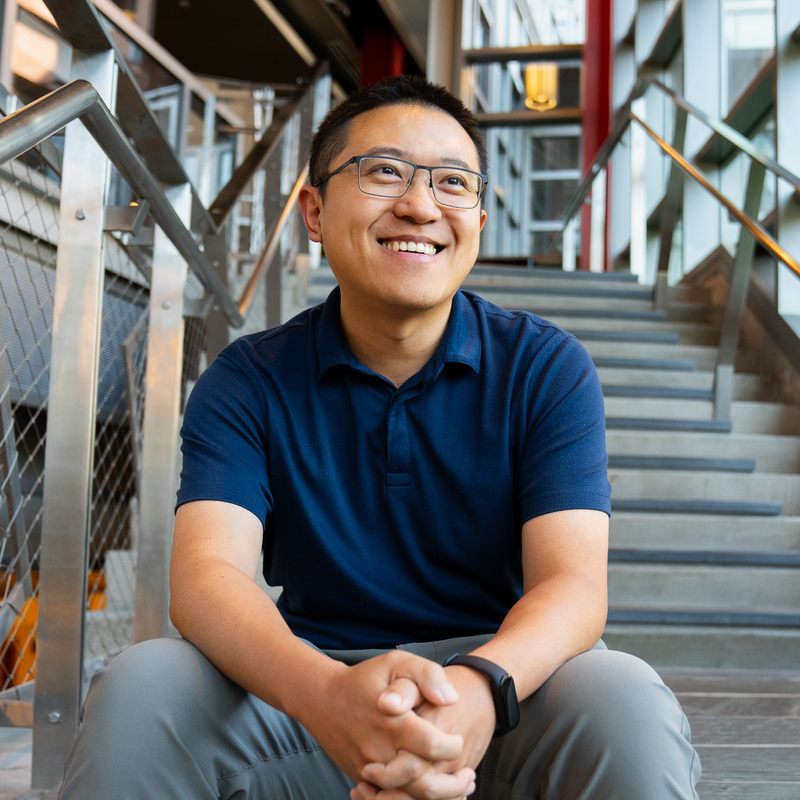
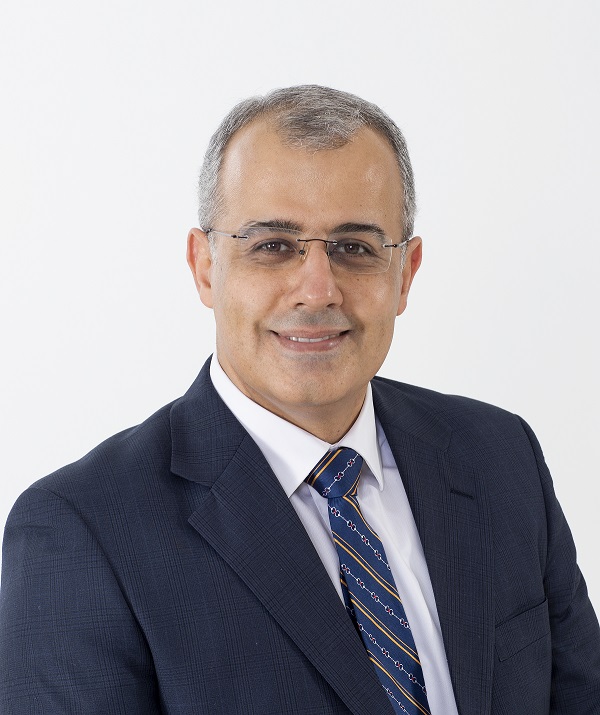
Gang Wang is an Associate Professor in the Department of Computer Science at the Siebel School of Computing and Data Science at the University of Illinois Urbana-Champaign (UIUC) . He serves as the Associate Director of the Capital One Illinois Center for Generative AI Safety and holds courtesy affiliations with the Department of Electrical and Computer Engineering , Security and Privacy Research at Illinois (SPRAI) , and the Coordinated Science Laboratory (CSL) . His research focuses on developing explainable and robust machine learning systems to enhance internet security and privacy. Key areas include adversarial machine learning , deepfake detection , phishing prevention , and security of social computing platforms . He actively contributes to major conferences like USENIX Security , CCS , NDSS , and ICML . Recent publications highlight his work on LLM benchmark contamination , VLM jailbreaks , and deepfake profile detection . His research team has produced award-winning papers at CHI and IEEE SP , with grants from NSF , Amazon , and Google . Notable students include Qingying Hao and Limin Yang , who co-authored multiple high-impact papers.
Ji Zhang is a Professor in the Department of Mathematics, Physics and Computing at the University of Southern Queensland. His research focuses on machine learning, data privacy, computer vision, and blockchain technology. He holds an MSc from Singapore and a PhD from Dalhousie University. His work addresses challenges in secure multiparty computation, adversarial machine learning, and deepfake detection. Key research themes include privacy-preserving techniques for data publishing, generative models for image manipulation, and graph neural networks for network analysis. Recent studies explore efficient neural dynamic data valuation and fair algorithmic systems. He has contributed to scalable graph mining frameworks and secure blockchain applications in healthcare and smart contracts. His publications reflect interdisciplinary innovation across cybersecurity, computer vision, and distributed systems. Notable projects include EVRACE for e-bike charging analysis and Tara-Net for takeaway rider accident detection. Despite no listed awards, his work demonstrates significant impact in AI-driven solutions for real-world problems. Collaborative activities span academic-industry partnerships in fraud detection systems and edge computing frameworks for worker safety monitoring (DeepSafety). Current research emphasizes improving transparency in graph neural networks and developing robust anomaly detection methodologies.
Samrat Gupta is an Associate Professor in the Information Systems area at the Indian Institute of Management Ahmedabad (IIMA), with additional roles as a Senior Researcher at the University of Agder (Norway) and visiting researcher at Bratislava University of Economics and Business (Slovakia). His academic foundation includes a doctoral fellowship from the Indian Institute of Management Lucknow and a bachelor's degree in Information Technology from Punjab Engineering College Chandigarh. His research centers on four interconnected themes: 1) Network theoretic modelling and analytics, 2) Information disorder driven by social media, 3) User engagement dynamics on digital platforms, and 4) User-centered digitalization frameworks. These interests bridge computer science, behavioral economics, and social media analytics, with applications in misinformation detection, governance systems, and consumer behavior. Gupta's publications demonstrate consistent focus on network analytics and digital society challenges, with recent work emphasizing AI transparency, social media polarization, and data quality. His research consistently integrates computational methods with social science frameworks, particularly through graph theory applications and user-centered design paradigms. Awards & Grants: SPARC Research Grant from Ministry of Education, Government of India (2019) Best Paper Award at ALLDATA International Conference (2019) EU Horizon-funded FAME Project: Federated decentralized data marketplace Ministry of Education-funded project on polarization dynamics and echo chambers He maintains active editorial roles including Associate Editor positions for ICIS, ECIS and PACIS conferences, and contributes to doctoral education through courses on network modeling and database systems. His funded projects include European Commission initiatives on data marketplaces and Indian government collaborations on socio-cultural polarization.
Shaowen Wang is a Professor of Geography and Geographic Information Science and the Siebel School of Computing and Data Science at the University of Illinois Urbana-Champaign (UIUC). He serves as Associate Dean for Life and Physical Sciences in the College of Liberal Arts and Sciences and is a Senior Faculty Fellow in the Office of the Vice Chancellor for Research and Innovation. His research focuses on advancing cyberGIS and geospatial data science, with applications in environmental modeling, public health, and sustainability. Wang leads the NSF-funded Institute for Geospatial Understanding through an Integrative Discovery Environment (I-GUIDE) and directs UIUC’s CyberGIS Center for Advanced Digital and Spatial Studies. Education: PhD in Geography, University of Iowa (2004) Master of Computer Science, University of Iowa (2002) MS in Geography, Peking University (1998) BS in Computer Engineering, Tianjin University (1995) Research Interests: Wang’s work integrates cyberGIS, spatial AI, and high-performance computing to address complex geospatial challenges. His research spans environmental modeling (e.g., hydrology, climate), public health (e.g., spatial accessibility to healthcare), and scalable geocomputation. His CyberGIS Center develops tools like CyberGIS-Compute and CyberGIS-Jupyter to democratize geospatial analytics. Recent Publications Trends: His recent work emphasizes AI-driven geospatial analysis (e.g., deep learning for hydrographic mapping), scalable solutions for environmental modeling, and cyberinfrastructure for reproducible research. Key contributions include frameworks for integrating HydroShare with computational tools and visual analytics for disaster resilience. Awards and Honors: Elected Fellow, AAAS (2021), AAG (2022), UCGIS (2024) NSF CAREER Award (2009) AAG Distinguished Scholarship Honors (2022) UIUC Romano & Centennial Professorial Scholars Advising and Grants: As a PI/co-PI, Wang has secured over $60M in research funding from NSF, NIH, USDA, and others. He has advised over 20 PhD students and 20 postdoctoral fellows, many now leading roles in academia and industry. His grants support projects like the I-GUIDE institute and spatial AI for extreme events. Labs and Initiatives: Directs the CyberGIS Center and co-leads the I-GUIDE initiative. Collaborates with the Taylor Geospatial Institute on projects like AI-driven hydrographic mapping and urban heat island analysis using sensor networks.
Dr. Frederick Li is an Associate Professor in the Department of Computer Science at the University of Durham. He holds a Ph.D. in Computer Graphics from City University of Hong Kong and has held academic roles at The Hong Kong Polytechnic University prior to his current position. His research focuses on Computer Graphics, Machine Learning, Visual Aesthetics, and Educational Technologies. He serves as an Associate Editor for Frontiers in Education and Virtual Reality & Intelligent Hardware, and has organized major conferences such as ICWL 2022 and ISVC 2021. Education: B.A. (Hons.) in Computing Studies from The Hong Kong Polytechnic University, M.Phil. in Computer Science, and Ph.D. in Computer Graphics. Research interests include mesh saliency, human-object interaction recognition, cloud modeling, and student performance analytics. He has published extensively in top venues like IEEE Transactions, ACM SIGGRAPH, and ECCV. Notable awards include Best Paper (ITiCSE 2014) and Outstanding Paper (ICALT 2013). He currently chairs the Undergraduate Board of Examiners and serves as an external examiner for Northumbria University's MSc program. His work spans educational technologies, collaborative virtual environments, and visual aesthetics, with applications in VR therapy, face forgery detection, and artistic style transfer. He supervises numerous Ph.D. students and contributes to Durham’s academic governance, including curriculum development and postgraduate management.
Dr Robert Bradshaw is a Senior Lecturer in Analytical Science and Co-Placement Lead at the Department of Biosciences and Chemistry, Sheffield Hallam University. He is affiliated with the Biomolecular Sciences Research Centre . His research focuses on forensic and environmental science, employing mass spectrometry, chromatography, and spectroscopy to address contaminants from plastics and counterfeit document analysis. Education: BSc (Hons) in Forensic Bioscience and PhD in MALDI MSI applications for forensic fingermark analysis from Sheffield Hallam University. He has co-authored 16 papers in fingermark analysis and 14 in mass spectrometry imaging, plus 4 book chapters on forensic science. Research interests include: Plastic-derived food contaminant detection using mass spectrometry and chromatography Forensic applications of MALDI-MS for latent fingerprints and document forgery Counterfeit product analysis via ink/substrate spectroscopic methods Publications emphasize MALDI-MS innovations in forensic and environmental domains. Awards: FHEA and RSC membership, with committee roles in analytical chemistry divisions. He supervises three postgraduate students and teaches analytical techniques across undergraduate/postgraduate programs.
Marjory Da Costa Abreu is an Associate Professor in Ethical Artificial Intelligence and Transforming Lives Fellow at Sheffield Hallam University's School of Computing and Digital Technologies, within the College of Business, Technology and Engineering. She holds a PhD, MPhil, BSc, and is a Senior Fellow of the Higher Education Academy (SFHEA). Research Interests: Applied AI, biometrics (face analysis, keystroke dynamics, speech recognition), health data analytics, forensic technologies, digital law, and ethical AI policy. Her work emphasizes decolonial approaches to museum data, transparency in gaming user behavior, and affordable biometric solutions. Projects: Ongoing projects include medieval document analysis for neurological disorder insights, signal processing for medical diagnostics, forensic keystroke analysis for social media accountability, and AI fairness in judicial systems. Winner of the Newton Research Collaboration Programme Award Collaborates with University of Kent, University of York, and Brazilian institutions Formerly a Reader in Artificial Intelligence at UFRN (until 2019) Teaching: Leads the MSc Artificial Intelligence program and the Artificial Intelligence Seminar Series. Focus areas include programming, machine learning, and research methods. Service Roles: External Examiner, Journal Associate Editor, UKRI reviewer. Advocate for women and underrepresented groups in STEM.
Raheem Sarwar is Senior Lecturer at Manchester Metropolitan University Business School with expertise in Natural Language Processing, AI, and Data Science. Holding a PhD from City University of Hong Kong, he teaches courses in Advanced Web Programming, Data Management, and Fundamentals of Programming while supervising doctoral candidates in NLP applications. His research spans NLP model development, federated learning optimization, and AI applications in healthcare diagnostics. Recent publications examine communication efficiency in personalized federated learning, fairness in algorithmic systems, transformer-based Urdu captioning, and medical image analysis for melanoma detection. Sarwar maintains an interdisciplinary research profile with applications in healthcare, sustainability, and digital security. Current projects include developing federated learning frameworks with strategic client selection and improving diagnostic accuracy through AI-CNN synergies.
Robert René Maria Birke is a tenured assistant professor in the Department of Computer Science at the University of Turin, leading research in the Parallel Computing group. His expertise spans virtual resource management, network design, workload characterization, and optimization of AI/big-data applications. Previously, he served as a visiting researcher at IBM Research Zurich and Principal Scientist at ABB Corporate Research, combining industry experience with academic rigor since earning his Ph.D. from Politecnico di Torino in 2009. His educational background includes: Ph.D. in Electronics and Communications Engineering, Politecnico di Torino (2009) Dr. Birke's research centers on systems-level challenges in distributed AI, with current projects investigating federated learning architectures, confidential computing via Trusted Execution Environments, and RISC-V processor optimizations for decentralized machine learning. His work bridges theoretical foundations with practical deployments, particularly in edge computing scenarios and high-performance data synthesis applications. Recent publications reveal growing emphasis on securing generative models against forgery attacks and optimizing tabular data synthesis techniques. Analysis of his 15 most recent publications (2024-2026) shows dominant themes in confidential federated learning (33% of works), RISC-V system optimizations (27%), and generative model security/synthesis (40%). This output spans premier venues including IEEE Transactions, ACM Computing Surveys, and SIGCOMM-affiliated conferences, demonstrating consistent contributions to systems-AI intersection research. Professional recognition includes: IEEE Senior Member While the text confirms extensive collaboration through co-authorships (notably with Marco Aldinucci, Lydia Chen, and Giulio Malenza), no specific student advisees or grant details are provided. His work appears embedded within European initiatives like ICS and EUPilot projects, focusing on compute continuum challenges. Dr. Birke actively contributes to the Parallel Computing group's mission through projects including HPC4AI@UNITO (datacenter digital twins) and Cross-Facility Federated Learning frameworks. His research ecosystem involves multi-institutional teams across Italy, Switzerland, and the EU, with recent talks addressing FLaaS implementations and generative model impacts on system design.
Saeed Tabar, Ph.D., is an Assistant Professor of Management Information Systems (MIS) at the University of West Georgia's Richards College of Business. His research focuses on cybersecurity, digital privacy, data analytics, and stock market prediction. He holds a Ph.D. in Information Technology from the University of Nebraska-Omaha (2018), with prior degrees from Iran University of Science & Technology and the University of Nebraska-Omaha. He teaches courses in cybersecurity, database management, and information systems. Education: B.Sc. Computer Engineering, Iran University of Science & Technology (2004) M.Sc. Secure Telecommunications, Iran University of Science & Technology (2011) M.Sc. Management Information Systems, University of Nebraska-Omaha (2017) Ph.D. Information Technology, University of Nebraska-Omaha (2018) Research Interests: Dr. Tabar's work bridges technology and socio-economic analysis. He explores cybersecurity challenges in IoT, stock market prediction using AI, and the societal impact of digital infrastructure. His recent studies include analyzing the network readiness index for crisis management and the economic implications of public investments in sports. Recent Research Trends: His articles span cybersecurity frameworks, predictive analytics for financial markets, and digital policy implications. He has published on topics ranging from image forgery detection to the long-term benefits of sports infrastructure investments. Teaching & Office: He teaches advanced cybersecurity courses (e.g., Defensive & Offensive Security, IoT Security) and holds office in Roy Richards Sr. Hall, Room 253.
Zitong Yu is an Assistant Professor of Computer Science at Great Bay University, China, leading the YU Vision (YUV) Group. He holds a PhD in Computer Science from the University of Oulu and has conducted postdoctoral research at Nanyang Technological University. His research focuses on computer vision, biometric security, and multimodal learning, with notable contributions to face anti-spoofing, deepfake detection, and remote physiological measurement. Postdoctoral Researcher: ROSE Lab, Nanyang Technological University (NTU) Visiting Scholar: University of Oxford (2021) His work bridges theoretical advancements with real-world applications, such as healthcare advisory roles with BioTrillion, USA. Key achievements include organizing international conferences (e.g., IJCB'24 Special Session), serving as Area Chair for BMVC 2024, and contributing to influential datasets like GenFace and DOLOS. Research interests span facial presentation attack detection, multimodal learning, and generative models for security. He has received awards including the World's Top 2% Scientists (2023-2024) and the Chinese Government Award for Outstanding Self-financed Students Abroad (2021). Grants include the Natural Science Foundation of China's Young Scientists Fund (300k RMB) and the Guangdong Provincial Regional Joint Fund (300k RMB). His labs and teams focus on advancing trustworthy AI systems through robust and generalizable models.
Professor Amir Hussain is a faculty member at Edinburgh Napier University's School of Computing Engineering and the Built Environment. His expertise spans Cyber-security, Internet of Things (IoT), Machine Learning, and Medical Informatics. He is associated with the Centre for Cybersecurity, IoT and Cyberphysical Systems and has led projects such as a stretchable piezoionic sensor system for electromechanical sensing. His research integrates AI-driven solutions for healthcare, IoT security, and network optimization. Key projects include developing secure edge computing frameworks and post-quantum cryptographic systems. Collaborations involve interdisciplinary work on biomedical sensor networks and federated learning applications. His publications address challenges in face forgery detection, sepsis transcriptomics, and energy-efficient wireless networks. He contributes to both computational and medical domains, emphasizing privacy preservation and secure AI implementations.
Vishnu Monn is an Associate Professor at Monash University Malaysia's School of IT, serving as Deputy Head of Education and Director of the Advanced Computing Platform. He holds a PhD in Engineering from Multimedia University (2016) and has over 15 years of academic and industry experience, including roles at Panasonic R&D Centre Malaysia (2005–2009) and Multimedia University (2009–2017). His research focuses on high-performance computing, predictive analytics, machine learning, computer vision, and soft robotics, with over MYR 1 million in secured grants as principal investigator. Education: B.Eng. (First-Class Honours) in Electrical and Electronics Engineering (2004) M.Eng. in Electrical and Electronics Engineering (2007) Ph.D. in Engineering (2016) Research interests include: High-performance computing architectures and applications Predictive analytics for industrial and environmental systems Machine learning models for computer vision tasks Soft robotics control systems Recent projects span autonomous driving algorithms, IoT-enabled smart cities, and soft robotics using reinforcement learning. He has published 61+ peer-reviewed articles in top journals and conferences, with recent work emphasizing multimodal learning, generative models, and blockchain optimization. Scientific contributions include leadership in interdisciplinary research, securing major grants, and establishing Monash Malaysia's high-performance computing facility. Teaching commitments include courses on big data, parallel computing, and embedded systems, with roles as chief examiner and program coordinator.
Dr. Alona Jurgenson is a Senior Postdoctoral Research Associate at the University of Oxford, funded by Google DeepMind. Her research focuses on generative models, healthcare AI, and spatial transcriptomics. She holds a PhD in Computer Science from the Technion (2023) and an MSc from Tel-Aviv University. Previously, she worked at Reichman University and the Yakhini Research Group. Research Interests: Generative Topological Networks (GTNs) - novel topology-based generative models Applications of deep learning in healthcare decision-making Spatial molecular data analysis for tumor heterogeneity studies Computational methods for DNA methylation prediction Key Achievements: Developed GTNs with strong theoretical foundations (2024) Created HTA index for spatial heterogeneity analysis in medical imaging Recipient of Eric and Wendy Schmidt Postdoctoral Award (2023) Publications: Focus on generative AI theory, healthcare applications, and bioinformatics. Her works appear in top journals with notable contributions to medical imaging analysis and molecular biology.
Prof. Dr. Dragan Mitraković is a full-time Professor at the Department of General Technical Sciences , Faculty of Technology and Metallurgy , University of Belgrade . His academic work spans interdisciplinary research at the intersection of electrical engineering, materials science, and optical engineering. Research focus on composite materials, thermal shock analysis, and optical fiber sensing Key contributions in industrial process optimization and material characterization Active mentor to students in thermogravimetry and composite damage detection His research interests center on optical fiber sensor integration , thermal stability prediction , and non-destructive testing . He has pioneered methods combining image analysis and mechanical stimulation for advanced material diagnostics. Article trends reveal expertise in refractory materials , bioreactor design , and plastic optical fiber characterization . His work bridges theoretical analysis with practical industrial applications. As an educator, he has mentored students on topics including: Thermogravimetric system acquisition Optical fiber signal processing Techno-economic computer system implementation Document forgery protection mechanisms Printer calibration protocols Graphic production management