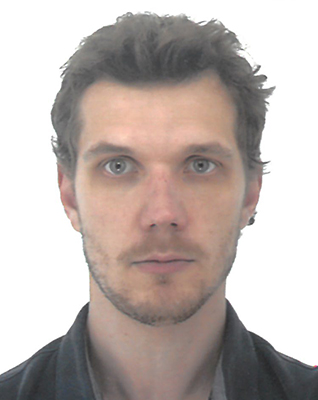
Alexey Nikolaevich Nazarov is a Professor at the Department of Software Engineering, Faculty of Computer Science, National Research University Higher School of Economics (HSE), where he has worked since 2015. His academic and teaching experience spans 14 years, with a focus on cybersecurity, cloud technologies, and information confrontation in social media. Doctor of Technical Sciences (2000) Engineer-Mathematician, Moscow Geological Prospecting Institute (1980) UN and ITU-certified expert His research interests center on cybersecurity , information warfare , and mathematical modeling , particularly in IoT and social media contexts. Articles highlight trends in neural network intrusion detection , ferroelectric memory devices , and cloud resource optimization . He has supervised 5 postgraduate and 2 doctoral students, organized scientific seminars, and contributed to cloud technology curricula. His expertise includes international standards (ITU, VAK), Skolkovo grant #87 (2012), and leadership in cybersecurity research.
Jan Franz Nygård is an Associate Professor at the Department of Physics and Technology , UiT The Arctic University of Norway. His work bridges Machine Learning with Health Informatics , focusing on cancer registries, AI for medical diagnostics, and data-driven healthcare solutions. UiT The Arctic University of Norway Department of Physics and Technology His research spans Cancer Research , Artificial Intelligence , and Data Science , with recent studies on synthetic data applications, federated learning, and quantum computing in healthcare. Over 15 recent publications highlight his contributions to breast cancer detection, cervical cancer risk prediction, and software testing for medical systems. Key collaborations include partnerships with the Cancer Registry of Norway , international consortia on federated networks, and interdisciplinary teams in Medical Imaging and Bioinformatics . His work addresses challenges in Secure Health Data Analysis and Population Health Management .
Litao Yu is a Part-Time Lecturer and Visiting Scholar at the Faculty of Engineering and Information Technology, University of Technology Sydney. Concurrently, he serves as a Senior Data Analyst at Australia's Department of Agriculture, Fishery and Forestry. His academic appointments include Research Fellow at UTS (2019-2024) and post-doctoral positions at Griffith University and Queensland University of Technology. Education: PhD from The University of Queensland (2013-2016) MPhil from Dalian University of Technology (2009-2012) BSc from Dalian Maritime University (2003-2007) Dr. Yu's research focuses on computer vision and machine learning with applications in agriculture, multimedia systems, and multimodal learning. His work spans few-shot learning, semantic segmentation, fine-grained recognition, and multimodal fusion techniques. Key application domains include animal welfare monitoring, aquaculture quality control, and travel information enhancement. His publications demonstrate strong thematic convergence around efficient visual recognition systems , with recurring focus on few-shot learning paradigms and attention mechanisms. Recent work shows increasing emphasis on agricultural applications of computer vision, including poultry monitoring, fish processing automation, and sheep tracking. Blockchain integration for supply chain transparency represents another emerging theme. No scientific awards are mentioned in available records. Teaching responsibilities at UTS include courses on Real-time Operating Systems and Shell Programming . No information is available regarding research grants, supervised students, or laboratory affiliations.
Zheng Wen is an Associate Professor (non-tenure-track) at Waseda University, affiliated with the Faculty of Science and Engineering and the Global Center for Science and Engineering. His research spans multiple interdisciplinary domains at the intersection of information technology, security systems, and artificial intelligence applications. Dr. Wen received his Ph.D. from Waseda University between 2013 and 2019, following undergraduate studies at Wuhan University from 2005 to 2009. Dr. Wen's research interests focus on the convergence of emerging technologies for practical applications. His primary areas include Data Science , Internet of Things (IoT) , Blockchain , and Artificial Intelligence , with specific applications in communication networks, disaster management, and content-oriented networking. His work demonstrates a strong emphasis on solving real-world problems through technological innovation, particularly in security-critical domains. Analysis of Dr. Wen's publication record reveals a consistent research trajectory focused on applying machine learning and AI techniques to security and communication challenges. His recent work shows increasing emphasis on blockchain applications for IoT security, GNSS spoofing detection for drone systems, and millimeter-wave imaging for security applications. The interdisciplinary nature of his research connects computer science, electrical engineering, and practical security implementations. Dr. Wen is an active member of professional organizations including IEEE and IEICE, reflecting his engagement with the broader academic community in his fields of expertise. While specific details about his advising and grant activities are not provided in the available information, his extensive publication record across multiple domains suggests active research supervision and likely participation in collaborative research projects. His work on drone security, blockchain applications, and millimeter-wave imaging indicates potential industry partnerships and practical implementations of his research. Dr. Wen's research appears to be conducted within collaborative teams focusing on security systems, wireless communications, and AI applications, with frequent co-authorship patterns suggesting established research groups working on related projects in these domains.
Sudip Misra is a Professor in the Department of Computer Science and Engineering at the Indian Institute of Technology Kharagpur, West Bengal, India. With an extensive publication record of 168 publications and over 1,142 citations, he has established himself as a leading researcher in networking and sensor systems. His work spans multiple domains within computer science and engineering, with a particular focus on practical applications of theoretical concepts. Dr. Misra's research interests encompass Wireless Sensor Networks, Internet of Things (IoT), Mobile Networks, Routing Protocols, Network Security, Energy Efficiency, Underwater Sensor Networks, UAV Networks, and Machine Learning applications for networking. His work demonstrates a consistent focus on solving real-world problems through innovative networking solutions, particularly in resource-constrained environments. He has made significant contributions to security protocols, energy management, and connectivity solutions across various network paradigms. Analysis of his recent publications reveals a strong trend toward practical applications of networking technologies, with increasing focus on IoT security, vehicular networks, underwater communication systems, and UAV-enabled networks. His work shows evolution from fundamental networking protocols to more complex, application-specific solutions addressing contemporary challenges in smart transportation, precision agriculture, and secure cloud-based IoT services. Dr. Misra has mentored numerous students and researchers, as evidenced by his extensive co-authorship record. His collaborative work spans multiple institutions across India and internationally, demonstrating strong research leadership and networking capabilities. His research has been supported by various funding mechanisms, though specific grants are not detailed in the available information. His laboratory or research group appears to focus on sensor networks, IoT systems, and related communication technologies, with particular emphasis on security, energy efficiency, and practical deployment scenarios. The research output suggests a well-established team working on cutting-edge networking challenges with real-world applicability.
Luis Fernandez Sanz is a Professor in the Department of Computer Science at the University of Alcala (Spain). His primary affiliation is with the 'Information Technologies for Training and Knowledge' research group, where he investigates e-learning systems, software quality, cybersecurity, and digital accessibility. Research Focus: Professor Sanz's work spans: Development of adaptive e-learning platforms and accessibility standards Software quality measurement and testing methodologies Cybersecurity in cloud computing and data science applications Integration of gamification in educational technology EU digital competence frameworks and industry skill alignment Project Leadership: He has secured significant EU funding for projects including: DEDALUS (data literacy courses for universities) Be@CyberPro (cybersecurity career awareness game) e-Skills Match (ICT professional standards) Multiple contracts with UNINFO and European Commission bodies Teaching: He instructs courses in Software Quality/Testing, Project Management, and ICT applications across undergraduate and graduate computer engineering programs. Scholarly Output: His publications demonstrate consistent focus on emerging technologies, with recent work analyzing AI security threats, blockchain applications in banking, sustainable IoT systems, and accessibility engineering. Research often incorporates empirical validation and industry collaboration.
Dr. Robert Smyk is an Assistant Professor in the Department of Automation at Gdańsk University of Technology's Faculty of Electrical and Automation Engineering. His office is located on floor 112 of the faculty building, and he can be contacted via email at robert.smyk@pg.edu.pl or by phone at +48 58 347 1332. Dr. Smyk's research spans several interconnected domains: Hardware-focused computing : FPGA implementations, residue arithmetic systems, and high-speed digital converters Algorithm development : Novel approaches to residue number system operations and signal processing optimizations Engineering applications : Computer vision for infrastructure inspection, cryptographic systems, and sensor data processing His publications demonstrate consistent focus on improving computational efficiency through mathematical optimizations and hardware-aware designs. With 67 publications documented in institutional repositories, his recent works explore: algorithmic improvements for residue arithmetic (2023-2025), thresholding/edge detection for industrial vision systems (2018-2022), and hardware architectures for specialized converters. Teaching activities include extensive involvement with 163 documented educational engagements.
Professor Kristina Kelber is a faculty member at HTW Dresden (Hochschule für Technik und Wirtschaft Dresden), holding the Chair of Communications Engineering within the Faculty of Electrical Engineering. She is also a member of the Faculty Council, contributing to academic governance at the institution. Her research focuses on signal processing , digital image processing , and the analysis and design of nonlinear dynamic systems . Her work spans theoretical aspects of communications engineering and practical applications in diverse fields including music technology for accessibility applications, bird song identification, film restoration, and visitor center information systems. Her publication record demonstrates consistent expertise from the 1990s to present, with evolving applications from foundational work in chaos-based encryption systems to more recent applied research with social impact. Professor Kelber has secured research funding for projects such as "sprechAktiv," a child-friendly interactive language learning media initiative developed in cooperation with Linguwerk GmbH, Dresden, and funded by the BMBF's SME innovative program from 2013-2015. Her research methodology combines theoretical analysis with practical implementation, as evidenced by publications ranging from mathematical analysis of chaotic systems to applied projects in music technology and image processing. Member of the Faculty Council at HTW Dresden Associated with the Communication Technology laboratory Active researcher with publications spanning over two decades Professor Kelber teaches courses in systems theory, signals and systems, audio and video technology, signal coding, and digital image processing across multiple degree programs. She offers both traditional classroom instruction and distance learning options through the Bildungsportal Sachsen (OPAL) platform, demonstrating adaptability to different educational delivery methods and commitment to accessible education.
Associate Professor Biplob Ray serves as Head of Course for Postgraduate ICT Courses at the School of Engineering and Technology, Central Queensland University. With over 15 years of academic experience, he has progressed from ICT Lecturer (2015-2019) to Senior Lecturer (2020-2022) and currently holds the position of Associate Professor (2023-Present). His research is centered at the Centre for Intelligent Systems within the Institute for Future Farming Systems, where he leads multidisciplinary projects with significant industry and government funding. Dr. Ray holds a PhD from Deakin University (2015), Master of Information Technology from University of Ballarat (2008), and Graduate Certificate in Education Tertiary Teaching (2013). His academic journey began with a BSEng in Computer Engineering, followed by professional experience as Analyst Programmer at Telstra and Systems Programmer in the Philippines. His research focuses on the intersection of Artificial Intelligence, Internet of Things, and Cybersecurity, with practical applications spanning smart farming, environmental monitoring, and energy systems. His multidisciplinary approach has secured over $3 million in research funding from Australian federal government and industry sources since 2016, including significant projects like the $1.28 million 'Intelligent, Adaptable, and User-Friendly Weed Management system' and the $513,268 'AI-SSPCAS' project with CSIRO Data61. Dr. Ray's publication record shows consistent high-quality output with approximately 15-20 papers annually, primarily in IEEE and Elsevier journals. His work demonstrates strong translational impact, with multiple projects featured in media outlets including ABC News, Channel 7, and Australian Tree Crop magazine. His research has directly contributed to practical implementations such as smart irrigation systems for Cairns Regional Council and cybersecurity solutions for small businesses. 2025 Australian Awards for University Teaching (AAUT) 2024 Vice-Chancellor's Award of Commendation for Outstanding Researcher (Mid-Career) 2023 Vice-Chancellor's Award for Exemplary Practice in Learning and Teaching 2021 Vice-Chancellor's Award for Exemplary Practice in Learning and Teaching (Tier 1) 2019 Vice-Chancellor's Award for Exemplary Practice in Learning and Teaching 2016 'RISING STAR of 2016' award from CQUniversity Dr. Ray currently supervises fifteen research students across PhD and Master's programs, with active grants supporting multiple research positions. His leadership extends to professional service as Vice-Chair of IEEE Victorian Section (2024-2025), former Chair of IEEE Victoria IoT Community, and member of the Engineering Institute of Technology Course Advisory Committee. The Centre for Intelligent Systems fosters interdisciplinary collaboration with regular seminars, industry partnerships, and international research connections, providing students with rich opportunities for professional development.
Vincent Itier serves as a Lecturer at IMT Nord Europe, where he is affiliated with the CRIStAL research laboratory (UMR CNRS 9189). His office is located in Building ESPRIT, Scientific City, at the Villeneuve d'Ascq campus. He is a member of the SIGMA research team and actively contributes to the academic community through teaching, research supervision, and scholarly publications. Dr. Itier's research interests span across multimedia security, digital forensics, and machine learning, with particular emphasis on detecting and understanding image manipulations. His work addresses critical challenges in digital media authenticity, including deepfake detection, photomontage identification, and steganalysis. He investigates how machine learning techniques can be leveraged to improve robustness against increasingly sophisticated image manipulation methods, with applications in combating 'fake news' and verifying digital content authenticity. His publication record demonstrates a consistent focus on digital image forensics, with recent work exploring deep learning approaches for detecting splicing, analyzing noise residuals in deepfakes, and developing robust steganalysis techniques. His research shows a clear evolution from traditional image processing methods toward more sophisticated deep learning frameworks that can handle the complex challenges of modern digital media manipulation. Supervised Minh Thong Doi's thesis on 'Deepfake detection: combining noise and semantic features and improving generalization to new generators' Currently offering M2 Internships and Post-doc positions for 2025-2026 Leading research within the ANR TSIA CI2(IA) project which aims to develop new tools for detecting and understanding image manipulation Dr. Itier maintains an active research presence through his GitHub profile (vitier) and professional website, and can be contacted via email at vincent.itier@imt-nord-europe.fr for potential collaborations or research opportunities.
M. N. Islam is a Professor and Chair of the Computer Security department at Farmingdale State College, State University of New York (SUNY), a position he has held since 2016. His academic career spans multiple institutions including Old Dominion University, University of West Florida, University of South Alabama, and Bangladesh University of Engineering and Technology, where he served in various roles from Lecturer to Associate Professor. He has held significant administrative positions including Program Coordinator for Security Systems & Law Enforcement Technology (2013-2015) and currently serves as Chair of the Computer Security department. Dr. Islam earned his Doctor of Engineering in Electrical and Electronic Engineering from Muroran Institute of Technology, Japan (1999), Master of Science in Engineering from Bangladesh University of Engineering and Technology (1994), and Bachelor of Science in Engineering (with 1st Class Honors) from the same institution (1991). His doctoral research focused on optical communication systems. His research spans multiple interdisciplinary fields with a strong emphasis on applying optical techniques to security problems. Dr. Islam's work in pattern recognition has led to innovations in distortion-invariant target detection using log-polar transformation and joint transform correlation. His security research includes robust information security systems using steganography and optical techniques, with applications in biometrics and data protection. He has also made significant contributions to digital image processing, particularly in super-resolution enhancement techniques for video scenes, and has conducted extensive research on optical communication systems and wireless networks. Dr. Islam has received numerous prestigious awards including Senior Membership in IEEE (2008) and SPIE (2010), inclusion in Marquis Who's Who in America (2010), and multiple Individual Development Award Program (IDAP) awards from the State of New York (2011, 2014). His research has been supported by grants from SUNY High Need Program, NYSUNY 2020 Program, W.E.B. Du Bois Faculty Student Research Experience, Farmingdale Students First Grant, and US Army Medical Research. As an educator and mentor, Dr. Islam has supervised numerous graduate and undergraduate students across multiple institutions. He has developed new curricula including B.S. degrees in Computer Security Technology and Infrastructure Security, and Microcredentials in Computer Security. His teaching portfolio includes over 30 courses ranging from foundational electrical engineering subjects to advanced computer security topics. He directs the Digital Image Processing Research Lab, which focuses on machine vision and security research, developing new facilities and securing research funding for innovative security applications.
Ondřej Schmidt serves as Assistant Professor at the Institute of Auxiliary Historical Sciences and Archives within Masaryk University's Faculty of Arts in Brno, Czech Republic. His academic base is located at Arna Nováka 1, building B1/B1.112 (602 00 Brno), where he maintains active research and teaching responsibilities. With over 77 publications spanning medieval diplomatic history, Schmidt has established himself as a specialist in late medieval Central European-Italian relations. Dr. Schmidt's research centers on late medieval diplomatic practices , particularly focusing on Emperor Sigismund of Luxembourg's interactions with Italian city-states and ruling families. His work examines cross-alpine communication networks, imperial charters, heraldic concessions, and conflict resolution mechanisms between 1350-1450. Through analysis of Gonzaga of Mantua correspondence, Collalto family archives, and papal curia records, he reconstructs the complex political and social dynamics of the period. Recent projects investigate secrecy in diplomatic correspondence, university foundations under imperial patronage, and social ascent strategies among Central European elites. His publication record demonstrates consistent scholarly output across multiple formats including peer-reviewed journal articles ( Archivio Storico Italiano , Studia historica Brunensia ), book chapters, monographs, and conference presentations. Schmidt has organized specialized workshops such as the 2025 session at the International Medieval Congress (University of Leeds) on 'Ruling with(out) a University.' His methodological approach combines traditional archival research with digital humanities techniques for analyzing diplomatic correspondence patterns. As an active participant in international academic networks, Schmidt presents regularly at major medieval conferences and contributes to collaborative projects examining Luxembourg dynasty court cultures. His current research trajectory shows increasing focus on transnational knowledge networks and the material dimensions of medieval diplomacy, particularly financial aspects of imperial charters and university foundations.