Esfandiar Mohammadi is an Associate Professor at the Institute for IT Security, University of Lübeck, leading the Privacy & Security (PrivSec) group and directing the AnoMed competence cluster. He has held tenured faculty positions since 2019 after postdoctoral research at ETH Zürich (2016-2019) and a PhD at Saarland University (2015). University of Lübeck (2015-present) ETH Zürich (2016-2019) Saarland University (2015) His research focuses on privacy-preserving technologies in machine learning, anonymous communication protocols, and formal verification of security properties. Recent work includes advancements in Mixnet scalability and federated learning with differential privacy guarantees. Key publication trends reveal a strong emphasis on privacy-preserving algorithms for machine learning (2024), cryptographic protocols for anonymous communication (2025), and security analysis of decentralized systems (2023-2025). Collaborations span institutions like ETH Zürich, Saarland University, and industry partners EnergieDock/NAECO Blue for the VeDS project. His group includes 11 researchers (5 PhD students) and software engineers working on topics like Differential Privacy Secure Multi-Party Computation Trusted Execution Environments
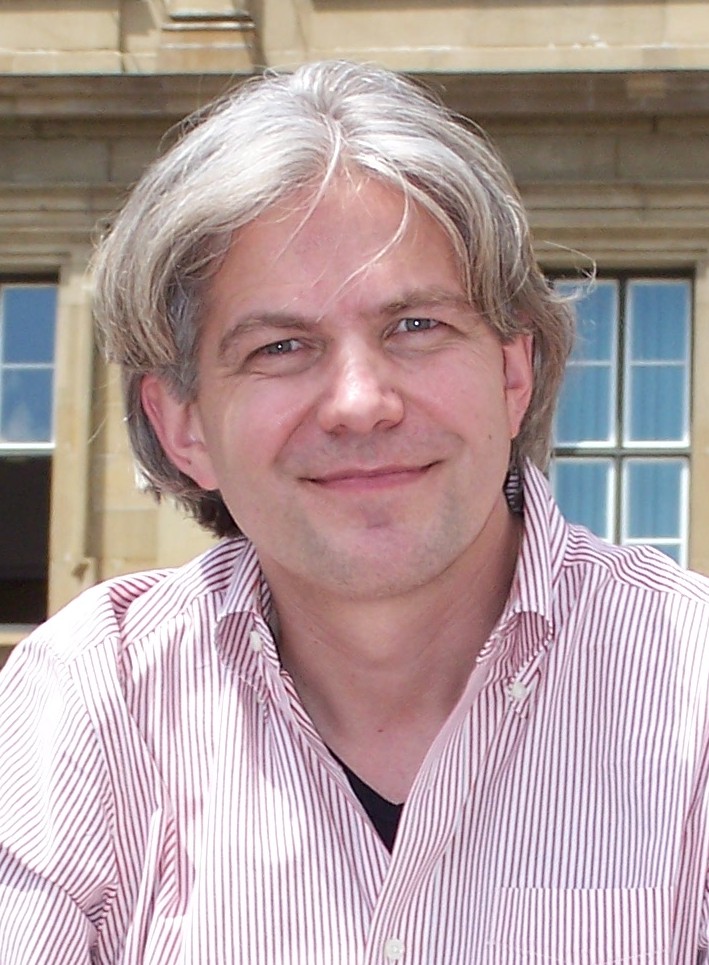
Rainer Böhme is a Professor at the University of Münster, Germany. His research focuses on cyber security, cryptography, steganography, digital forensics, and blockchain technology. He has made significant contributions to understanding cyber risk quantification, central bank digital currencies (CBDCs), and the socio-technical challenges in cryptocurrency systems. Key areas of research include steganalysis (analysis of hidden data in digital media), forensic techniques for neural network inference pipelines, and the economic implications of cyber insurance. He actively contributes to conferences like the Financial Cryptography Workshops (FC) and the Workshop on Information Hiding and Multimedia Security (IH). Böhme's work bridges theory and practice, addressing real-world issues such as privacy in CBDCs, adversarial attacks on AI systems, and the role of law enforcement in cryptocurrency markets. His recent studies explore the security implications of image orientation in JPEG files and the detection of privileged parties in blockchain transactions. He has collaborated with institutions like the University of Vienna and ETH Zurich, and his research has been published in top-tier venues such as IEEE Transactions on Information Forensics and Security and the ACM Conference on Computer and Communications Security (CCS).
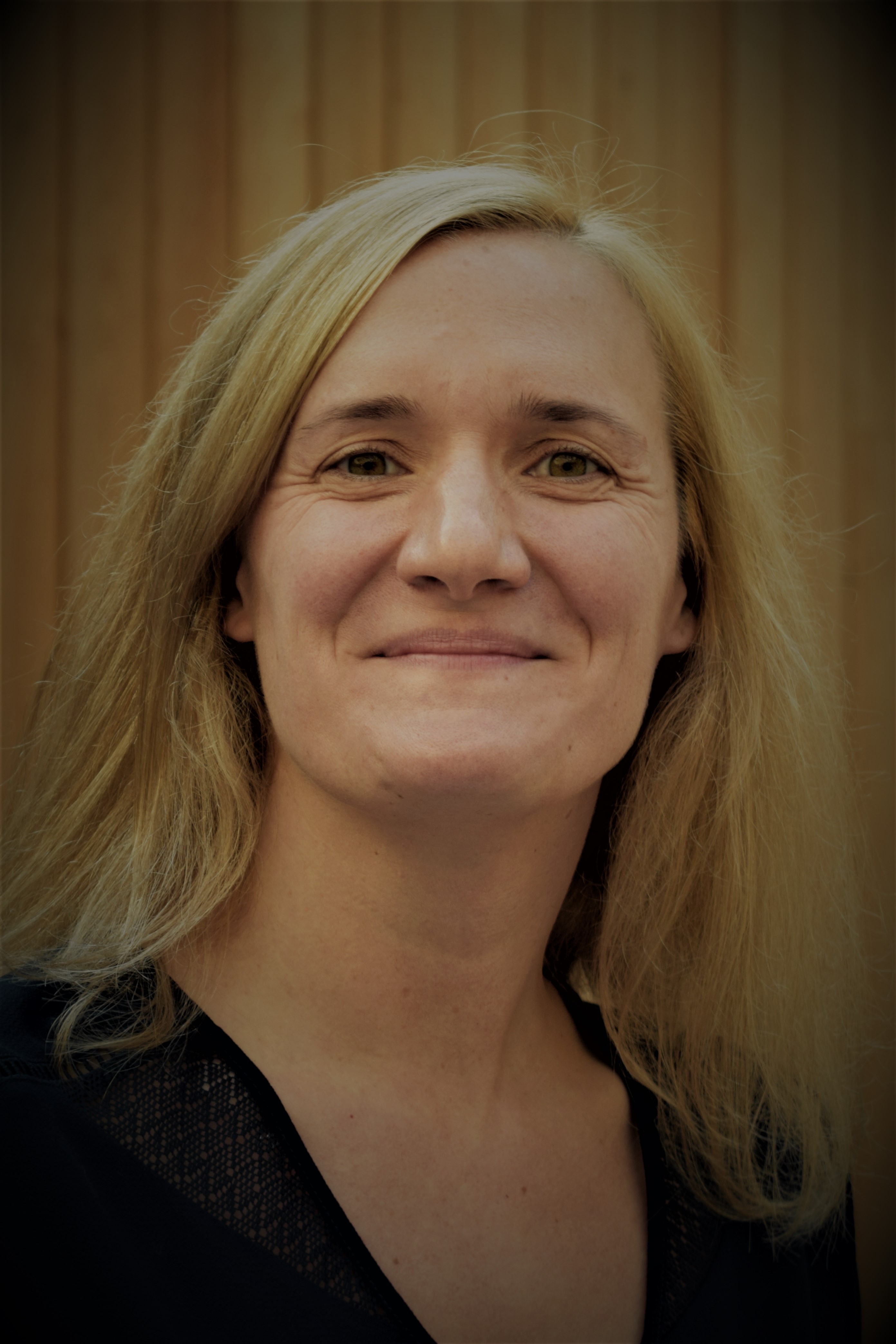
Nele Mentens is a full professor at both KU Leuven and Leiden University, where she leads cutting-edge research in applied cryptography, hardware security, and secure embedded systems. At KU Leuven, she is affiliated with the Faculty of Engineering Technology and the Electrical Engineering Department (ESAT), leading the Emerging Technologies, Systems & Security (ES&S) research group at the Diepenbeek campus. Simultaneously, she holds a full professorship at Leiden University’s Leiden Institute of Advanced Computer Science (LIACS), focusing on applied cryptography and security. She has been instrumental in numerous national and international research initiatives, including Horizon Europe and NWO-funded projects. Full Professor, KU Leuven (since 2023) Full Professor, Leiden University (since 2020) Associate Professor, KU Leuven (2014–2023) Post-doctoral Researcher & Lecturer, KHLim / KU Leuven (2007–2014) Ph.D. in Engineering Science, KU Leuven (2007) M.Sc. in Electrical Engineering, KU Leuven (2003) Her research focuses on secure and efficient hardware design, particularly for cryptographic applications on FPGAs, reconfigurable architectures, IoT security, and neuromorphic computing. She explores physical attack resistance, side-channel analysis protection, and trusted computing architectures, with applications in healthcare, industrial monitoring, and endpoint AI. Her work bridges theoretical cryptography with practical hardware implementations, emphasizing energy efficiency and real-time performance. The 15 most recent publications reflect a strong trend toward secure, energy-efficient, and intelligent embedded systems. Topics include neuromorphic AI accelerators, trusted IoT architectures, dynamic reconfiguration for side-channel protection, and secure medical data processing. These works span disciplines such as computer architecture, cybersecurity, digital design, and embedded systems, with a focus on hardware-software co-design and real-world deployment. Nele Mentens has received recognition for her contributions, including: Best Paper Award, DATE'16 Best Paper Nomination, AsianHOST'17 Best Paper Award, CHES'19 She has supervised over 15 Ph.D. students and post-docs, both current and former, and has served as principal investigator in approximately 25 funded research projects. Her work has attracted significant grants from Horizon Europe, NWO, FWO, and national innovation programs. She actively contributes to the academic community through editorial roles in top journals and leadership in major conferences. Nele Mentens leads the ES&S research group at KU Leuven and collaborates closely with LIACS at Leiden University. Her team includes Ph.D. students, post-docs, and research experts working on projects like NimbleAI, NeuroSoC, and TrustedIoT. She has also established secure electronics labs through infrastructure grants and maintains strong international ties with institutions such as EPFL, Ruhr University Bochum, and ETH Zurich.
Peter Druschel is the founding director of the Max Planck Institute for Software Systems (MPI-SWS) and leads the Distributed Systems Group. He holds adjunct professorships at Saarland University and the University of Maryland, reflecting his strong academic affiliations in computer science. He has previously served as a Professor of Computer Science at Rice University and has held visiting positions at MIT, Microsoft Research Cambridge, and LIP6. Education: Ph.D. in Computer Science, University of Arizona, 1994 His research centers on building secure, compliant, and privacy-preserving distributed and mobile systems. Key interests include accountable systems, peer-to-peer networks, operating systems, and network security. He has led foundational work in systems like Pastry, Scribe, and Glacier, and currently focuses on privacy compliance in data processing through projects like Thoth and iPic. His work is supported by major grants from the ERC, Max Planck Society, DFG, BMBF, and Google. The recent publications highlight a consistent trend in secure and privacy-aware systems, with a focus on policy enforcement, isolation mechanisms, anonymity, and mobile security. These works span top venues such as USENIX Security, OSDI, MobiSys, and SIGCOMM, reflecting sustained impact in systems and security communities. Scientific Awards: NSF CAREER Award (1995) Alfred P. Sloan Fellowship (2000) SIGOPS Mark Weiser Award (2008) Microsoft Research Outstanding Collaborator Award (2016) EuroSys Lifetime Achievement Award (2017) Druschel has advised numerous PhD and master’s students and postdoctoral researchers at MPI-SWS. He has co-directed major collaborative programs including the Cornell-Maryland-Max Planck Pre-doctoral School and the Maryland Max Planck Ph.D. Program. His leadership extends to professional service, having chaired SOSP, OSDI, NSDI, and EuroSys, and served on editorial boards of CACM, TOCS, and Royal Society Open Science. He is a member of Academia Europaea and the German Academy of Sciences Leopoldina. Labs and Teams: Distributed Systems Group, MPI-SWS imPACT ERC Synergy Project Collaborators include Bobby Bhattacharjee, Deepak Garg, Miguel Castro, Ion Stoica, and others
Yuan Liu is a faculty member affiliated with Guangzhou University's Cyberspace Institute of Advanced Technology. Their research focuses on cybersecurity, blockchain technology, federated learning, and IoT systems. They have held roles at multiple institutions, including Northeastern University (Software College) and Nanyang Technological University (PhD in Computer Engineering). Liu's work emphasizes secure communication, edge computing, and distributed systems, with contributions to protocols like blockchain-based redactable systems and quantum federated learning frameworks. They have collaborated extensively on projects addressing IoT security, smart healthcare, and privacy-preserving technologies. Key research trends include leveraging AI for enhanced security (e.g., watermarking frameworks, attack detection) and optimizing resource allocation in edge computing environments. Their publications span journals like IEEE Communications Surveys & Tutorials and conferences such as GLOBECOM.
Daxin Tian is a prominent professor at Beihang University's School of Transportation Science and Engineering, specializing in intelligent transportation systems and vehicular networks. With over 170 publications spanning from 2006 to 2025, his research has significantly contributed to the advancement of connected and autonomous vehicle technologies. His work appears consistently in top-tier IEEE journals including IEEE Transactions on Intelligent Transportation Systems, IEEE Transactions on Intelligent Vehicles, and IEEE Internet of Things Journal, establishing him as a leading authority in the field. Professor Tian's research interests encompass several critical areas in modern transportation technology: Connected and Autonomous Vehicle Systems Vehicular Networking and Communication Protocols Vehicle Platooning and Cooperative Driving Algorithms Edge Computing Applications for Transportation Computer Vision for Autonomous Driving Perception Traffic Flow Optimization and Prediction Models Resource Allocation in Vehicular Networks His recent publications demonstrate an increasing sophistication in addressing complex multi-vehicle scenarios while maintaining practical considerations like communication reliability, energy efficiency, and safety constraints. The research trajectory shows a clear evolution from foundational networking and control problems toward more integrated AI-driven solutions that combine computer vision, natural language processing, and advanced control theory for next-generation transportation systems. Professor Tian maintains extensive international collaborations, particularly with researchers at Canadian institutions including Victor C. M. Leung's group, while leading a substantial research team at Beihang University. His work frequently bridges theoretical advances with practical transportation challenges, resulting in numerous high-impact publications that address real-world implementation barriers in intelligent transportation systems.
Jussara M. Almeida is an established computer science researcher specializing in social network analysis, misinformation detection, and human mobility modeling. Her extensive publication record (1996–2025) demonstrates active research in web science, political communication on messaging platforms (WhatsApp/Telegram), and cloud systems. She frequently collaborates with Brazilian institutions and international partners on large-scale data projects. Research Focus: Her core interests include: Modeling information diffusion in encrypted messaging apps (WhatsApp/Telegram) Predicting human mobility patterns and privacy implications Analyzing political discourse and election-related coordination online Developing computational methods for misinformation detection Optimizing cloud/edge computing performance Publication Trends: Recent work (2021-2025) shows intensified focus on: Telegram's role in political mobilization and information dissemination Advanced techniques for identifying fake news websites and image-based misinformation Privacy-preserving mobility analysis and edge computing Child safety in live-streaming platforms Collaborations & Impact: Key collaborators include Marcos André Gonçalves, Fabrício Benevenuto, and Marco Mellia. Her research provides critical insights into real-world problems like election integrity, platform governance, and user privacy.
Junxi Chen is an academic affiliated with Dalian University of Technology's School of Software. His research focuses on advanced machine learning techniques, medical image analysis, and computer vision applications in healthcare. He has contributed significantly to adversarial machine learning, robust deep learning models, and medical image segmentation. His work bridges theoretical advancements with practical applications in medical diagnostics and data security. Key research areas include adversarial attacks/defense mechanisms, medical imaging segmentation (e.g., skin lesions, tumors), and innovative neural network architectures like UNet variants. He also explores secure data-hiding techniques in encrypted images and hybrid memory systems optimization. Publications span top venues such as CVPR, IEEE Transactions, and Medical Image Analysis journals. Collaborations with institutions like Dalian University of Technology and international co-authors highlight his global research impact.
Dr. Christian Borgs is a Researcher at the Institute of Sociology, University of Duisburg-Essen. His work focuses on privacy-preserving record linkage , leveraging cryptographic methods such as Bloom filters to securely integrate large-scale medical and administrative datasets. Collaborating extensively with Rainer Schnell, he addresses challenges in data privacy in healthcare, including perinatal and neonatal data analysis, mortality registries, and census data integration. His research emphasizes robust techniques for protecting patient privacy while enabling data utility for public health and policy. His publications highlight advancements in Bloom filter encryptions, randomized response techniques, and the evaluation of cryptographic methods for medical datasets. He actively participates in international conferences like ECML PKDD, IEEE ICDM, and the International Population Data Linkage Conference, contributing to the development of secure data integration frameworks. Despite no explicit awards listed, his contributions to privacy-preserving methodologies have significant impact in health informatics and administrative data science.
Jaime Delgado is a prominent researcher with over three decades of contributions to digital rights management, healthcare information systems, and security and privacy in eHealth. With an extensive publication record spanning from 1994 to 2025, Delgado has established themselves as a leading expert at the intersection of computer science and healthcare, developing practical frameworks that enhance security, privacy, and interoperability in medical systems. Delgado's research spans multiple critical domains: Digital Rights Management and Multimedia Content Security Healthcare Information Systems and eHealth Applications Security and Privacy in Medical Data Management Ontologies and Semantic Web Technologies for Healthcare Genomic Information Systems and FAIR Data Principles Trustworthy Media Systems and Provenance Tracking Analysis of recent publications (2021-2025) reveals a strategic shift toward healthcare applications, particularly focusing on security requirements for Internet of Medical Things (IoMT), privacy-enhancing techniques for medical data, and genomic information systems. Delgado's work demonstrates consistent development of practical architectures addressing real-world security challenges in healthcare settings, with increasing collaboration with medical professionals and participation in European health informatics initiatives like the MedSecurance Project. Delgado has received recognition for contributions to standardization efforts, particularly in developing frameworks for media trustworthiness and international standards for assessing trust in digital media. Their work on the JPEG Privacy and Security framework has significantly influenced industry practices. Through extensive collaboration with researchers like Silvia Llorente (43 joint publications), Eva Rodríguez (29 publications), and Rubén Tous (26 publications), Delgado has built a strong research network across European institutions. Their work consistently combines theoretical framework development with practical implementation considerations, addressing the critical balance between security requirements and clinical workflow usability. Delgado's laboratory work centers on developing secure frameworks for medical data management, with recent emphasis on genomic information systems, provenance tracking in eHealth, and security requirements for medical IoT devices. Their research group actively participates in European health informatics initiatives and contributes to international standards development, maintaining exceptional productivity with 4-7 publications annually in recent years.
Ja-Ling Wu is a distinguished Professor in the Department of Electrical Engineering at National Taiwan University's College of Electrical Engineering and Computer Science. With an extensive publication record spanning over four decades (1984-2025), Professor Wu has established himself as a leading researcher in multimedia systems, image processing, and security technologies. His academic career demonstrates consistent productivity with 255 indexed publications showing no signs of slowing down, with numerous papers published in 2024 and 2025. Professor Wu's research interests center on image compression, cryptography, privacy-preserving systems, and machine learning applications. His work bridges theoretical foundations with practical implementations, particularly in multimedia security and efficient data representation. Over his career, he has developed innovative approaches to image and video coding, data hiding techniques, and secure computation methods that have influenced both academic research and industry applications. Analysis of his recent publications (2023-2025) reveals a strategic evolution of his research toward contemporary challenges in AI security, with increasing focus on learned image compression, privacy-preserving machine learning, and the integration of cryptographic techniques with deep learning systems. His work demonstrates a consistent ability to adapt to emerging technological landscapes while maintaining core expertise in multimedia processing. Professor Wu has mentored numerous students who have become active researchers in their own right, with many continuing to collaborate with him on cutting-edge projects. His leadership in the field is evident through his sustained publication output across top venues including IEEE Transactions, ACM Multimedia, and specialized cryptography conferences.
Shuo Huang is an academic researcher with a focus on interdisciplinary fields spanning Machine Learning, Control Systems, and Signal Processing. Their work integrates theoretical advancements with practical applications in areas like neural networks, robotics, and sensor technology. They have contributed significantly to methodologies in predictive modeling, privacy-preserving machine learning, and optimization algorithms. Key research areas include the development of distributed Kalman filters for robotics, semi-supervised learning frameworks, and deep learning applications in computer vision and autonomous systems. They also engage in statistical process control and quality assurance, reflecting a blend of theoretical and applied engineering expertise. Notable contributions include advancements in privacy-preserving neural networks, adaptive control systems for electromechanical devices, and sensor design innovations. Their interdisciplinary approach bridges computer science, electrical engineering, and industrial applications.
Farhan Amin is a prolific researcher in computer science with a focus on Internet of Things (IoT) technologies, data security, and smart systems. He has published extensively in high-impact journals like IEEE Access and PeerJ Comput. Sci., collaborating with international experts such as Rashid Abbasi and Gyu Sang Choi. His work spans domains including smart city analytics, medical data protection, and next-generation IoT frameworks. Key Contributions: Dynamic trust management in IoT, 3D arthritis detection models, and hybrid data watermarking techniques. Collaborators: Rashid Abbasi, Salabat Khan, Abdul Mateen, Isabel de la Torre Díez. His research bridges theoretical innovation and practical applications, particularly in cybersecurity for IoT, network navigation, and healthcare analytics. Recent publications highlight advancements in zero-knowledge proofs, deep learning for medical imaging, and 6G-enabled healthcare systems. Farhan’s work on anticancer peptide prediction and child custody decision modeling demonstrates interdisciplinary reach. While not explicitly stated, his output suggests a faculty or senior research role at an institution engaged in cutting-edge computational science.
S. Boumerdassi is a researcher at the CEDRIC Laboratory of Conservatoire National des Arts et Métiers (CNAM) . He has been actively involved in interdisciplinary research spanning networking , machine learning , image encryption , and IoT systems since the early 2000s. His work has focused on security protocols, energy efficiency in data centers, and anomaly detection frameworks. Key Research Areas: Networking: VANETs, LoRaWAN, network anomalies, and edge computing. Security: Blockchain oracles, cryptographic protocols, and wireless sensor network security. Machine Learning: Applications in network optimization and sustainable agriculture. Image Encryption: Chaotic maps, DCT coefficients, and grain algorithms. Recent Publications highlight his contributions to federated learning, anomaly detection, and mobility models. Leadership and Collaboration He has co-organized conferences like Mobile, Secure, and Programmable Networking and contributed to edited volumes on machine learning and IoT. His collaborations include researchers from Springer, IEEE, and institutions across France, Italy, Spain, and Canada.
Reinhard Heckel is a Professor of Machine Learning at the Department of Computer Engineering, Technical University of Munich (TUM). His career includes positions as a Tenure-Track Assistant Professor at Rice University (2017–2019) and postdoctoral fellow at UC Berkeley's Berkeley Artificial Intelligence Research Lab. He holds a PhD from ETH Zurich (2014) and conducted doctoral research at Stanford University’s Statistics Department. Recognitions include being named one of Germany's 'Top 40 under 40' (2022) and the Werner von Siemens Ring Foundation Award (2022). Education & Professional Background: PhD in Computer Science, ETH Zurich (2014) Visiting Doctoral Fellow, Stanford University (Statistics Department) Postdoctoral Fellowship, UC Berkeley (EECS Department) Research Focus: His work bridges theoretical foundations and practical applications in machine learning, including: Algorithm development for deep learning and medical image processing Mathematical foundations of machine learning DNA data storage technology (error correction, synthesis methods) Computational imaging and inverse problem solutions Awards & Highlights: 2022: Capital 40 under 40, Werner von Siemens Ring Foundation Award 2015: ETH Zurich Medal for Doctoral Thesis, IBM Invention Achievement Award Grants & Collaboration: His research has been supported by grants focusing on DNA storage scalability and MRI reconstruction. He collaborates with institutions like IBM Research and the Berkeley AI Lab. Key projects include developing DNA synthesis methods and AI-driven medical imaging tools. Labs & Teams: Leads TUM's machine learning initiatives in computational imaging and biological data storage systems. Active in interdisciplinary teams bridging computer science, bioengineering, and statistics.