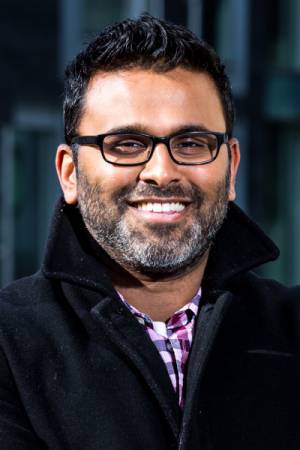
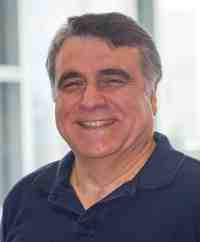
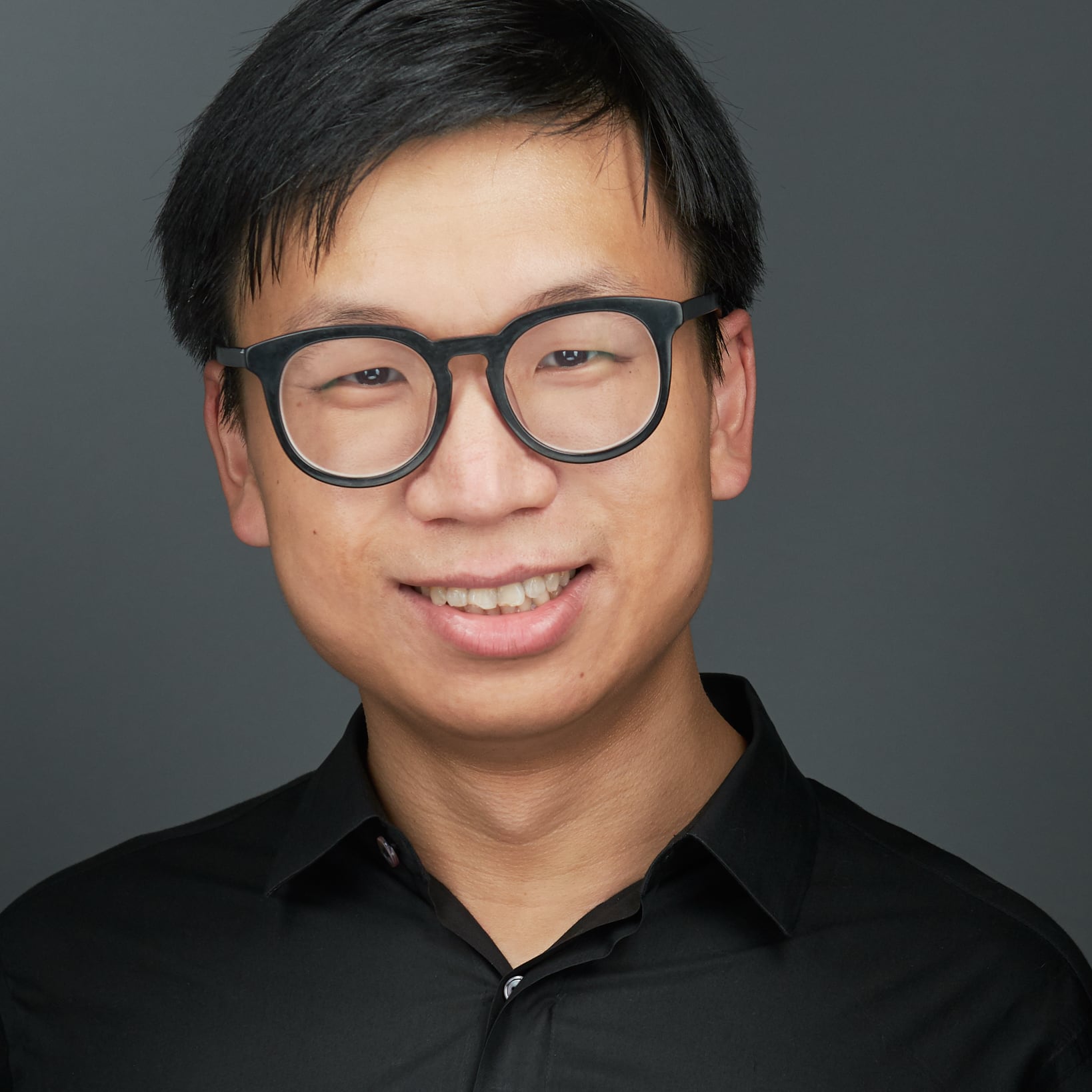
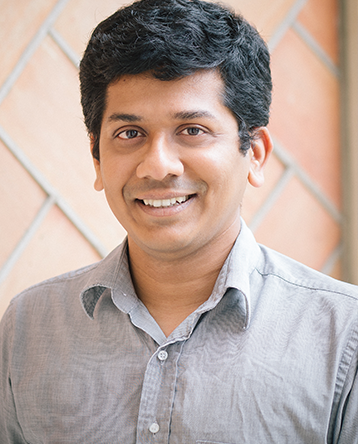
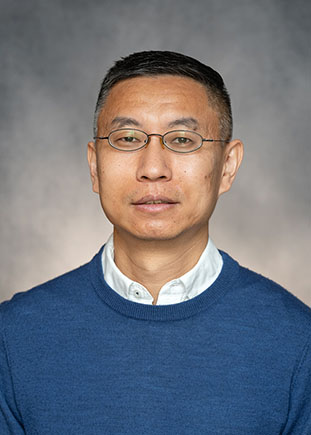
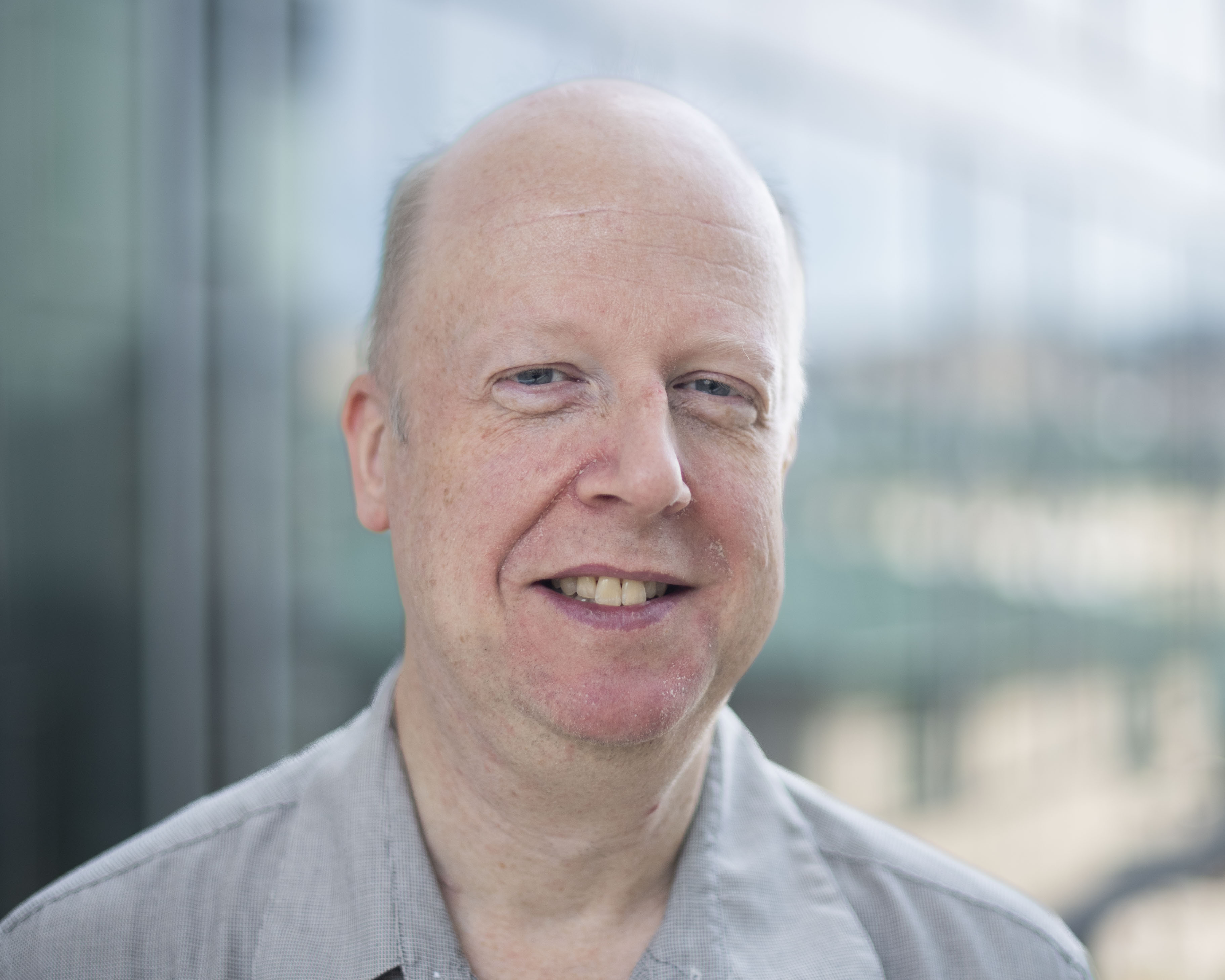
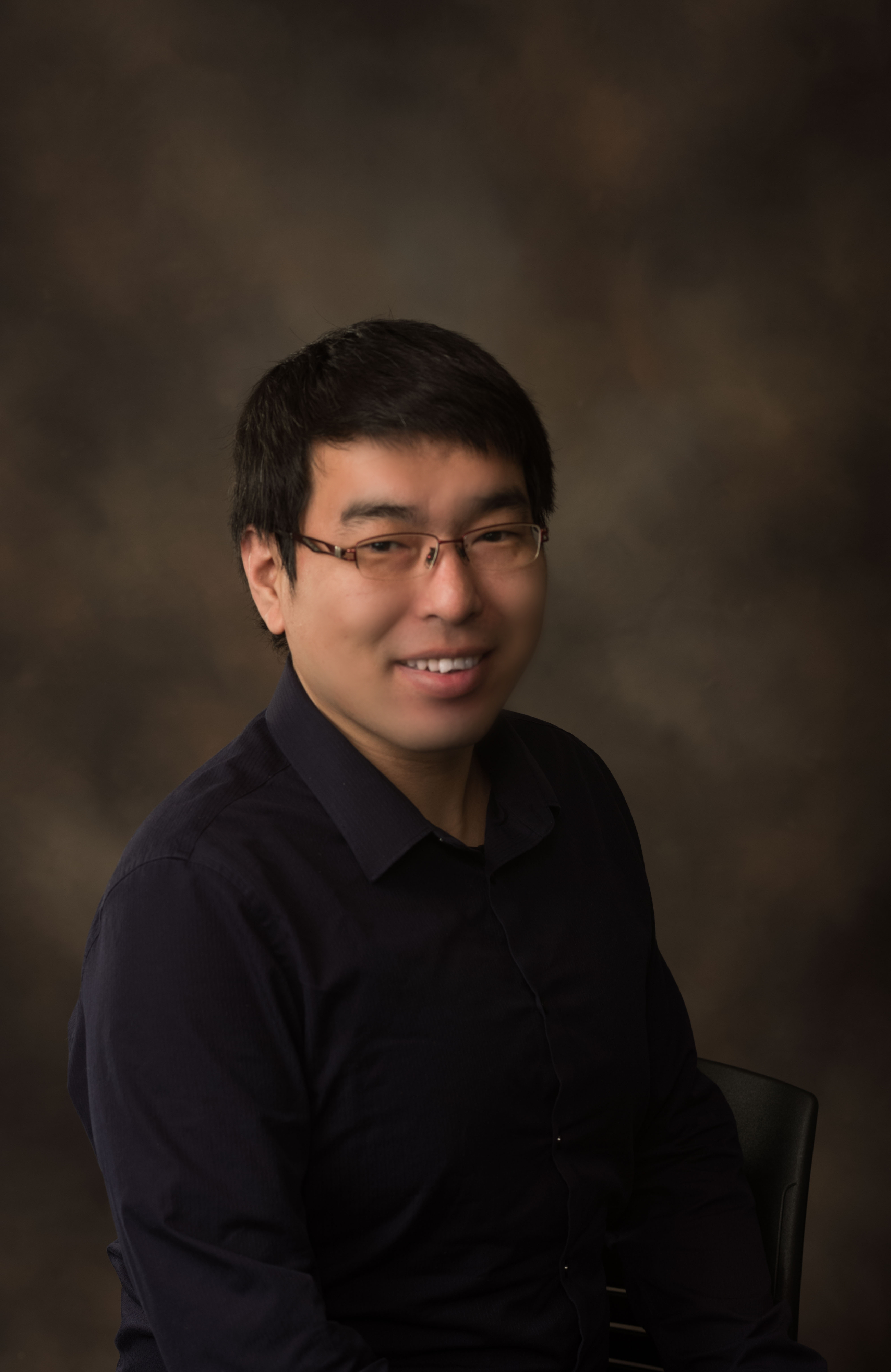
Deva Kannan Ramanan is a Professor at the Robotics Institute of Carnegie Mellon University , focusing on computer vision , machine learning , and human-centered robotics . His work bridges neurorobotics and visual perception , with applications in autonomous driving and 4D reconstruction . Research Topics Computer Vision 3-D Vision and Recognition Visual Servoing Neurorobotics Human-Centered Robotics Graphics & Creative Tools His recent publications in CVPR , ICRA , and ICCV emphasize 4D human reconstruction , neural rendering , and vision-language models for autonomous systems. He serves as General Chair of CVPR 2027 and Program Chair of CVPR 2018 , with IARPA funding for aerial-ground rendering (2023-2027). Current students include PhD candidates Sally Chen, Kangle Deng, and Zhiqiu Lin, while past advisees like Arun Vasudevan and Olga Russakovsky now hold positions at Amazon and Meta respectively.
Christos Faloutsos is the Fredkin Professor of Computer Science at Carnegie Mellon University, with a courtesy appointment in Electrical and Computer Engineering. He holds a B.Sc. from the National Technical University of Athens and M.Sc./Ph.D. from the University of Toronto. His research focuses on data mining, graph analysis, fractals, and database systems. Notable contributions include foundational work on R-trees, graph mining laws (e.g., Kronecker graphs), and applications in medical imaging, network security, and fraud detection. Key projects include PEGASUS (petascale graph mining), fraud detection in online auctions (NetProbe), and tools for human trafficking analysis (TrafficVis). He has led NSF-funded projects on tensor mining, network anomaly detection, and bioinformatics. Over 300 refereed publications highlight his contributions across databases, data mining, and networks. Awards include the KDD Best Paper (2005, 2016), SIGMOD Test-of-Time Award, and recognition as a top nurturer in IT. His lab collaborations span the Parallel Data Lab (PDL), Machine Learning Department, and Computational Biology.
Yonatan Bisk is an Assistant Professor at Carnegie Mellon University within the Language Technologies Institute (with courtesy appointment in Robotics Institute). His research bridges Natural Language Processing , Robotics , and Embodied AI , focusing on language grounding, theory of mind, and multimodal interaction. Education : Ph.D. in Computer Science from University of Illinois at Urbana-Champaign Postdoctoral Experience : USC ISI, University of Washington, Allen Institute for AI Industry Appointments : Microsoft Research, Meta AI His research emphasizes embodied language systems and social intelligence in AI . Recent projects include WebArena for autonomous agents, SOTOPIA for social reasoning, and HomeRobot for open-vocabulary manipulation. He leads the REAL Center (Robotics, Embodied AI, and Learning) to foster interdisciplinary collaboration. Key scientific awards include selection for the DARPA ISAT Study Group (2024). He teaches courses like "Talking to Robots" and "Multimodal Machine Learning" while serving as area chair/editor across NLP, Robotics, and ML communities.
Steve Chase is a Professor at Carnegie Mellon University , affiliated with the Biomedical Engineering , Electrical and Computer Engineering , Neuroscience Institute , and Robotics Institute departments. His research spans Computational Neuroscience , Neural Engineering , and Systems Neuroscience , with a focus on neural circuits, motor control, and brain-computer interfaces (BCI). Research Areas: Sensation & Perception, Methods Development, Diseases & Disorders, Physiological & Anatomical Methods. Lab Highlights: Development of the RotaWheel, memory trace studies in the motor cortex, and investigations into BCI stabilization and learning dynamics. Scientific Contributions: His lab has published extensively in journals like Neuron , Nature Computational Science , eLife , and PNAS , with notable works on neural activity patterns, dimensionality reduction in calcium imaging, and sensory constraints on motor cortex modulation. Students and postdocs in his lab have received awards, including the CNBC best paper award.
Pengtao Xie is an Associate Professor (with tenure as of June 2025) in the Department of Electrical and Computer Engineering at the University of California San Diego. He also serves as Associate Adjunct Professor in the Division of Biomedical Informatics, Department of Medicine, and holds affiliate appointments with the Halıcıoğlu Data Science Institute, School of Biological Sciences, Shu Chien-Gene Lay Department of Bioengineering, Skaggs School of Pharmacy and Pharmaceutical Sciences, and multiple research institutes including the AI Group, Center for Machine-Intelligence, Computing and Security, Institute of Engineering in Medicine, and Institute for Genomic Medicine. Education: PhD in Machine Learning, School of Computer Science, Carnegie Mellon University Research Interests: His research focuses on machine learning inspired by human learning skills, such as self-explanation, small-group learning, and learning by teaching. He applies these techniques to large language models, foundation models, healthcare, and biomedicine. His work spans generative AI, medical imaging, protein modeling, and drug discovery. Recent Research Trends: His 2024–2025 publications emphasize generative AI for ultra-low-data medical image segmentation, multimodal large language models for biomedical applications, protein function prediction, and novel training strategies like task-adaptive pretraining and bi-level optimization for model adaptation. Scientific Awards: NIH MIRA Award (2025) NSF CAREER Award (2024) Best Graduate Teacher Award – UCSD ECE (2023) ICLR Notable-Top-5% Paper (2023) Global Top-100 Chinese Young Scholars in AI (2022) UCSD Faculty Career Development Award (2022) Tencent Faculty Award (2021) Outstanding Reviewer – ICLR (2021) AMIA Doctoral Dissertation Award Finalist (2020) Amazon AWS Research Award (2020) Tencent AI-Lab Faculty Award (2020) Innovator Award – Pittsburgh Business Times (2018) Siebel Scholarship (2014) Advising and Grants: He currently advises PhD students, postdocs, and master’s students. He has received major grants including the NIH MIRA and NSF CAREER awards, and actively mentors Schmidt AI in Science postdocs and graduate students. Teaching and Labs: He teaches ECE285 Deep Generative Models and ECE175B Probabilistic Reasoning and Graphical Models . His lab focuses on foundational and translational AI research with applications in biomedicine and healthcare.
Jun-Yan Zhu is an Assistant Professor at Carnegie Mellon University's School of Computer Science, affiliated with the Robotics Institute and Computer Science Department. His research focuses on generative models, computer vision, and graphics. He holds a B.E. from Tsinghua University and a Ph.D. from UC Berkeley, with postdoctoral work at MIT CSAIL. Zhu leads the Generative Intelligence Lab, exploring human-creator collaboration with generative models. Affiliations: Robotics Institute, CMU Graphics Lab, CMU Computer Vision Group Education: B.E. (Tsinghua), Ph.D. (UC Berkeley) Research Interests: Generative AI, image/video synthesis, neural rendering, tactile sensing integration Notable contributions include CycleGAN, pix2pix, and GAN compression techniques. His work has been commercialized in Adobe's Firefly and NVIDIA's Canvas tools. Awards: ACM SIGGRAPH Dissertation Award, David J. Sakrison Prize, CVPR Best Paper Finalist Lab Members: 10+ PhD students and researchers Current projects include LEGO design synthesis, tactile-driven 3D generation, and generative model personalization.
Aswin Sankaranarayanan is a Professor in the Department of Electrical and Computer Engineering at Carnegie Mellon University (CMU) , where he leads the Image Science Lab . His research focuses on computational photography , 3D shape estimation , and novel imaging system design . He earned his Ph.D. in Electrical and Computer Engineering (2009) from the University of Maryland and completed a postdoctoral fellowship at Rice University (2012) . Research Themes: Developing imaging systems that exploit low-dimensional signal models to overcome traditional sensing limitations Co-design of optics and processing algorithms for efficient sensing Application of non-linear signal models to high-dimensional data Advancing compressed sensing and big data processing techniques Scientific Recognition: SIGGRAPH 2023 Best Paper Award (Split-Lohmann Multifocal Displays) CVPR 2019 Best Paper Award (Fermat Paths for NLOS Reconstruction) NSF CAREER Award (2017) Dean’s Early Career Fellowship (2018-2021) Herschel Rich Invention Award (2016) Technical Contributions: His recent publications reveal expertise in non-line-of-sight shape reconstruction , VR/AR display systems , and biomedical imaging . Collaborations span institutions like University College London and University of Toronto.
Fangwei Si is the Cooper-Siegel Assistant Professor of Physics at Carnegie Mellon University's Department of Physics, with courtesy appointments in Biomedical Engineering. His research focuses on uncovering biological laws through quantitative biophysics , integrating microfluidics , imaging , and physical modeling . He previously held postdoctoral positions at The Scripps Research Institute and University of California, San Diego, and earned his Ph.D. in Mechanical Engineering from Johns Hopkins University. Ph.D.: Johns Hopkins University (2015) B.S.: Peking University (2009) His research bridges cell surface biophysics , cellular adaptation , and bacteria-phage interactions , emphasizing how cells optimize fitness through precise membrane organization and component redundancy . Current projects explore mechanical compression effects , quantitative adaptation principles , and phage-host coevolution . The lab's articles reveal trends in cell size control (2017-2019), mechanosensation (2018), and stochastic modeling (2020-2021), extending to machine learning approaches (2025) and high-throughput imaging (2024). Key methods include microfluidics , genetic modulation , and physical modeling . At CMU, Si leads the Experimental Cell Biophysics Lab, mentoring Ph.D. students like Mo Zhou and Christopher Aldrich , alongside postdocs and undergraduates. His lab received NIH and NSF grants in 2023 to advance research on microbial systems.
Ralf Brown is a Principal Systems Scientist at Carnegie Mellon University's School of Computer Science, affiliated with the Language Technologies Institute (LTI). His research focuses on machine translation , language identification , and digital forensics , with notable contributions like the open-source CMU-EBMT system and the LTI LangID Corpus for 2000+ languages. Academic Roles: Research faculty since 1993, teaching courses like Coding & Algorithms Bootcamp and MIIS Capstone Project . Research Interests: Multilingual processing, example-based translation, low-resource languages, and text mining. Scientific Contributions: Authored 15+ publications on EBMT, corpus indexing, and context-sensitive translation. Developed tools for digital forensics (corrupted ZIP recovery) and language identification at scale. Awards: IJCAI Distinguished Paper Award Allen Newell Award for Research Excellence Open-Source Contributions: Key developer of darktable image editor Maintainer of the Interrupt List and other technical resources
Chun-Liang Li is a Research Scientist at Apple MLR and an Affiliate Assistant Professor at the Allen School of Computer Science, University of Washington. He holds a Ph.D. in Machine Learning from Carnegie Mellon University (2014-2019) and a B.S./M.S. in Computer Science and Information Engineering from National Taiwan University (2008-2013). His research spans machine learning, computer vision, and natural language processing, with emphasis on representation learning, efficient model training, and multimodal understanding. Key focus areas include large language model optimization, contrastive learning techniques, document understanding systems, and domain adaptation methods. Recent publications demonstrate strong focus on LLM efficiency (dataset decomposition, distillation techniques), document AI (table reasoning, form extraction), and multimodal alignment (image-text retrieval, prefix conditioning). His work consistently appears in premier venues including NeurIPS, CVPR, ACL, and ICLR. Awards and Honors: IBM Ph.D. Fellowship (2018) Best student paper runner-up, IJCAI (2017) First Place in both tracks of KDD Cup (2011, 2013) He actively mentors students and collaborators, inviting contact for internship opportunities. Current industry-academic position bridges cutting-edge research with practical applications in machine learning systems.
Matthew A. Smith is a Professor in the Department of Biomedical Engineering and the Carnegie Mellon Neuroscience Institute, where he serves as Co-Director of the Center for the Neural Basis of Cognition. His research bridges computational and experimental neuroscience to understand visual perception, cognition, and motor control. Dr. Smith's research focuses on neural engineering, visual perception, cognition, eye movements, and neural circuits . His laboratory investigates how groups of neurons interact to construct visual perception and translate it into cognitive processes and motor outputs. The lab employs a multi-scale approach combining single-neuron electrophysiology with global signals like EEG and near-infrared imaging, examining both normal and disease states of the brain. Analysis of his recent publications reveals strong trends in brain stimulation optimization (e.g., MiSO/OMiSO frameworks), neural population dynamics during cognitive tasks, visual cortex plasticity , and non-invasive neurotechnology development. His work spans fundamental neuroscience questions about working memory and perception while developing practical tools for brain monitoring and intervention. NIH K99/R00 Pathway to Independence Award Research to Prevent Blindness Career Development Award Dr. Smith has secured substantial funding from NIH, NSF, Research to Prevent Blindness, Schaffer Foundation for Glaucoma Research, and Hillman Foundation to support his research program. His laboratory actively develops novel methodologies for neural recording and stimulation while investigating fundamental mechanisms of visual processing and cognition. The lab maintains strong collaborative ties within Carnegie Mellon's neuroscience ecosystem through the Center for the Neural Basis of Cognition.
Haohan Wang is an Assistant Professor at the University of Illinois Urbana-Champaign's School of Information Sciences, with affiliations to the Carl R. Woese Institute for Genomic Biology and the National Center for Supercomputing Applications. His research focuses on developing trustworthy machine learning methods for computational biology and healthcare applications , emphasizing robustness , causality , and interpretability in vision-based models. Recent research trends in his work include: Large Language Model interactions with biomedical challenges (GenoAgent, GenoTex) Adversarial security in language and vision models (Guard, Jailbreakzoo) Genomic data analysis through robust machine learning frameworks (Precision Lasso, Kernel Mixed Models) Interactive toolkits like Robustar for data annotation and model training Scientific awards include recognition as Baidu's Top 50 AI+X Rising Young Scholars (2022), Best Paper Honorable Mention at WSDM 2023, and Broad Institute's Next Generation status (2019). Current projects explore AI-made scientists for biomedical discovery and Robustar development for GUI-based robust vision learning.
William W. Cohen is a Visiting Professor at Carnegie Mellon University's Machine Learning Department and holds a 20%-time appointment at Google. He earned his PhD in Computer Science from Rutgers University in 1990 and has held roles at AT&T Bell Labs, Whizbang Labs, and CMU. His research focuses on machine learning, NLP, neuro-symbolic reasoning, and knowledge representation. Education: B.S. (Duke, 1984), PhD (Rutgers, 1990). Research Interests: Cohen's work spans question answering, NLP tasks, and neuro-symbolic systems. He emphasizes scalable reasoning methods and has contributed to systems like Never-Ending Learning (NELL) and knowledge graph construction. Recent efforts include improving large language model evaluation and retrieval-augmented generation. Awards: AAAI Fellow (2006), 2008 SIGMOD Test of Time Award, 2014 SIGIR Test of Time Award, 2023 Semantic Web Science Ten-Year Award. His work on subtopic retrieval (SIGIR 2003) and data integration (SIGMOD 1998) are foundational. Grants & Advising: Supervised over 50 students, including notable figures like Bhuwan Dhingra (now at Duke) and Zhilin Yang. Active in funding projects related to AI ethics, knowledge graphs, and scalable learning systems. Labs & Teams: Core contributor to the NELL project and collaborator on initiatives like the Knowledge Vault and Open Information Extraction systems. Currently involved in developing robust AI evaluation frameworks and multimodal reasoning systems.
Asim Smailagic is Research Professor at Carnegie Mellon University directing the Laboratory for Intelligent Interactive Real-Time Computing Systems. His work develops wearable systems and virtual coaches for healthcare applications. Current research creates AI-assisted rehabilitation technologies, privacy-preserving medical imaging systems, and explainable AI for clinical decision support. His virtual coaches combine sensing, machine learning and human-computer interaction for personalized therapy. Recent publications address stroke rehabilitation assessment, algorithmic bias in medical imaging, and privacy-aware medical data compression. These innovations bridge AI with clinical applications for improved patient care. He received the Allen Newell Research Excellence Award, Carnegie Science Center Excellence Award, and leads projects funded by NSF, NIH and DoD.
Steven Chase is a Courtesy Professor in the Department of Electrical and Computer Engineering at Carnegie Mellon University, part of the College of Engineering. His research focuses on understanding neural mechanisms underlying learning, motor control, and the development of brain-computer interfaces (BCIs). He investigates how neural activity adapts during skill acquisition and explores the interplay between sensory input, motor output, and cognitive processes. His work emphasizes the neural basis of learning and adaptation, with a particular focus on motor cortex dynamics and the design of BCI systems. Recent studies explore how reward influences movement vigor, the role of limb posture in motor adaptation, and the neural substrates of choking under pressure. Chase's research also addresses the stability and plasticity of cortical representations during skill learning and sensory deprivation. Key trends in his publications include advancing BCI technology through low-dimensional control frameworks, analyzing neural memory traces during learning, and dissecting the multidimensional constraints shaping neural activity patterns. His work bridges computational neuroscience, neurophysiology, and engineering to develop translational solutions for neural prosthetics and rehabilitation. Chase collaborates widely on projects involving neural decoding algorithms, closed-loop systems, and the optimization of BCI usability. His research has implications for understanding fundamental neural processes and developing assistive technologies for motor impairments.